


Search results
Search for "Si" in Full Text gives 841 result(s) in Beilstein Journal of Nanotechnology. Showing first 200.
Low-temperature AFM with a microwave cavity optomechanical transducer
Beilstein J. Nanotechnol. 2025, 16, 1873–1882, doi:10.3762/bjnano.16.130
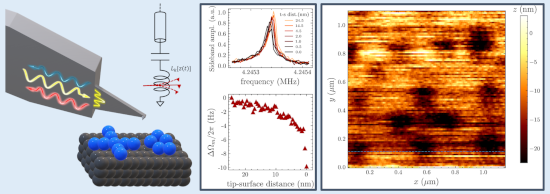
- the thermally limited regime ≪ , where Fmin ≃ . Achieving this limit can be especially challenging at cryogenic temperatures. Heritier et al. achieved a record force sensitivity of 0.16 aN/ using a Si nanoladder with Ωm/2π = 5.5 kHz and stiffness k = 6.5 µN/m at T = 100 mK [20]. AFM usually requires
- Si–N plate released from a Si substrate. The microwave superconducting lumped-element resonant circuit consists of an interdigital capacitor in series with a meandering nanowire inductor, both fabricated from a single layer of Nb–Ti–N deposited on the Si–N. The nanowire meanders across the clamping
- in the literature [28][29][30]. The main limitation to the internal quality factor of our microwave resonators is the highly disordered low-stress Si–N layer, which causes significant dielectric losses [31]. As discussed above, the figure of merit of a displacement detector should be evaluated with


Further insights into the thermodynamics of linear carbon chains for temperatures ranging from 13 to 300 K
Beilstein J. Nanotechnol. 2025, 16, 1818–1825, doi:10.3762/bjnano.16.125
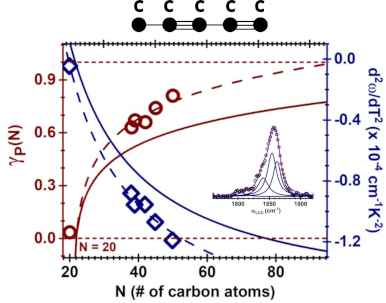
- synthesized using arc discharge [53]. The purity of MWCNT regarding nanoparticles is ≈80% with average diameters of 10.4 nm (average length of 2.3 mm). The LCC@CNT filling ratio is ≈80% [53]. The samples were dispersed in acetone and sonicated for 2 h and then drop casted onto a Si wafer of ≈1 cm2 area. Raman


![[Graphic 23]](/bjnano/content/inline/2190-4286-16-125-i25.svg?max-width=637&scale=1.18182)
Modeling magnetic properties of cobalt nanofilms used as a component of spin hybrid superconductor–ferromagnetic structures
Beilstein J. Nanotechnol. 2025, 16, 1557–1566, doi:10.3762/bjnano.16.110
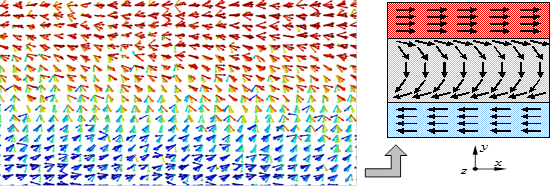
- the exchange integral, the sign of which determines the type of interaction (ferromagnetic or antiferromagnetic); and si and sj are spin vectors of individual atoms. Equation 6 provides a connection between the spatial and spin degrees of freedom of the system through the exchange integral in the form


Influence of laser beam profile on morphology and optical properties of silicon nanoparticles formed by laser ablation in liquid
Beilstein J. Nanotechnol. 2025, 16, 1533–1544, doi:10.3762/bjnano.16.108
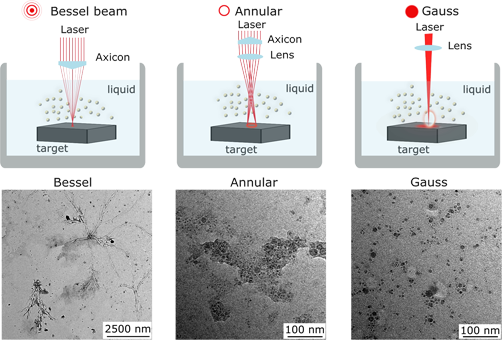
- annular profile formed using a combination of an axicon and a converging lens, and a Gaussian beam focused on the surface of a Si target using the same converging lens. In all the schemes, a nanosecond Nd3+:YAG laser with a pulse duration of 10 ns operating at its fundamental harmonic (1064 nm) was used
- morphology. The synthesized colloidal Si NPs are suggested for applications as a component of electrode materials in supercapacitors and batteries. Keywords: laser ablation; laser beams with Bessel, annular, Gaussian profiles; laser-induced modification; silicon nanoparticles; Introduction Silicon, due to
- become an emerging field of research [3][4][5][6][7]. The expanding application areas require silicon nanomaterials of different morphologies, including quantum dots, nanowires, and nanocrystalline films. Si nanowires, for example, are considered as a promising alternative to silicon electrodes in Li-ion


Cross-reactivities in conjugation reactions involving iron oxide nanoparticles
Beilstein J. Nanotechnol. 2025, 16, 1504–1521, doi:10.3762/bjnano.16.106
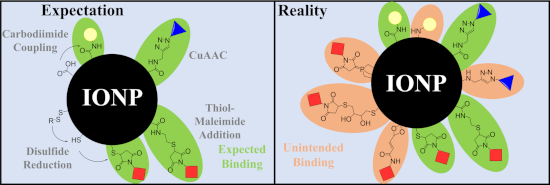
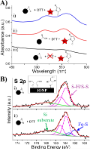
- majority of the bound CySH is either coordinated to surface Fe through the amine, or possibly bound to 3,4-DHBA quinones through its thiol. The presence of a higher binding energy feature in the S 2p spectra at >166 eV is attributed to a Si 2s plasmon loss peak, derived from the Si substrate (Supporting







Laser processing in liquids: insights into nanocolloid generation and thin film integration for energy, photonic, and sensing applications
Beilstein J. Nanotechnol. 2025, 16, 1428–1498, doi:10.3762/bjnano.16.104
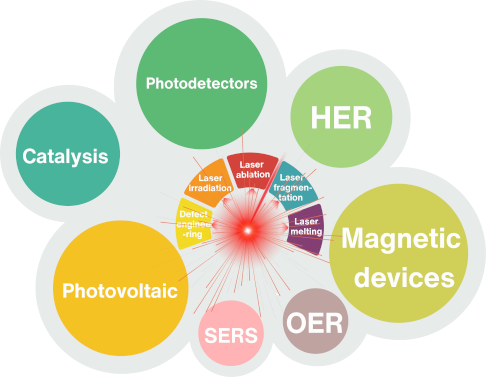
- quenching, and the challenges of oxidation in nanoparticle synthesis. Cost-effective methods for modifying the surface characteristics of Si nanocrystals (Si-ncs) and BaTaOxNy perovskite particles using laser fragmentation are reported in [39] and [40], respectively. In particular, laser fragmentation in
- water successfully alters the surface properties of Si-ncs, making them hydrophilic and improving their dispersion in aqueous solutions, while also leading to the formation of self-organized networks. However, laser fragmentation of BaTaOxNy particles resulted not only in increased surface area but also
- the milling effect have been noted to impact particle formation and morphology (Figure 8), as evidenced by studies such as the generation of Si particles in ethanol [48]. Milling large particles into smaller ones improves their absorption properties and facilitates the formation of spherical NPs by






Photochemical synthesis of silver nanoprisms via green LED irradiation and evaluation of SERS activity
Beilstein J. Nanotechnol. 2025, 16, 1417–1427, doi:10.3762/bjnano.16.103
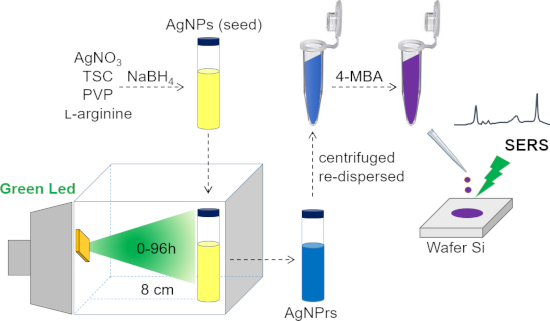
- ]. The Raman spectrum of a 100 mM 4-MBA solution, recorded on a Si wafer and amplified tenfold (Figure 7b), also shows the 1088 and 1596 cm−1 peaks with lower intensity, consistent with literature reports at the same concentration and excitation wavelength of 532 nm [20]. The Raman spectrum of 4-MBA at
- concentration of 4-MBA decreased logarithmically. Since the sample was prepared by drop casting onto a Si wafer, AgNPrs tended to aggregate, which may have led to reduced resolution of the Raman peaks at very low analyte concentrations. The relationship between 4-MBA concentration and the intensity of the 1589
- investigated on a Si wafer surface with the 4-MBA Raman reporter. The Si wafer was cut to a size of 1 × 1 cm and treated with piranha solution (H2SO4/H2O2 = 3:1) before used to remove organic compounds. A 2 mL sample was centrifuged at 12,000 rpm for 15 min, with the supernatant discarded, and the solid


The role of biochar in combating microplastic pollution: a bibliometric analysis in environmental contexts
Beilstein J. Nanotechnol. 2025, 16, 1401–1416, doi:10.3762/bjnano.16.102

- ]. These findings indicate that while different treatment models exhibit varying efficiency, the removal of nanoscale MPs predominantly depends on functional group interactions within biochar. The presence of functional groups in AZP such as C–H, C–O, C=C, N–H, Al–O, and Si–O, along with its graphite-like
- metal–O functional groups in adsorption [43]. In contrast, the adsorption kinetics of AZP show minimal differences between PFO and PSO models, suggesting a balanced contribution from its graphene-like structure and Al–O/Si–O functional groups. The mixed first- and second-order model achieves an R2 value



Crystalline and amorphous structure selectivity of ignoble high-entropy alloy nanoparticles during laser ablation in organic liquids is set by pulse duration
Beilstein J. Nanotechnol. 2025, 16, 1141–1159, doi:10.3762/bjnano.16.84
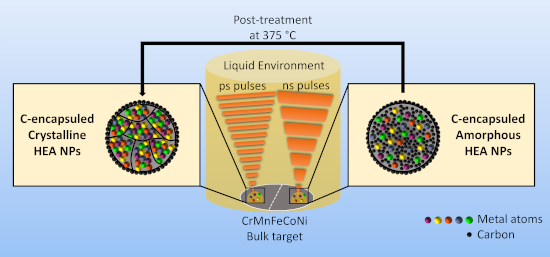
- matrix has been reported for monometallic systems [95][97][98] and alloys [76][77], stabilizing amorphous structures and enhancing glass formation ability (GFA). In general, Si, B, P, and carbon have been reported to diffuse into metallic matrices and thus enhance the GFA, whereas carbon seems to have




Tendency in tip polarity changes in non-contact atomic force microscopy imaging on a fluorite surface
Beilstein J. Nanotechnol. 2025, 16, 944–950, doi:10.3762/bjnano.16.72
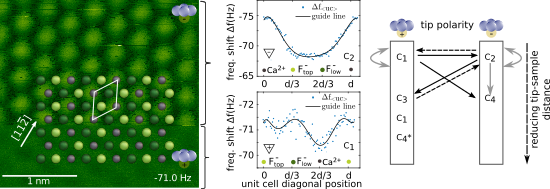
- distance-dependent data, the contrast mode assignment is questionable. Experimental RT experiments were performed on a bulk CaF2 crystal after preparing a clean CaF2(111) surface by cleaving the crystal in ultra-high vacuum (UHV) [23]. For the LT experiments, a CaF2/CaF/Si(111) thin film sample was used
- . The sample was prepared in situ by first degassing a p-type Si (B-doped) sample (Institute of Electronic Materials Technology, Warsaw, Poland) for several hours after introduction into the vacuum. Second, the Si(111)-(7 × 7) termination was formed by flash annealing cycles. Third, CaF2 material (99.9
- % purity) was deposited on the Si(111)-(7 × 7) surface from an EFM3T e-beam sublimator (Focus GmbH, Huenstetten, Germany) at substrates temperatures of 550 °C. Under these conditions, a CaF interface layer is formed, which removes the Si (7 × 7) reconstruction and allows for growing multilayers of well


Synthesis of biowaste-derived carbon-dot-mediated silver nanoparticles and the evaluation of electrochemical properties for supercapacitor electrodes
Beilstein J. Nanotechnol. 2025, 16, 933–943, doi:10.3762/bjnano.16.71
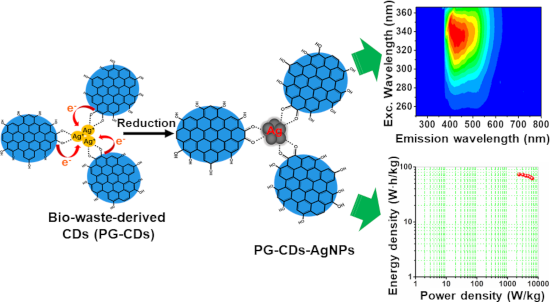
- , Dhulapally, Secundrabad, Telangana, 500100, India Department of Chemistry, Gachon University, 1342 Seongnam‑daero, Sujeong‑gu, Seongnam‑si, Gyeonggi‑do 13120, Republic of Korea Department of Chemical and Biological Engineering, Gachon University, 1342 Seongnam-daero, Seongnam-si, Gyeonggi-do 13120, Republic


Focused ion beam-induced platinum deposition with a low-temperature cesium ion source
Beilstein J. Nanotechnol. 2025, 16, 910–920, doi:10.3762/bjnano.16.69
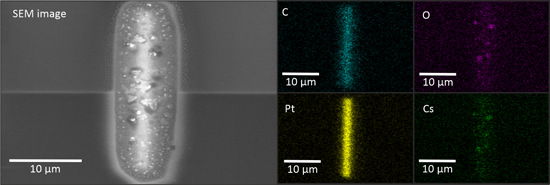
- avoid, for example, any inhomogeneous ripple structures. The dwell time was always 200 ns. For growth rate characterization, Pt layers with a length of 20 μm and a width of 1 μm were deposited on silicon (Si). The ion beam currents were changed, while the pattern size was kept constant. With the Cs+ FIB
- density of 6 pA·μm−2 . Before deposition, a small part of the Si substrate was gently milled with the Cs+ FIB at 16 kV, such that any native oxide and other contaminations were completely removed at this location. With that, the influence of oxygen molecules on the deposited layer can be excluded. The
- layers, which have a length of 40 μm and a width 1 μm, were deposited across the boundary between the bare Si and the Si with its native oxide intact. A visual inspection with the SEM reveals surface bubbles on layers deposited at 2 and 5 kV (as shown in Figure 1a). No significant differences can be seen


Characterization of ion track-etched conical nanopores in thermal and PECVD SiO2 using small angle X-ray scattering
Beilstein J. Nanotechnol. 2025, 16, 899–909, doi:10.3762/bjnano.16.68
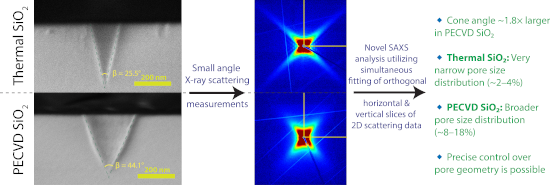
- -etched nanopores in two types of silicon dioxide, namely, one produced by wet thermal oxidation of Si (thermal SiO2) and another deposited by plasma-enhanced chemical vapor deposition (PECVD). Thermally grown SiO2 is of high quality and stoichiometric, however, requires high temperatures for growth, and
- can only be grown on a Si substrate. PECVD, in contrast, allows for the deposition at much lower temperatures on many different substrates with control over the film properties, such as stoichiometry, density, refractive index, and residual stress. As these fabrication methods involve fundamentally
- in thermal and PECVD SiO2 We utilized two types of amorphous silicon dioxide samples. The first type consisted of 1 μm thick thermally grown SiO2 on ⟨100⟩ Si substrates (300 μm thickness), obtained commercially from WaferPro Ltd, USA. The second type comprised PECVD-deposited SiO2 films (≈1.1 μm


Ar+ implantation-induced tailoring of RF-sputtered ZnO films: structural, morphological, and optical properties
Beilstein J. Nanotechnol. 2025, 16, 872–886, doi:10.3762/bjnano.16.66
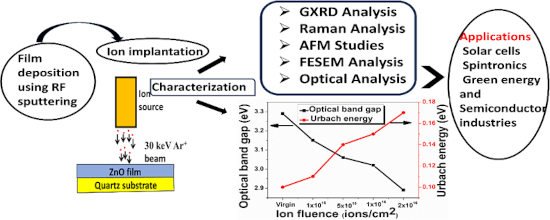
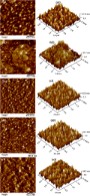
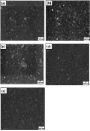
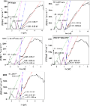
- the Si substrate, the oxygen content contains contributions from both SiO2 and ZnO. The variations in grain size and RMS roughness of ZnO films with increase in ion fluence follow the same trend in AFM and FESEM analyses, but with different magnitudes. This is because of the greater sensitivity of AFM






Synchrotron X-ray photoelectron spectroscopy study of sodium adsorption on vertically arranged MoS2 layers coated with pyrolytic carbon
Beilstein J. Nanotechnol. 2025, 16, 847–859, doi:10.3762/bjnano.16.64
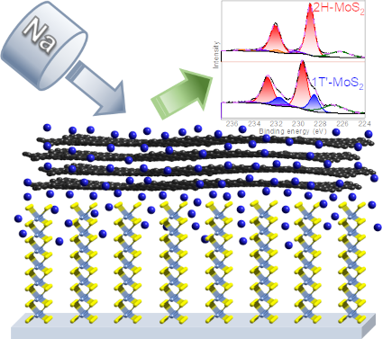
- decomposition residues. Results and Discussion Figure 1a shows the schematic diagram of the synthesis route of a hybrid film consisting of MoS2 coated with PyC. A molybdenum layer is deposited on a SiO2/Si substrate by magnetron sputtering for a short time of 10 s. This layer interacts with sulfur vapor at a
- wet transfer method (see the Experimental section for details). The resulting hybrid, designated PyC-MoS2, together with a surface-cleaned MoS2/SiO2/Si sample and a PyC film transferred onto a SiO2/Si substrate, were used to comparatively study the ability to adsorb and accumulate evaporated sodium
- SEM image of PyC transferred onto the SiO2/Si substrate also shows a uniform film surface (Figure 1e). The Raman spectrum of the MoS2 film contains two strong peaks at 382.6 and 408.9 cm−1 (Figure 2a) corresponding to the E12g mode and the A1g mode, respectively, of 2H-MoS2 [33]. The difference


Facile one-step radio frequency magnetron sputtering of Ni/NiO on stainless steel for an efficient electrode for hydrogen evolution reaction
Beilstein J. Nanotechnol. 2025, 16, 837–846, doi:10.3762/bjnano.16.63
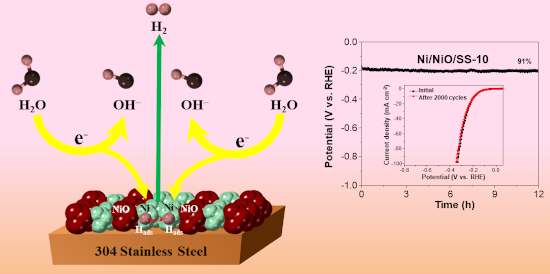
- adhesion and uniform distribution of materials on various substrates [23][24][25]. For instance, Ren et al. used the magnetron sputtering method to introduce Si into an iridium electrode to achieve efficient water electrolysis [26]. Additionally, this technique’s fast deposition rate and high level of the


Synthesis and magnetic transitions of rare-earth-free Fe–Mn–Ni–Si-based compositionally complex alloys at bulk and nanoscale
Beilstein J. Nanotechnol. 2025, 16, 823–836, doi:10.3762/bjnano.16.62
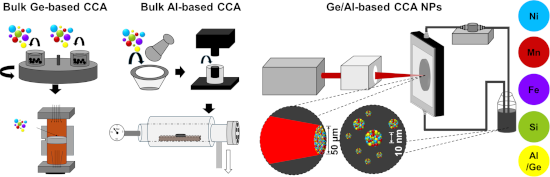
- metal and X can be Si, Ge or Al) have gained attention because of their magneto-structural phase transition at low temperatures. As ternary alloys, these materials undergo a magnetic and structural transition from a low-temperature orthorhombic TiNiSi-type structure to a high-temperature hexagonal Ni2In
- (which partly substitutes Mn atoms) and Ge or Al (which partially replaces Si atoms) [24] (forming CCAs), it effectively lowers the structural and magnetic phase transition temperatures while maintaining the overall magnetization. Previous studies on bulk MnFeNiGeSi [25] (i.e., doping MnNiSi with Fe and
- process. Initially, elemental Mn (99.2%, 3 µm), Fe (99.96%, 10–20 µm), Ni (99.5%, 45–60 µm), Si (99.999%, 45–60 µm), and Ge (99.99%, <250 µm) powders were mixed in the desired stoichiometric proportions and underwent HEBM in a planetary ball mill for 90 min under argon atmosphere and a ball-to-powder


Supramolecular hydration structure of graphene-based hydrogels: density functional theory, green chemistry and interface application
Beilstein J. Nanotechnol. 2025, 16, 806–822, doi:10.3762/bjnano.16.61
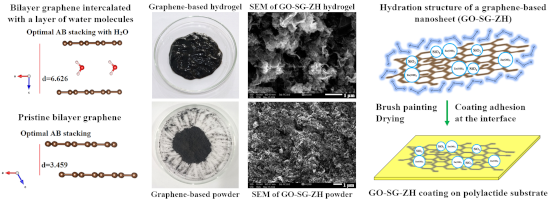
- surface (Si–OH). The bands at 3405.7 and 1628.6 cm−1 are characteristic of stretching and bending modes, respectively, of water molecules adsorbed on the surface [43]. The bands at 1017.3 and 464.8 cm−1 represent the stretching vibrations of siloxane groups (Si–O–Si). Particularly, the FTIR band at 662.43
- cm−1 is attributed to the bending vibration of Zn-O-Si bonds in the GO-SG-ZH nanocomposite [44]. Supramolecular systems with non-covalent interactions and reversible cross-links are recognized to provide extraordinary properties and applications [45][46][47]. Reversible self-assembly is an advantage


Morphology and properties of pyrite nanoparticles obtained by pulsed laser ablation in liquid and thin films for photodetection
Beilstein J. Nanotechnol. 2025, 16, 785–805, doi:10.3762/bjnano.16.60
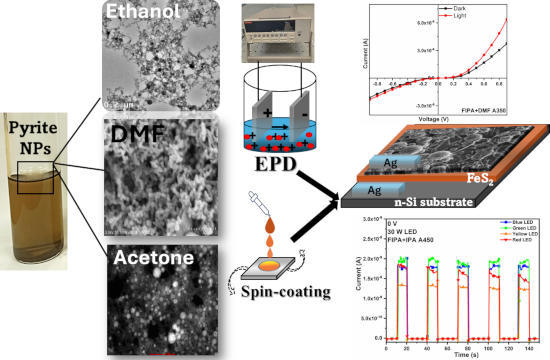
- synthesized by PLAL. FeS2 NPs were successfully synthesized in five different solvents, along with a minor phase of iron sulfide (FeS). Additionally, by combining electrophoretic deposition and spin-coating techniques, thin film photodiodes of FeS2 were fabricated on an n-type Si substrate utilizing the
- detectivity in the order of 106–108 Jones is attained. The FeS2/n-Si photodetector works in self-powered mode also in addition to the photoconductive mode. The results show the effective fabrication of nanostructured ultraviolet–visible–near infrared thin film photodetectors using semiconductor nanocolloids
- such properties [31]. For instance, it has been demonstrated that the wavelength-shifting characteristics of Si nanoparticles were caused by the effects of quantum-size confinement. The bandgap of silicon increased from its typical 1.1 eV in elemental form to nearly 3 eV in nanoparticle form, enhancing






Changes of structural, magnetic and spectroscopic properties of microencapsulated iron sucrose nanoparticles in saline
Beilstein J. Nanotechnol. 2025, 16, 762–784, doi:10.3762/bjnano.16.59
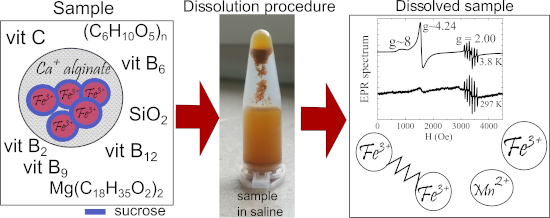
- 3d confirms the presence, in addition to iron, of elements from additives and organic compounds, such as Si from SiO2, Ca from calcium alginate, and Co most likely from cobalamin. The Na and Cl peaks relating to salt (NaCl), and peaks of P, S, Ni, and Zn (trace levels), were classified as
- 1s and Si 2p. In the spectrum of the FS0 sample, there was also a small amount <1% of N 1s, Fe 2p, and Ca 2p states, and a trace of Na 1s states. Performed sample dissolution caused the spectrum to be dominated by C 1s, the contribution of Fe 2p and Na 1s states increased, and the Si 2p states
- , as it is predicted in the literature of iron oxide minerals [87][88][93][94]. In addition, the XPS measurements, as a very powerful and sensitive method, confirmed the trace of Si ions in the composition of the samples. Obtained Si 2p spectra are in Figure 12b, while the peak binding energies


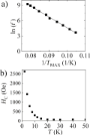


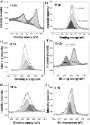

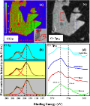
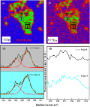
Thickness dependent oxidation in CrCl3: a scanning X-ray photoemission and Kelvin probe microscopies study
Beilstein J. Nanotechnol. 2025, 16, 749–761, doi:10.3762/bjnano.16.58
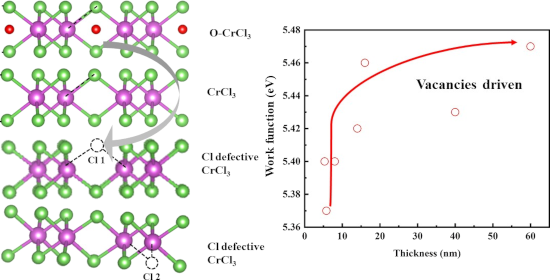
- known that 270 nm SiO2/Si substrates provide the highest optical contrast (O.C.) value for a single layer or few layers of CrCl3 [2][11]. Because of the insulating behavior of 270 nm SiO2 and to avoid surface charging, we utilized Si(001) wafers with a 1 nm layer of SiO2 and ITO films (190 nm) on glass
- substrates for SPEM investigations. In contrast, 285 nm SiO2/Si and ITO (190 nm) on glass substrates were used for surface potential studies. On native Si substrates, the optical contrast was insufficient to visualize thin flakes. We were unable to observe flakes with thicknesses smaller than 10 nm using the
- optical microscope. Therefore, we opted for an alternative substrate, indium tin oxide (ITO), to conduct the SPEM measurements on thinner layers. Figure 1 gives a direct comparison of AFM images and O.C. on the 1 nm SiO2/Si substrate. Optical contrast, AFM image, and a complete series of profiles showing

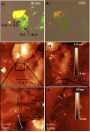




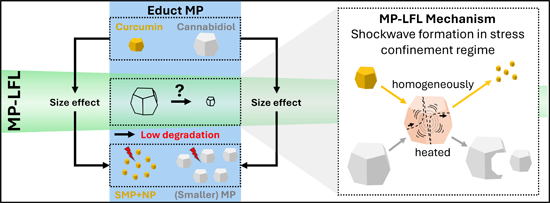
Efficiency of single-pulse laser fragmentation of organic nutraceutical dispersions in a circular jet flow-through reactor
Beilstein J. Nanotechnol. 2025, 16, 711–727, doi:10.3762/bjnano.16.55


Nanostructured materials characterized by scanning photoelectron spectromicroscopy
Beilstein J. Nanotechnol. 2025, 16, 700–710, doi:10.3762/bjnano.16.54
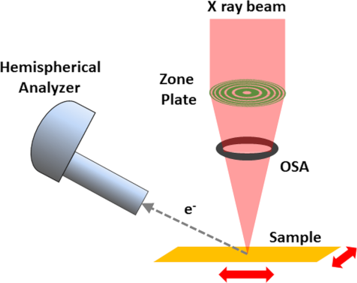
- , optoelectronic, or photovoltaic devices, as they combine a direct bandgap of tunable size with high charge carrier mobility [20]. Furthermore, they can be grown on Si substrates [21][22], which enables integration with a well-established technology platform and constrains the use of high performance, but
- few nanometers along the entire nanowire. For operando SPEM measurements, nanowires were transferred onto a prepatterned device template with flat, individually contacted Au/Ti electrodes deposited onto a SiO2/Si substrate, separated by a 1.5 µm wide insulating gap. Optical microscopy images of the


Nanoscale capacitance spectroscopy based on multifrequency electrostatic force microscopy
Beilstein J. Nanotechnol. 2025, 16, 637–651, doi:10.3762/bjnano.16.49

- locations on the microcapacitor sample. The first spectrum was recorded on one of the microcapacitors (C3, see Figure 2). Then, we measured in one of the FIB-etched trenches around the capacitors. Here, we assume that the bare silicon surface is covered by a thin native oxide layer (Si). Last, we measured
- + ions into the SiO2 layer. The C″ signal of the bare Si was stable over the whole range of excitation frequencies and only dropped at a much higher frequency around 24 MHz (see Figure S5, Supporting Information File 1). The dielectric response of the undefined particle was significantly lower compared
- increase of sample permittivity [95][96]. We measured a CPD difference between Si and F14H20 of −0.72 ± 0.08 V (see Figure S15, Supporting Information File 1), which is close to the literature value of −0.8 V [97]. Interestingly, the image of the C′ signal (Figure 7c,e) showed a more blurry structure




Focused ion and electron beams for synthesis and characterization of nanomaterials
Beilstein J. Nanotechnol. 2025, 16, 613–616, doi:10.3762/bjnano.16.47

- ion beam interactions [15]. In addition, the extension of the continuum model has proven useful in predicting the outcomes of ion beam milling processes in multilayered systems, as demonstrated in the case of the Si/SiO2/Pt system [16]. To identify the current state of the technology and routes




