


Search results
Search for "X-ray scattering" in Full Text gives 53 result(s) in Beilstein Journal of Nanotechnology.
Mechanism of silica–lysozyme composite formation unravelled by in situ fast SAXS
Beilstein J. Nanotechnol. 2019, 10, 182–197, doi:10.3762/bjnano.10.17
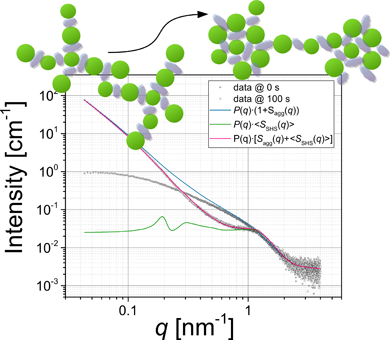
- : composite; lysozyme; scattering; silica; small-angle X-ray scattering (SAXS); Introduction A mechanistic understanding of aggregation in aqueous media leading to the formation of composites of inorganic nanoparticles and proteins is of paramount interest for colloid chemistry, Earth sciences, or the design
- at length scales from a few to hundreds of nanometres, which makes this system well-suited to be characterized by scattering methods. In particular, recent advances [25][26] in detector technology for synchrotron-based in situ and time-resolved small-angle X-ray scattering (SAXS), now allow one to
- aggregation of silica NPs (ca. 5 nm in diameter) at a time resolution of 50 ms. It is important to note that at typical NPs sizes and concentrations [17][24] and protein concentrations [27] usually employed to make such SiO2–LZM composites, the relative X-ray scattering contrast/intensity of lysozyme, in the



pH-mediated control over the mesostructure of ordered mesoporous materials templated by polyion complex micelles
Beilstein J. Nanotechnol. 2019, 10, 144–156, doi:10.3762/bjnano.10.14
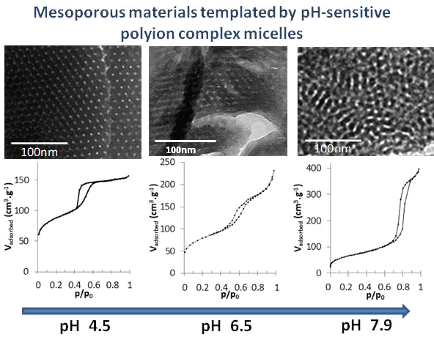
- cylindrical pores was determined from the adsorption branch using the nonlocal density functional theory (NLDFT) model [32] and the width of slit-shaped pores was estimated from the desorption branch using the method of Broekhoff and de Boer [33]. The structural properties were studied by small angle X-ray
- scattering (SAXS) and electron microscopy. SAXS measurements were performed in transmission mode on an in-house setup at the Laboratoire Charles Coulomb (Université Montpellier, France) using a high brightness, low power X-ray tube (λ = 1.5418 Å). All the intensities were corrected from transmission and


A novel polyhedral oligomeric silsesquioxane-modified layered double hydroxide: preparation, characterization and properties
Beilstein J. Nanotechnol. 2018, 9, 3053–3068, doi:10.3762/bjnano.9.284
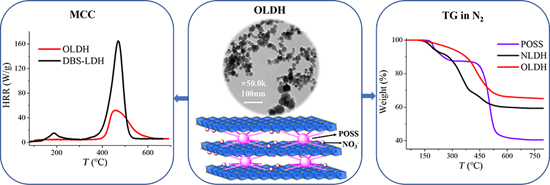
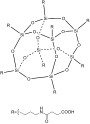
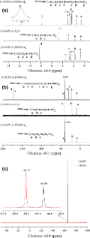
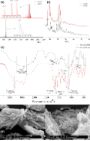
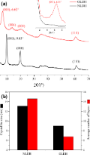
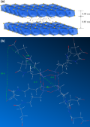
- with a Nicolet 560 spectrometer, using KBr pellets. X-ray diffraction was measured using an X’Pert PRO diffractometer with Cu Kα radiation (λ = 0.154 nm). Wide-angle X-ray scattering (WAXS) was measured in the range of 2θ = 3–70° with a step width of 0.026°, and small-angle X-ray scattering (SAXS) was







Nanoconjugates of a calixresorcinarene derivative with methoxy poly(ethylene glycol) fragments for drug encapsulation
Beilstein J. Nanotechnol. 2018, 9, 2057–2070, doi:10.3762/bjnano.9.195
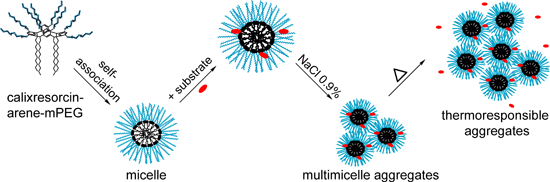
- calixarene and calixresorcinarene polylactide star polymers [19]. Self-association and hemotoxicity of 3 First, the self-association of macrocycle 3 in the aqueous solution was studied by using small-angle X-ray scattering (SAXS). The obtained data are typical for core–shell particles that practically do not
- using a Specord 50 plus instrument of Analytic Jena AG in quartz cells of 1 cm path length. The hemolytic activity of C11-mPEG against human red blood cells (hRBC) was tested by the method reported in [39]. Small-angle X-ray scattering (SAXS) data for samples were collected with the Bruker AXS Nanostar


Induced smectic phase in binary mixtures of twist-bend nematogens
Beilstein J. Nanotechnol. 2018, 9, 1297–1307, doi:10.3762/bjnano.9.122
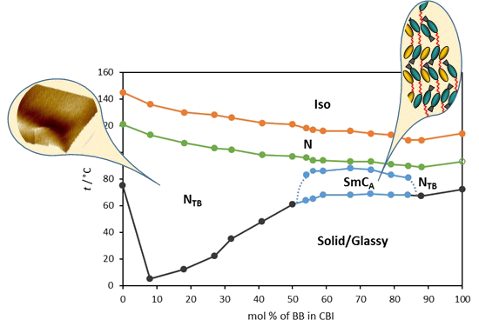
- the Figure 4e. Most recently Clark’s group indicated that the helix pitch (pH) of CB7CB experimentally measured by resonant soft X-ray scattering (RSoXS) appears to be controlled by the molecular bend and can be approximated with 2πRmol of a single all-trans molecule near the N–NTB phase transition




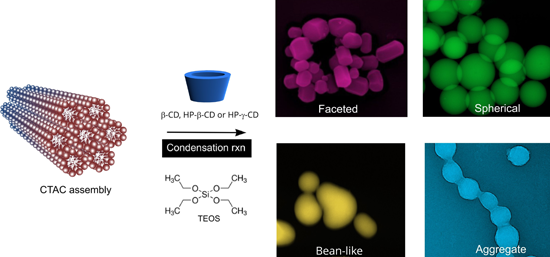
Cyclodextrin-assisted synthesis of tailored mesoporous silica nanoparticles
Beilstein J. Nanotechnol. 2018, 9, 693–703, doi:10.3762/bjnano.9.64
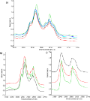
- range of 0.05–0.3. The pore size distribution was obtained from the adsorption isotherms by the Barrett–Joyner–Halenda (BJH) method. Wide-angle X-ray scattering (WAXS) experiments were performed using a PANalytical X'Pert Pro MPD, which was powered by a Philips PW3040/60 X-ray generator fitted with an


Mechanistic insights into plasmonic photocatalysts in utilizing visible light
Beilstein J. Nanotechnol. 2018, 9, 628–648, doi:10.3762/bjnano.9.59
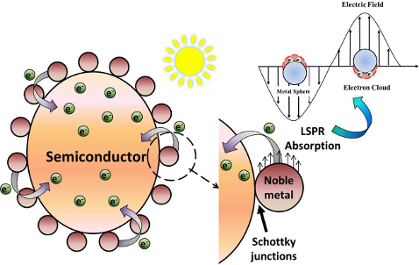
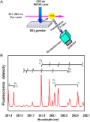
- adopted experimental setup is depicted in Figure 10. The significant spectral variations observed by X-ray absorption spectroscopy (XAS) and resonant inelastic X-ray scattering (RIXS) suggest that electrons injected from Au NPs upon LSPR excitation could survive longer and become trapped at a Ti site near





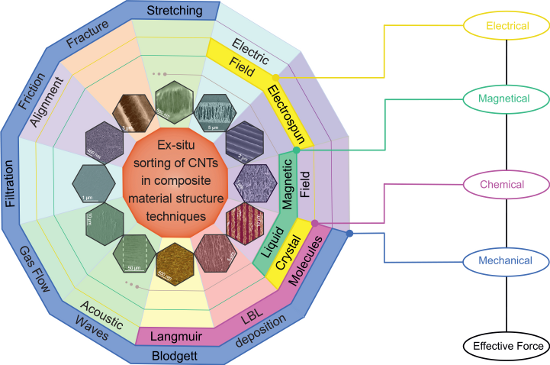
Engineering of oriented carbon nanotubes in composite materials
Beilstein J. Nanotechnol. 2018, 9, 415–435, doi:10.3762/bjnano.9.41
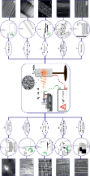
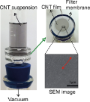
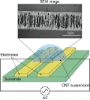
- with different alignments and their XRD results. It indicates the intensity of the (002) peak is enhanced if the CNTs in the sample are less aligned [130]. Small-angle X-ray scattering (SAXS) is a method for evaluating the particle size distribution or nanohole size distribution in the sample. This








Ta2N3 nanocrystals grown in Al2O3 thin layers
Beilstein J. Nanotechnol. 2017, 8, 2162–2170, doi:10.3762/bjnano.8.215
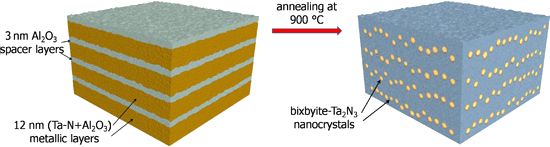
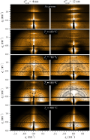
- magnetron deposition at room temperature and characterized using grazing incidence small-angle X-ray scattering (GISAXS), X-ray reflectivity (XRR), grazing incidence X-ray diffraction (GIXRD), secondary ion mass spectrometry (SIMS) and X-ray photoelectron spectroscopy (XPS). We found amorphous tantalum
- nitride NPs with the processing parameters of the films. For this purpose we used complimentary and well-established characterization techniques such as X-ray reflectivity (XRR), grazing incidence small-angle X-ray scattering (GISAXS), grazing incidence X-ray diffraction (GIXRD), secondary ion mass
- representative 1D X-ray scattering profiles and corresponding fitting curves. Additional XPS spectra around the Ta 4p and N 1s core levels are also provided. Acknowledgements K.S. and M.B acknowledge the Croatian science foundation, project number 2334 for financial support. I. S. and M. P. acknowledge the


First examples of organosilica-based ionogels: synthesis and electrochemical behavior
Beilstein J. Nanotechnol. 2017, 8, 736–751, doi:10.3762/bjnano.8.77
- Brunauer–Emmett–Teller (BET) method [34]. Determination of average pore diameters was done using the Barrett–Joyner–Halenda (BJH) approach using the desorption branch of the sorption isotherms [35]. X-ray scattering. Small angle X-ray scattering (SAXS) intensities were recorded at room temperature with a
- vibrations and Si–OH silanol groups on the silica surface. Broad bands between 3000 and 3400 cm−1 originate from Si–OH, H2O, C–N, and N–H stretching vibrations. A further characteristic N–H stretching vibration is observed at 2055 cm−1 [48]. Figure 6 shows a representative small angle X-ray scattering (SAXS








Solvent-mediated conductance increase of dodecanethiol-stabilized gold nanoparticle monolayers
Beilstein J. Nanotechnol. 2016, 7, 2057–2064, doi:10.3762/bjnano.7.196
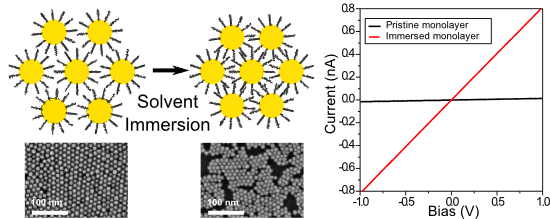
- an average factor of 36 and 22 after immersion in pure ethanol (EtOH) and tetrahydrofuran (THF), respectively. Analysis by scanning electron microscopy (SEM) and small-angle X-ray scattering (SAXS) reveals a solvent-induced decrease in lattice constant of close-packed monolayers. We compare the
- alone can induce a structural transition responsible for a large portion of the observed increase in conductivity of micro-contact printed self-assembled gold nanoparticle monolayers. Results and Discussion Gold nanoparticles with an average diameter of 10.6 nm measured by small-angle X-ray scattering



Cubic chemically ordered FeRh and FeCo nanomagnets prepared by mass-selected low-energy cluster-beam deposition: a comparative study
Beilstein J. Nanotechnol. 2016, 7, 1850–1860, doi:10.3762/bjnano.7.177
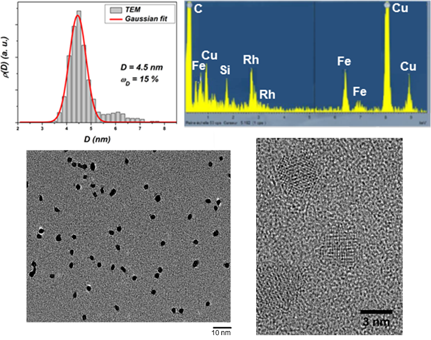
- between low signal from the Si substrate and maximum intensity of the Bragg (110) peak. The Figure 7 shows the measured X-ray scattering where we can see three peaks which correspond to the main Bragg peaks common to the B2 and bcc structures. These three peaks, showing the very good crystallinity of the
- corresponding to fcc (A1) (a) and CsCl-type (B2) phase (b). Figure 4a is a slightly changed reproduction from [13], copyright 2013 American Physical Society. Simulated X-ray scattering curves for CsCl-type (B2) phase (a) FeRh and (b) FeCo nanoparticles with different sizes [11]. Anomalous scattering f′ and f
- ″ coefficients as a function of photon energy for Fe, Co and Rh elements in the range of Fe and Co K edges. Measured X-ray scattering at 7.108 keV on annealed FeCo nanoparticles with 5 nm in diameter. (a) ZFC/FC and m(H) experimental data for mass-selected as-prepared FeCo clusters with 4.3 nm in diameter along


Cantilever bending based on humidity-actuated mesoporous silica/silicon bilayers
Beilstein J. Nanotechnol. 2016, 7, 637–644, doi:10.3762/bjnano.7.56
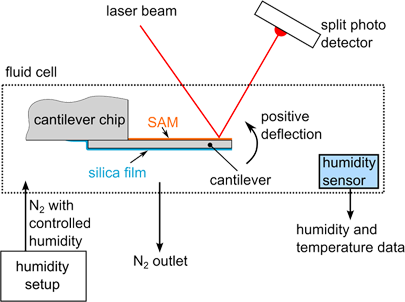
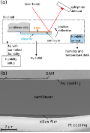
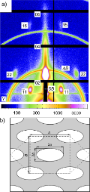
- humidity. We also investigate a similar film on bulk silicon substrate using grazing-incidence small-angle X-ray scattering (GISAXS), in order to determine nanostructural parameters of the film as well as the water-sorption-induced deformation of the ordered mesopore lattice. The strain of the mesoporous
- bending; grazing incidence small-angle X-ray scattering (GISAXS); mesoporous film; sorption-induced deformation; Introduction Because the bending of a microcantilever can be measured with extremely high accuracy, sensors utilizing this principle are in focus of recent research. Such sensors are able, for


Counterion effects on nano-confined metal–drug–DNA complexes
Beilstein J. Nanotechnol. 2016, 7, 62–67, doi:10.3762/bjnano.7.7
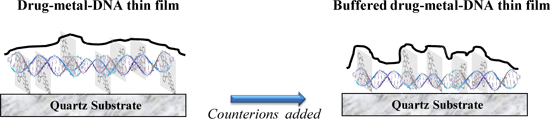
- –DNA composites; polyelectrolyte; X-ray scattering; Introduction Condensed state behaviour of DNA, the best-known biopolymer, in a confined space is a matter of interest due to its relevance in living systems. Within cells DNA molecules remain in a confined space crowded by other molecules and ions
- film similar to the case of film formed from “pristine” DNA molecules [8]. Anomalous X-ray scattering data provides us the distribution of an effective density of Cu atoms along the film depth. Within any material X-rays interact with electrons only. Hence, the presence of a particular element is


Green and energy-efficient methods for the production of metallic nanoparticles
Beilstein J. Nanotechnol. 2015, 6, 2354–2376, doi:10.3762/bjnano.6.243
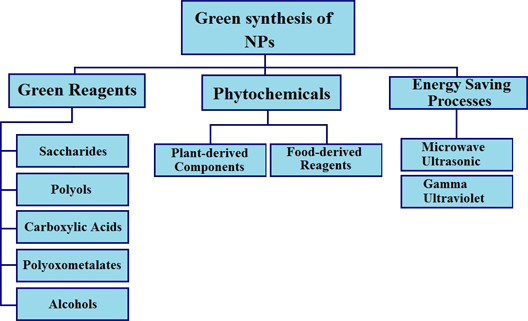
- [136][137]. In the field of nanotechnology, the real-time monitoring of size and shapes of nanostructures is of high importance even though it is very challenging. There are reports on developing innovative systems, such as grazing-incidence small-angle X-ray scattering setup that showed a high


Influence of grain size and composition, topology and excess free volume on the deformation behavior of Cu–Zr nanoglasses
Beilstein J. Nanotechnol. 2015, 6, 537–545, doi:10.3762/bjnano.6.56
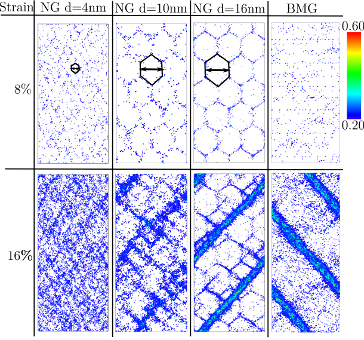
- ]. The recent work of Chen et al. [8], supports Gleiter’s results on the structural model of a NG. The microstructure of a metallic nanoglass consisting of glassy grains and glass–glass interfaces has been experimentally revealed by electron microscopy, small-angle X-ray scattering and positron



Conformal SiO2 coating of sub-100 nm diameter channels of polycarbonate etched ion-track channels by atomic layer deposition
Beilstein J. Nanotechnol. 2015, 6, 472–479, doi:10.3762/bjnano.6.48
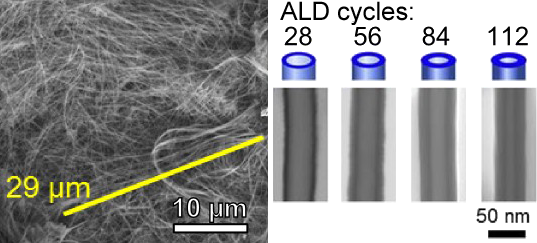
- membranes by small angle X-ray scattering (SAXS) reveals a homogeneous, conformal layer of SiO2 in the channels at a deposition rate of 1.7–1.8 Å per ALD cycle. Characterization by infrared and X-ray photoelectron spectroscopy (XPS) confirms the stoichiometric composition of the SiO2 films. Detailed XPS
- in the range of nanometres and lengths in the range of micrometres, cylindrical tubes with an aspect ratio as large as 3000 have been produced. Keywords: atomic layer deposition (ALD); ion-track technology; nanochannels; polycarbonate; silica (SiO2); small angle X-ray scattering (SAXS); track-etched
- evidence the conformity of the developed ALD process, coated membranes were analyzed by small angle X-ray scattering (SAXS). Pronounced oscillations of the X-ray intensity as a function of the scattering vector demonstrate both an excellent conformity and uniformity of the SiO2 layers in the channels, and


Silicon and germanium nanocrystals: properties and characterization
Beilstein J. Nanotechnol. 2014, 5, 1787–1794, doi:10.3762/bjnano.5.189
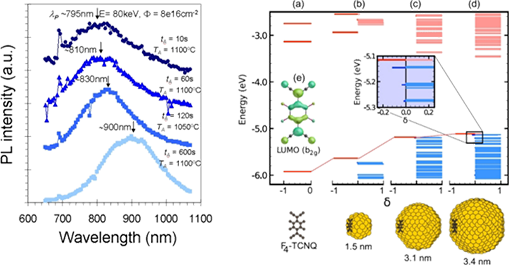
- other useful techniques that can provide information regarding the structural properties of NCs. One of them is grazing incidence small X-ray scattering (GISAXS), which is a non-destructive technique for the structural characterization of NCs supported on a substrate [32] and NCs embedded in a matrix


Nanoglasses: a new kind of noncrystalline materials
Beilstein J. Nanotechnol. 2013, 4, 517–533, doi:10.3762/bjnano.4.61
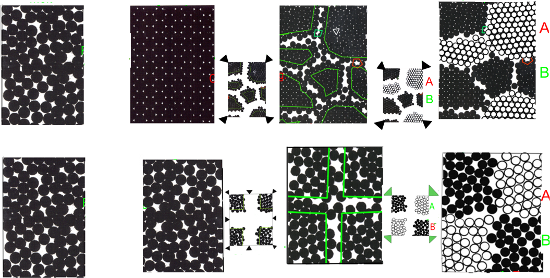
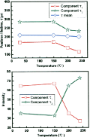
- increased to 150 °C or above (Figure 8). At the same time, the τ2 component increased in intensity from 35 to about 75% (Figure 8). Positron lifetimes on the order of 350–500 ps, as indicators of nanovoids, were not observed. In order to study the structure of nanoglasses, small-angle X-ray scattering






Novel composite Zr/PBI-O-PhT membranes for HT-PEFC applications
Beilstein J. Nanotechnol. 2013, 4, 481–492, doi:10.3762/bjnano.4.57
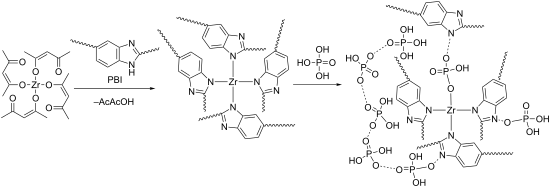
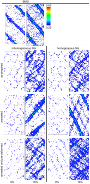
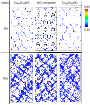
- -PhT reference membrane were tested in fuel cells operating at 160 °C at a constant current density of 0.4 A·cm−2 for 2000 h. Hydrogen and air flows were the same as described above. Results and Discussion X-ray scattering data presented in Figure 3 indicate that the composite membranes have a uniform
- layers. Small angle X-ray scattering results for the different types of composites and the reference membrane. FT-IR spectra of a mixture of BI with Zr(acac)4 (4:1 molar ratio, upper spectrum) and of the product of the reaction occurring after heating of this mixture to 320–350 °C (lower spectrum


Digging gold: keV He+ ion interaction with Au
Beilstein J. Nanotechnol. 2013, 4, 453–460, doi:10.3762/bjnano.4.53
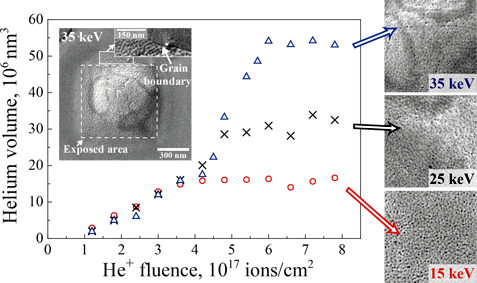
- -time X-ray scattering. At temperatures of 20–60 °C they observed the formation of mounds with a characteristic spacing. A similar pattern was also observed on Cu{110}, sputtered by 1 keV Ar+ ions at 320 K and normal incidence [20]. The corresponding scaling factor was 0.26 ± 0.02. To a certain extent


Distribution of functional groups in periodic mesoporous organosilica materials studied by small-angle neutron scattering with in situ adsorption of nitrogen
Beilstein J. Nanotechnol. 2012, 3, 428–437, doi:10.3762/bjnano.3.49
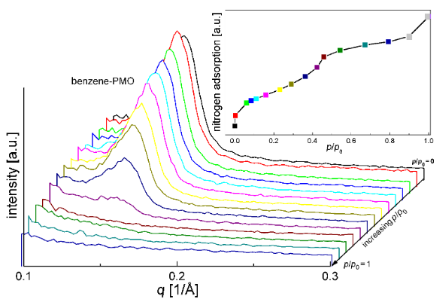
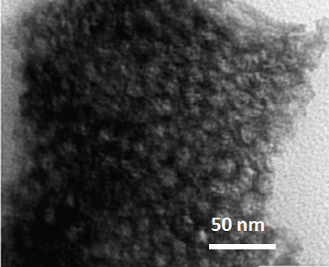
- ], divinylbenzene [12] or biphenyl [13]. However, direct experimental proofs for this molecular-scale periodicity are only rarely given. Gas sorption [14], wide-angle X-ray scattering (WAXS), i.e., powder X-ray diffraction (XRD), and IR spectroscopy [15] are commonly used as analysis tools for porous materials in


Mesoporous MgTa2O6 thin films with enhanced photocatalytic activity: On the interplay between crystallinity and mesostructure
Beilstein J. Nanotechnol. 2012, 3, 123–133, doi:10.3762/bjnano.3.13
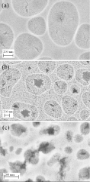
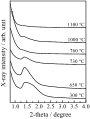
- temperature-dependent X-ray scattering. Optimal activity was obtained when the mesoporous film was heated to 790 °C; at this temperature, crystallinity was significantly high, with MgTa2O6 nanocrystals of 1.6 nm in size (averaged over all reflections), and an ordered mesoporous structure was maintained. When
- . Atomic force microscopy (AFM) investigations were conducted with a Nanoscope III, Digital Instruments, in tapping mode. Transmission electron microscopy (TEM) images were taken with a Zeiss EM 912Ω instrument at an acceleration voltage of 120 kV. The small-angle X-ray scattering (SAXS) and X-ray






Nanostructured, mesoporous Au/TiO2 model catalysts – structure, stability and catalytic properties
Beilstein J. Nanotechnol. 2011, 2, 593–606, doi:10.3762/bjnano.2.63
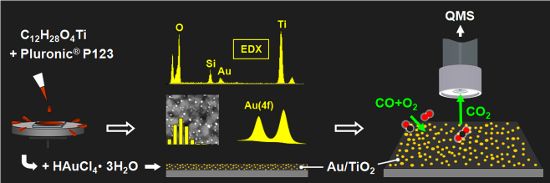
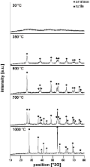
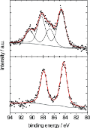
- morphology of the coating depends critically on the posttreatment temperature. As synthesized, the coatings possess an amorphous network structure comprising mesopores. The mesoscopic ordering of the pore system after the heat treatment was confirmed by small angle X-ray scattering, displaying a broad






Inorganic–organic hybrid materials through post-synthesis modification: Impact of the treatment with azides on the mesopore structure
Beilstein J. Nanotechnol. 2011, 2, 486–498, doi:10.3762/bjnano.2.52
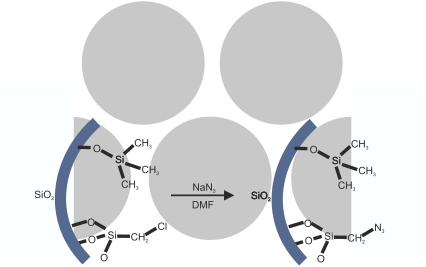
- strong influence on the structure in the mesoporous regime, with changes such as an increase of mesopore diameter, pore volume and lattice constants, as well as a concomitant decrease of the pore wall thickness, as confirmed by small angle X-ray scattering, transmission electron microscopy, and nitrogen
- evaluated by nitrogen sorption and small angle X-ray scattering (SAXS) analyses. Figure 2 shows the nitrogen adsorption/desorption isotherms at 77 K for modified silica gels before and after nucleophilic substitution (SiO2–(CH2)1,3–Cl → SiO2–(CH2)1,3–N3). The isotherms for the chloroalkyl-containing
- . The specific surface area was evaluated using sorption data in a relative pressure range of 0.05–0.30 with a five-point-analysis according to the BET model. Small angle X-ray scattering (SAXS) experiments were performed either with a Bruker Nano-Star or a Bruker Nano-Star (turbospeed solution) and a 2





