


Search results
Search for "adsorbent" in Full Text gives 47 result(s) in Beilstein Journal of Nanotechnology.
SERS active Ag–SiO2 nanoparticles obtained by laser ablation of silver in colloidal silica
Beilstein J. Nanotechnol. 2018, 9, 2396–2404, doi:10.3762/bjnano.9.224
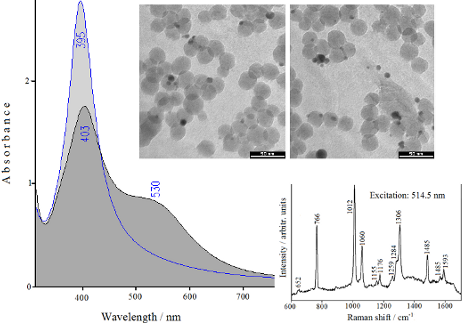
- used in the past (10 wt % SiO2) to obtain silica doped with silver [35]. This concentration is optimal for our purposes, that is, having a colloid with a high concentration of silica to exploit its adsorbent capacities, and limiting the background signal of silica. However, we have studied, during the


SO2 gas adsorption on carbon nanomaterials: a comparative study
Beilstein J. Nanotechnol. 2018, 9, 1782–1792, doi:10.3762/bjnano.9.169

- time. The relative influence of surface area and functional groups on the SO2 adsorption characteristics is discussed. The isosteric heat of adsorption values are calculated to quantify the nature of the interaction between the SO2 molecule and the adsorbent. Most importantly, while chemisorption is
- -graphene layers [18]. With this morphology it represents a typological carbon adsorbent with extended structural disorder. Graphene oxide (GO) has a 2D layered structure as shown schematically in Figure 1b. The starting material for the synthesis of GO is graphite, the oxidation of which introduces oxygen
- shown that the oxygen functionalities present on GO are in the form of hydroxy and carboxy groups [12]. The tunability of the material in terms of porosity and extent of functionalization makes GO a prototype of a hydrophilic carbon adsorbent and as such interesting for studying gas adsorption in 2D


Uniform cobalt nanoparticles embedded in hexagonal mesoporous nanoplates as a magnetically separable, recyclable adsorbent
Beilstein J. Nanotechnol. 2018, 9, 1770–1781, doi:10.3762/bjnano.9.168
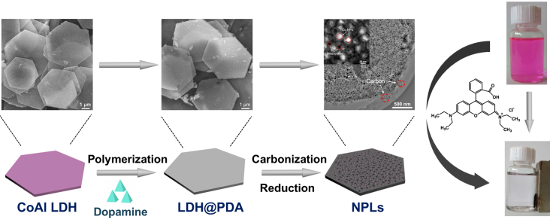
- within 2 min and the adsorption reaches equilibrium after about 30 min. The maximum adsorption capacity approaches 172.41 mg/g. After regeneration, this adsorbent can be recycled easily by magnetic separation and still possess good adsorption capacity for RhB removal, even after five cycles. Keywords
- : absorbent regeneration; CoAl layered double hydroxide; efficient adsorbent; hexagonal nanoplates; magnetic nanoparticles; polydopamine; Introduction Nanocomposites with unique electronic, mechanical, magnetic, and physicochemical properties have gained much attention because of their large specific surface
- the formation of stable bi-dentate complexes between the Co particles and MB dye. The Co nanoparticles in the carbon-based nanocomposites not only enhance the adsorption ability, but also help to separate the adsorbent owing to their strong magnetic response. Generally, Co nanoparticles can be


Photocatalytic and adsorption properties of TiO2-pillared montmorillonite obtained by hydrothermally activated intercalation of titanium polyhydroxo complexes
Beilstein J. Nanotechnol. 2018, 9, 364–378, doi:10.3762/bjnano.9.36
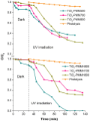
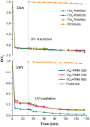
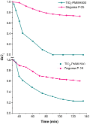
- nitrogen as an adsorbent [40][41]. At P/P0 ratios close to 1 the isotherms of the samples TiO2-PMMHx feature a sharp rise of the sorption curve indicating the presence of large pores in the pillared samples, which is confirmed by the average pore diameter data (Dav) (Table 5). The values of specific
- ], which may be respectively represented by the following equations: where Qt and Qe are the amounts of adsorbed dye per unit weight of adsorbent at a given time t (mg/g) and at equilibrium, respectively; k1 and k2 are the adsorption rate constants of pseudo-first (min−1) and pseudo-second order (mg g−1
- , mg/g) on the sample at the time t was calculated by the equation: where C0 and Ct (mg/L) are the initial concentration of dye and the dye concentration at time t (min), V is the volume of the dye solution (L), m is the mass of air-dried adsorbent (g). Small-angle XRD patterns of the raw MM, Ti-MM






Review: Electrostatically actuated nanobeam-based nanoelectromechanical switches – materials solutions and operational conditions
Beilstein J. Nanotechnol. 2018, 9, 271–300, doi:10.3762/bjnano.9.29


L-Lysine-grafted graphene oxide as an effective adsorbent for the removal of methylene blue and metal ions
Beilstein J. Nanotechnol. 2017, 8, 2680–2688, doi:10.3762/bjnano.8.268
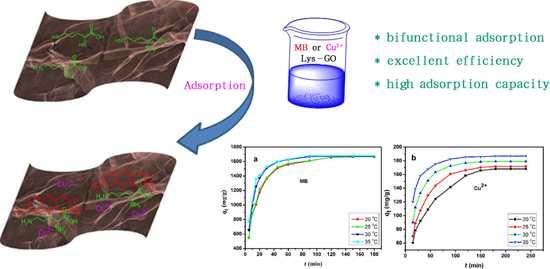
- +) from wastewater. These results showed that Lys-GO is a bifunctional adsorbent for the removal of dyes and metal ions, and excellent adsorption efficiency was obtained. The maximum adsorption capacities for MB dye and Cu2+ were 1679.1 mg/g and 186.9 mg/g at 35 °C, respectively. The kinetics of
- . Reduced graphene oxide as an effective adsorbent can be used for the removal of malachite green dye and metal ions [10][11]. A high-performance hydrophilic polyvinylidene fluoride/graphene oxide (PVDF/GO)–lysine composite membrane can be used for sea water desalination and purification [12]. However, the
- ) used as an adsorbent for the removal of methyl orange and amaranth in 2017 [22]. The maximum adsorption capacities of PFGA for methyl orange and amaranth were as high as 3059.2 mg/g and 2043.7 mg/g, respectively. Herein, we inferred that grafting amino groups onto graphene might enhance the performance


Fabrication of carbon nanospheres by the pyrolysis of polyacrylonitrile–poly(methyl methacrylate) core–shell composite nanoparticles
Beilstein J. Nanotechnol. 2017, 8, 1897–1908, doi:10.3762/bjnano.8.190

- . Adsorption experiment The obtained carbon nanospheres were used as the adsorbent for the removal of methylene blue (MB) from water. A batch adsorption experiment was operated by mixing the carbon nanospheres (0.010 g) and MB aqueous solution (30 mL, 66 mg/L) in a 50 mL centrifuge tube, which was followed by
- shaking the mixture at a speed of 150 rpm. After 2 h of shaking, the adsorbent was separated from the mixture by centrifugation. The appearance of the mixture remained homogeneous during the adsorption experiment. The MB concentration of the supernatant was determined with a UV–vis spectrophotometer at a
- timely discharge of the gases from the PAN-based nanoparticles. The formation of large pores, i.e., mesopores may be attributed to the residual gases which remain inside the nanoparticles. The carbonized sample CP6 was further applied as an adsorbent for removal of methylene blue (MB) (a common dye used



Three-in-one approach towards efficient organic dye-sensitized solar cells: aggregation suppression, panchromatic absorption and resonance energy transfer
Beilstein J. Nanotechnol. 2017, 8, 1705–1713, doi:10.3762/bjnano.8.171
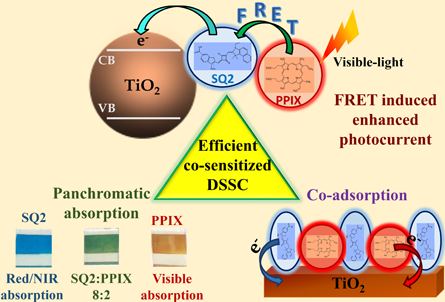
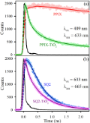
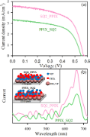
- two dyes increase the photocurrent as well as the efficiency of the device. From the absorption spectra of the co-sensitized photoanodes, PPIX was observed to be efficiently acting as a co-adsorbent and to reduce the dye aggregation problem of SQ2. It has further been proven by a comparison of the
- concentrations of co-adsorbent is an unavoidable constraint on the co-sensitization of organic dyes [18][28][29][30]. In order to avoid the co-adsorbent, one of the co-sensitizers can be used to counteract the aggregation of the other. Spectroscopic studies and excited-state dynamics of the two dyes can be
- major reasons for the enhanced light-harvesting over the entire solar spectrum. PPIX–SQ2 co-sensitized DSSCs were found to be more efficient compared to SQ2-sensitized DSSCs prepared using the optimum concentration of the well-known co-adsorbent chenodeoxycholic acid (CDCA). The wavelength-dependent



Hierarchically structured nanoporous carbon tubes for high pressure carbon dioxide adsorption
Beilstein J. Nanotechnol. 2017, 8, 1135–1144, doi:10.3762/bjnano.8.115
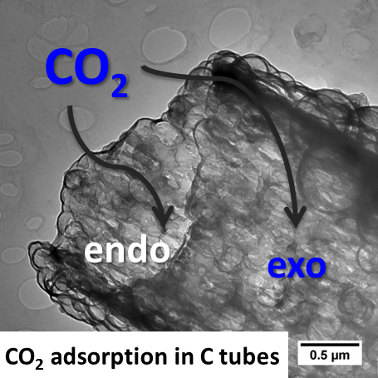
- used for increasing their adsorption capacity: (i) morphological structuring to increase the surface area and (ii) modification of the tube surface with functional groups to enhance the adsorbent/adsorbate attraction. For (i), new carbon materials have been studied as adsorbents such as ordered
- ultramicropores (<0.7 nm), while at high pressure, CO2 adsorption occurs on the supermicropores of the adsorbent. Since almost no change is observed in the adsorption isotherm at low pressure, and the decrease in adsorption is only observed at high pressure for 4, it is believed that the amount of supermicropores


Synthesis of graphene–transition metal oxide hybrid nanoparticles and their application in various fields
Beilstein J. Nanotechnol. 2017, 8, 688–714, doi:10.3762/bjnano.8.74
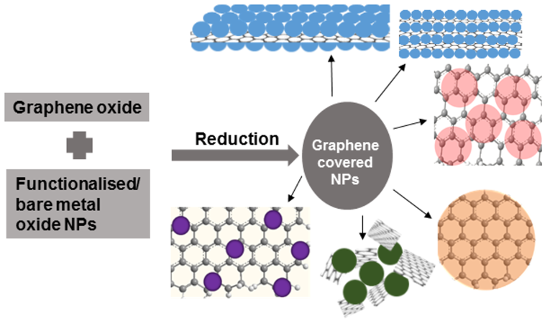
- material [149]. Fe2O3 graphene composites also have significant applications in LIBs [150][151][152][153]. Li et al. show the application of monolithic Fe2O3 graphene hybrids in arsenic removal also due to the self-supported adsorbent properties of the material [154]. α-Fe2O3–rGO prepared by a hydrothermal






Fiber optic sensors based on hybrid phenyl-silica xerogel films to detect n-hexane: determination of the isosteric enthalpy of adsorption
Beilstein J. Nanotechnol. 2017, 8, 475–484, doi:10.3762/bjnano.8.51
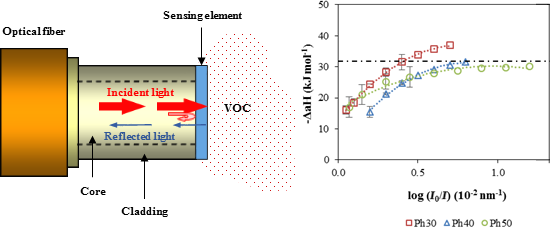
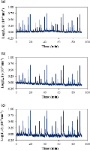
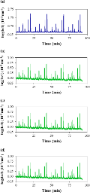
- magnitude of the isosteric enthalpy of n-hexane increased with the relative response and reached a plateau that stabilized at approximately −31 kJ mol−1 for Ph40 and Ph50 and at approximately −37 kJ mol−1 for Ph30. This indicates that the adsorbate–adsorbent interaction was dominant at lower relative
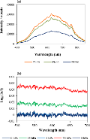
- . Therefore, the adsorbent–nitrogen interaction decreased with the increasing percentage of the hybrid silicon precursor. Time-response curves Figure 4a includes the raw spectra of the as-fabricated sensing elements obtained under vacuum, in which the intensity of the reflected light by sensing elements Ph30
- approximately −37 kJ mol−1 for Ph30. At low adsorption, the adsorbate–adsorbent interaction is dominant [26]. Because n-hexane is a non-polar compound, it exhibits almost non-specific interactions with the surface of the hybrid xerogels. The enthalpy of adsorption for n-hexane for Ph40 and Ph50 was similar to






Tailoring bifunctional hybrid organic–inorganic nanoadsorbents by the choice of functional layer composition probed by adsorption of Cu2+ ions
Beilstein J. Nanotechnol. 2017, 8, 334–347, doi:10.3762/bjnano.8.36
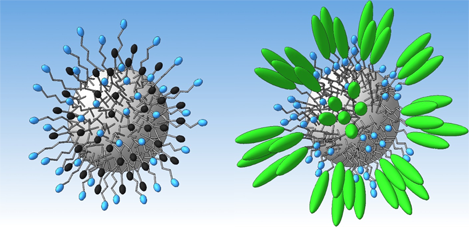
- surface layers were analyzed by diffuse reflectance infrared Fourier transform (DRIFT) spectroscopy, and 13C and 29Si solid-state NMR spectroscopy revealing their composition and organization. The fine chemical structure of the surface in the produced hybrid adsorbent particles and the ligand distribution
- adsorption to occur on specific sites uniformly spread on the surface of the adsorbent. It is commonly used for description of processes, where adsorbed species form a monolayer, and is described by the following equation: where Ceqv is the concentration of solute remaining in solution after equilibrium to
- adsorption capacity in the multilayer of the adsorbent [58][59]. X-band EPR spectra of the samples were recorded at room temperature using a radio spectrometer РE-1306 equipped with a frequency meter ChZ-54 and frequency converter YaZCh-87. The magnetic field was calibrated using 2,2-diphenyl-1


Nanocrystalline ZrO2 and Pt-doped ZrO2 catalysts for low-temperature CO oxidation
Beilstein J. Nanotechnol. 2017, 8, 264–271, doi:10.3762/bjnano.8.29
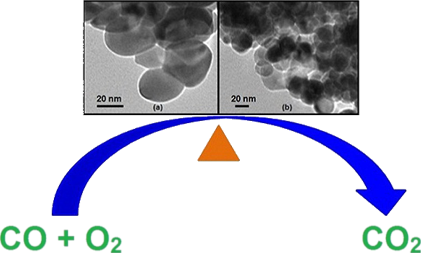
- ) with Ni-filtered Cu Kα radiation (λ = 1.542 Å) over a range of 2θ from 20 to 80°. The data were obtained with an step size of 0.02° and a scan rate of 0.5°/min. The specific surface area of the samples was obtained using a BET instrument using N2 as adsorbent (Micrometrics, ASAP 2010). UV–vis


Prediction of the mechanical properties of zeolite pellets for aerospace molecular decontamination applications
Beilstein J. Nanotechnol. 2016, 7, 1761–1771, doi:10.3762/bjnano.7.169
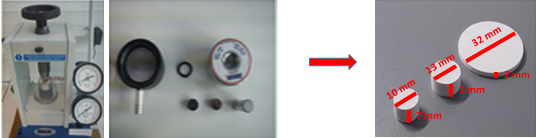
- molecular decontamination applications, especially in the aerospace field where the dimensions are very important. Indeed, the available space inside a satellite is limited, and the dimensions of any adsorbent bodies have to be controlled to avoid increased costs of the satellite. This methodology allows


Graphene-enhanced plasmonic nanohole arrays for environmental sensing in aqueous samples
Beilstein J. Nanotechnol. 2016, 7, 1564–1573, doi:10.3762/bjnano.7.150
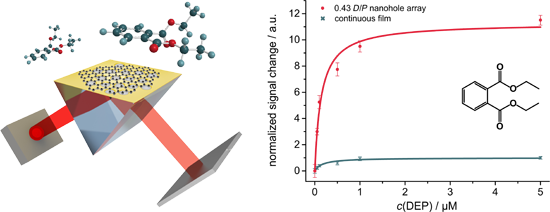
- that this type of plasticizers adsorbs on polystyrene resins by multiple adsorbent–adsorbate interactions such as hydrogen bonding and π-stacking [38], which makes them an ideal analyte for the evaluation of the graphene-modified gold surfaces in SPR. Nanostructured surfaces are promising in enhancing




Development of adsorptive membranes by confinement of activated biochar into electrospun nanofibers
Beilstein J. Nanotechnol. 2016, 7, 1556–1563, doi:10.3762/bjnano.7.149
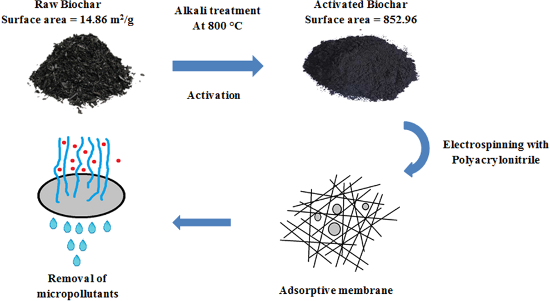
- reports on embedding adsorbent materials into NFMs to enhance the adsorption capability of the composite membranes. For example, Wu et al. [15], Xu et al. [16] and Wang et al. [17] used SiO2 particles for the fabrication of composite poly(vinyl alcohol), poly(acrylic acid) and PAN NFMs in order to adsorb
- was around 6.3 mg/g of membrane. Therefore, further research is still needed to increase the adsorption capacity through increased adsorbent loading or adsorbent specific surface area. Also, working on other applications of these adsorptive membranes, such as immobilization of enzyme would be of




Investigating organic multilayers by spectroscopic ellipsometry: specific and non-specific interactions of polyhistidine with NTA self-assembled monolayers
Beilstein J. Nanotechnol. 2016, 7, 544–553, doi:10.3762/bjnano.7.48
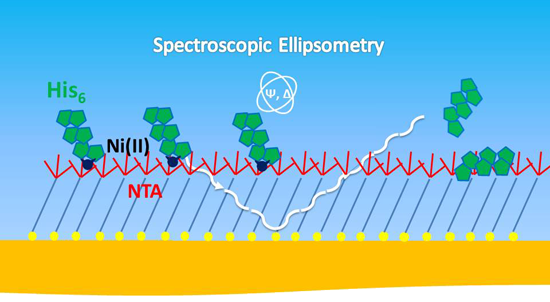
- (NTA) group, after loading with nickel ions (Ni(II)), provide platforms able to specifically bind his-tag proteins [13][14][15][16][17][18] and enzymes that retain their activity upon immobilization [19][20][21]. The affinity between the adsorbent surface and the protein can be modulated, e.g., by




Synthesis, characterization and in vitro biocompatibility study of Au/TMC/Fe3O4 nanocomposites as a promising, nontoxic system for biomedical applications
Beilstein J. Nanotechnol. 2015, 6, 1677–1689, doi:10.3762/bjnano.6.170
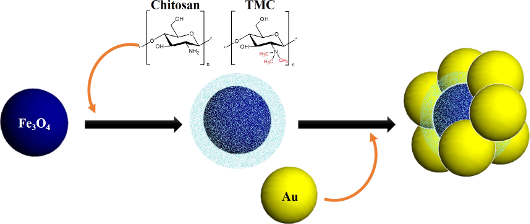
- that these polymers provide an adsorbent network on the surface of the Fe3O4 nanoparticles, it was decided to additionally assemble Au nanoparticles onto the polymer-coated magnetic particles, resulting in the development of novel nanocomposites. The final diameter of the resulting nanocomposite was




The fate of a designed protein corona on nanoparticles in vitro and in vivo
Beilstein J. Nanotechnol. 2015, 6, 36–46, doi:10.3762/bjnano.6.5
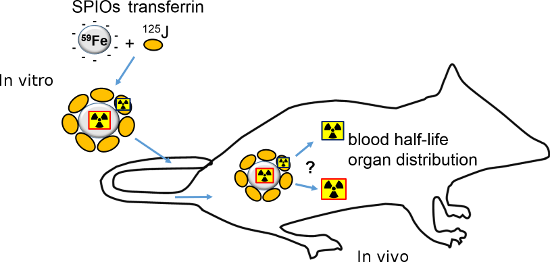
- nm) is much smaller than the adsorbent. If the nanoparticle and protein are in the same size, the Langmuir adsorption formalism seems not to be valid. This was discussed by Liu et al. using small CeO2-particles and bovine serum albumin with similar size of 7 nm [36]. The smaller surface free energy


Neutral and charged boron-doped fullerenes for CO2 adsorption
Beilstein J. Nanotechnol. 2014, 5, 413–418, doi:10.3762/bjnano.5.49
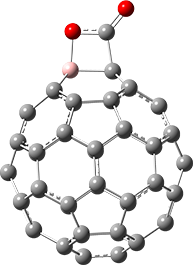
- common technology for the capture of CO2. However this method is criticized for its very high energy consumption and operational limitations such as corrosion, slow uptake rates, foaming and large equipment. Hence there is a huge interest in solid adsorbent materials for CCS [3][4][5][6]. In past few
- years metal organic frameworks (MOFs) have emerged as solid CO2 adsorbent materials due to their tuneable chemical and physical properties. Particularly, there is growing interest for metal free carbon-based nanomaterials for gas adsorption. Carbon-based nanomaterials such as fullerene, carbon nanotubes
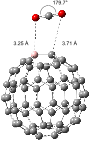
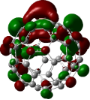
- enhanced by introducing extra electrons to the system. The enhanced interaction of CO2 with adsorbent materials by electron injection has been further proved by Jiao et al. [19]. Therefore, we will investigate the CO2 adsorption on BC59 fullerene in both the neutral and the 1e−-charged states



Distribution of functional groups in periodic mesoporous organosilica materials studied by small-angle neutron scattering with in situ adsorption of nitrogen
Beilstein J. Nanotechnol. 2012, 3, 428–437, doi:10.3762/bjnano.3.49
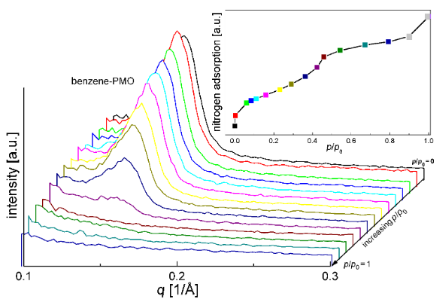
- the chemical nature, i.e., the electron density for SAXS or the neutron scattering length density (SLD) for SANS, of the pore walls in relation to the adsorbed gas. Thus, already small changes at the interface between the host material (the adsorbent) and the adsorbate can be monitored directly [21
- was 77 K. Before the measurement of each neutron scattering pattern, the sample was filled with a certain amount (n/n0) of adsorbent, by applying a gas-adsorption setup, which was connected to the measuring cell and enables a direct in situ SANS measurement for each point of the p–V adsorption


Inorganic–organic hybrid materials through post-synthesis modification: Impact of the treatment with azides on the mesopore structure
Beilstein J. Nanotechnol. 2011, 2, 486–498, doi:10.3762/bjnano.2.52
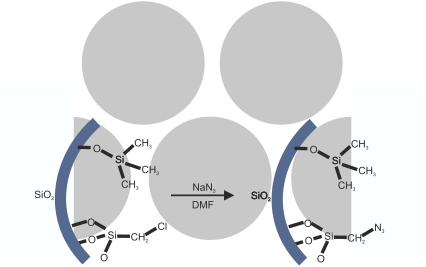
- methyl-spacer samples and in the range of 270 cm3 g−1 for propyl-spacer samples (Table 1). The decreasing C-value, indicative of the adsorbent–adsorbate interactions, for gels prepared from a silica-precursor solution containing 3.0–6.0 mmol CMTMS follows the trend expected for gels with increasing





