


Search results
Search for "alcohol" in Full Text gives 276 result(s) in Beilstein Journal of Nanotechnology. Showing first 200.
Effect of additives on the synthesis efficiency of nanoparticles by laser-induced reduction
Beilstein J. Nanotechnol. 2025, 16, 464–472, doi:10.3762/bjnano.16.35
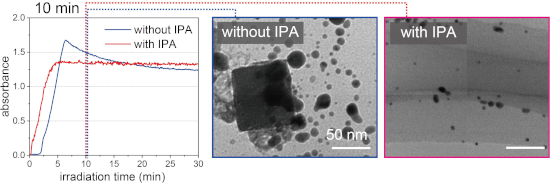
- of nanoparticles in large quantities for practical use. In this study, we investigated improvements of the synthesis efficiency of nanoparticles in LRL by adding scavengers, such as isopropyl alcohol (IPA) and glycerin, for oxidative radicals formed by laser irradiation to the solution and converting
- nanoparticle synthesis. It was assumed that the synthesis of nanoparticles would be promoted by removing the hydroxyl radicals formed by laser irradiation. Isopropyl alcohol acts as a radical scavenger, and reacts with •OH to produce a reducing radical (E0 = −1.8 V) [34]. Therefore, we added IPA to the
- Au nanoparticles by LRL. On the other hand, the synthesis efficiency is even higher with glycerin. While IPA and ethanol are monovalent alcohols with a single hydroxy group, glycerin is a trivalent alcohol with three hydroxy groups. Therefore, we speculate that glycerin was able to more efficiently


Tailoring of physical properties of RF-sputtered ZnTe films: role of substrate temperature
Beilstein J. Nanotechnol. 2025, 16, 333–348, doi:10.3762/bjnano.16.25
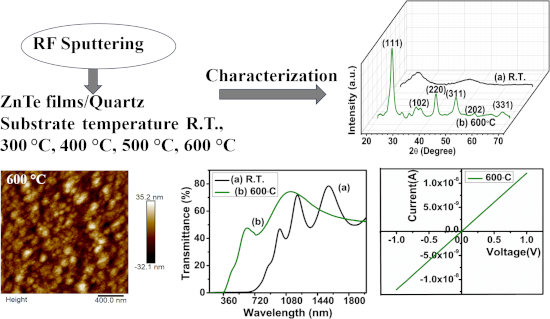
- temperatures. Prior to film deposition, the substrates were cleansed in an ultrasonic cleaner using acetone and isopropyl alcohol sequentially for 10 min at room temperature. The cleaned substrates were then dried in air and placed on the substrate holder in the chamber. A ZnTe target (dimensions 2 inch




Enhancing mechanical properties of chitosan/PVA electrospun nanofibers: a comprehensive review
Beilstein J. Nanotechnol. 2025, 16, 286–307, doi:10.3762/bjnano.16.22

- Department of Chemical Engineering, Faculty of Engineering, University of Malaya, 50603 Kuala Lumpur, Malaysia 10.3762/bjnano.16.22 Abstract This review examines strategies to enhance the mechanical properties of chitosan/polyvinyl alcohol (PVA) electrospun nanofibers, recognized for their biomedical and
- directions are proposed to overcome these obstacles and further enhance the mechanical properties of chitosan/PVA electrospun nanofibers, guiding their development for practical applications. Keywords: biomaterials; chitosan; electrospun nanofiber; mechanical properties; polyvinyl alcohol; Introduction In
- sensitive compounds [3]. Electrospun nanofibers exhibit a large surface area, high porosity, and small pore size, making them useful for a wide range of applications, as shown in Figure 1. Chitosan/polyvinyl alcohol (PVA) electrospun nanofibers have many applications, including water treatment, biomedical


Preferential enrichment and extraction of laser-synthesized nanoparticles in organic phases
Beilstein J. Nanotechnol. 2025, 16, 254–263, doi:10.3762/bjnano.16.20
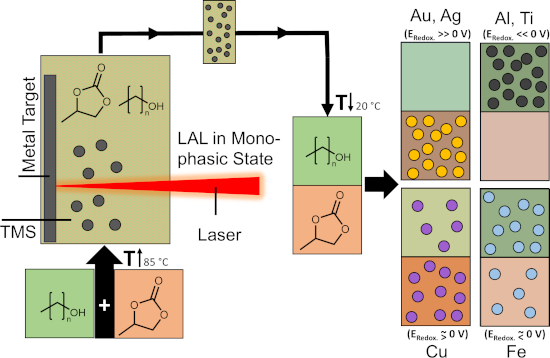
- unaddressed in literature. To tackle this knowledge gap, the present study investigates the phase preference of laser-generated noble metal (Au and Ag) and base metal (Cu, Fe, Al and Ti) nanoparticles within propylene carbonate/alcohol (PC/A) systems. Alcohols of increasing chain length (C6–C11) and hence
- decreasing polarity were chosen for this study. For each metal, LAL was performed at elevated temperatures (85 °C) where the PC/A mixture forms a single phase. Upon cooling, the phases separated and the amount of colloidal nanoparticles in the alcohol and propylene carbonate phase was analyzed for each metal
- system. The abundance of nanoparticles in PC or alcohol was found to correlate with the electrochemical reduction potential of the respective metal, where the noble metals were enriched within the more polar solvents. The polarity of the solvents (as function of the carbon chain length of the alcohol




Radiosensitizing properties of dual-functionalized carbon nanostructures loaded with temozolomide
Beilstein J. Nanotechnol. 2025, 16, 229–251, doi:10.3762/bjnano.16.18
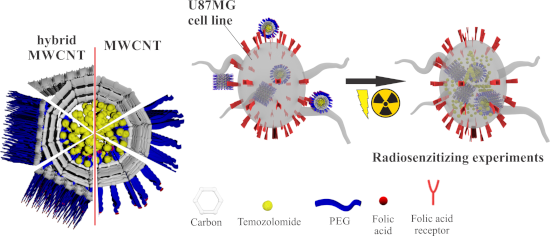
- . Despite the beneficial properties, CNs have not been extensively researched as inherent drugs or drug/TMZ carriers for the treatment of GBM. In two papers, a hybrid made of carbon quantum dots functionalized with chitosan, polyethylene oxide, and carboxymethyl cellulose–polyvinyl alcohol provided
- release was also provided through loading TMZ in a hybrid compound of carbon quantum dots, chitosan, polyethylene oxide, and carboxymethyl cellulose–polyvinyl alcohol (CS-PEO-CQDs/CMC-PVA) via coaxial spinning, and a transport system of CMC-PVA coating and CS-PEO-CQDs core was formed [41][42]. In a study




Recent advances in photothermal nanomaterials for ophthalmic applications
Beilstein J. Nanotechnol. 2025, 16, 195–215, doi:10.3762/bjnano.16.16
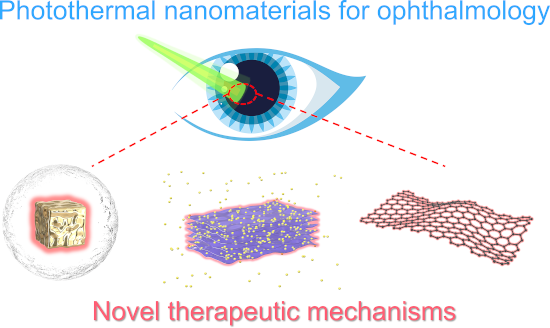
- vesicle leakage, bacterial endophthalmitis, and ocular hypotonia. Wang et al. developed a polyvinyl alcohol (PVA) hydrogel with enhanced photothermal, antimicrobial, and drug-delivery capabilities (PVA@rGO-Ag/5-Fu) [71]. Under NIR irradiation, the rGO-Ag component in the hydrogel effectively targets and


TiO2 immobilized on 2D mordenite: effect of hydrolysis conditions on structural, textural, and optical characteristics of the nanocomposites
Beilstein J. Nanotechnol. 2025, 16, 128–140, doi:10.3762/bjnano.16.12
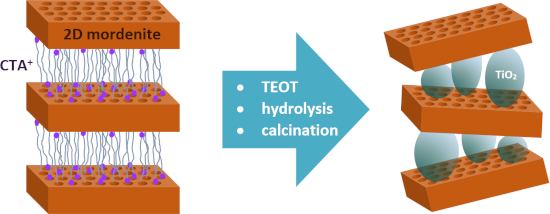
- accuracy of the experiment). Therefore, this step is immediately followed by condensation: The final composition of the hydrolysis products of alkoxides of titanium roughly corresponds to TiO1.5(OR)·yROH, where y = 0.15–1.00 depending on the nature of the alcohol. The residual carbon during thermal



Nanocarriers and macrophage interaction: from a potential hurdle to an alternative therapeutic strategy
Beilstein J. Nanotechnol. 2025, 16, 97–118, doi:10.3762/bjnano.16.10
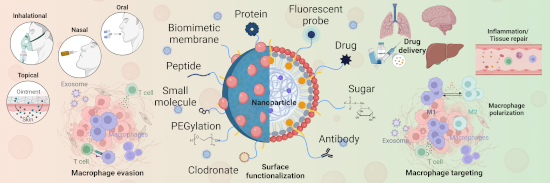
- KCs to phagocytose foreign particles, NCs can be designed to selectively administer antiviral drugs, antifibrotic agents, and chemotherapeutics [83]. 6.1.1 Hepatitis: Hepatitis is an inflammation of the liver with various etiologies, including viral infections (hepatitis B and C), alcohol abuse
- often results from chronic liver injury due to various causes, including hepatitis (such as hepatitis B and C), long-term alcohol abuse, and non-alcoholic steatohepatitis, which is associated with obesity and metabolic syndrome. The progression of liver fibrosis is driven by the activation of hepatic


Natural nanofibers embedded in the seed mucilage envelope: composite hydrogels with specific adhesive and frictional properties
Beilstein J. Nanotechnol. 2024, 15, 1603–1618, doi:10.3762/bjnano.15.126
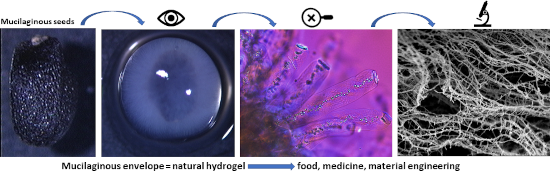
- elements of the cell wall and the mucilage envelope [7][13][16]. Samateh et al. [8] did not detect them. This can be a result of the prior treatment, such as dehydration in alcohol series before CPD (possibly an effect of the protein denaturation), or due to differences in chemical composition between the


Green synthesis of silver nanoparticles derived from algae and their larvicidal properties to control Aedes aegypti
Beilstein J. Nanotechnol. 2024, 15, 1566–1575, doi:10.3762/bjnano.15.123
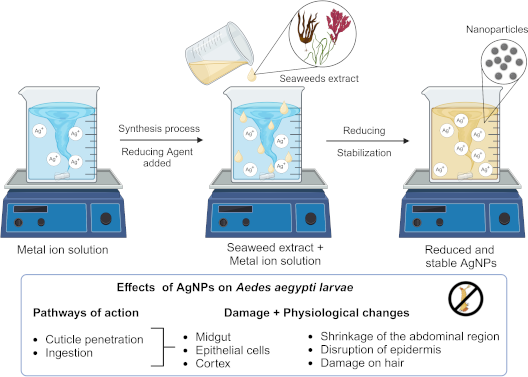
- , chemical, or biological methods [28]. Chemical AgNPs synthesis can require toxic substances such as polyvinylpyrrolidone, polyvinyl alcohol, and polyacrylonitrile as stabilizing agents and sodium borohydride, hydrazine, and hydroxylamine as reducing agents [29]. These may generate more toxic chemical


Ultrablack color in velvet ant cuticle
Beilstein J. Nanotechnol. 2024, 15, 1554–1565, doi:10.3762/bjnano.15.122

- sunlight (personal observations). For subsequent analyses, we utilized female specimens collected from Caatinga regions in Pernambuco, Brazil (09°19’44.2’’S, 42°33’30’’W) in February 2022. The specimens were preserved in absolute alcohol. Scanning electron microscopy (SEM) To investigate the internal
- –2.00 hPa. For sample preparation, transversely sectioned T. bifurca specimens were fixed in Karnovsky fixative solution + 0.1% ruthenium red for 12 h. Following buffer washing, a post-fixative solution (osmium tetroxide + 0.1% ruthenium red) was applied at room temperature. After rinsing with alcohol
- , dehydration proceeded through sequential baths of 70%, 90%, and three changes of 100% alcohol. The material (meso and metasoma) was embedded in epoxy resin, and the molds were polymerized at 60 °C. After block trimming, ultrathin sections (60 to 80 nm) were obtained using a Leica EM UC7 ultramicrotome (EM UC7



Investigation of Hf/Ti bilayers for the development of transition-edge sensor microcalorimeters
Beilstein J. Nanotechnol. 2024, 15, 1353–1361, doi:10.3762/bjnano.15.108

- . Finally, we performed a lift-off process using N-methylpyrrolidone followed by a rinse in isopropyl alcohol. The edges of the structures after the lift-off process appeared to be vertical well-defined walls without upward bends, as shown in the SEM image in Figure 2. A thin layer of titanium on top of


Synthesis, characterization and anticancer effect of doxorubicin-loaded dual stimuli-responsive smart nanopolymers
Beilstein J. Nanotechnol. 2024, 15, 1189–1196, doi:10.3762/bjnano.15.96
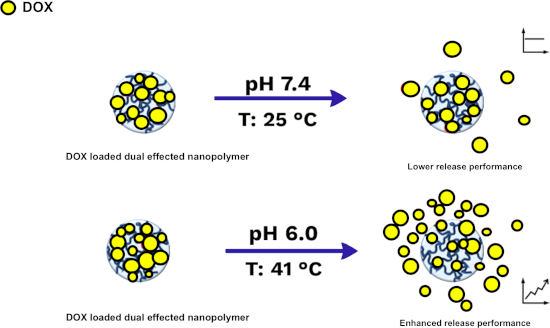
- polyvinyl alcohol (PVA), 57.7 mg sodium dodecyl sulfate (SDS), and 46.9 mg NaHCO3 in 20 mL of water (solution A in Figure 1). For solution B, 0.2 g PVA and 0.2 g SDS were dissolved in 400 mL of water. The organic phase (solution C) was obtained by mixing and dissolving (30 min in a beaker) 0.8 mL 2


Quantum-to-classical modeling of monolayer Ge2Se2 and its application in photovoltaic devices
Beilstein J. Nanotechnol. 2024, 15, 1153–1169, doi:10.3762/bjnano.15.94
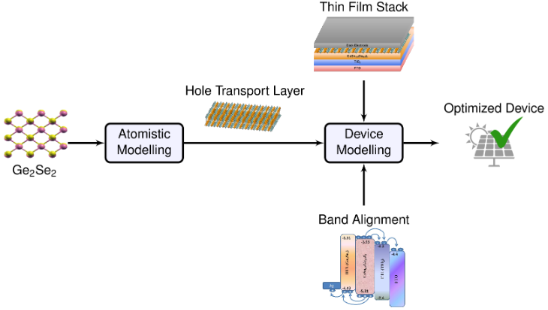
- in PSCs, either as HTL or as ETL. Yin et al. [26] reported a PCE of approximately 17.3% with TiS2 nanosheets suspended in isopropanol alcohol in a PSC. 2D sheets of SnS2 have been proposed by Zhao et al. [27] as a prospective ETL for PSCs. It achieved a maximum PCE of around 20%. Similarly, other




Recent updates in applications of nanomedicine for the treatment of hepatic fibrosis
Beilstein J. Nanotechnol. 2024, 15, 1105–1116, doi:10.3762/bjnano.15.89
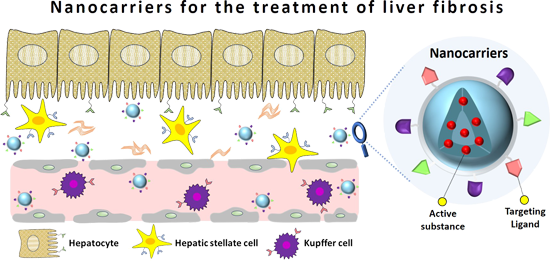
- to the trans-differentiation of hepatic stellate cells (HSCs) into collagen-producing myofibroblasts, resulting in the progressive accumulation of extracellular matrix (ECM) protein [12]. The condition may be caused by various etiologies, including viral hepatitis infection, alcohol abuse, and


Unveiling the potential of alginate-based nanomaterials in sensing technology and smart delivery applications
Beilstein J. Nanotechnol. 2024, 15, 1077–1104, doi:10.3762/bjnano.15.88


Therapeutic effect of F127-folate@PLGA/CHL/IR780 nanoparticles on folate receptor-expressing cancer cells
Beilstein J. Nanotechnol. 2024, 15, 954–964, doi:10.3762/bjnano.15.78
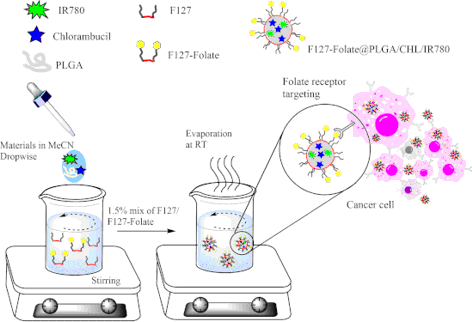
- emulsion, or nanoprecipitation [1][4], in which copolymers are dissolved in an organic solvent, called the organic phase, and then are put into an immiscible aqueous solution, called the water phase, to form the nanoparticles. Various surfactants, including poly(vinyl alcohol) (PVA), sodium cholate, or
- ligand folate to improve their capacity to target cells expressing the folate receptor. Materials and Methods Chlorambucil (C0253), PLGA 504H (719900), IR780 (425311), Pluronic™ F-127 (P2443), poly(vinyl alcohol) (PVA) (P8136), phosphate buffered saline (PBS) (P4417), dimethyl sulfoxide (DMSO) (472301



Identification of structural features of surface modifiers in engineered nanostructured metal oxides regarding cell uptake through ML-based classification
Beilstein J. Nanotechnol. 2024, 15, 909–924, doi:10.3762/bjnano.15.75
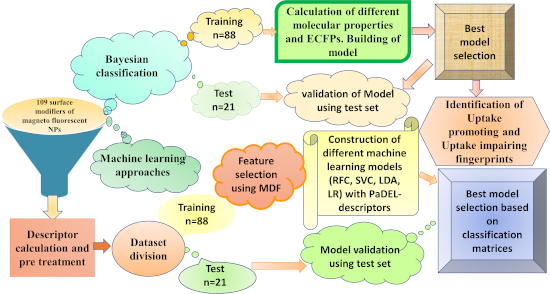
- . The uptake-impairing fingerprints UIp 12, UIp 15, UIp 16, and UIp 18 indicate the presence of aliphatic/cyclic alcohol-like structures in the surface modifiers, and a negative impact on cell uptake of ENMOs is shown in the case of surface modifier 59. Similarly, fingerprints UIp 2, UIp 3, UIp 6, UIp 8
- surface modifier 74 (Supporting Information File 1, Figure S4). The fingerprints UIh 5, UIh 10, UIh 13, UIh 15, and UIh 18 with a branched aliphatic structure have a negative impact on the uptake of ENMOs. As discussed previously in the case of the PaCa2 cell line, aliphatic alcohol-related fingerprints
- modifier 86 is due to the presence of fingerprints UPu 12 and UPu 18. The uptake-impairing fingerprints UIu 1, UIu 4, UIu 11, UIu 12, and UIu 14 indicate the presence of aliphatic alcohol functionality. The presence of primary or secondary amino groups (UIu 2, UIu 5, UIu 8, UIu 9, UIu 10, and UIu 16) also


Water-assisted purification during electron beam-induced deposition of platinum and gold
Beilstein J. Nanotechnol. 2024, 15, 884–896, doi:10.3762/bjnano.15.73
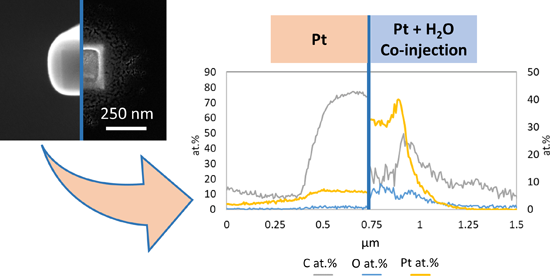
- subsequently sonicated for 2 min in acetone and for 2 min in isopropyl alcohol. All depositions were performed with both GIS nozzles inserted. Deposition, imaging, and EDX analysis were performed in immersion mode at a working distance of 5 mm. Deposition conditions In general, the main parameters that control





Electrospun polysuccinimide scaffolds containing different salts as potential wound dressing material
Beilstein J. Nanotechnol. 2024, 15, 781–796, doi:10.3762/bjnano.15.65
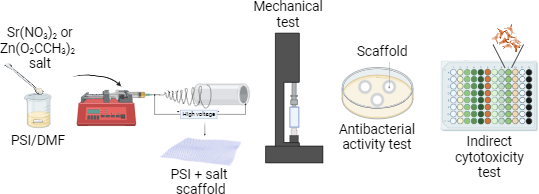
- thickness of the scaffolds was hard to define. According to their results, a growing concentration of prednisone in PSI and PCL polymers also increased the value of the initial modulus. In the case of poly(vinyl alcohol) (PVA), the initial modulus values decreased with increasing prednisone content [35]. We



Laser synthesis of nanoparticles in organic solvents – products, reactions, and perspectives
Beilstein J. Nanotechnol. 2024, 15, 638–663, doi:10.3762/bjnano.15.54
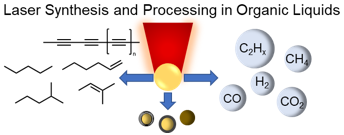
- , ethanol, isopropyl alcohol, diethyl ether, and isobutanol with nanosecond laser pulses while quantifying the formed hydrogen pressure with amperometric sensors. The organic alcohols, while having a lower number of hydrogen atoms per molecule, showed a ten times higher hydrogen evolution rate than water
- [45]. Additionally, the molecular structure of the solvent affects the hydrogen evolution rate. Ethanol and isopropyl alcohol produced greater hydrogen yields than isobutyl alcohol and diethyl ether, which was attributed to the higher ratio of hydrogen to carbon and, thus, more C–H bonds relative to C
- chemical reactions occurring during the LRL of AuCl4 and AgClO4 in water–isopropyl alcohol solution using femtosecond and nanosecond lasers (Figure 6). Isopropyl alcohol was found to decompose to numerous products, including methane, acetylene, propene, and C5 alkyne hydrocarbons. However, the product





Classification and application of metal-based nanoantioxidants in medicine and healthcare
Beilstein J. Nanotechnol. 2024, 15, 396–415, doi:10.3762/bjnano.15.36
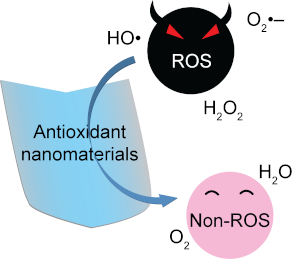
- hydrogels (such as gelatin methacryloyl, chitosan/polycaprolactone, polyvinyl alcohol/chitosan, and polypyrrole-grafted gelatin) were combined to generate diverse combinations of nanocomposites for wound repair [156][157][158][159][160][161]. This strategy not only endows nanoantioxidants with topical


Ultrasensitive and ultrastretchable metal crack strain sensor based on helical polydimethylsiloxane
Beilstein J. Nanotechnol. 2024, 15, 270–278, doi:10.3762/bjnano.15.25
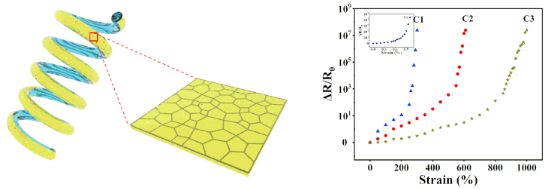
- successfully retrieved by peeling it off from the screw. In order to eliminate the contaminants from the surface of the helically structured PDMS, a 10 min ultrasound treatment in absolute alcohol was employed, followed by drying in a sterile oven. Prior to the Au deposition, the outer surface of the helically


Nanocarrier systems loaded with IR780, iron oxide nanoparticles and chlorambucil for cancer theragnostics
Beilstein J. Nanotechnol. 2024, 15, 180–189, doi:10.3762/bjnano.15.17
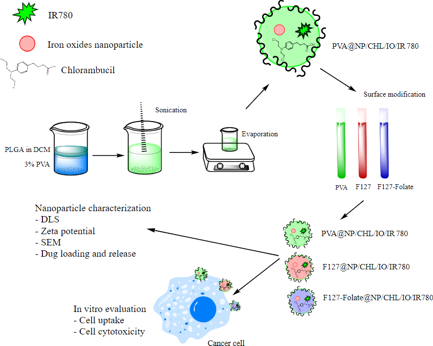
- alcohol)-based nanoparticles (NPs) using the single emulsion technique. Then the NPs were coated with F127 and F127-folate by simple incubation for five days. The nanoparticles have the hydrodynamic size of approx. 250 nm with negative charge. Similar to chlorambucil and IR780, iron oxide loadings were
- and target efficacy. To increase the blood half-life, stealth materials have been attached to the nanoparticle surface to prevent protein adsorption and immune cell phagocytosis [4]. Most sheath materials are hydrophilic polymers such as poly(vinyl alcohol), poly(ethylene glycol), and poly(ethylene
- -127 (P2443), poly(vinyl alcohol) (PVA) (P8136), phosphate buffered saline (PBS) (P4417), dimethyl sulfoxide (DMSO) (472301), dichloromethane (DCM), 3-[4,5-dimethylthiazol-2-yl]-2,5 diphenyl-2H-tetrazolium bromide (MTT) (M2128), and coumarin-6 (442631), K3[Fe(CN)6] (1049730100) were purchased from


Berberine-loaded polylactic acid nanofiber scaffold as a drug delivery system: The relationship between chemical characteristics, drug-release behavior, and antibacterial efficiency
Beilstein J. Nanotechnol. 2024, 15, 71–82, doi:10.3762/bjnano.15.7
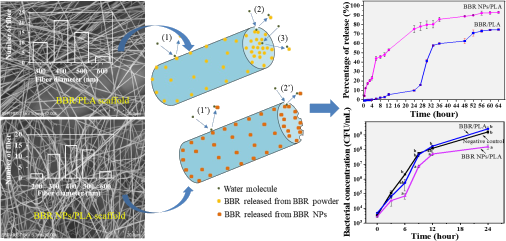
- worthwhile mentioning that the hybrid cross-linked nanofibers in this work were made of a mixture of a hydrophilic polymeric matrix (polyvinyl alcohol and carboxymethyl cellulose) and a hydrophobic polymer (polycaprolactone) [16]. Interestingly, the nature of the drug and the drug–polymer compatibility





