Search results
Search for "anisotropic" in Full Text gives 246 result(s) in Beilstein Journal of Nanotechnology. Showing first 200.
Performance optimization of a microwave-coupled plasma-based ultralow-energy ECR ion source for silicon nanostructuring
Beilstein J. Nanotechnol. 2025, 16, 484–494, doi:10.3762/bjnano.16.37

- the increase in bombardment time, more silicon and oxygen atoms are sputtered. Due to the presence of the ripples, the surface becomes anisotropic. The consequence of such an anisotropic nature of the surface is investigated and discussed in the upcoming section. Application of nanopatterned Si


Vortex lattices of layered HTSCs at different vortex–vortex interaction potentials
Beilstein J. Nanotechnol. 2025, 16, 362–370, doi:10.3762/bjnano.16.27
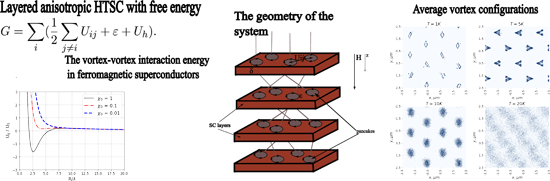
- interaction potential of which is identical in shape to the interaction potential in ferromagnetic superconductors. The modeling results can also be useful for analyzing vortex configurations in a layered anisotropic HTSC in an inclined magnetic field. Methods Calculations were performed using the Monte Carlo
- method within the framework of a two-dimensional model of a layered HTSC [24][25][26]. Most of the HTSCs applicable in practice are strongly anisotropic substances characterized by the anisotropy parameter γ > 10. Examples of such HTSCs are YBa2Cu3O7−δ (γ ≈ 10) and Bi2Sr2CaCu2O8−δ (γ ≈ 200) [1]. Such


Facile synthesis of size-tunable L-carnosine-capped silver nanoparticles and their role in metal ion sensing and catalytic degradation of p-nitrophenol
Beilstein J. Nanotechnol. 2024, 15, 1576–1592, doi:10.3762/bjnano.15.124
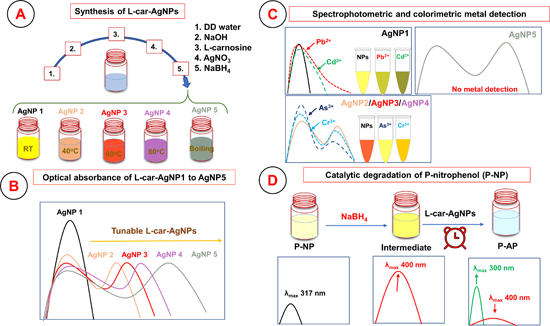
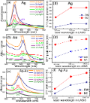
- , which confirms that the nanoparticles are spherical and monodispersed. However, silver nanoparticles with anisotropic shape were reported to have two absorption bands, namely transverse and longitudinal [24]. Furthermore, the color of the anisotropic nanosilver is different from yellow, which is also




Ultrablack color in velvet ant cuticle
Beilstein J. Nanotechnol. 2024, 15, 1554–1565, doi:10.3762/bjnano.15.122

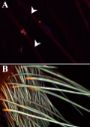
- ultrastructure consisting of randomly oriented anisotropic micropillars accounts for its significant absorptivity [27]. Peacock spiders feature microstructures in specific body regions that exhibit ultrablack coloration with high absorbance. Interestingly, these microstructures are absent in other dark body



Nanoarchitectonics with cetrimonium bromide on metal nanoparticles for linker-free detection of toxic metal ions and catalytic degradation of 4-nitrophenol
Beilstein J. Nanotechnol. 2024, 15, 1312–1332, doi:10.3762/bjnano.15.106
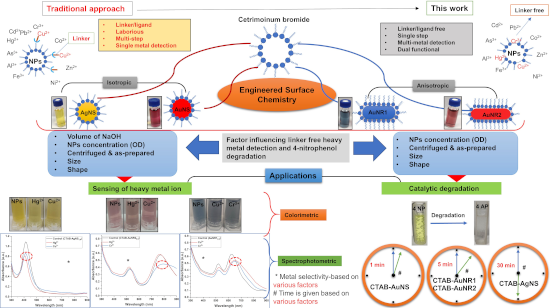
- degrading 94.37% of 4-NP within 1 min. In contrast, silver nanospheres effectively detected Hg2+, Cu2+, and Fe3+ at concentrations as low as 1 ppm and degraded 90.78% of 4-NP within 30 min. Moreover, anisotropic gold nanorods (CTAB-AuNR1 and CTAB-AuNR2) showed promising sensing capabilities towards Cu2
- -modified isotropic and anisotropic CTAB-AgNPs were used to detect cobalt ions. The author found that only rod-shaped particles enabled visual detection of cobalt [25]. Yagyu et al. showed the efficient removal of radioactive cesium using Prussian blue [26]. Also, 4-nitrophenol was degraded using CTAB
- CTAB-capped gold and silver nanoparticles without linker/buffer for catalysis and detection heavy metals is a current need. In this work, we have developed a linker-free nanosensor with CTAB as capping agent on both isotropic and anisotropic gold and silver nanoparticles. The CTAB-capped metal




New design of operational MEMS bridges for measurements of properties of FEBID-based nanostructures
Beilstein J. Nanotechnol. 2024, 15, 1273–1282, doi:10.3762/bjnano.15.103
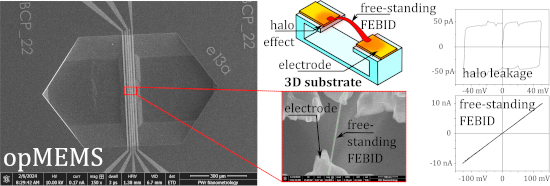
- (Si3N4) layer was deposited via CVD. The 40 nm thick platinum paths were then patterned by lift-off photolithography. The opMEMS bridge body was defined photolithographically with a feature size of 2 µm, etched by dry oxygen plasma etching (DRIE) and then released by KOH anisotropic wet silicon etching
- only for the visual assessment of the shape and dimensions of a structure, but also for the observation of movement and deflection of an opMEMS. At the same time, the ion beam allows for local doping of the substrate and anisotropic milling. The NanoLab 600i also provides three gas injection systems


A low-kiloelectronvolt focused ion beam strategy for processing low-thermal-conductance materials with nanoampere currents
Beilstein J. Nanotechnol. 2024, 15, 1197–1207, doi:10.3762/bjnano.15.97

- the ion incidence angle and associated changes in interaction volume shape as well as heat generation need to be investigated further. The ion beam usually hits the sample at glancing angles during TEM lamella preparation and cross-sectioning, which leads to anisotropic changes in the interaction

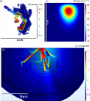


Quantum-to-classical modeling of monolayer Ge2Se2 and its application in photovoltaic devices
Beilstein J. Nanotechnol. 2024, 15, 1153–1169, doi:10.3762/bjnano.15.94
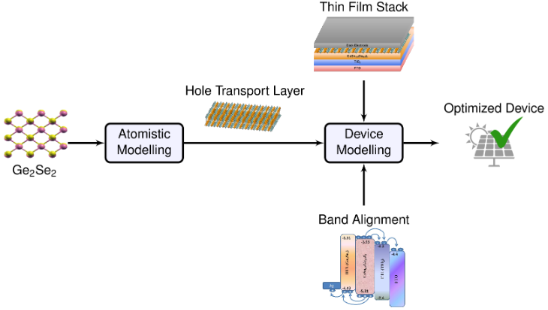
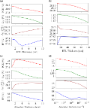
- investigated structure exhibits strongly anisotropic optical properties for which the parametric values depend on the direction of the chosen plane. Dielectric function and absorption coefficient The static dielectric constants (real part of εr at ω = 0), along the in-plane (XX) and out-of-plane (ZZ) direction




Photocatalytic methane oxidation over a TiO2/SiNWs p–n junction catalyst at room temperature
Beilstein J. Nanotechnol. 2024, 15, 1132–1141, doi:10.3762/bjnano.15.92
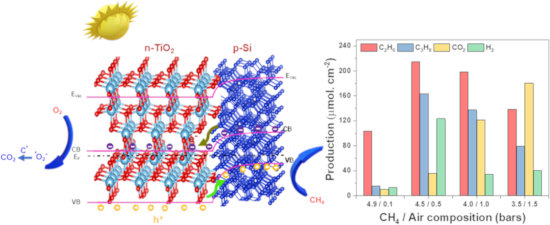
- recombination of charge carriers is mainly attributed to the anisotropic movement of generated electron–hole pairs in semiconductors. Therefore, the implementation of a driving force could remarkably accelerate the oriented motion of electrons and holes, which could suppress recombination and eventually improve


Effect of wavelength and liquid on formation of Ag, Au, Ag/Au nanoparticles via picosecond laser ablation and SERS-based detection of DMMP
Beilstein J. Nanotechnol. 2024, 15, 1054–1069, doi:10.3762/bjnano.15.86

- detection of DMMP (1.2 ppm V) in the vapor phase using Glass_Ag_Au NPs, 3D fractal microstructure substrates developed by corner lithography and anisotropic wet etching of silicon using the 785 nm as the Raman excitation. When UV excitation was utilized during the measurements, the Raman peak intensities


Atomistic insights into the morphological dynamics of gold and platinum nanoparticles: MD simulations in vacuum and aqueous media
Beilstein J. Nanotechnol. 2024, 15, 995–1009, doi:10.3762/bjnano.15.81
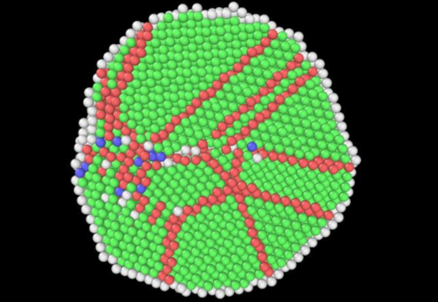
- clusters consisting of 1157 atoms [51]. Some light on the microscopic origin of the anisotropic growth of gold NPs has been cast via molecular dynamics simulations [52]. In a similar way, Lümmen and Kraska investigated the homogeneous nucleation and cluster growth of Pt clusters from supersaturated vapour


Recent progress on field-effect transistor-based biosensors: device perspective
Beilstein J. Nanotechnol. 2024, 15, 977–994, doi:10.3762/bjnano.15.80
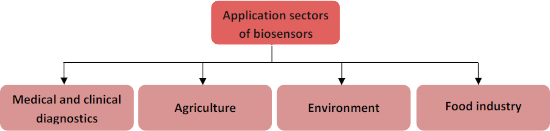
- -care diagnostic systems. This device was realized using a top-to-down approach with an anisotropic and cost-effective self-stop etching method [85][86]. A novel CMOS anisotropic technique was implemented for the etching process, combining classical optical and electron beam lithography with anisotropic
- CMOS technology, combined with optical lithography and an anisotropic self-stop etching method [88][89]. The incorporated P- and N-type NWs showed complementary electrical responses upon prostate-specific antigen binding, providing a unique means of internal command for biosensing signal verification




Beyond biomimicry – next generation applications of bioinspired adhesives from microfluidics to composites
Beilstein J. Nanotechnol. 2024, 15, 965–976, doi:10.3762/bjnano.15.79
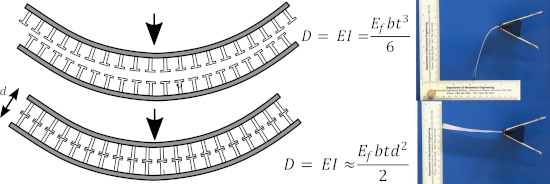
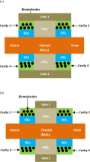
- single sheet. A deliberate defect to yield anisotropic adhesion was described in 2013 by my student Walid bin Khaled [25]. It has been thoroughly characterized in various papers, including his work and that of visiting student Yue Wang, who collaborated with me between 2015 and 2016 [27]. Yue Wang also


Effects of cutting tool geometry on material removal of a gradient nanograined CoCrNi medium entropy alloy
Beilstein J. Nanotechnol. 2024, 15, 925–940, doi:10.3762/bjnano.15.76
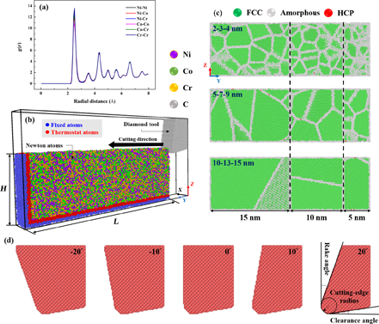
- the grain boundaries of the sample forms a clear network of contour maps [30]. The anisotropy of the grains causes anisotropic deformation and increases the surface dispersion density. Therefore, the stress required to promote plastic deformation rises more at grain boundaries than inside grains [23








Synthesis of silver–palladium Janus nanoparticles using co-sputtering of independent sources: experimental and theorical study
Beilstein J. Nanotechnol. 2024, 15, 808–816, doi:10.3762/bjnano.15.67
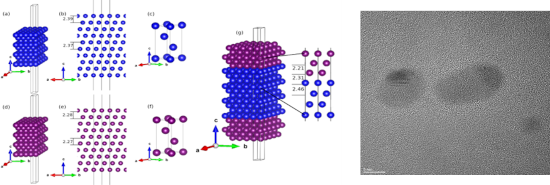
- promote twin proliferation, which favored the production of Pd−Au Janus icosahedra. In the same experimental setup, they also promoted twin elongation, which aided the production anisotropic Pd@Au core–shell starfish-like structures. As it is known, icosahedral nanoparticles are formed by 20 tetrahedral




Gold nanomakura: nanoarchitectonics and their photothermal response in association with carrageenan hydrogels
Beilstein J. Nanotechnol. 2024, 15, 678–693, doi:10.3762/bjnano.15.56

- hydrogels is not well reported. In this study, nanomakura-shaped anisotropic gold nanoparticles (AuNMs) were synthesized via a surfactant-assisted seed-mediated protocol. Quaternary cationic surfactants having variable carbon tail length (n = 16, 14, 12) were used as capping for tuning the plasmon peak of
- , electrochemical sensors, and photothermal therapy (PTT) [5]. These technologies are based on the principle of elastic scattering properties of metal nanoparticles and on the shift in the plasmon band, which is more prominent in the case of anisotropic nanoparticles in comparison to isotropic ones [6]. Several
- anisotropic gold nanoparticles (AuNPs) have been synthesized and studied in recent years including nanorings, nanoprisms, nanoplates, crooked nanorods, dendrimers, nanocubes, nanodumbells, dogbones, and nanomakura [7][8][9][10][11][12][13][14]. Vis-à-vis to spherical nanoparticles, anisotropic nanoparticles






Functional fibrillar interfaces: Biological hair as inspiration across scales
Beilstein J. Nanotechnol. 2024, 15, 664–677, doi:10.3762/bjnano.15.55
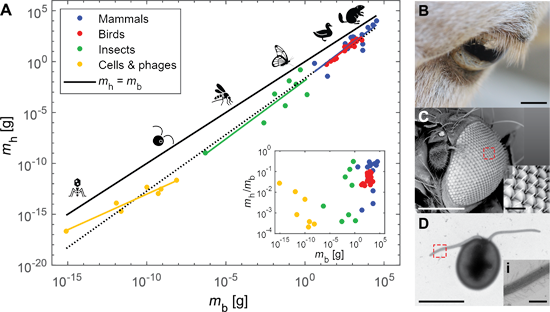
- [21][22]. Burrowing The use of hairs to generate frictional forces is not unique to animals that climb. Hair-like setae on the skin of earthworms aid in burrowing by increasing friction and providing anisotropic anchoring [65][66][67]. When burrowing, the earthworm mainly uses cavity expansion to
- worm to anchor tighter to the surrounding soil. Meanwhile, when the circular muscles relax, the setae deflect and interact less with the soil. This anisotropic anchoring has been realized in a bio-inspired burrowing soft robot [70]. Flying Flying organisms span about eight orders of magnitude in mass


Comparative analysis of the ultrastructure and adhesive secretion pathways of different smooth attachment pads of the stick insect Medauroidea extradentata (Phasmatodea)
Beilstein J. Nanotechnol. 2024, 15, 612–630, doi:10.3762/bjnano.15.52
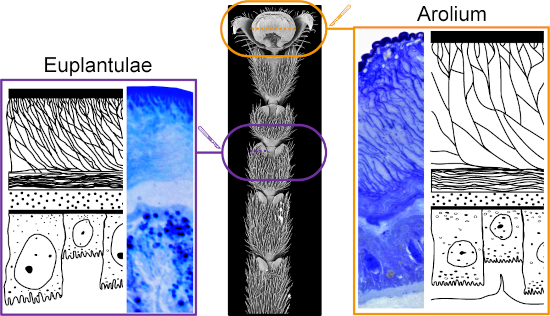
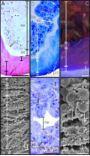
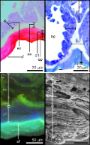
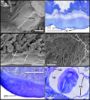
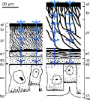
- 5 (euplantulae)). In general, the hierarchical organization of the fibres enables local deformation to adjust to the surface profile of the substrate (e.g., [20][45][70]). This results in anisotropic material properties (i.e., the pads are soft during compression); however, those withstand high



Directed growth of quinacridone chains on the vicinal Ag(35 1 1) surface
Beilstein J. Nanotechnol. 2024, 15, 556–568, doi:10.3762/bjnano.15.48
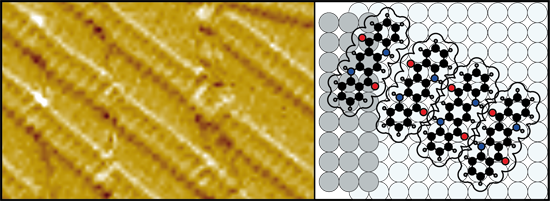
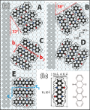
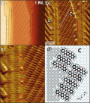
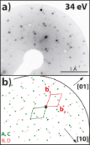
- ° and 58° between the chains and the Ag step edges. Hence, such a strict selection of the azimuthal angle of the chains, similar to the one found by Schnadt et al., does not apply to QA. Anisotropic β-phase Now we discuss an interesting aspect regarding the β-phase on Ag(35 1 1), namely the fact that


Multiscale modelling of biomolecular corona formation on metallic surfaces
Beilstein J. Nanotechnol. 2024, 15, 215–229, doi:10.3762/bjnano.15.21
- orientations of each protein treated as different potential adsorbates to allow for a more physically realistic model of corona formation for anisotropic proteins. In brief, a standard kinetic Monte Carlo routine is used to advance the simulation from one event, collision of an incoming adsorbate with the NP




TEM sample preparation of lithographically patterned permalloy nanostructures on silicon nitride membranes
Beilstein J. Nanotechnol. 2024, 15, 1–12, doi:10.3762/bjnano.15.1
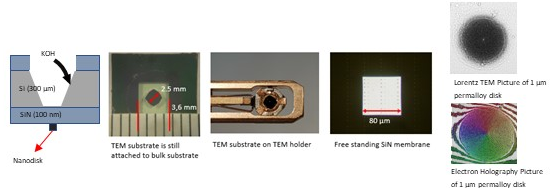
- KOH solution resulted in a faster etch rate but led to much stronger bubbling and roughening of the Si surface with the creation of micropyramidal hillocks [31]. The surface alignment of the Si substrates is parallel to the {100} crystallographic plane of Si, and the anisotropic KOH etching results in


Nanoarchitectonics of photothermal materials to enhance the sensitivity of lateral flow assays
Beilstein J. Nanotechnol. 2023, 14, 988–1003, doi:10.3762/bjnano.14.82
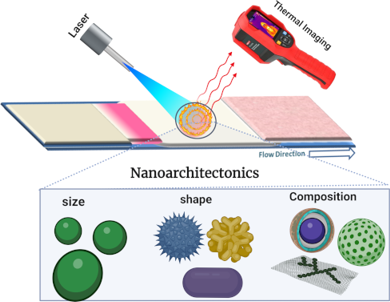
- architecture of the gold nanoparticles, their plasmonic absorption can be tuned from the visible to the NIR region. Among the different structures of gold, gold nanorods are commonly used as photothermal agents because of the tuneable aspect ratio, anisotropic architecture, and high photoconversion efficiency
- , SERS, fluorescence, and photothermal applications [45]. For instance, compared to spherical architectures, anisotropic nanoscale architectures, such as nanostars, nanoflowers, nanopopcorns, nanorods, and nanocages, exhibit superior SERS and photothermal conversion activities [46][47]. Therefore, it is


Upscaling the urea method synthesis of CoAl layered double hydroxides
Beilstein J. Nanotechnol. 2023, 14, 927–938, doi:10.3762/bjnano.14.76
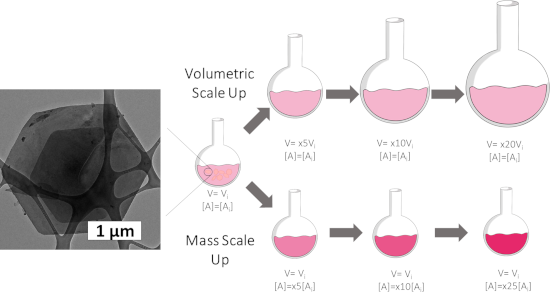
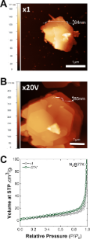
- better immobilization of these small anisotropic crystals, precluding any artefacts in the magnetic measurements. The porous texture of all prepared materials was characterized by N2 adsorption at 77 K and CO2 at 273 K in an AUTOSORB-6 apparatus. Prior to the measurements, the samples were degassed for 4


The microstrain-accompanied structural phase transition from h-MoO3 to α-MoO3 investigated by in situ X-ray diffraction
Beilstein J. Nanotechnol. 2023, 14, 692–700, doi:10.3762/bjnano.14.55
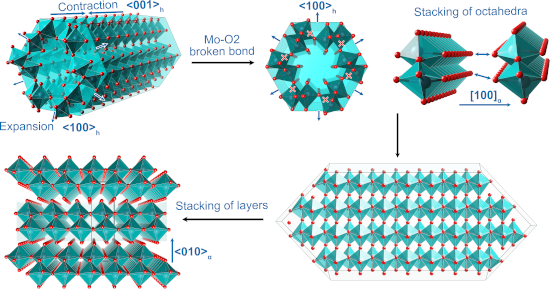
- strongly anisotropic, that is, αa=b = 72.87 × 10⁻⁶ K−1 and αc = −19.44 × 10⁻⁶ K−1. In the h-MoO3 phase, water molecules are located at the (0 0 0.25) site inside the MoO6 octahedra tunnel that is formed by six MoO6 corner-sharing octahedron zigzag chains. With increasing temperature, the release of water
- MoO6 octahedra tunnel. Before the phase transition, the release of the water molecules causes the octahedra chains to shrink and the octahedra tunnel to expand, which results in a strongly anisotropic thermal expansion. When the phase transition occurs, the anomalous expansion of the MoO6 octahedra
- transition from h-MoO3 to α-MoO3 Anisotropic thermal expansion and first-order phase transition The coefficient of thermal expansion (CTE) is an important mechanical parameter for the application of MoO3 thin films, as it can increase the mismatch between thin films and the substrate, causing microdevices to


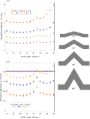
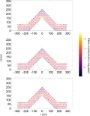
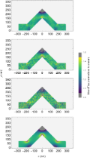
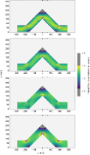
Thermal transport in kinked nanowires through simulation
Beilstein J. Nanotechnol. 2023, 14, 586–602, doi:10.3762/bjnano.14.49
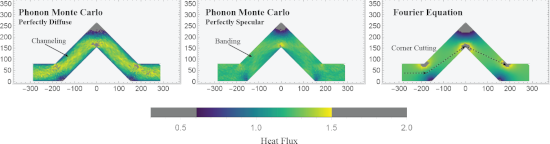
- conductivity of a theoretical crystal with cubic symmetry is isotropic (and investigations of perfectly cubic systems have found such [37]), because of the limited dimensions of a nanostructure along certain crystal axes the contribution to thermal transport in the lattice can be anisotropic. In addition
- , anisotropic heat transport has been found in silicon nanosystems [38], where the thermal conductivity can vary based on the lattice orientation along the direction of transport. It is possible that this effect is related to how lattice orientation can affect surface scattering. Zhou, Chen and Hu showed that a