Search results
Search for "antibacterial" in Full Text gives 136 result(s) in Beilstein Journal of Nanotechnology.
Enhancing mechanical properties of chitosan/PVA electrospun nanofibers: a comprehensive review
Beilstein J. Nanotechnol. 2025, 16, 286–307, doi:10.3762/bjnano.16.22

- materials, are designed to enhance the functionality and properties of the fibers, thereby broadening their applications in areas such as antibacterial treatments, water purification, and biomedical engineering [75][76][77]. Fabrication of multicomponent polymer nanofibers like chitosan/PVA can be carried
- unique properties such as biodegradability, biocompatibility, and antibacterial activity, which are considered effective in promoting wound healing. The presence of chemical structures like glycosaminoglycans in chitosan mimics the ECM and provides a hemostatic effect, thereby accelerating the healing
- with excellent antibacterial efficiency, when compared to commercial wound dressings [202]. Challenges and future perspectives Despite new technologies being discovered every day, the current mechanical performance of electrospun nanofibers remains limited. For biomedical materials, single modification


Recent advances in photothermal nanomaterials for ophthalmic applications
Beilstein J. Nanotechnol. 2025, 16, 195–215, doi:10.3762/bjnano.16.16
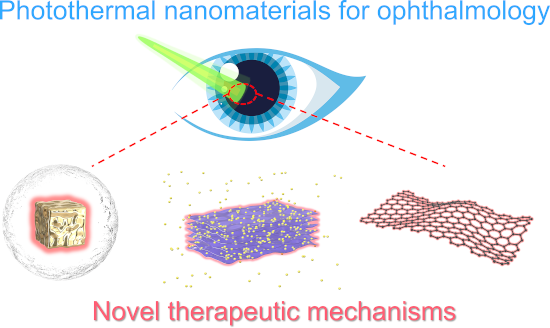
- vitro antibacterial experiments, the minimum inhibitory concentrations of AuAgCu2O NS (808 nm, 0.75 W·cm−2, 10 min) and AgCu2O-EDTA (808 nm, 0.25 W·cm−2, 5 min) were similar. However, AgCu2O-EDTA required a lower laser energy density and shorter irradiation times, resulting in a milder photothermal


Clays enhanced with niobium: potential in wastewater treatment and reuse as pigment with antibacterial activity
Beilstein J. Nanotechnol. 2025, 16, 141–154, doi:10.3762/bjnano.16.13
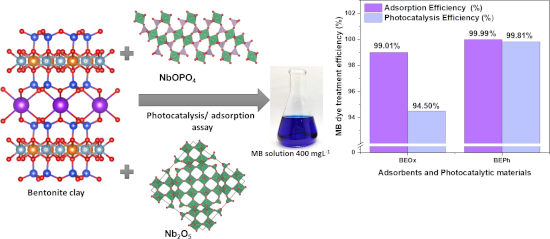
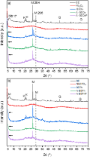
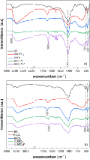
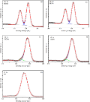
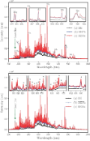
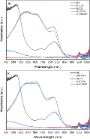
- for their potential as antibacterial hybrid pigments. The bentonite clay modified with niobium was prepared by a solution containing swelling clay mixed with niobium oxide (NbOx) and niobium phosphate (NbPh) in a water solution; after that, the suspension was calcinated. X-ray diffractometry, X-ray
- cereus (ATCC 10876) and Proteus mirabilis (ATCC 35649). The analysis revealed remarkable antibacterial activity against Proteus mirabilis, suggesting a preferential selectivity for Gram-negative bacteria. Keywords: adsorption; bentonite; hybrid pigment; niobium; photocatalysis; water remediation
- space as a pigment in the powder form and dispersed in colorless paint. The novel-developed pigments, specifically the smectite clay modified with niobium-containing adsorbed dye, were investigated as antibacterial pigments. Experimental Materials The bentonite clay from the Guarapuava region in the



Nanocarriers and macrophage interaction: from a potential hurdle to an alternative therapeutic strategy
Beilstein J. Nanotechnol. 2025, 16, 97–118, doi:10.3762/bjnano.16.10


Characterization of ZnO nanoparticles synthesized using probiotic Lactiplantibacillus plantarum GP258
Beilstein J. Nanotechnol. 2025, 16, 78–89, doi:10.3762/bjnano.16.8
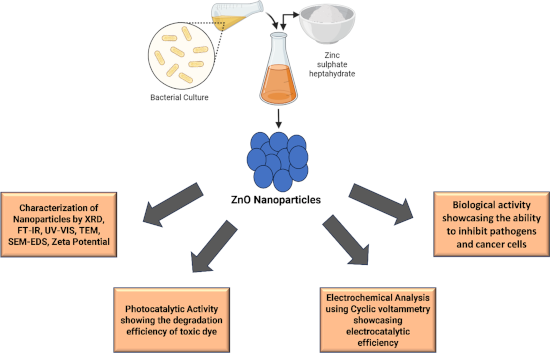
- potential of −60 mV. Furthermore, the synthesized nanoparticles displayed significant antibacterial activity against selected human pathogens, with the biggest inhibition zone observed against Staphylococcus aureus (22 ± 0.57 mm) and the smallest inhibition zone observed against Salmonella enterica serovar
- characterization using UV–vis spectroscopy, Fourier-transform infrared spectroscopy, X-ray diffraction measurements, energy-dispersive X-ray spectroscopy, scanning and transmission electron microscopy, photocatalytic studies, electrochemical analysis, and determination of antibacterial and anticancer activity. The
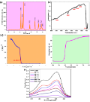
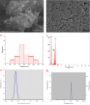
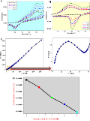
- frequency (ω), Y, and n. The obtained results suggest robust electron transfer and enhanced electrocatalytic efficiency in dextrose oxidation [19][20][21] (Figure 5). Antibacterial activity of ZnO NPs The biogenic ZnO NPs presented a good dispersion and exhibited antibacterial activity against both Gram



Biomimetic nanocarriers: integrating natural functions for advanced therapeutic applications
Beilstein J. Nanotechnol. 2024, 15, 1619–1626, doi:10.3762/bjnano.15.127

- amphiphilic nanoparticles and ROS-responsive poly(α-l-lysine) nanoparticles, which are developed and used to encapsulate antibiotics, achieving both antibacterial and antioxidant functionalities [79][80]. Conclusion Biomimetic nanocarriers represent a promising strategy for the treatment of several clinically


Liver-targeting iron oxide nanoparticles and their complexes with plant extracts for biocompatibility
Beilstein J. Nanotechnol. 2024, 15, 1593–1602, doi:10.3762/bjnano.15.125
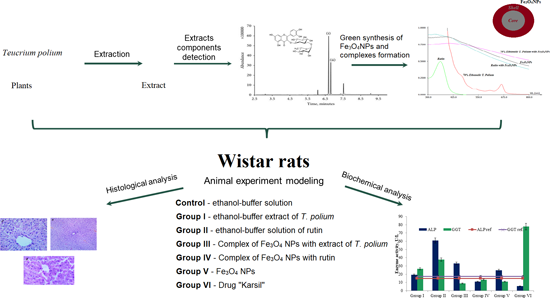
- the agents were administered after being passed through antibacterial membrane filters (pore diameter 0.45 μm). All interventions were performed in accordance with the principles of laboratory animal care of the Ethics Committee of Yerevan State Medical University (Yerevan, Armenia) and in accordance


Electrochemical nanostructured CuBTC/FeBTC MOF composite sensor for enrofloxacin detection
Beilstein J. Nanotechnol. 2024, 15, 1522–1535, doi:10.3762/bjnano.15.120
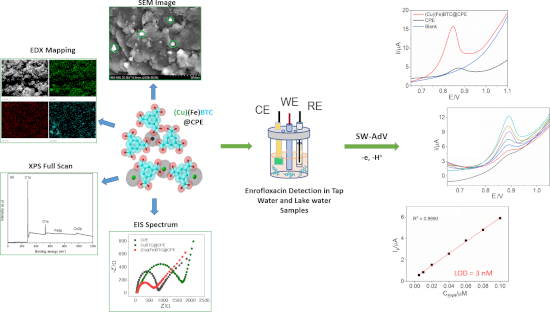
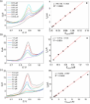
- extensively used in livestock and aquaculture as an antibacterial agent, showing high activity against both Gram-negative and Gram-positive bacteria [1][2]. ENR, like other fluoroquinolones, is used to treat susceptible bacteria responsible for infections of the skin and soft tissue. The overuse of ENR causes





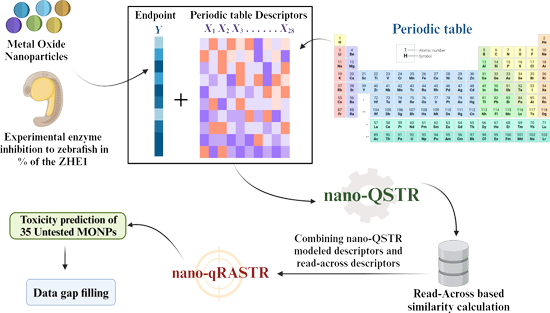
Introducing third-generation periodic table descriptors for nano-qRASTR modeling of zebrafish toxicity of metal oxide nanoparticles
Beilstein J. Nanotechnol. 2024, 15, 1142–1152, doi:10.3762/bjnano.15.93
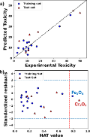
- strong antibacterial, antifungal, antidiabetic, antioxidant, anticancer, and photocatalytic activities [7][8][9]. Besides the medical field, they are also commonly used in commercial products such as fuel cells and plastics, and environmental applications such as analysis, sensing, remediation, and


Recent updates in applications of nanomedicine for the treatment of hepatic fibrosis
Beilstein J. Nanotechnol. 2024, 15, 1105–1116, doi:10.3762/bjnano.15.89
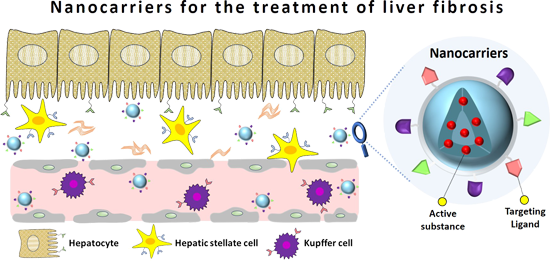
- antioxidant, antibacterial, and anti-inflammation properties [63]. The combined administration of SeNPs and vitamin E resulted in an in vivo reduction of hepatic enzyme activity induced by acrylamide while also improving the lipid profile and histological hepatic tissues. In addition, zinc oxide NPs displayed


Unveiling the potential of alginate-based nanomaterials in sensing technology and smart delivery applications
Beilstein J. Nanotechnol. 2024, 15, 1077–1104, doi:10.3762/bjnano.15.88
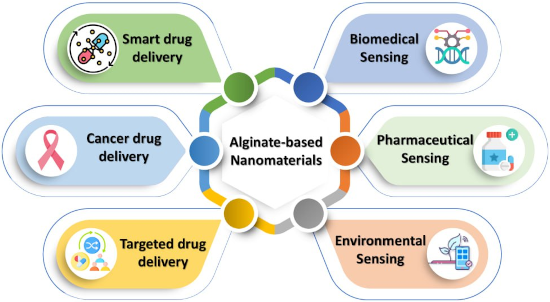
- several excellent properties that can be crucial in drug delivery, such as low cost, antioxidant and antibacterial activity, non-toxicity, biodegradability, and biocompatibility. Biopolymeric nanoparticles (NPs) can be used in DDSs, and they can protect the drugs from the adverse conditions of the
- gel structure. As a result, the viscosity and other mechanical qualities of alginate can be enhanced, allowing for the formation of a hydrogel. The attractive properties of alginate include low cost, abundance, biocompatibility, biodegradability, antibacterial activity, non-toxicity, and the ease to


Interface properties of nanostructured carbon-coated biological implants: an overview
Beilstein J. Nanotechnol. 2024, 15, 1041–1053, doi:10.3762/bjnano.15.85
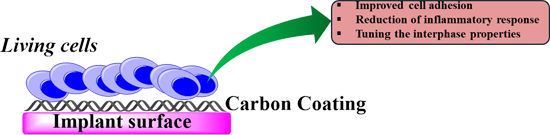
- [110][111]. Romo-Rico et al. [112] used PVD to coat a medical-grade cobalt–chromium alloy with high-grade graphene. The authors reported an appreciable antibacterial activity against S. aureus and P. aeruginosa; also, adhesion was prevented. This study proved that the balance between surface polarity
- adhesion of sulfate-reducing bacteria. Furthermore, graphene coatings can also exhibit antibacterial activity through electron transfer phenomena as reported by Yang et al. [114] for graphene coatings on titania. The authors reported that the increased electrical conductivity was due to the unpaired
- bactericidal effects. The authors also proved the cytocompatibility of the bactericidal coatings. GO showed similar results on titanium surfaces as reported by Yang et al. [115], reporting antibacterial activity of over 99% against both E. coli or S. aureus when a small doping with copper was applied. The



Electrospun polysuccinimide scaffolds containing different salts as potential wound dressing material
Beilstein J. Nanotechnol. 2024, 15, 781–796, doi:10.3762/bjnano.15.65
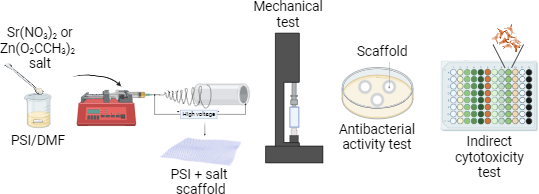
- polymeric scaffold containing polysuccinimide (PSI) and antibacterial salts. Antibacterial agents for therapeutical purposes mostly contain silver ions which are associated with high environmental impact and, in some cases, may cause undesired immune reactions. In our work, we prepared nanofibrous systems
- containing antibacterial and tissue-regenerating salts of zinc acetate or strontium nitrate in different concentrations, whose structures may be suitable for developing biomedical wound dressing systems in the future. Several experiments have been conducted to optimize the physicochemical, mechanical, and
- 8 h; however, only 50% of the zinc acetate was dissolved. In addition, antibacterial activity tests were performed with four different bacterial strains relevant to skin surface injuries, leading to the appearance of inhibition zones around the scaffold discs in most cases. We also investigated the

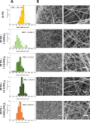


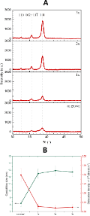
Effect of repeating hydrothermal growth processes and rapid thermal annealing on CuO thin film properties
Beilstein J. Nanotechnol. 2024, 15, 743–754, doi:10.3762/bjnano.15.62
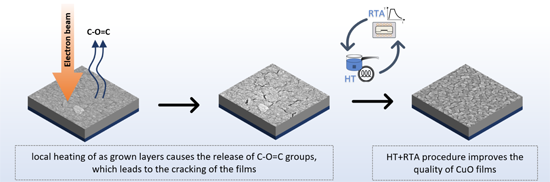
- -cleaning [1], anti-corrosion [2], and antibacterial [3] coatings. Like other CuO nanostructures, thin films also show potential for applications in photovoltaic cells [4][5], lithium-ion batteries [6], supercapacitors [7], gas sensors [8], and biosensors [9]. Furthermore, the literature reports their




On the additive artificial intelligence-based discovery of nanoparticle neurodegenerative disease drug delivery systems
Beilstein J. Nanotechnol. 2024, 15, 535–555, doi:10.3762/bjnano.15.47
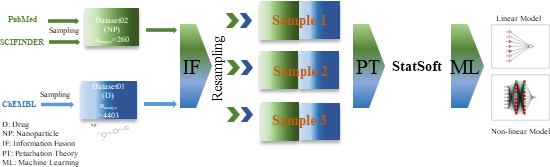
- interact with targets within the CNS interactome [58]. Speck-Planche et al. compiled manually a database of NPs from the literature. They constructed a QSAR model to investigate multiple antibacterial profiles of NPs under diverse experimental conditions. Furthermore, Ortega-Tenezaca et al. enriched the NP
- dataset and developed a PTML model for the discovery of antibacterial NPs [59]. Diéguez et al. expanded the NP database and developed a PTML model in order to design antibacterial drug and NP systems [10]. In this study, we utilized the IFPTML model to investigate N2D3Ss, encompassing assays of ADs and
- take into consideration both components (NDD and NPs) of the N2D3Ss. In our group, Dieguéz-Santana et al. for the first time applied successfully the IFPTML technique to study the combination of multiple antibacterial drugs and preclinical assays on the cytotoxicity of NPs [10]. In this paper, we used




New application of bimetallic Ag/Pt nanoplates in a colorimetric biosensor for specific detection of E. coli in water
Beilstein J. Nanotechnol. 2024, 15, 95–103, doi:10.3762/bjnano.15.9
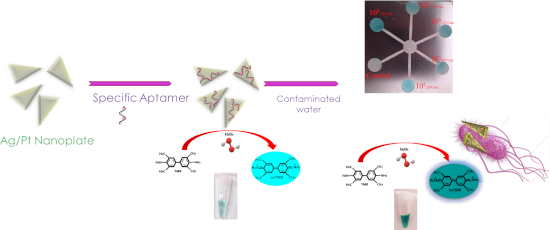
- nanoparticles (i.e., silver nanoplates, Ag NPLs) covered with a layer of Pt atoms to improve the peroxide activity of NPLs, and use them as colorimetric biosensor materials. Metallic NPLs were employed in a variety of applications, including antibacterial activity [17][18][19], hazardous dye removal [20


Berberine-loaded polylactic acid nanofiber scaffold as a drug delivery system: The relationship between chemical characteristics, drug-release behavior, and antibacterial efficiency
Beilstein J. Nanotechnol. 2024, 15, 71–82, doi:10.3762/bjnano.15.7
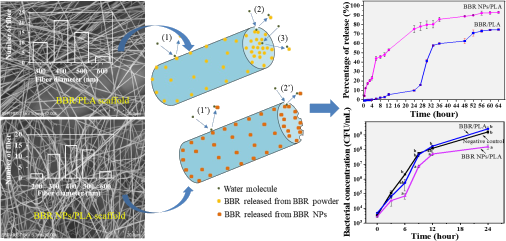
- release from the BBR/PLA and BBR NPs/PLA nanofiber scaffolds was investigated in relation to their chemical characteristics, BBR dispersion into nanofibers, and wettability. The BBR release profiles strongly influenced the antibacterial efficiency of the scaffolds over time. When the BBR was loaded, the
- , the BBR NPs/PLA nanofiber scaffold had more wettability and higher concentration of BBR NPs dispersed on the surface of PLA nanofibers. This led to a sustained release of 75 wt % of the loaded BBR during the first 24 h, and consequently boosted the antibacterial effectiveness. Moreover, the
- systems, and tissue engineering, according to the requirement of BBR concentration for the desired therapeutic effects. Keywords: antibacterial activity; berberine; drug-release system; electrospun nanofiber; polylactic acid; Introduction Medicinal plants have various biologically active compounds, such


Fluorescent bioinspired albumin/polydopamine nanoparticles and their interactions with Escherichia coli cells
Beilstein J. Nanotechnol. 2023, 14, 1208–1224, doi:10.3762/bjnano.14.100
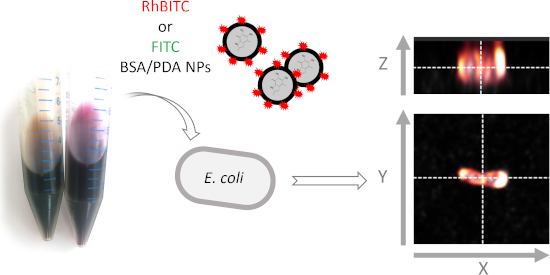
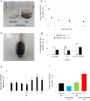
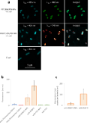
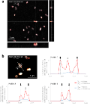
- labelled BSA/PDA NPs to track bacteria and carry drugs in the core of bacterial cells. Keywords: accumulation; albumin; antibacterial; Escherichia coli; fluorescence; nanoparticles; penetration; polydopamine; Introduction Organic nanoparticles (ONPs) are used to target and deliver drugs to tissue and
- of antimicrobial resistance of bacteria [5], this appears as a promising route to deliver antimicrobials while reducing the drug doses and subsequent harmful side effects in antibacterial applications. To this end, different types of ONPs have been used, such as liposomes [6] and nanoparticles (NPs
- antibacterial activity is high because of their small size and because any antibacterial natural or synthetic peptide containing KE diads may be used to create such PDA NPs. Fluorescent PDA NPs made with a KE diad-containing protein or peptide have never been reported so far. They may be obtained by labelling



Silver nanoparticles loaded on lactose/alginate: in situ synthesis, catalytic degradation, and pH-dependent antibacterial activity
Beilstein J. Nanotechnol. 2023, 14, 781–792, doi:10.3762/bjnano.14.64
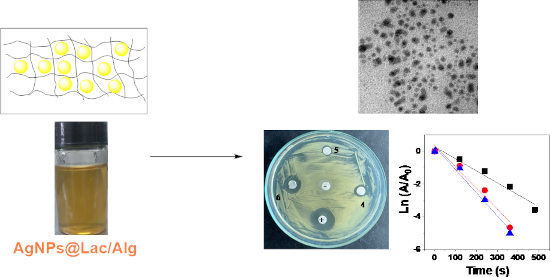
- catalytic performance in degrading the pollutants methyl orange and rhodamine B. The antibacterial activity of the nanocomposite is pH-dependent, related to the alterations in surface properties of the nanocomposite at different pH values. At pH 6, the nanocomposite demonstrated the highest antibacterial
- antibacterial agents. One of the advantages of AgNPs over bulk metal or salts is their ability to controllably release silver as ions or particles, resulting in prolonged protection against bacteria [20]. While the specific mechanism of their antibacterial properties is not fully understood, mechanisms such as
- release of silver ions or electrostatic interaction between AgNPs and microbial cells, have been proposed [21][22]. The AgNPs might release silver ions capable of binding to nucleic acids, thereby, exhibiting antibacterial activity [23][24]. Consequently, any silver-containing composite material with


Nanoarchitectonics to entrap living cells in silica-based systems: encapsulations with yolk–shell and sepiolite nanomaterials
Beilstein J. Nanotechnol. 2023, 14, 522–534, doi:10.3762/bjnano.14.43
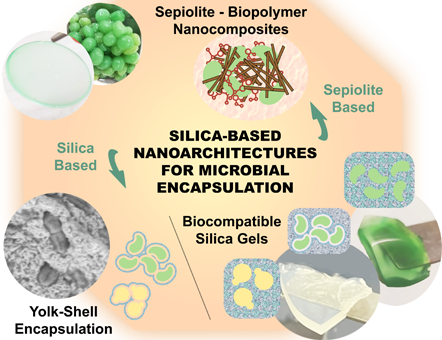
- demonstrated great biocompatibility, allowing the cells to survive over long periods of time [38]. However, in the present study using chitosan-based biohybrids, we have observed that the cells did not stay alive for long. The current results point out that chitosan may exhibit antibacterial activity


Plasmonic nanotechnology for photothermal applications – an evaluation
Beilstein J. Nanotechnol. 2023, 14, 380–419, doi:10.3762/bjnano.14.33
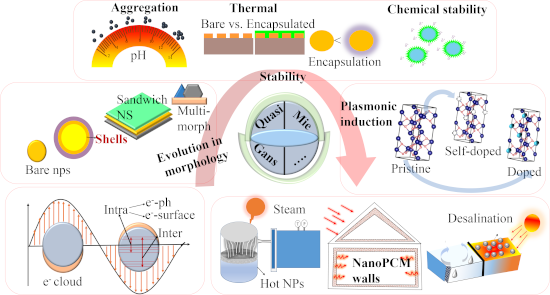
- resonances in the UV–vis–IR part of the electromagnetic spectrum are especially researched on for PT applications [13], with excellent reviews on materials for mid-IR applications [14], cancer treatment [15], antibacterial research [16], solar-driven vapour evaporation [16], solar collectors [11][17][18




Quercetin- and caffeic acid-functionalized chitosan-capped colloidal silver nanoparticles: one-pot synthesis, characterization, and anticancer and antibacterial activities
Beilstein J. Nanotechnol. 2023, 14, 362–376, doi:10.3762/bjnano.14.31
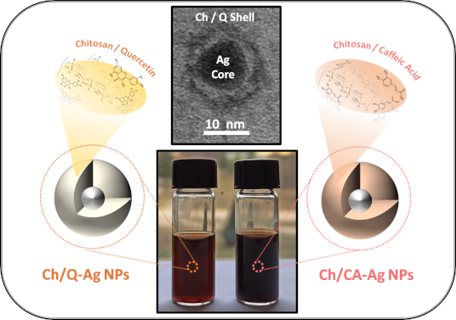
- characterization of quercetin- and caffeic acid-functionalized chitosan-capped colloidal silver nanoparticles (Ch/Q- and Ch/CA-Ag NPs), and their antibacterial and anticancer activities. The formation of Ch/Q- and Ch/CA-Ag NPs has been confirmed by ultraviolet–visible (UV–vis) spectroscopy, Fourier-transform
- glioblastoma) and ARPE-19 (human retinal pigment epithelium) cells. Both NPs showed anticancer activity, but Ch/Q-Ag NPs seemed to be more effective on cancer cell lines (U-118 MG) in comparison to healthy ones (ARPE-19). Furthermore, the antibacterial activity of Ch/Q- and Ch/CA-Ag NPs against Gram-negative
- (P. aeruginosa and E. coli) and Gram-positive (S. aureus and S. epidermidis) bacteria was determined, and dose-dependent antibacterial effects were found. Keywords: Ag NPs; anticancer and antibacterial effects; caffeic acid; chitosan; one-pot synthesis; quercetin; U-118 MG and ARPE-19 cells


Structural, optical, and bioimaging characterization of carbon quantum dots solvothermally synthesized from o-phenylenediamine
Beilstein J. Nanotechnol. 2023, 14, 165–174, doi:10.3762/bjnano.14.17
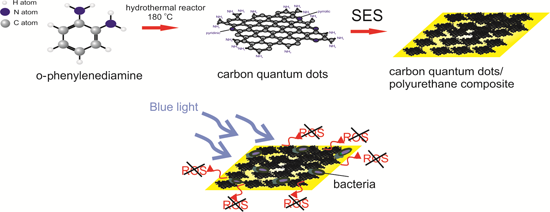
- , 11000 Belgrade, Serbia 10.3762/bjnano.14.17 Abstract Carbon quantum dots as a novel type of carbon nanomaterials have attracted the attention of many researchers because of their unique optical, antibacterial, and anticancer properties as well as their biocompatibility. In this study, for the first
- characterization methods (AFM, TEM, EDS, FTIR, photoluminescence, and EPR) indicate the significant influence of the precursor on structural, chemical, and optical properties. Antibacterial and cytotoxicity tests showed that these dots did not have any antibacterial potential, because of the low extent of reactive
- oxygen species production, and showed low dark cytotoxicity. By investigating the cellular uptake, it was established that these dots penetrated the HeLa cells and could be used as probes for bioimaging. Keywords: antibacterial; bioimaging; carbon quantum dots; precursor; reactive oxygen species


Batch preparation of nanofibers containing nanoparticles by an electrospinning device with multiple air inlets
Beilstein J. Nanotechnol. 2023, 14, 141–150, doi:10.3762/bjnano.14.15
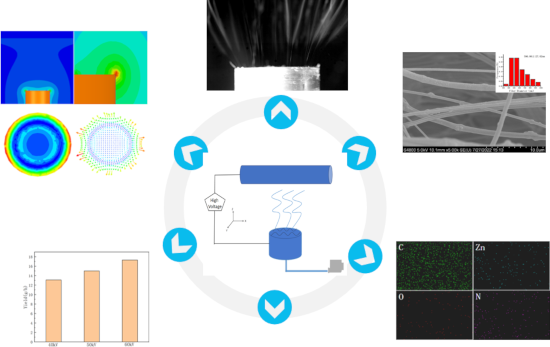
- promising materials, such as conductive fibers [6], phase change fibers [7], antistatic fibers [8], and antibacterial fibers [9]. Therefore, the batch preparation of high-performance functional nanofibers by electrospinning has become a current research hotpot [10]. The properties of spinning solutions used
- easily sink down, resulting in an uneven distribution of nanoparticles in the obtained fibers [17]. Due to their stable physical and chemical properties, good biocompatibility, excellent photoelectric properties, non-toxicity, strong antibacterial activity and low price, ZnO nanoparticles can be used in


Antimicrobial and mechanical properties of functionalized textile by nanoarchitectured photoinduced Ag@polymer coating
Beilstein J. Nanotechnol. 2023, 14, 95–109, doi:10.3762/bjnano.14.11
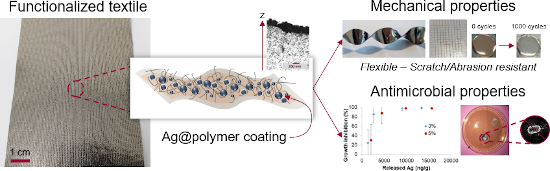
- , metal-based nanoparticles (MNPs) are of particular interest for such applications as they exhibit impressive antibacterial and antifungal properties. Unlike antibiotics for example, that target cell wall synthesis, translational machinery and DNA replication inside bacteria cells [7], MNPs simply attack
- in Figure 11a for E. coli and remarkably a total inhibition of growth was reached within 24 hours. The silver concentration has no significant impact on antibacterial activity, which indicates that a mere 3 wt % Ag-loaded sample is sufficient to obtain complete elimination of bacteria. The released