Search results
Search for "biomedical" in Full Text gives 390 result(s) in Beilstein Journal of Nanotechnology. Showing first 200.
Prospects of nanotechnology and natural products for cancer and immunotherapy
Beilstein J. Nanotechnol. 2025, 16, 1644–1667, doi:10.3762/bjnano.16.116
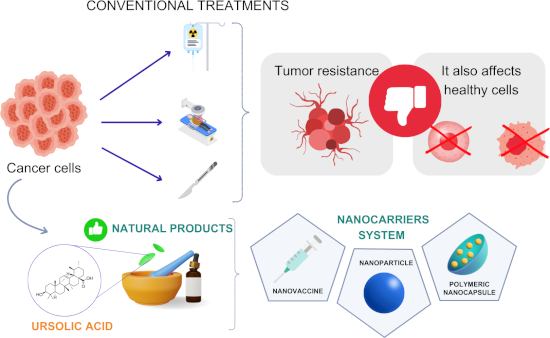
- -EGCG, as well as manganin, FeCl3, and the PD-L1 antibody. Hyaluronic acid is a non-sulfated glycosaminoglycan component of the extracellular matrix and has diverse biomedical applications [115]. It can be obtained through the fermentation of bacteria and yeasts, as well as animal sources, using


Nanotechnology-based approaches for the removal of microplastics from wastewater: a comprehensive review
Beilstein J. Nanotechnol. 2025, 16, 1607–1632, doi:10.3762/bjnano.16.114
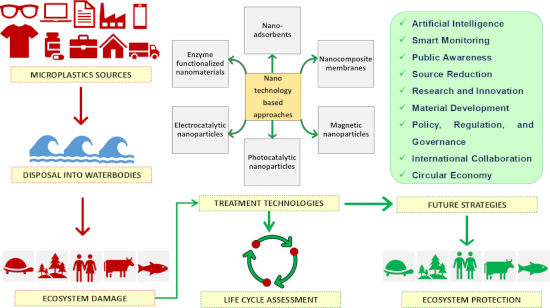
- techniques for the removal of MPs. Nanoparticle-based removal Advancements in characterization and synthesis techniques have enabled the manipulation of materials at the nanoscale, leading to innovations across various domains, including energy, electronics, and biomedical applications. Figure 5 depicts


Transient electronics for sustainability: Emerging technologies and future directions
Beilstein J. Nanotechnol. 2025, 16, 1545–1556, doi:10.3762/bjnano.16.109

- , making them ideal candidates for next-generation biomedical implants that are designed to function for a limited period, such as for temporary rehabilitation or short-term therapeutic purposes following surgery [6][7][8][10][14][21][22][23][24][25][26][27][28][29][30]. Clinically relevant implementations
- constituent (Figure 1e) [27]. Crucially, the utility of transient systems is not confined to the biomedical domain. Their degradation mechanisms are equally applicable in broader environmental settings where biocompatibility constraints are relaxed. In contexts such as soil, compost, freshwater, or marine
- development of advanced sensing platforms capable of detecting and responding to complex biological signals, alongside the integration of AI-based algorithms for real-time lifetime prediction and adaptive control. Beyond biomedical applications, such intelligent transient systems hold significant promise in


Cross-reactivities in conjugation reactions involving iron oxide nanoparticles
Beilstein J. Nanotechnol. 2025, 16, 1504–1521, doi:10.3762/bjnano.16.106
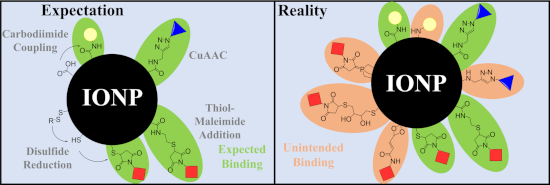
- (IONPs) with functional organic molecules is a major area of research for biomedical applications. Conjugation reactions, such as carbodiimide coupling and the highly selective class of reactions known as “click chemistry”, have been instrumental in tailoring the ligand layers of IONPs to produce
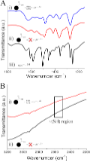
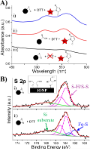
- functional biomedical nanomaterials. However, few studies report the controls performed to determine if the loading of molecules onto IONPs is due to the proposed coupling reaction(s) employed, or some other unknown interaction with the IONP surface. Herein, we use 3,4-dihydroxybenzoic acid-functionalized
- erroneous conclusions about the efficacy of conjugation reactions, which can have detrimental impacts on the functionality and safety of IONPs in biomedical applications. Keywords: click chemistry; copper-catalyzed azide–alkyne cycloaddition; disulfide reduction; iron oxide nanoparticles; thiol–maleimide







Nanomaterials for biomedical applications
Beilstein J. Nanotechnol. 2025, 16, 1499–1503, doi:10.3762/bjnano.16.105
- , Istanbul, Turkey 10.3762/bjnano.16.105 Keywords: biomedical applications; drug delivery; nanocarriers; nanomaterials; nanomedicine; nanoparticles; polymeric nanoparticles; tissue regeneration; Medicine has rapidly advanced over the last few decades, and nanotechnology has played a significant role in
- conditions such as cancer, neurological disorders, and infections. Quantum dots are a widely studied type of nanomaterial used in biomedical diagnostics. When these semiconductor particles are exposed to light, they strongly and stably emit fluorescence. Unlike regular dyes, quantum dots do not quickly fade
- , nanomaterials are crucial for developing the latest generation of medical technologies that are smart and responsive to the body natural system [40]. In conclusion, the biomedical field now relies on nanotechnology, which leads to helpful, practical answers when traditional approaches do not work. It turns out
Laser processing in liquids: insights into nanocolloid generation and thin film integration for energy, photonic, and sensing applications
Beilstein J. Nanotechnol. 2025, 16, 1428–1498, doi:10.3762/bjnano.16.104




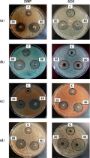


Parylene-coated platinum nanowire electrodes for biomolecular sensing applications
Beilstein J. Nanotechnol. 2025, 16, 1392–1400, doi:10.3762/bjnano.16.101
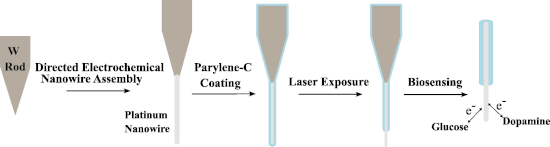
- [22]. Due to these attributes, parylene-C, along with other variants of parylene, has been extensively utilized in the protection of electronic devices and surface modification of biomedical devices [23]. In this study, platinum was chosen as the DENA growth material due to its exceptional


Enhancing the therapeutical potential of metalloantibiotics using nano-based delivery systems
Beilstein J. Nanotechnol. 2025, 16, 1350–1366, doi:10.3762/bjnano.16.98
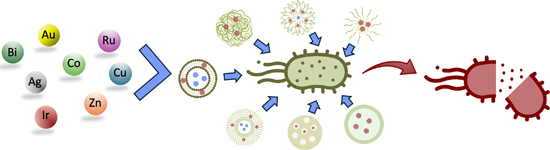
- against E. coli, S. aureus, and L. monocytogenes. In addition, improved biofilm disruption and reduced cytotoxicity were also observed. Bismuth complexes Bismuth and its derivatives have been widely employed in biomedical applications [130]. Among their most prominent applications is the treatment of
- significant intrinsic cytotoxicity of Ir(III) complexes remains a limiting factor for biomedical applications; in this regard, the development of nanocarriers that can enhance the biocompatibility of these complexes is currently of much interest [139][140]. For example, the encapsulation of the Ir-based


Ferroptosis induction by engineered liposomes for enhanced tumor therapy
Beilstein J. Nanotechnol. 2025, 16, 1325–1349, doi:10.3762/bjnano.16.97
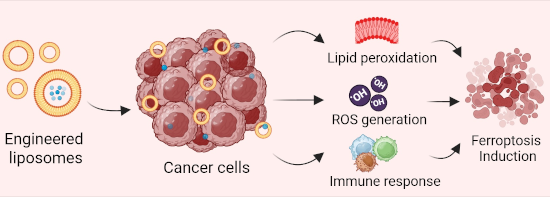
- Biomedical Technology, The Personalized Medicine Research Institute (PRECISION), University Medical Center Groningen, University of Groningen, 9713 AV Groningen, The Netherlands Department of Immunology, Faculty of Medicine, Mashhad University of Medical Sciences, Mashhad, Iran 10.3762/bjnano.16.97 Abstract


Better together: biomimetic nanomedicines for high performance tumor therapy
Beilstein J. Nanotechnol. 2025, 16, 1246–1276, doi:10.3762/bjnano.16.92
- University, Islamabad 45320, Pakistan Department of Biomedical Engineering, Erciyes University, 38039, Kayseri, Turkey Nanotechnology Research and Application Center (ERNAM), Erciyes University, Kayseri 38039, Turkey Clinical Engineering Research and Implementation Center (ERKAM), Erciyes University, Kayseri
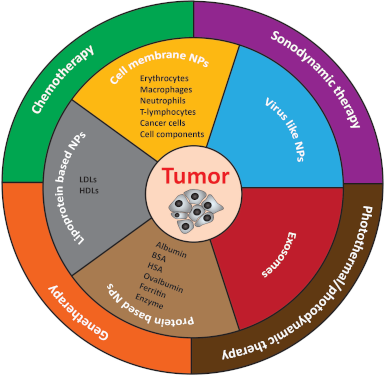
- inspired coatings derived from cell membranes with nanoparticle cores, these carriers become highly versatile vessels for encapsulating a wide array of therapeutic agents. As a result, they are being extensively harnessed for the precise delivery of drugs and genes, underpinning numerous biomedical
- physicochemical and biological properties, and incredible potential of being therapeutic agent carriers for biomedical applications [10][11]. They are capable to deliver a range of therapeutics including genes, vaccines, biological macromolecules, hydrophobic/hydrophilic drugs, and proteins to certain organs such






Towards a quantitative theory for transmission X-ray microscopy
Beilstein J. Nanotechnol. 2025, 16, 1113–1128, doi:10.3762/bjnano.16.82
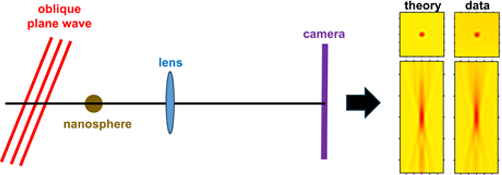
- ; transmission X-ray microscope; Introduction Transmission X-ray microscopes (TXMs) operating in the soft and tender X-ray energy range are valuable tools for structural analysis in both biomedical and materials science research [1][2][3][4]. These microscopes yield images at a lateral resolution approaching 25
- nm, from which quantitative data are often extracted. For example, in materials science applications, nanoscale spectromicroscopy [5][6][7][8] is used to examine a sample around its absorption edges, which provides insights into its electronic structure. In biomedical applications [9][10][11][12
- model. This will then enable more quantitatively accurate measurements in both spectromicroscopy and biomedical imaging. Experimental The measured data [35] were obtained by allowing both 60 nm gold nanospheres and 270 nm gold shells from a colloidal gold suspension to dry onto holey carbon-coated gold



Fabrication of metal complex phthalocyanine and porphyrin nanoparticle aqueous colloids by pulsed laser fragmentation in liquid and their potential application to a photosensitizer for photodynamic therapy
Beilstein J. Nanotechnol. 2025, 16, 1088–1096, doi:10.3762/bjnano.16.80
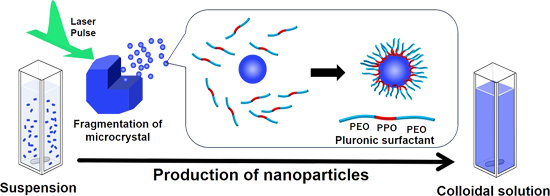
- biological optical window (wavelengths from 650 to 1000 nm) and have recently attracted attention for applications in biomedical research such as photoacoustic imaging of tissues and PDT of tumors [2][3]. Porphyrins and Pcs are hydrophobic hydrocarbons that are insoluble in water. Hence, polymer composite
- polypropylene oxide (PPO) arranged in a triblock structure. Here, the stability in phosphate-buffered saline (PBS, pH 7.2), which is used widely in pharmacology and biomedical experiments, was examined. We evaluated the phototoxicity of the fabricated nanoparticle colloids in vitro against PC12 cells (a cell
- useful as a potential photosensitizer for PDT treatments in biomedical applications. Experimental Materials Cobalt(II) phthalocyanine (CoPc, 97%), nickel(II) phthalocyanine (NiPc, 85%), platinum octaethylporphyrin (PtOEP, 98%), and Pluronic® F-127 were purchased from Sigma-Aldrich. Chloroaluminum


Piezoelectricity of hexagonal boron nitrides improves bone tissue generation as tested on osteoblasts
Beilstein J. Nanotechnol. 2025, 16, 1068–1081, doi:10.3762/bjnano.16.78
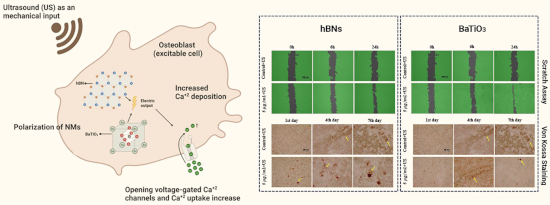
- stimulate electrically excitable cells without requiring an external power source, making them highly attractive for biomedical applications such as treating cardiac arrhythmias and promoting bone regeneration [17][18]. Mechanical stimulation, notably ultrasound (US), can induce a piezoelectric response in
- , making them particularly attractive for biomedical applications. [21][22]. Barium titanate (BaTiO3) is one of the most well-known piezoelectric nanomaterials (NMs), characterized by a cubic structure with four polymorphs which change depending on the temperature and a high dielectric constant. All its
- properties due to its noncentrosymmetric crystal structure, making it a promising material for biomedical applications such as bone regeneration, where it can convert mechanical stimuli into bioelectrical signals. Additionally, the biocompatibility and ability of hBN to be integrated into composite scaffolds


Soft materials nanoarchitectonics: liquid crystals, polymers, gels, biomaterials, and others
Beilstein J. Nanotechnol. 2025, 16, 1025–1067, doi:10.3762/bjnano.16.77
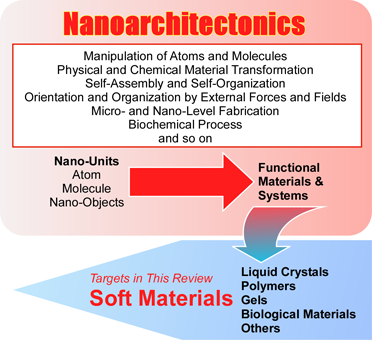
- as biomedical applications [15][16][17][18][19][20], but also extends to functional material systems that address issues such as energy [21][22][23][24][25] and environment [26][27][28][29][30]. The creation of such soft functional materials has been fostered alongside the advancement of science
- release of protein biopharmaceuticals in response to antibodies. It is anticipated that these hydrogels will prove useful in a number of biomedical applications, including the three-dimensional controlled release of drugs and proteins, the construction of hierarchical organoids, and the development of






Multifunctional properties of bio-poly(butylene succinate) reinforced with multiwalled carbon nanotubes
Beilstein J. Nanotechnol. 2025, 16, 1014–1024, doi:10.3762/bjnano.16.76
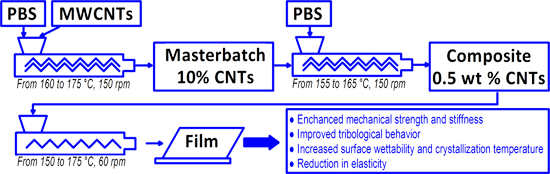
- of MWCNTs to tailor the properties of BioPBS for specific applications, such as in the packaging, automotive, and biomedical industries, where both biodegradability and enhanced material performance are desirable. Keywords: melt compounding; multiwalled carbon nanotubes; poly(butylene succinate



A calix[4]arene-based supramolecular nanoassembly targeting cancer cells and triggering the release of nitric oxide with green light
Beilstein J. Nanotechnol. 2025, 16, 1003–1013, doi:10.3762/bjnano.16.75
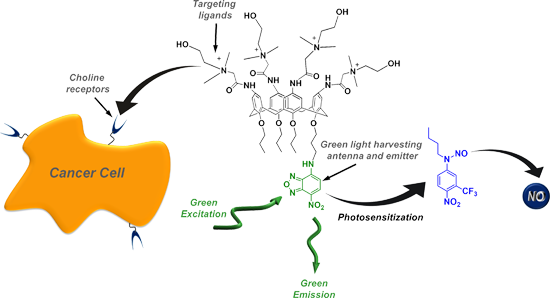
- , C.N.R., I-95126 Catania, Italy Institute for Biomedical Research and Innovation, National Research Council (CNR), I-90146 Palermo, Italy 10.3762/bjnano.16.75 Abstract We have designed and synthesized a novel calix[4]arene derivative bearing four choline appendages as recognition targeting ligands and
- immunogenicity and paving the way for a variety of applications in the biomedical field [1][6][7][8][9]. Due to their amphiphilic character, calix[n]arene derivatives can self-assemble in water medium, leading to nanoaggregates exhibiting much better hosting performances than the single monomers [10]. Aggregates
- poorly active unconventional photoactivatable drug molecules [12][13][14] as well as efficient cages to inhibit undesired photodegradation of photosensitive conventional drugs [15]. Nitric oxide (NO) is one of the most extensively studied molecules in the fascinating realm of biomedical sciences. This


Structural and magnetic properties of microwave-synthesized reduced graphene oxide/VO2/Fe2O3 nanocomposite
Beilstein J. Nanotechnol. 2025, 16, 921–932, doi:10.3762/bjnano.16.70
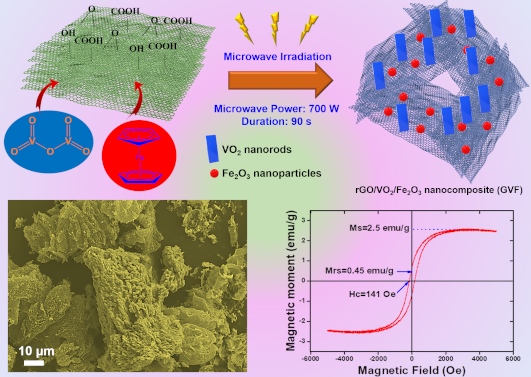
- Fe2O3 nanoparticles and VO2 nanorods on the 2D rGO surface. Notably, the ternary composite displayed good magnetic properties for its potential biomedical applications. Overall, this work explores an efficient and cost-effective synthetic approach for developing graphene-based magnetic nanocomposites
- , including their derivatives, are broadly explored for miscellaneous applications, such as energy storage/conversion, EMI shielding, biosensing, optoelectronics, robotics, flexible electronics, paint industries, textile industries, biomedical devices [5][6][7]. To be specific, the innovation of graphene
- , the approach was also able to convert V2O5 to form VO2 and synthesize Fe2O3 from ferrocene. The structure and properties of the NC were examined through various characterization techniques. Lastly, the magnetic properties of Fe-containing ternary NCs were also evaluated for their possible biomedical



Synthesis and magnetic transitions of rare-earth-free Fe–Mn–Ni–Si-based compositionally complex alloys at bulk and nanoscale
Beilstein J. Nanotechnol. 2025, 16, 823–836, doi:10.3762/bjnano.16.62
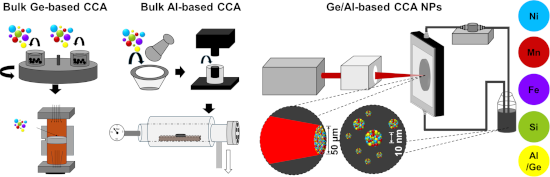
- ], wear resistant coatings [29], environmental [30], biomedical [31], magnetic [32] and electronic [33] technologies. In magnetic NPs, a key feature is the superparamagnetic blocked-to-superparamagnetic fluctuating transition, which occurs at a characteristic blocking temperature (TB). Below TB, NPs


Supramolecular hydration structure of graphene-based hydrogels: density functional theory, green chemistry and interface application
Beilstein J. Nanotechnol. 2025, 16, 806–822, doi:10.3762/bjnano.16.61
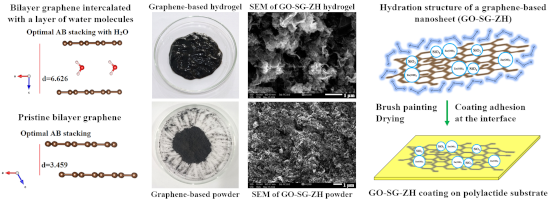
- Zn(OH)2 constituent). ZH nanoparticles and GO nanosheets in the GO-SG-ZH hydrogel are antibacterial and antibiofilm agents with low toxicity for food packaging and biomedical applications [56][57]. The main antibacterial mechanism of GO nanosheets is cell membrane damage caused by direct contact of
- biomedical applications thanks to its antibiofilm, safety, and biodegradability properties. Stability of graphene oxide–nanosilica–zinc hydroxide coatings on polylactide films in aqueous environments SG/PLA and GO-SG-ZH/PLA films were immersed in an environment simulating aqueous food for one month. The


Colloidal few layered graphene–tannic acid preserves the biocompatibility of periodontal ligament cells
Beilstein J. Nanotechnol. 2025, 16, 664–677, doi:10.3762/bjnano.16.51
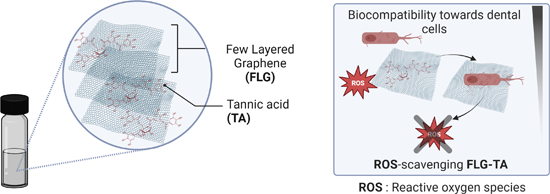
- satisfactory biocompatibility, FLG–TA potentially offers new insights as a novel biomaterial for dental applications. The addition of TA to the FLG surface enhances both physicochemical and biological properties. This advantageous combination expands the potential uses of the biocomposite across biomedical




Nanoscale capacitance spectroscopy based on multifrequency electrostatic force microscopy
Beilstein J. Nanotechnol. 2025, 16, 637–651, doi:10.3762/bjnano.16.49

- ; quantitative force spectroscopy; scanning capacitance force microscopy; Introduction Technological progress in fields including electronics, energy storage, photonics, and biomedical devices would not have been possible without the development of new materials. Progress in these areas requires a detailed




Polyurethane/silk fibroin-based electrospun membranes for wound healing and skin substitute applications
Beilstein J. Nanotechnol. 2025, 16, 591–612, doi:10.3762/bjnano.16.46
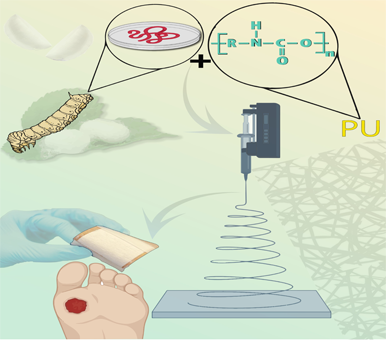
- 37610, Pakistan 10.3762/bjnano.16.46 Abstract The importance of electrospun membranes for biomedical applications has increased, especially when it comes to skin regeneration and wound healing. This review presents the production and applications of electrospun membranes based on polyurethane (PU) and
- silk fibroin (SF) and highlights their benefits as a skin substitute. This review also highlights the electrospinning technique used to prepare nanofibers for these biomedical applications. Silk, well-known for its excellent biocompatibility, biodegradability, structural properties, and low immunogenic
- response, is extensively investigated by addressing its molecular structure, composition, and medical uses. PU is a candidate for potential biomedical applications because of its strength, flexibility, biocompatibility, cell-adhesive properties, and high resistance to biodegradation. PU combined with silk



Nanomaterials in targeting amyloid-β oligomers: current advances and future directions for Alzheimer's disease diagnosis and therapy
Beilstein J. Nanotechnol. 2025, 16, 561–580, doi:10.3762/bjnano.16.44
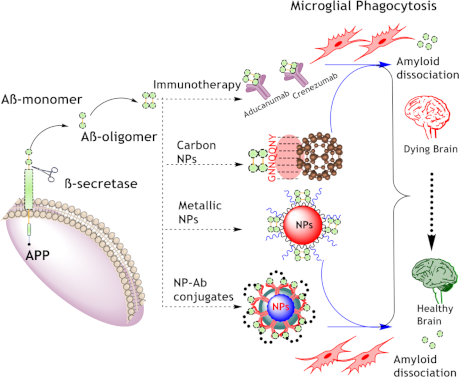
- physicochemical properties, diverse structural forms, and potential applications in combating NDs. The unique characteristics of CNMs, including their hydrophobic surfaces and variable dimensions, enable them to interact effectively with biomolecules, making them valuable tools in biomedical research and
- valuable candidates for various biomedical applications such as diagnosis, therapeutics, and drug delivery. The efficacy of these NPs is closely linked to their pharmacokinetic properties. The biodistribution, safety profile, and clearance mechanism of NPs plays a critical role in the clinical application


Functionalized gold nanoflowers on carbon screen-printed electrodes: an electrochemical platform for biosensing hemagglutinin protein of influenza A H1N1 virus
Beilstein J. Nanotechnol. 2025, 16, 540–550, doi:10.3762/bjnano.16.42
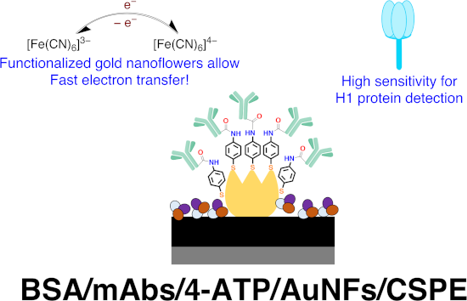
- Manouchehri Doulabi Gemma Mestres Masood Kamali-Moghaddam Division of Biomedical Engineering, Department of Materials Science and Engineering, Uppsala University, Uppsala, Sweden Department of Immunology, Genetics and Pathology, Science for Life Laboratory, Uppsala University, Uppsala, Sweden 10.3762/bjnano


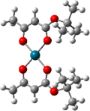
Electron beam-based direct writing of nanostructures using a palladium β-ketoesterate complex
Beilstein J. Nanotechnol. 2025, 16, 530–539, doi:10.3762/bjnano.16.41
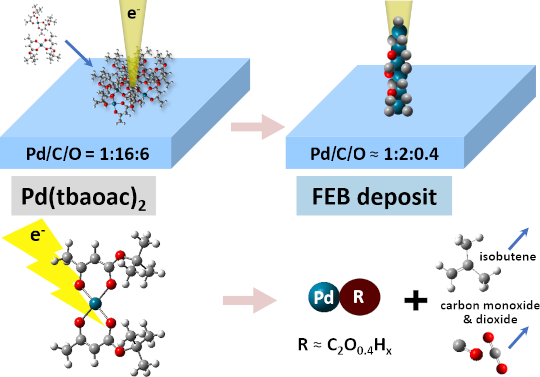
- applications [32][33][34], palladium is an important metal as it is the optimal material to make metallic contacts with CNTs [35]. Palladium nanoparticles are also being explored for biomedical applications and sensors [36]. Therefore, Pd nanoprinting via FEBID could emerge as a key technique for creating