


Search results
Search for "chemical vapor deposition (CVD)" in Full Text gives 117 result(s) in Beilstein Journal of Nanotechnology.
A review on the green and sustainable synthesis of silver nanoparticles and one-dimensional silver nanostructures
Beilstein J. Nanotechnol. 2021, 12, 102–136, doi:10.3762/bjnano.12.9
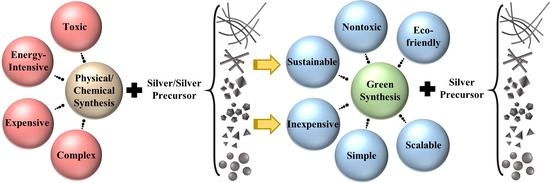
- deposition process. Chemical vapor deposition (CVD) and atomic layer deposition (ALD) are among other chemical methods for nanoparticle synthesis. CVD is a method that allows production of nanoparticles on a substrate [241]. The process consists of three steps. First, the addition of a volatile precursor in


Towards 3D self-assembled rolled multiwall carbon nanotube structures by spontaneous peel off
Beilstein J. Nanotechnol. 2020, 11, 1865–1872, doi:10.3762/bjnano.11.168
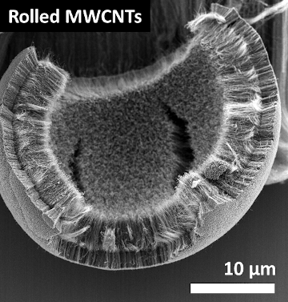
- change within CNTs and to optimize the formation of complex CNT structures, the possibility to couple aerosol-assisted chemical vapor deposition (AACVD) [20] and chemical vapor deposition (CVD) was explored [16]. For detailed synthesis and characterization protocols, including control experiments, please



Effect of localized helium ion irradiation on the performance of synthetic monolayer MoS2 field-effect transistors
Beilstein J. Nanotechnol. 2020, 11, 1329–1335, doi:10.3762/bjnano.11.117
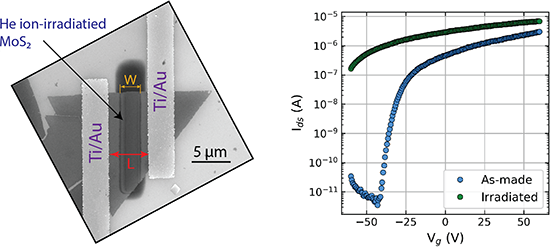
- demonstrated impressive on/off ratios (approx. 107) in field-effect transistors (FETs), while maintaining carrier mobilities that may be adequate for commercial applications [1][2]. At the same time, advances in chemical vapor deposition (CVD) techniques have allowed for the reliable millimeter-scale synthesis


Revealing the local crystallinity of single silicon core–shell nanowires using tip-enhanced Raman spectroscopy
Beilstein J. Nanotechnol. 2020, 11, 1147–1156, doi:10.3762/bjnano.11.99
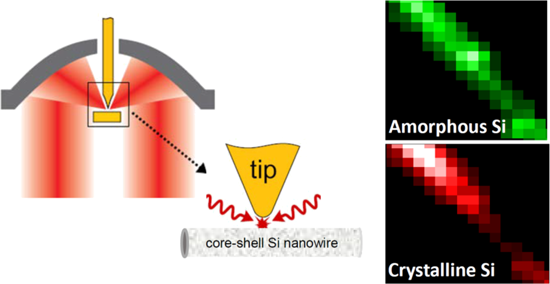
- to chemical vapor deposition (CVD), and enables direct nanowire growth in a bottom-up manner. The nanowire composition, in particular the doping concentration, can be controlled by an adequate adjustment of the synthesis gas mixture, e.g., by setting the SiH4/B2H6 ratio during the synthesis of boron


Band tail state related photoluminescence and photoresponse of ZnMgO solid solution nanostructured films
Beilstein J. Nanotechnol. 2020, 11, 899–910, doi:10.3762/bjnano.11.75
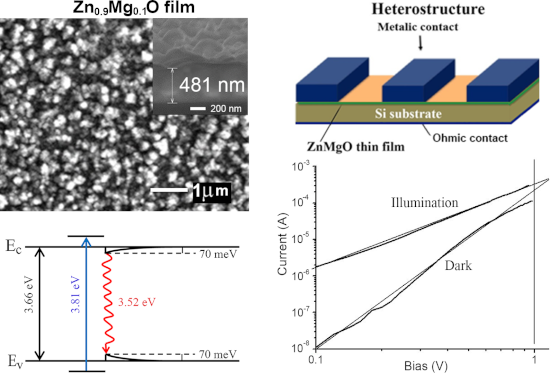
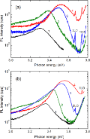
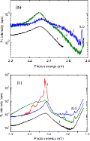
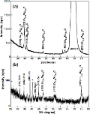
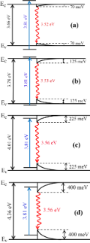
- radio-frequency plasma-assisted molecular beam epitaxy (RF-MBE) [2][7][10][11], DC [12][13] and RF [1][3][6] magnetron sputtering, pulsed laser deposition (PLD) [14][15], plasma-enhanced atomic layer deposition (PE-ALD) [16], chemical vapor deposition (CVD) [17], metal–organic chemical vapor deposition

Templating effect of single-layer graphene supported by an insulating substrate on the molecular orientation of lead phthalocyanine
Beilstein J. Nanotechnol. 2020, 11, 814–820, doi:10.3762/bjnano.11.66
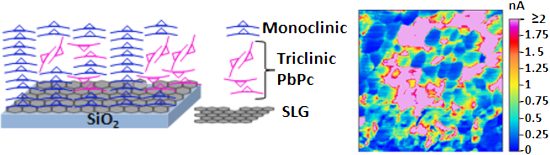
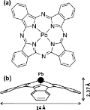
- ) substrate [24]. It will be interesting to explore the molecular orientation of nonplanar PbPc on single-layer graphene supported on a substrate. In this study, we have investigated the molecular orientation of a PbPc film deposited on chemical vapor deposition (CVD)-grown graphene transferred onto a SiO2/Si
- . Single-layer graphene was synthesized by chemical vapor deposition (CVD) on a copper substrate and transferred by a standard technique using poly(methyl methacrylate) (PMMA) onto a SiO2 (300 nm)/Si substrate as reported elsewhere [30]. This process is optimized with regard to minimal PMMA contamination


Light–matter interactions in two-dimensional layered WSe2 for gauging evolution of phonon dynamics
Beilstein J. Nanotechnol. 2020, 11, 782–797, doi:10.3762/bjnano.11.63
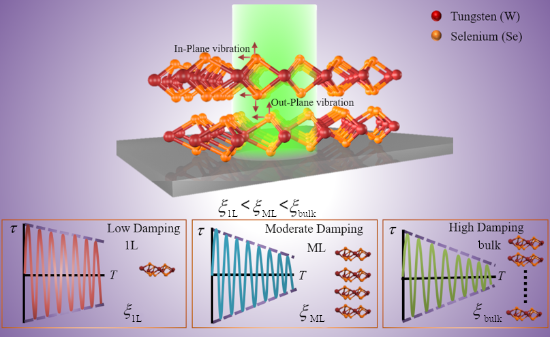
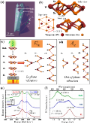
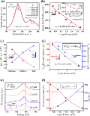
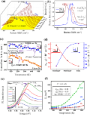
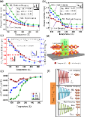
- work reported τ over a range T = 4.4–300 K in naturally abundant and isotopically pure WSe2 grown by the chemical vapor deposition (CVD) method [29]. In one of our recent works, exciton dynamics and phonon lifetimes in CVD-grown and mechanically exfoliated 1L WSe2 nanosheets were analyzed and τ
Hexagonal boron nitride: a review of the emerging material platform for single-photon sources and the spin–photon interface
Beilstein J. Nanotechnol. 2020, 11, 740–769, doi:10.3762/bjnano.11.61
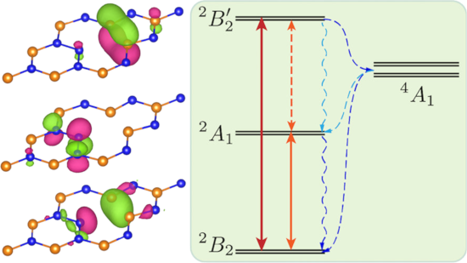
- complexes, it is shown they are low-energy formation defects in h-BN. This suggests that the assignment is presently controversial also considering the successive verification of SPEs as discussed in the following. In [45] h-BN exfoliated flakes, monolayer chemical vapor deposition (CVD) and in-house h-BN




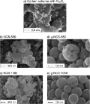
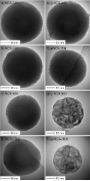
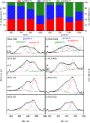
Synthesis of amorphous and graphitized porous nitrogen-doped carbon spheres as oxygen reduction reaction catalysts
Beilstein J. Nanotechnol. 2020, 11, 1–15, doi:10.3762/bjnano.11.1
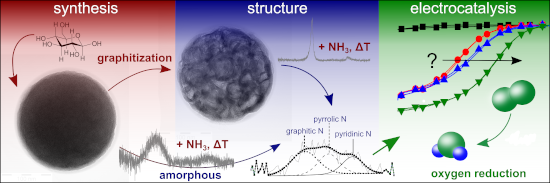
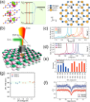
- are chemical vapor deposition (CVD) and arc discharge methods for N-doped graphene, graphite, and carbon nanotubes [9]. Most commonly, the post-synthetic approach is carried out by thermal treatment of carbon in ammonia atmosphere, typically leading to surface N-doping. A variety of N bonding




Hierarchically structured 3D carbon nanotube electrodes for electrocatalytic applications
Beilstein J. Nanotechnol. 2019, 10, 1475–1487, doi:10.3762/bjnano.10.146
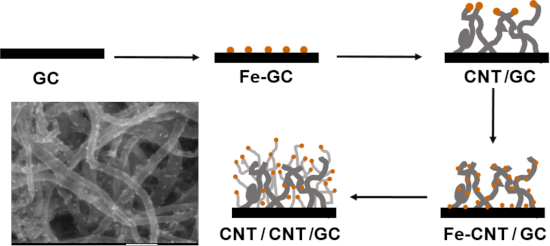
- a glassy carbon (GC) substrate in a sequence of electrodeposition and chemical vapor deposition (CVD) steps as follows: Primary CNTs are grown over electrodeposited iron by CVD followed by a second Fe deposition and finally the CVD growth of secondary CNTs. The prepared 3-dimensional CNT structures
- the preparation of hierarchically structured CNTs on glassy carbon (GC) based on a sequential CNT growth over electrodeposited Fe nanoparticles via chemical vapor deposition (CVD) with cyclohexane as the carbon precursor. Pt electrodeposition onto these hierarchical structures leads to active





Direct observation of the CVD growth of monolayer MoS2 using in situ optical spectroscopy
Beilstein J. Nanotechnol. 2019, 10, 557–564, doi:10.3762/bjnano.10.57
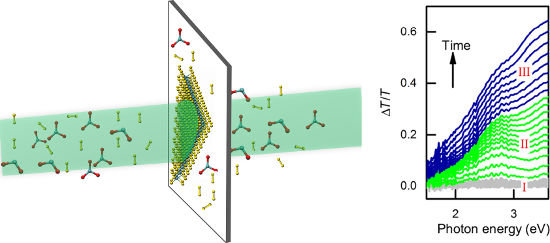
- dichalcogenide (2D TMDC) materials. However, it is very challenging to carry out such studies during chemical vapor deposition (CVD). Here, we report the first, real time, in situ study of the CVD growth of 2D TMDCs. More specifically, the CVD growth of a molybdenum disulfide (MoS2) monolayer on sapphire
- the temperature distribution in the CVD reactor has been revealed. Our results demonstrate the great potential of real time, in situ optical spectroscopy to assist the precisely controlled growth of 2D semiconductor materials. Keywords: chemical vapor deposition (CVD); in situ differential optical
- synthesizing large-area 2D TMDCs have been reported, including mechanical exfoliation, sulphurization of metal thin films, mass transport, molecular beam epitaxy (MBE) and chemical vapor deposition (CVD) [6][7]. In particular, CVD is considered to be an attractive and very promising approach for large-scale


Nanocomposite–parylene C thin films with high dielectric constant and low losses for future organic electronic devices
Beilstein J. Nanotechnol. 2019, 10, 428–441, doi:10.3762/bjnano.10.42
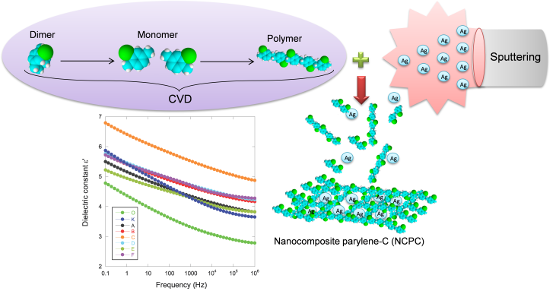
- Nazionale di Fisica Nucleare, Laboratori Nazionali di Legnaro, Viale dell’Università 2, 35020 Legnaro (PD), Italy 10.3762/bjnano.10.42 Abstract Nanocomposite–parylene C (NCPC) thin films were deposited with a new technique based on the combination of chemical vapor deposition (CVD) for parylene C
- voltages of TFTs [2]. Unfortunately these approaches can not be used when parylene C (PPXC) is chosen as gate dielectric as the only proven process for producing high-quality PPXC layers is chemical vapor deposition (CVD). Parylene C has emerged as a particularly interesting material for organic electronic




Biocompatible organic–inorganic hybrid materials based on nucleobases and titanium developed by molecular layer deposition
Beilstein J. Nanotechnol. 2019, 10, 399–411, doi:10.3762/bjnano.10.39
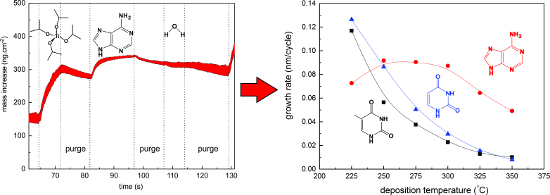
- enables control of cell–surface interactions, which plays a major role in controlling the bioactivity of solid surfaces. Biocompatibility can be enhanced by coating the surface using various thin film deposition techniques such as chemical vapor deposition (CVD), physical vapor deposition (PVD) or atomic




Sub-wavelength waveguide properties of 1D and surface-functionalized SnO2 nanostructures of various morphologies
Beilstein J. Nanotechnol. 2019, 10, 379–388, doi:10.3762/bjnano.10.37
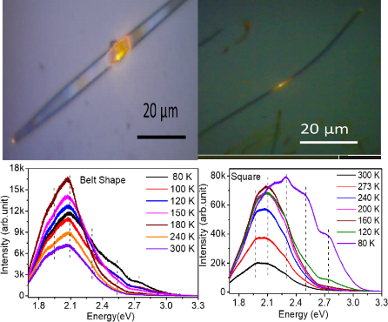
- chemical vapor deposition (CVD) technique has been widely used for the controlled preparation of nanostructures [23]. Especially the vapor–solid (VS) process, without the involvement of catalysts, and the vapor–liquid–solid (VLS) process, with the assistance of catalysts, are utilized for the growth of


Effects of post-lithography cleaning on the yield and performance of CVD graphene-based devices
Beilstein J. Nanotechnol. 2019, 10, 349–355, doi:10.3762/bjnano.10.34
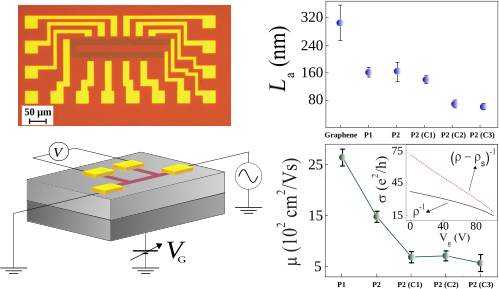
- electrical properties to surface phenomena and the existence of several routes for its surface functionalization, grant this 2D material plenty of application possibilities [1][2][3][4][5][6][7][8]. Among the several synthesis methods of high-quality graphene, chemical vapor deposition (CVD) stands out as


Zn/F-doped tin oxide nanoparticles synthesized by laser pyrolysis: structural and optical properties
Beilstein J. Nanotechnol. 2019, 10, 9–21, doi:10.3762/bjnano.10.2
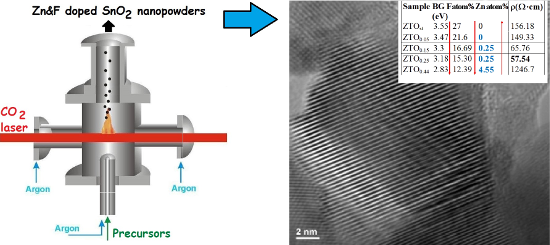
- [17]. Highly conductive films based on amorphous Co-doped SnO2 were also synthesized using a pulsed spray evaporation chemical vapor deposition (CVD) technique [18]. One of the most reported cationic dopants for tin oxide is Zn2+, where the obtained zinc-doped tin oxide (ZTO) films show lower bandgap



Investigation of CVD graphene as-grown on Cu foil using simultaneous scanning tunneling/atomic force microscopy
Beilstein J. Nanotechnol. 2018, 9, 2953–2959, doi:10.3762/bjnano.9.274
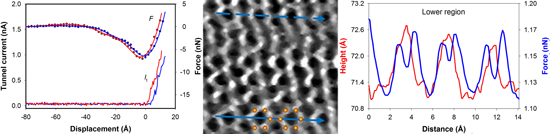
- surface, and A is the measured amplitude during tip–surface interactions [34]. Graphene layers were grown on Cu foils using chemical vapor deposition (CVD) [35]. A custom-built atmospheric CVD system was used. Cu foils were heated under H2 + Ar atmosphere up to 950 °C. Upon reaching the process
- an inequivalent electronic structure in HOPG or multilayer graphene due to the presence of a carbon atom or a hollow site underneath. In this work, we report small-amplitude, simultaneous STM/AFM imaging using a metallic (tungsten) tip, of the graphene surface as-grown by chemical vapor deposition
- (CVD) on Cu foils. Truly simultaneous operation is possible only with the use of small oscillation amplitudes. Under a typical STM imaging regime the force interaction is found to be repulsive. Force–distance spectroscopy revealed a maximum attractive force of about 7 nN between the tip and carbon


Metal-free catalysis based on nitrogen-doped carbon nanomaterials: a photoelectron spectroscopy point of view
Beilstein J. Nanotechnol. 2018, 9, 2015–2031, doi:10.3762/bjnano.9.191
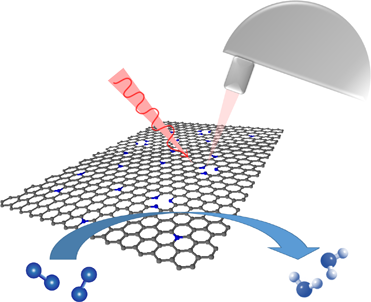
- -synthetic treatments. The most common technique for doping during the synthesis is chemical vapor deposition (CVD), similar to the synthesis of the pristine material [36][69][70], albeit using nitrogen-containing precursors such as benzylamine [71], acetonitrile [72][73], phthalocyanines [74][75] or ammonia


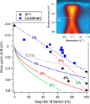


Toward the use of CVD-grown MoS2 nanosheets as field-emission source
Beilstein J. Nanotechnol. 2018, 9, 1686–1694, doi:10.3762/bjnano.9.160
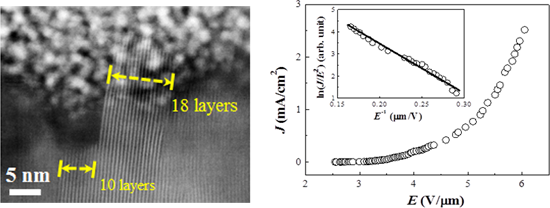
- the fabricated MoS2 NSs could have a great potential as robust high-performance electron-emitter material for various applications such as microelectronics and nanoelectronics, flat-panel displays and electron-microscopy emitter tips. Keywords: chemical vapor deposition (CVD); field emission
- ][16] and the number of layers [16]. Various methods have been used to synthesize vertically aligned MoS2 NSs: liquid-phase exfoliation [17], hydrothermal synthesis [8] or chemical vapor deposition (CVD) [15][17][18]. CVD is regarded as the most promising method to synthesize high-quality MoS2 with

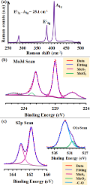


Chemistry for electron-induced nanofabrication
Beilstein J. Nanotechnol. 2018, 9, 1317–1320, doi:10.3762/bjnano.9.124

- chemical vapor deposition (CVD), which is a thermally driven process [6]. Consequently, these precursors are optimized with respect to thermal chemistry and do not necessarily perform well in the electron-driven FEBID process. In fact, they often experience incomplete fragmentation so that material from
Formation mechanisms of boron oxide films fabricated by large-area electron beam-induced deposition of trimethyl borate
Beilstein J. Nanotechnol. 2018, 9, 1282–1287, doi:10.3762/bjnano.9.120
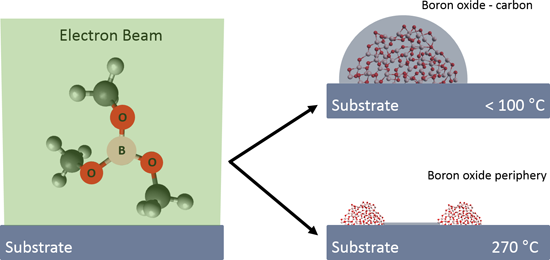
- and undergoes subsequent reaction with an electron beam. The process has major advantages over thermal chemical vapor deposition (CVD) processes one of which being that the substrate is not exposed to the elevated temperatures required for the thermal decomposition of precursor molecules. To date, the



A novel copper precursor for electron beam induced deposition
Beilstein J. Nanotechnol. 2018, 9, 1220–1227, doi:10.3762/bjnano.9.113
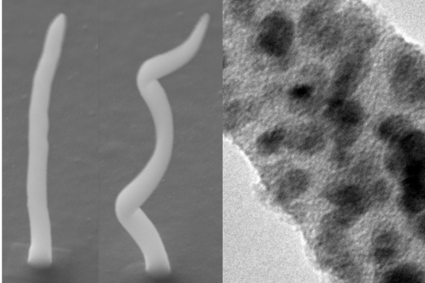
- deposition should furthermore provide for conductive deposits with a preferably high copper content. Here, the metal-organic precursor bis(tert-butylacetoacetato)Cu(II) (CAS: 23670-45-3, C16H26CuO6) is introduced as a fluorine-free alternative. This precursor is known from chemical vapor deposition (CVD


Review on nanoparticles and nanostructured materials: history, sources, toxicity and regulations
Beilstein J. Nanotechnol. 2018, 9, 1050–1074, doi:10.3762/bjnano.9.98

- morphologies such as hollow tubes, ellipsoids or spheres. Fullerenes (C60), carbon nanotubes (CNTs), carbon nanofibers, carbon black, graphene (Gr), and carbon onions are included under the carbon-based NMs category. Laser ablation, arc discharge, and chemical vapor deposition (CVD) are the important


Single-crystalline FeCo nanoparticle-filled carbon nanotubes: synthesis, structural characterization and magnetic properties
Beilstein J. Nanotechnol. 2018, 9, 1024–1034, doi:10.3762/bjnano.9.95
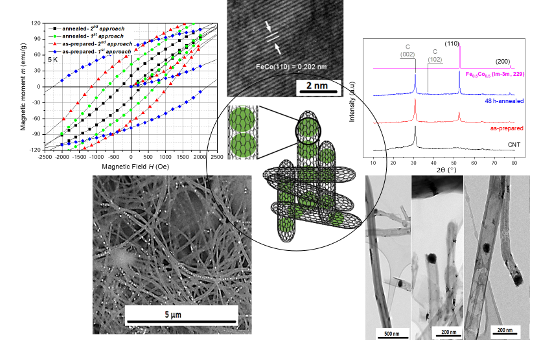
- the filling material due to the confinement of the material within the hollow tubular cavity. Chemical vapor deposition (CVD) is a technique used to fill MNPs into CNTs via in situ filling, in which metallocene precursors are used as a carbon source and MNPs [22][30][37] or hydrocarbons (such as


Effect of annealing treatments on CeO2 grown on TiN and Si substrates by atomic layer deposition
Beilstein J. Nanotechnol. 2018, 9, 890–899, doi:10.3762/bjnano.9.83
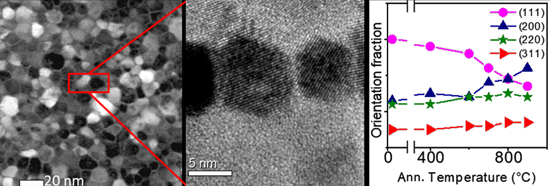
- sputtering [7], e-beam [16], physical vapor deposition [17], chemical vapor deposition (CVD) [18], and atomic layer deposition (ALD). The latter has been explored by using different precursors, e.g., Ce(thd)4, Ce(iPrCp)3 and Ce(mmp)4) [19][20][21][22][23], obtaining as-deposited film with polycrystalline





