Search results
Search for "curcumin" in Full Text gives 38 result(s) in Beilstein Journal of Nanotechnology.
Self-assembly of amino acids toward functional biomaterials
Beilstein J. Nanotechnol. 2021, 12, 1140–1150, doi:10.3762/bjnano.12.85
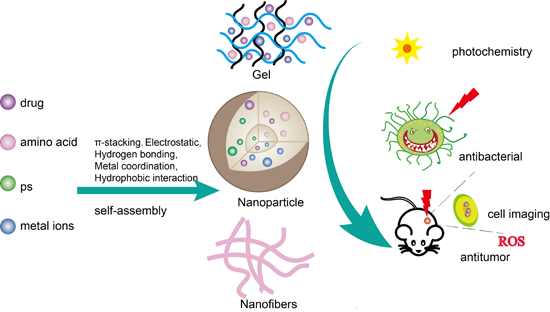
- tumor site 24 h after injection. In contrast, no significant fluorescence was observed in mice injected with unencapsulated Ce6 12 h after injection. In addition, metal nanoparticles induce an effective tumor ablation, while unencapsulated Ce6 only partially inhibits tumor growth. Curcumin is a
- promising natural antitumor drug, which can inhibit the transformation, proliferation, and migration of tumor cells through various ways, and has anti-angiogenic activity and good biocompatibility [72]. However, the poor water solubility and low bioavailability of curcumin hinder its direct application [73
- ]. Therefore, it is necessary to develop an encapsulation system to improve the bioavailability of curcumin in the tumor microenvironment in order to achieve effective delivery of curcumin and improve the therapeutic effect [74]. Li et al. [75] dissolved 9-Fmoc-ʟ-histidine (Fmoc-H) in hexafluoropropofol or

Use of nanosystems to improve the anticancer effects of curcumin
Beilstein J. Nanotechnol. 2021, 12, 1047–1062, doi:10.3762/bjnano.12.78
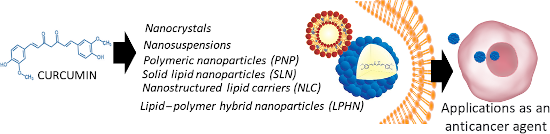
- , Hermosillo, Sonora 83000, México 10.3762/bjnano.12.78 Abstract Curcumin (CUR) is a phenolic compound that is safe for human consumption. It exhibits chemopreventive, antiproliferative, antiangiogenic, and antimetastatic effects. However, these benefits can be hampered due to the lipophilic nature, rapid
- disadvantages, such as the need for additional instrumentation to generate electromagnetic or ultrasonic waves, which may increase their cost and/or complexity. Curcumin (CUR) or diferuloylmethane is a phenolic compound extracted from turmeric (Curcuma longa) rhizomes. It is safe for human consumption [13] and
- is known for its potentially beneficial health effects [14][15]. Searching for peer-reviewed publications using the term “curcumin” in PubMed, ScienceDirect, and Scopus published during 2010–2020 results in 34.4, 20.4, and 26.6 thousand publications, respectively, of which 74.6%, 62.4%, and 33.4% are


The impact of molecular tumor profiling on the design strategies for targeting myeloid leukemia and EGFR/CD44-positive solid tumors
Beilstein J. Nanotechnol. 2021, 12, 375–401, doi:10.3762/bjnano.12.31


Key for crossing the BBB with nanoparticles: the rational design
Beilstein J. Nanotechnol. 2020, 11, 866–883, doi:10.3762/bjnano.11.72
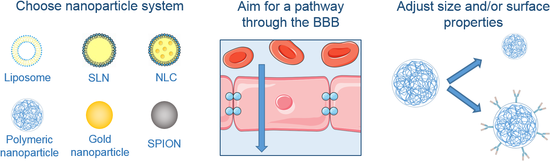
- the amount of drug delivered to the brain by coating and conjugating SLNs. Coating SLNs with PS80 has been proven to be successful for the brain delivery of curcumin [161]. Studies have shown that PS80 allows ApoE adsorption on SLNs in the same way as for PBCA and PLGA nanoparticles [162]. Surface


Small protein sequences can induce cellular uptake of complex nanohybrids
Beilstein J. Nanotechnol. 2019, 10, 2477–2482, doi:10.3762/bjnano.10.238
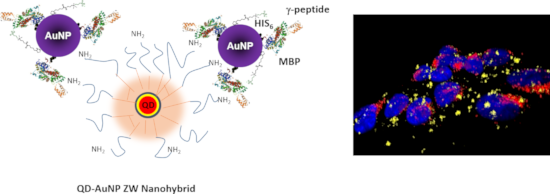
- stability and tumour accumulation of curcumin [17]. Overall, there is a consensus that using colloidally stable nanoparticles is crucial for understanding and controlling cellular uptake, because materials that are prone to aggregation show higher non-specific interactions with biological fluids and cell

Design of a nanostructured mucoadhesive system containing curcumin for buccal application: from physicochemical to biological aspects
Beilstein J. Nanotechnol. 2019, 10, 2304–2328, doi:10.3762/bjnano.10.222
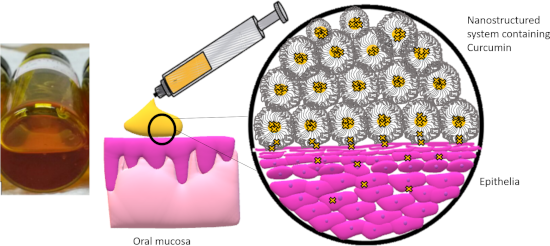
- , The University of Sheffield, Sheffield, UK 10.3762/bjnano.10.222 Abstract Mucoadhesive nanostructured systems comprising poloxamer 407 and Carbopol 974P® have already demonstrated good mucoadhesion, as well as improved mechanical and rheological properties. Curcumin displays excellent biological
- activity, mainly in oral squamous cancer; however, its physicochemical characteristics hinder its application. Therefore, the aim of this study was to develop nanostructured formulations containing curcumin for oral cancer therapy. The photophysical interactions between curcumin and the formulations were
- gelation temperature of 36 °C, which ensures increased retention after application in the oral cavity. The mucoadhesion results confirmed the previous findings with the nanostructured systems showing a residence time of 20 min in porcine oral mucosa under flow system conditions. Curcumin was released after


Microfluidics as tool to prepare size-tunable PLGA nanoparticles with high curcumin encapsulation for efficient mucus penetration
Beilstein J. Nanotechnol. 2019, 10, 2280–2293, doi:10.3762/bjnano.10.220
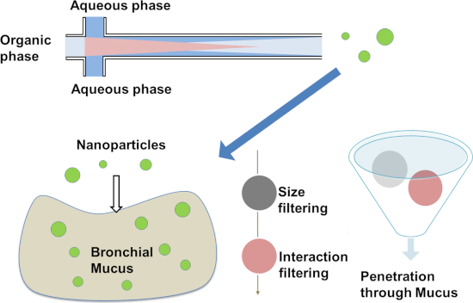
- total flow rate. Furthermore, the influence of the length of the focus mixing channel on the size was evaluated in order to better understand the nucleation–growth mechanism. Surprisingly, the channel length was revealed to have no effect on particle size for the chosen settings. In addition, curcumin
- applications. Keywords: curcumin; human pulmonary mucus; microfluidics; muco-penetrating nanoparticles; nanomedicine; permeability; PLGA nanoparticles; Introduction In the last decades, the application of nanotechnology in medicine has gained significant attention, especially in the biomedical field for
- of a lipophilic model drug (curcumin, a nonsteroidal naturally anti-inflammatory drug) was assessed by comparing different preparation approaches, such as bench-top preparations with different injection procedures. The choice of an anti-inflammatory drug for potential loading into PLGA NPs was made


BergaCare SmartLipids: commercial lipophilic active concentrates for improved performance of dermal products
Beilstein J. Nanotechnol. 2019, 10, 2152–2162, doi:10.3762/bjnano.10.208
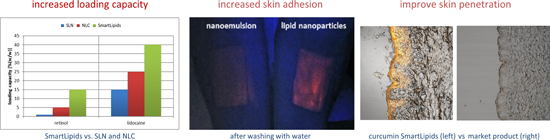
- suspension was prepared containing 0.2% curcumin. Curcumin has many positive effects on the skin [31][32] and is at the same time fluorescent, allowing for a good and easy detection in the skin by fluorescence microscopy. The suspension was applied to pig ear skin in a covered Franz cell, incubated for 24 h
- comparison, a tenfold higher concentrated 2% curcumin suspension is shown in Figure 8 (middle column). The curcumin remains as a thick fluorescent layer on top of the stratum corneum, showing practically no fluorescence inside the epidermis. Finally, a curcumin containing marketed product from the US is
- shown, according to HPLC analysis containing 0.0001% curcumin in dissolved form, corresponding to its maximum solubility. Only negligible fluorescence in the skin was detectable (Figure 8, right column). This shows that SmartLipids are an enabling technology to provide efficient skin penetration even


Microfluidic manufacturing of different niosomes nanoparticles for curcumin encapsulation: Physical characteristics, encapsulation efficacy, and drug release
Beilstein J. Nanotechnol. 2019, 10, 1826–1832, doi:10.3762/bjnano.10.177
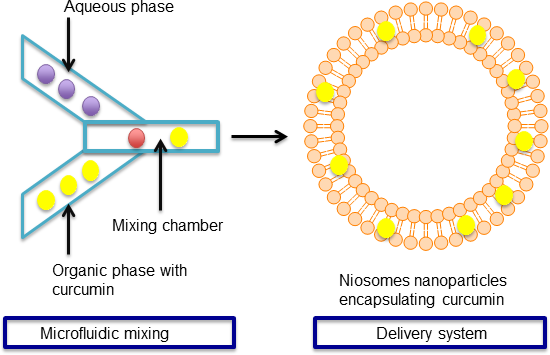
- Street, G4 0RE Glasgow, United Kingdom Oman College of Health Sciences, School of Pharmacy, Muscat, Oman Institute of Infection Immunity and Inflammation, College of MVLS, University of Glasgow, Glasgow, United Kingdom 10.3762/bjnano.10.177 Abstract Curcumin, a natural chemical compound found in Curcuma
- longa that has been used in antitumor and anti-inflammation applications, exhibits very limited water solubility and rapid in vivo degradation, which limits its clinical application. To overcome these limitations, niosome nanoparticles were prepared by microfluidic mixing for curcumin encapsulation
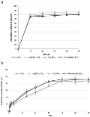
- electron microscopy. Curcumin was encapsulated with a maximum encapsulation efficiency of around 60% using Tween 85 as the non-ionic surfactant. Niosomes prepared by microfluidic mixing provided a controlled release of curcumin, as indicated by the release profile of curcumin, improving its therapeutic


Enhanced antineoplastic/therapeutic efficacy using 5-fluorouracil-loaded calcium phosphate nanoparticles
Beilstein J. Nanotechnol. 2018, 9, 2499–2515, doi:10.3762/bjnano.9.233
- for hepatoma targeted delivery of docetaxel with lactose as the targeting molecule [7]. Curcumin-loaded organically modified silica nanoparticles (ORMOSIL) were studied to check the potential anticancer property of ORMOSIL nanocarriers [8]. However, in some instances, after nanoparticle formation, the


Green synthesis of fluorescent carbon dots from spices for in vitro imaging and tumour cell growth inhibition
Beilstein J. Nanotechnol. 2018, 9, 530–544, doi:10.3762/bjnano.9.51
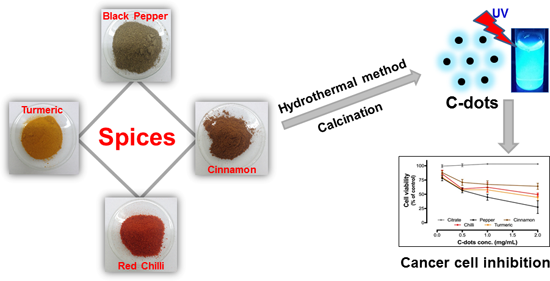
- majorly cultivated in Asia and is widely used in food industries as a colouring agent or food additive [19]. One of its major components, curcumin [20], plays an important role in the treatment of periodontal diseases and oral cancers [21]. Turmeric exhibits numerous therapeutic properties such as


Strategy to discover full-length amyloid-beta peptide ligands using high-efficiency microarray technology
Beilstein J. Nanotechnol. 2017, 8, 2446–2453, doi:10.3762/bjnano.8.243
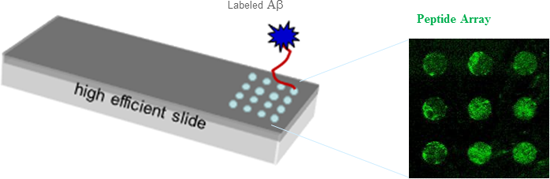
- ], osmolytes [8], curcumin [9], carnosine [10], peptide β-sheet breakers [11][12][13], epigallocatechin-3-gallate (ECGC) [14], D-enantiomeric peptides [15], nonpeptidic β-sheet breakers [16], Sylibins [17], and metal ionophores [18], have been investigated for their potential to treat AD by preventing Aβ


Cationic PEGylated polycaprolactone nanoparticles carrying post-operation docetaxel for glioma treatment
Beilstein J. Nanotechnol. 2017, 8, 1446–1456, doi:10.3762/bjnano.8.144
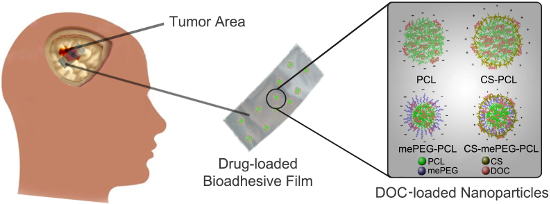
- studied for targeting and delivery of chemotherapeutic drugs for glioma treatment. Fang et al. prepared core–shell nanocapsules for co-delivery of the hydrophilic drug doxorubicin, and the hydrophobic drug curcumin. Their results showed that the synergistic cytotoxic effect on RG2 glioma cells was