


Search results
Search for "defect" in Full Text gives 402 result(s) in Beilstein Journal of Nanotechnology. Showing first 200.
Synchrotron X-ray photoelectron spectroscopy study of sodium adsorption on vertically arranged MoS2 layers coated with pyrolytic carbon
Beilstein J. Nanotechnol. 2025, 16, 847–859, doi:10.3762/bjnano.16.64
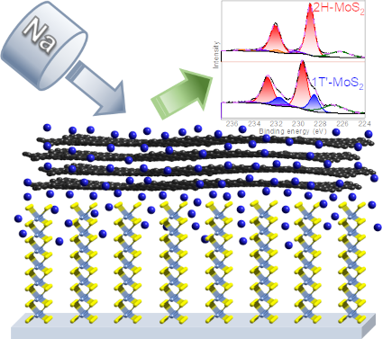
- hybrid anodes based on MoS2. The diffusion of sodium ions in layered MoS2 is highly anisotropic. It is fast along the basal planes and is not possible through defect-free layers [3]. Thus, when the interlayer channels coincide with the Na+ movement paths, the diffusion distance is shortened, resulting in
- confirms the vertical orientation of the MoS2 layers relative to the substrate surface [37]. The weak defect-induced mode LA(M) at 227 cm−1 and the asymmetric shape of the E12g and A1g modes indicate the nanometer size of the MoS2 crystallites in the plane [38][39]. All the above modes are visible in the


Thickness dependent oxidation in CrCl3: a scanning X-ray photoemission and Kelvin probe microscopies study
Beilstein J. Nanotechnol. 2025, 16, 749–761, doi:10.3762/bjnano.16.58
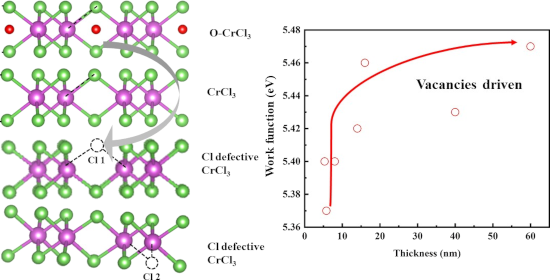
- properties for 2D magnets by manipulating factors such as layer thickness, applied strain, and induced defect sites. Numerous theoretical studies predict that magnetic order in monolayers occurs at temperatures significantly higher than the bulk Curie temperature (i.e., 17 K). In their work, Liu et al
- air we observed the huge Cl vacancy signature in Cl 2p core levels (i.e., a low-energy component at 198 eV). Our conclusion is that the thin CrCl3 layers are more difficult to be modified because of the high energy of defect formation and the rapid quenching of them by mobile free atoms; this is





Efficiency of single-pulse laser fragmentation of organic nutraceutical dispersions in a circular jet flow-through reactor
Beilstein J. Nanotechnol. 2025, 16, 711–727, doi:10.3762/bjnano.16.55
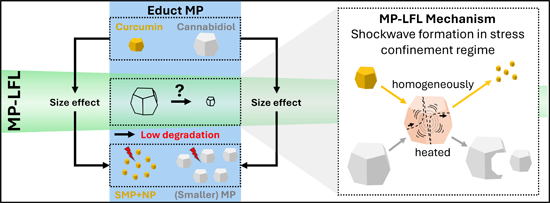
- ), and laser melting (LML) in liquids are aimed at synthesizing nanoparticles (NPs) from bulk targets (LAL), by downsizing (LFL), or by increasing/reshaping (LML) particle dispersions [1]. On the other hand, pulsed laser defect engineering in liquids (PUDEL) processes involve targeted post-treatment of
- colloids, for example, to increase their defect density in favor of electrocatalytic or optical properties without changing their size [6][7][8]. In addition, the acronym PUDEL has recently been used for pulsed laser diffusion enhancement in liquids, which refers to an increase in diffusion without


Nanostructured materials characterized by scanning photoelectron spectromicroscopy
Beilstein J. Nanotechnol. 2025, 16, 700–710, doi:10.3762/bjnano.16.54
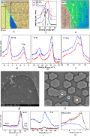
- Ni3+ to reach charge neutrality. Additionally, NiO exhibits a wide bandgap, which also prompts considerable research interest. The properties of NiO are highly dependent on the synthesis method, owing to the variable dimensionality, morphology, crystalline orientation, and defect structure [44


The impact of tris(pentafluorophenyl)borane hole transport layer doping on interfacial charge extraction and recombination
Beilstein J. Nanotechnol. 2025, 16, 678–689, doi:10.3762/bjnano.16.52
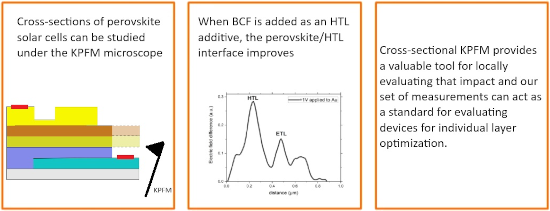
- as grain boundaries and interfacial defect states that hinder performance. Specifically, since the interaction of adjacent layers at the interfaces of a solar cell is an important limiting factor for its operation, there is a need for dedicated studies regarding interfacial behavior. Kelvin probe
- 1), with voltage drops and rises being apparent because of the band bending introduced by mobile ions or surface defect states caused by the cleaving. Furthermore, the CPD decrease (black curves) on the HTL side relative to the perovskite when BCF is included in both cases reveals the p-doping of
- accumulation at the perovskite junctions because of the applied bias (like the aforementioned defect-state and relative work function contributions). Consequently, we use these bias-induced potential profiles (that result from the aforementioned subtraction of CPD profiles) to plot electric field profiles


Colloidal few layered graphene–tannic acid preserves the biocompatibility of periodontal ligament cells
Beilstein J. Nanotechnol. 2025, 16, 664–677, doi:10.3762/bjnano.16.51
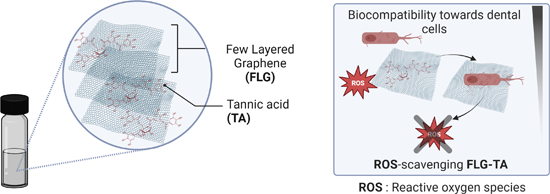
- FLG–TA has a low defect content, evidenced by its weak D peak. Although the absorption of carbonyl functions in TA molecules might influence the defect ratio for FLG–TA because of the increase in the G peak (Figure S2, Supporting Information File 1, shows the Raman spectrum of TA powder), it remains
- occurring at the edges rather than within the bulk structure. This low defect ratio, accomplished through the use of TA, offers a straightforward and potentially biocompatible method for producing a high-quality FLG–TA biocomposite suitable for dental applications. Arrangement of TA molecules on the surface




Nanoscale capacitance spectroscopy based on multifrequency electrostatic force microscopy
Beilstein J. Nanotechnol. 2025, 16, 637–651, doi:10.3762/bjnano.16.49

- understanding of material properties, particularly at the nanoscale, where phenomena such as quantum confinement, interface effects, and defect dynamics play a critical role. Innovations in characterization techniques have enabled researchers to explore these properties with unprecedented precision, paving the
- variations influence key properties such as charge transport, polarization dynamics, and defect distributions, directly impacting the performance of microelectronic and energy systems [14][15]. Understanding these effects requires correlating nanoscale dielectric properties with structural and morphological




Polyurethane/silk fibroin-based electrospun membranes for wound healing and skin substitute applications
Beilstein J. Nanotechnol. 2025, 16, 591–612, doi:10.3762/bjnano.16.46
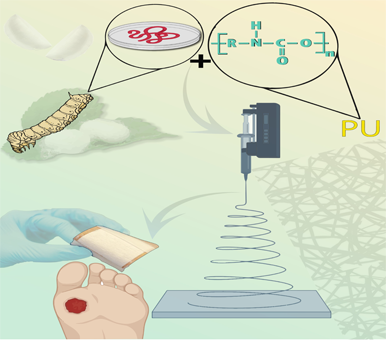
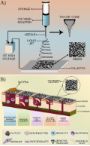
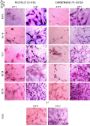
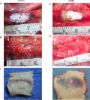
- compromised by trauma, congenital anomalies, burns, or because of a chronic defect. After a skin injury, it is imperative to restore skin integrity for homeostasis function and protection from microbes [26]. Wounds can be acute or chronic. Acute wounds heal in a matter of weeks, while chronic wounds take



Feasibility analysis of carbon nanofiber synthesis and morphology control using a LPG premixed flame
Beilstein J. Nanotechnol. 2025, 16, 581–590, doi:10.3762/bjnano.16.45
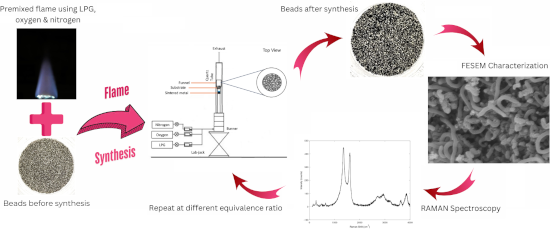
- . A higher presence of defects was found before in CNFs via Raman spectroscopy [12]. A slightly elevated defect density was also observed in CNTs derived from LPG [16][31]. The D band and G band intensities show an ID/IG ratio of more than 1.13, which is a clear indicator for high disorder and



N2+-implantation-induced tailoring of structural, morphological, optical, and electrical characteristics of sputtered molybdenum thin films
Beilstein J. Nanotechnol. 2025, 16, 495–509, doi:10.3762/bjnano.16.38
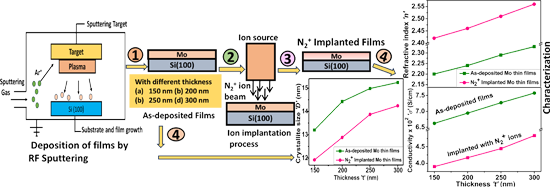
- function of the film thickness. Ion implantation induces many alterations in the reflectance spectra. The shift of the peak to shorter wavelengths (about 225 nm) shows a change in the electrical structure of the Mo thin film, probably due to defect formation. These defects can modify the plasmonic behavior


Performance optimization of a microwave-coupled plasma-based ultralow-energy ECR ion source for silicon nanostructuring
Beilstein J. Nanotechnol. 2025, 16, 484–494, doi:10.3762/bjnano.16.37

- treatments such as nanopatterning, sputter etching, and controlled defect formation [6][7]. Particularly, ultralow-energy ion beams are exceptionally valuable for the precise modification of 2D layers [8] and ion-induced nanopatterning of semiconductor surfaces [9]. Over the past few decades, ion-induced


Graphene oxide–chloroquine conjugate induces DNA damage in A549 lung cancer cells through autophagy modulation
Beilstein J. Nanotechnol. 2025, 16, 316–332, doi:10.3762/bjnano.16.24
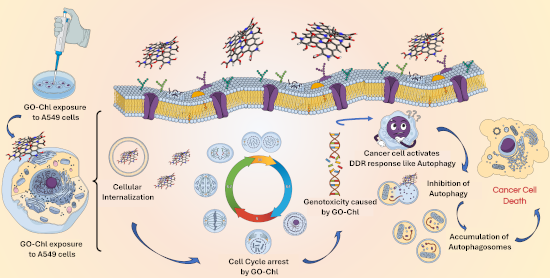
- defect band (D band) in the Raman spectra (recorded at an excitation wavelength of 514 nm) of the compounds. Supporting Information File 1, Figure S1c reveals the appearance of the G band (1581 cm−1) and D band (1352 cm−1) for graphite, corresponding to the E2g symmetric vibrations associated with the



Preferential enrichment and extraction of laser-synthesized nanoparticles in organic phases
Beilstein J. Nanotechnol. 2025, 16, 254–263, doi:10.3762/bjnano.16.20
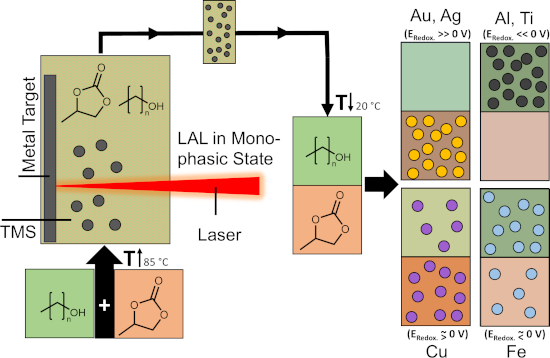
- depends on where in the plume they stem from, and there is a distribution of cooling rates ranging at least over three orders of magnitude, from less than 1011 to 1013 K·s−1, evidencing undercooling effects and defect-rich nanoparticle crystallization [59]. One may hypothesize that the different cooling




A review of metal-organic frameworks and polymers in mixed matrix membranes for CO2 capture
Beilstein J. Nanotechnol. 2025, 16, 155–186, doi:10.3762/bjnano.16.14
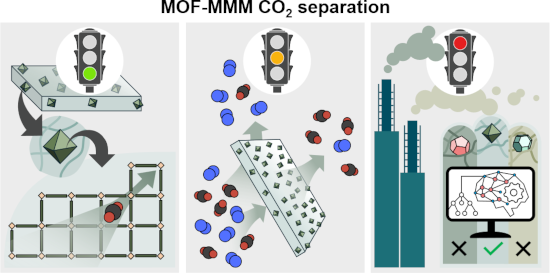
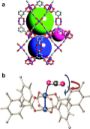
- Figure 6a, is crucial for the gas separation performance of MOF-based MMMs, as it helps overcome defect formation and control interface morphology. There are five types of common defects for MOF-based MMMs, namely (1) voids around the MOF, Figure 6b, (2) rigidified polymer around the MOF, Figure 6c, (3
- rigidification effects and partial pore blockage. This rigidified polymer may also alter the effective MOF apertures, affecting MMM selectivity unpredictably [78][87][115][119]. The rigidified polymer defect typically forms during the solvent removal step, see Figure 4, where rapid solvent removal quenches the
- –polymer matrix interface compatibility are crucial for reducing plasticization. 3.5.6 Reducing defect propensity. Besides the techniques already discussed, the formation of defects in MOF-based MMMs can be significantly reduced by optimizing the MOF–polymer interface through MOF or polymer




Comparison of organic and inorganic hole transport layers in double perovskite material-based solar cell
Beilstein J. Nanotechnol. 2025, 16, 119–127, doi:10.3762/bjnano.16.11
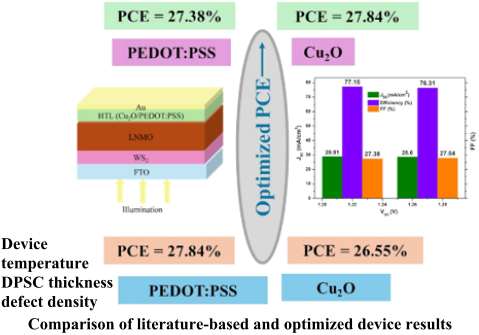
- 25.44% with VOC = 1.1027 V, JSC = 27.89 mA/cm2, and FF = 82.69%, suggesting the suitability of La2NiMnO6. In 2024, Singh et al. proposed a planar DPSC with La2NiMnO6 as absorber layer, Cu2O as HTL, and WS2 as ETL, and several parameters of the absorber layer including thickness, defect density, series
- and shunt resistance, interfacial defect density, and various metal electrodes were studied. An efficiency of 18.89% with VOC = 0.7919 V, JSC = 27.89 mA/cm2, and FF = 85.52% was reported for the device structure FTO/WS2/La2NiMnO6/Cu2O/Au [15][16]. In 2023, the highest optimized efficiency of 24.08
- possible that misalignment of energy levels due to thermal effects can hinder efficient hole extraction, further increasing recombination losses. Effect of absorber layer defect density Defects in the absorber layer hinder carrier transportation between the absorber layer and the CTLs, leading to a drop in


Advanced atomic force microscopy techniques V
Beilstein J. Nanotechnol. 2025, 16, 54–56, doi:10.3762/bjnano.16.6

- different origins. The authors assign one type of defects to a possible defect in the Ir surface. The other type is identified as four missing carbon atoms corroborated by a higher reactivity with the tip. We thank all authors who contributed to this thematic issue and we are grateful to all reviewers for
Effect of radiation-induced vacancy saturation on the first-order phase transformation in nanoparticles: insights from a model
Beilstein J. Nanotechnol. 2024, 15, 1453–1472, doi:10.3762/bjnano.15.117

- , and other emerging nanotechnologies. When HDCMs are exposed to radiation, such as ion bombardment or exposure to high-energy radiation sources, defects (vacancies, interstitials, point defect clusters, voids, and interstitial loops) are created in the crystal lattice because of the displacement of
- , and cavities [1][2]. Experimental studies on Pd have shown that the defect density generally increases with grain size; in grains smaller than 30 nm, no defects were observed [3], suggesting that large defects (clusters and dislocations) do not exist in small nanoparticles. One possible explanation is
- based on the fact that the movement of dislocations is impeded by particle surfaces (grain boundaries) quite rapidly. For example, a transmission electron microscopy study (irradiation with Kr ions at 1 MeV at room temperature and an average defect generation rate of about 2 × 10⁻³ dpa·s−1) showed that


Strain-induced bandgap engineering in 2D ψ-graphene materials: a first-principles study
Beilstein J. Nanotechnol. 2024, 15, 1440–1452, doi:10.3762/bjnano.15.116
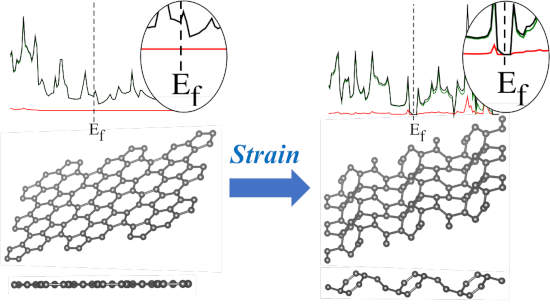
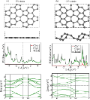
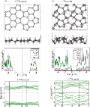
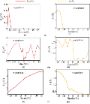
- engineering can be achieved through different techniques like (i) doping, where the introduction of dopants or impurities modifies the EBS [21], (ii) strain engineering by inserting mechanical strain to alter the electronic properties [22][23], and (iii) defect engineering [24]. Among these techniques, strain


Lithium niobate on insulator: an emerging nanophotonic crystal for optimized light control
Beilstein J. Nanotechnol. 2024, 15, 1415–1426, doi:10.3762/bjnano.15.114
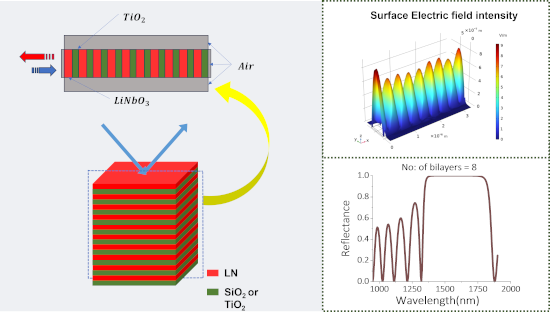
- . Jamshidi-Ghaleh et al. investigated the behavior of the LN defect layer in MgF2/Ag/TiO2-based one-dimensional ternary photonic crystal (1DTPC). A voltage-dependent defect mode, arising from the electro-optic characteristics of LN, emerges inside the bandgap of the ternary photonic crystal. The localized
- parametric down-conversion and four-wave mixing. Recent research explores LiNbO3 as a defect layer in 1D PhC for manipulating quantum light in integrated photonic circuits [32], opening up potential applications in quantum computing, quantum photonics, and quantum communication [64][65][66][67][68]. In


Various CVD-grown ZnO nanostructures for nanodevices and interdisciplinary applications
Beilstein J. Nanotechnol. 2024, 15, 1390–1399, doi:10.3762/bjnano.15.112
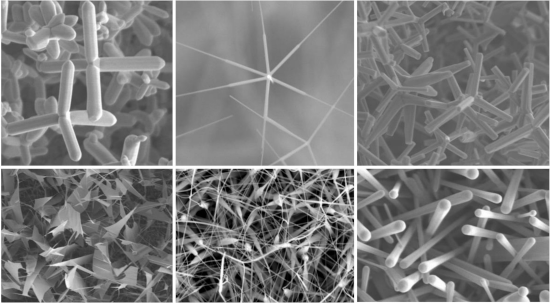
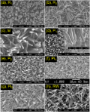
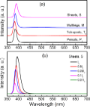
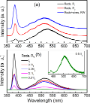
- . Depending on the morphology and crystal quality, their photoluminescence spectra have only a strong UV emission associated with the exciton radiative recombination, or both UV and defect-related visible emissions with their relative intensity ratio varying with the excitation power density. The obtained
- quality [65]. By changing the excitation density, the intensity ratio of these two emissions could also be changed, as illustrated in Figure 9b and its inset for the case of nanorods R2. In these samples, after laser excitation, the exciton-related UV emission is partially absorbed by defect centres
- occupying lower energy levels in the forbidden region. Different from the samples belonging to the first group, defects are insignificant due to their good crystal quality. Their exciton-related UV emission is not massively absorbed by defect centres playing a role as carrier traps, and always give a strong



Quantum-to-classical modeling of monolayer Ge2Se2 and its application in photovoltaic devices
Beilstein J. Nanotechnol. 2024, 15, 1153–1169, doi:10.3762/bjnano.15.94
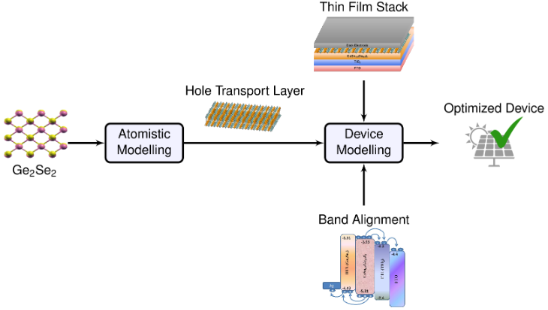
- resistance and higher losses [59]. We set the optimal absorber thickness at 2 µm, above which the parameter variation was only very little. Effect of defects in the absorber layer Halide pervoskites are generally considered as defect-resilient; yet, deep level defects shows significant impact on the device
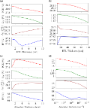
- performance [60][61]. Therefore, it is important to analyze their impact on the cell performance for better device design. Figure 7d shows the variation of the cell parameters at varying absorber defect densities from 1014 cm−3 to 1018 cm−3. Figure 7d shows that higher defect densities lead to worse device
- performance. This is due to the decrement in the lifetime of the charge carriers because of the shorter diffusion length, which results from the higher defect densities [62]. We can observed that the performance parameters decrease significantly above defect densities of 1015 cm−3. Effect of interface defects




Effect of wavelength and liquid on formation of Ag, Au, Ag/Au nanoparticles via picosecond laser ablation and SERS-based detection of DMMP
Beilstein J. Nanotechnol. 2024, 15, 1054–1069, doi:10.3762/bjnano.15.86

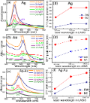
- ) laser melting in liquid (LML), and (iii) laser defect engineering in liquid (LDL) [16]. In our previous work, we fabricated Ag–Cu alloy NPs using the femtosecond (fs) laser irradiation approach [17]. Similarly, Ag/Au alloy NPs were fabricated by laser ablation of single metal targets in water followed


Bolometric IR photoresponse based on a 3D micro-nano integrated CNT architecture
Beilstein J. Nanotechnol. 2024, 15, 1030–1040, doi:10.3762/bjnano.15.84
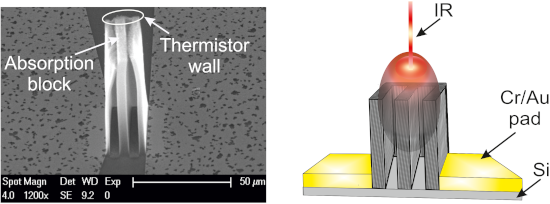
- the carbon nanotubes, while the D- and 2D-band peaks are the defect band peak and its first overtone, respectively. At lower wavenumbers, RBM peaks are seen. Their appearance symbolizes the presence of few-layer CNTs (single or double layer). Compared to SWCNTs [8], for which the characteristic


Beyond biomimicry – next generation applications of bioinspired adhesives from microfluidics to composites
Beilstein J. Nanotechnol. 2024, 15, 965–976, doi:10.3762/bjnano.15.79
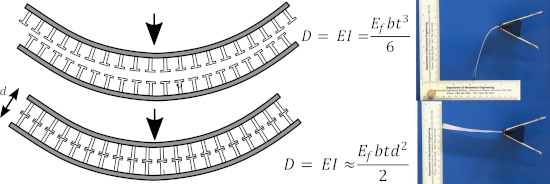
- single sheet. A deliberate defect to yield anisotropic adhesion was described in 2013 by my student Walid bin Khaled [25]. It has been thoroughly characterized in various papers, including his work and that of visiting student Yue Wang, who collaborated with me between 2015 and 2016 [27]. Yue Wang also
- developed the adhesion circle test system, which has been instrumental in characterizing how these fibers with the deliberate defect function, demonstrating that the same geometry with different structural materials can exhibit vastly different adhesion properties [28]. Generally, structural materials for


Electrospun nanofibers: building blocks for the repair of bone tissue
Beilstein J. Nanotechnol. 2024, 15, 941–953, doi:10.3762/bjnano.15.77
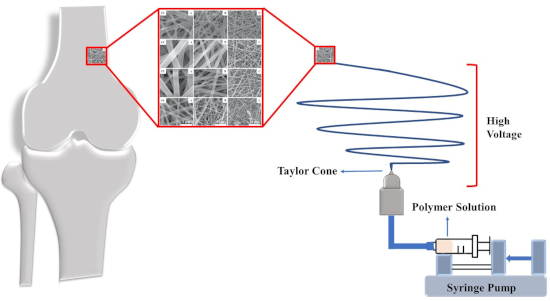
- solution from the needle tip to be higher than the rate required for Taylor cone formation [49][50]. Thus, it may cause multiple jets or destabilization of the Taylor cone, resulting in an increase in bead defect density [49][51][52]. The fiber diameter decreases with increasing voltage [53]. The bead
- defect density increases above a critical voltage [49]. The aspect ratio of the obtained beads increases up to a certain voltage value and then decreases [50][54]. Flow rate Insufficient flow rate does not allow for jet formation. In contrast, excessive flow rates will cause an increase in the polymer





