


Search results
Search for "displays" in Full Text gives 457 result(s) in Beilstein Journal of Nanotechnology. Showing first 200.
Piezoelectricity of hexagonal boron nitrides improves bone tissue generation as tested on osteoblasts
Beilstein J. Nanotechnol. 2025, 16, 1068–1081, doi:10.3762/bjnano.16.78
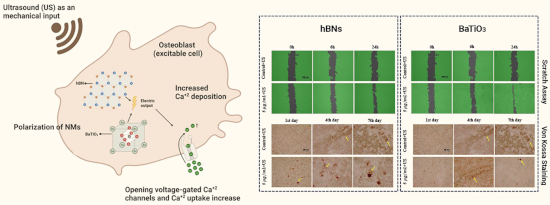
- -plane bending vibration, respectively [43]. The broad band at 3200 cm−1 could be attributed to stretching vibrations of hydroxyl groups (O–H) of hBNs or humidity. Supporting Information File 1, Figure S3 (d) displays the Raman spectrum of hBNs, which reveals a dominant peak at 1367 cm−1, in line with
- experiments to reflect a strategy to explore dose-response relationships in a nontoxic range. Cellular uptake assay Figure 4 displays the SSC% shift observed for both NMs compared to the control group. The SSC% shift in hBNs and hBNs+US treated cells remained consistent across concentrations and were nearly


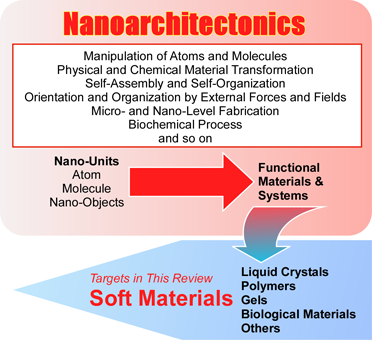
Soft materials nanoarchitectonics: liquid crystals, polymers, gels, biomaterials, and others
Beilstein J. Nanotechnol. 2025, 16, 1025–1067, doi:10.3762/bjnano.16.77






Time-resolved probing of laser-induced nanostructuring processes in liquids
Beilstein J. Nanotechnol. 2025, 16, 968–1002, doi:10.3762/bjnano.16.74
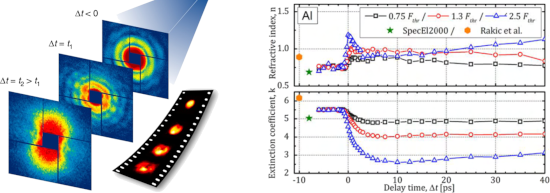
- particles. The particles only occupy a mass fraction of 0.02%. Figure 9A displays the relative changes in scattering when the suspension is irradiated by 1 ps laser pulses at the interband transition at 400 nm. This difference, ΔI, includes negative and positive contributions depending on the formation


Synthesis of biowaste-derived carbon-dot-mediated silver nanoparticles and the evaluation of electrochemical properties for supercapacitor electrodes
Beilstein J. Nanotechnol. 2025, 16, 933–943, doi:10.3762/bjnano.16.71
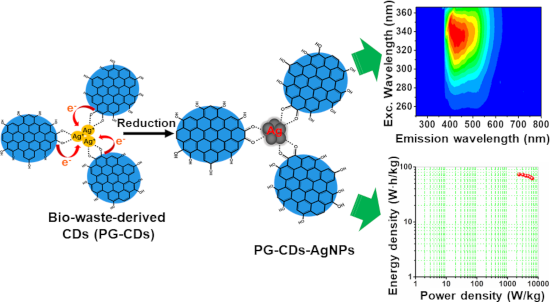
- PG-CDs-AgNPs were recorded. As the excitation wavelength rises from 250 to 370 nm, the PL emission intensity gradually rises and the maximum PL emission intensity (430 nm) was attained at the excitation wavelength of 340 nm as displayed in Figure 1c. Figure 1d displays the excitation and emission
- contour map of PG-CDs-AgNPs, which suggests the PL emission in the blue range. The crystalline nature of the PG-CDs-AgNPs was established from the X-ray diffraction pattern. Figure 2a displays an XRD pattern of the PG-CDs-AgNPs synthesized via PG-CDs mediated reduction. According to the XRD pattern, the
- -CDs-AgNPs proves the existence of O, C, and Ag (Supporting Information File 1, Figure S2c–e). Figure 4a–c displays TEM images of PG-CDs-AgNPs with different scale bars exhibiting that the particles are spherical and uniformly distributed. Figure 4d is the HR-TEM image of PG-CDs-AgNPs, exhibiting a


Structural and magnetic properties of microwave-synthesized reduced graphene oxide/VO2/Fe2O3 nanocomposite
Beilstein J. Nanotechnol. 2025, 16, 921–932, doi:10.3762/bjnano.16.70
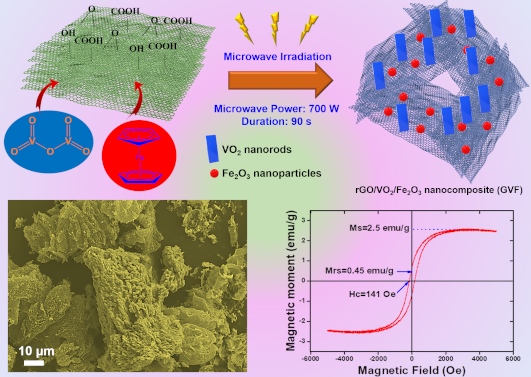
- is important to note that the diffraction pattern of GVF also displays a few characteristic peaks of VO2 with smaller intensity values, indicating its minimal presence in the formed GVF. Additionally, slight shifting of the peak position of individual components in the NCs is an indication of
- (Figure 3d). It is interesting to note that, while GV displays a lower value, GVF displays a higher ID/IG ratio than that of rGO (0.79). Notably, the induction of defects in graphene structures through NC formation generally leads to improved magnetic properties [37][38][39]. Therefore, the GVF is
- exfoliation of graphene sheets. On the other hand, the SEM micrograph of GVF demonstrates the dispersion of the nanorods of VO2 and NPs on Fe2O3 on the graphene surface (Figure 4c,d). It is important to note that the morphological analysis of GVF displays a porous nature, which is also favorable for



Focused ion beam-induced platinum deposition with a low-temperature cesium ion source
Beilstein J. Nanotechnol. 2025, 16, 910–920, doi:10.3762/bjnano.16.69
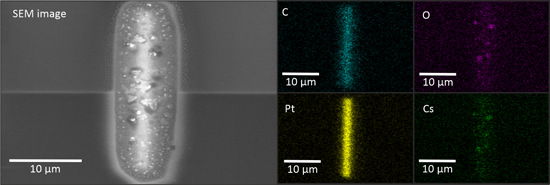
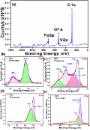
- of the Cs+ FIBID-Pt deposits using focused electron beam-induced deposition (FEBID). Therefore, a C-rich region exists in the lower-left corner of the C map. EDS spectra were taken at five points within the bulk deposit and then averaged to determine the chemical composition. Figure 6 displays these


Characterization of ion track-etched conical nanopores in thermal and PECVD SiO2 using small angle X-ray scattering
Beilstein J. Nanotechnol. 2025, 16, 899–909, doi:10.3762/bjnano.16.68
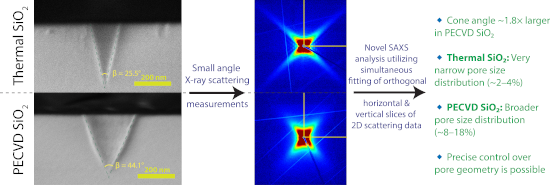
- details). Although both materials reveal conical nanopores, thermal SiO2 exhibits more uniformly sized nanopores, while PECVD SiO2 displays higher dispersity in pore dimensions (excluding overlapping pores). As an example, three representative non-overlapping pores are highlighted in Figure 1a,b. Their
- patterns is evident upon detailed examination. The horizontal cut intensities from thermal SiO2 nanopores reveal six to eight distinct oscillations, whereas PECVD SiO2 displays a maximum of four oscillations. Furthermore, the reduced peak-to-trough amplitude in oscillations resulting from nanopores in


Ar+ implantation-induced tailoring of RF-sputtered ZnO films: structural, morphological, and optical properties
Beilstein J. Nanotechnol. 2025, 16, 872–886, doi:10.3762/bjnano.16.66
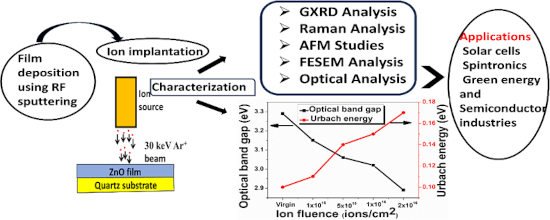
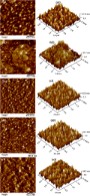
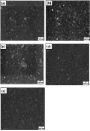
- displays [5], solar cells [6], and light-emitting diodes [7]. There are numerous methods for synthesizing ZnO films, including pulsed laser deposition, spray pyrolysis, radio frequency (RF) sputtering, and sol–gel techniques. Here RF sputtering is preferred over other methods because it provides high






Facile one-step radio frequency magnetron sputtering of Ni/NiO on stainless steel for an efficient electrode for hydrogen evolution reaction
Beilstein J. Nanotechnol. 2025, 16, 837–846, doi:10.3762/bjnano.16.63
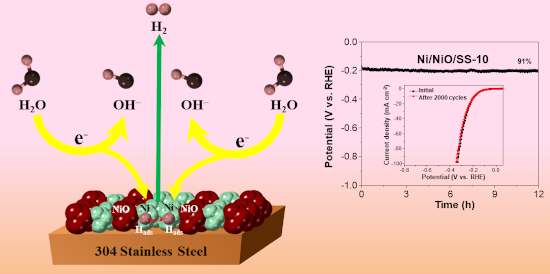
- substrates such as nickel foam (NF), carbon cloth, and fluorine-doped tin oxide [27][28][29]. Also, SS displays high electrical conductivity, outstanding chemical stability, and good mechanical properties. Therefore, numerous researchers have used SS as a template to deposit nanomaterials using various
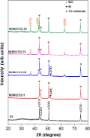
- potential regarding industrial application. Results and Discussion Crystal structure and phase of the as-synthesized electrodes were verified by X-ray diffraction (XRD) measurements with 2θ ranging from 20° to 80°. Figure 1 displays the XRD patterns of SS, Ni/NiO/SS-5, Ni/NiO/SS-10, Ni/NiO/SS-15, and Ni/NiO


Synthesis and magnetic transitions of rare-earth-free Fe–Mn–Ni–Si-based compositionally complex alloys at bulk and nanoscale
Beilstein J. Nanotechnol. 2025, 16, 823–836, doi:10.3762/bjnano.16.62
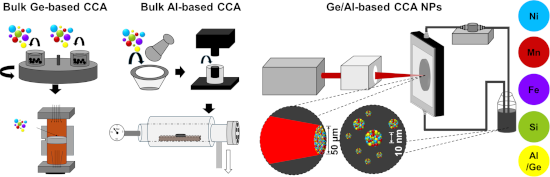
- , the M–H curve displays a significant hysteresis loop with a Hc of 26.2 kA·m−1, which is higher than that of the bulk Ge-based CCA (8.4 kA·m−1) (Figure 7b, Table 4, and Figure S6b, Supporting Information File 1). At 300 K, Hc drops to 0.7 kA·m−1, and Ms (300 K, 9 T) decreases to 6.6 A·m2·kg−1


Changes of structural, magnetic and spectroscopic properties of microencapsulated iron sucrose nanoparticles in saline
Beilstein J. Nanotechnol. 2025, 16, 762–784, doi:10.3762/bjnano.16.59
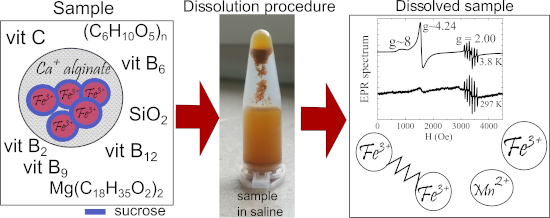
- stretching (amide II), and –C=C stretching of phenyl and pterin rings [61] of folic acid. Of note, the infrared spectrum of FST displays an increased intensity in the folic acid-related bands, a slight upshift in the ascorbic-related bands, and the emergence of more pronounced CH2 bands. This behavior




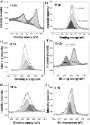

Thickness dependent oxidation in CrCl3: a scanning X-ray photoemission and Kelvin probe microscopies study
Beilstein J. Nanotechnol. 2025, 16, 749–761, doi:10.3762/bjnano.16.58
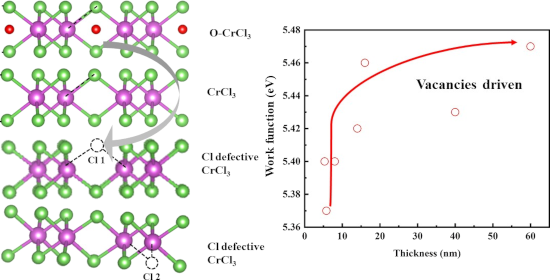
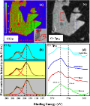
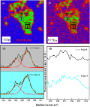
- beams. In contrast, the OSA measurement spectrum showed a Si component due to the wider beam diameter. This is further supported by the evaluation of the CrCl3 stoichiometry in the latter two cases. Table 1 displays the area under the peaks for Cl 2p and Cr 2p. The stoichiometry was determined after
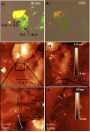
- ITO substrate for the points T and L in (a, b), respectively, together with zoomed details in (e) and (f). The inset displays the thickness profiles of T and L, respectively. A schematic of experimental SPEM setup in the case of a few layer CrCl3 flake [27]. The lower part of the figure Figure 3 was





Synthesis of a multicomponent cellulose-based adsorbent for tetracycline removal from aquaculture water
Beilstein J. Nanotechnol. 2025, 16, 728–739, doi:10.3762/bjnano.16.56
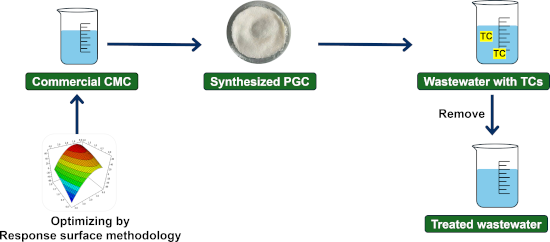
- aligns with the subsequent EDX results. The FTIR spectrum (Figure 2g) of commercial CMC displays distinct adsorption bands at 3219, 2875, 1424, 1325, 1053, 1029 and 893 cm−1. The broad band from 3219 to 3406 cm−1 corresponds to O‒H stretching vibrations, reflecting the abundance of hydroxy and carboxyl


Zeolite materials with Ni and Co: synthesis and catalytic potential in the selective hydrogenation of citral
Beilstein J. Nanotechnol. 2025, 16, 520–529, doi:10.3762/bjnano.16.40
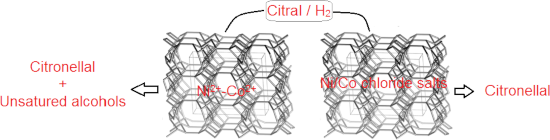
- 0.70 × 0.65 nm2). Additionally, the kinetic diameter of a nitrogen molecule (0.36 nm) is closer to the HEU channel diameter, further influencing the observed behavior. Table 3 displays the specific surface area (SSA) and microporous volume (Vmicro) values determined for the obtained materials. It is
- ) and 450 °C, whereas NiZImp displays three peaks at 150, 410, and 500 °C. Regarding the bimetallic systems, CoNiZIE shows three peaks at 170, 380, and 500 °C, while CoNiZImp shows five peaks at 170, 310, 350 (intense), 420, and 500 °C. In line with the elemental composition (Figure 3, Table 1 and Table


Quantification of lead through rod-shaped silver-doped zinc oxide nanoparticles using an electrochemical approach
Beilstein J. Nanotechnol. 2025, 16, 422–434, doi:10.3762/bjnano.16.33
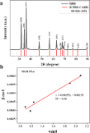
- sensitivity among all. Results and Discussion X-ray diffraction of as-synthesized Ag@ZnO nanorods The Ag@ZnO NRs were analyzed for their crystal phases by evaluating the X-ray diffraction pattern. Figure 1a displays the diffraction pattern of the Ag@ZnO NRs that were formed. It was observed that this pattern
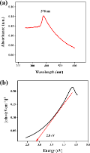
- Ag@ZnO nanorods Figure 4a displays the optical spectra of Ag@ZnO NRs, which was obtained in the 200–600 nm wavelength range. The absorbance peak in this spectrum, which is moved toward a higher wavelength also known as redshift, is shown at 378 nm (for pure ZnO it is 362 nm) [20]. The bandgap energy
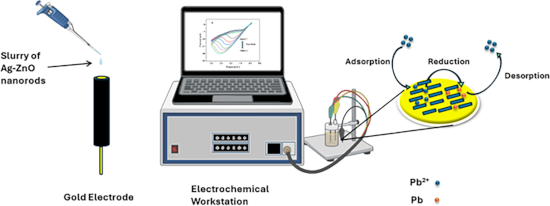
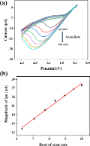
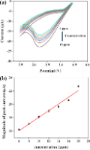
- investigated. The studies on scan-rate dependence were conducted at different scan rates between 40–100 mV/s in a solution containing 20 ppm of lead. Figure 11a displays the CV results of the Ag@ZnO NRs/Nafion/gold electrode, using scan rates varying from 40 to 100 mV/s. The observed CV response, which varies





Comparison of organic and inorganic hole transport layers in double perovskite material-based solar cell
Beilstein J. Nanotechnol. 2025, 16, 119–127, doi:10.3762/bjnano.16.11
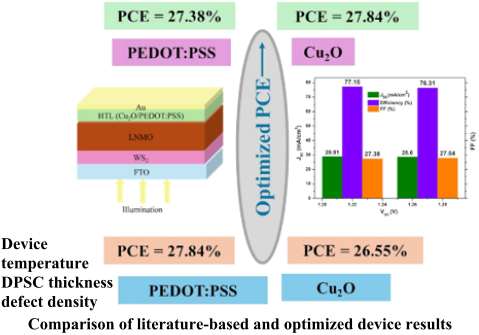
- optimized PSC device displays a higher efficiency of 27.84% with Cu2O and 27.38% with PEDOT:PSS for the planar n-i-p FTO/WS2/LNMO/HTL/Au device structure. However, highly efficient organic HTLs have a few disadvantages over inorganic HTLs, including multistep synthesis requiring additional doping, leading


Characterization of ZnO nanoparticles synthesized using probiotic Lactiplantibacillus plantarum GP258
Beilstein J. Nanotechnol. 2025, 16, 78–89, doi:10.3762/bjnano.16.8
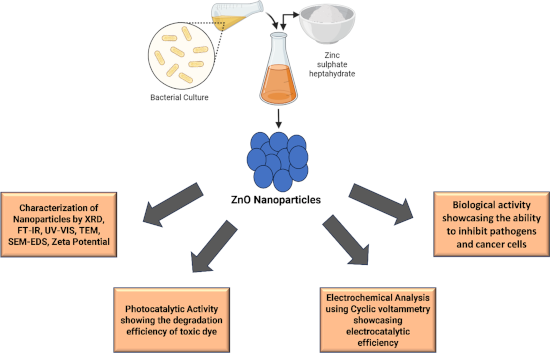
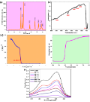
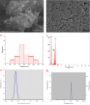
- ZnO NPs confirms the XRD results, that is, the hexagonal wurtzite structure (Figure 3). SEM and EDX analysis SEM was used to analyze the surface morphology of a modified nanocomposite film, and the image displays a consistent coverage of a web-like structure. Close-up views revealed a crumpled and



Theoretical study of the electronic and optical properties of a composite formed by the zeolite NaA and a magnetite cluster
Beilstein J. Nanotechnol. 2025, 16, 44–53, doi:10.3762/bjnano.16.5
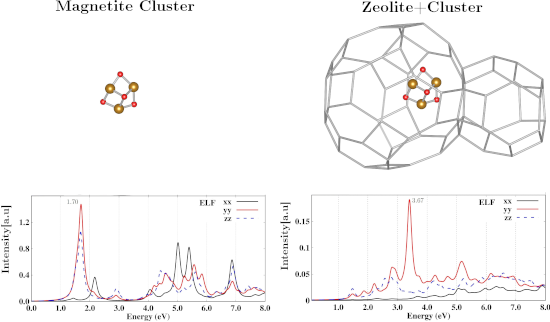
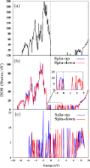
- of the isolated cluster. Given the observed structural modifications of the cluster when integrated into the zeolite (Figure 2), it is expected that its electronic properties would also undergo changes. Figure 4a displays the total density of states (TDOS) for the NaA zeolite, featuring a primary
- transition from spin up to spin down. Figure 4c displays the TDOS for the magnetite cluster. Notably, it reveals the presence of both spin polarizations at the Fermi level, with the spin-down polarization being the dominant one. This observation is indicative of a ferromagnetic behavior, aligning with the




Bioinspired nanofilament coatings for scale reduction on steel
Beilstein J. Nanotechnol. 2025, 16, 25–34, doi:10.3762/bjnano.16.3

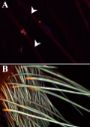
- maintenance costs. By understanding and replicating the nanostructured [3][7][8][9], liquid-repelling features of Collembola skin, we propose a novel approach to mitigate this issue. Figure 1 displays the cuticle micro- and nanostructure which leads to effective water repellency [5]. It has been shown how the


A nanocarrier containing carboxylic and histamine groups with dual action: acetylcholine hydrolysis and antidote atropine delivery
Beilstein J. Nanotechnol. 2025, 16, 11–24, doi:10.3762/bjnano.16.2

- and 2) exceeding 2000 kDa likely corresponded to aggregates of p(Hist-CA). The particle distribution diagram from DLS data displays two peaks with average hydrodynamic diameters of 50 ± 4 nm and 190 ± 30 nm and with a polydispersity index (PdI) of 0.245 (Figure 1c). Evidently, the former peak


Ultrablack color in velvet ant cuticle
Beilstein J. Nanotechnol. 2024, 15, 1554–1565, doi:10.3762/bjnano.15.122

- transparent scales into superwhite and melanized scales into superblack [25]. Melanin pigments can produce a black color with visible reflections, such as in shiny fur and feathers. The degree of such visible reflections depends on the surface structure. Ultrablack color lacks this gloss and instead displays



Strain-induced bandgap engineering in 2D ψ-graphene materials: a first-principles study
Beilstein J. Nanotechnol. 2024, 15, 1440–1452, doi:10.3762/bjnano.15.116
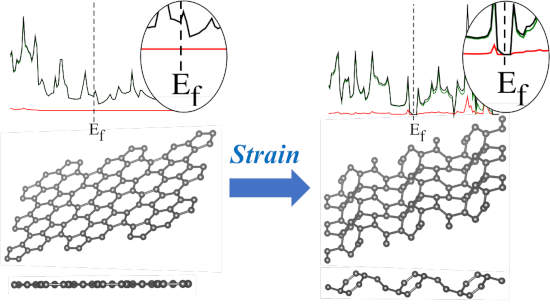
- pliable displays and as strengthening material in composites [2][3][4]. It has also gained considerable attention among researchers for its application in hydrogen storage, owing to its good adsorption capacity and controllable storage and re-release of hydrogen at efficient temperatures [4][5]. The
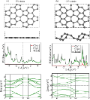
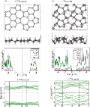
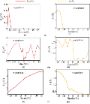
- observed to be −17% to +17%, whereas for ψ-graphone, it lies within the strain span of −16% to +16%. The remarkable strain tolerance of these materials makes them promising candidates for flexible displays and other electronic devices. Computational Methodology The computational parameters used in our


Ion-induced surface reactions and deposition from Pt(CO)2Cl2 and Pt(CO)2Br2
Beilstein J. Nanotechnol. 2024, 15, 1427–1439, doi:10.3762/bjnano.15.115

- )2Br2 evolves in response to (Figure 4, left) Ar+ and (Figure 4, right) H2+ exposure. Prior to ion irradiation, the C 1s region displays a single peak at 289 eV corresponding to the carbonyl (CO) groups in Pt(CO)2Br2. Upon ion irradiation, the C 1s peak decreases in intensity and shifts to 288 eV until
- m/z 20 correspond to, respectively, Ar+ and Ar2+ ions formed by electron impact ionization of neutral Ar in the QMS). The top panel displays the gas phase species observed during the film’s exposure to 4.0 µC/cm2 Ar+, corresponding to an acquisition time of 30 s. (Right) Kinetic profile for 13CO



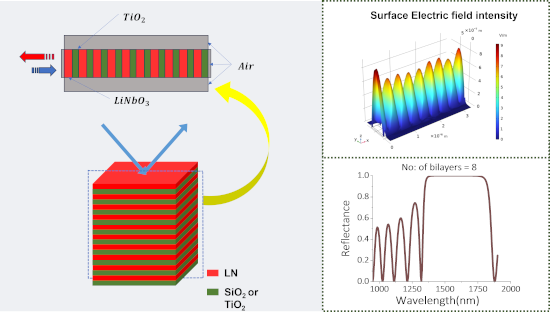
Lithium niobate on insulator: an emerging nanophotonic crystal for optimized light control
Beilstein J. Nanotechnol. 2024, 15, 1415–1426, doi:10.3762/bjnano.15.114
- layer to absorb four times more near-infrared light [43]. Flip-chip micro light-emitting diodes (micro-LEDs) are a revolutionary technology with the potential to create next-generation HDR displays due to their tiny size, exceptional brightness, wide color gamut, and energy efficiency [44][45][46


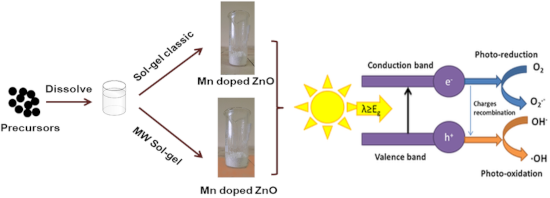
Mn-doped ZnO nanopowders prepared by sol–gel and microwave-assisted sol–gel methods and their photocatalytic properties
Beilstein J. Nanotechnol. 2024, 15, 1283–1296, doi:10.3762/bjnano.15.104
- domain sizes, and lattice strains. Textural parameters of the samples. Supporting Information Figure S1 displays the FTIR spectra of the sol–gel (SG) and microwave-assisted sol–gel (MW) samples after photocatalytic tests, alongside the spectrum of commercial oxalic acid for comparison. Figure S2 shows





