Search results
Search for "electrochemistry" in Full Text gives 90 result(s) in Beilstein Journal of Nanotechnology.
Exfoliation in a low boiling point solvent and electrochemical applications of MoO3
Beilstein J. Nanotechnol. 2020, 11, 662–670, doi:10.3762/bjnano.11.52
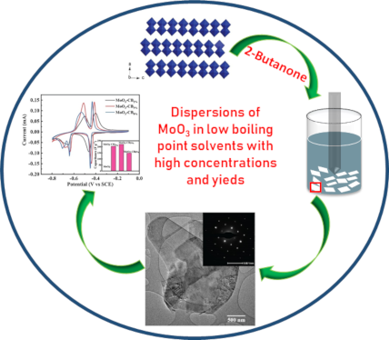
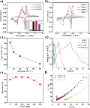
- layered materials, molybdenum oxide (MoO3) has gained special attention because of its numerous applications in electronics, catalysis, electrochemistry, solar cells and gas sensors [6]. Monolayered and few-layered MoO3 has been reported to have better properties than the bulk material [7]. Thus, it is

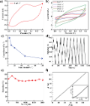
Silver-decorated gel-shell nanobeads: physicochemical characterization and evaluation of antibacterial properties
Beilstein J. Nanotechnol. 2020, 11, 620–630, doi:10.3762/bjnano.11.49
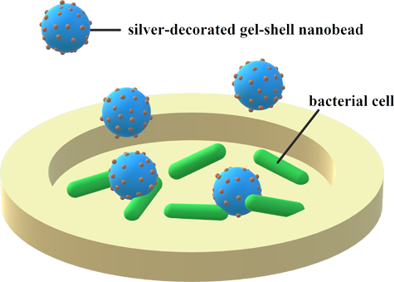
- ; Staphylococcus sp; Introduction Over the last several years, scientific advances in synthetic polymer materials resulted in a number of applications. With regard to this, special attention has been paid to polymer nanoparticles [1][2]. Polymer nanobeads have been used in various areas including electrochemistry


Antimony deposition onto Au(111) and insertion of Mg
Beilstein J. Nanotechnol. 2019, 10, 2541–2552, doi:10.3762/bjnano.10.245
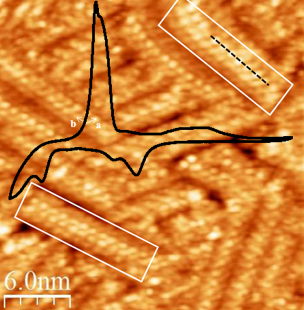
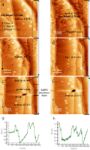
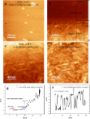
- described in [19]). Results and Discussion Electrochemistry of antimony on Au(111) The cyclic voltammograms of Sb deposition at underpotential and overpotential on Au(111) in 0.5 M H2SO4 containing 0.25 mM Sb2O3 electrolyte saturated by argon are shown in Figure 1. Two peaks were observed in the





High-tolerance crystalline hydrogels formed from self-assembling cyclic dipeptide
Beilstein J. Nanotechnol. 2019, 10, 1894–1901, doi:10.3762/bjnano.10.184
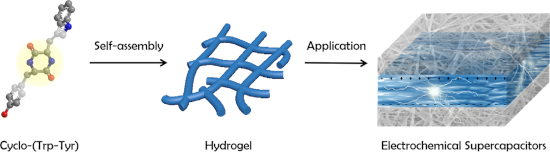
- conditions, including in the presence of charged biopolymers, extreme acid/base environments, and changing thermal conditions. Such high tolerance enables the crystalline hydrogels to be applied in the complex and harsh environments of electrochemistry. In addition, this study demonstrates that the self


Selective gas detection using Mn3O4/WO3 composites as a sensing layer
Beilstein J. Nanotechnol. 2019, 10, 1423–1433, doi:10.3762/bjnano.10.140
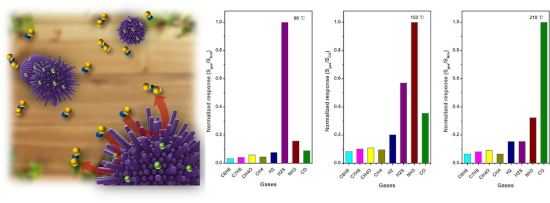
- color because of its oxygen vacancy, which is an important reason why WO3 exhibits n-type semiconductor characteristics. WO3 is a multifunctional semiconductor material and widely used in phototropism [1], electrochromism [2], photocatalysis [3], electrochemistry [4], gas sensing [5] and other fields


In situ AFM visualization of Li–O2 battery discharge products during redox cycling in an atmospherically controlled sample cell
Beilstein J. Nanotechnol. 2019, 10, 930–940, doi:10.3762/bjnano.10.94
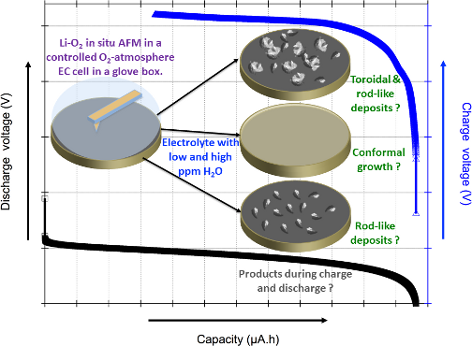
- conditions. Keywords: AFM; battery; EIS; in situ; Li–O2; Introduction Italian anatomist Luigi Galvani [1] is credited with the birth of electrochemistry in the year 1791. Electrochemistry is the study of chemical processes that cause electrons to move from one element to another causing oxidation (loss of
- ] discusses various in situ techniques to monitor electrochemistry of rechargeable battery materials. When considering rechargeable battery materials, electrochemical reactions [7] between lithium (Li) and oxygen (O2) offer the highest theoretical potential of any possible battery technology of 3500 Wh/kg. Li
- surface was cleaned and then imaged using tapping mode. Liu et al. [24] performed in situ AFM investigations of Li/O2 electrochemistry measuring formation of toroidal and spherical structures. The AFM scanner was briefly exposed to the atmosphere in their case, leading to possible increases in the amount


Nanoporous water oxidation electrodes with a low loading of laser-deposited Ru/C exhibit enhanced corrosion stability
Beilstein J. Nanotechnol. 2019, 10, 157–167, doi:10.3762/bjnano.10.15
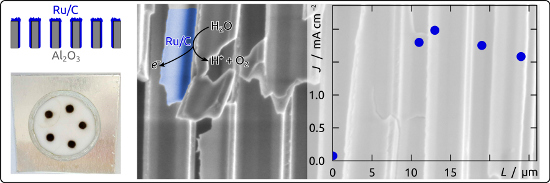
- to planar samples at pH 4. Finally, their electrocatalytic performance depends on the geometric parameters and is optimized with 13 μm pore length, which yields 2.6 mA cm−2, or 49 A g−1, at η = 0.20 V. Keywords: electrochemistry; nanostructures; noble metals; ruthenium catalyst; water splitting




Hydrogen-induced plasticity in nanoporous palladium
Beilstein J. Nanotechnol. 2018, 9, 3013–3024, doi:10.3762/bjnano.9.280
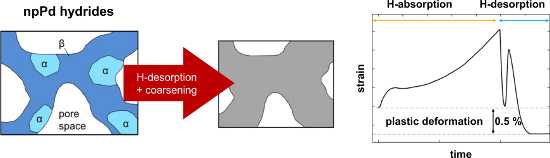
- are elucidated, taking into account characteristics of structure and deformation mechanism. Keywords: electrochemistry; hydride formation; in situ dilatometry; internal-stress plasticity; nanoporous palladium; Introduction Material properties on the nanoscale can differ substantially from their bulk


Ternary nanocomposites of reduced graphene oxide, polyaniline and hexaniobate: hierarchical architecture and high polaron formation
Beilstein J. Nanotechnol. 2018, 9, 2936–2946, doi:10.3762/bjnano.9.272
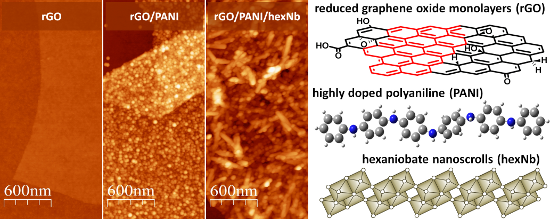
- with rGO flakes and hexNb nanoscrolls, which promote conformational changes of the polymer backbone (secondary doping). Spectroscopic and electrochemistry data indicate a synergetic effect on the ternary nanocomposite, which is attributed to interactions between the components resulting from the


Accurate control of the covalent functionalization of single-walled carbon nanotubes for the electro-enzymatically controlled oxidation of biomolecules
Beilstein J. Nanotechnol. 2018, 9, 2750–2762, doi:10.3762/bjnano.9.257
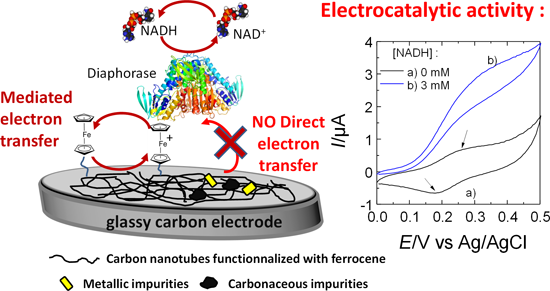
- the solvent used for doing electrochemistry. The results of the present study therefore lead us to claim that, while many people are now working with graphene, CNTs are indeed useful for well-designed electrocatalytic devices, thus being a viable alternative to graphene-based sensors provided that the






Impact of the anodization time on the photocatalytic activity of TiO2 nanotubes
Beilstein J. Nanotechnol. 2018, 9, 2628–2643, doi:10.3762/bjnano.9.244
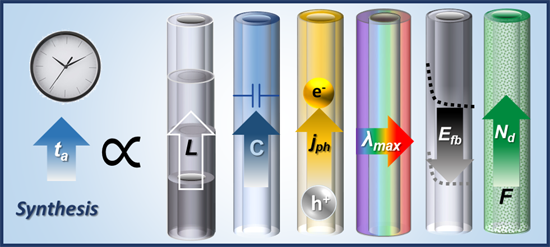
- °C) to ca. 8% (500 °C). This observation is of interest since most of the available literature suggests that the most photoactive crystalline phase is anatase and that the rutile phase appears at higher temperatures (above 500 °C) [44][54][55]. Electrochemistry and photoelectrochemistry A systematic


Sulfur-, nitrogen- and platinum-doped titania thin films with high catalytic efficiency under visible-light illumination
Beilstein J. Nanotechnol. 2018, 9, 1629–1640, doi:10.3762/bjnano.9.155
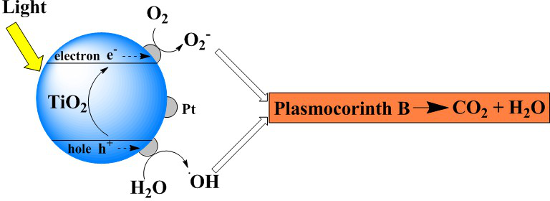
- is used in a variety of applications, such as photovoltaics [2], white pigments [3], electrochemistry [4], catalytic support [5], and most notably, photocatalysis [6]. Photocatalysis is used to describe a process during which a semiconductor (titanium dioxide) interacts with light to produce reactive


Facile phase transfer of gold nanorods and nanospheres stabilized with block copolymers
Beilstein J. Nanotechnol. 2018, 9, 616–627, doi:10.3762/bjnano.9.58
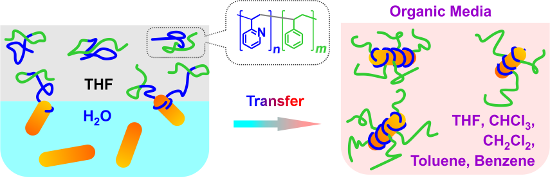
- , 119991, Moscow Russia Frumkin Institute of Physical Chemistry and Electrochemistry, Russian Academy of Sciences, Leninsky Prosp. 31, 119071 Moscow, Russia 10.3762/bjnano.9.58 Abstract A fast route to transfer Au nanoparticles from aqueous to organic media is proposed based on the use of a high molecular


L-Lysine-grafted graphene oxide as an effective adsorbent for the removal of methylene blue and metal ions
Beilstein J. Nanotechnol. 2017, 8, 2680–2688, doi:10.3762/bjnano.8.268
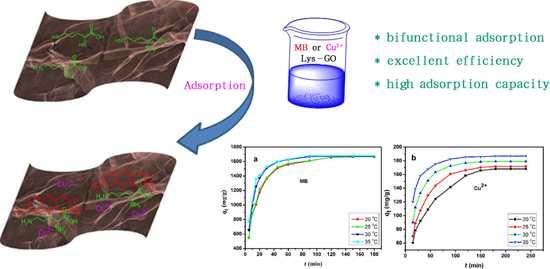
- attention because of their huge specific surface area, extraordinary electronic transport properties and unique adsorption properties [1][2][3]. These materials have important applications in many fields, including physics [4], electrochemistry [5], environmental science [6] and catalysis [7]. For example


Triptycene-terminated thiolate and selenolate monolayers on Au(111)
Beilstein J. Nanotechnol. 2017, 8, 892–905, doi:10.3762/bjnano.8.91
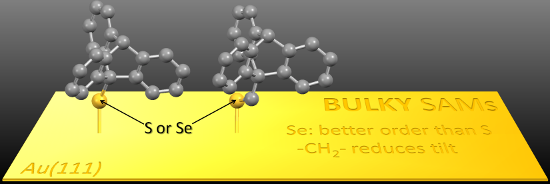
- reported, e.g., in electrochemistry [1][2], molecular electronics [1][2] and biocompatibility [1][2], to name only a few. Particularly interesting is the use of SAMs as templates for crystallographically oriented metal–organic framework (MOF) thin film growth [3]. The by far most intensely studied SAM




Copper atomic-scale transistors
Beilstein J. Nanotechnol. 2017, 8, 530–538, doi:10.3762/bjnano.8.57
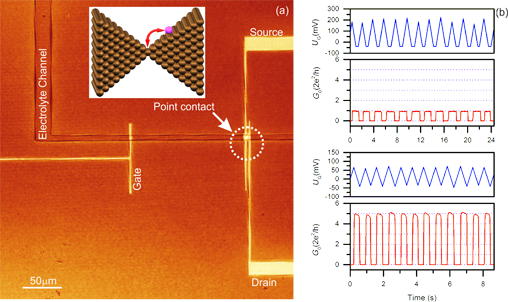
- . Keywords: electrochemistry; encapsulation; metallic atomic-scale transistor; nanotechnology; photolithography; Introduction Enormous research efforts worldwide are aimed at finding new solutions and technologies to manufacturing electronic components "beyond the silicon age". Resistive switching is one of


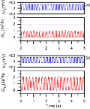
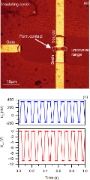
Evolution of the graphite surface in phosphoric acid: an AFM and Raman study
Beilstein J. Nanotechnol. 2016, 7, 1878–1884, doi:10.3762/bjnano.7.180
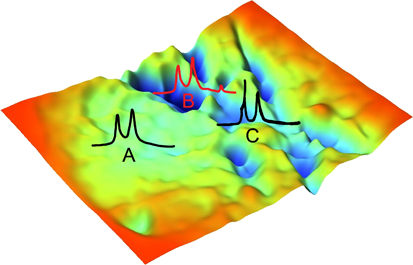
- HOPG intercalation, especially in relation with the exfoliation mechanism. Experimental Sample and electrochemistry As working electrode (WE) Z-grade highly oriented pyrolytic graphite (HOPG, 10 × 10 mm2, Optigraph©) crystal is used inside a three-electrode electrochemical cell. The graphite is


Microwave synthesis of high-quality and uniform 4 nm ZnFe2O4 nanocrystals for application in energy storage and nanomagnetics
Beilstein J. Nanotechnol. 2016, 7, 1350–1360, doi:10.3762/bjnano.7.126
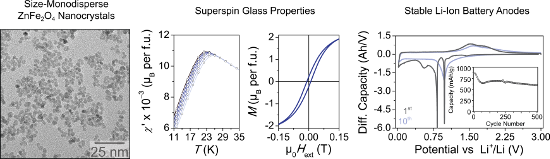
- Christian Suchomski Ben Breitung Ralf Witte Michael Knapp Sondes Bauer Tilo Baumbach Christian Reitz Torsten Brezesinski Institute of Physical Chemistry, Justus-Liebig-University Giessen, Heinrich-Buff-Ring 17, 35392 Giessen, Germany Battery and Electrochemistry Laboratory, Institute of


Mesoporous hollow carbon spheres for lithium–sulfur batteries: distribution of sulfur and electrochemical performance
Beilstein J. Nanotechnol. 2016, 7, 1229–1240, doi:10.3762/bjnano.7.114
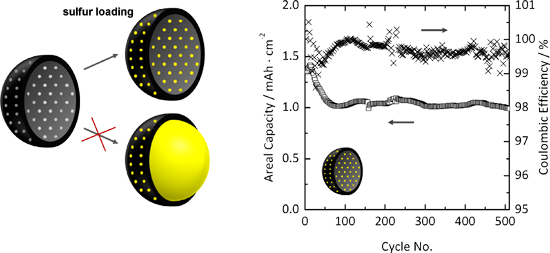
- Anika C. Juhl Artur Schneider Boris Ufer Torsten Brezesinski Jurgen Janek Michael Froba Institute of Inorganic and Applied Chemistry, University of Hamburg, Martin-Luther-King-Platz 6, 20146 Hamburg, Germany Battery and Electrochemistry Laboratory, Institute of Nanotechnology, Karlsruhe Institute
- Information File 160: Additional Information. Acknowledgements We thank Dr. Frank Hoffmann and Carl-Philipp Elverfeldt for helpful discussions and proof reading as well as Renate Walter for SEM and EDX measurements. This research was supported by the BASF International Scientific Network for Electrochemistry


Voltammetric determination of polyphenolic content in pomegranate juice using a poly(gallic acid)/multiwalled carbon nanotube modified electrode
Beilstein J. Nanotechnol. 2016, 7, 1104–1112, doi:10.3762/bjnano.7.103
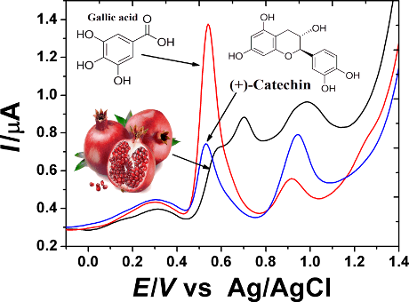
- Refat Abdel-Hamid Emad F. Newair Unit of Electrochemistry Applications (UEA), Chemistry Department, Faculty of Science, Sohag University, Sohag 82524, Egypt 10.3762/bjnano.7.103 Abstract A simple and sensitive poly(gallic acid)/multiwalled carbon nanotube modified glassy carbon electrode (PGA


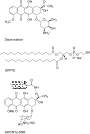
Comparison of the interactions of daunorubicin in a free form and attached to single-walled carbon nanotubes with model lipid membranes
Beilstein J. Nanotechnol. 2016, 7, 524–532, doi:10.3762/bjnano.7.46
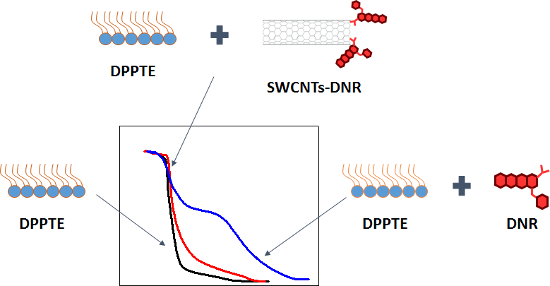
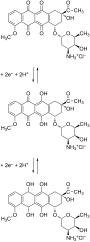
- drug in a free form and attached to carbon nanotubes with model membranes may be also followed using electrochemistry. After the LB transfer described in detail in Experimental section, supported layers were characterized by electrochemical techniques. First, in order to verify the presence of
- electrode by electrochemistry. In case of daunorubicin in the free form the estimation was based on the DNR concentration in the subphase (10−5 M) and surface concentration of the drug incorporating into the model membrane precompressed to 30 mN/m [24], while in case of DNR attached to carbon nanotubes the
- influenced to such a large extent and even at the higher weigh content of CNTs in the mixed layer, the monolayer retains its solid character. In this case hydrophobic interactions between the nanotubes and DPPTE molecules seem to play the most important role. Electrochemistry was also employed to compare the




Characterisation of thin films of graphene–surfactant composites produced through a novel semi-automated method
Beilstein J. Nanotechnol. 2016, 7, 209–219, doi:10.3762/bjnano.7.19
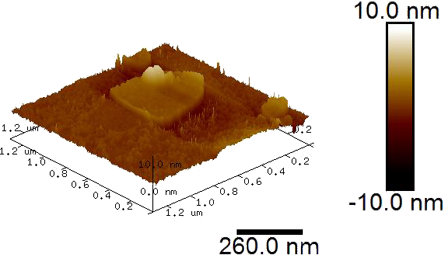
- number of layers [18]. However the intensity is also dependant on the excitation laser frequency and so cannot be solely relied upon. Further details on the electrochemistry and usage of graphene produced by this method are detailed in another paper [6]. Deposition of thin films of graphene–surfactant




Sonochemical co-deposition of antibacterial nanoparticles and dyes on textiles
Beilstein J. Nanotechnol. 2016, 7, 1–8, doi:10.3762/bjnano.7.1
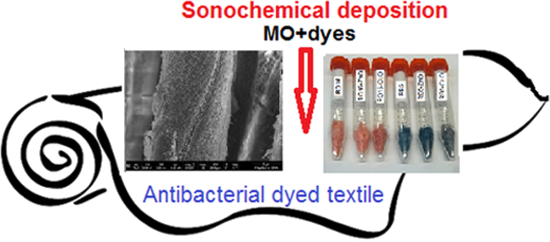
- the other hand, simultaneous deposition on solid surfaces of two materials was applied using methods such as reactive electron beam deposition [11], pulsed laser deposition [12], Langmuir–Blodgett [13], electrochemistry [14], ion sputtering [15], casting [16], and sonoelectrochemistry [17]. We could




Chemiresistive/SERS dual sensor based on densely packed gold nanoparticles
Beilstein J. Nanotechnol. 2015, 6, 2498–2503, doi:10.3762/bjnano.6.259
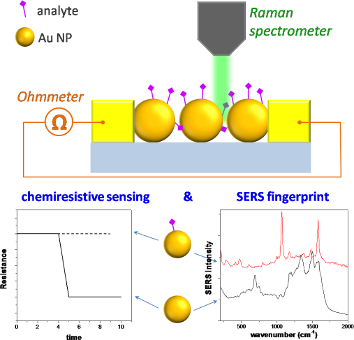
- formed by convective self-assembly, without implying lithographic procedures. The NP strips are fabricated directly across interdigitated electrodes on commercially available chips, making the DEOS easy to handle, and compatible with existing electrochemistry equipment. The adsorption of MBA model


Nanostructured superhydrophobic films synthesized by electrodeposition of fluorinated polyindoles
Beilstein J. Nanotechnol. 2015, 6, 2078–2087, doi:10.3762/bjnano.6.212
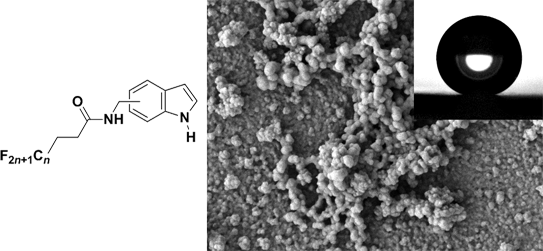
- oleophobic properties are obtained due to the presence of spherical nanoparticles and low surface energy compounds. Keywords: bioinspiration; conducting polymers; electrochemistry; nanostructures; polyindoles; superhydrophobic; Introduction The number of studies about materials with superhydrophobic