


Search results
Search for "green synthesis" in Full Text gives 38 result(s) in Beilstein Journal of Nanotechnology.
Tin dioxide nanomaterial-based photocatalysts for nitrogen oxide oxidation: a review
Beilstein J. Nanotechnol. 2022, 13, 96–113, doi:10.3762/bjnano.13.7
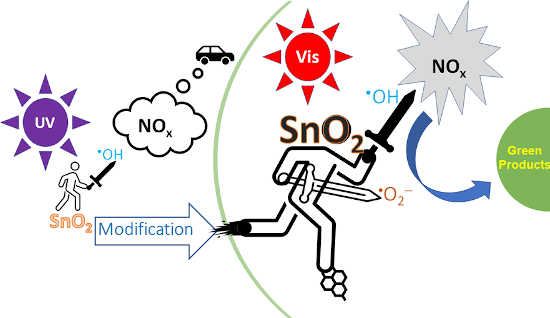
- time of SnO2 NPs (a) and Ag@SnO2 (b). Figure 16 was reprinted from [72], Catalysis Communications, vol. 136, by Bui, D. P.; Nguyen, M. T.; Tran, H. H.; You, S.-J.; Wang, Y.-F.; Van Viet, P. “Green synthesis of Ag@SnO2 nanocomposites for enhancing photocatalysis of nitrogen monoxide removal under solar


Sputtering onto liquids: a critical review
Beilstein J. Nanotechnol. 2022, 13, 10–53, doi:10.3762/bjnano.13.2
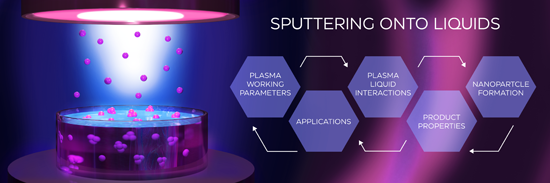
- . These chemical methods can be divided into two major techniques, namely chemical vapor deposition (CVD) with liquid-phase synthesis and colloidal synthesis. In general, the colloidal synthesis of NPs is highly acclaimed due to its versatility [16]. So-called bio-assisted methods, biosynthesis, or green
- synthesis also attract the attention of many researchers due to the “environmentally friendly” nature of these processes, promoted by involving biological systems or by being related directly to biological systems [20][23]. These methods use, among others, bacteria, fungi, viruses, yeasts, and plant






The role of deep eutectic solvents and carrageenan in synthesizing biocompatible anisotropic metal nanoparticles
Beilstein J. Nanotechnol. 2021, 12, 924–938, doi:10.3762/bjnano.12.69
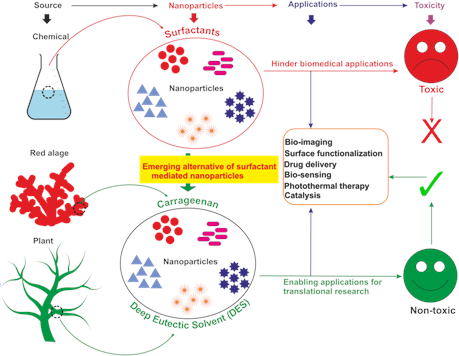
- monodispersed nanoparticles, an essential criterion for their intended application and a limitation of the green synthesis of nanoparticles using plant extracts. Several biocompatible counterparts such as polymers, lipids, and chitosan-based nanoparticles have been successfully used in the synthesis of safe
- biocompatible nature. Green synthesis of metal nanoparticles for biomedical applications has gained momentum recently due to their inherent nontoxicity. Although they are biocompatible, these metal nanoparticles lack monodispersity, high yield, and controlled morphology, which are essential criteria for the
- successful use in biological milieus. Recent studies indicated that the green synthesis of nanoparticles, such as zinc oxide nanoparticles and bimetallic copper–silver and nickel–cobalt nanoparticles, is preferred for catalytic, antibacterial, and therapeutic applications [12][13][14]. Several other


A review on the green and sustainable synthesis of silver nanoparticles and one-dimensional silver nanostructures
Beilstein J. Nanotechnol. 2021, 12, 102–136, doi:10.3762/bjnano.12.9
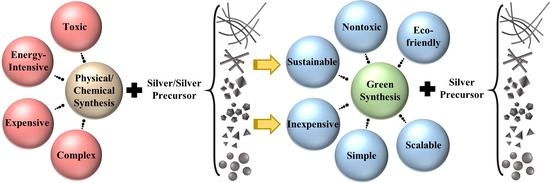
- type, reagent type, precursor concentration, temperature, process duration, and pH. Physical and chemical methods have been among the most common methods to synthesize silver nanostructures; however, they possess substantial disadvantages and short-comings, especially compared to green synthesis
- methods. On the contrary, the number of green synthesis techniques has been increasing during the last decade and they have emerged as alternative routes towards facile and effective synthesis of silver nanostructures with different morphologies. In this review, we have initially outlined the most common
- and popular chemical and physical methodologies and reviewed their advantages and disadvantages. Green synthesis methodologies are then discussed in detail and their advantages over chemical and physical methods have been noted. Recent studies are then reviewed in detail and the effects of essential


Antimicrobial metal-based nanoparticles: a review on their synthesis, types and antimicrobial action
Beilstein J. Nanotechnol. 2020, 11, 1450–1469, doi:10.3762/bjnano.11.129
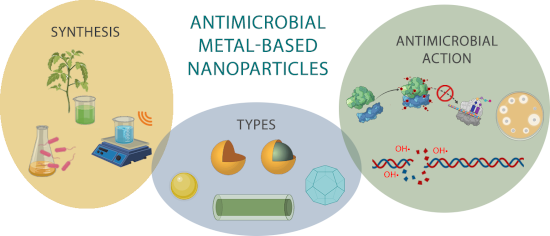
- state-of-the-art in metal-based nanoparticles, focusing on their synthesis methods, types, and their antimicrobial action. Different techniques used to synthesize metal-based nanoparticles were discussed, including chemical and physical methods and “green synthesis” methods that are free of chemical
- , physical methods have the highest economic and energetic costs [10]. Therefore, research has leaned towards chemical synthesis methods which are able to produce a large number of NPs in a shorter period of time [11]. The research in this area, especially the “green synthesis” methods, has undoubtedly
- received significant attention regarding their low environmental impact compared to other procedures [12][13]. There are different routes in which the green synthesis methods are applied through the use of microorganisms and plants in a safe, efficient, and profitable manner [14]. Different types of metal


Green fabrication of lanthanide-doped hydroxide-based phosphors: Y(OH)3:Eu3+ nanoparticles for white light generation
Beilstein J. Nanotechnol. 2019, 10, 1200–1210, doi:10.3762/bjnano.10.119
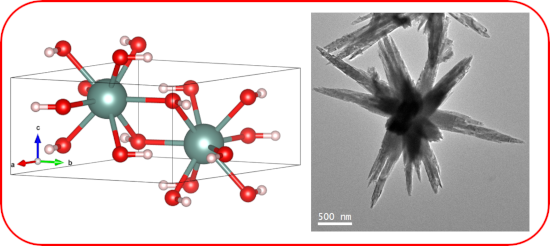
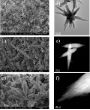
- unchanged CRI (≈60) as the amount of Y(OH)3:Eu3+ was increased. Keywords: green synthesis; phosphors; phosphor-converted white LED; white LED; white light generation; Introduction Interior lighting is an integral part of civilization, and its development has evolved toward the design of more energy



Mechanistic insights into plasmonic photocatalysts in utilizing visible light
Beilstein J. Nanotechnol. 2018, 9, 628–648, doi:10.3762/bjnano.9.59
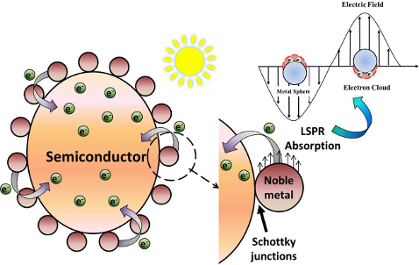
- nanoparticles takes place on the semiconductor surface. The most common light source used is a UV lamp producing a high-energy spectrum. Since most contemporary research promotes sustainable and green synthesis routes, replacing the UV lamp as the source of photons with renewable energy could be an alternative
- ). The so called green synthesis of Au and Ag are suitably used in clinical and biomedical fields because it is free of toxic chemicals and non-polar solvents. Numerous researches have proved that Au and Ag NPs can be synthesized from the chemicals extracted from plants and microorganisms such as fungi





Green synthesis of fluorescent carbon dots from spices for in vitro imaging and tumour cell growth inhibition
Beilstein J. Nanotechnol. 2018, 9, 530–544, doi:10.3762/bjnano.9.51
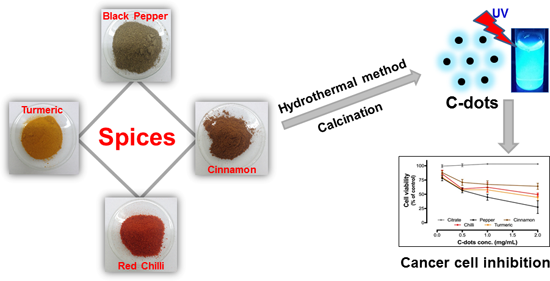
- . Generally, the synthesis of C-dots is a multistep and tedious procedure, which is often expensive. Moreover, a surface passivation with other ligands or additives is frequently needed in order to obtain exacerbated intrinsic fluorescence properties [5][12][13]. Recently, green synthesis methods of C-dots


Templated green synthesis of plasmonic silver nanoparticles in onion epidermal cells suitable for surface-enhanced Raman and hyper-Raman scattering
Beilstein J. Nanotechnol. 2016, 7, 834–840, doi:10.3762/bjnano.7.75
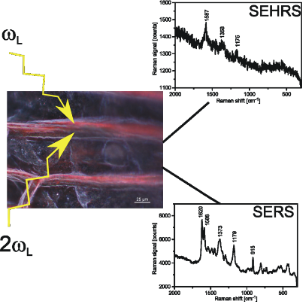
- affiliation: Philips Biocell, Gydevang 42, 3450 Allerød, Denmark Humboldt Universität zu Berlin, 12489 Berlin, Germany 10.3762/bjnano.7.75 Abstract We report fast and simple green synthesis of plasmonic silver nanoparticles in the epidermal cells of onions after incubation with AgNO3 solution. The biological
- the last decade, so-called “green synthesis” came into the focus of interest, since many molecules typically available in biological living matter have the capability to reduce silver and gold salts. It has been demonstrated that plants and also microorganisms such as algae, fungi, yeasts, and
- reading out the maximum signal of the band at 1175 cm−1 and subtracting the signal at 1130 cm−1 as background. Results and Discussion Among various plant materials applied for green synthesis of metal nanoparticles, also the use of onion extract for the preparation of gold and silver nanoparticles has


Green and energy-efficient methods for the production of metallic nanoparticles
Beilstein J. Nanotechnol. 2015, 6, 2354–2376, doi:10.3762/bjnano.6.243
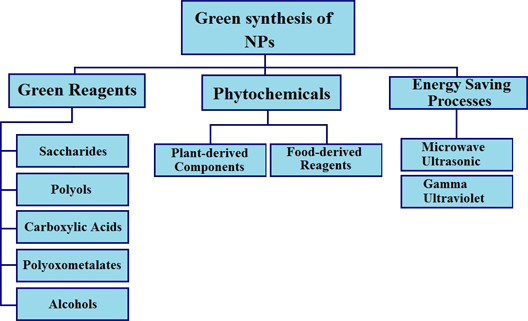
- accidents [116]. In recent years, researchers tried to get rid of toxic and flammable reagents, such as hydrazine, sodium borohydride, carbon monoxide, and dimethyl formamide (DMF) in the synthesis of NPs [90]. Green synthesis of NPs Metal NPs can be produced and stabilized by various physical and chemical
- deserve attention in a Green Chemistry approach [4][87]. For green synthesis of NPs, three major principles of Green Chemistry should be considered including the selection of (I) green solvents, (II) non-toxic reducing agents, and (III) harmless stabilizers [21][26][32][51][112][139]. Biochemical


Green synthesis, characterization and catalytic activity of natural bentonite-supported copper nanoparticles for the solvent-free synthesis of 1-substituted 1H-1,2,3,4-tetrazoles and reduction of 4-nitrophenol
Beilstein J. Nanotechnol. 2015, 6, 2300–2309, doi:10.3762/bjnano.6.236
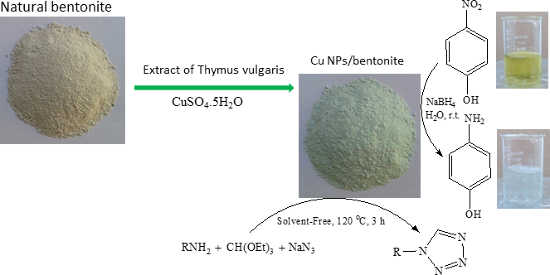
- . Preparation of Cu NPs/bentonite For green synthesis of Cu NPs/bentonite composite, 10 g natural bentonite was dispersed in 100 mL of 0.2 M CuSO4·5H2O under continuous stirring. After separation of quartz and feldspar precipitated in container, the above extract was added. This dispersion was stirred at 80 °C


Fabrication of hybrid nanocomposite scaffolds by incorporating ligand-free hydroxyapatite nanoparticles into biodegradable polymer scaffolds and release studies
Beilstein J. Nanotechnol. 2015, 6, 2217–2223, doi:10.3762/bjnano.6.227
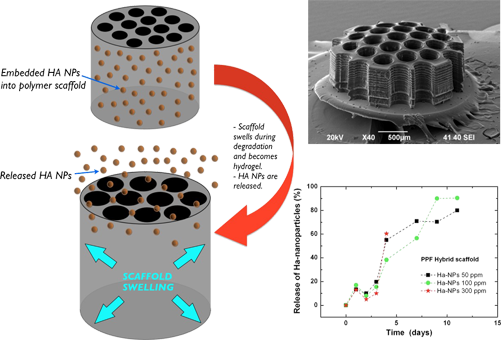
- production of highly pure nanoparticles, has attracted research over the last decade mainly because of the simplicity of the method [15][16][17][18]. The main advantages of the technique include the green synthesis without chemical agents, a high production yield [17], the possibility to work under ambient


Green preparation and spectroscopic characterization of plasmonic silver nanoparticles using fruits as reducing agents
Beilstein J. Nanotechnol. 2015, 6, 293–299, doi:10.3762/bjnano.6.27
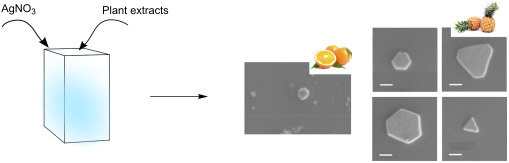
- excitation. Keywords: fruits; green synthesis; luminescence; plants; plasmonics; SERS; silver cluster; silver nanoparticles; Introduction Metal nanoparticles in various size ranges play an increasingly important role in many different fields of science, technology and medicine ranging from applications as





