Search results
Search for "lipid nanoparticles" in Full Text gives 39 result(s) in Beilstein Journal of Nanotechnology.
Nanotechnology – a robust tool for fighting the challenges of drug resistance in non-small cell lung cancer
Beilstein J. Nanotechnol. 2023, 14, 240–261, doi:10.3762/bjnano.14.23
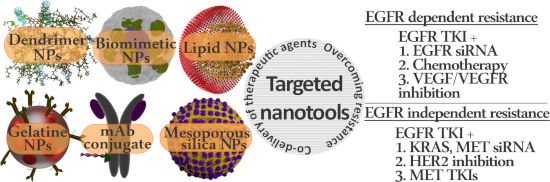
- the nanosystems [136][137]. Lipid nanoparticles (LNPs) in clinical trials are mainly composed of ionizable cationic lipids, amphipathic phospholipids, cholesterol, diffusible PEG lipids (for transient protection), and a targeting ligand [138]. After IV administration, lung capillaries receive the
- payload into the cytoplasm and efficacious transfection [142][143][144][145][146][147][148]. Besides the efforts for liver and liver hepatocyte targeting, different research groups are working on the challenge of developing lipid nanoparticles for specific organ targeting after IV administration
- , including lipid nanoparticles for lung targeting or targeting relevant cell types, that is, epithelial cells, endothelial cells, immune cells of the lungs, B cells, and T cells. Data regarding the biodistribution of polymers, polymer lipids, and lipid nanoparticles indicate that the internal and external


Facile preparation of Au- and BODIPY-grafted lipid nanoparticles for synergized photothermal therapy
Beilstein J. Nanotechnol. 2022, 13, 1432–1444, doi:10.3762/bjnano.13.118
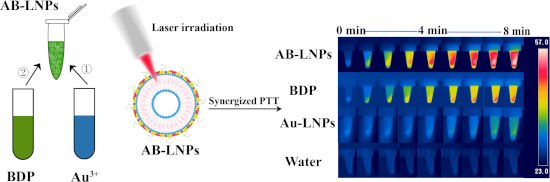
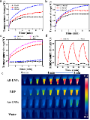
- nanoparticles limit their therapeutic applications. Previously, gold nanoclusters carrying lipid nanoparticles (Au-LNPs) have been reported after simply mixing Au3+ with preformed diethylenetriaminepentaacetic acid lipid nanoparticles to solve this contradiction. Au-LNPs demonstrated enhanced photothermal
- synergistic PTT in the treatment of cancer and other diseases. Keywords: BODIPY; gold nanoparticles; lipid nanoparticles; photothermal therapy; synergism; Introduction Photothermal therapy (PTT) relies on photothermal agents (PTAs) to convert light into heat energy to burn cancer cells. Due to its spatial
- reported for PTT use. In a previous reported work, we synthesized tiny gold nanoclusters by simply mixing Au3+ with preformed lipid nanoparticles (LNPs) containing diethylenetriaminepentaacetic acid (DTPA) [8]. The Au-grafted LNPs (Au-LNPs) showed significantly enhanced photothermal effects in comparison




Use of nanosystems to improve the anticancer effects of curcumin
Beilstein J. Nanotechnol. 2021, 12, 1047–1062, doi:10.3762/bjnano.12.78
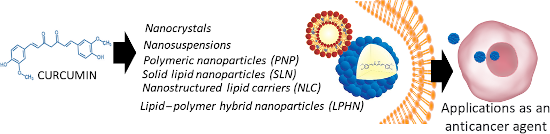
- treatments, which was accompanied by a dose-dependent increase in cytochrome C expression and a dose-dependent decrease in CDK1 expression. Solid lipid nanoparticles (SLN). SLN were first developed ca. 1990 (with patents and papers published a few years after) [60] and are the first generation of lipid
- -loaded polymeric (PNP with PLGA) and lipid nanoparticles (SLN with hydrogenated coco-glycerides and poloxamer 188). They reported greater stability at 135 days (>90% retention), lower average particle size (127.10 ± 11.30 nm), and higher EE% (90.49 ± 1.20%) in CUR-SL, as compared to CUR-PNP (338.20
- nanoparticles (50–1000 nm) [61]. They contain crystallized lipid droplets that are solid at room and body temperatures [62][63], with the drug or the molecule of interest loaded into the solid lipid phase [64]. The advantages of SLN include high drug loading capacity, great stability, good biocompatibility, and


Photothermally active nanoparticles as a promising tool for eliminating bacteria and biofilms
Beilstein J. Nanotechnol. 2020, 11, 1134–1146, doi:10.3762/bjnano.11.98
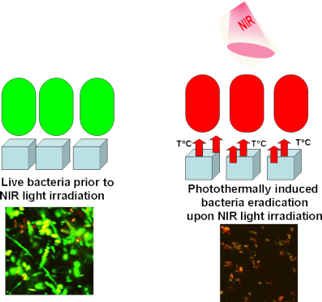
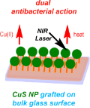
- studied. The state-of-the art in antimicrobial polymeric nanoparticles, with an emphasis on the relationship between their structure and activity, is well presented in a recent review [29]. The antibacterial properties of solid lipid nanoparticles are also a subject of specific research interest as they


Key for crossing the BBB with nanoparticles: the rational design
Beilstein J. Nanotechnol. 2020, 11, 866–883, doi:10.3762/bjnano.11.72
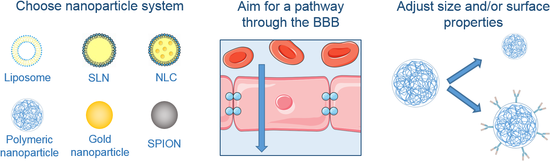
- nanoparticles (AuNPs); blood–brain barrier (BBB); drug delivery; liposomes; nanomedicine; polymeric nanoparticles; solid lipid nanoparticles; superparamagnetic iron oxide nanoparticles (SPIONs); Introduction Neurological disorders and brain diseases are real burdens for modern societies and healthcare systems
- the survival time of mice when loaded with paclitaxel. Thus, this formulation could be a promising drug delivery system for antitumor therapy. Solid lipid nanoparticles: Solid lipid nanoparticles (SLNs) are particles with a solid lipid core at room and body temperature [27]. SLNs can be prepared with


Interactions at the cell membrane and pathways of internalization of nano-sized materials for nanomedicine
Beilstein J. Nanotechnol. 2020, 11, 338–353, doi:10.3762/bjnano.11.25
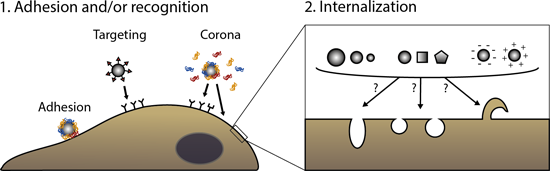
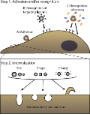
- of 100 nm silica nanoparticles incubated with human serum were found to interact with their corresponding receptors, low-density lipoprotein receptor and Fc-gamma receptor I, respectively [17]. Similarly, lipid nanoparticles were efficiently targeted to the hepatocytes upon adsorption of apoE on


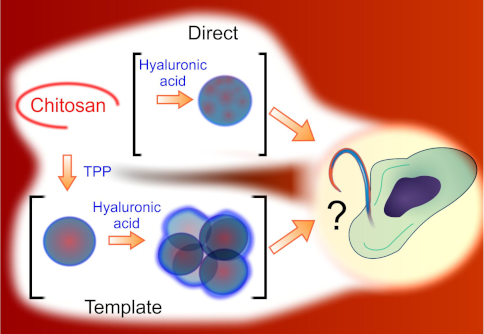
The different ways to chitosan/hyaluronic acid nanoparticles: templated vs direct complexation. Influence of particle preparation on morphology, cell uptake and silencing efficiency
Beilstein J. Nanotechnol. 2019, 10, 2594–2608, doi:10.3762/bjnano.10.250
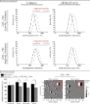
- to 0.5 mg/mL in both models (Figure 5A). Despite the fragile nature of macrophages, the low toxicity seen for HA-coated chitosan nanoparticles is in accordance with what reported in RAW 264.7 macrophages for other HA-based nanomaterials, such as HA-coated liposomes [36] and a library of lipid
- nanoparticles with surface-anchored HA [37], or chitosan-based carriers, such as mannosylated chitosan nanoparticles [38] or siRNA-entrapped chitosan nanoparticles (with or without TPP) [39]. The innocuous character of HA-coated chitosan nanoparticles in HCT-116 is also consistent with previous studies on HA



Frontiers in pharmaceutical nanotechnology
Beilstein J. Nanotechnol. 2019, 10, 2538–2540, doi:10.3762/bjnano.10.244

- announced the approval of a first-of-its-kind RNA interference (RNAi)-based drug, Onpattro™, which uses solid lipid nanoparticles to protect the sensitive compound from early degradation. Again, lipid materials rather than synthetic polymers have been used for drug delivery applications. In pharmaceutical
BergaCare SmartLipids: commercial lipophilic active concentrates for improved performance of dermal products
Beilstein J. Nanotechnol. 2019, 10, 2152–2162, doi:10.3762/bjnano.10.208
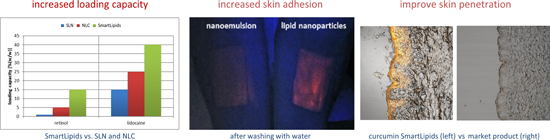
- Abstract SmartLipids are the latest generation of dermal lipid nanoparticles with solid particle matrix. Their characteristic properties resulting from the “chaotic” and disordered particle matrix structure are reviewed. These properties are high loading and firm inclusion of active agents, physical
- stability of the particle matrix lipid modification (primarily α, β′), and related to these three properties the improved chemical stabilization of labile active agents. Exemplarily data for these effects are shown and underlying mechanisms are discussed. Further, general properties of lipid nanoparticles
- inclusion; nanostructured lipid carriers (NLCs); penetration enhancement; skin occlusion; SmartLipids; solid lipid nanoparticles (SLNs); Introduction To meet the increasing expectations and demands of consumers in personal care and cosmetics, as well of patients in medical care, dermal delivery systems are


Synthesis and potent cytotoxic activity of a novel diosgenin derivative and its phytosomes against lung cancer cells
Beilstein J. Nanotechnol. 2019, 10, 1933–1942, doi:10.3762/bjnano.10.189
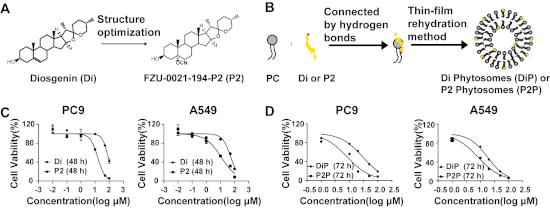
- , Di phytosomes (DiP) and P2 phytosomes (P2P) were prepared by a thin-film rehydration method (Figure 3A). Blank lipid nanoparticles without drugs (P) were also prepared with the same process. Particle size and zeta potential of the phytosomes were measured by dynamic light scattering (DLS). The
- . The results showed that the addition of Di and P2 decreased the particle size of lipid nanoparticles. Particle sizes of 100 nm diameter or less will be beneficial to the blood circulation and tumor accumulation [33]. Numerous studies have shown that cholesterol is crucial for the structural stability
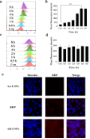
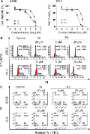
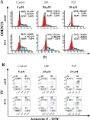
- the blank lipid nanoparticles was first investigated. As shown in Figure 4, P did not show any antiproliferative effects on A549 and PC9 cells, indicating the safety of the carrier material. DiP and P2P showed efficient antiproliferative activity in a dose- and time-dependent manner. DiP and P2P



Microfluidic manufacturing of different niosomes nanoparticles for curcumin encapsulation: Physical characteristics, encapsulation efficacy, and drug release
Beilstein J. Nanotechnol. 2019, 10, 1826–1832, doi:10.3762/bjnano.10.177
- unwanted side effects [8][9]. Liposomes, solid lipid nanoparticles, dendrimers, micelles, polymeric nanoparticles, gold nanoparticles, and carbon nanotubes are among the most common types of nanoparticle delivery systems [10]. These efforts have been reported in several studies. For example, Guo et al


Lipid nanostructures for antioxidant delivery: a comparative preformulation study
Beilstein J. Nanotechnol. 2019, 10, 1789–1801, doi:10.3762/bjnano.10.174
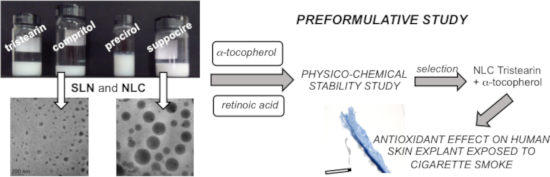
- Surgical Sciences, University of Ferrara, I-44121 Ferrara, Italy Department of Food and Nutrition, Kyung Hee University, Seoul, Korea 10.3762/bjnano.10.174 Abstract This investigation is a study of new lipid nanoparticles for cutaneous antioxidant delivery. Several molecules, such as α-tocopherol and
- retinoic acid, have been shown to improve skin condition and even counteract the effects of exogenous stress factors such as smoking on skin aging. This work describes the design and development of lipid nanoparticles containing antioxidant agents (α-tocopherol or retinoic acid) to protect human skin
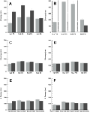
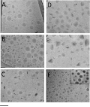
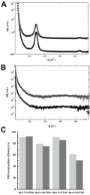
- against pollutants. Namely, solid lipid nanoparticles and nanostructured lipid carriers were prepared using different lipids (tristearin, compritol, precirol or suppocire) in the presence or absence of caprylic/capric triglycerides. The formulations were characterized by particle size analysis, cryogenic

Nanoporous smartPearls for dermal application – Identification of optimal silica types and a scalable production process as prerequisites for marketed products
Beilstein J. Nanotechnol. 2019, 10, 1666–1678, doi:10.3762/bjnano.10.162
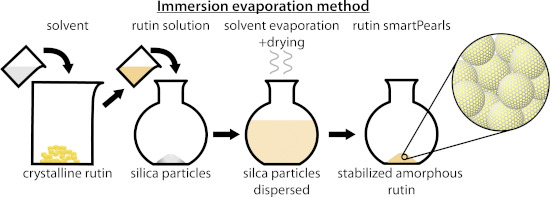
- solution, because the application of simple suspensions to the skin normally does not provide a sufficient dermal bioavailability. Classic delivery systems such as liposomes [3] or solid lipid nanoparticles (SLNs) [4][5] do not work because the active agents do not dissolve in the lipidic phase of these




Nanoscale isoindigo-carriers: self-assembly and tunable properties
Beilstein J. Nanotechnol. 2017, 8, 313–324, doi:10.3762/bjnano.8.34
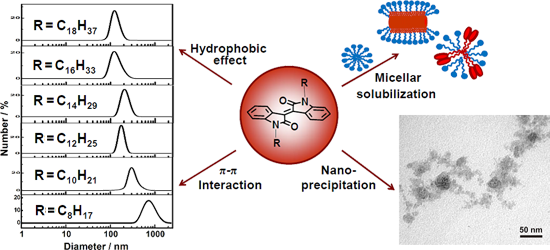
- and hydrogen bonding. Another strategy is the use of soft matter (micelles, emulsions, dendrimers, nanospheres, solid lipid nanoparticles or liposomes) as the delivery vehicle. These studies have been encouraged by the possibility to prevent side effects, to increase drug bioavailability, to decrease