Search results
Search for "liquid" in Full Text gives 995 result(s) in Beilstein Journal of Nanotechnology. Showing first 200.
Optical bio/chemical sensors for vitamin B12 analysis in food and pharmaceuticals: state of the art, challenges, and future outlooks
Beilstein J. Nanotechnol. 2025, 16, 2207–2244, doi:10.3762/bjnano.16.153
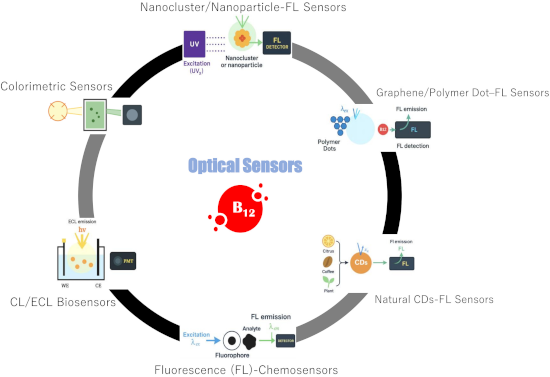
- significant health implications of VB12 deficiency. Traditional methods for VB12 analysis, such as high-performance liquid chromatography and enzyme-linked immunosorbent assay, are often troublesome and time-consuming, and require high-tech laboratory setups. The current overview highlights the latest optical
- different food and pharma formulations include high-performance liquid chromatography (HPLC) [14], HPLC coupled with inductively coupled plasma-mass spectrometry (ICP-MS) [15], and a diode array detector [16], atomic absorption spectroscopy [17], surface-enhanced Raman spectroscopy [18][19], capillary
- the detected CL light emission was the sensing output. Linear range and LOD of Co2+ were found to be 0.4 pg/L to 40 μg/L and 4.0 fg/L, respectively. The membrane/liquid CL system demonstrated analytical performance comparable to the liquid-only CL system. The pre-concentration of Co2+ on chitosan


Ultrathin water layers on mannosylated gold nanoparticles
Beilstein J. Nanotechnol. 2025, 16, 2183–2198, doi:10.3762/bjnano.16.151
- by water, and, indeed, a broad peak centered around 3400 cm−1, characteristic of liquid water, is present [26]. Water on the dimannoside can adsorb in a multitude of orientations. This averaging results in a low signal. Figure 5 provides a sketch of the principal ideas. VSFG experiments were repeated
- virtually unchanged, while the signals near 3400 cm−1, characteristic of liquid water, are nearly absent. It is important to note that the OD stretch of liquid D2O lies outside the probing frequency window. Interestingly, under the experimental conditions, H2O molecules in the topmost water layer appear
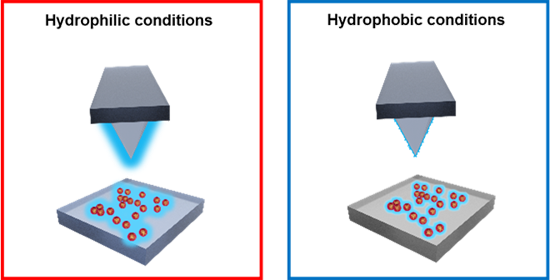
- scales of the liquid evaporation and the particle movement: The solvent evaporates so slowly that particles move over at least mesoscale distances, thus allowing for aggregation in the ring [33]. In our research, the deposition protocol may have influenced the observed phenomena. The hydrophilic APDMES



Quality by design optimization of microemulsions for topical delivery of Passiflora setacea seed oil
Beilstein J. Nanotechnol. 2025, 16, 2116–2131, doi:10.3762/bjnano.16.146
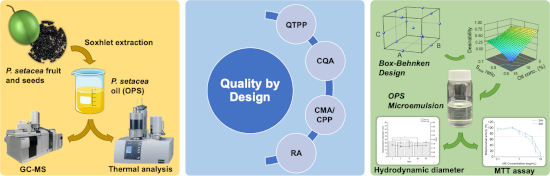
- and polydispersity index below 0.2 and remained stable for 60 days. The ME was gelled with sodium carboxymethyl cellulose, while vitamin E and Liquid Germall® Plus were incorporated as antioxidant and preservative agents, respectively, yielding the final topical gel formulation. Cytocompatibility
- compromising droplet stability [37]. Vitamin E at 0.05% w/w was included as a lipophilic antioxidant to protect the unsaturated fatty acids in OPS oil from oxidative degradation, thereby improving formulation stability [38]. Additionally, 0.2% of Liquid Germall® Plus was selected as a broad-spectrum
- , key attributes for dermatological applications. For topical administration, the base microemulsion was supplemented with vitamin E and Liquid Germall® Plus and subsequently gelled with NaCMC, resulting in a pseudoplastic system with suitable viscosity for skin application. In cytocompatibility assays


Multifrequency AFM integrating PeakForce tapping and higher eigenmodes for heterogeneous surface characterization
Beilstein J. Nanotechnol. 2025, 16, 2077–2085, doi:10.3762/bjnano.16.142
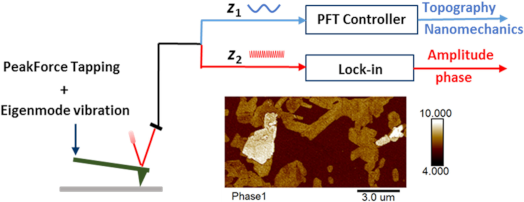
- include topographic step-like distortions and sudden phase-contrast inversions arising from bistable transitions between co-existing oscillation states, which complicate data interpretation [13][14][15][16][17]. Additionally, operational complexity escalates in liquid environments, where low-quality


Stereodiscrimination of guests in chiral organosilica aerogels studied by ESR spectroscopy
Beilstein J. Nanotechnol. 2025, 16, 2034–2054, doi:10.3762/bjnano.16.140
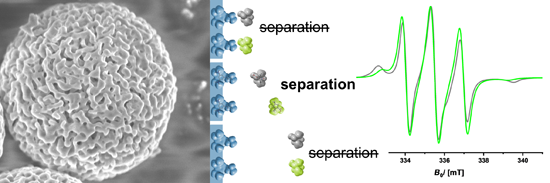
- high surface area and customizable chiral environments. A highly important and highly developed area of application of chiral materials possessing a high surface area is chromatography [11][12][13]. Techniques like high-performance liquid chromatography (HPLC) [13] and gas chromatography [14] are
- extensive description of the enormous progress of liquid chromatography with chiral, stationary phases made over several decades [18]. The author analyzes that a molecular understanding of the recognition mechanisms on chiral surfaces is still scarce, particularly regarding dynamic aspects. Meanwhile




Beyond the shell: exploring polymer–lipid interfaces in core–shell nanofibers to carry hyaluronic acid and β-caryophyllene
Beilstein J. Nanotechnol. 2025, 16, 2015–2033, doi:10.3762/bjnano.16.139
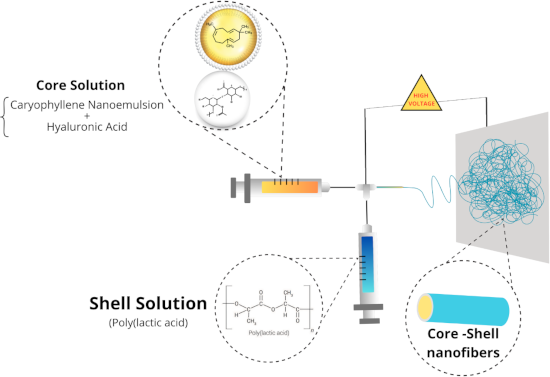
- for effective pharmaceutical use, βCp is often formulated within lipid liquid dispersions, such as nanoemulsions, to enhance its stability and improve therapeutic properties [35][36][37][38]. While lipid nanosystems offer undeniable advances for the delivery of active compounds, their inherent liquid
- before and after washing, were immersed in liquid nitrogen and fractured using tweezers. The fractured samples were mounted on 45 degree stubs to capture cross-sectional images without requiring the sample holder to be moved. Confocal microscopy Confocal microscopy was conducted to observe the




Laser ablation in liquids for shape-tailored synthesis of nanomaterials: status and challenges
Beilstein J. Nanotechnol. 2025, 16, 1963–1997, doi:10.3762/bjnano.16.137
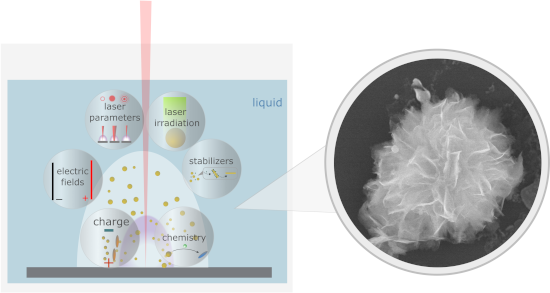
- stage of the development of laser ablation in liquids from the perspective of shape control of the forming nanomaterials. The key parameters influencing the NP shape are highlighted, including the composition of a liquid, laser focusing conditions and introduction of external fields, and the mechanism
- progress in the pulsed laser ablation in liquid (PLAL) field has been achieved by getting new insights into the process of laser ablation, its stages, and mechanisms allowing to significantly boost the productivity and reach gram-scale NP production [1][4]. Another direction of the research is the control
- (nanosecond), this interaction should be taken into account, resulting in the ionization and heating of the ejected material. The initial stages of interaction of a laser beam with a solid target are strongly dependent on laser pulse duration and fluence, surrounding liquid, target morphology and composition




Targeting the vector of arboviruses Aedes aegypti with nanoemulsions based on essential oils: a review with focus on larvicidal and repellent properties
Beilstein J. Nanotechnol. 2025, 16, 1894–1913, doi:10.3762/bjnano.16.132
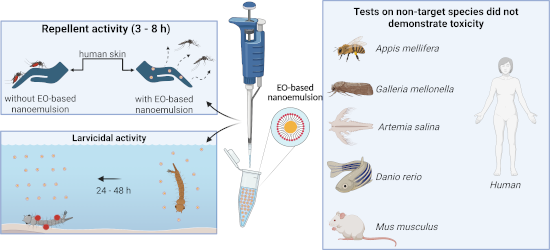
- [64]. Various classes of natural products and secondary metabolites have been evaluated, with a particular focus on plant essential oils and their constituents [65][66]. Essential oils in vector control Essential oils are hydrophobic, aromatic, volatile liquid compounds mainly secreted by glandular


Self-assembly and adhesive properties of Pollicipes pollicipes barnacle cement protein cp19k: influence of pH and ionic strength
Beilstein J. Nanotechnol. 2025, 16, 1863–1872, doi:10.3762/bjnano.16.129
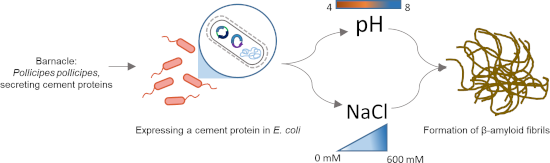
- from 0–600 mM, using a Slide-A-Lyzer™ MINI dialysis device, 10K MWCO (Thermo Fisher Scientific). Samples were incubated at 25 °C for up to 21 days, removed at intervals, snap frozen in liquid nitrogen, and stored at −80 °C for further analysis Transmission electron microscopy A 10 µL aliquot of


Exploring the potential of polymers: advancements in oral nanocarrier technology
Beilstein J. Nanotechnol. 2025, 16, 1751–1793, doi:10.3762/bjnano.16.122


Multifunctional anionic nanoemulsion with linseed oil and lecithin: a preliminary approach for dry eye disease
Beilstein J. Nanotechnol. 2025, 16, 1711–1733, doi:10.3762/bjnano.16.120
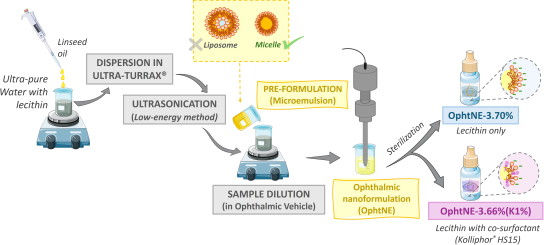
- liquid was removed with filter paper, and the samples were counterstained with 2.5% uranyl acetate (w/v). The grids were then dried under vacuum for 24 h before TEM analysis. Long-term stability test The long-term stability of the nanoformulations was assessed by storing the samples in hermetically



Beyond the bilayer: multilayered hygroscopic actuation in pine cone scales
Beilstein J. Nanotechnol. 2025, 16, 1695–1710, doi:10.3762/bjnano.16.119
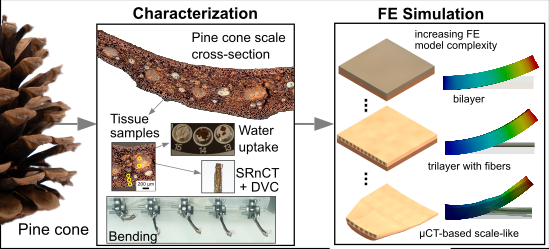
- , Hamburg, Germany) and a razor blade. One end of the pillars was then glued to special sample holders using a UV-cured liquid plastic welding system (Bondic BC4000, VIKO UG, Kranzberg, Germany). Each tissue sample was then imaged at a special synchrotron radiation-based nano-holotomography setup at the


Ambient pressure XPS at MAX IV
Beilstein J. Nanotechnol. 2025, 16, 1677–1694, doi:10.3762/bjnano.16.118
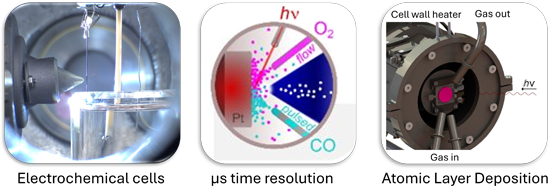
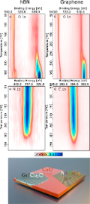
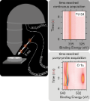
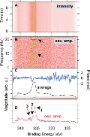
- –gas, solid–liquid, and liquid–gas interfaces in situ and under operando conditions. In this review, we highlight exemplary APXPS experiments conducted in different environments to study solid–gas and solid–liquid interfaces. APXPS at MAX IV is making a considerable contribution in various scientific
- environment, atomic layer deposition (ALD) is another field particularly developed at MAX IV. Also, the ultrahigh brightness of MAX IV ring, joined with in-house developments, make feasible in the soft X-ray regime, experiments accessing liquid layers and their interfaces with solids, opening up to completely
- permanently installed endstation dedicated to APXPS, that is, one for solid–gas experiments (SGE) and one primarily, but not limited to, for solid–liquid studies (SLE). The optics provide a spot size of 65 µm × 25 µm on the SGE and 60 µm × 50 µm on the SLE and a resolving power up to 35000. The SGE branch





Prospects of nanotechnology and natural products for cancer and immunotherapy
Beilstein J. Nanotechnol. 2025, 16, 1644–1667, doi:10.3762/bjnano.16.116


Photocatalytic degradation of ofloxacin in water assisted by TiO2 nanowires on carbon cloth: contributions of H2O2 addition and substrate absorbability
Beilstein J. Nanotechnol. 2025, 16, 1567–1579, doi:10.3762/bjnano.16.111
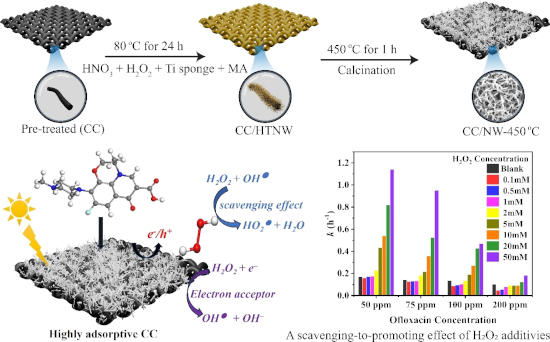
- –vis diffuse reflectance spectroscopy (UV-3150, Shimadzu, Japan). The concentration of OFL was determined using a Nexera LC-40D XR ultrahigh-performance liquid chromatography (HPLC) system (SHIMADZU, Japan). A Pyris 1 TGA instrument (USA) was used to carry out the thermogravimetric (TG) investigations
- -first-order kinetic model, as determined by Equation 3: The concentration of OFL was assessed using high-performance liquid chromatography with a C18 column maintained at 30 °C. The UV–vis detector was calibrated to a wavelength of 292 nm. The mobile phase consisted of a 15:85 ratio of methanol to 0.8


Influence of laser beam profile on morphology and optical properties of silicon nanoparticles formed by laser ablation in liquid
Beilstein J. Nanotechnol. 2025, 16, 1533–1544, doi:10.3762/bjnano.16.108
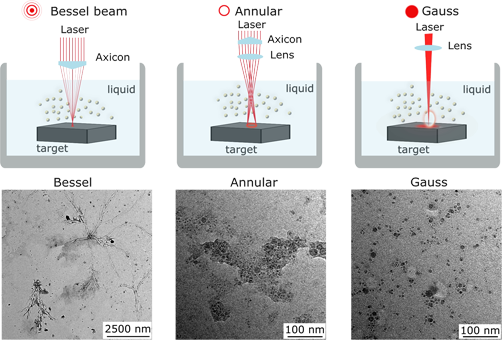
- Abstract In this study, silicon nanoparticles (NPs) were produced by pulsed laser ablation in a liquid, aiming to investigate the influence of a laser beam profile on the properties of the resultant NPs. Morphology, inner structure, and phase composition of the formed NPs were characterized by means of
- to alter the properties and morphology of NPs by changing the laser parameters and liquid media [10][11]. The control over the major characteristics of the produced nanomaterials can be achieved by adjustment of several experimental parameters, for example, laser wavelength, fluence, pulse width
- , repetition rate, and liquid composition. The parameters of the ablated target, such as its optical characteristics and conductivity/resistivity, might also have a pronounced impact on size and morphology of the produced NPs. As demonstrated in [12], femtosecond laser ablation of silicon with varying


Dendrimer-modified carbon nanotubes for the removal and recovery of heavy metal ions from water
Beilstein J. Nanotechnol. 2025, 16, 1522–1532, doi:10.3762/bjnano.16.107

- using 30 mL of distilled water through a ring-opening mechanism [51]. Then, 0.4 g of freshly prepared MA was mixed with 3.0 g of a DES synthesized by the reaction of choline chloride and zinc chloride in a 1:2 molar ratio under continuous stirring at room temperature until a homogeneous liquid was


Laser processing in liquids: insights into nanocolloid generation and thin film integration for energy, photonic, and sensing applications
Beilstein J. Nanotechnol. 2025, 16, 1428–1498, doi:10.3762/bjnano.16.104
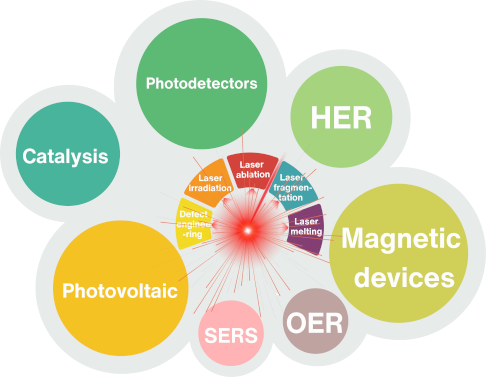
- also touches upon the phenomenon of laser-induced defects in liquid environments. While numerous comprehensive reviews on these topics already exist, this article aims to offer a succinct overview of the fundamental principles and applications of these techniques [1]. The focus is on providing a
- [12]. The size, shape, and composition of these nanomaterials can be controlled by adjusting experimental parameters such as laser settings, liquid medium, and target material. Additionally, the preparation of doped and multicomponent semiconductor nanostructures could expand LAL’s potential in
- combinatorial library of constituents and interactions [15], understanding of these processes remains insufficient. Yan et al. outline a comprehensive mechanistic scenario of PLAL, highlighting the interactions between photons, liquid molecules, solid targets, and laser-induced particles [8]. The formation


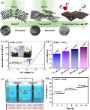




Synthesis and antibacterial properties of nanosilver-modified cellulose triacetate membranes for seawater desalination
Beilstein J. Nanotechnol. 2025, 16, 1380–1391, doi:10.3762/bjnano.16.100
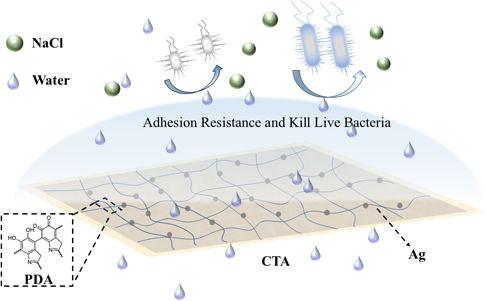
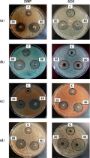
- spreading 25 µL bacterial liquid on each plate. The sterilized membranes were then placed on the top of the plate containing the attached bacterial strain and then incubated at 28 °C for 24 h. The antibacterial efficacy of each membrane was assessed by measuring the size of the inhibition zone against


Enhancing the therapeutical potential of metalloantibiotics using nano-based delivery systems
Beilstein J. Nanotechnol. 2025, 16, 1350–1366, doi:10.3762/bjnano.16.98
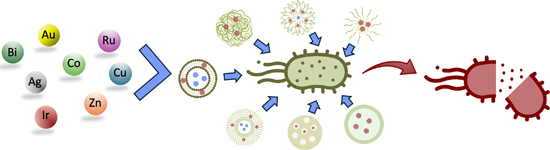
- ]. To address these issues, researchers have developed nanostructured lipid carriers, which incorporate liquid lipids into a solid lipid matrix, resulting in improved drug loading capacity and stability [75]. In summary, SLNs have garnered significant attention as a promising drug delivery system


Ferroptosis induction by engineered liposomes for enhanced tumor therapy
Beilstein J. Nanotechnol. 2025, 16, 1325–1349, doi:10.3762/bjnano.16.97
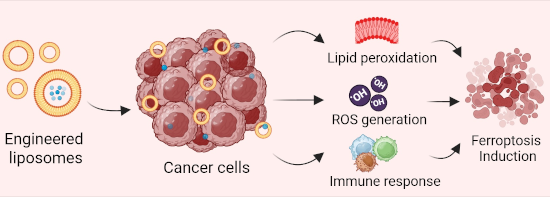
- systems. The EE of liposomes, which determines the amount of drug loaded into the vesicles, can be evaluated by various analytical methods. High-performance liquid chromatography (HPLC) and capillary electrophoresis (CE) are widely used methods to quantify the encapsulated drug [110][125]. HPLC separates


Acrocomia aculeata oil-loaded nanoemulsion: development, anti-inflammatory properties, and cytotoxicity evaluation
Beilstein J. Nanotechnol. 2025, 16, 1277–1288, doi:10.3762/bjnano.16.93
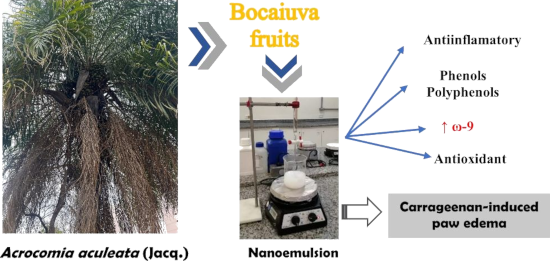
- a 75% ethanol solution. The mixture was stirred on a mechanical shaker for 2 h and allowed to stand in the dark for 24 h. The liquid was then centrifuged at 5000 rpm (LKP, Brazil). Aliquots of 1 mL of the ethanolic phase were used for analysis. The calibration curve was constructed using the


Functional bio-packaging enhanced with nanocellulose from rice straw and cinnamon essential oil Pickering emulsion for fruit preservation
Beilstein J. Nanotechnol. 2025, 16, 1234–1245, doi:10.3762/bjnano.16.91
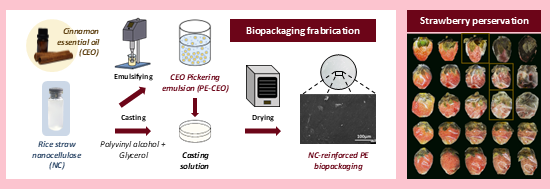
- a bleaching stage were used to extract cellulose from the straw. In the first acid hydrolysis step, the cellulose was treated with 62% H2SO4 solution at a solid-to-liquid ratio of 1:12 (g·mL−1), continuously stirred at a temperature of 40–42 °C for 2 h. The reaction was then quenched by 10-fold



Investigation of the solubility of protoporphyrin IX in aqueous and hydroalcoholic solvent systems
Beilstein J. Nanotechnol. 2025, 16, 1209–1215, doi:10.3762/bjnano.16.89
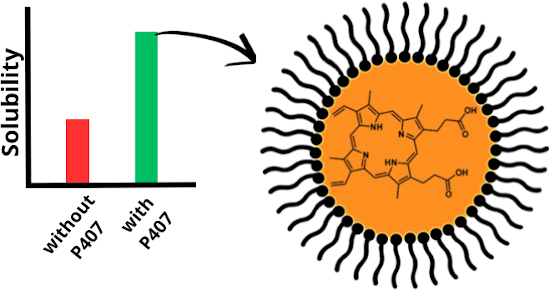
- aggregation, and improve bioavailability in aqueous media [5][16]. Additionally, at high concentrations, P407 can transition into more complex nanostructured systems, such as hydrogels and lyotropic liquid crystals, providing additional control over drug release and stability. The thermosensitive and self


Chitosan nanocomposite containing rotenoids: an alternative bioinsecticidal approach for the management of Aedes aegypti
Beilstein J. Nanotechnol. 2025, 16, 1197–1208, doi:10.3762/bjnano.16.88
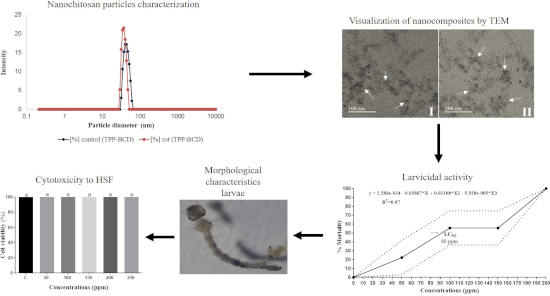
- encapsulation efficiency is estimated to be ≥99% within the detection limits of high-performance liquid chromatography (HPLC) and thin-layer chromatography (TLC) methods applied, indicating a highly effective incorporation of the rotenoids into the nanochitosan matrix. In addition to the high encapsulation
- important parameter for assessing nanoparticle stability and biodistribution. Typically, particles acquire an electric charge at the shear plane when dispersed in a liquid, which is reflected by their zeta potential, that is key to understanding dispersion and aggregation processes in nanoformulations. Zeta
- of 1 cm−1 and an accumulation of 35 scans per spectrum. A compressive force of 15 N was applied to the samples during measurement to ensure proper contact with the ATR crystal surface. Quantification of rotenoids by high-performance liquid chromatography The quantification of rotenoids was performed