Search results
Search for "melting" in Full Text gives 247 result(s) in Beilstein Journal of Nanotechnology. Showing first 200.
High-temperature epitaxial growth of tantalum nitride thin films on MgO: structural evolution and potential for SQUID applications
Beilstein J. Nanotechnol. 2025, 16, 690–699, doi:10.3762/bjnano.16.53
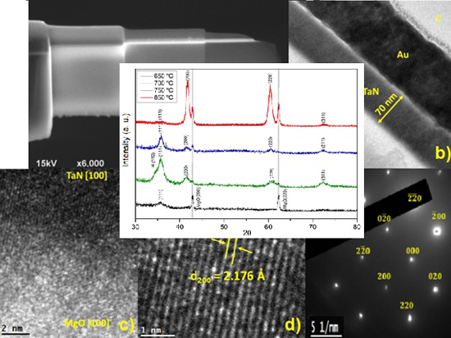
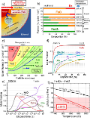
- and chemical properties, including ultrahardness (comparable to that of diamond) and high melting points around 3000 °C. These properties can be qualitatively understood by observing that the Fermi energy falls within a pronounced minimum of the density of states [7]. Some reports have shown that TaN


Aprepitant-loaded solid lipid nanoparticles: a novel approach to enhance oral bioavailability
Beilstein J. Nanotechnol. 2025, 16, 652–663, doi:10.3762/bjnano.16.50
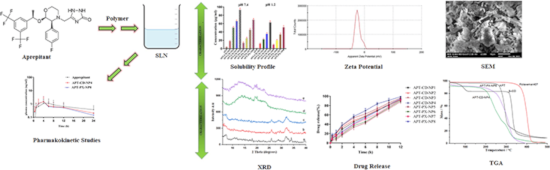
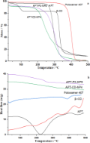
- (Figure 5b) were conducted to the study physical state of APT, β-CD, poloxamer 407, and APT-loaded SLNs formulations. APT exhibits an endothermic melting peak at 255 °C, which indicates a phase transition of APT. An endothermic peak of β-CD is seen at 100 °C, which is associated with the release of water
- from β-CD; the endothermic peak at 330 °C corresponds to the beginning decomposition of β-CD. The endothermic peak of poloxamer 407 at 48 °C corresponds to its melting, and another broad peak observed at 400 °C can be attributed to the thermal decomposition of poloxamer 407. APT-CD-NP4 showed a wide
- peak at 100 to 300 °C, and APT-PX-NP8 showed a peak at 310 °C (Figure 5b). The melting peaks of APT disappeared in the SLNs because of the molecular encapsulation of APT in the polymeric cavity. This indicates a strong interaction between polymers and APT [21]. The DSC results are in line with XRD and



Retrieval of B1 phase from high-pressure B2 phase for CdO nanoparticles by electronic excitations in CdxZn1−xO composite thin films
Beilstein J. Nanotechnol. 2025, 16, 551–560, doi:10.3762/bjnano.16.43

- described through two primary models: the Coulomb explosion model, which relies on electrostatic repulsive forces [10][11], and the thermal spike model, where energy is transferred to lattice atoms, resulting in melting and subsequent quenching to form tracks [12][13]. The latter model has been more widely
- evident; rather, distinct void regions are observed. Given that CdO has a melting temperature of ≈1000 °C, a portion of CdO may have melted during the annealing process at 900 °C, subsequently condensing in energetically favorable sites at the film surface. The whitish regions in the CZ900_Pris thin film
- transfer to the electronic system occurs through electron–electron interactions, followed by transference to the lattice atomic system via electron–phonon correlation [20][21]. Along the ion trajectory, a cylindrical region is generated, characterized by temperature exceeding the melting point of the


N2+-implantation-induced tailoring of structural, morphological, optical, and electrical characteristics of sputtered molybdenum thin films
Beilstein J. Nanotechnol. 2025, 16, 495–509, doi:10.3762/bjnano.16.38
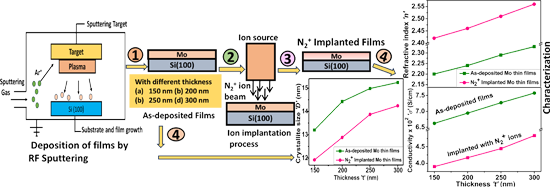
- remarkable thermal stability, high melting point, and chemical inertness. In the present study, Mo thin films of different thicknesses (150, 200, 250, and 300 nm) have been deposited on Si(100) substrates via radio frequency sputtering in an argon atmosphere at room temperature. Some of these films have been
- technological applications owing to their outstanding characteristics. The high melting point and stability of molybdenum ensure that it remains structurally intact under the harsh operating conditions of solar cells [1][2]. This stability is essential for long-term reliability and performance. The low


Effect of additives on the synthesis efficiency of nanoparticles by laser-induced reduction
Beilstein J. Nanotechnol. 2025, 16, 464–472, doi:10.3762/bjnano.16.35
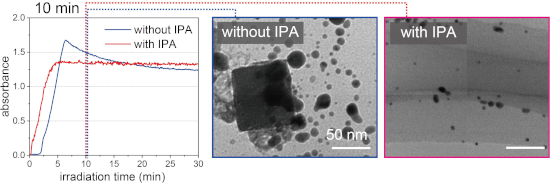
- target source material is a ‘solid’ or a ‘metal ion’. Methods for synthesizing particles using solid materials include laser ablation in liquid (LAL) [13][14][15], laser fragmentation in liquid (LFL) [16], and laser melting in liquid (LML) [17], and many excellent reports have been published on the


Vortex lattices of layered HTSCs at different vortex–vortex interaction potentials
Beilstein J. Nanotechnol. 2025, 16, 362–370, doi:10.3762/bjnano.16.27
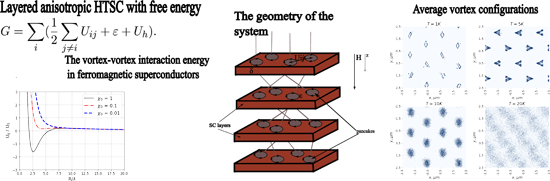
- superconductors have been analyzed. Clustering of the vortex system is demonstrated. The melting of a vortex lattice with increasing temperature has been studied. Keywords: high-temperature superconductor; HTSC; intertype superconductors; Monte Carlo method; vortex lattice; vortex–vortex interaction potential
- qualitatively preserved. The obtained results can be useful for designing superconducting devices of micrometer and submicrometer size. For the potential from Equation 2, vortex lattice melting with increasing temperature was studied. For the potential from Equation 3, the formation of a vortex lattice was
- potential observed in ferromagnetic superconductors. Clustering of vortices was observed in magnetic fields from 400 to 1000 G. For a vortex system interacting with a potential characteristic of intertype superconductors, melting inside vortex clusters was observed with increasing temperature. At


Pulsed laser in liquid grafting of gold nanoparticle–carbon support composites
Beilstein J. Nanotechnol. 2025, 16, 349–361, doi:10.3762/bjnano.16.26
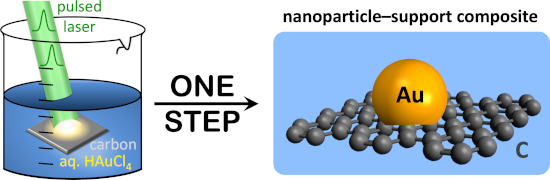
- nanosecond pulses, graphite has an effective absorption coefficient of 5 µm−1 [26], resulting in an ablation threshold fluence of 0.7 J·cm−2 [27]; thus, our chosen fluence was well below this ablation threshold. The critical melting fluence of graphite has been reported to be 0.13 J·cm−2 [28], suggesting


Tailoring of physical properties of RF-sputtered ZnTe films: role of substrate temperature
Beilstein J. Nanotechnol. 2025, 16, 333–348, doi:10.3762/bjnano.16.25
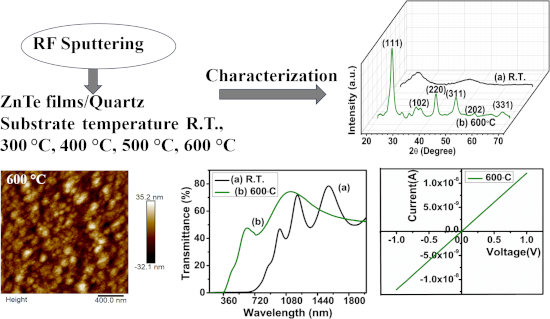
- physical properties (structure, morphology, optical and electrical properties, and luminescence) of RF-sputtered ZnTe films. Quartz is an import substrate because of its high transparency, high melting point, and low thermal expansion coefficient. This study helps in optimizing the substrate temperature to




Graphene oxide–chloroquine conjugate induces DNA damage in A549 lung cancer cells through autophagy modulation
Beilstein J. Nanotechnol. 2025, 16, 316–332, doi:10.3762/bjnano.16.24
- 1× PBS to remove any GO–Chl nanoconjugate not uptaken by the cells. Cells were then harvested using trypsin–EDTA and resuspended in 100 μL of 1× PBS, followed by mixing with 1% low-melting-point agarose (LMPA, prepared in 1× PBS) to achieve a final concentration of 0.5%. Thereafter, 80 μL of the
- suspension was layered onto base slides (pre coated with 1% normal-melting agarose; NMA), evenly spread with a coverslip, and kept on ice to allow gelation. The coverslip was carefully removed followed by the addition of a third layer of 90 μL of 0.5% LMPA, carefully spreading with a coverslip and kept on



Fabrication of hafnium-based nanoparticles and nanostructures using picosecond laser ablation
Beilstein J. Nanotechnol. 2024, 15, 1639–1653, doi:10.3762/bjnano.15.129
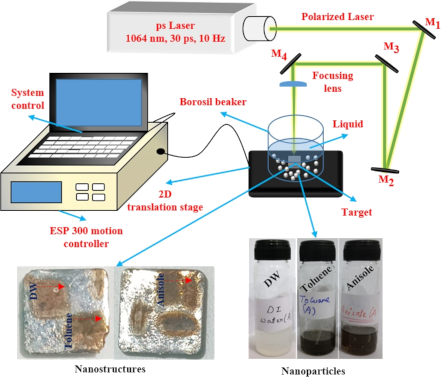
- optical properties [1][2][3][4]. Hf and its alloys are used in nuclear reactors because of their large neutron absorption cross sections and high melting points [5]. They are also used in submarines because of their corrosion resistance [6][7]. The high refractoriness of some Hf compounds [2][4] allows
- [8] compared to bulk Hf. HfO2 is a wide-bandgap (5.68 eV) material with a high dielectric constant (≈25) [9][10]. HfC has a very high melting point (≈3900 °C) and ranks among the hardest materials, with a Vickers hardness value exceeding 20 GPa [4][11]. The properties vary substantially depending on
- mbar) using an electron beam melting furnace having a beam power of 60 kW (ELIT 60) at an accelerating voltage of 24 kV in a water-cooled crucible with feeding mechanism and an extraction system [32]. All operations were conducted at the Centre for Materials for Electronics Technology (CMET), Hyderabad




Effect of radiation-induced vacancy saturation on the first-order phase transformation in nanoparticles: insights from a model
Beilstein J. Nanotechnol. 2024, 15, 1453–1472, doi:10.3762/bjnano.15.117

- . Disorder can arise from the recombination of these defects [1][2][3][4][5][6][7][8][9]. In metals, for instance, the equilibrium concentration of thermal vacancies, even at high pre-melting temperatures, reaches values of only about 0.1% [10][11]. Therefore, in the following, we will focus on radiation
- -induced vacancies, assuming that the concentration of radiation-induced point defects at characteristic temperatures (far from melting) exceeds the concentration of thermal-equilibrium defects. The behavior of HDCMs under irradiation highly depends on their size. For example, when TiN nanograins are
- transformations from bcc to fcc and from fcc to bcc that occur in an iron-like nanomaterial. We detail the findings for pure iron at the end of the paper. The enthalpy change for vacancy formation can be estimated from the equilibrium melting temperature, Tm, and is ΔHfα = 3.76·10−19 J for the α phase and ΔHfβ


A low-kiloelectronvolt focused ion beam strategy for processing low-thermal-conductance materials with nanoampere currents
Beilstein J. Nanotechnol. 2024, 15, 1197–1207, doi:10.3762/bjnano.15.97

- of 50 to 100 nm. Whilst this temperature does not cause any damage to this sample, elevated temperatures beyond the impact point can potentially cause heat damage, especially when working with materials with a lower thermal conductivity or a lower melting point than collagen. Future experiments




Effect of wavelength and liquid on formation of Ag, Au, Ag/Au nanoparticles via picosecond laser ablation and SERS-based detection of DMMP
Beilstein J. Nanotechnol. 2024, 15, 1054–1069, doi:10.3762/bjnano.15.86

- size and composition, making it a preferred choice for nanomaterials synthesis [2][3][4][5]. The process involves laser plasma interacting with a metal in a liquid; it excites electrons, which then generates atomic vibrations within a few picoseconds, causing rapid heating, melting, and explosive
- ) laser melting in liquid (LML), and (iii) laser defect engineering in liquid (LDL) [16]. In our previous work, we fabricated Ag–Cu alloy NPs using the femtosecond (fs) laser irradiation approach [17]. Similarly, Ag/Au alloy NPs were fabricated by laser ablation of single metal targets in water followed


Atomistic insights into the morphological dynamics of gold and platinum nanoparticles: MD simulations in vacuum and aqueous media
Beilstein J. Nanotechnol. 2024, 15, 995–1009, doi:10.3762/bjnano.15.81
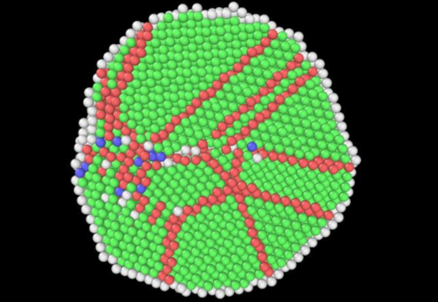
- can be traced back to the seminal works of Lindemann [29] and Pawlow [30]. Recent developments and the current state of the art have been summarized in the reviews of Mei and Lu [31] and Alcoutlabi and McKenna [32]. Emphasis has been placed on relating the melting temperature of a NP to its size by
- adapting theories suitable for bulk materials to NPs; examples include the classical nucleation theory [33], phenomenological models [34][35][36], as well as molecular simulations [37][38][39][40]. A molecular dynamics (MD) study of shape transformation and melting of tetrahexahedral Pt NPs has been
- carried out by Wen et al. [41]. Wang et al. employed ab initio MD to describe the melting of icosahedral Au nanoclusters [42]. The structural and thermal stability of high-index-faceted Pt NPs was addressed by Zeng et al. [43]. Similarly, the thermal stability of unsupported Au NPs was investigated by


Synthesis of silver–palladium Janus nanoparticles using co-sputtering of independent sources: experimental and theorical study
Beilstein J. Nanotechnol. 2024, 15, 808–816, doi:10.3762/bjnano.15.67
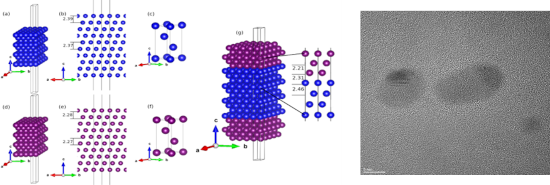
- melting temperature and, partly, because the appearance of moisture delays the diffusion of silver atoms. The synthesis of AgPd nanocrystals with sizes ranging from 2.46 to 6.65 nm has been reported for applications in the manufacturing of electronic components [6]. Chu et al. [7] synthesized Pd–Ag




Laser synthesis of nanoparticles in organic solvents – products, reactions, and perspectives
Beilstein J. Nanotechnol. 2024, 15, 638–663, doi:10.3762/bjnano.15.54
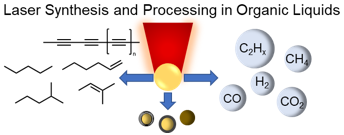
- review also includes findings that are specific to the LSPC method variants laser ablation (LAL), fragmentation (LFL), melting (LML), and reduction (LRL) in organic liquids. A particular focus will be set on permanent gases, liquid hydrocarbons, and solid, carbonaceous species generated, including the
- reduction in liquid (LRL), laser fragmentation in liquid (LFL), and laser melting in liquid (LML), which are schematically shown in Figure 1. Molecular precursors are only required in LRL, whereas the other variants employ a solid as starting material, which is ablated/fragmented/molten in the dispersing
- laser ablation, fragmentation, or melting in liquids (RLAL, RLFL, or RLML), which refers to the synthesis of nanoparticles wherein molecular or galvanic replacement precursors, such as metal salts, are added to react in situ [7]. The added precursors take part in chemical reactions leading to the





Heat-induced morphological changes in silver nanowires deposited on a patterned silicon substrate
Beilstein J. Nanotechnol. 2024, 15, 435–446, doi:10.3762/bjnano.15.39
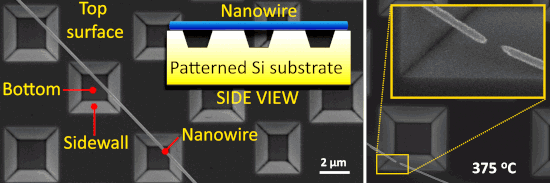
- Abstract Metallic nanowires (NWs) are sensitive to heat treatment and can split into shorter fragments within minutes at temperatures far below the melting point. This process can hinder the functioning of NW-based devices that are subject to relatively mild temperatures. Commonly, heat-induced
- , after depositing NWs onto a substrate, heat treatment at temperatures around a few hundred degrees Celsius is often employed to eliminate the surfactant used during synthesis [18][19]. The melting temperature of silver is 962 °C, which is significantly higher than the temperatures required to remove
- organics. However, when the size of the structures is reduced to the nanoscale, metals exhibit distinct behavior at elevated temperatures compared to their larger counterparts [20][21]. Generally, a reduction in the melting point occurs as the size and dimensionality of the nanostructures decrease [20][22


TEM sample preparation of lithographically patterned permalloy nanostructures on silicon nitride membranes
Beilstein J. Nanotechnol. 2024, 15, 1–12, doi:10.3762/bjnano.15.1
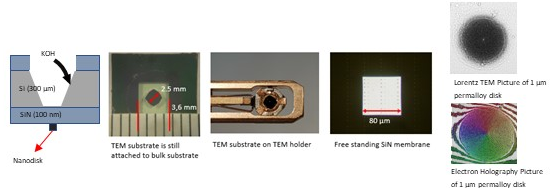
- mode to avoid melting of the PMMA resist. The second approach involved etching a thin Py film with an ion beam while preserving the intended structure with an electron-beam-patterned negative resist mask. Redeposition of etched material was found to construct fences at the edges of the structures
- establish a good thermal contact during metal deposition to prevent the resist mask from melting as the substrate temperature is above the glass transition temperature of the resist. Ion beam etching The IBE process (Figure 6) is as follows: The first step is to deposit Py on the substrate; then a negative
- associated with resist such as the edge bead problem and resist melting during deposition. This approach is ideal for applications on small substrates where spin coating of a homogeneous resist layer is difficult. This technique is particularly suitable for TEM application because TEM grids have the SiN


A multi-resistance wide-range calibration sample for conductive probe atomic force microscopy measurements
Beilstein J. Nanotechnol. 2023, 14, 1141–1148, doi:10.3762/bjnano.14.94
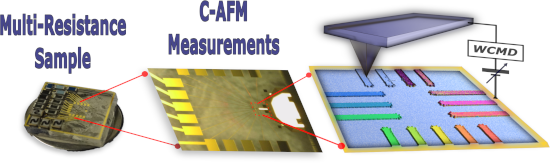
- droplets (F42240, lead-free solder paste – class 5, CIF, France). The fused silica substrate was placed on a heating plate set to 270 °C, which required around 3 min to reach the melting temperature of the solder droplets (217 °C), as observed under an optical microscope. Upon cooling, 16 SMD resistors


Two-dimensional molecular networks at the solid/liquid interface and the role of alkyl chains in their building blocks
Beilstein J. Nanotechnol. 2023, 14, 872–892, doi:10.3762/bjnano.14.72
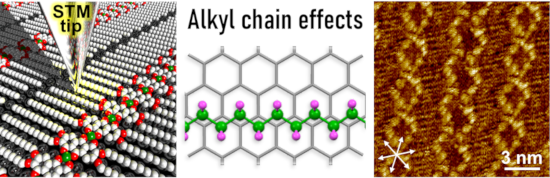
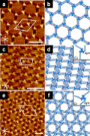
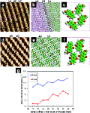
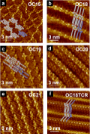
- (melting point temperature Tm) of 1-HA-OCn and 2-HA-OCn was revealed. The Tm values measured by differential scanning calorimetry (DSC) increased upon increase of the alkyl chain length exhibiting a zigzag fashion (Figure 11g) [129]. Such periodic changes in the 2D structure as well as Tm were also
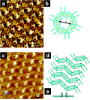
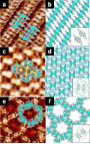
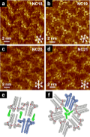
- phase transition temperature (melting point) for 1-HA-OCn (blue) and 2-HA-OCn (red) as a function of the number of carbon atoms in the alkyl chains. (a–c) Wheat-like structure formed by different orientations of anthraquinone pairs; (d–f) knot-like structure in which the clusters of the anthraquinone









N-Heterocyclic carbene-based gold etchants
Beilstein J. Nanotechnol. 2023, 14, 865–871, doi:10.3762/bjnano.14.71
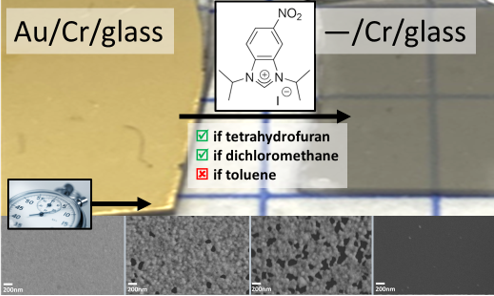
- water and carbon dioxide so that there was no need for a strong base for deprotonation or for air-free conditions [13][14]. Camden and co-workers have used CO2 adducts of benzimidazolium to produce NHC films by melting the solid CO2 adduct directly onto a gold surface under vacuum. They have also



Nanostructured lipid carriers containing benznidazole: physicochemical, biopharmaceutical and cellular in vitro studies
Beilstein J. Nanotechnol. 2023, 14, 804–818, doi:10.3762/bjnano.14.66
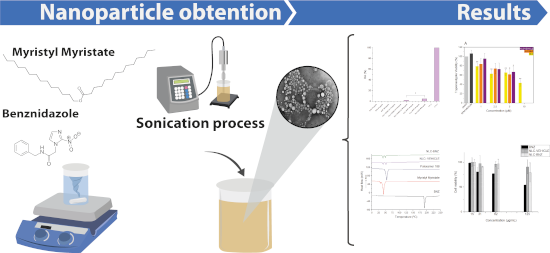
- (ζ) was measured by Doppler anemometry, and it was found to be around −13 mV. Differential scanning calorimetry (DSC) and thermogravimetric analysis (TGA) were performed to determine the thermal stability and melting/recrystallization processes of the components after drug encapsulation. Overlaid DSC
- thermograms are shown in Figure 2, whereas the melting temperature (Tm), the enthalpy of fusion (ΔHf), and crystallinity index (CI) are presented in Table 1. Whereas BNZ showed an endothermic peak at its melting point (191.2 °C) [23], the formulation showed two endothermic peaks in the range of 40–50 °C
- , which could be referred to the melting points of the lipid and the surfactant, respectively. This suggests that no other endothermic changes occur to the formulation constituents or its load during the high-energy sonication procedure. A peak matching the phase transition peak of BNZ did not appear in


Control of morphology and crystallinity of CNTs in flame synthesis with one-dimensional reaction zone
Beilstein J. Nanotechnol. 2023, 14, 741–750, doi:10.3762/bjnano.14.61
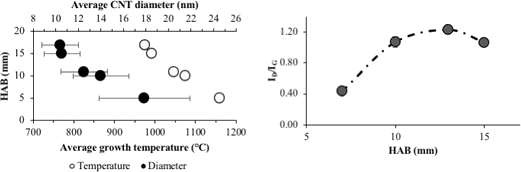
- widely accepted vapor–liquid–solid mechanism, the growth of CNTs occurs in three steps, namely, melting of nickel particles, adsorption of carbon atoms onto the surface of the metallic nickel, and finally, diffusion and deposition of the precipitated carbon, which forms tubular materials by curling of


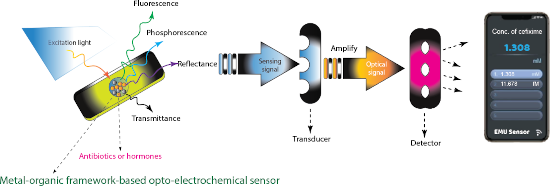
Metal-organic framework-based nanomaterials as opto-electrochemical sensors for the detection of antibiotics and hormones: A review
Beilstein J. Nanotechnol. 2023, 14, 631–673, doi:10.3762/bjnano.14.52


Plasmonic nanotechnology for photothermal applications – an evaluation
Beilstein J. Nanotechnol. 2023, 14, 380–419, doi:10.3762/bjnano.14.33
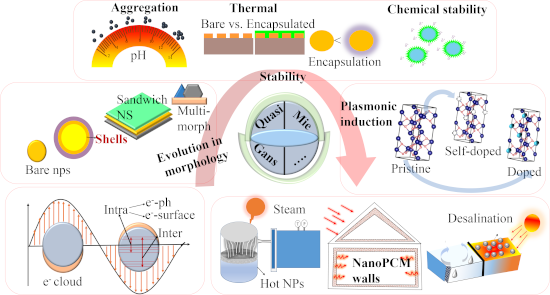
- plasmonic materials, such as a higher melting point, alloying capabilities, as well as possibly lower reactivities. Morphologies with optimal PT properties in terms of optical absorbance can benefit well from prior knowledge of the same, which can be obtained quite well through modelling efforts. Modelling
- volume fraction of the particles, Tm is the melting temperature, Tc is the temperature of the cooling fluid, W is the thickness of the compartment holding the n-PCM, kw is the conductivity of the wall, and k′ is the conductivity of the PCM. The thermal conductivity of the plasmonically enhanced PCM