


Search results
Search for "metallic nanoparticles" in Full Text gives 106 result(s) in Beilstein Journal of Nanotechnology.
Silver nanoparticles nucleated in NaOH-treated halloysite: a potential antimicrobial material
Beilstein J. Nanotechnol. 2021, 12, 798–807, doi:10.3762/bjnano.12.63
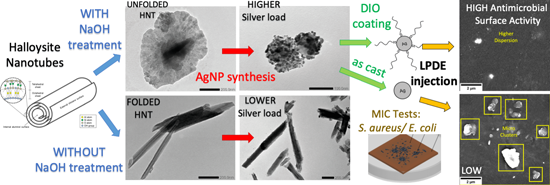
- of the top ten threats to public health [1]. Antimicrobial nanomaterials are one of the most promising antibiotic-free alternatives for many applications. Among them are metallic nanoparticles, which could be potent inorganic antimicrobial agents through ion release and the capability to rupture the




A review on nanostructured silver as a basic ingredient in medicine: physicochemical parameters and characterization
Beilstein J. Nanotechnol. 2021, 12, 440–461, doi:10.3762/bjnano.12.36

- –NIR absorption spectroscopy: Metallic nanoparticles are known to emit characteristic colors in the visible region of the electromagnetic spectrum due to a phenomenon known as surface plasmon resonance. The color of a colloidal nanoparticle solution is mainly dependent on the size and shape of the


Free and partially encapsulated manganese ferrite nanoparticles in multiwall carbon nanotubes
Beilstein J. Nanotechnol. 2020, 11, 1891–1904, doi:10.3762/bjnano.11.170
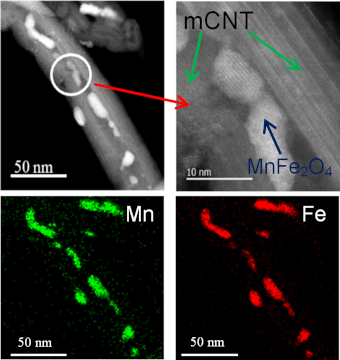
- ferrite nanoparticles in comparison to free manganese ferrite nanoparticles, which leads to an enhancement of the metallic properties. Keywords: carbon nanotubes; charge transfer; manganese ferrite; metallic nanoparticles; partial encapsulation; stress; surface; Introduction Since the discovery of




Optically and electrically driven nanoantennas
Beilstein J. Nanotechnol. 2020, 11, 1542–1545, doi:10.3762/bjnano.11.136

- ultrahigh sensitivity sensing the central feature for tightly confining and enhancing the optical near-field is a narrow gap between two metallic nanoparticles or tips. Creating such gaps to obtain a controlled distribution of hotspots, for example, on a chip, is no trivial task. This has been pursued using
Antimicrobial metal-based nanoparticles: a review on their synthesis, types and antimicrobial action
Beilstein J. Nanotechnol. 2020, 11, 1450–1469, doi:10.3762/bjnano.11.129

- . Keywords: antimicrobial mechanism; antimicrobial nanoparticles; metallic nanoparticles; nanoparticle synthesis; nosocomial infections; Review Introduction In the last decades, the search for new antimicrobial substances against microbial contamination has been the focus of many research fields, in public


Highly sensitive detection of estradiol by a SERS sensor based on TiO2 covered with gold nanoparticles
Beilstein J. Nanotechnol. 2020, 11, 1026–1035, doi:10.3762/bjnano.11.87
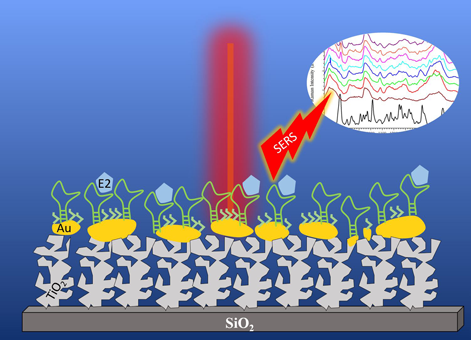
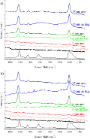
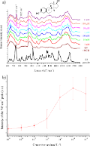
- water. SERS is mainly based on an electromagnetic effect that originates from the excitation of plasmon resonances, in particular of localized surface plasmons (LSPs) in metallic nanoparticles (NPs). Other effects may contribute to the enhancement such as the formation of hot spots or lightning rod




Microwave-induced electric discharges on metal particles for the synthesis of inorganic nanomaterials under solvent-free conditions
Beilstein J. Nanotechnol. 2020, 11, 1019–1025, doi:10.3762/bjnano.11.86
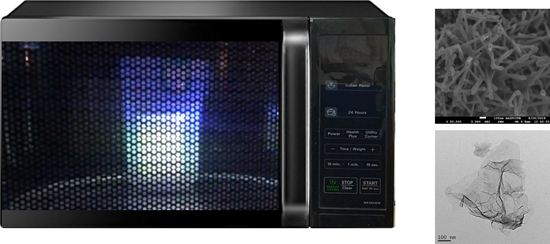
- treatment of metals under microwave irradiation in organic solvents can carbonize the organic solvents forming carbon-coated metallic nanoparticles [15][16]. Recently, Pentsak et al. have shown that metals, such as Cu, Fe, and Mo, on carbon form nanometer-scale structures under microwave heating [17
- (2.54 GHz, power 700 W) and treated for periods of time between 5 s and 2 min. Arcs were generated in the activated metal, which evaporated the metal along with carbon. Carbon-coated metallic nanoparticles formed on the top lid of the reaction vessel. For synthesizing nanorods, sulfur was used as a
- with either graphite or graphitic carbon nitride (g-C3N4) yields carbon-coated or nitrogen-doped carbon-coated metallic nanoparticles. When these reactions are conducted in a Teflon reactor, the products are further functionalized with fluorine. Figure 3a shows XRD patterns of Cu and Ni nanoparticles


Structural optical and electrical properties of a transparent conductive ITO/Al–Ag/ITO multilayer contact
Beilstein J. Nanotechnol. 2020, 11, 695–702, doi:10.3762/bjnano.11.57
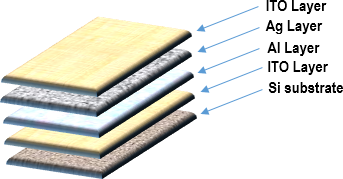
- ]. Further treatments beyond 500 °C resulted in the degradation of the film structure due to the appearance of metallic nanoparticles on the surface of the multilayer [4][28]. Furthermore, Cho et al. estimated a figure of merit of 12.28 × 10⁻⁴ Ω−1 for a 5.07 nm thick intermediate Al film after annealing at


Silver-decorated gel-shell nanobeads: physicochemical characterization and evaluation of antibacterial properties
Beilstein J. Nanotechnol. 2020, 11, 620–630, doi:10.3762/bjnano.11.49
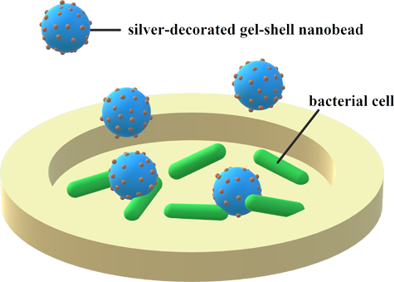
- generate metallic nanoparticles embedded in the shell. Such structures have been demonstrated to reveal antibacterial and antifungal properties. For example, Zhao et al. prepared micrometer-sized hybrid particles in a multi-step preparation involving the sulfonation of polystyrene beads and the


Evolution of Ag nanostructures created from thin films: UV–vis absorption and its theoretical predictions
Beilstein J. Nanotechnol. 2020, 11, 494–507, doi:10.3762/bjnano.11.40
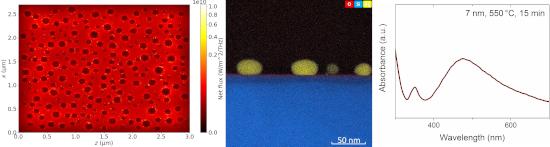
- size of the metallic nanoparticles is larger than 10 nm, their dielectric functions are known to be independent on the size and to have the values of the bulk material [7]. For instance, a dipole mode can then be excited when ε = −2, which corresponds to λ = 355 nm for Ag and λ = 490 nm for Au. When




Formation of nanoripples on ZnO flat substrates and nanorods by gas cluster ion bombardment
Beilstein J. Nanotechnol. 2020, 11, 383–390, doi:10.3762/bjnano.11.29
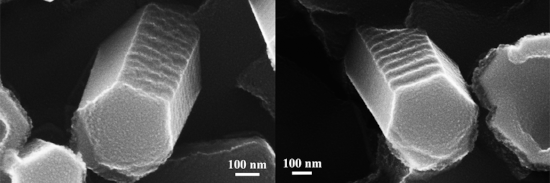
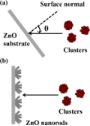
- of semiconductor quantum dots [2]. Arrays of metallic nanoparticles or nanowires aligned on dielectric surfaces with nanoripples are ideal for research on plasmonics [3]. Ag nanoparticle arrays created on rippled silicon surfaces have demonstrated excellent sensing of molecules through surface




Using gold nanoparticles to detect single-nucleotide polymorphisms: toward liquid biopsy
Beilstein J. Nanotechnol. 2020, 11, 263–284, doi:10.3762/bjnano.11.20
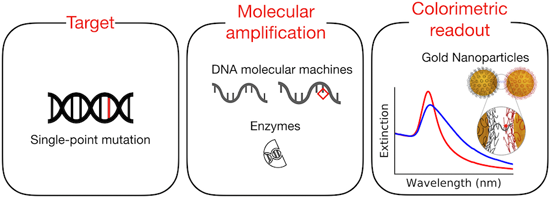
- seconds even at sub-picomolar concentration. Here, we review recent advancements in the development of sensors based on metallic nanoparticles for the detection of mutations in circulating tumor DNA molecules. By introducing the importance of DNA molecules as biomarkers in the field of liquid biopsy and





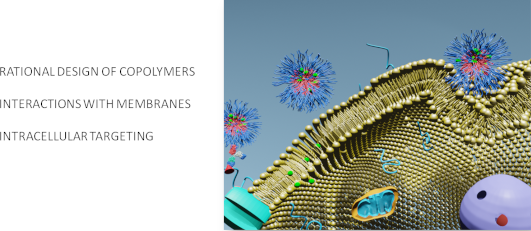
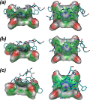
Rational design of block copolymer self-assemblies in photodynamic therapy
Beilstein J. Nanotechnol. 2020, 11, 180–212, doi:10.3762/bjnano.11.15







Gold and silver dichroic nanocomposite in the quest for 3D printing the Lycurgus cup
Beilstein J. Nanotechnol. 2020, 11, 16–23, doi:10.3762/bjnano.11.2
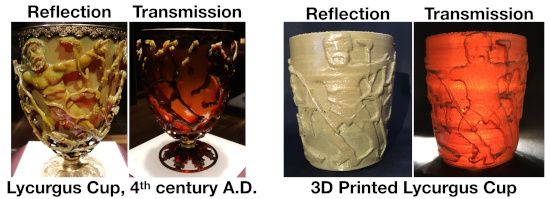
- scientists for centuries, was discovered to be due to the presence of nanoparticles in the glass. This effect was due to two different metallic nanoparticles: silver nanoparticles (AgNP) and gold nanoparticles (AuNP). While the latters are responsible for the red plasmonic colour, the silver nanoparticles
- metallic nanoparticles and modern technology such as 3D printing, recreate an artefact from more than 1600 years ago which has puzzled scientists for centuries? The results presented here are more general and can be applied in chemistry, physics and materials science. For example, the colour of the



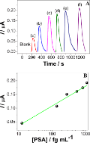
Use of data processing for rapid detection of the prostate-specific antigen biomarker using immunomagnetic sandwich-type sensors
Beilstein J. Nanotechnol. 2019, 10, 2171–2181, doi:10.3762/bjnano.10.210

- electrical or electrochemical signal. The choice of the molecular architecture for the electrochemical immunosensors is crucial for obtaining high sensitivity and specificity. The matrix on which the bioactive layer is deposited may contain metallic nanoparticles to enhance the electrochemical response [8][9


The influence of porosity on nanoparticle formation in hierarchical aluminophosphates
Beilstein J. Nanotechnol. 2019, 10, 1952–1957, doi:10.3762/bjnano.10.191
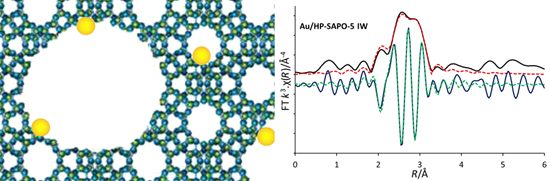
- : aluminophosphate; catalysis; hierarchical catalysts; nanoparticles; porosity; Findings The controlled synthetic design of metallic nanoparticles has generated significant interest in recent decades due to their implementation in a range of fields, including medicine [1], optics [2] and catalysis [3]. Given the



Toxicity and safety study of silver and gold nanoparticles functionalized with cysteine and glutathione
Beilstein J. Nanotechnol. 2019, 10, 1802–1817, doi:10.3762/bjnano.10.175
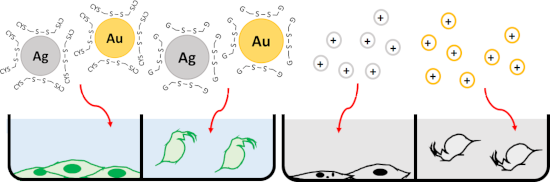
- Zagreb, Croatia 10.3762/bjnano.10.175 Abstract This study was designed to evaluate the nano–bio interactions between endogenous biothiols (cysteine and glutathione) with biomedically relevant, metallic nanoparticles (silver nanoparticles (AgNPs) and gold nanoparticles (AuNPs)), in order to assess the
- . Keywords: biocompatibility; cysteine; ecotoxicity; glutathione; nano–bio interactions; nanosafety; nanotoxicity; Introduction Metallic nanoparticles (NPs) such as silver and gold have been employed in a wide range of products and applications in the biomedical field owing to their remarkable physico
- with previously published toxicity data on polymer- or citrate-coated AgNPs and AuNPs indicated that functionalization with CYS- or GSH-reduced the NP toxicity towards D. magna (see Table S4 in Supporting Information File 1). Conclusion As the interest in metallic nanoparticles for biomedical use grows


Fabrication of silver nanoisland films by pulsed laser deposition for surface-enhanced Raman spectroscopy
Beilstein J. Nanotechnol. 2019, 10, 882–893, doi:10.3762/bjnano.10.89
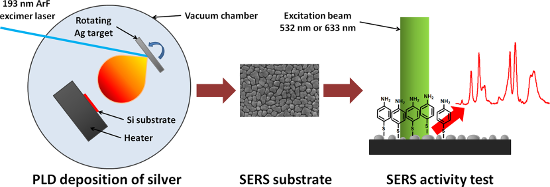
- the size, shape, and arrangements of nanostructures, the material they are made of and the surrounding medium [6]. One of the easiest nanostructures to produce are metallic nanoparticles (NPs). Alone or in composites with other materials, they find numerous applications in plasmonic photocatalysis [7
- ][8][9], photovoltaics [10] or optical sensing through localized surface plasmon resonance (LSPR) [11]. It is therefore not surprising that quite a number of studies have been initiated and performed in order to design and fabricate highly active SERS substrates based on metallic nanoparticles and




Enhancement in thermoelectric properties due to Ag nanoparticles incorporated in Bi2Te3 matrix
Beilstein J. Nanotechnol. 2019, 10, 634–643, doi:10.3762/bjnano.10.63
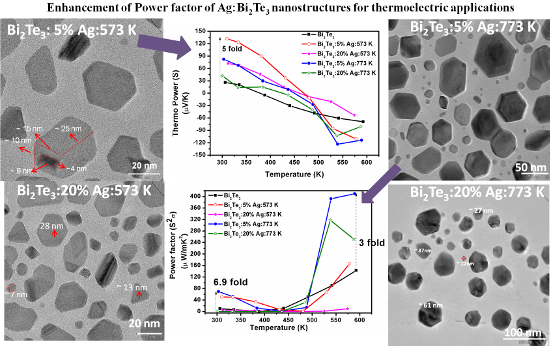
- matrix have been synthesized and a dramatic enhancement in ZT by 304% for 2 vol % Ag in Bi2Te3 has been reported [20]. One research group submitted a patent on solvothermally synthesized low-dimensional nanocrystals of bismuth telluride covered by 0.001 wt %, 0.05 wt % Au or 0.05 wt % Ag metallic
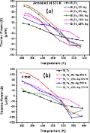
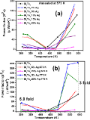
- nanoparticles that yield both a higher power factor and figure of merit than pure Bi2Te3 [21]. An enhanced Seebeck coefficient (S) could compensate for the reduction in electrical conductivity to some extent maintaining S2σ as unaffected as possible. Through the metal fraction in the matrix or the synthesis




Gold nanoparticles embedded in a polymer as a 3D-printable dichroic nanocomposite material
Beilstein J. Nanotechnol. 2019, 10, 442–447, doi:10.3762/bjnano.10.43
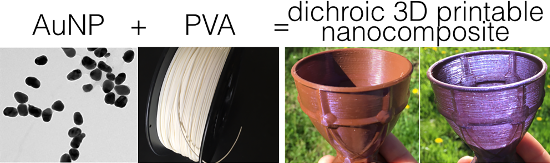
- , where craftsmen, unaware of the existence of surface plasmon resonance [3], used metallic nanoparticles for coloring mosaic tiles, pottery and glass [4][5]. Metallic nanoparticles were also used for staining glass during medieval times, examples of which can still be found in many churches and



Comparative biological effects of spherical noble metal nanoparticles (Rh, Pd, Ag, Pt, Au) with 4–8 nm diameter
Beilstein J. Nanotechnol. 2018, 9, 2763–2774, doi:10.3762/bjnano.9.258
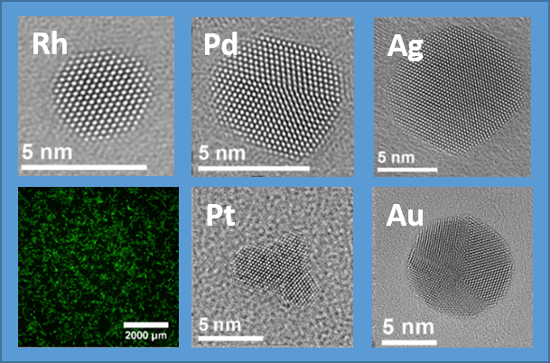
- , palladium, platinum, gold) that do not release ions are not cytotoxic under these conditions. Keywords: cytotoxicity; electron microscopy; metals; nanoparticles; nanotoxicity; Introduction Inorganic and metallic nanoparticles represent a well-established part of materials science, heterogeneous catalysis


Silencing the second harmonic generation from plasmonic nanodimers: A comprehensive discussion
Beilstein J. Nanotechnol. 2018, 9, 2674–2683, doi:10.3762/bjnano.9.250
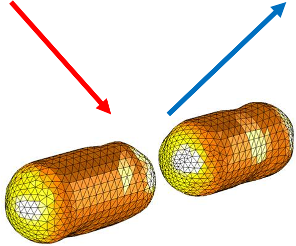
- metallic nanoparticles [28][29]. Note that other contributions to the SH signal, namely the χsurf,ttn component of the surface tensor (where t denotes the component tangential to the surface) and bulk contribution, are theoretically allowed but these terms contribute only weakly to the total SH wave [28
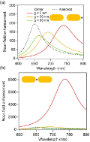


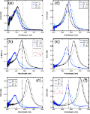
Polarization-dependent strong coupling between silver nanorods and photochromic molecules
Beilstein J. Nanotechnol. 2018, 9, 2657–2664, doi:10.3762/bjnano.9.247
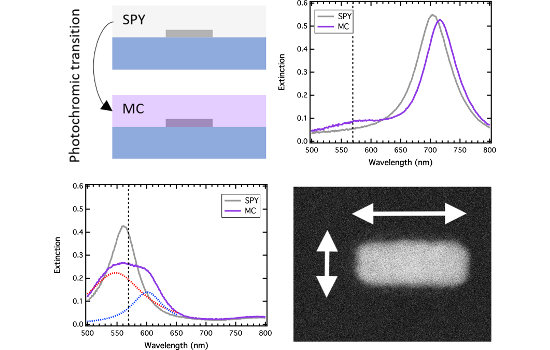
- ; Introduction For decades, plasmonic systems have been extensively studied for their potential applications in many research fields. Due to their localized surface plasmon resonance (LSPR), metallic nanoparticles have been used to enhance the sensitivity of bio- or chemo-sensors [1], enhance and direct the
- light emitted by quantum dots or molecules [2][3], and to kill cancer cells [4]. This resonance is directly linked to the intrinsic properties of the metallic nanoparticles (depending on the geometry or the nature of the metal), which makes it difficult to easily control its spectral position. Many
- . Indeed, the MC isomer presents an absorption maximum at 570 nm (Figure 1c). We characterized this film (without any metallic nanoparticles) by ellipsometry measurements and verified that the photochromic transition is accompanied by a high refractive index change. Figure 1d shows the variations of the



Au–Si plasmonic platforms: synthesis, structure and FDTD simulations
Beilstein J. Nanotechnol. 2018, 9, 2599–2608, doi:10.3762/bjnano.9.241
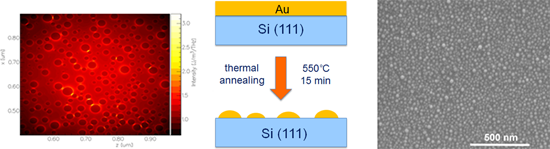
- or subwavelength propagation. There are a lot of methods for the manufacturing of plasmonic platforms. Some of them are relatively simple and cost-effective, but sizes and shapes of the obtained metallic nanoparticles are not homogeneous. On the other hand, there are also methods that can yield more



High-throughput micro-nanostructuring by microdroplet inkjet printing
Beilstein J. Nanotechnol. 2018, 9, 2372–2380, doi:10.3762/bjnano.9.222
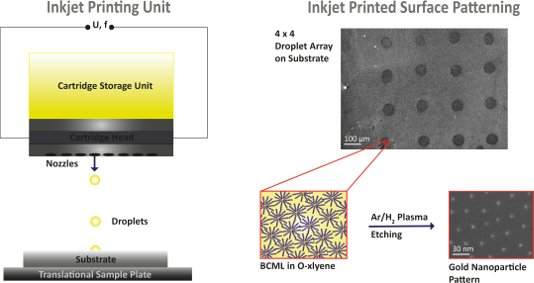
- : biofunctional surfaces; inkjet printing; microstructures; nanolithography; nanoparticles; Introduction Many applications require well-organized micro- and nanoscale patterning of metallic nanoparticles. Examples include high-performance optics [1], multimodal waveguides [2], biosensors [3] and biomaterials [4





