


Search results
Search for "microspheres" in Full Text gives 68 result(s) in Beilstein Journal of Nanotechnology.
Unravelling the interfacial interaction in mesoporous SiO2@nickel phyllosilicate/TiO2 core–shell nanostructures for photocatalytic activity
Beilstein J. Nanotechnol. 2020, 11, 1834–1846, doi:10.3762/bjnano.11.165
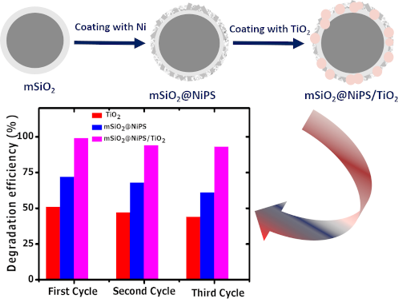
- formation of NiPS on the SiO2 surface (Figure 1e). A similar flake-like structure on the surface of silica was observed by Guo et al. [41] on mesoporous SiO2/Ni3Si2O5(OH)4 core–shell microspheres. Ni3Si2O5(OH)4 corresponding to 1:1 nickel phyllosilicate comprises a brucitic sheet of Ni(II) cations that are


Oxidation of Au/Ag films by oxygen plasma: phase separation and generation of nanoporosity
Beilstein J. Nanotechnol. 2020, 11, 1608–1614, doi:10.3762/bjnano.11.143
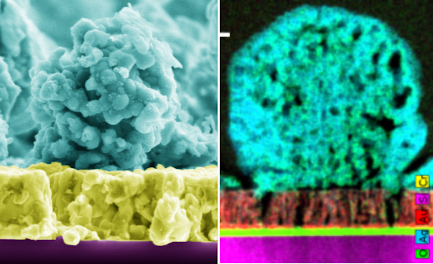
- silver and gold. In addition, it was shown that the preferential oxidation of silver resulted in a solid-state diffusion of silver toward the surface where it oxidized and formed nanoporous microspheres. The gold phase remaining in the film exhibited nanoporosity due to the injected vacancies at the
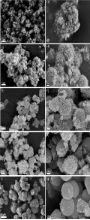
- formation of unique features, consisting of silver oxide nanoporous microspheres (Figure 1). Our observation was supported by various characterization techniques, including scanning electron microscopy (SEM), transmission electron microscopy (TEM) and X-ray diffraction spectroscopy (XRD). We conducted our
- top surface of the films (Figure 2a,b). Increasing the oxidation time to 15 min results in the formation of nanoporous microspheres at the surface (Figure 2c,d). By using elemental energy dispersive X-ray (EDS) analysis, these microspheres were confirmed to be constituted of silver oxide


Plant growth regulation by seed coating with films of alginate and auxin-intercalated layered double hydroxides
Beilstein J. Nanotechnol. 2020, 11, 1082–1091, doi:10.3762/bjnano.11.93
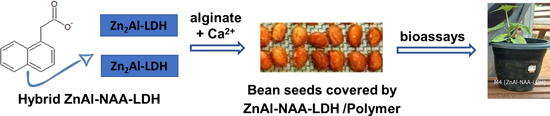
- alginate microspheres containing LDH intercalated with borate anions (LDH-B-ALG) and used them as a new slow-release boron fertilizer. In vitro release tests and leaching experiments showed that the boron release in the solution and the leaching in soil columns were much lower from LDH-B-ALG when compared



Silver-decorated gel-shell nanobeads: physicochemical characterization and evaluation of antibacterial properties
Beilstein J. Nanotechnol. 2020, 11, 620–630, doi:10.3762/bjnano.11.49
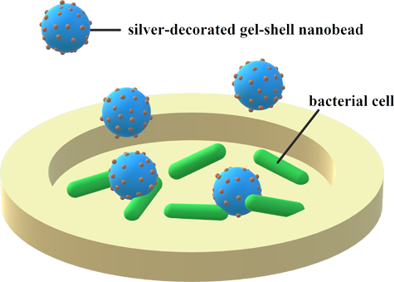
- [10][11][12][13][14][15][16][17]. The resulting composites exhibit a double function, they support the metal nanoparticles and prevent their aggregation. For example, polystyrene microspheres have been decorated with silver nanoparticles and were used as catalysts, Raman-enhancing materials
- nanoparticles. This approach is similar in some aspects to synthetic strategies reported in the literature. For example, Li et al. [41] proposed the decoration of the surface of polystyrene microspheres with silver nanoparticles through adsorption (the Ag nanoparticles were generated in the solution through


Facile biogenic fabrication of hydroxyapatite nanorods using cuttlefish bone and their bactericidal and biocompatibility study
Beilstein J. Nanotechnol. 2020, 11, 285–295, doi:10.3762/bjnano.11.21
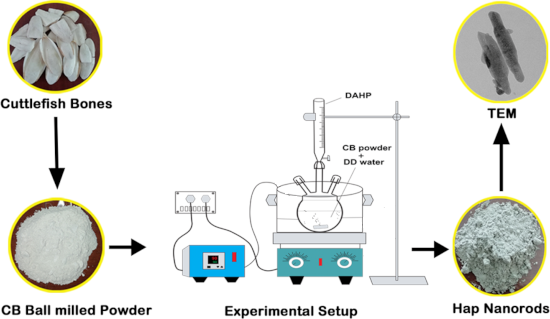
- the morphology evaluation of the nanomaterials. The parameters were optimized based on the study by Casella et al. (2017), in which Hap nanoparticles were synthesized with various morphologies such as rods, hexagonal prisms, hollow flower structure, and microspheres by adjusting the reaction time [63


Synthesis and acetone sensing properties of ZnFe2O4/rGO gas sensors
Beilstein J. Nanotechnol. 2019, 10, 2516–2526, doi:10.3762/bjnano.10.242
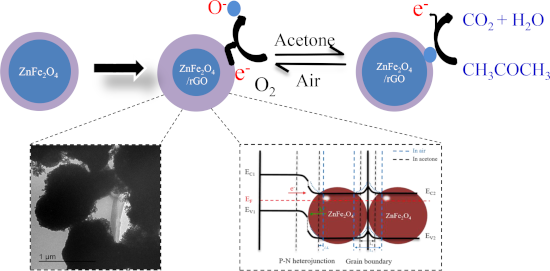
- field of gas sensing. It was reported that small, well-dispersed ZnFe2O4 nanoparticles showed a good selectivity to acetone at 200 °C, but the detection limit was only 5 ppm [15]. Porous ZnFe2O4 double-shell microspheres showed a response to acetone at 206 °C, which is mainly ascribed to their unique




Revisiting semicontinuous silver films as surface-enhanced Raman spectroscopy substrates
Beilstein J. Nanotechnol. 2019, 10, 1048–1055, doi:10.3762/bjnano.10.105
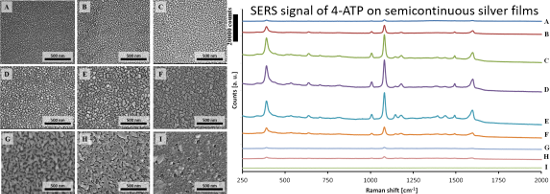
- -structured surfaces made of glass [25][26], GaN [27][28][29], Si [30], TiO2 [31], Al2O3 [32], Ti [33], polymers [34], or planar surfaces coated with nano/microspheres resulting in metal film on nanospheres MFON [35][36], and Au nanocrescents on a monolayer of polystyrene nanospheres [37]. Additionally




A Ni(OH)2 nanopetals network for high-performance supercapacitors synthesized by immersing Ni nanofoam in water
Beilstein J. Nanotechnol. 2019, 10, 281–293, doi:10.3762/bjnano.10.27
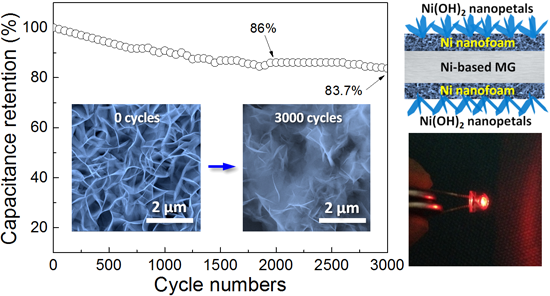
- support to the dealloyed Ni-NF/MG substrate. In additon, the in situ growth in deionized water offers a good connection between Ni-NF and Ni(OH)2. The growth mechanism of Ni(OH)2 nanopetals According to the SEM images (Figure 2b–d), Ni(OH)2 nanopetals and flower-like microspheres grow on the surface of Ni


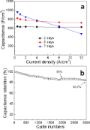


Zn/F-doped tin oxide nanoparticles synthesized by laser pyrolysis: structural and optical properties
Beilstein J. Nanotechnol. 2019, 10, 9–21, doi:10.3762/bjnano.10.2
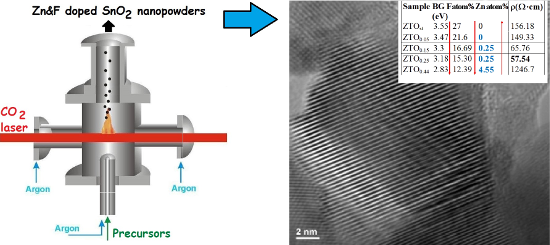
- nanostructured microspheres [43]. Moreover, for the half hour milled sample from [42], the stannous fluoride XRD peaks can also be identified at 2θ ≈ 25° and 2θ ≈ 27°. In brief, the XPS results indicate that Zn atoms are incorporated into the SnO2 crystal lattice through the substitution of Sn sites. In Figure
- values. A clear optical behavior influence of the presence of carbon layers on tin dioxide can be observed for the SnO2@C and SnO2@SiO2@C nanostructured microspheres (C symbolizing here reduced graphene oxide, rGO) reported in [53], where the UV–vis spectra show a clear increase in absorbance (mostly in



Light extraction efficiency enhancement of flip-chip blue light-emitting diodes by anodic aluminum oxide
Beilstein J. Nanotechnol. 2018, 9, 1602–1612, doi:10.3762/bjnano.9.152
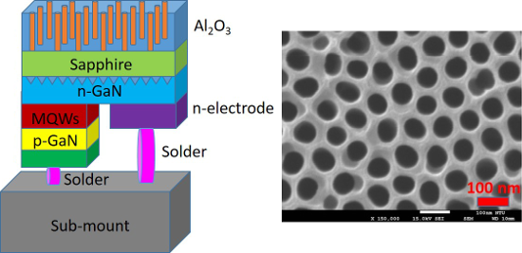
- microspheres and microlens arrays in thin-film flip-chip LEDs [20][21][22] and organic LEDs [23][24][25] has significantly improved the LEE. The use of microspheres and microlens arrays produced via the colloidal method has enabled the wafer-scale deposition of two-dimensional close-packed arrays with high


Interaction-tailored organization of large-area colloidal assemblies
Beilstein J. Nanotechnol. 2018, 9, 1582–1593, doi:10.3762/bjnano.9.150
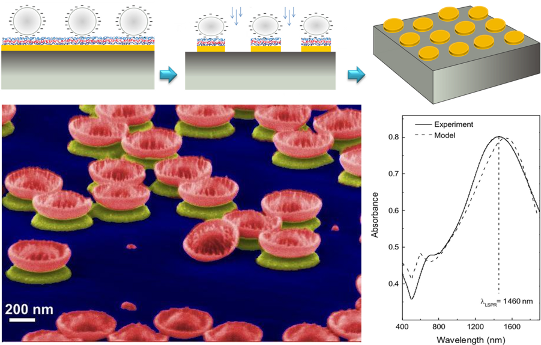
- latex with surface charge density 1.2 µC/cm2 and concentration 8% w/v) and 500 ± 50 nm (non-functionalized Polybeads® – microspheres containing a slight anionic charge from sulfate ester, concentration 2.5% w/v) were respectively purchased from Invitrogen and Polyscience, Inc. Poly


Cr(VI) remediation from aqueous environment through modified-TiO2-mediated photocatalytic reduction
Beilstein J. Nanotechnol. 2018, 9, 1448–1470, doi:10.3762/bjnano.9.137
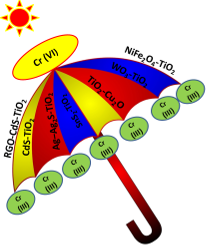
- core–shell nanotubes exhibited higher Cr(VI) oxyanion reduction and adsorption. The activity could be varied with concentration, pH and dopant acid [133]. Graphene-wrapped differently faceted (001 and 101) TiO2 hollow-core–shell microspheres (TGHMs) have been fabricated by Liu et al. and were applied


Heterostuctures of 4-(chloromethyl)phenyltrichlorosilane and 5,10,15,20-tetra(4-pyridyl)-21H,23H-porphine prepared on Si(111) using particle lithography: Nanoscale characterization of the main steps of nanopatterning
Beilstein J. Nanotechnol. 2018, 9, 1211–1219, doi:10.3762/bjnano.9.112
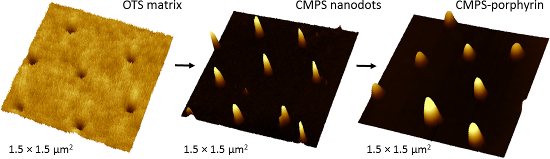
- drying, 10 µL of monodisperse silica microspheres in water was deposited on the clean silicon substrates and dried in air to produce a surface film of Si spheres. The substrate and dried microspheres were placed in an oven at 150 °C for 20 h. The annealing heating step was used to temporarily solder the
- silica microspheres to the silicon surface so that the beads would not be displaced in solution. The substrates containing the silica microspheres masks were then removed from the oven and placed in a 0.1% (v/v) solution of OTS in toluene for 5 h. The samples were then rinsed with ethanol and water with
- ]. Steps for preparing nanopatterned CMPS-porphyrin heterostructures. (a) Monodisperse silica spheres were deposited on Si(111) to form a surface mask for particle lithography. (b) After immersion in OTS solution, the microspheres were rinsed away to reveal nanoholes of OTS. (c) With a second immersion


Fabrication and photoactivity of ionic liquid–TiO2 structures for efficient visible-light-induced photocatalytic decomposition of organic pollutants in aqueous phase
Beilstein J. Nanotechnol. 2018, 9, 580–590, doi:10.3762/bjnano.9.54
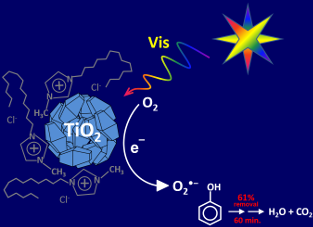
- photoactivity of TiO2, a series of TiO2 microspheres have been synthesized via a solvothermal method assisted by 1-methyl-3-octadecylimidazolium chloride ([ODMIM][Cl]) and 1-methyl-3-tetradecylimidazolium chloride ([TDMIM][Cl]). All as-prepared samples were characterized by X-ray powder diffraction (XRD), X-ray
- photoactivity under visible-light irradiation is presented in Figure 3. The average size of the microspheres, calculated based on the statistical average size of 100 microstructures, is also included in this figure. The four main fractions of TiO2 microspheres have been recognized. Generally, for all the
- samples, the dominant fraction were the microspheres with an average diameter ranging from 3 to 5 µm. Based on these results, as well as our previous study [28], we can conclude that longer alkyl chains in the imidazolium cation lead to a larger particle size. Recently we examined the influence of two




Synthesis and characterization of electrospun molybdenum dioxide–carbon nanofibers as sulfur matrix additives for rechargeable lithium–sulfur battery applications
Beilstein J. Nanotechnol. 2018, 9, 262–270, doi:10.3762/bjnano.9.28
- ], multiwalled carbon nanotubes (MWNTs) [4] and hollow carbon microspheres [5]) and electrically conductive polymeric materials (e.g., polyaniline [6], polypyrrole [7] and poly(3,4-ethylenedioxythiophene) [8]) have been considerably used to encapsulate sulfur or polysulfide. Recently, polar metal oxide/sulfide
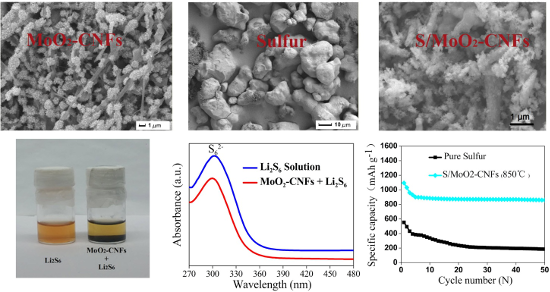
- (1D) MoO2–CNFs nanocomposites, especially with secondary MoO2 nanostructures, are difficult to achieve due to lack of appropriate and generalized synthetic methodologies. Recently, hierarchical MoO2/C microspheres and hierarchical MoO2/Mo2C/C hybrid nanowires were fabricated using organic–inorganic


Liquid-crystalline nanoarchitectures for tissue engineering
Beilstein J. Nanotechnol. 2018, 9, 205–215, doi:10.3762/bjnano.9.22
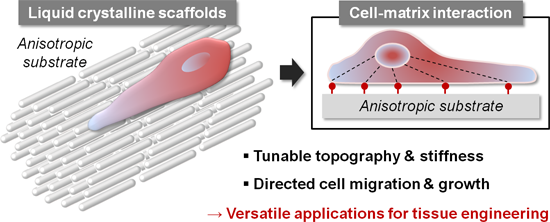
- induced 2D and 3D aligned cell growth in response to the lamellar molecular structure of LCE matrices, with tunable porosity and crosslinking density [99][100][101]. In addition, the 3D anisotropic cell scaffolds can be fabricated by using nematic LCE microspheres as building blocks by tuning elastic


Fabrication of CeO2–MOx (M = Cu, Co, Ni) composite yolk–shell nanospheres with enhanced catalytic properties for CO oxidation
Beilstein J. Nanotechnol. 2017, 8, 2425–2437, doi:10.3762/bjnano.8.241
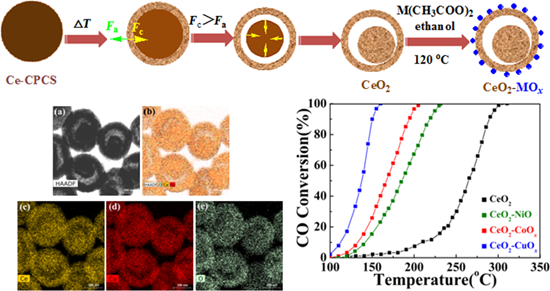
- synthesized by thermal decomposition of the as-prepared Ce–Zn precursor and exhibited excellent activity for removing CO [17]. CeO2–ZnO composite hollow microspheres were fabricated via annealing of a precursor of amorphous zinc–cerium citrate hollow microspheres and presented excellent catalytic activity in





Hydrothermal synthesis of ZnO quantum dot/KNb3O8 nanosheet photocatalysts for reducing carbon dioxide to methanol
Beilstein J. Nanotechnol. 2017, 8, 2264–2270, doi:10.3762/bjnano.8.226
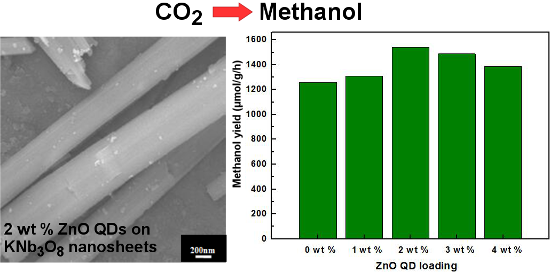
- much higher than that of the commercial Degussa P25 [10]. Zhou et al. synthesized porous K4Nb6O17 microspheres with large surface area via a homogeneous precipitation method, which showed not only two times higher photocatalytic activity than that of the commercial Degussa P25 (the titanium dioxide




Freestanding graphene/MnO2 cathodes for Li-ion batteries
Beilstein J. Nanotechnol. 2017, 8, 1932–1938, doi:10.3762/bjnano.8.193
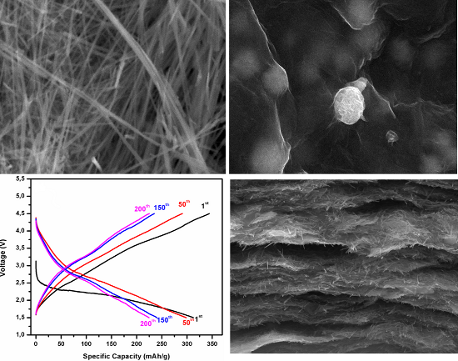
- -like γ-MnO2 microspheres were wrapped by transparent graphene layers. In order to illustrate the dispersion of MnO2 polymorphs (i.e. not only the surface of graphene sheets, but also interlayers of graphene), cross-sectional characterization of graphene/MnO2 composite layers was implemented using SEM
- nanorods were homogenously dispersed not only at the surface, but also in the interlayer space of grapheme layers. Moreover, urchin-like γ-MnO2 microspheres were found wrapped by graphene nanosheets. The electrochemical cycling results demonstrated that the graphene/α-MnO2 cathode showed the best


Fabrication of carbon nanospheres by the pyrolysis of polyacrylonitrile–poly(methyl methacrylate) core–shell composite nanoparticles
Beilstein J. Nanotechnol. 2017, 8, 1897–1908, doi:10.3762/bjnano.8.190

- production of carbon nanospheres. However, these methods require special equipment, and the size control of the resulting spheres also remains a problem. Carbon nanospheres or microspheres can also be fabricated via pyrolysis of various particulate polymer precursors [20][21][22][23][24][25][26][27]. The
- , the direct fabrication of discrete carbon nanospheres can be achieved. Although carbon nanospheres and microspheres have been fabricated by various methods, reports on the fabrication of monodisperse carbon nanospheres with a diameter less than 100 nm are still very few [21][27][37][38]. Also
- , although PAN-based carbon nanospheres and microspheres were reported to be fabricated by pyrolysis of various precursors [23][31][33][34][35], their detailed microstructure, including the elemental composition, crystalline structure, structure ordering and porous configuration, have not yet been reported



Development of an advanced diagnostic concept for intestinal inflammation: molecular visualisation of nitric oxide in macrophages by functional poly(lactic-co-glycolic acid) microspheres
Beilstein J. Nanotechnol. 2017, 8, 1637–1641, doi:10.3762/bjnano.8.163
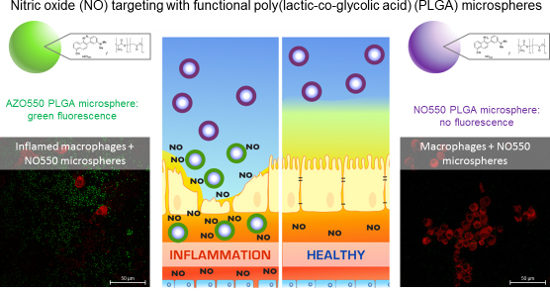
- Schiller University Jena, Institute for Inorganic and Analytical Chemistry, Humboldtstr. 8, 07743 Jena, Germany 10.3762/bjnano.8.163 Abstract We here describe a new approach to visualise nitric oxide (NO) in living macrophages by fluorescent NO-sensitive microspheres based on poly(lactic-co-glycolic acid
- ) (PLGA). PLGA microspheres loaded with NO550 dye were prepared through a modified solvent-evaporation method. Microparticles were characterized by a mean hydrodynamic diameter of 3000 nm, zeta potential of −26.000 ± 0.351 mV and a PDI of 0.828 ± 0.298. Under abiotic conditions, NO release was triggered
- through UV radiation (254 nm) of 10 mM sodium nitroprusside dehydrate (SNP). After incubation, AZO550 microspheres exhibited an about 8-fold increased emission at 550 nm compared to NO550 particles. For biotic NO release, RAW 264.7 murine macrophages were activated with lipopolysaccharide (LPS) of


Vapor deposition routes to conformal polymer thin films
Beilstein J. Nanotechnol. 2017, 8, 723–735, doi:10.3762/bjnano.8.76
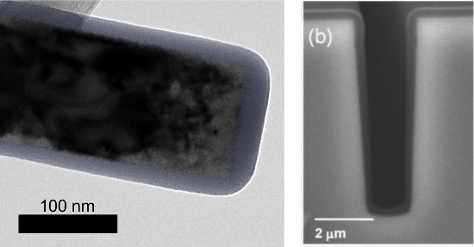
- silica microspheres for biological sensors, as seen in Figure 9a [29]. Lahann and coworkers used parylene CVD to form thin films of poly[(p-xylene-4-methyl-2-bromoisobutyrate)-co-(p-xylene)] which served as a conformal initiating layer for atom transfer radical polymerization to produce conformal brushes


Synthesis of graphene–transition metal oxide hybrid nanoparticles and their application in various fields
Beilstein J. Nanotechnol. 2017, 8, 688–714, doi:10.3762/bjnano.8.74
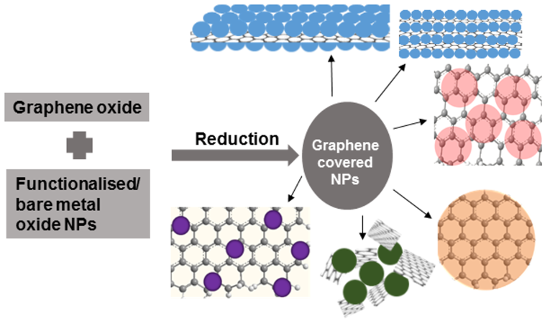
- , solid and hollow spheres. Graphene-wrapped Cu2O nanocubes exhibit higher electrocatalytic performance towards electro-oxidation of glucose with lower detection time, and this hybrid has improved electrochemical stability [211]. Ding et al. have prepared Cu2O microspheres on rGO by a one-step synthesis




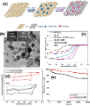


Carbon nanotube-wrapped Fe2O3 anode with improved performance for lithium-ion batteries
Beilstein J. Nanotechnol. 2017, 8, 649–656, doi:10.3762/bjnano.8.69
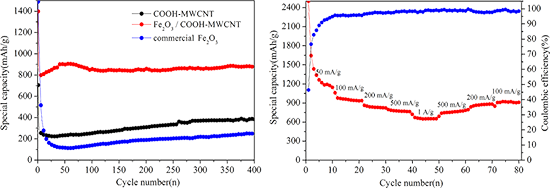
- . Liang et al. [20] employed a simple and easy hydrothermal method for the synthesis of α-Fe2O3 microspheres by using sodium citrate as surfactant. A reversible discharge capacity of 489.5 mAh·g−1 was obtained at a current density of 100 mA·g−1 of up to 50 cycles. The specific capacity of the synthesized
- α-Fe2O3 microspheres was much better than that of commercial graphite (372 mAh·g−1) although further improvement in cyclic stability was needed [20]. An effective method to improve the electrical conductivity of Fe2O3 is to fabricate Fe2O3/carbon nanotube (CNT), Fe2O3/graphene or Fe2O3/graphene/CNT


Self-assembly of silicon nanowires studied by advanced transmission electron microscopy
Beilstein J. Nanotechnol. 2017, 8, 440–445, doi:10.3762/bjnano.8.47
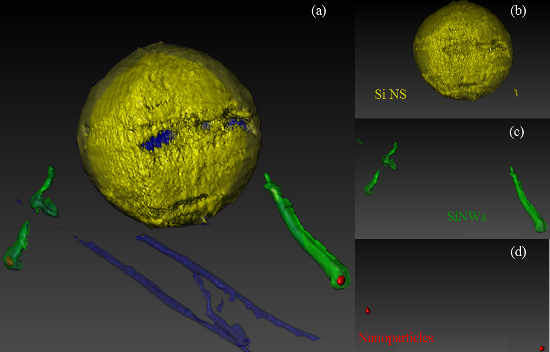
- SiNWs via the VLS mechanism after suitable optimization of the process. Experimental The inductively coupled plasma process [10] is conventionally exploited to transform a rough Si powder feedstock (irregular particles with mean size of 115 µm and 99.5% purity) into spherical microspheres of equivalent
- , re-condensate as silicon spheres due to the surface-energy minimization principle. During the formation of the microspheres, a fraction of the Si feedstock sublimates and the molecules in the vapor phase aggregate in the form of lighter Si nanostructures. These are transported downstream in the





