


Search results
Search for "nanoparticle" in Full Text gives 757 result(s) in Beilstein Journal of Nanotechnology. Showing first 200.
Safe and sustainable by design with ML/AI: A transformative approach to advancing nanotechnology
Beilstein J. Nanotechnol. 2026, 17, 176–185, doi:10.3762/bjnano.17.11
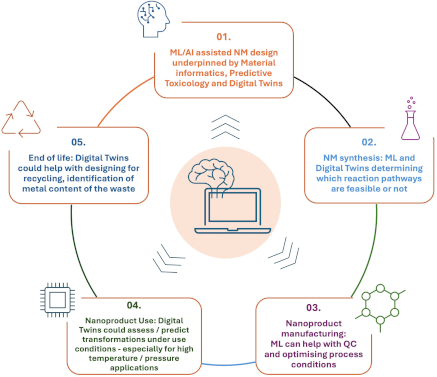
- , offering unprecedented opportunities to design and develop nanomaterials with unique, tailored properties. These advances have significantly impacted diverse industrial sectors, including healthcare, energy, environmental remediation, and defence. For instance, nanoparticle-based drug delivery systems have
- and risks associated with specific ENMs [56]. One illustrative application involves modelling nanoparticle–protein interactions, a critical factor in drug delivery systems, where digital twins can accurately predict protein adsorption patterns on nanoparticle surfaces through read-across and
- interpolation from limited experimental datasets [57]. Given that protein corona formation [58] can drastically alter the biodistribution and immunological profile of a nanoparticle, digital twins help pinpoint safer design parameters – such as surface coatings or particle size modifications – which improve


From shield to spear: Charge-reversible nanocarriers in overcoming cancer therapy barriers
Beilstein J. Nanotechnol. 2026, 17, 159–175, doi:10.3762/bjnano.17.10
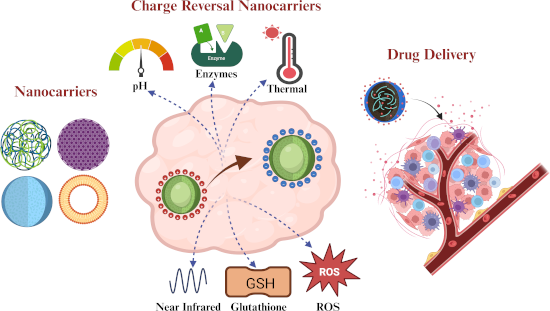
- -functionalized GO complex was developed for targeted, controlled release of DOX, enabling selective drug release in acidic intracellular organelles for enhanced cancer treatment [78]. Wang et al. developed a pH-responsive, charge-reversible, and photo-cross-linkable polymer nanoparticle composed of [poly(VBMC-co
- [88]. Jia et al. reported a dual-responsive shape-transformable charge-reversible nanoparticle (DHP@BPP) combined with chemo-photodynamic immunotherapy for treating breast cancer and lung metastasis [81]. Hu et al. developed a hybrid nanocarrier, UPOE, using stimuli-responsive, charge-reversal metal


Influence of surface characteristics on the in vitro stability and cell uptake of nanoliposomes for brain delivery
Beilstein J. Nanotechnol. 2026, 17, 139–158, doi:10.3762/bjnano.17.9
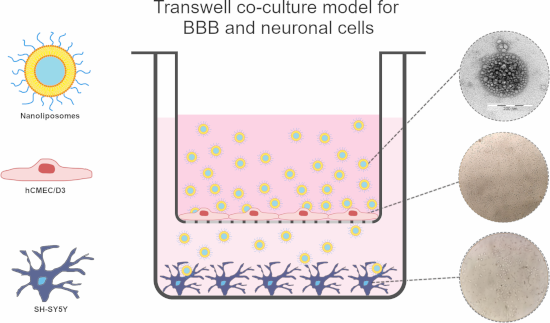
- (ethylene glycol) with a fixed concentration different than that used in the present study), examining their cellular uptake at a single time point. The results highlighted that both the type of nanocarrier and the nature of the surface polymer critically influence nanoparticle–cell interactions, including
- proteins detach from the nanoparticle–corona complex under the influence of centrifugal forces. Hence, it is crucial to ascertain the optimal number of washing cycles and centrifugation duration necessary for effectively isolating a particular type of a nanosystem–corona complex from a protein-rich medium




Development and in vitro evaluation of liposomes and immunoliposomes containing 5-fluorouracil and R-phycoerythrin as a potential phototheranostic system for colorectal cancer
Beilstein J. Nanotechnol. 2026, 17, 97–121, doi:10.3762/bjnano.17.7
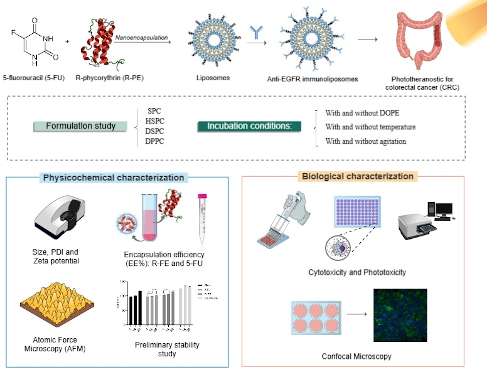
- . These systems are formed by monoclonal antibodies linked to the lipid bilayer, allowing the nanoparticle to recognize and specifically bind to receptors overexpressed in the membrane of tumor cells. This active functionalization expands the therapeutic potential of liposomes by promoting greater
- h, samples were ultracentrifuged at 18.000 rpm for 10 min. The supernatant was collected and quantified using a micro BCA assay, following the instructions of the manufacturer. The nanoparticle precipitate was re-dispersed in fresh PBS/azide buffer and agitated until the next time point, as
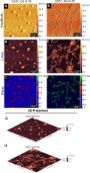
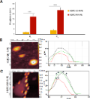
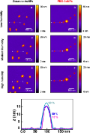
- from [e.g., n = 507] HSPC-50-R-PE control liposomes and [e.g., n = 788] HSPC-IM-R-PE immunoliposomes, which were obtained from six and eight independent AFM images, respectively. 2.4 Fourier transform infrared spectroscopy Drug–nanoparticle interactions were studied by subjecting the previously



Functional surface engineering for cultural heritage protection: the role of superhydrophobic and superoleophobic coatings – a comprehensive review
Beilstein J. Nanotechnol. 2026, 17, 63–96, doi:10.3762/bjnano.17.6

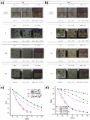
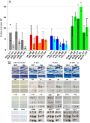
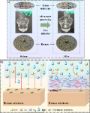
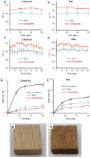
- , as the investigated polymeric and nanoparticle-filled coatings provide effective protection for stone substrates without significant alteration of their aesthetic properties and with considerable resistance to environmental stressors. However, the criterion of reversibility is not addressed in either
- weathering, especially at higher nanoparticle concentrations. Color stability increased, but a slight darkening and higher surface roughness was spotted, which may limit use for outdoor applications. Overall, the Paraloid–silica nanoparticle coatings effectively enhanced UV, moisture, and biological




Quantitative estimation of nanoparticle/substrate adhesion by atomic force microscopy
Beilstein J. Nanotechnol. 2026, 17, 1–14, doi:10.3762/bjnano.17.1

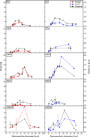
- , Leoben, Austria 10.3762/bjnano.17.1 Abstract Understanding nanoparticle adhesion to substrates is the key for their stability and performance in many applications, including energy systems, nanofabrication, catalysis, and electronic devices. In this study, we present a methodology for examining adhesion
- calibration achieved through wedge and diamagnetic lateral force calibrator methods. The work of adhesion was quantified by integrating the obtained lateral forces over the distance moved during manipulation, revealing a non-monotonic dependency on nanoparticle size with maximum adhesion observed for
- strategies for tailoring nanoparticle/substrate interactions. Keywords: adhesion; atomic force microscopy; magnetron sputtering; nanomanipulation; nanoparticles; Introduction Nanoparticles (NPs) are at the forefront of basic research and technological innovation, captivating researchers and engineers from



Internal 3D temperature mapping in biological systems using ratiometric light-sheet imaging and lipid-coated upconversion nanothermometers
Beilstein J. Nanotechnol. 2025, 16, 2306–2316, doi:10.3762/bjnano.16.159
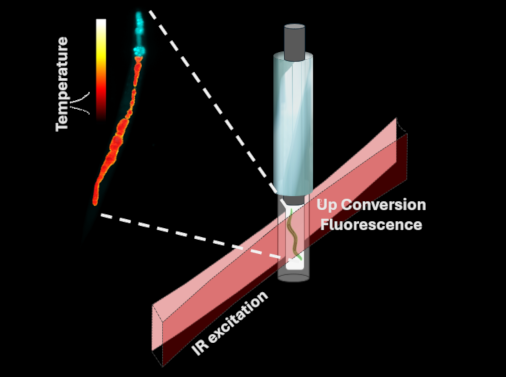
- range was chosen because (i) it remains below the high-stress temperature threshold of C. elegans (>35 °C) [53] and (ii) it falls within the linear, high-sensitivity region of the NaYF4:Yb/Er nanoparticle thermometric response (20–100 °C) [44]. The black diamonds denote the combined mean values of both
- observation is consistent with Chen et al. [50], who reported internalization of PEI-capped UCNPs into both the gut cavity and intestinal cells. They attributed UCNP uptake within the gut cavity to the favorable nanoparticle dispersibility and cellular internalization to endocytosis, facilitated by
- to the luminal environment rather than intracellular regions, indicating that surface chemistry governs not only nanoparticle uptake but also the spatial interpretation of the thermal maps. This distinction is crucial, as it means our thermal maps report on the temperature within the digestive tract


Chiral plasmonic nanostructures fabricated with circularly polarized light
Beilstein J. Nanotechnol. 2025, 16, 2245–2264, doi:10.3762/bjnano.16.154
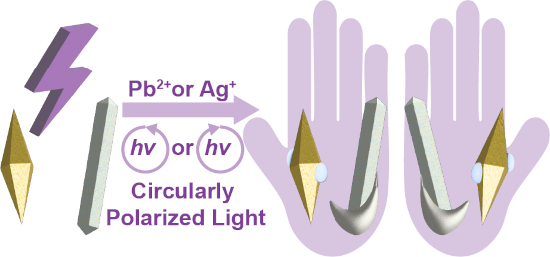
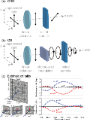
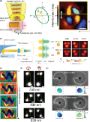
- was the amino acid- and peptide-directed seeded growth of gold helicoids [19] (Figure 1d). This was the first time molecular chirality was transferred to plasmonic nanoparticle shapes at the single NC level. However, an atomic-level understanding of how the chiral geometry occurs is still under
- the final NC morphology on the EM field distribution of symmetric nanoparticle precursors [98]. A representative example is the plasmon-mediated synthesis of Au NCs, where the surfactant polyvinylpyrrolidone (PVP) relays warm (not hot) electrons to reduce [101]. Growth was directed by the spatial
- that the sites of Au deposition ( reduction) are the locations of electrons from the nanoparticle transferred via PVP. Researchers made similar observations when electron beam lithography resist was exposed to hot electrons from AuNRs [86]. This study found hydrogen silsesquioxane underwent water





Optical bio/chemical sensors for vitamin B12 analysis in food and pharmaceuticals: state of the art, challenges, and future outlooks
Beilstein J. Nanotechnol. 2025, 16, 2207–2244, doi:10.3762/bjnano.16.153
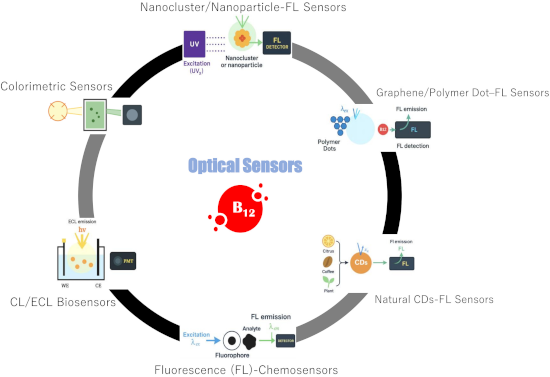
- -based AuNP colorimetric biosensors In this sensing system, the recognition material is the RNA aptamer, the indicator material is the gold nanoparticle (AuNP), and the sensing signal is colorimetric. The excellent optical-electronic characteristics of AuNPs have been recently considered in point-of-care


Ultrathin water layers on mannosylated gold nanoparticles
Beilstein J. Nanotechnol. 2025, 16, 2183–2198, doi:10.3762/bjnano.16.151
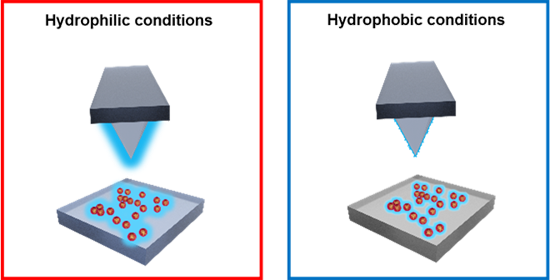
- nanoparticle systems, one functionalized with an oligo(ethylene glycol) ligand, and one functionalized with a mixture of the same with a dimannoside ligand. The dimannoside ligand was chosen to mimic the surface chemistry of viral spike proteins. We characterized the particles by electron microscopy, dynamic
- size average of the dimanno-AuNPs is 30.4 ± 1.1 nm (PDI = 0.29) with a peak at 16.8 ± 0.9 nm. This indicates that the dimannoside coating results in reduced nanoparticle aggregation. Hence, a small number of multimers of the NPs is present in the solution (i.e., stronger particle association). DLS is
- . In other words, the nanoparticle has a non-centrosymmetric environment, which can simply be the presence of the gold surface. The noise-like feature at ~3400 cm−1 is assigned to hydrogen-bonded water as features above 3600 cm−1 should indicate non-hydrogen-bonded water. This is proof that water is



Microplastic pollution in Himalayan lakes: assessment, risks, and sustainable remediation strategies
Beilstein J. Nanotechnol. 2025, 16, 2144–2167, doi:10.3762/bjnano.16.148
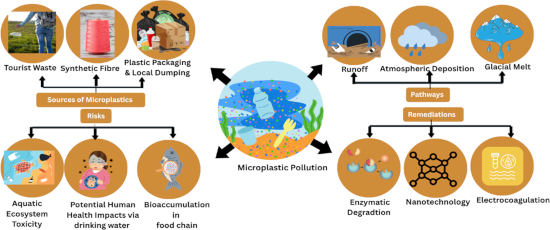
- systems that combine nanotechnology with biological components (e.g., enzymes), are emerging as environmentally benign solutions in addition to independent nanoparticles. Enzyme–nanoparticle conjugates can target certain plastic polymers, enabling more rapid and targeted breakdown. Iron oxide


Rapid synthesis of highly monodisperse AgSbS2 nanocrystals: unveiling multifaceted activities in cancer therapy, antibacterial strategies, and antioxidant defense
Beilstein J. Nanotechnol. 2025, 16, 2105–2115, doi:10.3762/bjnano.16.145
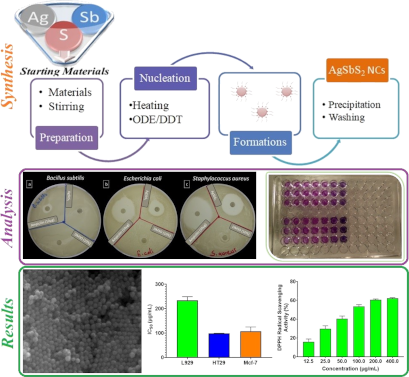
- novel antimicrobial agents. Nanoparticle therapy is emerging as a prominent avenue toward that end [8]. Free radicals represent an important focus in pharmacological research. The severity of oxidative stress, defined as the imbalance between the formation of reactive oxygen/nitrogen species (ROS/RNS
- ). DPPH and nanoparticle mixed solutions were used as sample, while only DPPH solution was used as negative control and ascorbic acid was used as a positive control. The samples were kept in the dark at room temperature for 30 min of incubation, and the change in color was monitored, using a microplate
- their simpler outer membranes compared to those of gram-negative species. The moderate effectiveness of AgSbS2 NCs against E. coli (MIC and MBC; 1.0 mg/mL and 2.0 mg/mL, respectively) also aligns with findings in nanoparticle research where the outer lipopolysaccharide layers of gram-negative bacteria


Toward clinical translation of carbon nanomaterials in anticancer drug delivery: the need for standardisation
Beilstein J. Nanotechnol. 2025, 16, 2092–2104, doi:10.3762/bjnano.16.144

- stabilising surface coatings are employed to preserve nanoparticle stability over time. The degree of functionalisation is also a key consideration as surface modifications can enhance solubility, targeting ability, and biocompatibility. Consistent functionalisation is necessary to ensure reproducibility and
- , disruption of cellular membranes, prolonged retention in tissues, and activation of immune responses. These risks highlight the importance of careful nanoparticle design and thorough preclinical evaluation. Biodegradability represents another crucial factor governing the clinical translation of CNMs
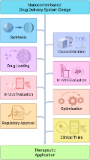
- nanoparticle-based drug delivery system. Created in BioRender. Bartkowski, M. (2025) https://BioRender.com/goba3a2. This content is not subject to CC BY 4.0. A selection of key challenges and opportunities associated with the clinical translation of a CNP-based DDS. Created in BioRender. Bartkowski, M. (2025



Laser ablation in liquids for shape-tailored synthesis of nanomaterials: status and challenges
Beilstein J. Nanotechnol. 2025, 16, 1963–1997, doi:10.3762/bjnano.16.137
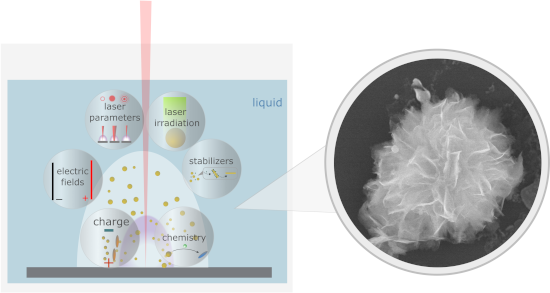
- ), the thermal evaporation is preferential [1], while for picosecond and femtosecond laser pulses of lower power density, the explosive ejection mechanism typically prevails resulting in NP formation at earlier stages from the ejected droplets or fragments. 1.3 Nanoparticle nucleation and growth After
- surface free energy is determined as work per unit area required for the formation of a new surface [12]. Therefore, it is a fundamental parameter that determines nanoparticle growth and stability of different particle shapes. The surface energy is dependent on a multitude of parameters, including NP size
- the anisotropic growth and self-assembly of nanostructures with the formation of nanorods and nanosheets. It is currently agreed that media surrounding the particles also influence the surface energy dependence on nanoparticle size. If ions or surfactants are present in the solution, their absorption




PEGylated lipids in lipid nanoparticle delivery dynamics and therapeutic innovation
Beilstein J. Nanotechnol. 2025, 16, 1914–1930, doi:10.3762/bjnano.16.133
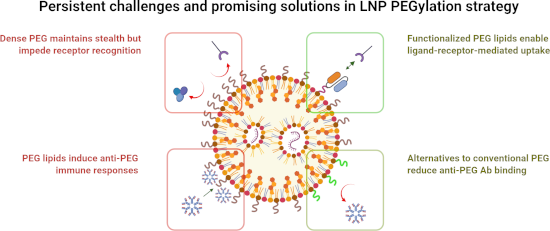
- nanoparticle formulation is polyethylene glycol-modified (i.e., PEGylated) lipids (PEG lipids), which can significantly influence the stability, cell interactions, and overall effectiveness of LNP delivery vehicles. This review collates insights into the role of PEG lipids in LNPs by illustrating how the PEG
- chains arrange on the nanoparticle surface and the potential impacts on LNPs’ physicochemical properties by varying surface PEG density or PEG chemistry. Subsequently, PEG conformations are discussed in terms of their modulation of protein corona formation, cellular uptake, and immunogenic responses
- LNPs, PEG lipids are widely used to provide the nanoparticles with a unique outer layer. The “stealth” properties of PEG chains can prevent nanoparticle aggregation, reduce nonspecific protein adsorption, and delay immune recognition, thereby extending LNP circulation half-life in the bloodstream [2][4


On the road to sustainability – application of metallic nanoparticles obtained by green synthesis in dentistry: a scoping review
Beilstein J. Nanotechnol. 2025, 16, 1851–1862, doi:10.3762/bjnano.16.128
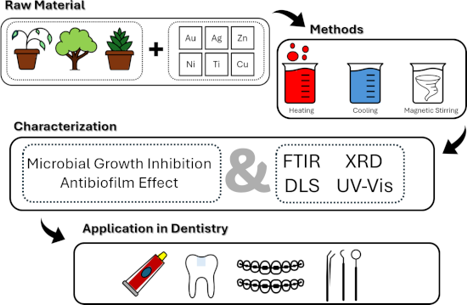
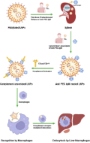
- activity and enhanced biocompatibility, achieved through phytochemically mediated synthesis. Conventional nanoparticle production often relies on toxic reagents and energy-intensive processes, posing environmental and clinical challenges. In contrast, green synthesis, using plant extracts, fungi, or
- bacteria, offers a sustainable alternative by leveraging natural reducing agents like polyphenols and flavonoids. These bioactive compounds not only facilitate nanoparticle formation but also improve stability and biological efficacy, making them ideal for dental applications such as caries prevention
- biomaterials [16][17]. Owing to their high adaptability to various metals, including silver, zinc, iron, and platinum, their operational simplicity, and the ability to control nanoparticle size and morphology by selecting plant extracts and reaction conditions, green synthesis is gaining increasing prominence


Current status of using adsorbent nanomaterials for removing microplastics from water supply systems: a mini review
Beilstein J. Nanotechnol. 2025, 16, 1837–1850, doi:10.3762/bjnano.16.127
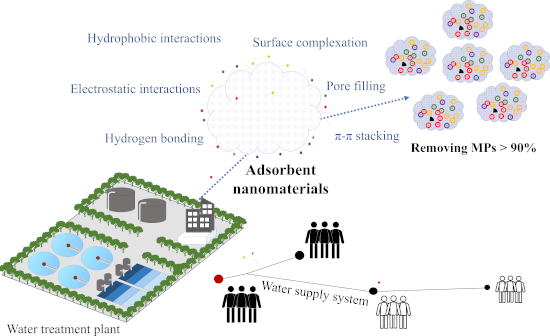
- process. According to Goel et al., the physical methods primarily rely on magnetic separation, while chemical approaches focus on nanoparticle functionalization to improve their effectiveness in microplastic removal [74]. Accordingly, numerous magnetic nanomaterials have been investigated and modified to


Exploring the potential of polymers: advancements in oral nanocarrier technology
Beilstein J. Nanotechnol. 2025, 16, 1751–1793, doi:10.3762/bjnano.16.122
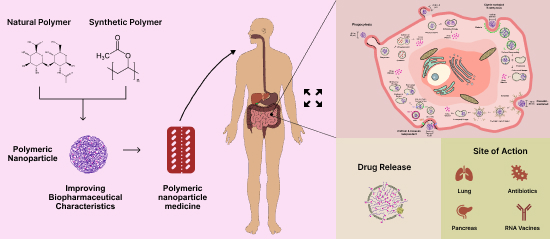
- permeability, critical factors for effective oral drug delivery, are discussed in detail. Furthermore, nanoparticle synthesis methods that enable controlled release profiles, optimized biodistribution, and improved therapeutic efficacy are also explored. Thus, polymers represent a dynamic platform for
- developing diverse nanocarriers for oral applications, and this review provides a valuable theoretical foundation for understanding the strategies currently employed in this field. Keywords: drug delivery; nanoparticle; oral administration; polymer; polymeric nanoparticle; Review 1 Introduction The oral
- overall release kinetics [24][32][33]. From a pharmacokinetic perspective, the size, surface charge, and morphology of PNs can modulate their transit through the GIT, and such properties can be tuned during nanoparticle preparation. The choice of manufacturing method considers not only these parameters


Advances of aptamers in esophageal cancer diagnosis, treatment and drug delivery
Beilstein J. Nanotechnol. 2025, 16, 1734–1750, doi:10.3762/bjnano.16.121
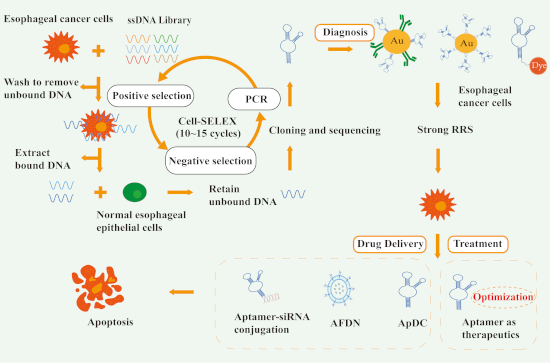
- a single biometric element to directly analyze biomarkers [45][46], while dual-system biosensors combine two antibodies and/or aptamers [47] into a better composite material to improve the specificity and sensitivity of the sensor. Figure 3 is a schematic diagram of a gold nanoparticle aptasensor
- diagnostic outcomes. The establishment of a multiprotein model [49] confirms this conjecture. There are already gold nanoparticle aptamer biosensors and fluorescent aptamer sensors that show great potential in esophageal cancer diagnosis (Table 1). 3.1 Gold nanoparticle–aptamer sensors Scholars reviewed
- , incorporating specific assessments for immunotoxicity, organ toxicity, and nanoparticle accumulation in organs. Second, the negatively charged phosphate backbone of nucleic acid aptamers generates electrostatic repulsion with the anionic phospholipid bilayer of cell membranes, significantly limiting their


Prospects of nanotechnology and natural products for cancer and immunotherapy
Beilstein J. Nanotechnol. 2025, 16, 1644–1667, doi:10.3762/bjnano.16.116
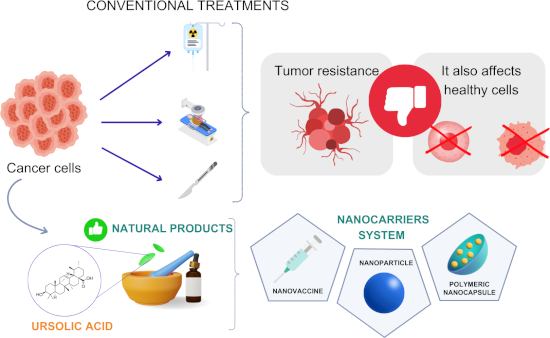
- ]. Additionally, the use of biomimetic nanoparticles, including exosome-based delivery systems and cell membrane-coated nanoparticles, has shown promise in improving targeting efficiency and immune evasion [18][19]. Despite these advances, significant challenges remain, including nanoparticle stability in
- patents analyzed primarily focused on carrier-free self-assembly nanoparticle technology, which was present in eight inventions. Other types of nanotechnology, including nanovaccine, polymeric nanocapsules, and nanodrug complexes, were each identified in a single publication. The 14 inventions based on
- characterization, and therapeutic evaluation of nanotechnology [92]. The formulation of patent CN114470229 was discussed in an article by Guo et al., which showed that the nanoparticle, as in the patent, achieved better solubility, synergistic effect, and better targeting [93]. In addition, the article published


Venom-loaded cationic-functionalized poly(lactic acid) nanoparticles for serum production against Tityus serrulatus scorpion
Beilstein J. Nanotechnol. 2025, 16, 1633–1643, doi:10.3762/bjnano.16.115
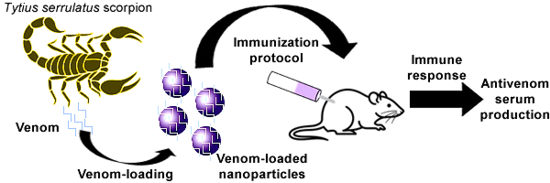
- barriers, their biocompatibility, and low toxicity [18]. Their manipulation at the nanoscale changes specific surface properties, possibly improving the ability to cross biological barriers targeting the affected tissues [18][19]. In this context, nanoparticle controlled release based on biodegradable
- (≈225 nm) and PDI (<0.3). In vitro protein release The Figure 4 shows the release profile of T. serrulatus venom protein-loaded PLA cationic nanoparticles with two different formulations containing 0.5% (Figure 4a) and 1.0% (Figure 4b) (w/w) of Tsv in the nanoparticle suspension. The in vitro protein
- mice immunized with venom-loaded nanoparticles and aluminum hydroxide, demonstrating higher effectiveness of NPs at a 1.0% concentration compared to that of AH. Nanoparticle results were statistically different to those of the AH immunized groups, and demonstrated that the nanoparticles can stimulate


Nanotechnology-based approaches for the removal of microplastics from wastewater: a comprehensive review
Beilstein J. Nanotechnol. 2025, 16, 1607–1632, doi:10.3762/bjnano.16.114
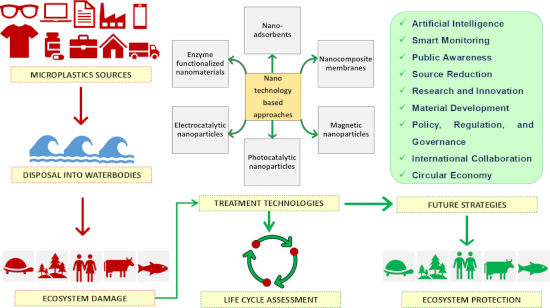
- techniques for the removal of MPs. Nanoparticle-based removal Advancements in characterization and synthesis techniques have enabled the manipulation of materials at the nanoscale, leading to innovations across various domains, including energy, electronics, and biomedical applications. Figure 5 depicts
- various techniques for synthesis of nanoparticles. Nanoparticle synthesis is essential for tailoring materials that effectively remove MPs. Various approaches allow researchers to customize structure and functionality based on application needs. For example, the sol–gel process transforms a colloidal
- , including MPs [86]. Figure 7 illustrate the various types of nanoadsorbents used for MP removal, while Table 3 present their operational conditions and corresponding removal efficiencies for different types of MPs. Nanoparticle-based photocatalysis: Catalytic or photocatalytic oxidation, categorized under
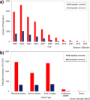


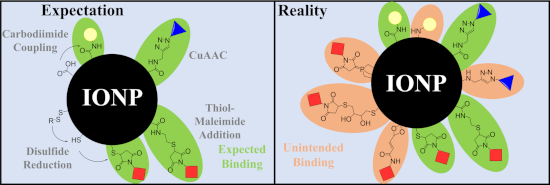
Cross-reactivities in conjugation reactions involving iron oxide nanoparticles
Beilstein J. Nanotechnol. 2025, 16, 1504–1521, doi:10.3762/bjnano.16.106







Laser processing in liquids: insights into nanocolloid generation and thin film integration for energy, photonic, and sensing applications
Beilstein J. Nanotechnol. 2025, 16, 1428–1498, doi:10.3762/bjnano.16.104
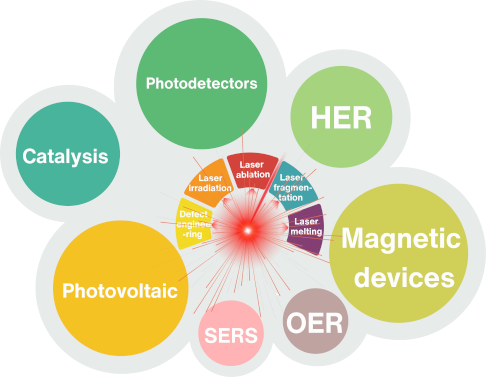
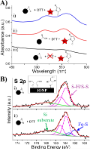
- examples of nanoparticle synthesis by laser ablation were discussed [7]. They have clearly depicted how the properties of the nanoparticles (NPs) depend strongly on size, shape, and size uniformity. Pulsed laser ablation in liquids (PLAL) is a promising method for producing pristine and supported materials
- exploration of the nanoparticle formation mechanism. These advanced analytical methods offer higher temporal and spatial resolutions compared to conventional techniques [22][23][24][25]. A recent review by Byram et al. [11] highlights the significant advancements made in PLAL over the past decade using laser
- potential in applications like catalysis. This technique has become a valuable addition to the toolbox of nanoparticle synthesis, offering enhanced precision and scalability for advanced materials and applications [6][29][30]. The synthesis of lead telluride (PbTe) NPs was successfully performed through






Photochemical synthesis of silver nanoprisms via green LED irradiation and evaluation of SERS activity
Beilstein J. Nanotechnol. 2025, 16, 1417–1427, doi:10.3762/bjnano.16.103
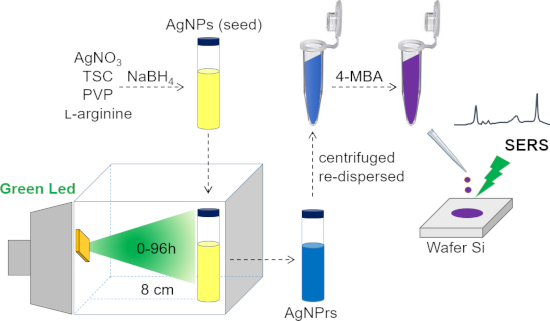
- candidates for surface-enhanced Raman scattering (SERS) due to their strong localized surface plasmon resonance and sharp tip geometry. In this study, AgNPrs were synthesized through a photochemical method by irradiating spherical silver nanoparticle seeds with 10 W green light-emitting diodes (LEDs; 520
- began to emerge at approximately 650 nm. This shoulder became more prominent after 24 h, shifting slightly to 662 nm. The appearance of this absorption feature indicated the onset of anisotropic nanoparticle formation, such as silver nanoprisms [4][5][6][7]. After 48 h of LED irradiation, the IPD peak
- experimental conditions, small spherical silver nanoparticle seeds had been almost completely converted into silver nanoprisms. Unlike conventional chemical synthesis methods, the photochemical LED-based approach does not produce fragmented or etched structures, resulting in well-formed AgNPrs. Additionally





