


Search results
Search for "nanowire" in Full Text gives 182 result(s) in Beilstein Journal of Nanotechnology.
Application of nanoarchitectonics in moist-electric generation
Beilstein J. Nanotechnol. 2022, 13, 1185–1200, doi:10.3762/bjnano.13.99
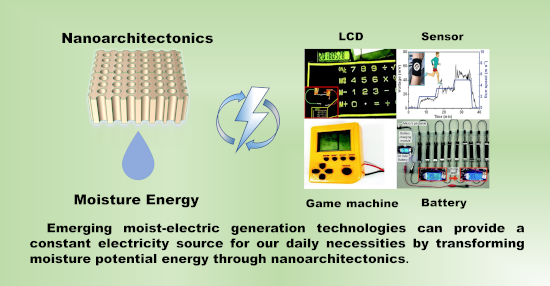
- . However, after the solid–liquid contact, the research on the principle of the selective interaction of ions at the solid interface is still not comprehensive and systematic. And more experimental work is needed to complement and prove it. In 2014, Zhu et al. fabricated a nanowire fluorinated ethylene
- without modification. The high surface area from the nanowire arrays perpendicular to the surface plays an important role in increasing the output power. MEG devices based on polyethylene derivatives have been prepared using a variety of methods to obtain nanoscale networks with high porosity, including
- . 105630, Copyright Elsevier (2021). This content is not subject to CC BY 4.0. (f) SEM image of high porosity TiO2 nanowire network. Figure 4f was reproduced from [54], Shen, D. et al., “Self-Powered Wearable Electronics Based on Moisture Enabled Electricity Generation”, Adv. Mater., with permission from


Effects of focused electron beam irradiation parameters on direct nanostructure formation on Ag surfaces
Beilstein J. Nanotechnol. 2022, 13, 1004–1010, doi:10.3762/bjnano.13.87
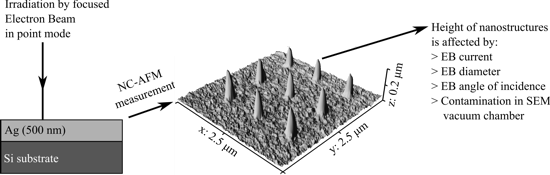
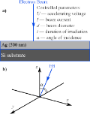
- material greatly affects the growth rate of the nanowires, with the Cu surface providing the fastest growth. Energy-dispersive X-ray spectroscopy (EDX) revealed the presence of both carbon and substrate materials in the nanowires. The effect of substrate material on nanowire growth rate could be attributed




Efficient liquid exfoliation of KP15 nanowires aided by Hansen's empirical theory
Beilstein J. Nanotechnol. 2022, 13, 788–795, doi:10.3762/bjnano.13.69
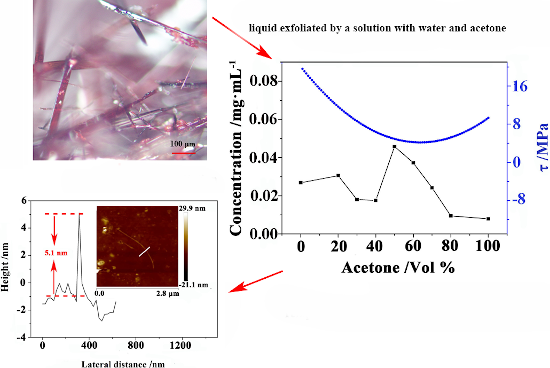
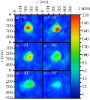
- previous study, with thickness reduction of the KP15 nanowires, a surface-state luminescence at 693 nm gradually dominates in the KP15 nanowire [14]. This could affect light absorption properties of KP15 due to its decreased size. To avoid the generation of concentration error caused by the absorbance
- after liquid exfoliation. (e) Width histograms of KP15 nanowires after liquid exfoliation. Sizes of exfoliated KP15 nanowires. (a) Cross section of the KP15 nanowire marked in the upper right corner inset image. (b) Cross section of the KP15 nanowire marked in the upper right corner inset image. (c
- ) Cross section of the KP15 nanowire marked in the upper right corner inset image. (d) Cross section of the KP15 nanowire marked in the upper right corner inset image. Hansen parameters for the solvents [21]. Supporting Information Supporting Information File 10: Strong temperature-dependent Raman


Zinc oxide nanostructures for fluorescence and Raman signal enhancement: a review
Beilstein J. Nanotechnol. 2022, 13, 472–490, doi:10.3762/bjnano.13.40
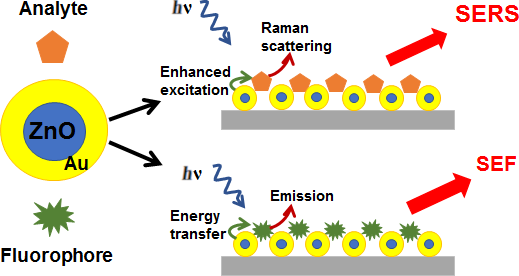
- milli-Q water to the freshly prepared Ag nanowire solution [55]. A higher photocatalytic activity was shown for the Ag–ZnO core–shell particles compared to ZnO alone under solar light irradiation. SERS applications of ZnO-based nanostructures SERS is a powerful technique with promising applications for




A chemiresistive sensor array based on polyaniline nanocomposites and machine learning classification
Beilstein J. Nanotechnol. 2022, 13, 411–423, doi:10.3762/bjnano.13.34
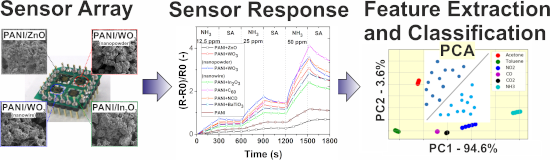
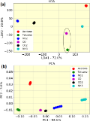
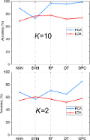
- will be used to predict the probabilistic prediction: SEM micrographs of deposited layers on an interdigital transducer structure: (a) PANI/ZnO, (b) PANI/WO3 (nanopowder), (c) PANI/WO3 (nanowire), (d) PANI/In2O3, (e) PANI/C60, (f) PANI/NCD, (g) PANI/BaTiO3, and (h) pristine PANI. The Raman spectra of




Electrostatic pull-in application in flexible devices: A review
Beilstein J. Nanotechnol. 2022, 13, 390–403, doi:10.3762/bjnano.13.32
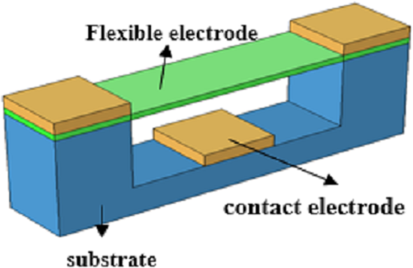
- . Electrode materials include diamond, SiC, Si, and Ge. Table 3 summarizes nanowire materials commonly used for NEM switches. The research on NWs-NEM switches can be classified into two types, namely manufacturing techniques and in situ techniques. In the former, the switches are first processed by top-down
- et al. [8] made a CuO NWs switch, 3 µm long, 80 nm in diameter, and 120 nm in the gap, with a pull-in voltage of 12.5 V. Feng et al. [40] prepared SiC nanowire NEM switches using bottom-up techniques. The pull-in voltage ranges from one to several volts and the response time is below microseconds
- for resonance detection of a GeSn alloy. Meija et al. [42] proposed the technique of using resonance aid to reduce the pull-in voltage of Ge0.91Sn0.09 NWs. By applying 610.8 kHz and 0.45 V AC voltage to a GeSn alloy nanowire, the pull-in voltage can be reduced from 13.8 to 5 V. This method can


Plasma modes in capacitively coupled superconducting nanowires
Beilstein J. Nanotechnol. 2022, 13, 292–297, doi:10.3762/bjnano.13.24
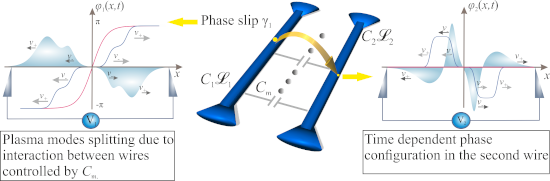
- elsewhere. The system of two capacitively coupled superconducting nanowires. Time-dependent phase configurations describing a QPS event at t = 0 (red) and t > 0 (blue) together with propagating voltage pulses generated by this QPS event in a single superconducting nanowire. The same as in Figure 1 in the


Impact of device design on the electronic and optoelectronic properties of integrated Ru-terpyridine complexes
Beilstein J. Nanotechnol. 2022, 13, 219–229, doi:10.3762/bjnano.13.16
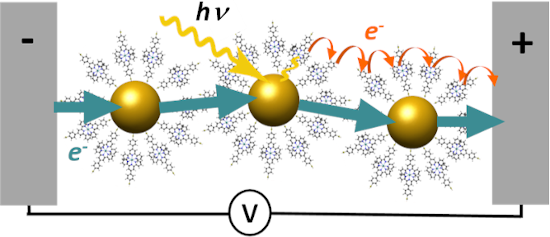
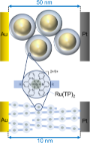
- conductance value characteristic for long supramolecular wires. These nanowire devices are compared to well-accessible devices based on a few Ru(MPTP)2–AuNP building blocks with a diameter of 12.9 ± 1.6 nm immobilized between nanoelectrode pairs with gap sizes of 20 to 50 nm. Here, the redox-active Ru(MPTP)2
- -complexes form the ligand shell of the AuNPs. In these devices two to four Ru(MPTP)2–AuNP building blocks are needed to bridge the gap between the nanoelectrodes. The AuNP devices have been characterized in the same manner as the nanowire devices. The thus determined conductance values are 12.8, 16.3, and
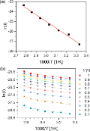
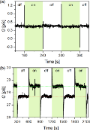
- 28.9 pS. These values are higher, by roughly a factor of ten, than the conductance values obtained for nanowire devices, but three orders of magnitude lower than conductance values obtained for single-AuNP devices, which are typically around 14 ± 3 nS, as reported in [15]. Representative conductance


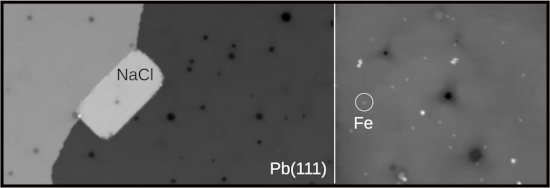
Topographic signatures and manipulations of Fe atoms, CO molecules and NaCl islands on superconducting Pb(111)
Beilstein J. Nanotechnol. 2022, 13, 1–9, doi:10.3762/bjnano.13.1
- realization of MZMs in two dimensions has been also observed in vortex cores on a proximitized topological insulator surface [19][20], in iron-based superconductors [7][21][22] or hybrid van der Waals heterostructures [23]. The fingerprint for MZMs in conductance measurements through the nanowire or in


Chemical vapor deposition of germanium-rich CrGex nanowires
Beilstein J. Nanotechnol. 2021, 12, 1365–1371, doi:10.3762/bjnano.12.100
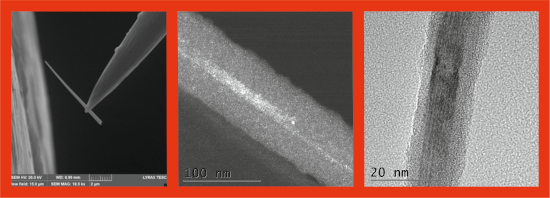
- . The nanowires possessed a complex structure, namely a thin crystalline germanium core and amorphous CrGex coating. The composition of the nanowire coating was [Cr]/[Ge] = 1:(6–7). The resistance of the nanowire–deposit system was estimated to be 2.7 kΩ·cm using an unique vacuum contacting system
- . Keywords: chemical vapor deposition; chromium germanide; nanostructured materials; nanowire; resistivity; Introduction Metal silicides and germanides belong to an extensively studied group of materials offering a wide variety of properties to meet various requirements in battery, optical, and electronic
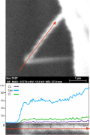
- , nanowires grew in a tapering manner (Figure 1b and Supporting Information File 1, Figure S2). Linear EDX analysis (Figure 2) and elemental mapping (Supporting Information File 1, Figure S3) of a single nanowire showed that it was composed of Cr, Ge, O (from an oxidized surface) and C (a standard impurity in



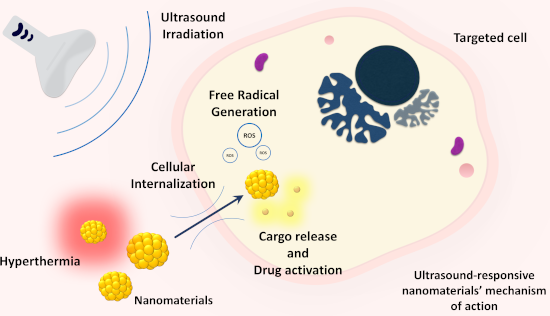
Comprehensive review on ultrasound-responsive theranostic nanomaterials: mechanisms, structures and medical applications
Beilstein J. Nanotechnol. 2021, 12, 808–862, doi:10.3762/bjnano.12.64


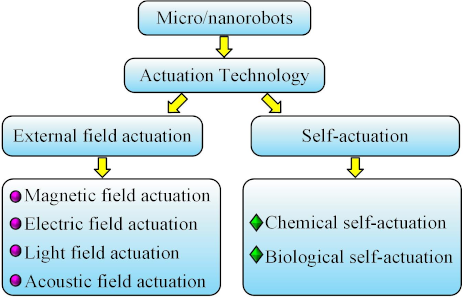
Recent progress in actuation technologies of micro/nanorobots
Beilstein J. Nanotechnol. 2021, 12, 756–765, doi:10.3762/bjnano.12.59
- an electric eel, called nanoeel. It has a smart flexible tail, made of polyvinylidene fluoride copolymer, connected to the head of a polypyrrole nanowire. The head is decorated with a nickel ring for magnetic actuation. When an alternating magnetic field is applied, the magnetic head module (nickel


Recent progress in magnetic applications for micro- and nanorobots
Beilstein J. Nanotechnol. 2021, 12, 744–755, doi:10.3762/bjnano.12.58
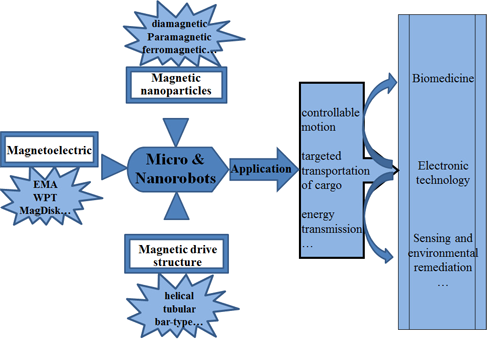
- operating frequency range. Targeted treatment and controlled drug delivery with MNRs have been achieved [74][75]. For locomotion and drug delivery, the same external power sources should be chosen, if possible. Chen et al. [76] proposed a hybrid magnetoelectric nanowire for MNR applications, which could use
- materials. In the presence of an external magnetic field, a piezoresponse force microscope (PFM) could be used to directly probe the ferroelectricity and magnetoelectricity of this nanowire. Experiments were carried out in a specially designed setup with three pairs of orthogonal electromagnetic coils to


Nanogenerator-based self-powered sensors for data collection
Beilstein J. Nanotechnol. 2021, 12, 680–693, doi:10.3762/bjnano.12.54
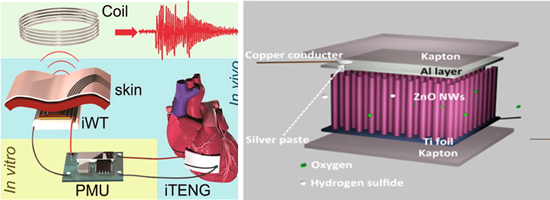
- . Lee et al. proposed a based Hg2+ ion sensor based on ZnO nanowires and carbon nanotubes for detecting toxic pollutants [17]. The ZnO nanowire (NW) array acted as power source. When Hg2+ ions were detected, the system powered a light-emitting diode (LED). Li et al. designed a self-powered heavy metal
- to the test gas. The sensitivity of above ZnO-based self-powered sensor is 127.3% under 1000 ppm H2S. The piezoelectric output of sensor decreased with increase of the concentration of the tested gas, as shown in Figure 5e. In 2016, a self-powered gas sensor based on a NiO/ZnO heterojunction nanowire
- flexible nanogenerator as self-powered sensor for transportation monitoring“, pages no. 75–81, Copyright (2012), with permission from Elsevier. Figure 1f was republished from [18] (X. Xue et al., “Surface free-carrier screening effect on the output of a ZnO nanowire nanogenerator and its potential as a

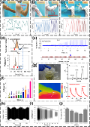
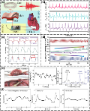


A review of defect engineering, ion implantation, and nanofabrication using the helium ion microscope
Beilstein J. Nanotechnol. 2021, 12, 633–664, doi:10.3762/bjnano.12.52
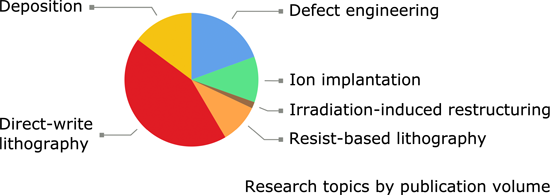
- into the YBCO thin film and thus be used to define precise sample geometries, without material removal. For example, high-dose irradiation over larger areas leaving a narrow gap in between has been used to define YBCO nanowires, which were then line-irradiated at lower dose to form nanowire-based
- membrane targets by ion implantation. Ion-induced mass transport In one example of a morphological change attributed to ion-induced mass transport, segments of a free-standing GaAs nanowire of 100 nm diameter were irradiated locally with 30 keV helium ions at relatively low dose resulting in local thinning
- the beam energy and current, the growth of single-crystal nanowires was also shown. This is reminiscent of nanowire growth by the vapor–solid–liquid mechanism, except here the process was performed at room temperature and without the flow of a gaseous precursor. In the HIM case it was proposed that


High-yield synthesis of silver nanowires for transparent conducting PET films
Beilstein J. Nanotechnol. 2021, 12, 624–632, doi:10.3762/bjnano.12.51
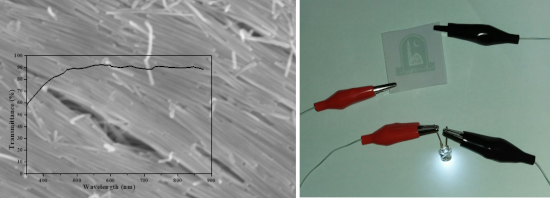
- synthesis, ethylene glycol was used as a reducing agent in the presence of PVP as capping agent. Silver nitrate and CuCl2 were used as sources of silver and metallic salt, respectively. The resultant nanowires grew 3.3–4.7 µm in length and 75–97 nm in diameter. A silver nanowire ink was then transferred to
- nanowire interactions. Also, the aligned assembly may not only yield reduced PET film roughness and resistance but also improved transmissivity. Here, AgNWs with lengths and diameters of 3.3–4.7 µm and 75–97 nm, respectively, have been formed in the reaction. The AgNWs with larger diameters yield lower
- free from impurities, that is, silver nanoparticles. No other nanostructures could affect the optical and conduction properties, or the roughness of the film. A silver nanowire ink formulated by adding HEC to an aqueous solution of silver nanowires, was then loaded onto the surface of PET films by


Properties of graphene deposited on GaN nanowires: influence of nanowire roughness, self-induced nanogating and defects
Beilstein J. Nanotechnol. 2021, 12, 566–577, doi:10.3762/bjnano.12.47
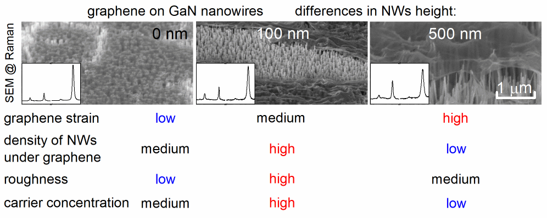
- different nanowire substrates shows that bigger differences in nanowires height increase graphene strain, while a higher number of nanowires in contact with graphene locally reduces the strain. Moreover, the value of graphene carrier concentration is found to be correlated with the density of nanowires in
- graphene on rarely distributed nanowires. Our results also show modification of graphene carrier concentration and strain by different types of defects present in graphene. Therefore, the nanowire substrate is promising not only for strain and carrier concentration engineering but also for defect
- absorption [9]. However, the interaction between corrugated nanowire substrate and graphene could substantially increase the scattering of carriers in a graphene electrode and decrease its conductivity. Therefore, detailed studies of the interaction between nanowire substrate and graphene are crucial to gain




Spontaneous shape transition of MnxGe1−x islands to long nanowires
Beilstein J. Nanotechnol. 2021, 12, 366–374, doi:10.3762/bjnano.12.30
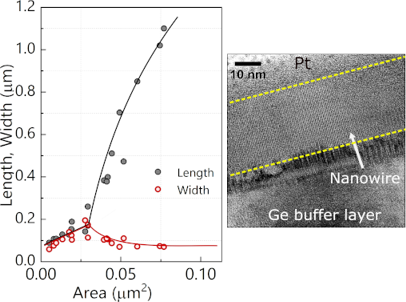
- start to elongate rapidly and their width approaches the optimal value of s ≃ 80 nm (Figure 7a). We have calculated an island aspect ratio as large as t/s ≃ 17 in our sample. These results confirm the compatibility of the nanowire growth with the strain-induced elongation mechanism, also observed in


A review on the green and sustainable synthesis of silver nanoparticles and one-dimensional silver nanostructures
Beilstein J. Nanotechnol. 2021, 12, 102–136, doi:10.3762/bjnano.12.9


Piezotronic effect in AlGaN/AlN/GaN heterojunction nanowires used as a flexible strain sensor
Beilstein J. Nanotechnol. 2020, 11, 1847–1853, doi:10.3762/bjnano.11.166
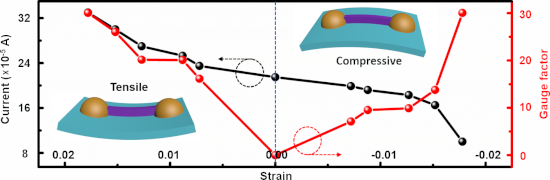
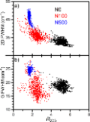
- heterojunction (left panel, b1) and HRTEM image of the corresponding GaN layer (right panel, b2). (c) XRD 2θ scan of the epitaxial structure in the region of the (002) reflection. (a) Schematic diagrams after ICP dry etching, (b) during EC wet etching, (c) and of a single nanowire. (d) SEM image of a AlGaN/AlN


Seebeck coefficient of silicon nanowire forests doped by thermal diffusion
Beilstein J. Nanotechnol. 2020, 11, 1707–1713, doi:10.3762/bjnano.11.153
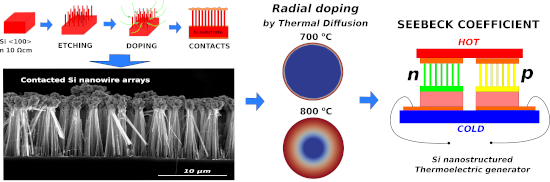
- Technological Applications (SRTA-City), New Borg El-Arab City, 21934, Alexandria, Egypt 10.3762/bjnano.11.153 Abstract Thermoelectric generators made by large arrays of nanowires perpendicular to a silicon substrate, that is, so-called silicon nanowire forests are fabricated on large areas by an inexpensive
- metal-assisted etching technique. After fabrication, a thermal diffusion process is used for doping the nanowire forest with phosphorous. A suitable experimental technique has been developed for the measurement of the Seebeck coefficient under static conditions, and results are reported for different
- doping parameters. These results are in good agreement with numerical simulations of the doping process applied to silicon nanowires. These devices, based on doped nanowire forests, offer a possible route for the exploitation of the high power factor of silicon, which, combined with the very low thermal


Piezoelectric sensor based on graphene-doped PVDF nanofibers for sign language translation
Beilstein J. Nanotechnol. 2020, 11, 1655–1662, doi:10.3762/bjnano.11.148
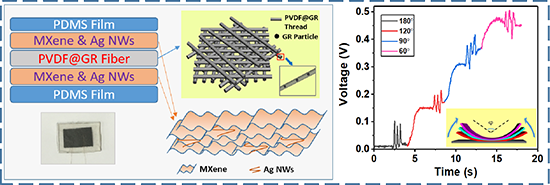
- is added under stirring to yield the spinning solution for electrospinning. After preparation of the fibers, an aqueous solution of Ti3C2 MXene and Ag NWs is sprayed on both sides of the material and then dried. Finally, the nanowire membrane is covered on both sides with PDMS to obtain the


A self-powered, flexible ultra-thin Si/ZnO nanowire photodetector as full-spectrum optical sensor and pyroelectric nanogenerator
Beilstein J. Nanotechnol. 2020, 11, 1623–1630, doi:10.3762/bjnano.11.145
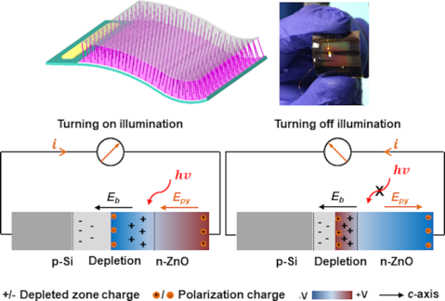
- work, a new type of self-powered, high-performance ultra-thin p-Si/n-ZnO nanowire (NW) flexible photodetector (PD) and its application as full-spectrum optical sensor and pyroelectric nanogenerator (PENG) are demonstrated. The working mechanism of PDs for PENGs is carefully investigated and


Walking energy harvesting and self-powered tracking system based on triboelectric nanogenerators
Beilstein J. Nanotechnol. 2020, 11, 1590–1595, doi:10.3762/bjnano.11.141
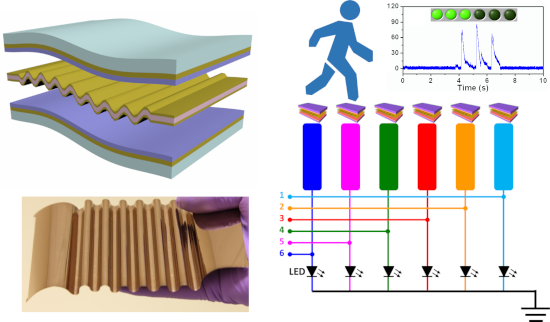
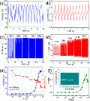
- inductively coupled plasma chamber, at corresponding flow rates of 10.0, 30.0, and 15.0 sccm, respectively. The nanowire structure was obtained on the surface by etching the PTFE film for 15 s. The high-density plasma was generated by a 500 W power source while the plasma ions were triggered by another 160 W




Wafer-level integration of self-aligned high aspect ratio silicon 3D structures using the MACE method with Au, Pd, Pt, Cu, and Ir
Beilstein J. Nanotechnol. 2020, 11, 1439–1449, doi:10.3762/bjnano.11.128
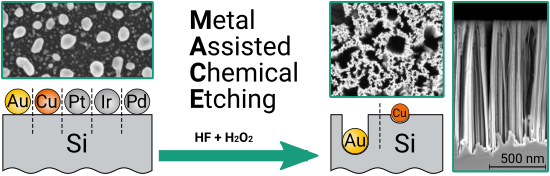
- random structures are typically vertically aligned nanowires, also called nanorods. Silicon nanowire arrays can be designed to have a low reflectance of about 1% in a broad spectral range, depending on their geometry. These silicon structures exhibit efficient light trapping because photons are scattered
- to fabricate high-efficiency solar cells [4][5]. These nanowire-based solar cells show a higher short circuit current and a higher quantum efficiency than planar cells [6]. Another energy conversion application for nanowires is a thermoelectric harvester. The one-dimensional structures reduce heat
- transport and improve the efficiency of the thermoelectric generator [7]. Silicon nanowire arrays are also an emerging anode material for integrated lithium-ion batteries. They have a ten times higher theoretical capacity than graphite and can be used for cells with high energy density. However, these





