Search results
Search for "nickel" in Full Text gives 186 result(s) in Beilstein Journal of Nanotechnology.
Fragmentation of metal(II) bis(acetylacetonate) complexes induced by slow electrons
Beilstein J. Nanotechnol. 2023, 14, 980–987, doi:10.3762/bjnano.14.81
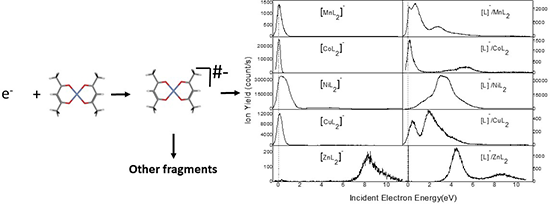
- the ligands, that is, (L-C3H3), is observed for CoL2 (Figure 2), NiL2 (Figure 3), and CuL2 (Figure 4), as [ML(L-C3H3)]− anion (Table 1). We can notice that the Mn (Figure 5) and Cu (Figure 4) complexes produce fewer fragments than those containing cobalt, nickel, and zinc. Furthermore, the


Ni, Co, Zn, and Cu metal-organic framework-based nanomaterials for electrochemical reduction of CO2: A review
Beilstein J. Nanotechnol. 2023, 14, 904–911, doi:10.3762/bjnano.14.74
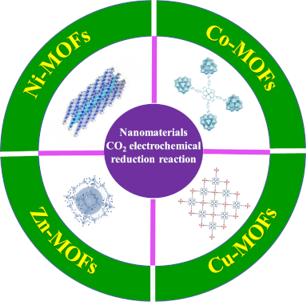
- architectures, pronounced porosity, abundant active sites, and well-distributed metallic nodes. This article commences by elucidating the mechanistic aspects of CO2 reduction, followed by a comprehensive exploration of diverse materials encompassing MOFs based on nickel, cobalt, zinc, and copper for efficient
- accessibility to active sites and unstable MOFs/substrate interfaces. Therefore, further studies are required to develop binder-free electrodes by in situ synthesis of MOFs on conductive substrates, such as nickel foam, copper foil, and carbon cloth, to overcome the aforementioned limitations and advancing the
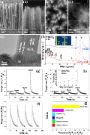
- 2D Ni(Im)2-15 nm, (d) durability test and FE of 2D Ni(Im)2-5 nm at −0.85 V vs RHE for 14 h. Figure 2 was adapted with permission of The Royal Society of Chemistry, from [39], (“Ultrathin 2D nickel zeolitic imidazolate framework nanosheets for electrocatalytic reduction of CO2” by J.-X. Wu et al


Control of morphology and crystallinity of CNTs in flame synthesis with one-dimensional reaction zone
Beilstein J. Nanotechnol. 2023, 14, 741–750, doi:10.3762/bjnano.14.61
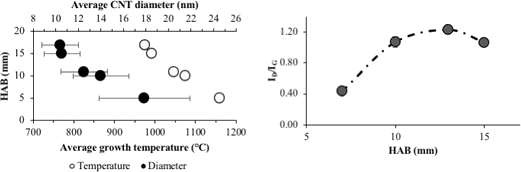
- ratio was also shown in another study by Hamzah et al. [13], utilizing a methane diffusion flame with different air flow rates. This study aims to synthesize CNTs on nickel wire through methane combustion in a one-dimensional premixed flat flame. The resulting CNT morphology and crystallinity will be
- is vital to achieve uniformity of the flame characteristics in the radial direction [17], which is useful for consistent CNT growth along the metal wire in the present study. CNT growth In general, the growth of CNTs on nickel wire starts from a process of surface breakup in a carbon-rich high
- widely accepted vapor–liquid–solid mechanism, the growth of CNTs occurs in three steps, namely, melting of nickel particles, adsorption of carbon atoms onto the surface of the metallic nickel, and finally, diffusion and deposition of the precipitated carbon, which forms tubular materials by curling of


A graphene quantum dots–glassy carbon electrode-based electrochemical sensor for monitoring malathion
Beilstein J. Nanotechnol. 2023, 14, 701–710, doi:10.3762/bjnano.14.56
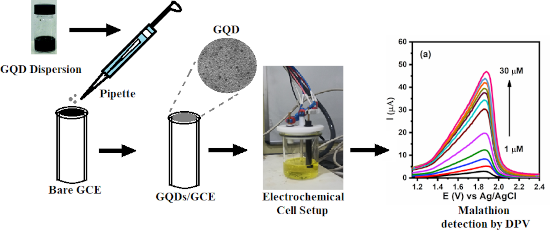
- -functionalized nickel/silver/graphene quantum dot/graphene hybrid for the colorimetric detection of malathion [28]. This paper describes the development of an electrochemical sensor based on a graphene quantum dot-modified glassy carbon electrode (GQDs/GCE) for the determination and quantification of the


Mixed oxides with corundum-type structure obtained from recycling can seals as paint pigments: color stability
Beilstein J. Nanotechnol. 2023, 14, 467–477, doi:10.3762/bjnano.14.37
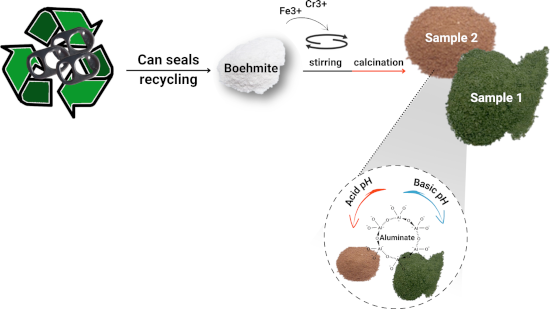
- without added pigments exhibits a more significant color variation (ΔE) in an acid environment. A work under similar conditions of harsh environments with cobalt and nickel aluminates obtained by the same synthetic route used in this article yielded similar results of color stability [14], with




Conjugated photothermal materials and structure design for solar steam generation
Beilstein J. Nanotechnol. 2023, 14, 454–466, doi:10.3762/bjnano.14.36
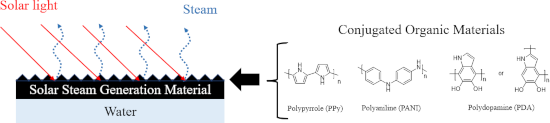
- to a lowering of the surface temperature of the sidewalls, allowing for further energy harvesting from the environment. All these processes will contribute to the increase in the overall water evaporation amount. Shao et al. fabricated a nickel–cobalt bimetal (Ni1Co3@PDA) coated with self-polymerized
- with the average temperatures of the sidewall surfaces under solar spectral irradiance (AM1.5G). Figure 11 was adapted with permission of The Royal Society of Chemistry from [49] (“Stackable nickel–cobalt@polydopamine nanosheet based photothermal sponges for highly efficient solar steam generation” by


Evaluation of electrosynthesized reduced graphene oxide–Ni/Fe/Co-based (oxy)hydroxide catalysts towards the oxygen evolution reaction
Beilstein J. Nanotechnol. 2023, 14, 420–433, doi:10.3762/bjnano.14.34
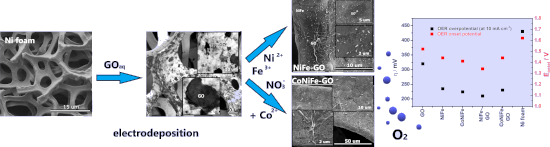
- Cracow, Poland 10.3762/bjnano.14.34 Abstract In this work, the specific role of the addition of graphene oxide (GO) to state-of-the-art nickel–iron (NiFe) and cobalt–nickel–iron (CoNiFe) mixed oxides/hydroxides towards the oxygen evolution reaction (OER) is investigated. Morphology, structure, and OER
- CoNiFe-GO were fabricated without any additives directly on the nickel foam substrate. A significant improvement of the OER activity was observed after combining NiFe with GO (OER overpotential η(10 mA·cm−2): 210 mV) compared to NiFe (η: 235 mV) and GO (η: 320 mV) alone. A different OER activity was
- and expensive metals [5], studies on other catalyst materials are being conducted. Recently, transition-metal-based materials including nickel, iron, and/or cobalt have become promising catalysts for OER [6][7][8][9][10]. The materials are characterized by relatively low cost and environmentally




Plasmonic nanotechnology for photothermal applications – an evaluation
Beilstein J. Nanotechnol. 2023, 14, 380–419, doi:10.3762/bjnano.14.33
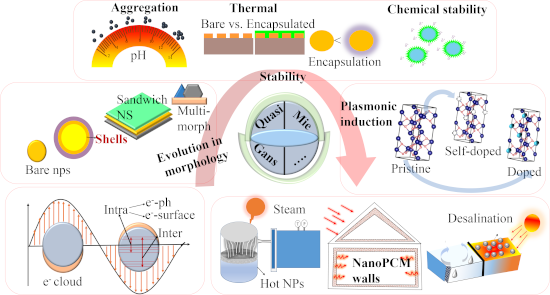
- elements, nanospheres of gold, silver, platinum, cobalt, zinc, nickel, titanium, copper, aluminium, molybdenum, vanadium, and palladium have been analysed [98]. Although there were assumptions of homogeneity, sphericity, and no interaction between particles, the Mie theory-based scattering cross sections




Structural studies and selected physical investigations of LiCoO2 obtained by combustion synthesis
Beilstein J. Nanotechnol. 2022, 13, 1473–1482, doi:10.3762/bjnano.13.121
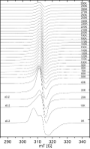
- dynamic Jahn–Teller effect. Below about 20 K the dynamic effect becomes static, and the spectra show a clear anisotropy due to static Jahn–Teller distortion. Experimental spectra obtained at 5 K (Figure 7) show that the EPR spectra for each sample consist of two different nickel complexes. From the
- components of the g-tensor (Figure 8) show that the distortion of the coordination environment of Ni3+ ions (both axial and non-axial) decreases with the temperature at which the samples were prepared. There may be two reasons for the existence of two types of nickel complexes in the spectrum. The first
- reason may be the expected differences in the g-tensor values from nickel complexes on the surface and inside the crystallites. However, as shown in Figure 9 the mutual changes in the concentration of Ni3+(I) and Ni3+(II) complexes are too small in relation to the changes in surface area measured by X




Near-infrared photoactive Ag-Zn-Ga-S-Se quantum dots for high-performance quantum dot-sensitized solar cells
Beilstein J. Nanotechnol. 2022, 13, 1337–1344, doi:10.3762/bjnano.13.110
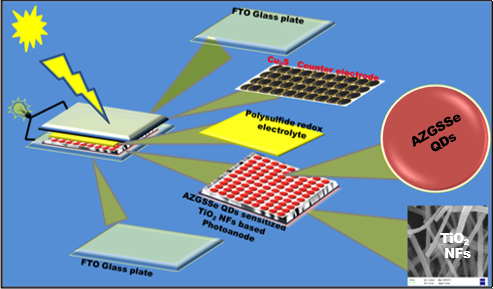
- QDSCs. Physical characterization The crystalline structure and size of the synthesized QDs were examined by X-ray diffraction (Riganku Ultima IV XRD spectrometer with nickel-filtered Cu Kα radiation with a step width of 0.02°) High-resolution transmission electron microscopy was carried out on a JEOL


Bending and punching characteristics of aluminum sheets using the quasi-continuum method
Beilstein J. Nanotechnol. 2022, 13, 1303–1315, doi:10.3762/bjnano.13.108
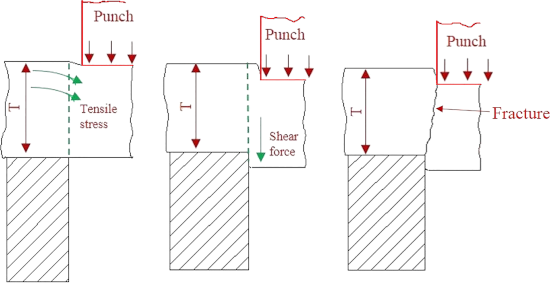
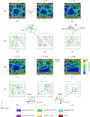
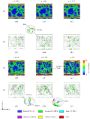
- retaining the efficiency of continuum models. A nickel punch and a single-crystalline Al workpiece were used as the punching materials. Models with different crystal orientations, workpiece thicknesses, clearances, and taper punch angles were established. The results of the stress–displacement curve, shear
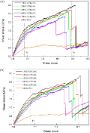
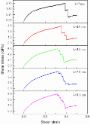
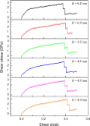
- subsequent studies. The physical model of the nano-punching system. (a) The punch is made of nickel, and the workpiece is a single crystalline Al. (b) A clearance δ is set between the punch and the substrate during the nano-punching process. The shear stress–displacement curves of O1, O2, and O3 orientations





Theoretical investigations of oxygen vacancy effects in nickel-doped zirconia from ab initio XANES spectroscopy at the oxygen K-edge
Beilstein J. Nanotechnol. 2022, 13, 975–985, doi:10.3762/bjnano.13.85
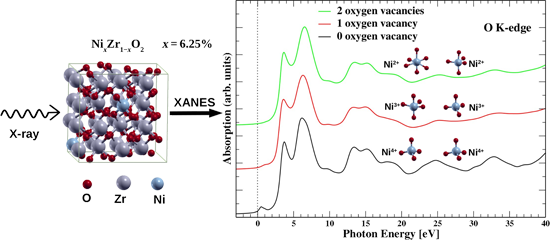
- varying concentrations. Specifically, our model system consist of a supercell composed of a zirconia (ZrO2) matrix containing two nickel dopants (2Ni), which substitute two Zr atoms at a finite separation. We found the 2Ni atoms to be most stable in a ferromagnetic configuration in the absence of oxygen
- hybridized with unoccupied Ni 3d states. The intensity of this pre-edge peak, however, reduces upon the introduction of a single vacancy in the 2Ni-doped zirconia matrix. The corresponding ground state remains ferromagnetic, while one of the nickel atoms adopts a trigonal bipyramidal geometry, and the other
- spectrum shows a further decrease in the intensity of the pre-edge peak, compared to the case of a single vacancy. Thus, the changes in the intensity of the pre-edge peak evidence a major structural change in the local environment around nickel atoms and, by extension, in the zirconia matrix. This change


Solar-light-driven LaFexNi1−xO3 perovskite oxides for photocatalytic Fenton-like reaction to degrade organic pollutants
Beilstein J. Nanotechnol. 2022, 13, 882–895, doi:10.3762/bjnano.13.79
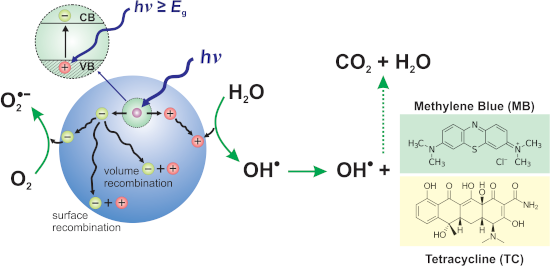
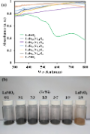
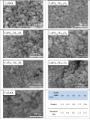
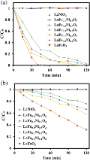
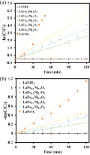
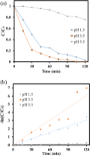
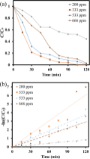
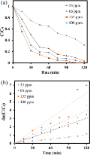
- . EDS detection showed that the synthesized samples exhibited the accurate Fe/Ni atomic ratios as designed. The detailed EDS data was provided in Table S3. The lanthanum, nickel, iron, and oxygen were analyzed from the samples, and the carbon was detected from the carbon tape. MB removal test using
- were lanthanum nitrate hexahydrate (99.9%, La(NO3)3·6H2O, Alfa Aesar), ferric nitrate nonahydrate (≥98.0%, Fe(NO3)3·9H2O, J.T. Baker), and nickel nitrate hexahydrate (98.0%, Ni(NO3)2·6H2O, Showa), respectively. The citric acid (95.0%, C6H8O7) and ammonia (28.0–30.0%, NH4OH) were both obtained from J.T
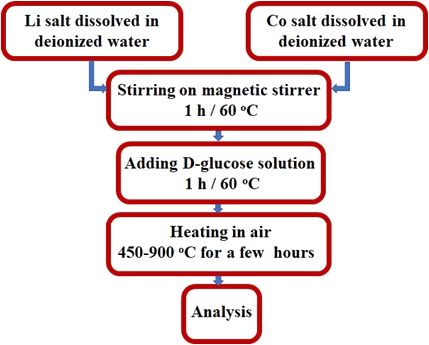
- synthesis. First, 0.02 mol lanthanum nitrate hexahydrate (La(NO3)3∙6H2O), ferric nitrate nonahydrate (Fe(NO3)3∙9H2O), and nickel nitrate hexahydrate (Ni(NO3)2∙6H2O) were dissolved in deionized water to form the mixed solution. Various photocatalysts with different molar ratios of Fe/Ni were manipulated at



Recent advances in nanoarchitectures of monocrystalline coordination polymers through confined assembly
Beilstein J. Nanotechnol. 2022, 13, 763–777, doi:10.3762/bjnano.13.67
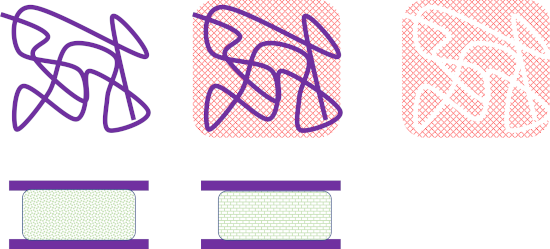
- . Illustration of the possible structure of water inside the Ni–CN–Ni nanosheets. The green balls represent carbon. The red balls represent nickel. The yellow balls represent nitrogen. The blue balls represent oxygen. The gray balls represent hydrogen. Figure 9 was used with permission of The Royal Society of




Tubular glassy carbon microneedles with fullerene-like tips for biomedical applications
Beilstein J. Nanotechnol. 2022, 13, 455–461, doi:10.3762/bjnano.13.38
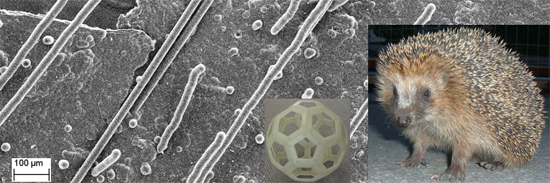
- characterization techniques such as XPS and TEM. Recently, V. Uskoković [30] has pointed out that although glassy carbons have seen numerous application in the last fifty years, biomedical applications have been sporadic. I. Schreiver et al. [31] have shown that allergic reactions can be triggered by nickel and
- chrome particles released from surgical stainless steel needles during needle wear in human skin. Allergic reactions such as contact dermatitis resulting from the presence of nickel and chromium in acupuncture needles have also been reported [32]. Glassy carbon is biocompatible, electrically and


A non-enzymatic electrochemical hydrogen peroxide sensor based on copper oxide nanostructures
Beilstein J. Nanotechnol. 2022, 13, 424–436, doi:10.3762/bjnano.13.35
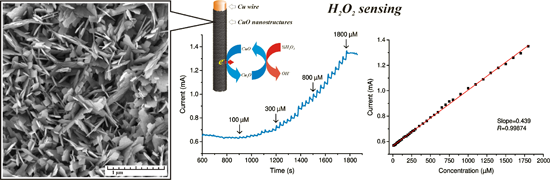
- were ≥99.8% pure. Copper wire of 2 mm thickness (99.9% purity) was purchased from Sigma-Aldrich. Ag/AgCl wire was purchased from A-M Systems, USA. Printed circuit boards (PCBs) with ENIG (Electroless Nickel Immersion Gold) surface finish were purchased from Multi-CB (Germany). Distilled water was




Biocompatibility and cytotoxicity in vitro of surface-functionalized drug-loaded spinel ferrite nanoparticles
Beilstein J. Nanotechnol. 2021, 12, 1339–1364, doi:10.3762/bjnano.12.99
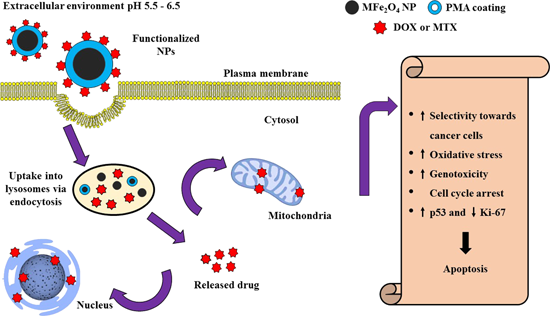
- magnetocrystalline anisotropy, high saturation magnetization, and coercivity even at room temperature as compared to others [15]. The substitution of metal cations M+ for cobalt, nickel, and zinc contributes to diverse magnetic properties, morphology, and size of iron oxide NPs [13][16] along with varied tissue
- cobalt ferrite (CFO), nickel ferrite (NFO), and zinc ferrite (ZFO) as compared to FeO due to the ionic radii difference of divalent M+2 cations. The peak shift also indicates the incorporation of M+2 cations into the lattice. Further confirmation of the crystalline nature of the composites was obtained
- ) values, as shown in Table 3 [24]. From Figure 2c, all samples went through saturation at an applied field of 2.0 T, except nickel ferrite. This is may be due to the presence of a strong magnetic anisotropy, which required a higher applied field to induce saturation [25]. Cobalt ferrite has the maximum





Morphology-driven gas sensing by fabricated fractals: A review
Beilstein J. Nanotechnol. 2021, 12, 1187–1208, doi:10.3762/bjnano.12.88
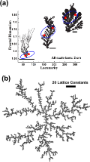
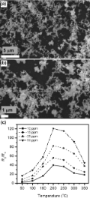
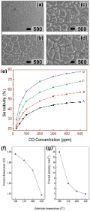
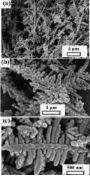
- -like structure of nanoscale Zn-doped nickel oxide dendritic crystals by an electrolytic method with high-temperature oxidation for the detection of NH3 at room temperature. Zn-doped NiO dendritic crystals at the nanoscale consisted of a major elongated stem having numerous secondary and tertiary










The effect of cobalt on morphology, structure, and ORR activity of electrospun carbon fibre mats in aqueous alkaline environments
Beilstein J. Nanotechnol. 2021, 12, 1173–1186, doi:10.3762/bjnano.12.87
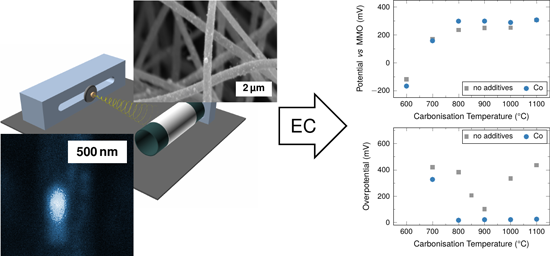
- , cobalt, iron, and nickel, are known to catalyse the graphitisation process [34][35][36][37] with cobalt having the weakest effect [37]. Depending on the cobalt salt the graphitisation process will result in turbostratic carbon [31][35][36]. Turbostratic carbon is typically described as an intermediate


An overview of microneedle applications, materials, and fabrication methods
Beilstein J. Nanotechnol. 2021, 12, 1034–1046, doi:10.3762/bjnano.12.77
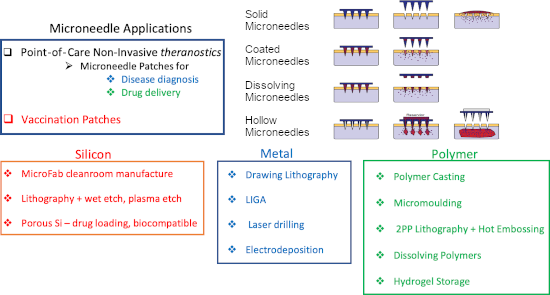
- (COP) material using this method [5]. Fabrication and use of metal microneedles In addition to silicon and polymers, microneedles are also fabricated from metals including nickel, titanium, stainless steel, and palladium. Metals provide good mechanical properties and biocompatibility for microneedle
- manufacturing compared to silicon, notwithstanding some issues of toxicity. Photochemical etching, electroplating, and laser cutting are common techniques in the fabrication of solid and hollow metallic microneedles. Studies have demonstrated the fabrication of hollow nickel microneedles by electroplating, with
- heights ranging from 300 to 450 μm in a 6 × 6 array. The mould was fabricated from a two-layer thick SU-8 epoxy resin master structure [103]. Microneedles with 1800 μm height, different inner diameters (40, 60, 80, and 100 μm), and a series of bevel angles were also fabricated from nickel using a


Progress and innovation of nanostructured sulfur cathodes and metal-free anodes for room-temperature Na–S batteries
Beilstein J. Nanotechnol. 2021, 12, 995–1020, doi:10.3762/bjnano.12.75
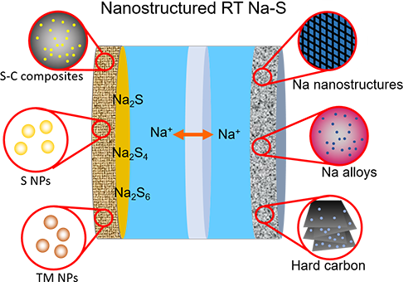
- . Consequently, the electrocatalysts accelerate the reaction kinetics, improving the electrochemical performance of Na–S batteries. Different compounds were shown to have this property such as cobalt nanoparticles [34][45][46], iron nanoclusters [47] and iron disulfide [48], gold nanodots [49], nickel sulfide
- shuttle effect. Zhang et al. [47] studied iron, copper, and nickel nanoclusters (ca 1.2 nm) loaded onto hollow carbon nanospheres. On the one hand, the chemical coupling between nanocluster and sulfur assists in sulfur immobilization and enhances conductivity and reactivity. On the other hand, the
- based on nickel disulfide nanocrystals implanted in nitrogen-doped porous carbon nanotubes. It exhibits high reversible capacity of 650 mAh·g−1 after 200 cycles at 0.1 A·g−1 and excellent cycling stability for 3500 cycles. Additionally, Kumar et al. [51] described a cathode, based on manganese dioxide




A Au/CuNiCoS4/p-Si photodiode: electrical and morphological characterization
Beilstein J. Nanotechnol. 2021, 12, 984–994, doi:10.3762/bjnano.12.74
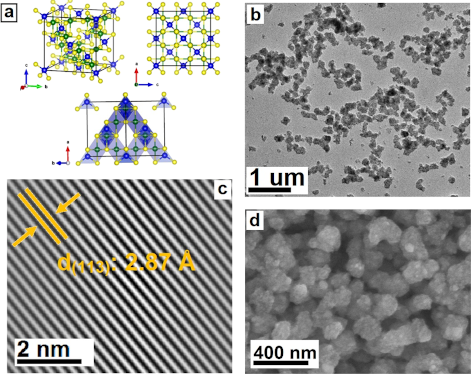
- nanocrystals. Also, I–V and C–V measurements were performed to determine the photodiode and capacitance characteristics of the Au/CuNiCoS4/p-Si devices. Experimental Materials Copper(II) acetate (CuAc2), nickel(II) acetate (NiAc2), cobalt acetate (CoAc2), trioctylphosphine oxide (TOPO), 1-dodecanethiol (DDT



The role of deep eutectic solvents and carrageenan in synthesizing biocompatible anisotropic metal nanoparticles
Beilstein J. Nanotechnol. 2021, 12, 924–938, doi:10.3762/bjnano.12.69
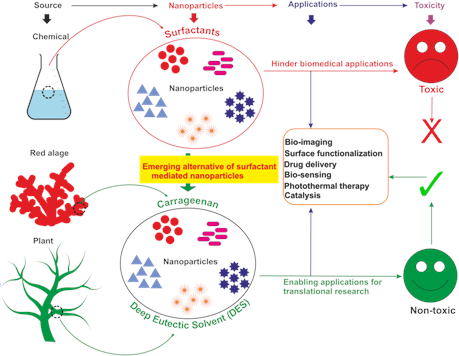
- successful use in biological milieus. Recent studies indicated that the green synthesis of nanoparticles, such as zinc oxide nanoparticles and bimetallic copper–silver and nickel–cobalt nanoparticles, is preferred for catalytic, antibacterial, and therapeutic applications [12][13][14]. Several other
- ethylene glycol in a molar ratio of 1:2 for electrodeposition of a zinc–nickel alloy to provide corrosion protection [90]. Due to the ever-rising interest in DESs for nanomaterial synthesis, a fundamental understanding regarding interfacial behavior and mass transport, such as ionic adsorption, surface


Effects of temperature and repeat layer spacing on mechanical properties of graphene/polycrystalline copper nanolaminated composites under shear loading
Beilstein J. Nanotechnol. 2021, 12, 863–877, doi:10.3762/bjnano.12.65
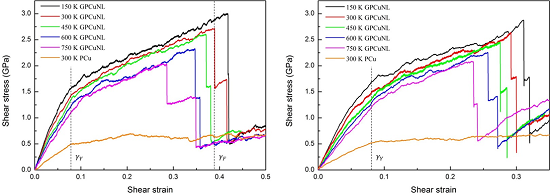
- ]. Therefore, the design of ordered graphene composites and the development of optimized microstructures is a major issue to study. In 2013, Kim et al. synthesized metal–graphene nanolayered (MGNL) composites consisting of alternating metal (copper or nickel) layers and graphene monolayers [22]. Since then, a










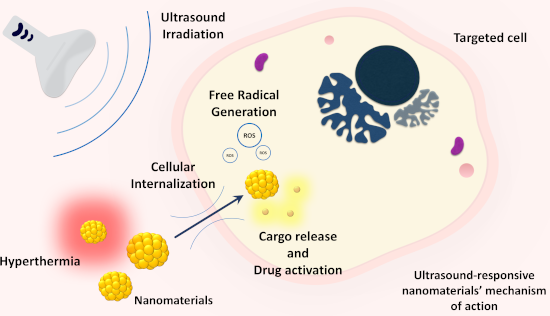
Comprehensive review on ultrasound-responsive theranostic nanomaterials: mechanisms, structures and medical applications
Beilstein J. Nanotechnol. 2021, 12, 808–862, doi:10.3762/bjnano.12.64