


Search results
Search for "noise" in Full Text gives 490 result(s) in Beilstein Journal of Nanotechnology. Showing first 200.
Modeling magnetic properties of cobalt nanofilms used as a component of spin hybrid superconductor–ferromagnetic structures
Beilstein J. Nanotechnol. 2025, 16, 1557–1566, doi:10.3762/bjnano.16.110
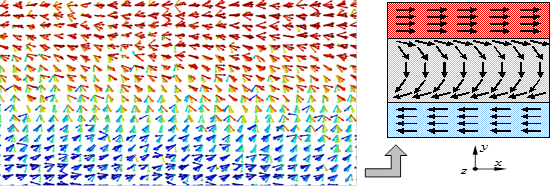
- force parameter and damping spin coefficient, respectively; χ(t), η(t) are white noise present in the description of atom motion processes and the behavior of their spins, respectively; and ωi is the multiplication value of the gyromagnetic ratio and the local magnetic field [22]. It has been known for


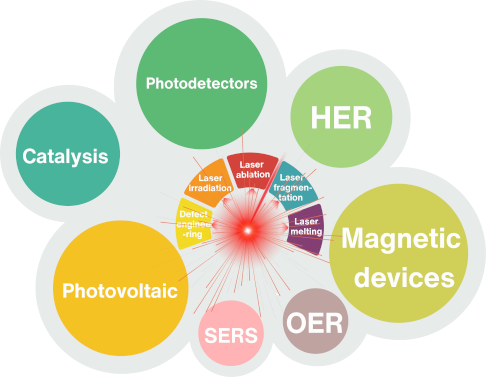
Laser processing in liquids: insights into nanocolloid generation and thin film integration for energy, photonic, and sensing applications
Beilstein J. Nanotechnol. 2025, 16, 1428–1498, doi:10.3762/bjnano.16.104






Parylene-coated platinum nanowire electrodes for biomolecular sensing applications
Beilstein J. Nanotechnol. 2025, 16, 1392–1400, doi:10.3762/bjnano.16.101
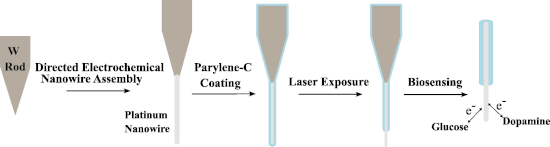
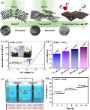
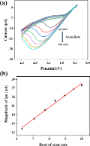
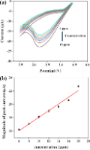
- , and enhanced signal-to-noise ratio besides high-resolution scanning applications [4][5]. These properties have made nanoscale electrodes the preferred choice in the biosensing industry, particularly for point-of-care applications. As this market continues to expand, there is a growing demand for more
- electrodes were used as above. The Gamry potentiostat was used for CV tests with scan range from −0.5 to 0.5 V, 30 mV/s, 1 mV step size (1 data point for 1 mV change, 30 data point per second), and four cycles. For noise reduction and statistical considerations, the mean value from the last three cycles were


Synthesis and antibacterial properties of nanosilver-modified cellulose triacetate membranes for seawater desalination
Beilstein J. Nanotechnol. 2025, 16, 1380–1391, doi:10.3762/bjnano.16.100
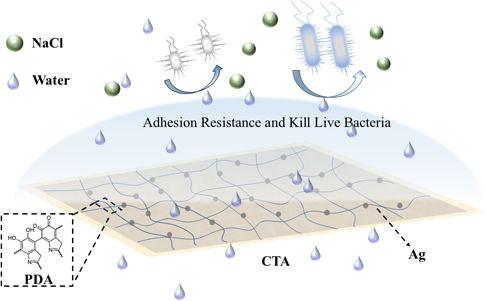
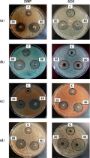
- sample. The low concentration of PDA and Ag may result in characteristic peaks being masked by noise; thus no significant differences are observed in the FTIR curves of the three materials. To confirm the successful polymerization of dopamine into PDA, the dark brown layer adhering to the PCTA membrane


Deep-learning recognition and tracking of individual nanotubes in low-contrast microscopy videos
Beilstein J. Nanotechnol. 2025, 16, 1316–1324, doi:10.3762/bjnano.16.96
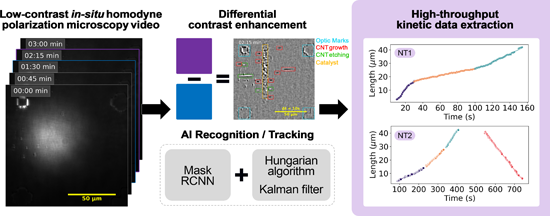
- initial frame rate, typically between 40 and 25 fps, was reduced by averaging frames to one frame per second. This operation boosts further analysis and improves signal-to-noise ratio without compromising kinetic data quality, as the nanotube growth rate is typically of the order of 0.5 µm·s−1 and the
- localization precision of the optical setup is 0.33 µm. Frames were then aligned using a template matching algorithm from the OpenCV Python library. Shade correction was applied to compensate for uneven illumination caused by the optics. Residual noise was reduced using fast Fourier transform (FFT) band-pass


Mechanical stability of individual bacterial cells under different osmotic pressure conditions: a nanoindentation study of Pseudomonas aeruginosa
Beilstein J. Nanotechnol. 2025, 16, 1171–1183, doi:10.3762/bjnano.16.86
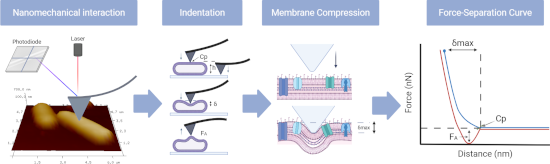
- minimum damage to the mechanical integrity of the cell membrane. Before each experiment in FV mode, the cantilever was calibrated using the thermal-noise method which is integrated in the multimode AFM software and is briefly described next. First, the optical-lever sensitivity (OLS) of the cantilever was


Deep learning for enhancement of low-resolution and noisy scanning probe microscopy images
Beilstein J. Nanotechnol. 2025, 16, 1129–1140, doi:10.3762/bjnano.16.83
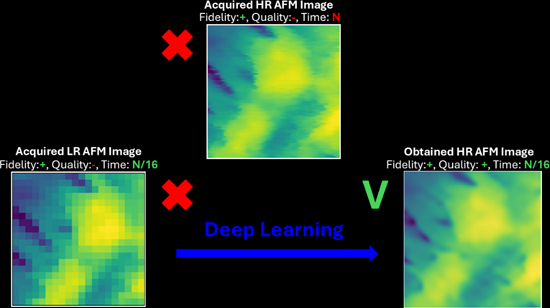
- -resolution AFM images. In those studies, fidelity metrics were applied to quantify the quality of the reconstructed images. The most common fidelity metrics include peak-signal-to-noise-ratio (PSNR), which is based on pixel-to-pixel differences of the reference and reconstructed images and structural
- assessments, a blind and subjective evaluation was conducted, polling AFM experts for their opinions on both image fidelity and image quality. Reference metrics The first comparison of the SR images to the GT references was to take the peak-signal-to-noise ratio (PSNR). This is done by taking the logarithm of
- calculating the sharpness of that image. In some sense, sharpness quantifies the clearness of an image. Nonetheless, high sharpness values can be due to the spikes typical of noise, and values should be interpreted carefully. One way to determine sharpness is by calculating first-order derivatives (gradients


Time-resolved probing of laser-induced nanostructuring processes in liquids
Beilstein J. Nanotechnol. 2025, 16, 968–1002, doi:10.3762/bjnano.16.74
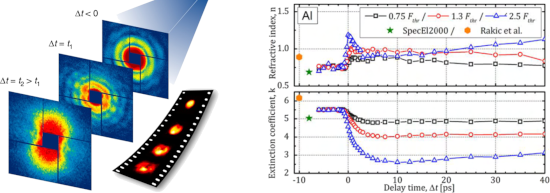
- particularly advantageous for visualizing structural changes in single particles. Although technical challenges remain in achieving sufficient signal-to-noise ratio, single-particle imaging uniquely resolves local fluctuations that are otherwise averaged out in ensemble measurements. Recognizing that


Tendency in tip polarity changes in non-contact atomic force microscopy imaging on a fluorite surface
Beilstein J. Nanotechnol. 2025, 16, 944–950, doi:10.3762/bjnano.16.72
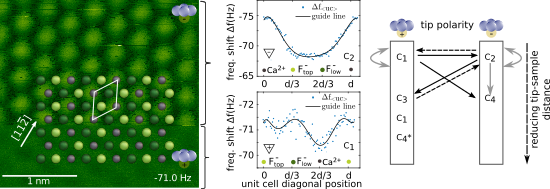
- -noise ratio of the Δf data in the RT experiments, unit cell averaging is performed as described in [10]. From the unit-cell averaged data, contrast profile lines Δf⟨uc⟩ are extracted along the diagonal of the unit cell in the direction, with the resulting data included as traces next to the respective


Focused ion beam-induced platinum deposition with a low-temperature cesium ion source
Beilstein J. Nanotechnol. 2025, 16, 910–920, doi:10.3762/bjnano.16.69
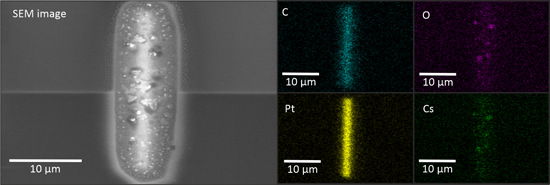
- signal-to-noise ratios for SIMS analysis. A disadvantage of using Cs+ is a possible surface modification [20][21][22]. One aspect of this paper is to show whether it is at all possible to deposit Pt with Cs+ ions or whether surface modifications dominate [10]. This work presents FIBID experiments using a


Thickness dependent oxidation in CrCl3: a scanning X-ray photoemission and Kelvin probe microscopies study
Beilstein J. Nanotechnol. 2025, 16, 749–761, doi:10.3762/bjnano.16.58
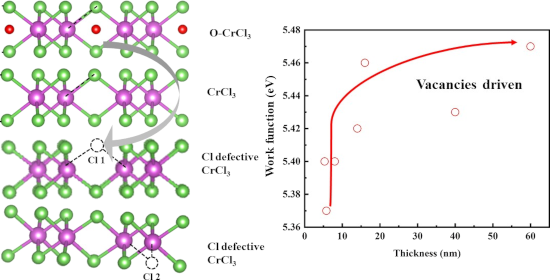
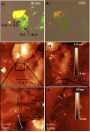
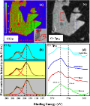
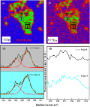
- through a 48-channel delay line detector. To analyze the photoelectron intensity of an individual atomic element on the captured SPEM maps, the image underwent background correction by eliminating the topographic features. We also applied the (3 × 3) filter to reduce the noise before extracting the





The impact of tris(pentafluorophenyl)borane hole transport layer doping on interfacial charge extraction and recombination
Beilstein J. Nanotechnol. 2025, 16, 678–689, doi:10.3762/bjnano.16.52
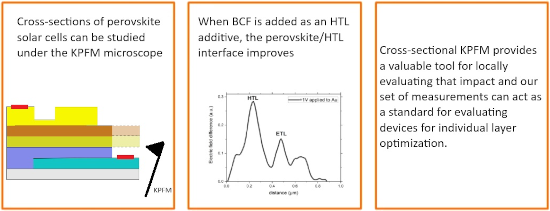
- , respectively. The profiles were smoothed with a 30 point adjacent-averaging method, to get smooth derivative curves with negligible noise. The structures of (a) spiro-OMeTAD, (b) PTAA and (c) BCF. Current–voltage characteristics for the four solar cells that were chosen to be cleaved and polished for cross


Colloidal few layered graphene–tannic acid preserves the biocompatibility of periodontal ligament cells
Beilstein J. Nanotechnol. 2025, 16, 664–677, doi:10.3762/bjnano.16.51
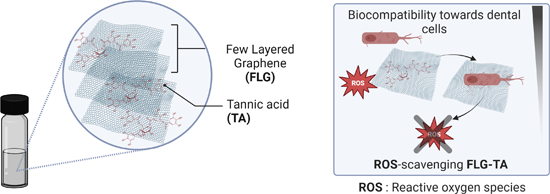
- containing 2 μM Calcein AM and 0.25 μM SYTOX Deep Red for 30 min. After the cells were washed with PBS to optimize signal-to-noise ratio, they were imaged using epifluorescence microscopy with FITC filter set for live cells (green fluorescence) and deep red filter set for dead cells (red fluorescence




Nanoscale capacitance spectroscopy based on multifrequency electrostatic force microscopy
Beilstein J. Nanotechnol. 2025, 16, 637–651, doi:10.3762/bjnano.16.49

- or heterodyne Kelvin probe force microscopy (KPFM) [18][26][79]. The second harmonic signals are proportional to the local capacitance gradients, providing information about the local tip–sample capacitance. To ensure a sufficient signal-to-noise ratio, the resulting frequencies should coincide with
- in the case of conventional EFM, signal-to-noise is greatly improved by choosing Δωe such that one of the induced sidebands falls on one of the cantilever’s mechanical resonances. We call this method multifrequency heterodyne electrostatic force microscopy (MFH-EFM). To calculate the second
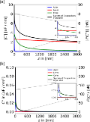
- . Thus, the improved lateral resolution comes at the price of a reduced signal-to-noise ratio. To reproduce these findings experimentally, we performed force–distance spectroscopy on the etched microcapacitors shown in Figure 2. The resulting curves of the C′ and C″ signals qualitatively reproduced the




Functionalized gold nanoflowers on carbon screen-printed electrodes: an electrochemical platform for biosensing hemagglutinin protein of influenza A H1N1 virus
Beilstein J. Nanotechnol. 2025, 16, 540–550, doi:10.3762/bjnano.16.42
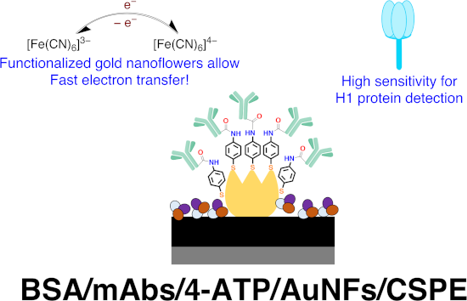
- antigen load because a good signal-to-noise ratio response was observed, making this detection a rapid and accurate process. Under the optimal parameters (pulse amplitude = 86 mV, potential increment = 4 mV, and scan rate = 100 mV/s), the negative control and four different concentrations (10, 100, 1,000


Impact of adsorbate–substrate interaction on nanostructured thin films growth during low-pressure condensation
Beilstein J. Nanotechnol. 2025, 16, 473–483, doi:10.3762/bjnano.16.36

- mesoscopic level. In the simplest case, we choose it as white zero-mean delta-correlated Gaussian noise: ⟨ξ(r,t)⟩ = 0, ⟨ξ(r,t)ξ(r’,t’)⟩ = σ2δ(r− r’)(t − t’) with the intensity σ2. The reaction term for the first adsorptive layer has the following form: Adsorption processes are described by the term Ra = ka(1


Quantification of lead through rod-shaped silver-doped zinc oxide nanoparticles using an electrochemical approach
Beilstein J. Nanotechnol. 2025, 16, 422–434, doi:10.3762/bjnano.16.33
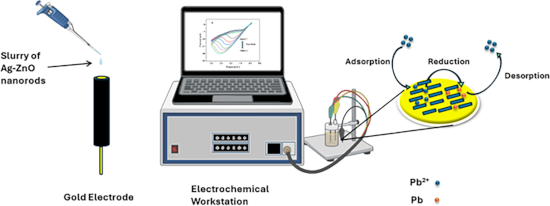
- electrochemical process. The higher impedance of the modified Ag@ZnO NRs electrode improved signal-to-noise ratio, which means that the electrode can better distinguish the electrochemical signal of the analyte from background noise, resulting in more accurate results. Furthermore, a higher impedance of the





ReactorAFM/STM – dynamic reactions on surfaces at elevated temperature and atmospheric pressure
Beilstein J. Nanotechnol. 2025, 16, 397–406, doi:10.3762/bjnano.16.30
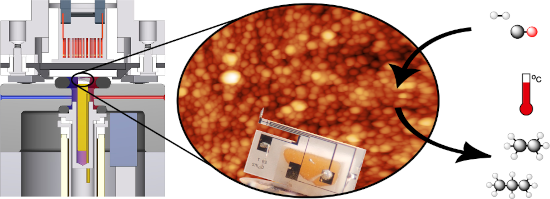
- increasing (and decreasing [23]) temperatures, the slope is steeper; hence, it becomes more important to have a stable temperature while scanning. The data in this graph were collected under UHV conditions; increasing the pressure will affect the Q-factor [19] and, in turn, the signal-to-noise ratio. To


Advanced atomic force microscopy techniques V
Beilstein J. Nanotechnol. 2025, 16, 54–56, doi:10.3762/bjnano.16.6

- accurate knowledge of the quartz cantilever stiffness, the authors develop a method to quantify the stiffness based on thermal noise measurements and numerical simulation. Calibrated measurements of conductivity and resistivity are the focus of the contribution by Piquemal et al. [3]. A particular
Facile synthesis of size-tunable L-carnosine-capped silver nanoparticles and their role in metal ion sensing and catalytic degradation of p-nitrophenol
Beilstein J. Nanotechnol. 2024, 15, 1576–1592, doi:10.3762/bjnano.15.124
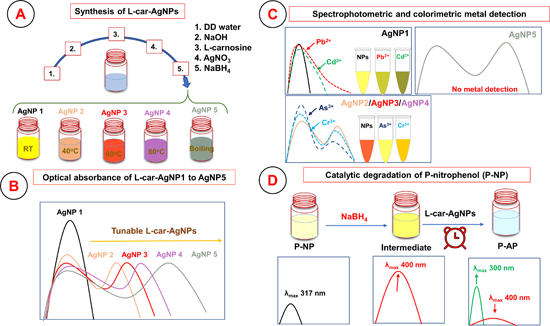
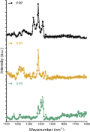
- ʟ-carnosine in aqueous solution compared to those in the solid is probably due to solvent effects. Figure 4c shows surface-enhanced Raman spectra (SERS) of ʟ-carnosine-capped silver nanoparticles. The signal-to-noise (S/N) ratio follows the order ʟ-car-AgNP4 > ʟ-car-AgNP3 > ʟ-car-AgNP2 > ʟ-car-AgNP1




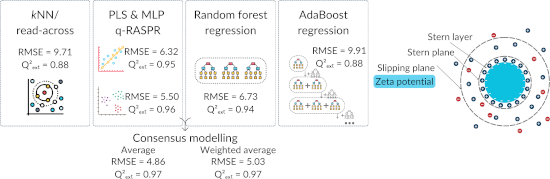
The round-robin approach applied to nanoinformatics: consensus prediction of nanomaterials zeta potential
Beilstein J. Nanotechnol. 2024, 15, 1536–1553, doi:10.3762/bjnano.15.121
- identical normalisation parameters were applied to the descriptors in the test set (18 NMs). To identify the most relevant parameters, eliminate noise, and avoid overfitting, the BestFirst method with the CfsSubset evaluator were employed [40]. Four descriptors were selected to use in the model (see below


Lithium niobate on insulator: an emerging nanophotonic crystal for optimized light control
Beilstein J. Nanotechnol. 2024, 15, 1415–1426, doi:10.3762/bjnano.15.114
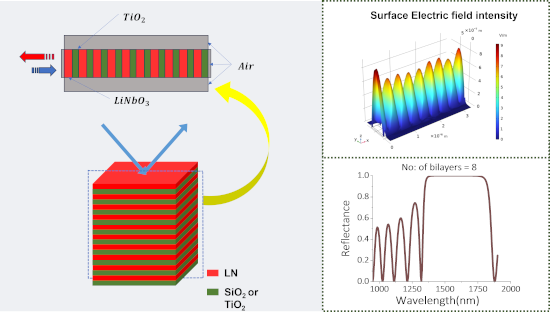
- second-harmonic generation and modulation. This confinement is also crucial in reducing the impact of environmental noise on quantum systems, providing a more stable and controlled environment for quantum computing experiments. Achieving phase matching is crucial for various quantum processes, such as


A biomimetic approach towards a universal slippery liquid infused surface coating
Beilstein J. Nanotechnol. 2024, 15, 1376–1389, doi:10.3762/bjnano.15.111
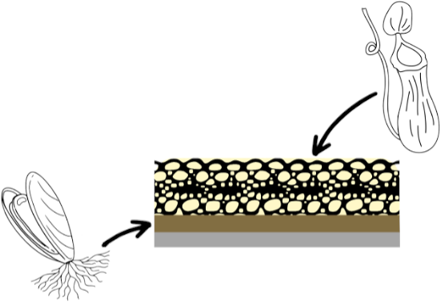
- baseline absorbance value. 5% is a sufficient threshold to overcome the noise floor of the data [33]. Clot morphology Wells of interest of a non-treated 96-well polystyrene were blocked with 300 μL 1% BSA in Milli-Q water for 2 h at 37 °C. After 2 h, wells were rinsed three times with Milli-Q water. Plates




Out-of-plane polarization induces a picosecond photoresponse in rhombohedral stacked bilayer WSe2
Beilstein J. Nanotechnol. 2024, 15, 1362–1368, doi:10.3762/bjnano.15.109
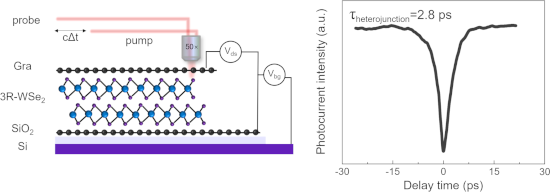
- microscopy (SPCM) with a 780 nm fiber laser (NPI Rainbow 780 OEM) mechanical chopped at 1050 Hz. The laser was focused near the diffraction limit on the samples by an objective (Olympus LMPLFLN 50×). The photocurrent was collected by a lock-in amplifier (Stanford SR830) with a background noise of


Investigation of Hf/Ti bilayers for the development of transition-edge sensor microcalorimeters
Beilstein J. Nanotechnol. 2024, 15, 1353–1361, doi:10.3762/bjnano.15.108

- generally also means a shorter thermal response time, allowing the detector to respond more quickly to small temperature changes. Second, the active area is reduced, which allows for a more efficient detection of a useful signal because of the higher energy density and, therefore, a higher signal-to-noise
- estimate the TES ampere–watt sensitivity, spectral density of various noise components, and energy resolution. The ampere–watt sensitivity of TES is represented as Here, LI is the DC gain, τ is the time constant in the absence of electrothermal feedback, τI is the time constant in the limit when the
- [20]: where NEP is the noise equivalent power. The NEP is equal to the ratio of the total noise power spectral density IN to the ampere–watt sensitivity SI(ω). The total noise is composed of four components, namely, phonon noise , Nyquist TES noise , Nyquist external circuit noise , and the readout





