Search results
Search for "polarization" in Full Text gives 390 result(s) in Beilstein Journal of Nanotechnology. Showing first 200.
Better together: biomimetic nanomedicines for high performance tumor therapy
Beilstein J. Nanotechnol. 2025, 16, 1246–1276, doi:10.3762/bjnano.16.92
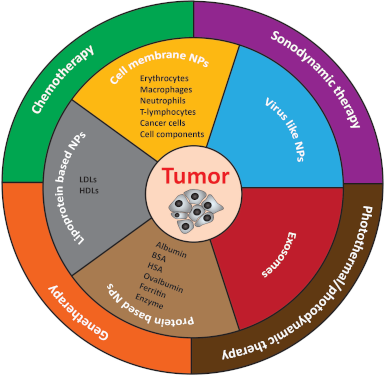
- used to escape the reticuloendothelial system (RES), target cancer cells and pathogens, and enhance tumor accumulation. Recently, Huang et al. reported macrophage membrane-coated targeted NPs for tumor inhibition and macrophage polarization. They incorporated methyltransferase like 14 (METTL14) and
- RS09 inside the macrophages and then functionalized the surface with DSPE-PEG2000-cRGD. METTL14 significantly inhibits the tumor growth in vitro, downregulates TICAM2, and inhibits the macrophage polarization by the Toll-like receptor 4 pathway. The combinatory NPs induce antitumor M1 macrophage
- polarization, and cRGD modification further enhances tumor accumulation [32]. In another study, Hou et al. employed M1-type macrophages and loaded them with sorafenib (SF) to develop lipid nanoparticles (M1/SLNPs). The M1/SLNPs showed an increase in tumor accumulation and enhanced the SF tumor targeting







Single-layer graphene oxide film grown on α-Al2O3(0001) for use as an adsorbent
Beilstein J. Nanotechnol. 2025, 16, 1082–1087, doi:10.3762/bjnano.16.79
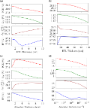
- (0001). Two sets of Raman spectra from SLG/α-Al2O3(0001) (upper) and SLGO/α-Al2O3(0001) (lower). (a) C 1s core level XPS and (b) polarization dependence of C K-edge NEXAFS spectra of SLG/α-Al2O3(0001) (lower) and SLGO/α-Al2O3(0001) (upper) The incident angles of photon beams from the surface are 90
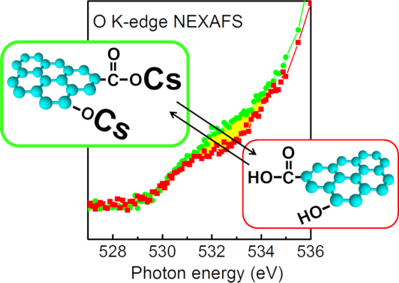
- ° (red) and 30° (blue), respectively. (a) O K-edge NEXAFS of α-Al2O3(0001) (black) and SLGO/α-Al2O3(0001) (red). (b) and (c) Polarization dependence of O K-edge NEXAFS of SLGO/α-Al2O3(0001) and Cs-adsorbed SLGO/α-Al2O3(0001), respectively. The incident angles of the photon beams from the surface are 90


Piezoelectricity of hexagonal boron nitrides improves bone tissue generation as tested on osteoblasts
Beilstein J. Nanotechnol. 2025, 16, 1068–1081, doi:10.3762/bjnano.16.78
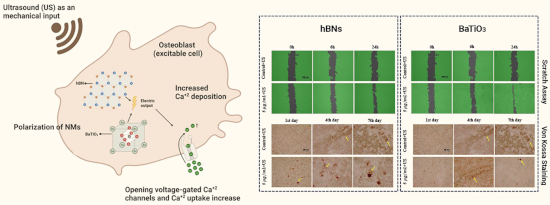
- amplitude and PRFM phase images of hBNs. The amplitude image presents the strength of hBNs piezoelectric response, which was recorded as 2 mV. This acquired amplitude response measures the effective piezoelectric coefficient, which can be correlated with the polarization magnitude. The observed PRFM
- applied electric field, the acquired phase signals determine the polarization direction of hBNs [49]. The direction and angle of polarization of piezoelectric hBNs were recorded by phase contrast measurement, and it was found to be 300°. This high value indicates that hBNs gave spontaneous responses as
- polarization to external stimulation. Characterization of BaTiO3 The FTIR spectrum of BaTiO3 is shown in Supporting Information File 1, Figure S4 (a). A characteristic peak of BaTiO3 was observed at 1420 cm−1, corresponding to crystalline Ba–Ti–O [50]. Additionally, slight peaks appeared at 1630 and 3480 cm−1


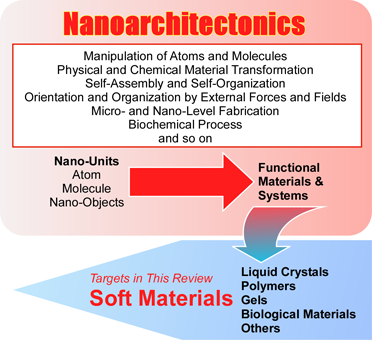
Soft materials nanoarchitectonics: liquid crystals, polymers, gels, biomaterials, and others
Beilstein J. Nanotechnol. 2025, 16, 1025–1067, doi:10.3762/bjnano.16.77
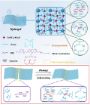
- had a smectic crystal phase that had a tilted chromophore (the part that gives the molecule its color) at 45° from the layer normal. This tilted chromophore caused a macroscopic polarization (a change in the electric field) when a direct current (DC) bias was applied during cooling from a high
- -temperature phase to a smectic crystal phase. By contrast, the other diastereomer exhibited a smectic crystal phase in which the chromophore was parallel to the layer normal and no macroscopic polarization was induced. Bulk photovoltaic effects and polarization-induced electroluminescence were exclusively
- tilted smectic crystal phase, with the addition of fullerene derivatives, was also investigated. The emission was linearly polarized with a dichroic ratio exceeding ten for the polarization-induced electroluminescence observed in the tilted smectic crystal phase. Reversing the polarity of the poling






Time-resolved probing of laser-induced nanostructuring processes in liquids
Beilstein J. Nanotechnol. 2025, 16, 968–1002, doi:10.3762/bjnano.16.74
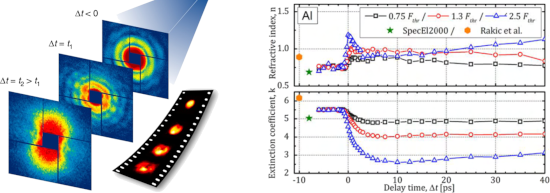
- conventional TTM that describes energy transfer between electrons and the lattice. Although the dynamics of photoexcited hot electrons were expected to uniformly affect the entire specimen within a few picoseconds, the experiment instead observed inhomogeneous and laser-polarization-dependent anisotropic
- plasmons through the wavelength and polarization state of femtosecond laser pulses [82]. Active research in this domain is anticipated to facilitate the precise optical control of material phases. Furthermore, advances in imaging technologies, particularly those enabling ultrafast, three-dimensional, and


Synthesis of biowaste-derived carbon-dot-mediated silver nanoparticles and the evaluation of electrochemical properties for supercapacitor electrodes
Beilstein J. Nanotechnol. 2025, 16, 933–943, doi:10.3762/bjnano.16.71
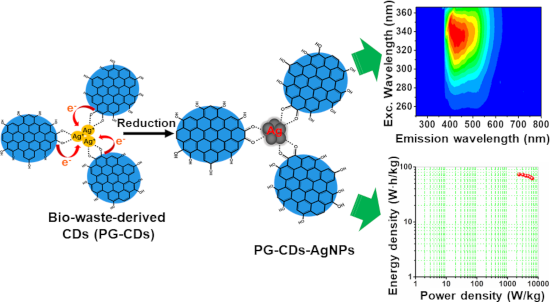
- energy demand. Therefore, a notable research focus has been given to advancements in renewable energy storage systems. Secondary batteries and supercapacitors are promising alternatives for energy storage applications [1][2]. Through the electrostatic polarization of electrolyte solutions, supercapacitor


Heat-induced transformation of nickel-coated polycrystalline diamond film studied in situ by XPS and NEXAFS
Beilstein J. Nanotechnol. 2025, 16, 887–898, doi:10.3762/bjnano.16.67
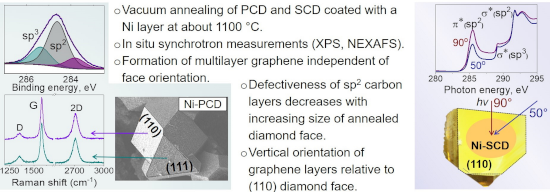
- structure (NEXAFS) methods are noncontact and nondestructive methods to investigate the chemical state of the elements on the surface and in the bulk of solids. The signals collected over a large surface area provide overall insight into the surface state. Moreover, the polarization-dependence of NEXAFS
- oriented perpendicular to this plane [53]. The difference in the polarization of π- and σ-electrons explains the dependence of NEXAFS spectra of graphitic materials on the angle of incidence of the radiation. Thus, it can be concluded that the orientation of graphitic layers is predominantly vertical
- Russian–German dipole beamline (RGBL dipole) of the Berliner Elektronenspeicherring für Synchrotronstrahlung (BESSY II) operated by the Helmholtz-Zentrum Berlin für Materialien und Energie (Berlin, Germany) [55]. Light polarization at the RGBL dipole is linearly horizontal. The samples were fixed in pairs


Insights into the electronic and atomic structures of cerium oxide-based ultrathin films and nanostructures using high-brilliance light sources
Beilstein J. Nanotechnol. 2025, 16, 860–871, doi:10.3762/bjnano.16.65

- density of empty states of the investigated sample. In contrast, the extended energy range X-ray absorption fine structure (EXAFS), up to a few hundred electronvolts above the absorption edge, is sensitive to the local atomic structure around the absorbers. A polarization-dependent Ce L3-edge EXAFS study


Facile one-step radio frequency magnetron sputtering of Ni/NiO on stainless steel for an efficient electrode for hydrogen evolution reaction
Beilstein J. Nanotechnol. 2025, 16, 837–846, doi:10.3762/bjnano.16.63
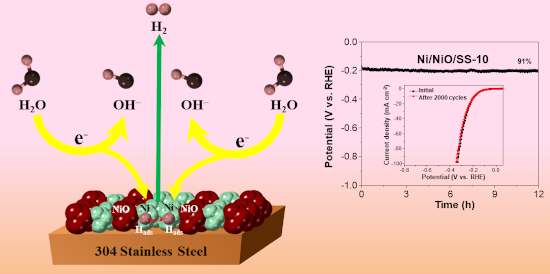
- mapping of the Ni/NiO/SS-10 sample. (a) Survey XPS spectrum of Ni/NiO/SS-10. High-resolution XPS spectra of (b) Ni 2p3/2 and (c) O 1s. (a) Polarization curves of SS, Ni/NiO/SS-5, Ni/NiO/SS-10, Ni/NiO/SS-15, and Ni/NiO/SS-20 electrodes. (b) Corresponding Tafel slopes of electrodes. (c) Nyquist plots of
- /NiO/SS-20 electrodes at an overpotential of 200 mV. (c) Potential–time response of the Ni/NiO/SS-10 electrode measured over a period of 12 h. Inset: Polarization curves recorded initially and after 2000 CV cycles of the Ni/NiO/SS-10 electrode. (d) Chronoamperometric curve of Ni/NiO/SS-10 electrode


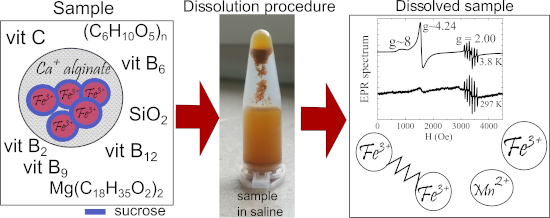
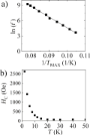
Changes of structural, magnetic and spectroscopic properties of microencapsulated iron sucrose nanoparticles in saline
Beilstein J. Nanotechnol. 2025, 16, 762–784, doi:10.3762/bjnano.16.59





Nanoscale capacitance spectroscopy based on multifrequency electrostatic force microscopy
Beilstein J. Nanotechnol. 2025, 16, 637–651, doi:10.3762/bjnano.16.49

- way for the design of materials with tailored functionalities [1][2][3][4][5][6]. Dielectric properties are fundamental for understanding the behavior and performance of various material systems, as they directly influence charge storage, polarization, and energy dissipation mechanisms. For instance
- variations influence key properties such as charge transport, polarization dynamics, and defect distributions, directly impacting the performance of microelectronic and energy systems [14][15]. Understanding these effects requires correlating nanoscale dielectric properties with structural and morphological




Retrieval of B1 phase from high-pressure B2 phase for CdO nanoparticles by electronic excitations in CdxZn1−xO composite thin films
Beilstein J. Nanotechnol. 2025, 16, 551–560, doi:10.3762/bjnano.16.43

- any polarization effects of the incident laser light. The optically active phonon modes at the center of the Brillouin zone have the following point symmetries: In this equation, the A1 and E1 modes correspond to Raman and infrared (IR) active branches, characterized by polar symmetries that further


N2+-implantation-induced tailoring of structural, morphological, optical, and electrical characteristics of sputtered molybdenum thin films
Beilstein J. Nanotechnol. 2025, 16, 495–509, doi:10.3762/bjnano.16.38
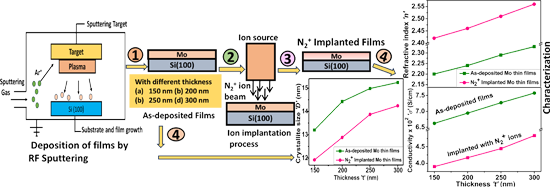
- two parameters ψ and Δ characterize a change in polarization state. ψ denotes the amplitude ratio between p-polarized (parallel to the plane of incidence) and s-polarized (perpendicular to the plane of incidence) light components after interaction with the sample. Δ denotes the phase difference


Size control of nanoparticles synthesized by pulsed laser ablation in liquids using donut-shaped beams
Beilstein J. Nanotechnol. 2025, 16, 407–417, doi:10.3762/bjnano.16.31
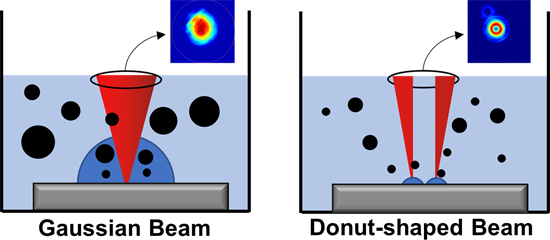
- beams of controlled polarization was performed to produce nanoparticles from metal (gold), oxide (yttrium oxide, Y2O3), and alloy (high-entropy alloy (HEA)) targets. The selected materials are typical representatives of their classes, whose NPs are widely used in applications such as biology and
- was added in front of the S-waveplate to control the polarization state of the donut-shaped pulses between radial and azimuthal. The shapes of the beams were monitored on a temporarily reflected beam branch using a profiler (typical shapes of the Gaussian and donut-shaped beams are shown in Figure 1b
- and Figure 1c, respectively). To monitor the polarization of the donut-shaped beam, an additional Glan–Taylor polarizer was placed in front of the profiler. The spot diameters, 2wo, of the Gaussian beams (where wo is the beam waist) at the sample surface were measured with a silicon target using the


Vortex lattices of layered HTSCs at different vortex–vortex interaction potentials
Beilstein J. Nanotechnol. 2025, 16, 362–370, doi:10.3762/bjnano.16.27
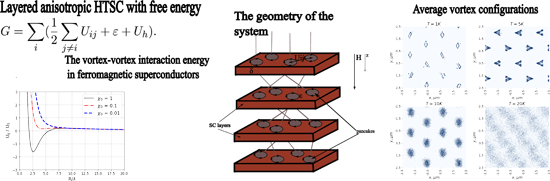
- . A potential different from the classical one is observed for intervortex interaction and in the so-called ferromagnetic superconductors [22]. The polarization of the magnetic moments of the crystal lattice induced by vortices leads to an interaction potential that has a minimum and a maximum (at


Nanocarriers and macrophage interaction: from a potential hurdle to an alternative therapeutic strategy
Beilstein J. Nanotechnol. 2025, 16, 97–118, doi:10.3762/bjnano.16.10

- innovative strategies to exploit macrophage interactions for therapeutic advantage. Recent advancements in treating liver and lung diseases, particularly focusing on macrophage polarization and RNA-based therapies, have highlighted the potential developments in macrophage–NC interaction. Furthermore, we will
- delve into the intriguing potential of nanomedicine in neurology and traumatology, associated with macrophage interaction, and the exciting possibilities it holds for the future. Keywords: drug delivery; macrophages; nanomedicine; polarization; RNA-based therapies; Review 1 Introduction In the vast
- following degradation in lysosomes using hydrolytic enzymes and reactive oxygen species (ROS). Additionally, macrophages present antigen fragments through major histocompatibility complex (MHC) molecules, activating adaptive immune responses [16]. 2.2 Macrophage polarization Macrophages are involved in


Theoretical study of the electronic and optical properties of a composite formed by the zeolite NaA and a magnetite cluster
Beilstein J. Nanotechnol. 2025, 16, 44–53, doi:10.3762/bjnano.16.5
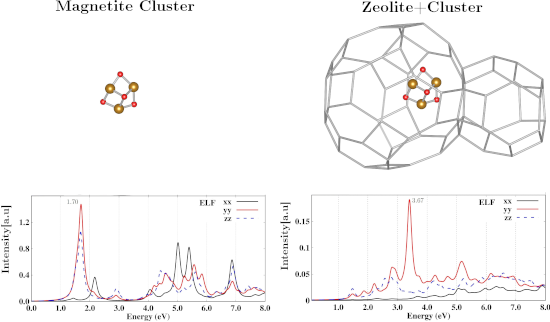
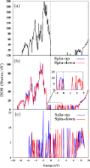
- properties. For the energy convergence criterion, we consider a value of 1 × 10⁻⁴ Ry. For a valid comparison, the same values were used to calculate the electronic and optical properties of the isolated magnetite cluster. Finally, spin polarization was considered for both calculations (zeolite-cluster and
- transition from spin up to spin down. Figure 4c displays the TDOS for the magnetite cluster. Notably, it reveals the presence of both spin polarizations at the Fermi level, with the spin-down polarization being the dominant one. This observation is indicative of a ferromagnetic behavior, aligning with the




Orientation-dependent photonic bandgaps in gold-dust weevil scales and their titania bioreplicates
Beilstein J. Nanotechnol. 2025, 16, 1–10, doi:10.3762/bjnano.16.1
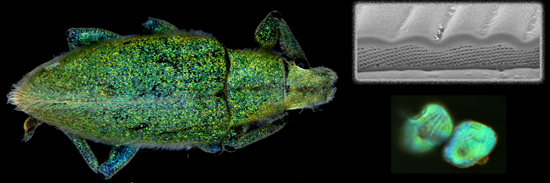
- }-oriented domains exhibits polarization conversion, rotating the angle of linearly polarized light. The overall coloration, resulting from the reflections from many scales, is close to uniformly diffuse because of the random orientation of the domains. Using titania sol–gel chemistry, we produced negative
- customizable photonic bandgaps that might be used in novel optical materials. Keywords: animal coloration; photonic crystal; polarization conversion; sol–gel replication; weevil; Introduction Animal coloration is produced by means of absorption, scattering, luminescence, and interference. The latter is
- . The domains in lattice orientation {100} exhibited polarization conversion. The structure inferred from optical measurements was confirmed using conventional and focused ion beam scanning electron microscopy (FIB-SEM). By averaging the reciprocal space images obtained from different lattice


Fabrication of hafnium-based nanoparticles and nanostructures using picosecond laser ablation
Beilstein J. Nanotechnol. 2024, 15, 1639–1653, doi:10.3762/bjnano.15.129
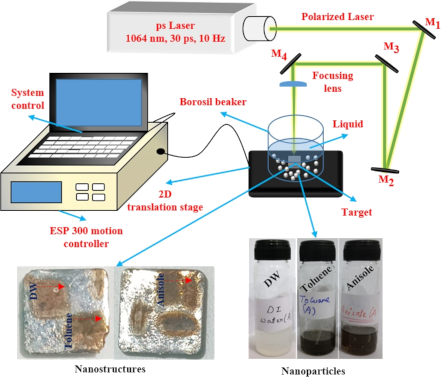
- properties make Hf metal suitable for laser patterning of sub-wavelength-size structures, and the choice of the liquid for LAL enables the variation of feature size. We have used linearly polarised light in the present study. The orientation of the LIPSS depends on the polarization and rotates with the input
- polarization. The available literature on LIPSS suggests that there will be no changes in the spacing or other morphological features except the orientation of the LIPSS with respect to the polarisation. Combined with the picosecond laser’s high precision processing and industrial scalability, Hf is a




Lithium niobate on insulator: an emerging nanophotonic crystal for optimized light control
Beilstein J. Nanotechnol. 2024, 15, 1415–1426, doi:10.3762/bjnano.15.114
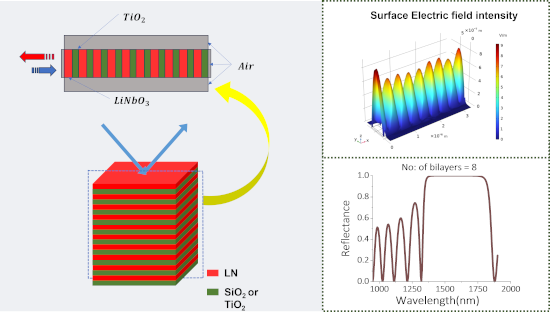
- modulation capabilities of lithium niobate coupled with transparency and high refractive index of titanium dioxide, offer a versatile platform for designing devices with controlled polarization, tunable modulation, and well-defined photonic bandgaps [9][13][24]. The complementary nonlinear optical properties


A biomimetic approach towards a universal slippery liquid infused surface coating
Beilstein J. Nanotechnol. 2024, 15, 1376–1389, doi:10.3762/bjnano.15.111
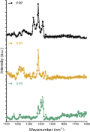
- –4000 cm−1). Each beam was overlapped in space and time to produce SFG photons at a spot size of approximately 1 mm. Spectra were collected and offset with a 4 cm−1 step size at 200 acquisitions per step. Spectra were collected in an ssp, ppp, and sps polarization combinations (SFG, visible, IR) in a
- in the bulk. A final mode was assigned to the CF3 asymmetric stretching at 1370 cm−1 [46]. Observed changes across the SFG spectra collected with different polarization combinations provide information about the orientation of molecular bonds at the interface [26][27]. Here, by collecting SFG spectra
- 1800 cm−1 from a COC substrate coated with PDA–FDT. The top spectra were collected in ppp, the middle spectra in ssp, and the bottom spectra in sps polarization combinations. FXIIa concentration after 1 h incubation with HMWK and PK on surfaces. Error bars indicate standard deviation, n = 18. COC, PDA




Out-of-plane polarization induces a picosecond photoresponse in rhombohedral stacked bilayer WSe2
Beilstein J. Nanotechnol. 2024, 15, 1362–1368, doi:10.3762/bjnano.15.109
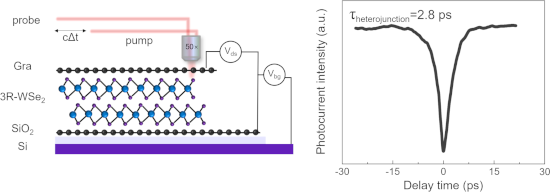
- .15.109 Abstract Constructing van der Waals materials with spontaneous out-of-plane polarization through interlayer engineering expands the family of two-dimensional ferroelectrics and provides an excellent platform for enhancing the photoelectric conversion efficiency. Here, we reveal the effect of
- spontaneous polarization on ultrafast carrier dynamics in rhombohedral stacked bilayer WSe2. Using precise stacking techniques, a 3R WSe2-based vertical heterojunction was successfully constructed and confirmed by polarization-resolved second harmonic generation measurements. Through output characteristics
- and the scanning photocurrent map under zero bias, we reveal a non-zero short-circuit current in the graphene/3R WSe2/graphene heterojunction region, demonstrating the bulk photovoltaic effect. Furthermore, the out-of-plane polarization enables the 3R WSe2 heterojunction region to achieve an ultrafast


The role of a tantalum interlayer in enhancing the properties of Fe3O4 thin films
Beilstein J. Nanotechnol. 2024, 15, 1253–1259, doi:10.3762/bjnano.15.101

- NTT Hi-Tech Institute, Nguyen Tat Thanh University, 298-300A Nguyen Tat Thanh Street, Ward 13, District 4, Ho Chi Minh City 700000, Vietnam 10.3762/bjnano.15.101 Abstract High spin polarization and low resistivity of Fe3O4 at room temperature have been an appealing topic in spintronics with various
- K [1], as well as its high spin polarization with only one spin at the Fermi level, even at room temperature [2][3][4][5][6]. Fe3O4 thin films are an issue of interest and have extensive applications in Li-ion batteries, spin Seebeck devices, supercapacitors, spin Hall magnetoresistance, and the


AI-assisted models to predict chemotherapy drugs modified with C60 fullerene derivatives
Beilstein J. Nanotechnol. 2024, 15, 1170–1188, doi:10.3762/bjnano.15.95
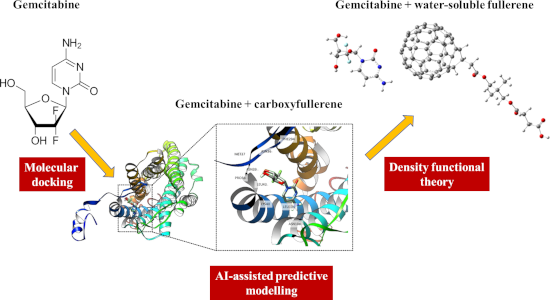
- . Gemcitabine includes an active pyrimidinone fragment as a very reactive zone. The frontier molecular orbitals and the ESP map are shown Supporting Information File 1, Figure S2. Again, there is a strong polarization, which can induce a route for reaction. The ring nitrogen atom in alpha position concerning


Quantum-to-classical modeling of monolayer Ge2Se2 and its application in photovoltaic devices
Beilstein J. Nanotechnol. 2024, 15, 1153–1169, doi:10.3762/bjnano.15.94
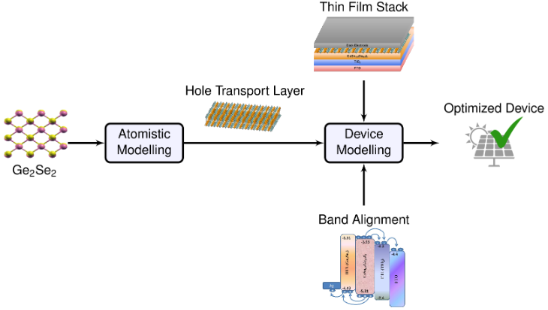
- , we can calculate the refractive index and extinction coefficient as Here, and are the conduction and valence band Bloch states with energies and , respectively, r is the position of the electron, and u is the polarization of light. e is the electronic charge, and Ω is the volume. Via the well