


Search results
Search for "porphyrin" in Full Text gives 71 result(s) in Beilstein Journal of Nanotechnology.
Adsorption and self-assembly of porphyrins on ultrathin CoO films on Ir(100)
Beilstein J. Nanotechnol. 2020, 11, 1516–1524, doi:10.3762/bjnano.11.134
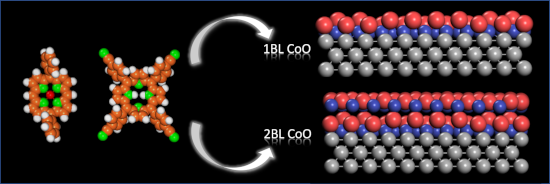
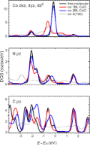
- surfaces is of fundamental interest due to a variety of potential applications. We investigate here the molecule–molecule and molecule–substrate interaction of Co-5,15-diphenylporphyrin (Co-DPP) and 2H-tetrakis(p-cyanophenyl)porphyrin (2H-TCNP) on one bilayer (1BL) and two bilayer (2BL) thick cobalt oxide
- cannot give rise to intermolecular forces anymore. The molecules employed in this study, Co-5,15-diphenylporphyrin (Co-DPP) and 2H-tetrakis(p-cyanophenyl)porphyrin (2H-TCNPP), are representatives with which this important hierarchy of interaction energies may be studied. While Co-DPP anchors mainly
- % purity, Figure 1a) and 2H-TCNPP (2, Porphyrin Systems, 97% purity, Figure 1b) were evaporated from a graphite crucible effusion cell. Co-DPP was evaporated at a measured cell temperature of 540 K and 2H-TCNPP at 640 K, which resulted in a molecular deposition rate of 0.04 and 0.06 nm−2·min−1. Both




Role of redox-active axial ligands of metal porphyrins adsorbed at solid–liquid interfaces in a liquid-STM setup
Beilstein J. Nanotechnol. 2020, 11, 1264–1271, doi:10.3762/bjnano.11.110
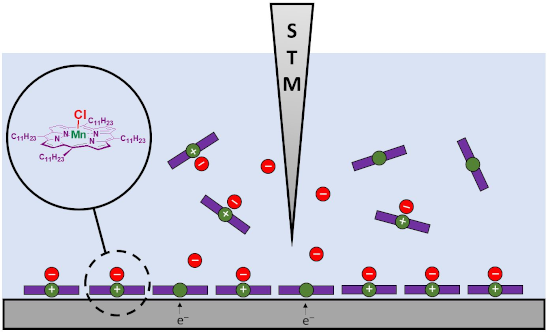
- ascribed to the occurrence of redox reactions in which chloride is oxidized to chlorine and the Mn(III) center of the porphyrin moiety is reduced to Mn(II). The resulting Mn(II) porphyrin products were identified by UV–vis analysis of the liquid phase. For solutions of Mn(III) porphyrins with non-redox
- manganese center of the porphyrin moiety serves as a coordination site for an oxygen atom, which subsequently is inserted into the double bond of the alkene. A variety of oxygen donors can be used to oxidize the manganese center to an active manganese-oxo (Mn=O) species, such as iodosylbenzene, hypochlorite
- and hydrogen peroxide. The use of the environmentally most benign oxidant, molecular oxygen (O2), is also possible, but comes with a drawback. To be able to generate an Mn=O complex, the Mn(III) porphyrin first needs to be reduced to a Mn(II) porphyrin, which can subsequently coordinate to O2 and


A few-layer graphene/chlorin e6 hybrid nanomaterial and its application in photodynamic therapy against Candida albicans
Beilstein J. Nanotechnol. 2020, 11, 1054–1061, doi:10.3762/bjnano.11.90
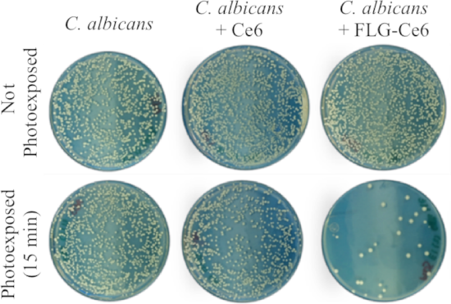
- visible spectra. An example of this is the porphyrin chlorin e6 (Ce6), which has been widely used as a photosensitizer in PDT [9][10][11][12][13]. One of the main drawbacks in the use of Ce6, and in general for any other organic photosensitizer materials, is the quenching after photoexcitation which


Rational design of block copolymer self-assemblies in photodynamic therapy
Beilstein J. Nanotechnol. 2020, 11, 180–212, doi:10.3762/bjnano.11.15
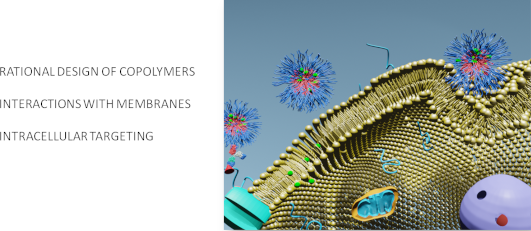
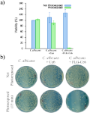
- reducing power of glutathione (GSH) was exploited in a supramolecular micellar system formed through the host–guest interaction between a PEGylated cyclodextrin and adamantane moieties conjugated to a porphyrin photosensitizer through a disulfide bond. Once the disulfide link was cleaved by glutathione
- , the porphyrin photosensitizer was released and the size of the nanoobjects in solution increased (Figure 5d) [77]. For a combined photodynamic therapy/photothermal therapy (PDT/PTT) approach, indocyanine green (ICG) has been encapsulated in a protein, namely human serum albumin. First human serum
- hydrophobic central block was made of porphyrin molecules linked by disulfide groups; in the intracellular microenvironment the reduction by glutathione could activate the porphyrin molecules for PDT [88]. For self-assembled nanoparticles that are too labile and easily disassemble in vivo, cross-linking with






Molecular architectonics of DNA for functional nanoarchitectures
Beilstein J. Nanotechnol. 2020, 11, 124–140, doi:10.3762/bjnano.11.11
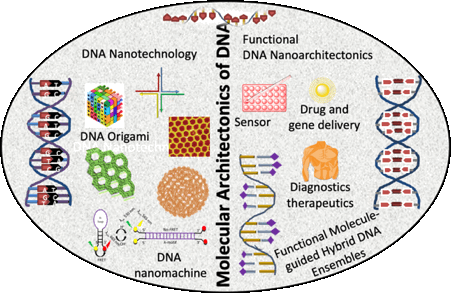
- ], Hélène [90], and co-workers reported the utility of porphyrin-tethered DNA as artificial nucleases. Murashima, Sugimoto, and co-workers adopted a novel approach to design DNA nanoarchitectures by substituting the nucleobases of DNA with porphyrins [91]. The tetraphenylporphyrin-modified nucleotide was
- inserted into the center of a 13-mer oligonucleotide sequence in an automated DNA synthesizer through phosphoramidite chemistry. The annealing of porphyrin-tethered oligonucleotides with complementary oligonucleotides resulted in the formation of a B-form DNA duplex. The conformational distortion effect
- due to the intercalation of porphyrin was neutralized via stabilization of the ensemble by stacking interactions that created the B-form duplex structure. Sitaula, Reed, and co-workers reported the ligation of a porphyrin derivative by a 19-nucleotide DNA sequence [92]. The porphyrin units were


Advanced hybrid nanomaterials
Beilstein J. Nanotechnol. 2019, 10, 2563–2567, doi:10.3762/bjnano.10.247

- operate in the physiological range with suitable sensitivity. Another metal–organic framework (MOF) is studied in “The nanoscaled metal–organic framework ICR-2 as a carrier of porphyrins for photodynamic therapy” [36]. Phosphinate-based MOF nanoparticles are decorated with porphyrin-type molecules as
- photosensitizers for biological applications. In this work, it was found that the photodynamic efficacy of the system depends on the substituent at the porphyrin phosphinate groups. Environmental Hybrid nanomaterials may play a key role in the field of environmental research, in which environmental remediation and
Use of data processing for rapid detection of the prostate-specific antigen biomarker using immunomagnetic sandwich-type sensors
Beilstein J. Nanotechnol. 2019, 10, 2171–2181, doi:10.3762/bjnano.10.210

- MNPs was oxidized by H2O2 to form an intermediate (Fe4+=O) and a porphyrin π-cation radical. The oxidized HRP was reduced by the mediator hydroquinone (HQ) forming benzoquinone (BQ), which was electrochemically reduced by accepting one electron from the electrode, with the enzyme returning to its
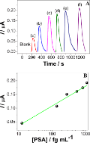


Review of advanced sensor devices employing nanoarchitectonics concepts
Beilstein J. Nanotechnol. 2019, 10, 2014–2030, doi:10.3762/bjnano.10.198
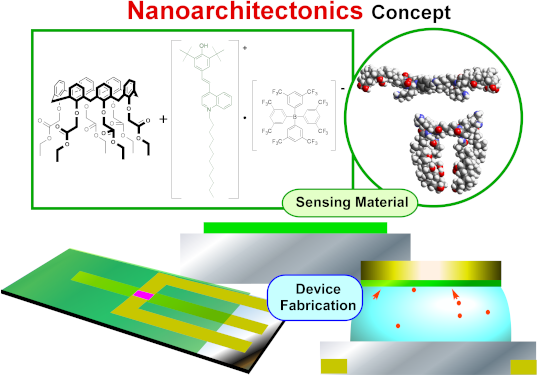
- surface stress sensor as a novel nanomechanical device and a highly networked capsular nanoarchitecture of silica–porphyrin hybrid as the sensing material. Not limited to this particular case, innovations from both the device side and the materials side for improved sensors has been continuously pursued


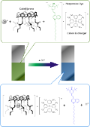

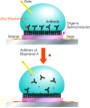


Materials nanoarchitectonics at two-dimensional liquid interfaces
Beilstein J. Nanotechnol. 2019, 10, 1559–1587, doi:10.3762/bjnano.10.153
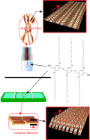
- reported by Yan, Zhao and co-workers [128]. Other one-dimensional functional structures such as porphyrin-functionalized DNA (by Stulz [129]), DNA-based complex structures for ultrasensitive mercury detection (by Govindaraju and co-workers [130]), self-assembled chiral twisted and helical nanofibers (by
- diffraction (GIXD) revealed a face-centred square grid structure with an average domain size of 3600 Å2. Makiura et al. employed a similar method to form multilayers of an oriented porphyrin-based MOF film on top of substrates by repeating transfer and washing of interfacially grown MOF layers (Figure 10
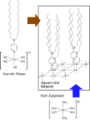
- ) [228]. DHTPA was dissolved in water, and the resulted aqueous solution was layered on top of a chloroform solution of a tetra-substituted amine monomer containing porphyrin. The segregation of the monomers confined the imine formation to the interface and yielded wafer-size multilayer imine-linked COF













Comparing a porphyrin- and a coumarin-based dye adsorbed on NiO(001)
Beilstein J. Nanotechnol. 2019, 10, 874–881, doi:10.3762/bjnano.10.88
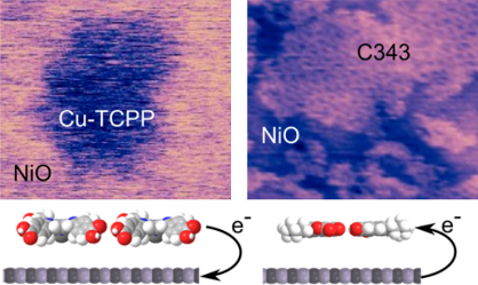
- technologies such as dye-sensitized solar cells. A key optimization parameter for such devices is the choice of the compounds in order to control the direction and the intensity of charge transfer across the interface. Here, the deposition of two different molecular dyes, porphyrin and coumarin, as single
- Kelvin probe force microscopy measurements. Keywords: coumarin; Kelvin probe force microscopy; metal oxide; molecular resolution; nickel oxide (NiO); non-contact atomic force microscopy; porphyrin; Introduction With regard to its use in dye-sensitized solar cells (DSSCs), the wide-bandgap n-type
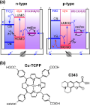
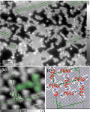
- -carboxyphenyl)porphyrin (Cu-TCPP) has been studied for the fabrication of n-type DSSCs [21][22]. In contrast, Coumarin 343 (C343) is an electron acceptor and is used for the design of p-type devices [23][24]. Both molecules structures are shown in Figure 1b. In this paper, non-contact atomic force microscopy



The effect of translation on the binding energy for transition-metal porphyrines adsorbed on Ag(111) surface
Beilstein J. Nanotechnol. 2019, 10, 706–717, doi:10.3762/bjnano.10.70
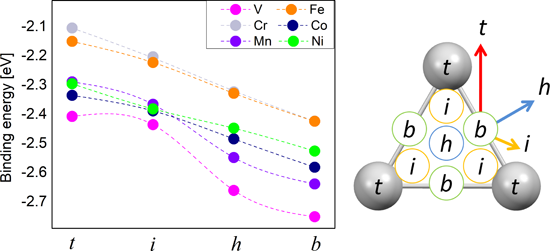
- are organo-metallic compounds exhibiting a wide range of optoelectronic, magnetic, and mechanical properties that are interesting for nanotechnology applications ([1][2]. The core of these compounds is porphyrin, a planar heterocycle, formed by four pyrrole moieties [2]. The π-system of porphyrin
- applications can be found in the literature, ranging from molecular sensors [3] over memory devices [4] to light-harvesting structures [5][6][7]. Among all porphyrin compounds, transition-metal porphyrins (TMPPs) are of particularly interest. Because they accommodate a transition-metal atom in the center, the
- . This is a consequence of the fact that self-organization is dominated by the periphery of the porphyrin [32][33][34][35][36][37][38]. As an example, we note the case of mixtures of Co-TPP and Ni-TPP (TPP = tetraphenylporphyrin) on Au(111) forming ordered islands with random distributions of the two


![[Graphic 1]](/bjnano/content/inline/2190-4286-10-70-i1.svg?max-width=637&scale=1.18182) , for all systems and relative molecule–surface positions. Right: symm...
, for all systems and relative molecule–surface positions. Right: symm...


![[Graphic 7]](/bjnano/content/inline/2190-4286-10-70-i7.svg?max-width=637&scale=1.18182) for selected TMPP systems (M = V, Mn, Co; red: positive values, blue: negative value...
for selected TMPP systems (M = V, Mn, Co; red: positive values, blue: negative value...
Ultrathin hydrophobic films based on the metal organic framework UiO-66-COOH(Zr)
Beilstein J. Nanotechnol. 2019, 10, 654–665, doi:10.3762/bjnano.10.65
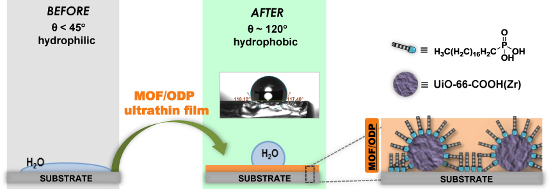
- important characteristic in many practical applications. Aguado et al. [37] obtained hydrophobic SIM-2 by post-synthetic functionalization of SIM-1 films deposited onto anodic alumina disks (MOF layer thickness ≈20 µm). Grzybowski et al. [45] obtained freestanding, porphyrin-based MOF films approximately


Electrolyte tuning in dye-sensitized solar cells with N-heterocyclic carbene (NHC) iron(II) sensitizers
Beilstein J. Nanotechnol. 2018, 9, 3069–3078, doi:10.3762/bjnano.9.285
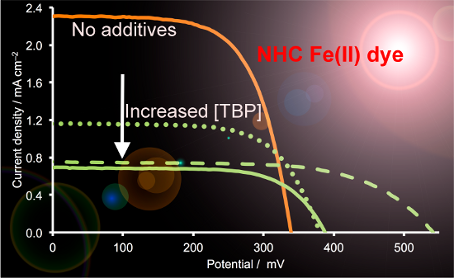
- realized with ruthenium-based [2], zinc(II) porphyrin-based [5][6][7][8][9] or metal-free organic dyes [10][11][12]. In a recent review [2], Nazeeruddin points to the fact that only incremental enhancements of the photoconversion efficiencies of ruthenium dyes have occurred during the last two decades



The nanoscaled metal-organic framework ICR-2 as a carrier of porphyrins for photodynamic therapy
Beilstein J. Nanotechnol. 2018, 9, 2960–2967, doi:10.3762/bjnano.9.275
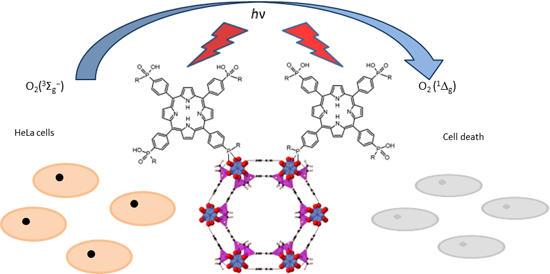
- Technology, Technická 5, 166 28 Prague, Czech Republic 10.3762/bjnano.9.275 Abstract Nanosized porphyrin-containing metal-organic frameworks (MOFs) attract considerable attention as solid-state photosensitizers for biological applications. In this study, we have for the first time synthesised and
- these porphyrins allows for superior loading of the nanoparticles when compared with commonly used 5,10,15,20-tetrakis(4-carboxyphenyl)porphyrin. The nanoICR-2/porphyrin composites retain part of the free porphyrins photophysical properties, while the photodynamic efficacy is strongly affected by the R
- substituent at the porphyrin phosphinate groups. Thus, phosphinatophenylporphyrin with phenyl substituents has the strongest photodynamic efficacy due to the most efficient cellular uptake. Keywords: metal-organic framework; phosphinic acid based MOF; photodynamic therapy; porphyrin; singlet oxygen


Recent highlights in nanoscale and mesoscale friction
Beilstein J. Nanotechnol. 2018, 9, 1995–2014, doi:10.3762/bjnano.9.190
- porphyrin molecule functionalized by two meso-(3,5-dicyanophenyl) and two meso-(3,5-di-tert-butylphenyl) peripheral rings to the AFM apex, which was then dragged over the surface, as sketched in Figure 6a. Despite the complex molecular structure attached to the tip, atomic-scale patterns and sawtooth
- and the surface plays an important role in the formation of the single-point contact with the copper surface. Of the many internal degrees of freedom of a porphyrin molecule, the σ-bond connecting the porphyrin leg in contact to the surface to the macrocycle was postulated to be the dominant molecular
- the bond-length and bond-angle variations of the porphyrin leg while sliding. Controlling friction and wear by the application of mechanical oscillations and electrostatic forces One way to control friction is to apply an AC voltage between the probing tip and surface [179]. In this experiment, an


Cr(VI) remediation from aqueous environment through modified-TiO2-mediated photocatalytic reduction
Beilstein J. Nanotechnol. 2018, 9, 1448–1470, doi:10.3762/bjnano.9.137
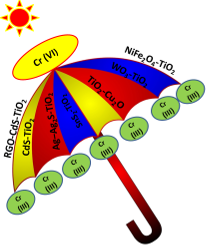


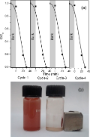
Heterostuctures of 4-(chloromethyl)phenyltrichlorosilane and 5,10,15,20-tetra(4-pyridyl)-21H,23H-porphine prepared on Si(111) using particle lithography: Nanoscale characterization of the main steps of nanopatterning
Beilstein J. Nanotechnol. 2018, 9, 1211–1219, doi:10.3762/bjnano.9.112
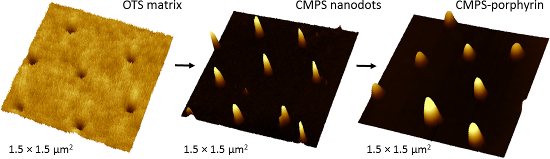
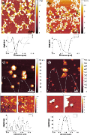
- . Nanostructures of CMPS formed within the nanoholes, to furnish spatially selective sites for binding porphyrins. The samples were then characterized with AFM to evaluate the height and morphology of the CMPS nanostructures that had formed within the nanoholes of OTS. The samples were then refluxed in a porphyrin
- matrix of OTS showed minimal areas of nonspecific adsorption. The AFM studies provide insight into the mechanism of the self-polymerization of CMPS as a platform for constructing porphyrin heterostructures. Keywords: atomic force microscopy (AFM); nanostructures; particle lithography; porphyrin; self
- triple-decker sandwich complex of phthalocyanine compounds prepared on graphite was studied using STM by Lei et al. [17]. A method of photocatalytic lithography was reported for making porphyrin surface structures that were applied for preparing protein arrays [18][19]. The assembly of porphyrins at


Adsorption of iron tetraphenylporphyrin on (111) surfaces of coinage metals: a density functional theory study
Beilstein J. Nanotechnol. 2017, 8, 2484–2491, doi:10.3762/bjnano.8.248
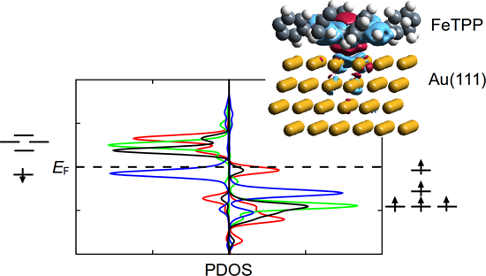
- ). While the LS ground state is mostly observed in sixfold-coordinated molecular complexes, the ground state of square planar fourfold-coordinated Fe porphyrin can be either IS or HS depending on the functional groups, characterization method or approximation used [2][3][4][5][6][7]. The main difference
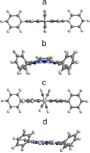
- higher by 0.11 eV for S4, and by 0.04 eV for D2d and C2h (Table 1). Note that the IS state was found as ground state in some other calculated results [6][7]. The difficulty for obtaining a proper description of the fundamental state of Fe porphyrin is well known. This is a result of the competition
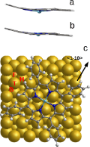
- ± 0.002 Å in the IS state) by comparison with the free molecule bond length. Furthermore, the side view of the central porphyrin macrocycle of the HS shows a deformation with the Fe atom pointing out of the plane formed by the four N atoms of the pyrrole rings (downwards to the surface) (Figure 5a). This




Towards molecular spintronics
Beilstein J. Nanotechnol. 2017, 8, 2464–2466, doi:10.3762/bjnano.8.245
- theoretical calculations on 2D porphyrin-based networks for spintronics [20]. We are also happy to host a review paper entitled “Spin-chemistry concepts for spintronics scientists” [21], which discusses the vast terminology differences and addresses the benefits that might arise from a stronger interaction
(Metallo)porphyrins for potential materials science applications
Beilstein J. Nanotechnol. 2017, 8, 1786–1800, doi:10.3762/bjnano.8.180
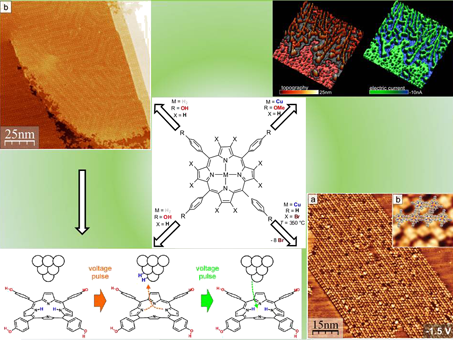
- , which enable a better potential to build molecular spintronic devices [4][5][6][7][8][9]. A crucial step and thus, a prerequisite for the reliable implementation of (metallo)porphyrin-based thin films in a device, is the understanding of the electrical response and local transport properties [10
- alternatives for device approaches such as sensors or organic field-effect transistors (OFETs) [57]. The compatibility of (metallo)porphyrin compounds with deposition techniques of organic molecules presents a great potential for the implementation and scaling down of porphyrins into current device fabrication
- processes, where thin films are required. Therefore, the understanding of the electrical transport properties of (metallo)porphyrin compounds (down to the nanoscale) is a crucial step for a reliable implementation in devices [10]. When performed at the nanoscale level, for example via spectroscopic







Three-in-one approach towards efficient organic dye-sensitized solar cells: aggregation suppression, panchromatic absorption and resonance energy transfer
Beilstein J. Nanotechnol. 2017, 8, 1705–1713, doi:10.3762/bjnano.8.171
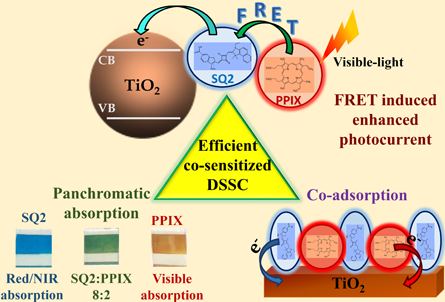
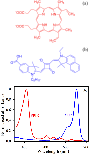
- , the two organic dyes chosen for co-sensitization are protoporphyrin IX (PPIX) and squarine (SQ2) because of their complementary absorption spectra. From the structure of PPIX (Figure 1a), it is evident that this sensitizer is a derivative of porphyrin, which is an integral part of many naturally



Two-dimensional carbon-based nanocomposites for photocatalytic energy generation and environmental remediation applications
Beilstein J. Nanotechnol. 2017, 8, 1571–1600, doi:10.3762/bjnano.8.159


Synthesis, spectroscopic characterization and thermogravimetric analysis of two series of substituted (metallo)tetraphenylporphyrins
Beilstein J. Nanotechnol. 2017, 8, 1191–1204, doi:10.3762/bjnano.8.121
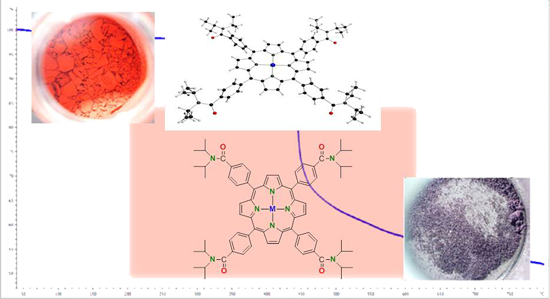
- Institute for Integrative Nanosciences, IFW Dresden, Helmholtzstrasse 20, 01069 Dresden, Germany 10.3762/bjnano.8.121 Abstract Subsequent treatment of H2TPP(CO2H)4 (tetra(p-carboxylic acid phenyl)porphyrin, 1) with an excess of oxalyl chloride and HNR2 afforded H2TPP(C(O)NR2)4 (R = Me, 2; iPr, 3) with
- molecular beam deposition (OMBD), which is attributed to their comparatively low thermal stability as determined by thermogravimetric analysis (TG) of selected representatives. Keywords: electrospray ionization mass spectrometry; IR spectroscopy; metalloporphyrin; porphyrin; thermogravimetry; UV–vis
- porphyrins of the type H2TPP(OH)4 (tetra(p-hydroxyphenyl)porphyrin) [6][7] and MTPP(OMe)4/H2TPP(OMe)4 (tetra(p-methoxyphenyl)porphyrin) (M = Cu [8][9], Ni [9]), cf. Figure 1. The properties of the metalloporphyrins are governed by the (transition) metal ions and the exocyclic moieties on the individual


Selective photodissociation of tailored molecular tags as a tool for quantum optics
Beilstein J. Nanotechnol. 2017, 8, 325–333, doi:10.3762/bjnano.8.35
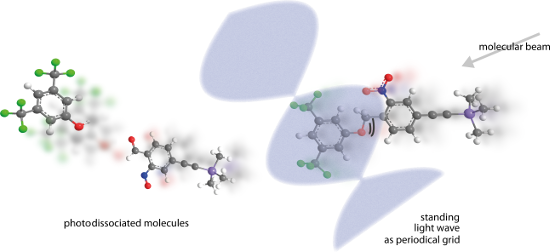
- clusters [10][11][12][13][14][15][16], up to tailored porphyrin derivatives as massive as 10 kDa [17]. In these experiments, every single molecule contained 810 atoms and yet it still needed to be described by a quantum wave function with a de Broglie wavelength of 300–500 fm. The molecular coherence


Ordering of Zn-centered porphyrin and phthalocyanine on TiO2(011): STM studies
Beilstein J. Nanotechnol. 2017, 8, 99–107, doi:10.3762/bjnano.8.11
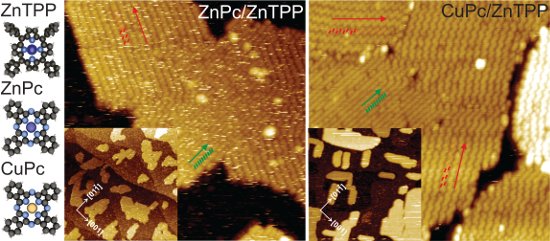
- the hydroxy groups on the titania surface. However, it was shown that the two equivalent N–H–Obr bonds are formed in the most favored configuration for the porphyrin molecules on TiO2(110) [28]. Formation and ordering of ZnPc/ZnTPP heterostructures In our recent work on CuPc molecule overlayers on
- models of the molecules used in the present study are shown in Figure 8. Basically, we used a Zn atom containing porphyrin and phthalocyanine molecules with a 4-fold symmetry, but for comparison, the Cu-based phthalocyanines are discussed too. Adsorption of ZnPc molecules on the TiO2(011)-(2×1) surface





