


Search results
Search for "pyrene" in Full Text gives 28 result(s) in Beilstein Journal of Nanotechnology.
Towards a scalable and accurate quantum approach for describing vibrations of molecule–metal interfaces
Beilstein J. Nanotechnol. 2011, 2, 427–447, doi:10.3762/bjnano.2.48
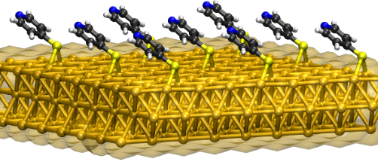
- efficient computational tool. We also present results on the vibrational spectrum of hydrogen fluoride on pyrene, on the thiophene molecule in the gas phase, and on small neutral gold clusters. Keywords: computational scaling; grid computing; molecule–metal interactions; periodic density functional theory
- to compute the anharmonic stretch frequency of hydrogen fluoride adsorbed on pyrene (Figure 6), a model system for the adsorption of HF on graphite. The potential energy surface (mode–mode representation) is computed at a moderate ab initio cost (MP2/SBK level of theory). This system is challenging
- as it contains 78 modes and the weak π–hydrogen bond requires correlated electronic structure methods. The computed harmonic frequency for the stretching mode of HF adsorbed on pyrene is 3661 cm−1 which is −112 cm−1 away from that of the free HF molecule, ω(HF) = 3773 cm−1 at this level of theory. At


Novel acridone-modified MCM-41 type silica: Synthesis, characterization and fluorescence tuning
Beilstein J. Nanotechnol. 2011, 2, 284–292, doi:10.3762/bjnano.2.33
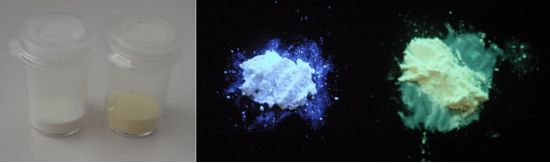
- compound prepared from pyrenesulfonyl chloride and APTES via sulfamidation immediately yielded a flocculent precipitate when brought in contact with TEOS. This observation might be explained by the combination of the pyrene moieties, forming strong π-bonding interactions, and the highly polar hydrogen
- bonding sulfonamide, causing the compound to become inhomogeneous in TEOS. As expected, the material obtained from the pyrene precursor showed a drastically decreased inner surface area of only 322 m2·g−1 and no ordered material structure at all. The CHNS analysis of MCM-ACR clearly indicates a slightly


On the reticular construction concept of covalent organic frameworks
Beilstein J. Nanotechnol. 2010, 1, 60–70, doi:10.3762/bjnano.1.8
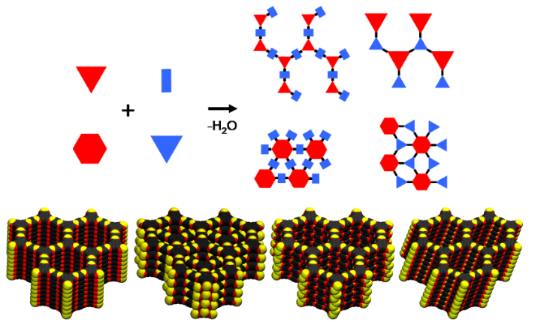
- -triyltriboronic acid (BTBA) and pyrene-2,7-diylboronic acid (PDBA) were considered as linkers a–e, respectively, with -B(OH)2 groups attached to each point of extension (Figure 5). Self-condensation of these building blocks result in the formation of B3O3 rings and the resultant COFs are those made of connector I




Other Beilstein-Institut Open Science Activities



