


Search results
Search for "release kinetics" in Full Text gives 48 result(s) in Beilstein Journal of Nanotechnology.
Engineered titania nanomaterials in advanced clinical applications
Beilstein J. Nanotechnol. 2022, 13, 201–218, doi:10.3762/bjnano.13.15
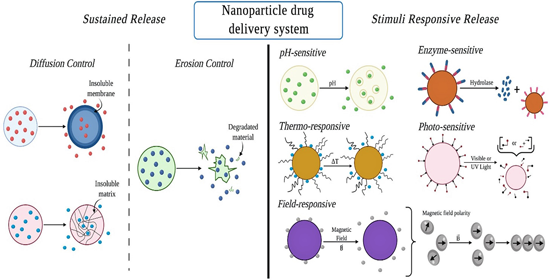
- demonstrated enhanced osseointegration [58]. Additionally, drug release kinetics and duration from titania nanotubes (TNTs) can be controlled by modifying nanotube dimensions, surface chemistry, or by a polymer coating on the TNT implant surface through dip coating or plasma polymerization. Losic and co


Biocompatibility and cytotoxicity in vitro of surface-functionalized drug-loaded spinel ferrite nanoparticles
Beilstein J. Nanotechnol. 2021, 12, 1339–1364, doi:10.3762/bjnano.12.99
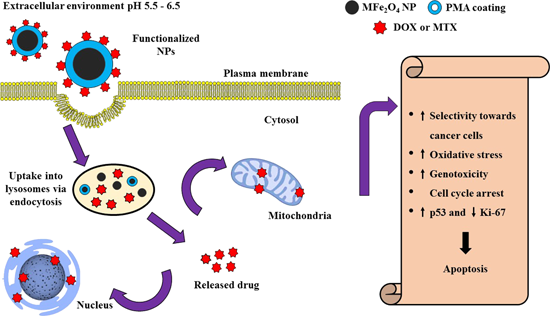
- applications [30]. All samples have lower PDI values (0.13–0.33) which indicates a uniform distribution of NPs in different dispersion media (Table 5). pH-dependent drug-loading and drug-release kinetics The UV–vis-based confirmation of drug (DOX and MTX) attachment to PMA-coated MFe2O4 (M = Fe, Co, Zn, Ni
- 0.5 mM of drugs for the loading on NPs. The encapsulated and loaded drug % for DOX and MTX are given in Table 6. For pH-dependent drug-release kinetics, drug-loaded NPs were dispersed in solutions with different pH values (1× PBS; pH 5.5, 6.5, and 7.4) at room temperature and the amount of release
- release kinetics Drug release kinetics of DOX- and MTX-loaded MFe2O4 (M = Fe, Co, Zn, Ni) NPs were studied at different pH values [68]. The nanoparticles were dispersed in PBS with pH values ranging from 5.5–7.4 and spectrophotometric data were measured at different time intervals (0, 1, 5, 10, 20, 40, 60





pH-driven enhancement of anti-tubercular drug loading on iron oxide nanoparticles for drug delivery in macrophages
Beilstein J. Nanotechnol. 2021, 12, 1127–1139, doi:10.3762/bjnano.12.84
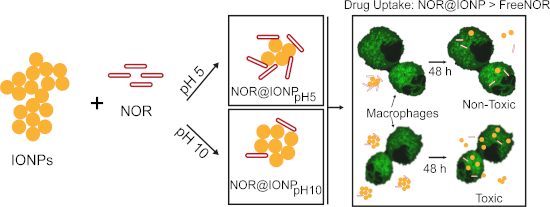
- the release kinetics and saturation amounts were identical in both the pH (5 or 7.4) of the release media, irrespective of whether NOR@IONPpH5 or NOR@IONPpH10 was used (Figure 5). Free drug is observed to have rapid release profile which saturates by 4 h. NOR@IONPpH5 displays an initial burst release



Use of nanosystems to improve the anticancer effects of curcumin
Beilstein J. Nanotechnol. 2021, 12, 1047–1062, doi:10.3762/bjnano.12.78
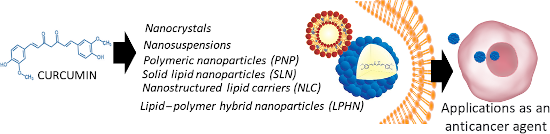
- constituted by lipophilic and hydrophilic polymers which contribute to increase their systemic mobility and residence time [86]. The advantages of this hybrid system include high encapsulation efficiency, well-defined release kinetics, well-tolerated serum stability, and well-triggered tissue, cellular, and


Comprehensive review on ultrasound-responsive theranostic nanomaterials: mechanisms, structures and medical applications
Beilstein J. Nanotechnol. 2021, 12, 808–862, doi:10.3762/bjnano.12.64


Plant growth regulation by seed coating with films of alginate and auxin-intercalated layered double hydroxides
Beilstein J. Nanotechnol. 2020, 11, 1082–1091, doi:10.3762/bjnano.11.93
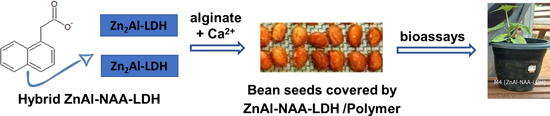
- the stacking of particles in the form of plates (Figure 4a,b). The ZnAl-NAA-LDH sample exhibits a surface in the form of compact plates (Figure 4c,d). In vitro experiments to prove the efficiency of ZnAl-NAA-LDH as a slow-release matrix were performed in solutions with pH 4 and pH 7, and the release
- kinetics was also studied. See Supporting Information File 1 for complete experimental data. Germination rate and germination speed index The seed germination rate results are shown in Figure 5. After the final germination period of 15 days, the control experiment showed the highest percentage of



Luminescent gold nanoclusters for bioimaging applications
Beilstein J. Nanotechnol. 2020, 11, 533–546, doi:10.3762/bjnano.11.42
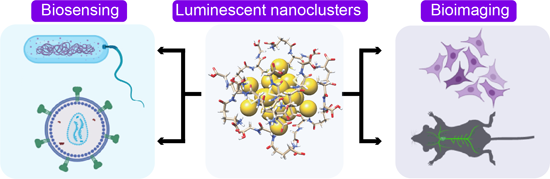
- endocytosis. The superparamagnetic nature of the PML-MF allowed for the magnetic targeting of the nanocarriers. Further, the ability of BSA to encapsulate drug molecules was explored to load doxorubicin (DPML-MF) in the nanocarriers. The release kinetics of doxorubicin studied at pH 7.4 and 4.4 were found to


Fully amino acid-based hydrogel as potential scaffold for cell culturing and drug delivery
Beilstein J. Nanotechnol. 2019, 10, 2579–2593, doi:10.3762/bjnano.10.249
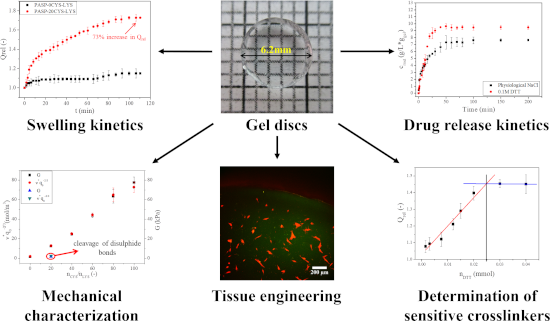
- established. Using metoprolol as a model drug, cell proliferation and drug release kinetics were studied at different LYS contents and in the presence of thiol groups. The optimal ratio of cross-linkers for the proliferation of periodontal ligament cells was found to be 60−80% LYS and 20−40% CYS. The
- well as biocompatibility and biodegradability are also fundamental features of polymers developed for numerous medical applications [11][12]. Polymer hydrogels are capable of releasing physically entrapped drug molecules. The release kinetics of the loaded drug molecules depend significantly on the
- improve the pharmacological and therapeutic properties of various drugs [28]. By applying such microcarriers, the drug release kinetics can be controlled. Among the anionic amino acids, glutamic acid was previously used for the preparation of polymer-based microcarriers [33]. However, there are only


Design of a nanostructured mucoadhesive system containing curcumin for buccal application: from physicochemical to biological aspects
Beilstein J. Nanotechnol. 2019, 10, 2304–2328, doi:10.3762/bjnano.10.222
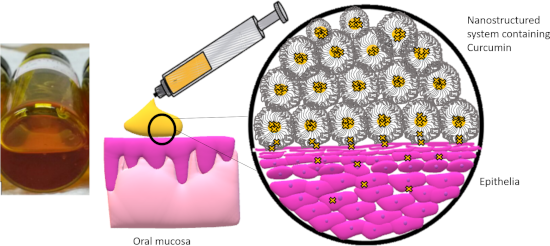
- used to evaluate the release mechanism of CUR. Here, the release exponent (n), which determines if the drug release mechanism is Fickian (Case I) or non-Fickian (transport Case II, anomalous or super case II) revealed an n value of 0.6517. The nanostructured systems displayed anomalous release kinetics


Incorporation of doxorubicin in different polymer nanoparticles and their anticancer activity
Beilstein J. Nanotechnol. 2019, 10, 2062–2072, doi:10.3762/bjnano.10.201
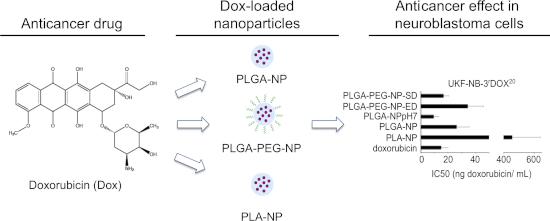
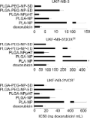
- preparation by solvent displacement led to the smallest nanoparticles. In PLGA nanoparticles, the drug load could be optimised using solvent displacement at pH 7 reaching 53 µg doxorubicin/mg nanoparticle. These PLGA nanoparticles displayed sustained doxorubicin release kinetics compared to the more burst
- -like kinetics of the other preparations. In neuroblastoma cells, doxorubicin-loaded PLGA-PEG nanoparticles (presumably due to their small size) and PLGA nanoparticles prepared by solvent displacement at pH 7 (presumably due to their high drug load and superior drug release kinetics) exerted the
- [50]. To optimise the loading efficiency and drug release kinetics of PLGA nanoparticles the pH value of the stabiliser solution used during nanoparticle preparation was increased to 7. At this pH value, doxorubicin exists in the more lipophilic deprotonated form [51]. The use of PVA solution at pH 7





Doxorubicin-loaded human serum albumin nanoparticles overcome transporter-mediated drug resistance in drug-adapted cancer cells
Beilstein J. Nanotechnol. 2019, 10, 1707–1715, doi:10.3762/bjnano.10.166
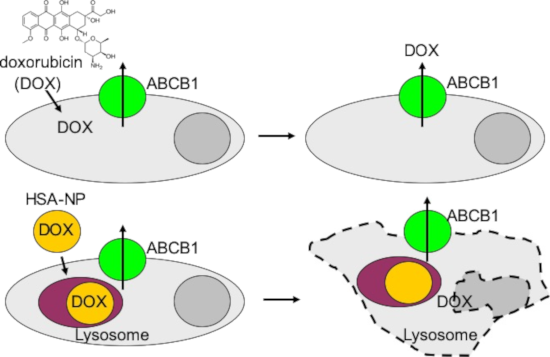
- paclitaxel with albumin may differ from that of doxorubicin. Hence, variations in drug binding and drug release kinetics may be responsible for this difference. Despite the prominent role of ABCB1 as a drug resistance mechanism, attempts to exploit it as drug target have failed so far, despite the


Layered double hydroxide/sepiolite hybrid nanoarchitectures for the controlled release of herbicides
Beilstein J. Nanotechnol. 2019, 10, 1679–1690, doi:10.3762/bjnano.10.163
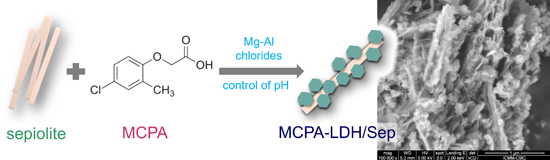
- , producing stable systems even using consolidation temperatures as low as 60 °C. The developed hybrid nanoarchitectures have been tested in vitro as systems for the controlled release of the incorporated organic species MCPA. In vitro tests carried out in deionized water showed that the herbicide release
- kinetics depended on the nanoarchitecture composition and the method of preparation. The materials with higher LHD content showed slower release rates. The herbicide could be completely released from the hybrid nanoarchitectures, confirming their suitability for the controlled release of pesticides in


Biomimetic and biodegradable cellulose acetate scaffolds loaded with dexamethasone for bone implants
Beilstein J. Nanotechnol. 2018, 9, 1986–1994, doi:10.3762/bjnano.9.189
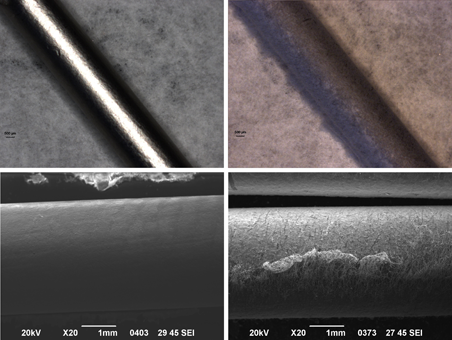
- . Cytotoxicity studies were performed by using MTT assay, methylene-blue staining and SEM fixation and showed very good cell adhesion and proliferation, indicating the cytocompatibility of these fibrous scaffolds. Drug-release kinetics was measured for the evaluation of a controllable and sustained release of
- is created [23]. Grounded aluminum foils, glass substrates and also coatings for orthopaedic pins were used as collectors to carry out the necessary studies. Drug-release kinetics and degradation study of scaffolds Degradation study was carried out in order to evaluate the mass loss of polymer and
- study was examined in both pure CA and drug-loaded CA scaffolds over a period of 150 days to determine how the degradation rate is affected by the presence of the drug. Finally, release kinetics of drug-loaded CA electrospun scaffolds was measured. Degradation study: First, the electrospun samples were


BN/Ag hybrid nanomaterials with petal-like surfaces as catalysts and antibacterial agents
Beilstein J. Nanotechnol. 2018, 9, 250–261, doi:10.3762/bjnano.9.27
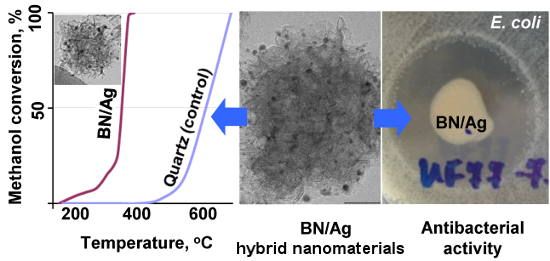
- /Ag HNMs obtained via CVD and UV decomposition of AgNO3. Both samples demonstrated a sustained ion release over 14 days and similar ion release kinetics. During the first 3 h, approximately 25 ppb of Ag+ ions were released, after this, the Ag+ ion leaching gradually slowed down. The average rate of Ag





Chitosan-based nanoparticles for improved anticancer efficacy and bioavailability of mifepristone
Beilstein J. Nanotechnol. 2016, 7, 1861–1870, doi:10.3762/bjnano.7.178
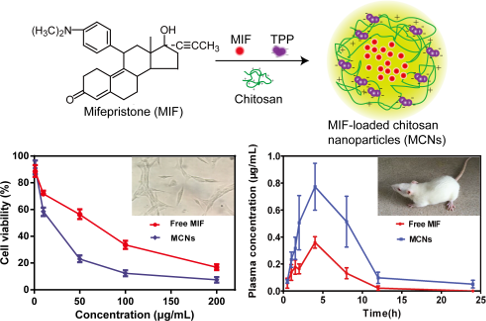
- loading capacity (DL). MCNs prepared with the optimum conditions resulted in spherical particles with an average size of 200 nm. FTIR and XRD spectra verified that MIF was successfully encapsulated in CNs. The EE and DL of MCNs determined by HPLC were 86.6% and 43.3%, respectively. The in vitro release
- kinetics demonstrated that MIF was released from CNs in a sustained-release manner. Compared with free MIF, MCNs demonstrated increased anticancer activity in several cancer cell lines. Pharmacokinetic studies in male rats that were orally administered MCNs showed a 3.2-fold increase in the area under the


Nanofibers for drug delivery – incorporation and release of model molecules, influence of molecular weight and polymer structure
Beilstein J. Nanotechnol. 2015, 6, 1939–1945, doi:10.3762/bjnano.6.198
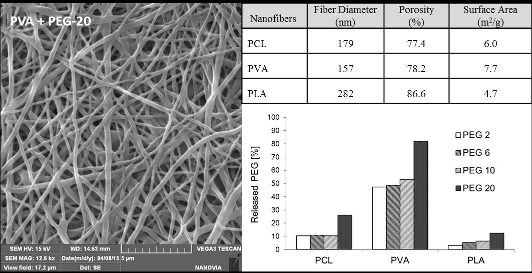
- ; nanofibrous carriers; needle-free electrospinning; release kinetics; Introduction To date, numerous drug delivery systems have been developed, such as hydrogels that carry drugs or highly sophisticated electronic microchips [1][2]. The required release rates of the therapeutic agents depend on the medicinal
- concluded that the release kinetics are given by effects discussed above. Despite attempts to ensure the similar nanofibrous structures, the varied morphology may be also responsible for the variation in the PEG release rate. The release of model molecules directly correlated with the specific surface areas
- polymers and PEG of various molecular weights leads to materials with significantly different release kinetics of PEGs. These basic findings on relationships between PEG size and polymer structure on release kinetics were done in respect that even PEG serves as additive compound it has main effect on the



Protein corona – from molecular adsorption to physiological complexity
Beilstein J. Nanotechnol. 2015, 6, 857–873, doi:10.3762/bjnano.6.88
- consequence, the delicate interplay between the relative timescales of particle transport and dissolution/release kinetics can well govern NP toxicity. While this factor further complicates a fundamental understanding of NP toxicity, the right time-scale ratio of the participating effects can be a critically



Hematopoietic and mesenchymal stem cells: polymeric nanoparticle uptake and lineage differentiation
Beilstein J. Nanotechnol. 2015, 6, 383–395, doi:10.3762/bjnano.6.38
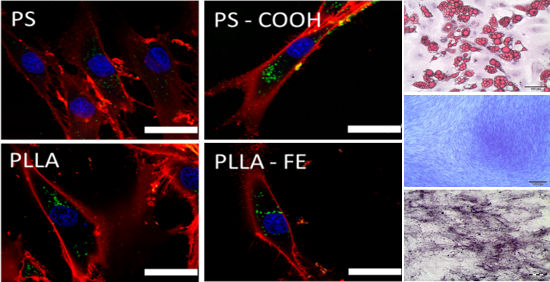
- intracellular depot of a drug or a nucleic acid construct with slow release kinetics. Thus, the intended nanoparticles should be tested for toxicity and the nanomaterial as a carrier ideally should not influence cellular functions itself, that is, only the payload should exert such an effect. Once introduced


Release behaviour and toxicity evaluation of levodopa from carboxylated single-walled carbon nanotubes
Beilstein J. Nanotechnol. 2015, 6, 243–253, doi:10.3762/bjnano.6.23
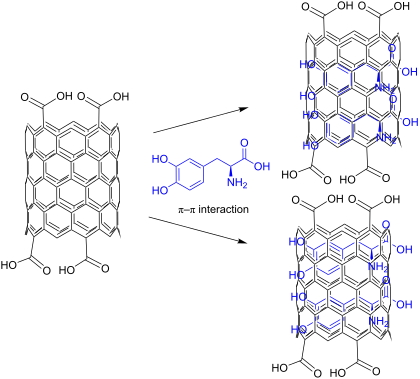
- exhibited favourable, slow, sustained-release characteristics as a drug carrier with a release period over more than 20 h. The results obtained from the drug release studies of LD at different pH values showed that the LD-loaded nanohybrid is pH activated. The release kinetics of LD from SWCNT–COOH were
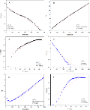
- therapeutic effect [26] and may benefit the treatment of PD. Release kinetics of LD To further analyse the release kinetics of LD from the SWCNT–COOH nanocarrier, pseudo-first-order (Equation 1), pseudo-second-order (Equation 2) and a parabolic diffusion equation (Equation 3) were adopted [3][27][28] as




Liquid fuel cells
Beilstein J. Nanotechnol. 2014, 5, 1399–1418, doi:10.3762/bjnano.5.153
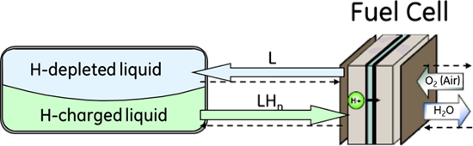
- ]. Hydrogen can be reversibly stored in metallic hydrides, e.g., intermetallic phases AB5 and AB3 [16], or complex hydrides, e.g., metal borohydrides M(BH4)n [17]. However, good hydrogen release kinetics and reversibility are inversely correlated with the storage capacity. Dehydrogenation of metal hydrides

Nanodiamond-DGEA peptide conjugates for enhanced delivery of doxorubicin to prostate cancer
Beilstein J. Nanotechnol. 2014, 5, 937–945, doi:10.3762/bjnano.5.107
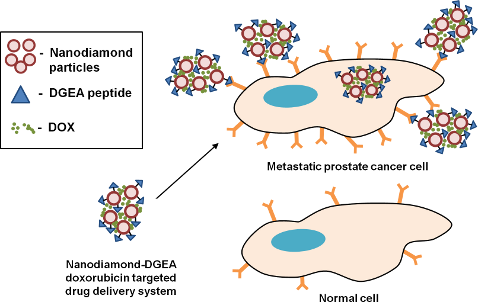
- drug concentrations, DOX efficacy was enhanced. The quantitative analysis of DOX release kinetics and cellular internalization are limitations of this study and should be the subject of future studies. Conclusion In this study, a novel targeted drug delivery system consisting of NDs (drug delivery


Injection of ligand-free gold and silver nanoparticles into murine embryos does not impact pre-implantation development
Beilstein J. Nanotechnol. 2014, 5, 677–688, doi:10.3762/bjnano.5.80
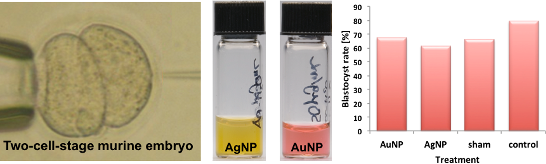
- µg/mL] AgNP dispersion was added to a blastomere with a volume of 90 pL [56]. The chosen concentration of Ag+-ions was approximated based on previously reported ion release kinetics of silver colloids in aqueous solution [57]. Control co-incubations of embryos with equimolar KNO3 showed no effect




Near-infrared dye loaded polymeric nanoparticles for cancer imaging and therapy and cellular response after laser-induced heating
Beilstein J. Nanotechnol. 2014, 5, 313–322, doi:10.3762/bjnano.5.35
- compared to the free form [24]. Our release kinetics and pharmacokinetics study results [24] seem to indicate that the NP formulation stabilizes IR820, protecting it from degradation and allowing for longer detection windows. Discussion The MW of PGMD polymer is 3000 Da, which is expected for polymers





