Search results
Search for "self-organization" in Full Text gives 69 result(s) in Beilstein Journal of Nanotechnology.
Charged particle single nanometre manufacturing
Beilstein J. Nanotechnol. 2018, 9, 2855–2882, doi:10.3762/bjnano.9.266
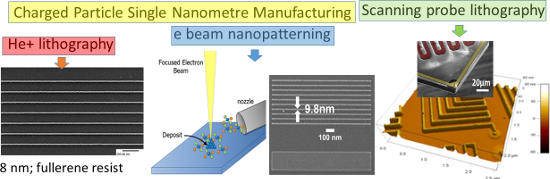
- structuring techniques are required. Among several candidates, molecular self-assembly and self-organization of structures represent the so-called bottom-up approach. Nanoindentation, thermal scanning probe lithography, local oxidation lithography, dip-pen lithography, extreme UV lithography or X-ray


Biomimetic surface structures in steel fabricated with femtosecond laser pulses: influence of laser rescanning on morphology and wettability
Beilstein J. Nanotechnol. 2018, 9, 2802–2812, doi:10.3762/bjnano.9.262
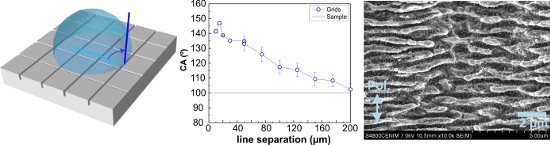
- surface topography needs to be mimicked, but often also a specific function of the structure. An alternative approach to laser direct writing of complex structures is the generation of laser-induced periodic surface structures (LIPSS), which is based on directed self-organization of the material and
- self-organization experiments in steel exploiting spike structure formation upon a single laser scan have been reported in [23], showing good performance for fluid transport applications but less similarity in morphology to the bug cuticle. The results obtained at = 0.2 J/cm2 are shown in Figure 2B
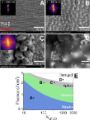
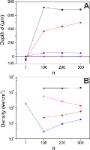
- case and underlines the interest of such high values for the fabrication of new surface morphologies based on self-organization mechanisms. Like for the structures observed at lower fluence, the cones have a smooth tip that is possibly related to heat accumulation. For rescanning at n = 100, similar



Variation of the photoluminescence spectrum of InAs/GaAs heterostructures grown by ion-beam deposition
Beilstein J. Nanotechnol. 2018, 9, 2794–2801, doi:10.3762/bjnano.9.261
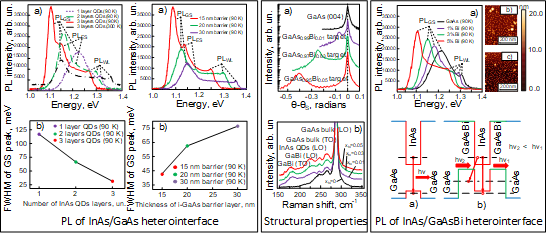
- QDs, their sizes and density will be determined by the self-organization on the new growth surface, which can cause a fluctuation in QD sizes during vertical stacking and a degradation of the structural and optical properties of the InAs/GaAs heterostructures. The results of the investigations showed
- of this. Bi has a large atomic size, so it creates elastic strain in the GaAs lattice and thus influences the QD self-organization. Consequently, using Bi as a surfactant on the GaAs growth surface changes the kinetics of In surface diffusion during ion-beam deposition. Unchanged is the circumstance


Block copolymers for designing nanostructured porous coatings
Beilstein J. Nanotechnol. 2018, 9, 2332–2344, doi:10.3762/bjnano.9.218
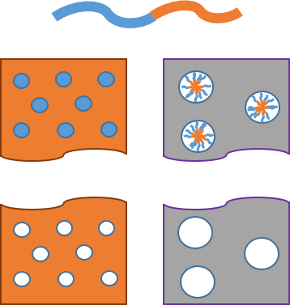
- mild conditions can easily cleave the linkage between the blocks without affecting the block’s self-organization. Based on almost the same principle, nanoporous thin films with well-ordered cylindrical pores were obtained by preparing metallo-supramolecular block copolymers (where the two different
- systems is the polar affinity between titania and the PEO domains (this is another advantage of this class of BCs, namely PS-b-PEO). By changing the titania precursor (i.e., TTIP) and the BC volume ratio, it was possible to drive the self-organization of the PEO domains, and consequently, the titania


Nanoporous silicon nitride-based membranes of controlled pore size, shape and areal density: Fabrication as well as electrophoretic and molecular filtering characterization
Beilstein J. Nanotechnol. 2018, 9, 1390–1398, doi:10.3762/bjnano.9.131
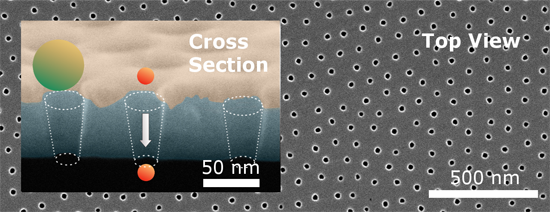
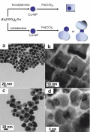
- . 12 nm) are deposited on the silicon oxide layer with a quasi-hexagonal order by self-organization. This is realized by dip-coating from a solution of Au salt-loaded PS–P2VP diblock copolymer micelles directly on the upper membrane face (coating is done without preceding deposition of appropriate
- self-organization of Au-loaded diblock copolymer micelles followed by plasma treatments. (b) Applying a photochemical growth process the Au NP size can be enlarged in a controlled way. (c) The resulting NP mask is exploited to etch nanopillars by RIE, (d) a Cr layer (black) is evaporated, (e) and the


Tuning adhesion forces between functionalized gold colloidal nanoparticles and silicon AFM tips: role of ligands and capillary forces
Beilstein J. Nanotechnol. 2018, 9, 660–670, doi:10.3762/bjnano.9.61
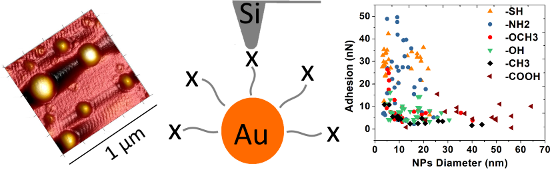
- forces between NPs and Si tips, apart from other molecular interactions such as H-bonding and capillary forces. SAM packing density and adhesion In addition to the previously discussed factors, packing density of SAM on the surface has also an important role in adhesion [41]. The self-organization and


Liquid-crystalline nanoarchitectures for tissue engineering
Beilstein J. Nanotechnol. 2018, 9, 205–215, doi:10.3762/bjnano.9.22
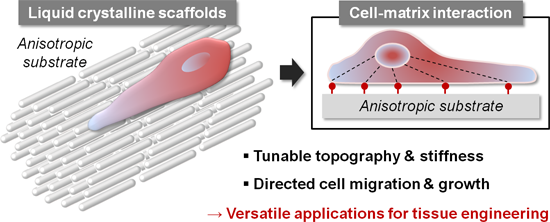
- modern technology and industry ranging from electronic display devices to optical communication networks [2][3][4], thanks to their softness and flexibility, rapid molecular self-organization/reorganization, and sensitive responsivity to external stimuli [5]. For this reason, many researchers have been
- are core materials in the living body [16]. For example, cell membranes [17] and chromosomes [18][19] exhibit LC-like phases, and some pathological states are closely related to LC formation processes, such as those of amyloid fibrils [20]. Consequently, complex self-organization dynamics of living
- systems have been modeled and analyzed as LC structures. LCs can be not only versatile model systems for understanding self-organization mechanisms in biological phenomena, but also robust engineering platforms to create novel functional nanomaterials and microdevices for tissue repair. Tissue mimicry is


Process-specific mechanisms of vertically oriented graphene growth in plasmas
Beilstein J. Nanotechnol. 2017, 8, 1658–1670, doi:10.3762/bjnano.8.166
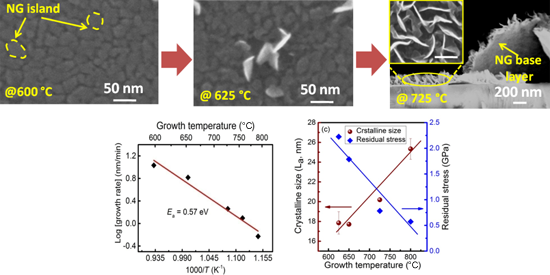
- water purification and supercapacitive performance. Hence, the aim of research on VGNs is to achieve a pre-determined structure for suitable applications, which depends on the hierarchical organization of nanostructures. Such self-organization can be realized by controlling the process parameters during
- nanostructures in plasmas are C2 and CH, as well as atomic and molecular hydrogen [26]. The rapid nucleation of nanoislands, self-organization and coalescence between them take place through direct adsorption and surface diffusion of carbon-containing species on the substrate surface [24]. Hence, the commonly


A nanocomplex of C60 fullerene with cisplatin: design, characterization and toxicity
Beilstein J. Nanotechnol. 2017, 8, 1494–1501, doi:10.3762/bjnano.8.149
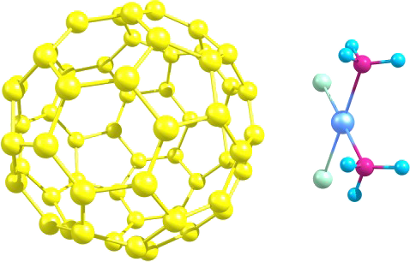
- ., 25, 98693 Ilmenau, Germany 10.3762/bjnano.8.149 Abstract The self-organization of C60 fullerene and cisplatin in aqueous solution was investigated using the computer simulation, dynamic light scattering and atomic force microscopy techniques. The results evidence the complexation between the two

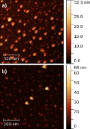


Near-field surface plasmon field enhancement induced by rippled surfaces
Beilstein J. Nanotechnol. 2017, 8, 956–967, doi:10.3762/bjnano.8.97
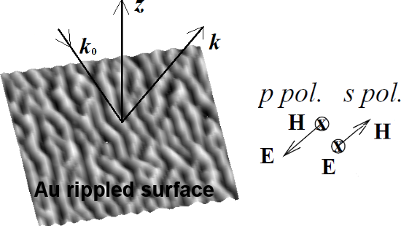
- processes or self-organization have been demonstrated to be an excellent and relatively low-cost alternative, allowing maskless patterning of macroscopic surface areas [18]. Many of such techniques lead to typical patterns including fractal surfaces. Regular, or nearly regular, nanoscale ripples have width


Recombinant DNA technology and click chemistry: a powerful combination for generating a hybrid elastin-like-statherin hydrogel to control calcium phosphate mineralization
Beilstein J. Nanotechnol. 2017, 8, 772–783, doi:10.3762/bjnano.8.80
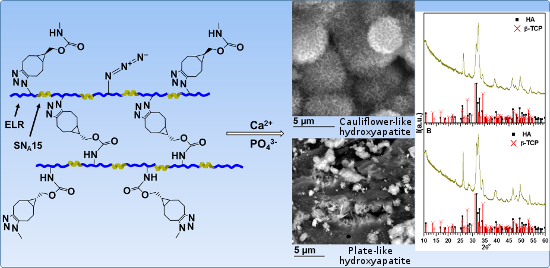
- polymers (ELPs) or recombinamers (ELRs), which are excellent example of materials that exhibit self-assembly and self-organization [27][28][29]. The majority of ELPs or ELRs consist of simple amino-acid consensus epitopes that are also present in natural elastin, such as (VPGXG)* (see Table 1 for details



Physics, chemistry and biology of functional nanostructures III
Beilstein J. Nanotechnol. 2017, 8, 590–591, doi:10.3762/bjnano.8.63

- targeted applications. In the present Thematic Series a bright spectrum of such targeted functional nanostructures is presented demonstrating the unique possibilities of engineering at the nanometer scale. The self-organization of nanoparticles, nanowires or nanotubes and the introduction of those
Nano- and microstructured materials for in vitro studies of the physiology of vascular cells
Beilstein J. Nanotechnol. 2016, 7, 1620–1641, doi:10.3762/bjnano.7.155
- computers, such as methods using the self-organization of macromolecular systems. Computer-assisted methods, also known as solid free-form or rapid prototyping, initally require the design of a computer model with a special software. The second step is then the realization of the computer model with a

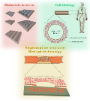


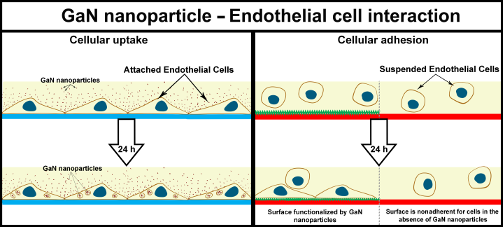
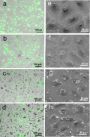
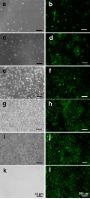
Viability and proliferation of endothelial cells upon exposure to GaN nanoparticles
Beilstein J. Nanotechnol. 2016, 7, 1330–1337, doi:10.3762/bjnano.7.124
- of premature tissue damage and dispensing of medications. Nature supplies many examples of biomimetic materials in the form of organic/inorganic components such as bone, teeth, and muscle. Based on biological examples, new and innovative biological materials can be designed through self-organization



Optical absorption signature of a self-assembled dye monolayer on graphene
Beilstein J. Nanotechnol. 2016, 7, 862–868, doi:10.3762/bjnano.7.78
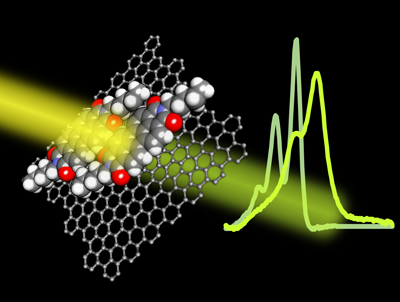
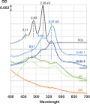
- -3,4,9,10-diimide (PTCDI); scanning tunnelling microscopy; self-assembly; self-organization; Introduction Close-packed assemblies of dye molecules exhibit drastically altered photonic properties as compared with the isolated or diluted species [1]. These changes find their origin in near-field optical



High-resolution noncontact AFM and Kelvin probe force microscopy investigations of self-assembled photovoltaic donor–acceptor dyads
Beilstein J. Nanotechnol. 2016, 7, 799–808, doi:10.3762/bjnano.7.71
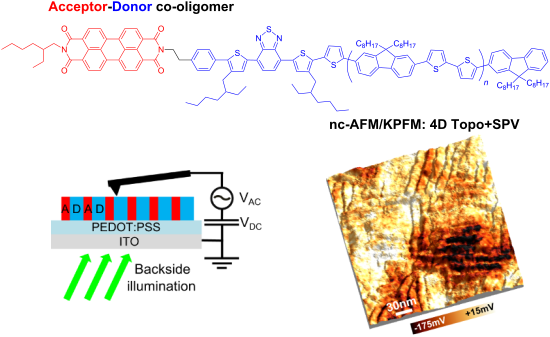
- . The topographic images reveal a lamellar self-organization with modulation periodicities (mean values deduced from FFT images, not shown) of ≈9.5 and 15 nm for AD1 and AD3, respectively. These values are fully consistent with the structural model proposed by Schwarz et al. [19] for standing A–D


Self-organization of gold nanoparticles on silanated surfaces
Beilstein J. Nanotechnol. 2015, 6, 2345–2353, doi:10.3762/bjnano.6.242
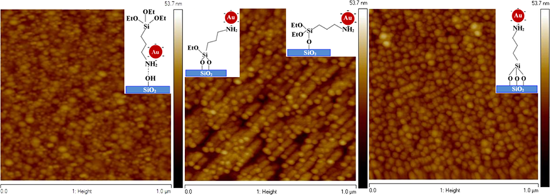
- of Oman Functional Materials Division, School of Information and Communication Technology, KTH Royal Institute of Technology, Isafjordsgatan 22, SE-164 40 Kista Stockholm, Sweden 10.3762/bjnano.6.242 Abstract The self-organization of monolayer gold nanoparticles (AuNPs) on 3
- -aminopropyltriethoxysilane (APTES)-functionalized glass substrate is reported. The orientation of APTES molecules on glass substrates plays an important role in the interaction between AuNPs and APTES molecules on the glass substrates. Different orientations of APTES affect the self-organization of AuNps on APTES
- are fundamentally important and also can be applied for designing and modelling of surface plasmon resonance based sensor applications. Keywords: 3-aminopropyletriethoxysilane; electrostatic interaction; functionalization; gold nanoparticles; self-assembled monolayer; self-organization; Introduction


Template-controlled mineralization: Determining film granularity and structure by surface functionality patterns
Beilstein J. Nanotechnol. 2015, 6, 1763–1768, doi:10.3762/bjnano.6.180
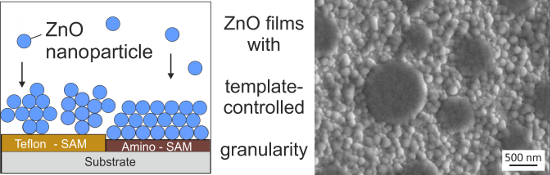
- of the nanoparticles, which nucleate in solution and subsequently deposit on the functionalized substrate. Keywords: bioinspired synthesis; polymer-blend lithography; surface functionality; template-controlled self-assembly; zinc oxide thin film; Introduction Self-organization plays an important
- role in nature – and more and more in technology [1][2]. Increasingly complex structures can evolve from using principles of self-organization in a bottom-up approach rather than from lithography-based top-down approaches. The key issue for intelligent self-assembly of complex structures is the design

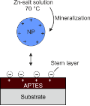
Self-assembly of nanostructures and nanomaterials
Beilstein J. Nanotechnol. 2015, 6, 1397–1398, doi:10.3762/bjnano.6.144
- processes building on the natural self-organization of matter should therefore be conceived and developed, along with adequate characterization methods in order to allow for their application in innovative devices. Such self-organization processes are already implemented in various materials such as
- construction. Research on self-assembled nanostructures encompasses fundamental issues in chemical synthesis, crystal growth and self-organization of 0D, 1D and 2D nanostructures, nanopatterning, lithographic techniques, nanocharacterization, scaling of materials properties down to molecular dimensions
Magnetic properties of self-organized Co dimer nanolines on Si/Ag(110)
Beilstein J. Nanotechnol. 2015, 6, 777–784, doi:10.3762/bjnano.6.80
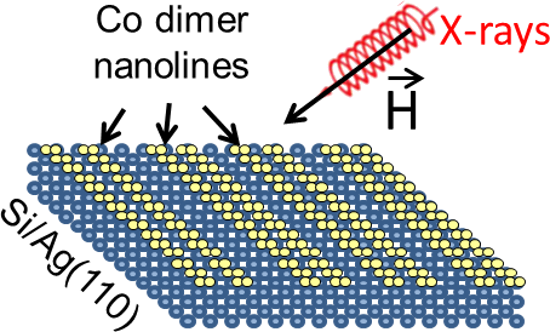
- Co layer exhibits an enhanced magnetization, strongly suggesting a ferromagnetic ordering with an in-plane easy axis of magnetization, which is perpendicular to the Co nanolines. Keywords: nanomagnetism; one-dimensional nanostructures; scanning tunneling microscopy (STM); self-organization; X-ray


The effect of surface charge on nonspecific uptake and cytotoxicity of CdSe/ZnS core/shell quantum dots
Beilstein J. Nanotechnol. 2015, 6, 281–292, doi:10.3762/bjnano.6.26
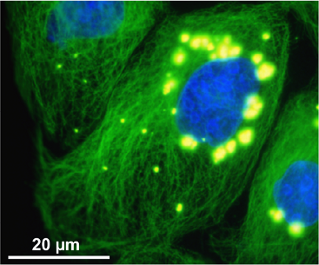
- -Planck-Institute for Dynamics and Self-Organization (MPIDS), Laboratory for Fluid Dynamics, Pattern Formation and Biocomplexity, Am Fassberg 17, 37077 Goettingen, Germany 10.3762/bjnano.6.26 Abstract In this work, cytotoxicity and cellular impedance response was compared for CdSe/ZnS core/shell quantum



Mechanical properties of MDCK II cells exposed to gold nanorods
Beilstein J. Nanotechnol. 2015, 6, 223–231, doi:10.3762/bjnano.6.21
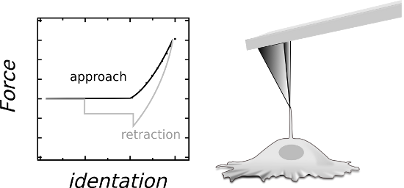
- , 50931 Cologne, Germany Max-Planck-Institute for Dynamics and Self-Organization (MPIDS), Laboratory for Fluid Dynamics, Pattern Formation and Biocomplexity, Am Fassberg 17, 37077 Goettingen, Germany Institute of Physical Chemistry, Duesbergweg 10–14, University of Mainz, 55128 Mainz, Germany 10.3762


Mammalian cell growth on gold nanoparticle-decorated substrates is influenced by the nanoparticle coating
Beilstein J. Nanotechnol. 2014, 5, 2479–2488, doi:10.3762/bjnano.5.257
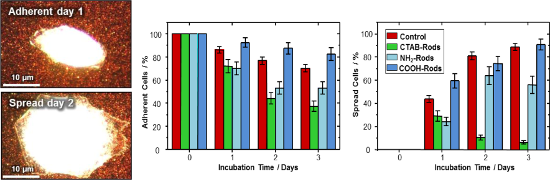
- , 47057 Duisburg, Germany Laboratory for Fluid Dynamics, Pattern Formation and Biocomplexity, Max Planck Institute for Dynamics and Self-Organization (MPIDS), Am Fassberg 17, 37077 Göttingen, Germany Institute of Physical Chemistry, University of Göttingen, Tammannstraße 6, 37077 Göttingen, Germany, Max


Inorganic Janus particles for biomedical applications
Beilstein J. Nanotechnol. 2014, 5, 2346–2362, doi:10.3762/bjnano.5.244
- approach to polymer-based particles with two distinct phases is the simultaneous electrohydrodynamic jetting of polymer solutions under the influence of an electrical field (Figure 3f) [28]. Further, Janus particles are in focus of current research due to their self-organization into complex and well






Properties of plasmonic arrays produced by pulsed-laser nanostructuring of thin Au films
Beilstein J. Nanotechnol. 2014, 5, 2102–2112, doi:10.3762/bjnano.5.219
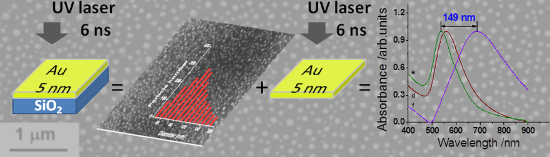
- films is followed by examples of experimental data and a discussion of our results on the characterization of structural and optical properties of gold nanostructures. These consist of partially spherical or spheroidal nanoparticles (NPs) which have a size distribution (80 ± 42 nm) and self-organization
- . Keywords: Au nanostructures; laser dewetting; laser nanostructuring; plasmonic enhancement; self-organization; Introduction The capability of pulsed-laser beams to deliver energy to a precise space at a precise time stimulated developments of laser technology and a variety of applications in scientific
- light harvesting, spintronics and catalysis. The reproducibly functionalized nanostructures are documented by numerous experimental data and the scaling-up potential of this technique is an additional advantage from the perspective of possible applications [6][7][8]. The self-organization of structures