


Search results
Search for "sensing applications" in Full Text gives 93 result(s) in Beilstein Journal of Nanotechnology.
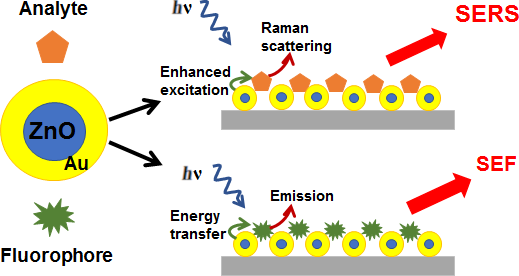
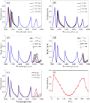
Zinc oxide nanostructures for fluorescence and Raman signal enhancement: a review
Beilstein J. Nanotechnol. 2022, 13, 472–490, doi:10.3762/bjnano.13.40


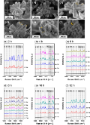


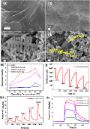
A chemiresistive sensor array based on polyaniline nanocomposites and machine learning classification
Beilstein J. Nanotechnol. 2022, 13, 411–423, doi:10.3762/bjnano.13.34
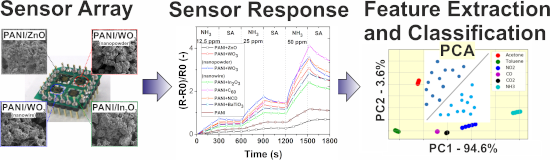
- powerful tool to address the abovementioned drawbacks is the implementation of a multisensor array combined with appropriate pattern recognition and classification tools [6]. Recently, classification in gas sensing applications has been carried out by principal component analysis to identify the difference
- combination for E-nose and gas sensor applications. The usage of a powerful classification system based on statistical analysis and machine learning algorithms is a prime need for sensing applications in different fields, such as gas detection and monitoring [22][23], food industry [24], and agriculture [25


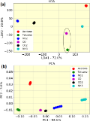
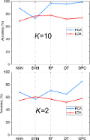


Morphology-driven gas sensing by fabricated fractals: A review
Beilstein J. Nanotechnol. 2021, 12, 1187–1208, doi:10.3762/bjnano.12.88
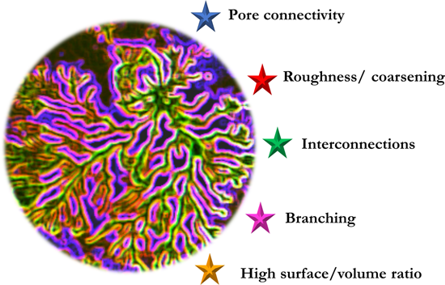
- geometries offer many reasons to be tested for sensing applications. This section reviews the formation of fab-fracs, sorted by the material of the structures, and their performance in gas sensing applications by comparing the fractal dimension, D. Wherever the fractal dimension has not been reported, these
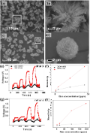
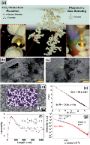
- to some excellent articles on hierarchical gas sensors that address such geometries [8][30][33][37]. Tin oxide-based fractals Yin et al. reported SnO2 nanoparticles with and without platinum (Pt) decoration synthesized using a sol–gel hydrothermal technique for gas sensing applications [63]. Figure
- ; J. Li; Q. Wang; F.-Y. Wu; D. Dastan; D. Wang; H. Garmestani; X.-M. Wang; Ş. Ţălud, “A highly sensitivity and selectivity Pt-SnO2 nanoparticles for sensing applications at extremely low level hydrogen gas detection”, pages no. 229–236, Copyright (2019), with permission from Elsevier. This content is

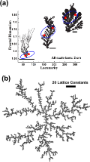


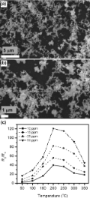







The role of deep eutectic solvents and carrageenan in synthesizing biocompatible anisotropic metal nanoparticles
Beilstein J. Nanotechnol. 2021, 12, 924–938, doi:10.3762/bjnano.12.69
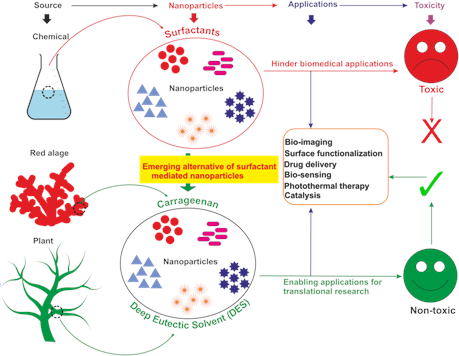
- and smartphone-based sensing applications [3][4][5]. Several other advanced sensing applications have emerged, such as battery-free and wireless devices, providing on-site results [6][7]. NIR absorption is exclusively exhibited by plasmonic anisotropic nanoparticles, enabling diagnostic imaging within


Recent progress in magnetic applications for micro- and nanorobots
Beilstein J. Nanotechnol. 2021, 12, 744–755, doi:10.3762/bjnano.12.58
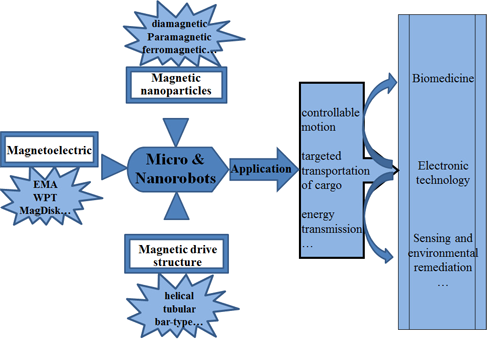
- enabled actuation, control, and observation of the FMSM. In most mobile sensing applications, microrobots are driven by chemical fuels such as hydrogen peroxide (H2O2) and surfactants. In contrast, magnetic drives have good biocompatibility and external power supply. For example, a porous microelectrode


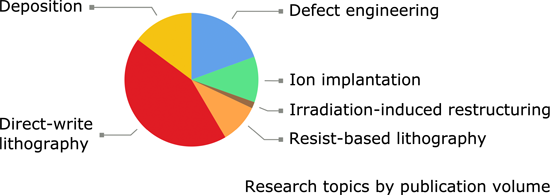
A review of defect engineering, ion implantation, and nanofabrication using the helium ion microscope
Beilstein J. Nanotechnol. 2021, 12, 633–664, doi:10.3762/bjnano.12.52


A stretchable triboelectric nanogenerator made of silver-coated glass microspheres for human motion energy harvesting and self-powered sensing applications
Beilstein J. Nanotechnol. 2021, 12, 402–412, doi:10.3762/bjnano.12.32
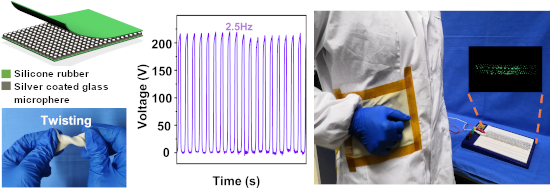
- Information File 6), the S-TENG can light up 235 LEDs by the continuously padding the device in single-electrode contact-separation mode. The S-TENG also can be placed on elbow and knee joints and harvest body motion energy for wearable devices [25]. Sensing applications The S-TENG provides an effective power

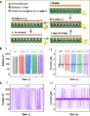


Piezoelectric sensor based on graphene-doped PVDF nanofibers for sign language translation
Beilstein J. Nanotechnol. 2020, 11, 1655–1662, doi:10.3762/bjnano.11.148
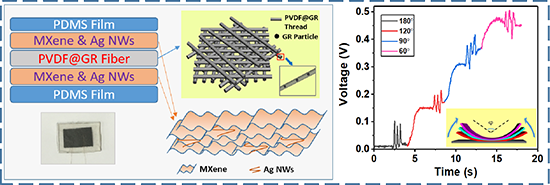
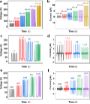
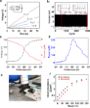
- , piezoelectric sensors show potential in wearable sensing applications [19][36][37][38][39][40][41]. However, traditional piezoelectric sensor devices such as piezoelectric ceramics have disadvantages in detecting bending, and their detection stability and measurement range need to be improved [18][42][43][44


Optically and electrically driven nanoantennas
Beilstein J. Nanotechnol. 2020, 11, 1542–1545, doi:10.3762/bjnano.11.136

- or TERS) [6][7][8][9][10][11][12][13][14][15], as well as for (bio-)sensing applications [16][17][18]. The integration of nanoantennas can lead to enhanced functionality for optoelectronic devices, nano-light sources, light amplification, or hybrid systems in combination with nanoemitters or two
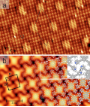
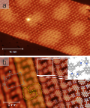
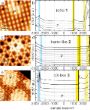
Self-assembly and spectroscopic fingerprints of photoactive pyrenyl tectons on hBN/Cu(111)
Beilstein J. Nanotechnol. 2020, 11, 1470–1483, doi:10.3762/bjnano.11.130
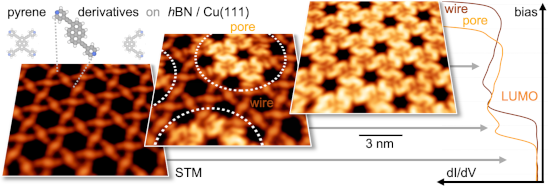
- ; Introduction Atomic-level control of molecular materials at interfaces is crucial to fully exploit the materials’ potential in electronic, optoelectronic, spintronic, and sensing applications [1][2]. Specifically, the effects of adsorption, conformation, and supramolecular organization on the resulting
- anchor for noncovalent functionalization, e.g., to develop graphene platforms to be used in sensing applications [65][66][67] and to employ hBN monolayers for capturing aromatic organic pollutants [68]. On bulk insulators, it was, for instance, demonstrated how the optical properties of an adsorbed




Triboelectric nanogenerator based on Teflon/vitamin B1 powder for self-powered humidity sensing
Beilstein J. Nanotechnol. 2020, 11, 1394–1401, doi:10.3762/bjnano.11.123
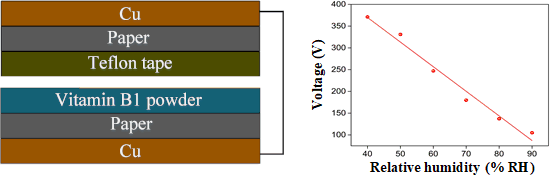
- , TENGs should be seamlessly integrated and fabricated using a simple process, particularly regarding multifunctional sensing applications. In the present study, a novel Teflon/vitamin B1 powder based triboelectric nanogenerator (TVB-TENG) is proposed. Vitamin B1 is an essential water-soluble vitamin




Gas-sensing features of nanostructured tellurium thin films
Beilstein J. Nanotechnol. 2020, 11, 1010–1018, doi:10.3762/bjnano.11.85
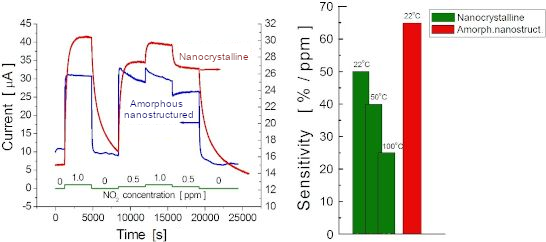
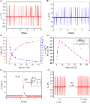
- development of thin films in chemical-sensing applications, especially for toxic gas sensing. Szaro [4] pioneered the studies regarding the effects of oxygen and nitrogen, diluted in either dry or wet air, on the electrical properties of Te films. The results showed an increase in the hole concentration


Formation of nanoripples on ZnO flat substrates and nanorods by gas cluster ion bombardment
Beilstein J. Nanotechnol. 2020, 11, 383–390, doi:10.3762/bjnano.11.29
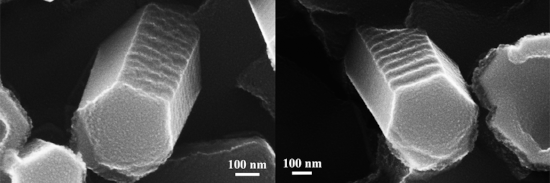
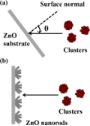
- , suggesting a small influence of the sort of material or the crystal orientation of the substrate on the ripple formation. Recently, Saleem et al. have proposed to use the nanoripple structures formed by GCIB for plasmonic and biomolecular sensing applications [16][17]. In all above-mentioned studies planar



Poly(1-vinylimidazole) polyplexes as novel therapeutic gene carriers for lung cancer therapy
Beilstein J. Nanotechnol. 2020, 11, 354–369, doi:10.3762/bjnano.11.26
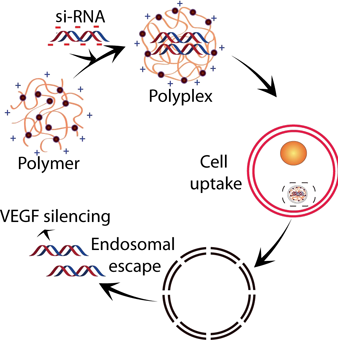
- and the enzyme glucose oxidase for glucose-sensing applications [11]. A hydrogel of xanthan gum and poly(1-vinylimidazole) was recently explored for protein encapsulation and delivery. The system exerted no toxic effects on cells and maintained the functionality of the protein [12]. A pyrrole


Plasmonic nanosensor based on multiple independently tunable Fano resonances
Beilstein J. Nanotechnol. 2019, 10, 2527–2537, doi:10.3762/bjnano.10.243
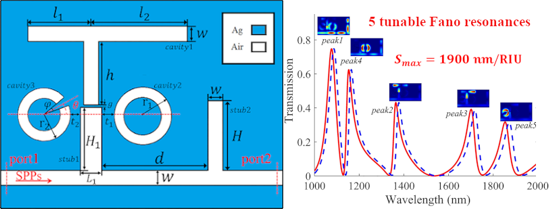
- Fano resonance is preferable to create an excellent plasmonic sensor with ultrahigh performance. However, such attempts to date lack the utilization of various resonators to generate multiple Fano peaks/dips at an arbitrary defined position for practical multi-sensing applications. In this paper, we




Evaluation of click chemistry microarrays for immunosensing of alpha-fetoprotein (AFP)
Beilstein J. Nanotechnol. 2019, 10, 2505–2515, doi:10.3762/bjnano.10.241
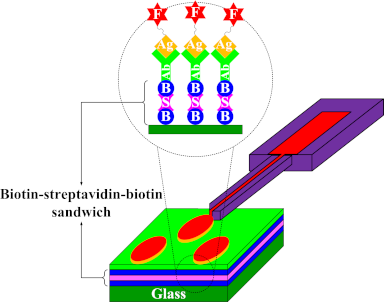
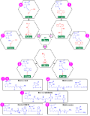
- the results of the fluorescence analysis, an incubation of samples of either route 3 or 5 at 37 °C for 20 min was determined to offer an optimal performance. Evaluation of sensitivity To further elucidate the capability of the approach for sensing applications, a sensitivity curve for one of the


Deterministic placement of ultra-bright near-infrared color centers in arrays of silicon carbide micropillars
Beilstein J. Nanotechnol. 2019, 10, 2383–2395, doi:10.3762/bjnano.10.229
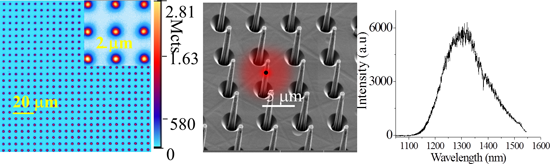
- near-infrared color centers in SiC using hydrogen irradiation and annealing at different temperatures. We have optimized the enhancement of color centers relevant for quantum sensing applications, such as silicon monovacancies and divacancies, and nitrogen vacancies. Due to the high fluence during


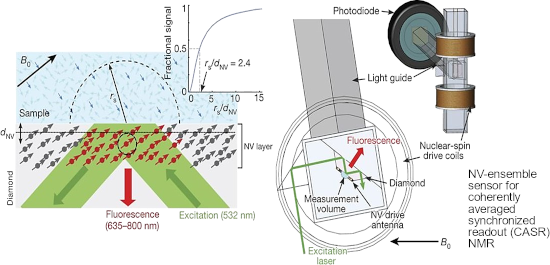
Nitrogen-vacancy centers in diamond for nanoscale magnetic resonance imaging applications
Beilstein J. Nanotechnol. 2019, 10, 2128–2151, doi:10.3762/bjnano.10.207


Kelvin probe force microscopy work function characterization of transition metal oxide crystals under ongoing reduction and oxidation
Beilstein J. Nanotechnol. 2019, 10, 1596–1607, doi:10.3762/bjnano.10.155
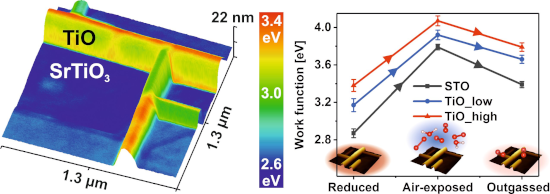
- splitting [1][44]. For industrial uses, the samples have to be exposed to ambient conditions, therefore it is necessary to investigate the impact of air exposure on electronic surface properties. Moreover, transition metal oxides are often regarded as promising materials for sensing applications, due to the


On the transformation of “zincone”-like into porous ZnO thin films from sub-saturated plasma enhanced atomic layer deposition
Beilstein J. Nanotechnol. 2019, 10, 746–759, doi:10.3762/bjnano.10.74
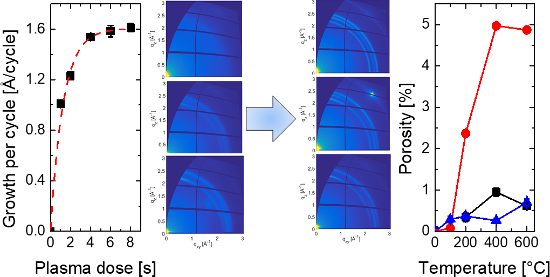
- ., for photocatalytic [75] or sensing applications [76][77]. On the zincone-like layer deposited with 1 s plasma exposure time crystallite formation began at 400 °C, as mentioned before, highlighting the role of this temperature range in the possible clogging of porosity. The relative increase in D is of


Commercial polycarbonate track-etched membranes as substrates for low-cost optical sensors
Beilstein J. Nanotechnol. 2019, 10, 677–683, doi:10.3762/bjnano.10.67
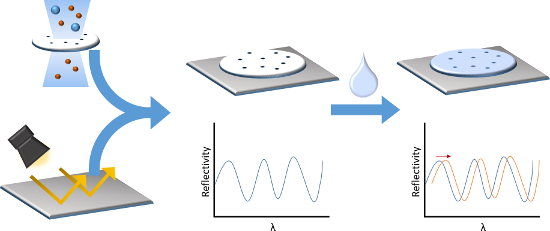
- sensing applications. To this end, we placed a 10 µL drop of pure ethanol on the area of the PCTE membrane illuminated by the light beam of the FTIR microscope and let it evaporate at room temperature. We recorded the spectrum of the sample before the deposition of the drop and during the evaporation


Wet chemistry route for the decoration of carbon nanotubes with iron oxide nanoparticles for gas sensing
Beilstein J. Nanotechnol. 2019, 10, 105–118, doi:10.3762/bjnano.10.10
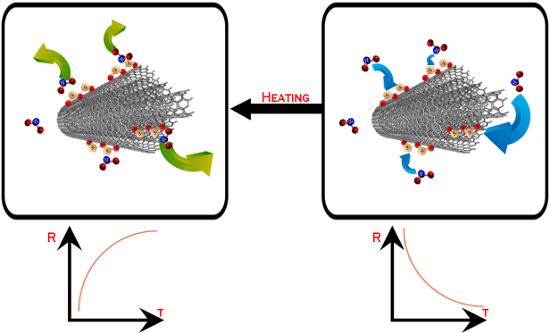
- properties [2][3]. In particular, they have been extensively researched in gas sensing applications because of their high thermal and chemical stability, high adsorption capacity and suitability for being functionalized, which enables tailoring (to some extent) their sensitivity and selectivity to the
- ][14]. Among them, iron oxide is a semiconductor that has been used in many gas sensing applications because of its low cost and simple preparation [14][15]. This oxide has been used in the detection of acetone, H2S, several alcohols, CO, acetic acid and liquefied petroleum gas (LPG) [16] and forming




Hydrogen-induced plasticity in nanoporous palladium
Beilstein J. Nanotechnol. 2018, 9, 3013–3024, doi:10.3762/bjnano.9.280
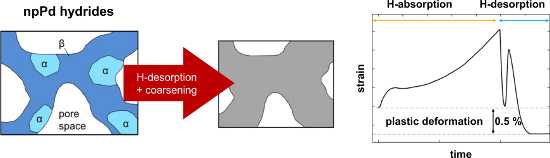
- element for hydrogen-sensing applications [23]. The mechanical properties of nanoporous samples have been extensively studied in the literature, especially for the model system of nanoporous gold (npAu). Reports on potential-controlled creep [24], fracture [25] and strength [26] in npAu add to the list of


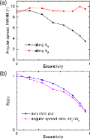
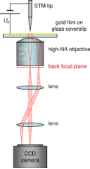
Directional light beams by design from electrically driven elliptical slit antennas
Beilstein J. Nanotechnol. 2018, 9, 2361–2371, doi:10.3762/bjnano.9.221
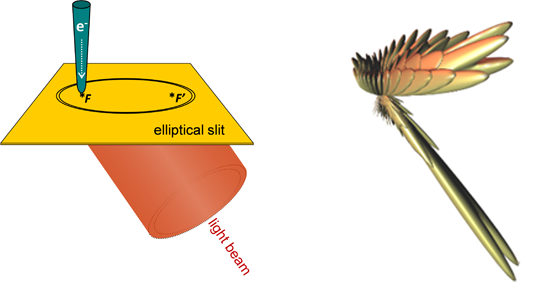
- , miniaturized electrical light sources are needed for chip-to-chip communication and optical interactions with the surrounding environment (e.g., for remote control, external communication or sensing applications). A number of electrically driven emitting optical antennas have been described in the recent





Optimization of the optical coupling in nanowire-based integrated photonic platforms by FDTD simulation
Beilstein J. Nanotechnol. 2018, 9, 2248–2254, doi:10.3762/bjnano.9.209
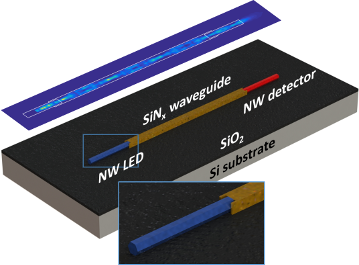
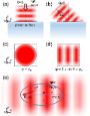
- source–waveguide–photodetector platform is the main building block of future multifunctional integrated photonic systems for photonic and sensing applications. (a) Schematic illustration of the platform geometry used for the FDTD simulations. The platform consists of a NW LED, waveguide and NW





