


Search results
Search for "sensitivity" in Full Text gives 761 result(s) in Beilstein Journal of Nanotechnology. Showing first 200.
Chiral plasmonic nanostructures fabricated with circularly polarized light
Beilstein J. Nanotechnol. 2025, 16, 2245–2264, doi:10.3762/bjnano.16.154
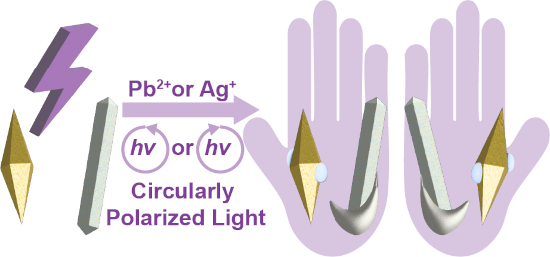
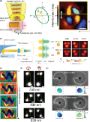
- alone cannot explain the over six orders of magnitude enhancement [53] in sensitivity observed when detecting chiral molecules. Research has shown that the Coulomb interaction between PNSs and molecules induces CD on achiral PNSs or achiral molecules when the other component is chiral [18][153][154][155


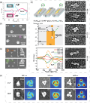
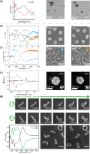


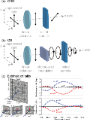

Optical bio/chemical sensors for vitamin B12 analysis in food and pharmaceuticals: state of the art, challenges, and future outlooks
Beilstein J. Nanotechnol. 2025, 16, 2207–2244, doi:10.3762/bjnano.16.153
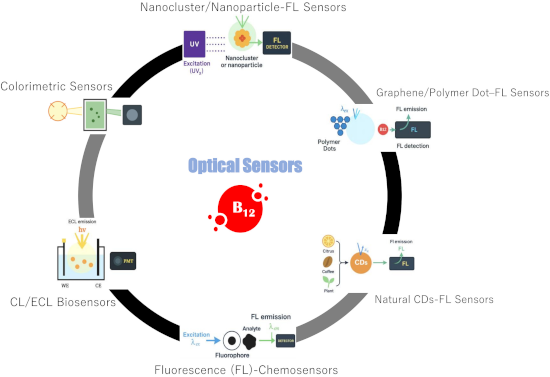
- sensitivity, specificity, rapid detection, and the ability for real-time analysis. CD- and QD-based biosensors with excellent optical properties such as photoluminescence enable the detection of VB12 at negligible concentrations and in real-world samples with complex matrices. Furthermore, integrating these
- gained popularity for their enhanced sensitivity and specificity [26]. Currently, automated enzyme immunoassays, GC-MS, LC-MS, and HPLC with either fluorescent or electrochemical detection are utilized to assess the total HCY level [26][71][74]. Optical biosensing techniques of vitamin B12 RNA aptamer
- the indicator, and the CL light emission as the signal. Linear range, LOD, RSD, and RR were 5 pg/mL, 10 pg/mL to 1.0 μg/mL, 0.30–1.09%, and 97.0–99.2%, respectively. The developed approach suggested remarkable benefits, including simplicity, lower reagent use, improved sensitivity and analytical


Electromagnetic study of a split-ring resonator metamaterial with cold-electron bolometers
Beilstein J. Nanotechnol. 2025, 16, 2199–2206, doi:10.3762/bjnano.16.152
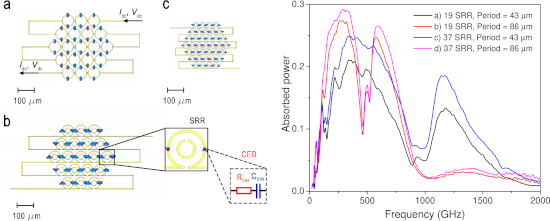
- thickness (or by stacking and bonding multiple thinner substrates), or by employing a lens with a pedestal structure. Discussion Solving the problem of broadband high-sensitivity reception for terahertz applications naturally entails comparing the metamaterial-based approach presented here with traditional
- constructing ultrabroadband, high-sensitivity receivers essential for next-generation spectroscopic and radioastronomical applications, particularly in demanding space and balloon-borne environments. One more important potential application for such broadband receiving system is the use for axion search


Microplastic pollution in Himalayan lakes: assessment, risks, and sustainable remediation strategies
Beilstein J. Nanotechnol. 2025, 16, 2144–2167, doi:10.3762/bjnano.16.148
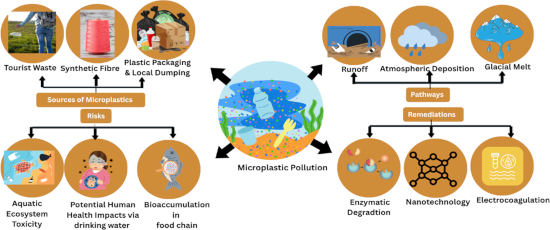
- ]. Himalayan alpine lakes are environmentally sensitive because of their glacial origin, steep altitude gradients, and high hydrological sensitivity to rapid climate change [16][17]. It is important to know the distinct environmental characteristics and sensitivities of Himalayan alpine lakes to place the


Multifrequency AFM integrating PeakForce tapping and higher eigenmodes for heterogeneous surface characterization
Beilstein J. Nanotechnol. 2025, 16, 2077–2085, doi:10.3762/bjnano.16.142
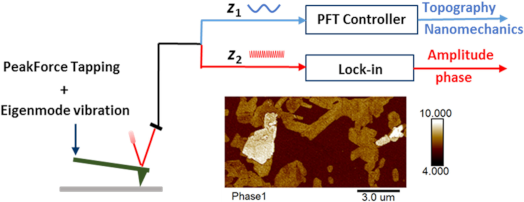
- overcome these challenges. This configuration harnesses the mechanical precision of quasi-static force control and the sensitivity of eigenmode signals to variations in surface properties and enables simultaneous topographical, mechanical, and compositional mapping. We apply this technique to
- calibration procedures Two distinct types of AFM probes were used to validate the universality of the method, namely, a soft probe (ScanAsyst-Air) and a stiff probe (NSC15/Al BS). The key calibrated parameters for each probe are summarized in Table 1. Calibration of optical lever sensitivity and spring
- constant The inverse optical lever sensitivity (InvOLS) and the spring constant (k) of each cantilever were calibrated following a standard procedure, which is built into the Bruker Nanoscope software. Briefly, InvOLS (in nm·V−1) was determined by averaging the slope of the constant compliance region from


Beyond the shell: exploring polymer–lipid interfaces in core–shell nanofibers to carry hyaluronic acid and β-caryophyllene
Beilstein J. Nanotechnol. 2025, 16, 2015–2033, doi:10.3762/bjnano.16.139
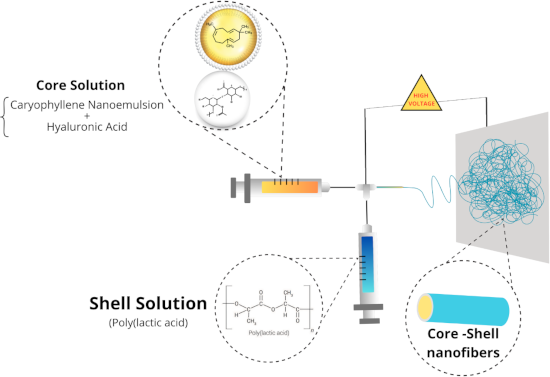
- impregnated with HA and βCp nanoemulsion. The use of βCp in practice is questioned due to its low aqueous solubility, low viscosity, extreme volatility, and sensitivity to temperature, oxygen, and light [38]. The production of a nanoemulsion was developed as a nanocarrier system designed to enhance both the




Laser ablation in liquids for shape-tailored synthesis of nanomaterials: status and challenges
Beilstein J. Nanotechnol. 2025, 16, 1963–1997, doi:10.3762/bjnano.16.137
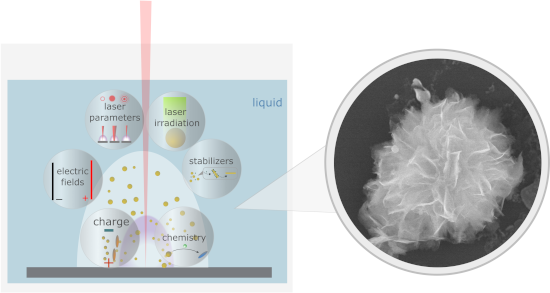
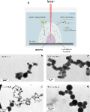
- enlarged aggregates were observed. The changes in the structure were observed even at slightly elevated temperatures (35 °C), which indicates high sensitivity of the growth mechanisms to temperature increase. A similar effect has been shown by Haram et al. in [47], who observed formation of Ag and Au




Mechanical property measurements enabled by short-term Fourier-transform of atomic force microscopy thermal deflection analysis
Beilstein J. Nanotechnol. 2025, 16, 1952–1962, doi:10.3762/bjnano.16.136
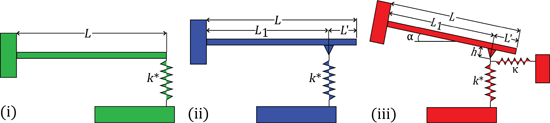
- used in this study [25]. We take the Sader spring constant, which has been widely used in other studies and is less sensitive to variations in the calculated cantilever sensitivity [25], as the spring constant of all cantilevers in the calculations in subsequent sections of this manuscript. Figure 2d




Evaluating metal-organic precursors for focused ion beam-induced deposition through solid-layer decomposition analysis
Beilstein J. Nanotechnol. 2025, 16, 1942–1951, doi:10.3762/bjnano.16.135
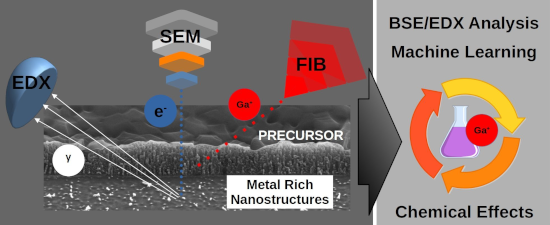
- of preliminary tests to confirm volatility and sensitivity to secondary electrons. Refining the conditions for efficient precursor delivery via the GIS system and its subsequent decomposition under ion beam influence requires testing in a difficult-to-access experimental reactor. Given the time- and


Quantum circuits with SINIS structures
Beilstein J. Nanotechnol. 2025, 16, 1931–1941, doi:10.3762/bjnano.16.134
- with selective etching of superconducting and normal metal electrodes. Improvement in ultimate sensitivity is achieved by suspending the absorber above the substrate. Best responsivity of up to 30 electrons per photon at a frequency of 350 GHz, or 72000 A/W, and voltage responsivity up to 3.9 × 10⁹ V/W
- junction; superconducting tunnel junctions; Introduction Modern superconducting electronics is moving towards lower temperatures, lower noise levels, and higher sensitivity, which can be achieved at sub-Kelvin temperatures using aluminum-based tunnel junctions. One group of devices, such as
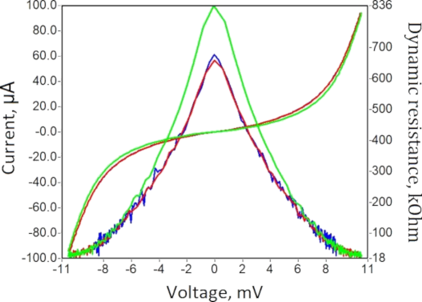
- in sorption 3He cryostat at 0.33 K, Figure 2b. The relatively low value of the resistance ratio (Rd/Rn – dynamic resistance/normal resistance) is associated with the high sensitivity of the interferometer to external noise. NIS thermometers The I–V characteristic and dynamic resistance of the NIS


PEGylated lipids in lipid nanoparticle delivery dynamics and therapeutic innovation
Beilstein J. Nanotechnol. 2025, 16, 1914–1930, doi:10.3762/bjnano.16.133
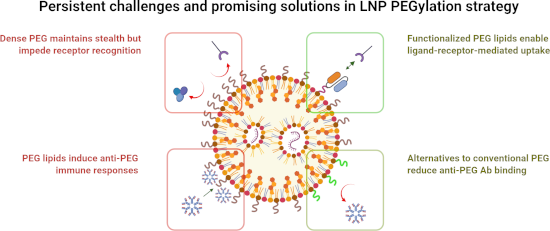
- ]. Some PEG lipids exhibit sensitivity in encapsulation efficiency at higher PEG molar fraction, while others can maintain stable payload encapsulation regardless of PEG density. Likewise, changes in size distribution and surface charge can be modest or pronounced depending on the specific PEG lipid



Targeting the vector of arboviruses Aedes aegypti with nanoemulsions based on essential oils: a review with focus on larvicidal and repellent properties
Beilstein J. Nanotechnol. 2025, 16, 1894–1913, doi:10.3762/bjnano.16.132
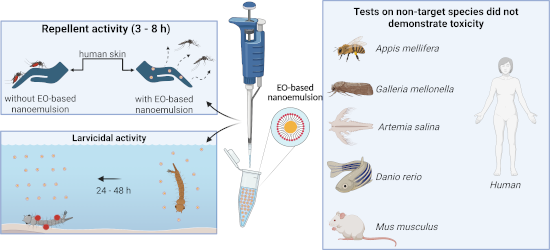
- solubility, high volatility, and intrinsic oxidation sensitivity. Thus, the development of novel formulations to efficiently deliver bioactives represents an innovative approach for Aedes aegypti control. In this context, nanothecnology provides smart formulations with improved drug solubility, controlled


Programmable soliton dynamics in all-Josephson-junction logic cells and networks
Beilstein J. Nanotechnol. 2025, 16, 1883–1893, doi:10.3762/bjnano.16.131

- motion is interrupted, for example, by a structural inhomogeneity in a transmission line. Traditionally, this sensitivity to structural inhomogeneities has been viewed as a challenge for robust circuit design. In this work, we propose to exploit the sensitivity mentioned above. We base our proposal on


Low-temperature AFM with a microwave cavity optomechanical transducer
Beilstein J. Nanotechnol. 2025, 16, 1873–1882, doi:10.3762/bjnano.16.130
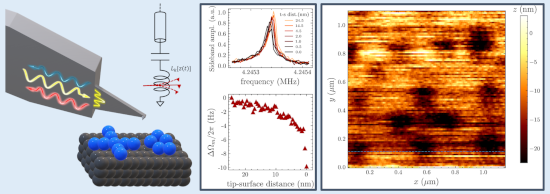
- noise, pointing to its crucial role in the context of force sensitivity. Through analysis of noise measurements we determine the effective temperature of the cantilever eigenmode and we determine the region of detector operation in which the sensor is thermal-noise-limited. Our analysis shows that the
- fulfills the specific requirements of the application. The latter is indeed the case for force sensing in atomic force microscopy (AFM). Force transduction at maximum sensitivity requires detecting the position of a “test mass”, while minimizing the added noise introduced by the detection itself [14][15
- features in a 1 µm scan field, but has not been tested to atomic resolution. Results and Discussion Force sensitivity and imaging The microcantilever in dynamic AFM operates as a resonant force transducer. Each individual eigenmode is described by a mechanical susceptibility χ, expressing cantilever


Self-assembly and adhesive properties of Pollicipes pollicipes barnacle cement protein cp19k: influence of pH and ionic strength
Beilstein J. Nanotechnol. 2025, 16, 1863–1872, doi:10.3762/bjnano.16.129
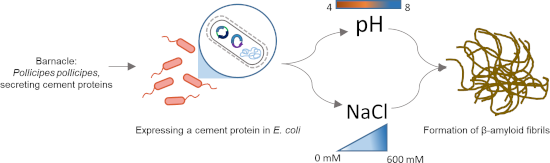
- fibril formation occurs in the acidic, iso-osmotic gland of the barnacle, with delayed cement curing enabling fibril secretion for sustained adhesion of the organism. The study provides insight into the environmental sensitivity of cp19k structure–function dynamics and may support the design of


Piezoelectricity of layered double hydroxides: perspectives regarding piezocatalysis and nanogenerators
Beilstein J. Nanotechnol. 2025, 16, 1812–1817, doi:10.3762/bjnano.16.124

- different thicknesses were investigated for the piezo-photocatalytic degradation of carbamazepine [6]. The ultrathin samples achieved an efficiency of 95.8% with a reaction rate constant of 0.148 min−1. This effect was attributed to the higher sensitivity of ultrathin LDH sheets to both light irradiation

Electrical, photocatalytic, and sensory properties of graphene oxide and polyimide implanted with low- and medium-energy silver ions
Beilstein J. Nanotechnol. 2025, 16, 1794–1811, doi:10.3762/bjnano.16.123
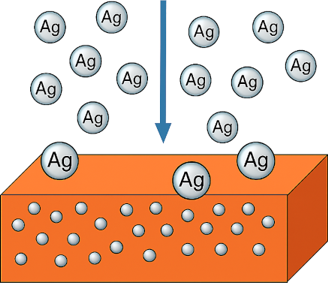
- Department of Inorganic Chemistry, University of Chemistry and Technology, Prague 6, 166 28, Czech Republic Ion Beam Center, Helmholtz-Zentrum Dresden Rossendorf, 01328 Dresden, Germany 10.3762/bjnano.16.123 Abstract Precise control of electrical conductivity, humidity sensitivity, and photocatalytic
- and enhances both the photocatalytic activity and humidity sensitivity of GO and PI. The most pronounced improvements occurred at higher fluences, where defect generation and partial deoxygenation contributed to optimal performance. Ion implantation thus represents an effective approach for tuning the
- various metallic ions available for ion implantation, Ag offers a unique combination of properties that make it particularly suitable for simultaneous enhancement of conductivity, humidity sensitivity, and photocatalytic activity [4]. Ag exhibits high electrical conductivity, strong catalytic activity


Exploring the potential of polymers: advancements in oral nanocarrier technology
Beilstein J. Nanotechnol. 2025, 16, 1751–1793, doi:10.3762/bjnano.16.122
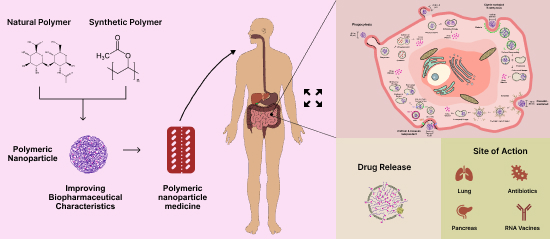
- , exhibits mucoadhesive properties, and its pH sensitivity serves as a valuable tool for controlling the release of encapsulated molecules [142][143]. Thus, alginate, with carboxyl groups (COO−), undergoes protonation and contracts in acidic environments, while in basic environments, it swells due to the


Advances of aptamers in esophageal cancer diagnosis, treatment and drug delivery
Beilstein J. Nanotechnol. 2025, 16, 1734–1750, doi:10.3762/bjnano.16.121
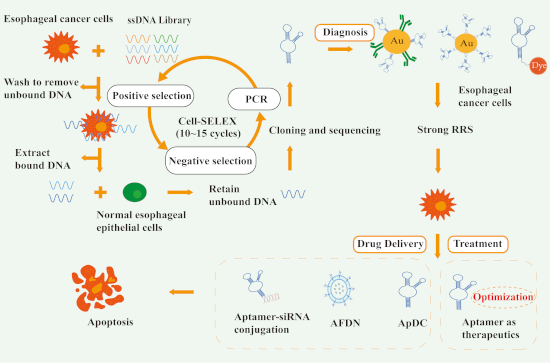
- to improve the penetration and accumulation of drugs in the lesion, providing more possibilities for the treatment strategy of EC. In addition, aptamer-based biosensors offer flexibility in design, combined with nanotechnology to achieve outstanding sensitivity [41]. Detection of EC-related
- disease progression, primarily encompassing proteins, nucleic acids, metabolites, and cellular components [44]. To be clinically relevant, these markers must demonstrate both high sensitivity and specificity, enabling robust diagnostic and prognostic capabilities. Most biosensors for cancer detection use
- a single biometric element to directly analyze biomarkers [45][46], while dual-system biosensors combine two antibodies and/or aptamers [47] into a better composite material to improve the specificity and sensitivity of the sensor. Figure 3 is a schematic diagram of a gold nanoparticle aptasensor


Beyond the bilayer: multilayered hygroscopic actuation in pine cone scales
Beilstein J. Nanotechnol. 2025, 16, 1695–1710, doi:10.3762/bjnano.16.119
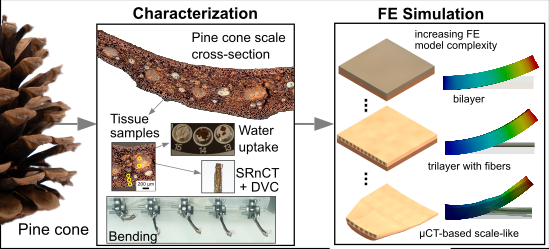
- points. These were located at the two adaxial apical corners of each geometry and at the adaxial apical center (Figure S2, Supporting Information File 2). In order to assess the sensitivity of the FE analyses with respect to the expansion coefficients in the measured ranges, two comparative simulations
- , Supporting Information File 2). A lower expansion coefficient resulted in negligible lateral curvature, while a higher expansion coefficient resulted in increased lateral curvature. To validate the FE simulations, a mesh sensitivity analysis was performed based on the trilayer geometry with fibers. Further
- mesh refinement with an increased number of nodes by a factor of ~3 resulted in a relative change in maximum deformation of only around 0.1% (For the mesh sensitivity analysis, elements sizes were changed from 0.15 mm (fibers) and 0.1 mm (sclereid layer and brown tissue) to 0.1 and 0.067 mm


Ambient pressure XPS at MAX IV
Beilstein J. Nanotechnol. 2025, 16, 1677–1694, doi:10.3762/bjnano.16.118
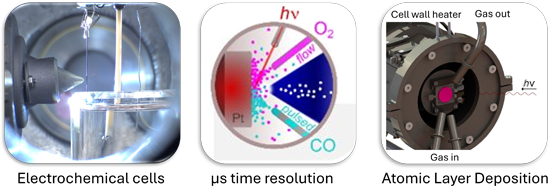
- spectroscopy (XPS) is a powerful surface science technique that enables the investigation of modifications in the chemical environment of a sample surface and its electronic states, owing to its exceptional surface sensitivity. However, the requirement for ultrahigh vacuum (UHV) conditions previously limited
- observation of catalytic surfaces under reaction conditions. This allows for full life cycle characterization of catalysts, offering insights into surface structure, composition, and dynamic behavior during catalysis. Thanks to its intrinsic surface sensitivity, APXPS is uniquely positioned to probe the
- answer. Comparing continuous and pump–probe acquisition: Pump–probe mode offers higher sensitivity to transient signals and smaller datasets but requires precise periodic modulation. It is ideal for fast, repeatable processes. Continuous acquisition, in contrast, is suitable for systems with self



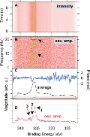


Influence of laser beam profile on morphology and optical properties of silicon nanoparticles formed by laser ablation in liquid
Beilstein J. Nanotechnol. 2025, 16, 1533–1544, doi:10.3762/bjnano.16.108
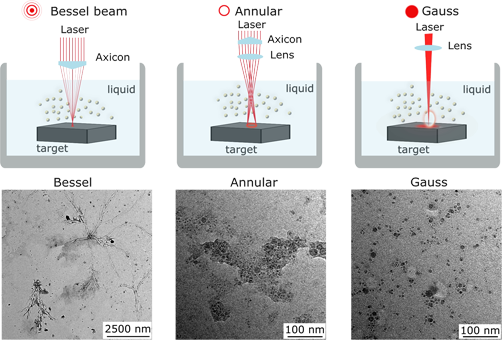
- , USA) equipped with Peltier-cooled CCD-detector and with a xenon arc lamp for excitation. The measured spectra were corrected for the spectral sensitivity of the spectrofluorometer. Results and Discussion Morphology and crystal structure The morphology characterization of as-formed Si NPs was performed


Laser processing in liquids: insights into nanocolloid generation and thin film integration for energy, photonic, and sensing applications
Beilstein J. Nanotechnol. 2025, 16, 1428–1498, doi:10.3762/bjnano.16.104
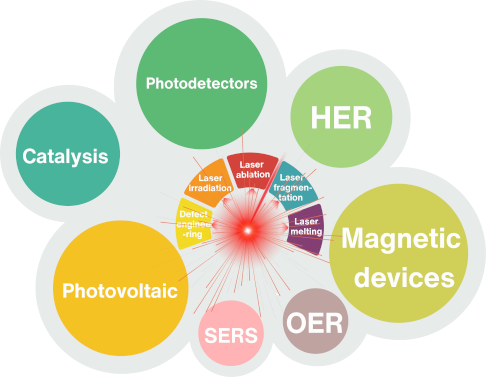
- challenges such as thin film defects, including comet marks, striation, chuck marks, environmental sensitivity, and edge effects. Remedies for these issues have been explained in a comprehensive review of the spin coating technique that emphasized parameters controlling the process, including spin speed






Photochemical synthesis of silver nanoprisms via green LED irradiation and evaluation of SERS activity
Beilstein J. Nanotechnol. 2025, 16, 1417–1427, doi:10.3762/bjnano.16.103
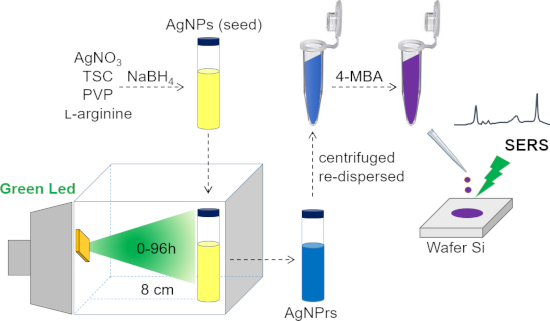
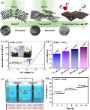
- triangular sharp, well-defined vertices exhibit better SERS properties than round-edged or poorly defined nanoplate structures. To further evaluate sensitivity, Raman spectra of mixture of AgNPrs and 4-MBA with various concentration ranging from 10−5 M to 10−9 M were recorded. As shown in Figure 9a, the peak


Parylene-coated platinum nanowire electrodes for biomolecular sensing applications
Beilstein J. Nanotechnol. 2025, 16, 1392–1400, doi:10.3762/bjnano.16.101
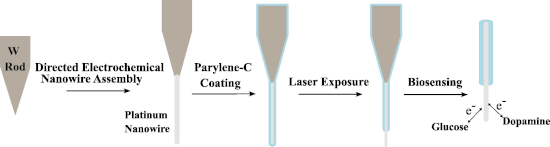
- and components [3]. Advancements in materials science over the past two decades have driven significant progress in the development of nanoscale electrodes. Their high surface-to-volume ratio and nanoscale dimensions offer inherent advantages, including improved response time, improved sensitivity
- . developed a glucose sensor using copper nanowires and CNTs, achieving a limit of detection as low as 0.3 nM, highlighting the remarkable sensitivity of CNT-based electrodes [9]. Nevertheless, several studies reported the toxicity of CNTs for tissues and cells including loss of cellular integrity, DNA damage
- -volume ratio, enhancing sensitivity and functionalization capabilities. Baetsen-Young et al. used dextrin-capped gold nanoparticles (12 nm) with ssDNA to detect the presence of Pseudoperonospora cubensis DNA, where the results show the ability to detect 18 spores/µL crude extractions [11]. However, the





