Search results
Search for "size distribution" in Full Text gives 598 result(s) in Beilstein Journal of Nanotechnology. Showing first 200.
Laser ablation in liquids for shape-tailored synthesis of nanomaterials: status and challenges
Beilstein J. Nanotechnol. 2025, 16, 1963–1997, doi:10.3762/bjnano.16.137
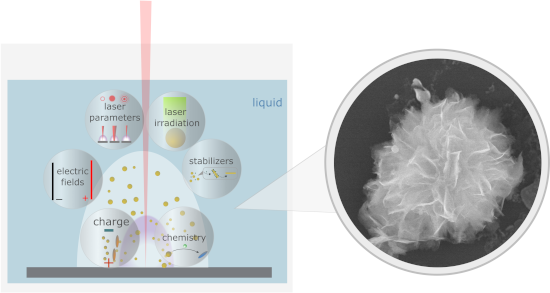
- of NP size and size distribution. As a result, the crucial experimental parameters were determined providing strategies to reduce the formation of large NPs and to produce monodisperse small nanocrystals [1][5]. However, the goal of controlled nanomaterials synthesis by PLAL is still not completely





PEGylated lipids in lipid nanoparticle delivery dynamics and therapeutic innovation
Beilstein J. Nanotechnol. 2025, 16, 1914–1930, doi:10.3762/bjnano.16.133
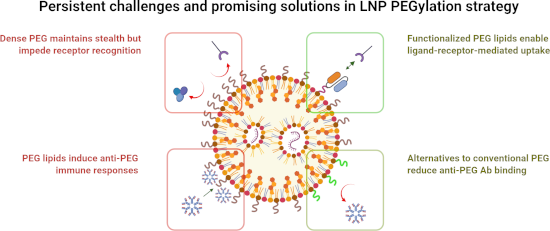
- particle size decreasing from 173.9 nm at 1 mol % to 109.1 nm at 5 mol %. Meanwhile, the PDI increased modestly from 0.060 to 0.146 with the increase of PEG density from 1 to 5 mol %, indicating a slight broadening in size distribution and less LNP homogeneity at higher PEG levels. The surface charge on
- ]. Some PEG lipids exhibit sensitivity in encapsulation efficiency at higher PEG molar fraction, while others can maintain stable payload encapsulation regardless of PEG density. Likewise, changes in size distribution and surface charge can be modest or pronounced depending on the specific PEG lipid



Targeting the vector of arboviruses Aedes aegypti with nanoemulsions based on essential oils: a review with focus on larvicidal and repellent properties
Beilstein J. Nanotechnol. 2025, 16, 1894–1913, doi:10.3762/bjnano.16.132


Phytol-loaded soybean oil nanoemulsion as a promising alternative against Leishmania amazonensis
Beilstein J. Nanotechnol. 2025, 16, 1826–1836, doi:10.3762/bjnano.16.126

- shown in the size distribution graph (Figure 1b). Moreover, the zeta potential (ZP) of both samples was around −20 mV, with no significant changes upon phytol loading. To evaluate the shape and morphological characteristics of the nanoemulsions, transmission electron microscopy (TEM) analysis was
- performed. The results revealed nanodroplets with spherical and oval shapes and a homogeneous size distribution, with diameters up to 250 nm, consistent with the dynamic light scattering (DLS) data (Figure 1c,d). Colloidal and physicochemical stability The colloidal and physicochemical stability of the NEs
- considered statistically significant for p < 0.05. Schematic illustration of PHYT-NE preparation: (a) size distribution of nanodroplets (b) and morphological aspects of blank-NE (c) and PHYT-NE (d). Figure 1a) is adapted from Servier Medical Art (https://smart.servier.com/), licensed under CC BY 4.0 (https


Multifunctional anionic nanoemulsion with linseed oil and lecithin: a preliminary approach for dry eye disease
Beilstein J. Nanotechnol. 2025, 16, 1711–1733, doi:10.3762/bjnano.16.120
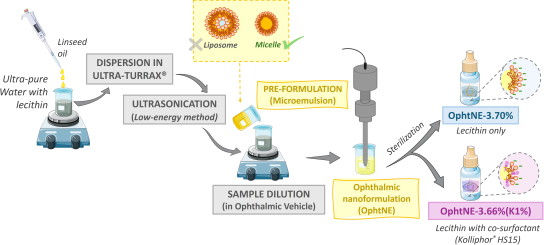
- resulting formulations, including their thermodynamic stability, size distribution, and optical clarity [47][48]. The packing parameter concept (PPC) provides a theoretical framework for predicting the geometry of amphiphilic systems, based on the ratio of the surfactant molecule’s total volume, the area of



Prospects of nanotechnology and natural products for cancer and immunotherapy
Beilstein J. Nanotechnol. 2025, 16, 1644–1667, doi:10.3762/bjnano.16.116

- inhibition of cancer cell migration, invasion, and metastasis [122][123]. The patent characterizes the NPs through DLS and TEM, confirming a uniform size distribution. Additionally, in vitro studies using MCF-7 breast cancer cells demonstrated inhibition of cell proliferation, with the NP inducing apoptosis
- nanoparticles demonstrated stability, spherical shape, and homogeneous size distribution. The use of nanoparticles with sterol compounds associated with Ce6 yielded higher tumor inhibition rates compared to the isolated compounds, especially the nanocarrier with ergosterol, which reached a rate of 86.4% [27][64


Venom-loaded cationic-functionalized poly(lactic acid) nanoparticles for serum production against Tityus serrulatus scorpion
Beilstein J. Nanotechnol. 2025, 16, 1633–1643, doi:10.3762/bjnano.16.115
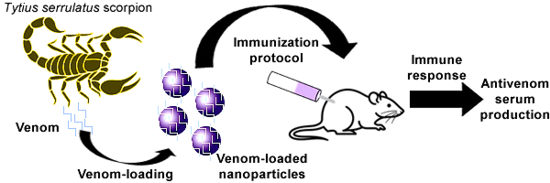
- 165 nm and a positive zeta potential of 7.0 mV. After the addition of venom, the PLA nanoparticles loaded with T. serrulatus venom proteins remained with a narrow particle size distribution. Moreover, an increase in size of the particles occurred after the addition of the venom for both concentrations


Photocatalytic degradation of ofloxacin in water assisted by TiO2 nanowires on carbon cloth: contributions of H2O2 addition and substrate absorbability
Beilstein J. Nanotechnol. 2025, 16, 1567–1579, doi:10.3762/bjnano.16.111
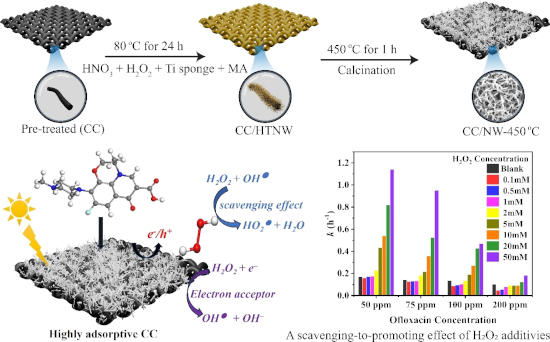
- pore size distribution, which shows a sharp peak at approximately 4.0 nm, suggesting a uniform pore size. The corresponding pore size distribution curve (Figure 3b, inset) indicates a mesoporous structure. Before calcination, the BET surface area of the titanate on carbon cloth was found to be 3.9 m2·g
- . (b) Low-temperature nitrogen adsorption–desorption isotherm of CC/NW-450 °C. The inset shows the corresponding pore size distribution curve. XPS spectra of CC/NW-450 °C and CC/HTNW. (a) Survey spectra and detailed XPS spectra of (b) C 1s, (c) O 1s, and (d) Ti 2p. (a) Photocatalytic degradation of


Laser processing in liquids: insights into nanocolloid generation and thin film integration for energy, photonic, and sensing applications
Beilstein J. Nanotechnol. 2025, 16, 1428–1498, doi:10.3762/bjnano.16.104
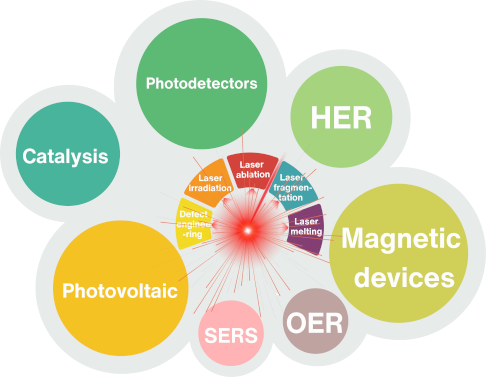
- specific applications will be crucial for realizing the full potential of laser-based techniques and addressing challenges in LAL such as low productivity, high energy consumption, and wide size distribution. Additionally, advancing in situ characterization methods, such as time-resolved shadowgraphy [26
- laser irradiation to fragment larger NPs suspended in a colloidal solution, resulting in smaller NPs with a narrow size distribution. LFL is particularly beneficial as a post-processing tool for NPs produced by PLAL, a technique which often results in broader or bimodal size distributions as discussed
- crystallographic structure. The findings suggest that smaller particle sizes are primarily achieved by increasing the number of laser pulses, though there is a limit to the number of pulses that should be applied. Furthermore, the energy output notably influenced the size distribution, with higher energy leading






Photochemical synthesis of silver nanoprisms via green LED irradiation and evaluation of SERS activity
Beilstein J. Nanotechnol. 2025, 16, 1417–1427, doi:10.3762/bjnano.16.103
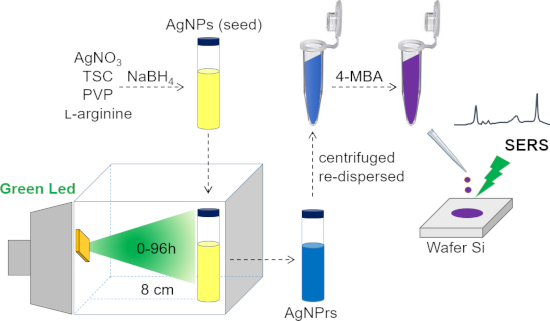
- these results, we conclude that 72 h represents the optimal irradiation time for the complete transformation of silver seeds into silver nanoplates in this study. From the FESEM images and particle size distribution graph after 12 h of LED irradiation in Figure 3, it is observed that the particle sizes
- performed (HORIBA XploRA ONE TM, France) using a 532 nm laser source and a 10× magnification microscope. Measurements were taken at ten random positions, and the average intensity was recorded. (a) UV–vis spectrum, (b) TEM image and (c) size distribution of seeds. UV–vis spectra of silver nanoparticles at
- spectra of the AgNPs seed shown in the Figure 1a displayed a single peak at 400 nm, indicating the presence of spherical silver nanoparticles with small sizes, consistent with studies in the literature [4][6][7]. The sample exhibited the characteristic yellow color of AgNPs. The TEM image and size


The role of biochar in combating microplastic pollution: a bibliometric analysis in environmental contexts
Beilstein J. Nanotechnol. 2025, 16, 1401–1416, doi:10.3762/bjnano.16.102

- -stable aggregates by approximately 20% and a decline in saturated hydraulic conductivity by up to 70%. Moreover, the water content in soil at field capacity decreases between 10% and 65%, depending on soil texture, MP concentration, and size distribution [56]. Biochar application has shown potential in



Ferroptosis induction by engineered liposomes for enhanced tumor therapy
Beilstein J. Nanotechnol. 2025, 16, 1325–1349, doi:10.3762/bjnano.16.97
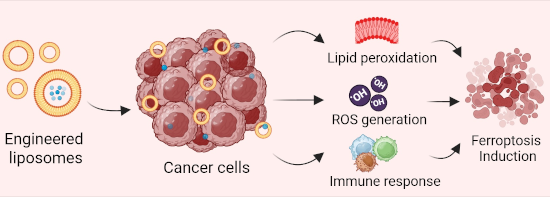
- light scattering (DLS) is commonly used to determine liposome size and size distribution. Transmission electron microscopy (TEM) and atomic force microscopy (AFM) can be used to image liposome morphology and determine lamellarity. Zeta potential measurements assess the surface charge of liposomes, which
- a crucial parameter that influences their biodistribution, cellular uptake, and drug release. DLS is a widely used technique to determine the size distribution of liposomes in solution [110][125]. DLS measures the fluctuations in light intensity generated by the Brownian motion of liposome particles


Acrocomia aculeata oil-loaded nanoemulsion: development, anti-inflammatory properties, and cytotoxicity evaluation
Beilstein J. Nanotechnol. 2025, 16, 1277–1288, doi:10.3762/bjnano.16.93
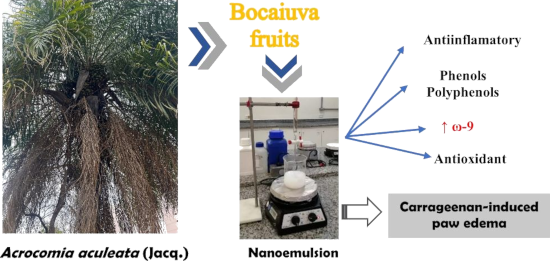
- requires the determination of key formulation parameters, including the required hydrophilic–lipophilic balance (HLBr), droplet size, and polydispersity index (PDI) [42][43][44]. In this study, the Acrocomia aculeata oil nanoemulsion (AANE) exhibited a uniform droplet size distribution and a stable PDI
- do Sul, Brazil (Reference number: 1.250/2022). Droplet size and polydispersity index of nanoemulsions versus the hydrophilic–lipophilic balance of the surfactant system used for the preparation. HLBr: required hydrophilic-lipophilic balance. Droplet size distribution and zeta potential of the


Investigation of the solubility of protoporphyrin IX in aqueous and hydroalcoholic solvent systems
Beilstein J. Nanotechnol. 2025, 16, 1209–1215, doi:10.3762/bjnano.16.89
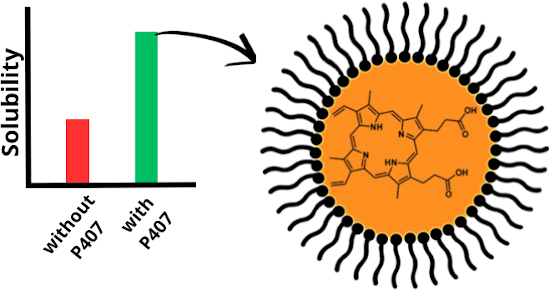
- of solubility were later contradicted by particle size distribution analysis. Figure 2 shows the solubility behavior of PpIX in water and EtOHabs, with mean concentrations of 0.497 ± 0.054 mg/mL in water, and 0.179 ± 0.004 mg/mL in EtOHabs. In contrast, the systems containing 0.4 mg/mL of PpIX in


Chitosan nanocomposite containing rotenoids: an alternative bioinsecticidal approach for the management of Aedes aegypti
Beilstein J. Nanotechnol. 2025, 16, 1197–1208, doi:10.3762/bjnano.16.88
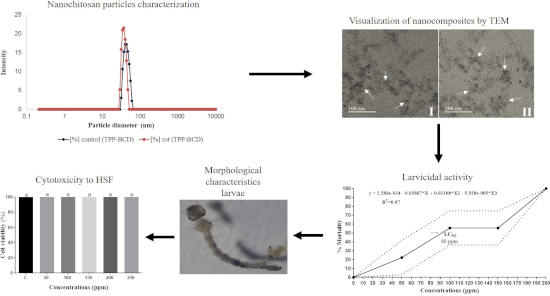
- expressed as a percentage relative to the negative control. Statistical analysis was performed using one-way ANOVA followed by Tukey’s multiple comparison test (p < 0.05) with the GraphPad Prism 10 software. Size distribution and zeta potential of nanoparticles. A) Conventional ionic gelation of CS/TPP



Crystalline and amorphous structure selectivity of ignoble high-entropy alloy nanoparticles during laser ablation in organic liquids is set by pulse duration
Beilstein J. Nanotechnol. 2025, 16, 1141–1159, doi:10.3762/bjnano.16.84
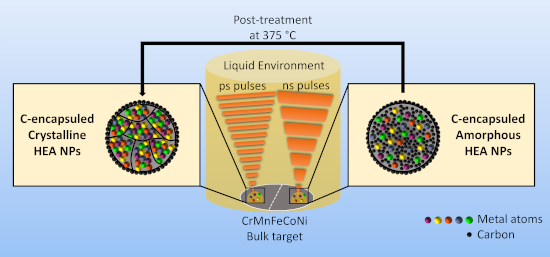
- amorphous ns-ablated particles. Based on these findings we can conclude that the pronounced differences in crystallinity in the samples cannot be explained by differences in particle diameters. However, a certain width of the size distribution curves indicated by the polydispersity indices (PDI) (PDI = 0.31
- solid solution fcc structure, whereas this study was more focused on the applicability in catalysis [18]. By irradiating metal chloride salts, premixed in ethanol and then added to a hexane solution with oleic acid present, Wang et al. successfully synthesized PtIrCuNiCr NPs with a narrow size
- distribution and uniformly mixed elements within the generated nanoparticles [62]. Recently, Tahir et al. conducted ps-LAL on the CrMnFeCoNi system in ethanol and varied production methods for the bulk targets, showing uniformly mixed HEA NPs with an fcc structure and indications for a minor fraction of




Fabrication of metal complex phthalocyanine and porphyrin nanoparticle aqueous colloids by pulsed laser fragmentation in liquid and their potential application to a photosensitizer for photodynamic therapy
Beilstein J. Nanotechnol. 2025, 16, 1088–1096, doi:10.3762/bjnano.16.80
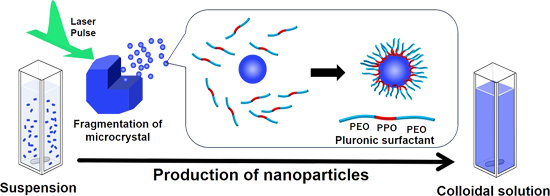
- . The nanoparticles having strong absorption in the NIR region (700 to 900 nm) were successfully prepared by PLFL, and the colloids remained stably dispersed over a period of at least one week. Particle size and size distribution determined by DLS measurements depended on the molecules. The compound
- -dependent diameters were estimated to be 40 to 80 nm from the number-weighted size distributions by DLS measurements (see Figure S2, Supporting Information File 1). The Z-average values suggest that AlClPc and PtOEP have a narrower size distribution than FePc, CoPc, and ZnPc. In general, molecular


A calix[4]arene-based supramolecular nanoassembly targeting cancer cells and triggering the release of nitric oxide with green light
Beilstein J. Nanotechnol. 2025, 16, 1003–1013, doi:10.3762/bjnano.16.75
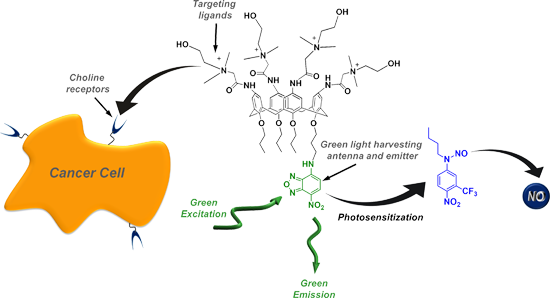
- inset shows the size distribution of the same solution of 1 obtained by DLS. (B) Fluorescence emission spectrum, λexc = 467 nm, of 1 as in (A). The inset shows the fluorescence decay and the related fitting of the same solutions recorded at λexc = 455 nm and λem = 550 nm. T = 25 °C. Cell viability
- observed upon exposure of an air-equilibrated NOPD 2 (100 µM) solution at λexc = 420 nm after 0, 6, 11, 20, 30, 40, 60, 80, 100, 130, and 160 min. (A) Absorption spectrum of the supramolecular complex 1·2 in water; [1] = 50 µM; [2] = 40 µM. The inset shows the size distribution of the same solution of 1·2


Time-resolved probing of laser-induced nanostructuring processes in liquids
Beilstein J. Nanotechnol. 2025, 16, 968–1002, doi:10.3762/bjnano.16.74


Shape, membrane morphology, and morphodynamic response of metabolically active human mitochondria revealed by scanning ion conductance microscopy
Beilstein J. Nanotechnol. 2025, 16, 951–967, doi:10.3762/bjnano.16.73
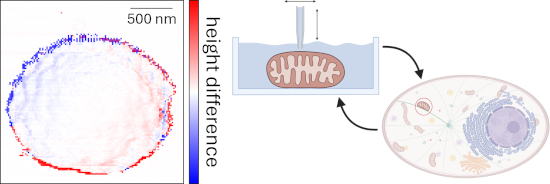
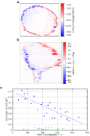
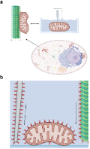
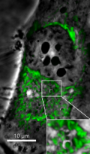
- 3c. The average values of apparent height, diameter, and volume are compared. Irregular mitochondria tend to be smaller with reduced statistical significance (Welch’s t-test). The size distribution of metabolically active mitochondria is bimodal, that is, diameters predominantly fell into two



Synthesis of biowaste-derived carbon-dot-mediated silver nanoparticles and the evaluation of electrochemical properties for supercapacitor electrodes
Beilstein J. Nanotechnol. 2025, 16, 933–943, doi:10.3762/bjnano.16.71
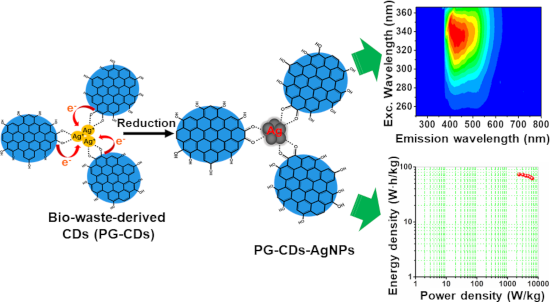
- distribution of PG-CDs-AgNPs was responsible for the enhanced surface area [35]. The pore size distribution plot of PG-CDs-AgNPs suggests the mesoporous characteristics (Supporting Information File 1, Figure S1b), which, via the diffusion of electrolyte ions, is highly efficient for electrochemical charge
- storage. The size distribution, morphology, and crystallinity of PG-CDs-AgNPs were further characterized by SEM and TEM analysis. The SEM image of PG-CDs-AgNPs (Supporting Information File 1, Figure S2a) reveals that PG-CDs-AgNPs possess spherical and distorted spherical structure. Supporting Information
- well-resolved lattice spacing of 0.24 nm equivalent to (111) lattice planes of silver [36]. The clear visible lattice fringe indicates that the particles are crystalline. The average particle size distribution histogram depicted that the diameter of PG-CDs-AgNPs were approximately 9–10 nm, as depicted


Characterization of ion track-etched conical nanopores in thermal and PECVD SiO2 using small angle X-ray scattering
Beilstein J. Nanotechnol. 2025, 16, 899–909, doi:10.3762/bjnano.16.68
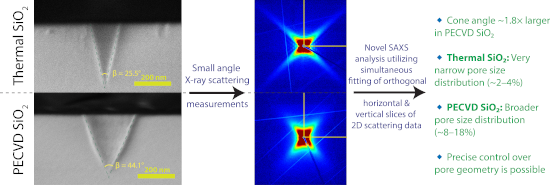
- , and nanofluidic applications. The characterization of the pore morphology and size distribution, along with its dependence on the material properties and fabrication parameters, is crucial to designing nanopore systems for specific applications. Here, we present a comprehensive study of track-etched
- analyzing the complex highly anisotropic two-dimensional SAXS patterns of the pores by reducing the analysis to two orthogonal one-dimensional slices of the data. The simultaneous fit of the data enables an accurate determination of the pore geometry and size distribution. The analysis reveals substantial
- differences between the nanopores in thermal and PECVD SiO2. The track-to-bulk etching rate ratio is significantly different for the two materials, producing nanopores with cone angles that differ by almost a factor of two. Furthermore, thermal SiO2 exhibits an exceptionally narrow size distribution of only 2


Synthesis and magnetic transitions of rare-earth-free Fe–Mn–Ni–Si-based compositionally complex alloys at bulk and nanoscale
Beilstein J. Nanotechnol. 2025, 16, 823–836, doi:10.3762/bjnano.16.62
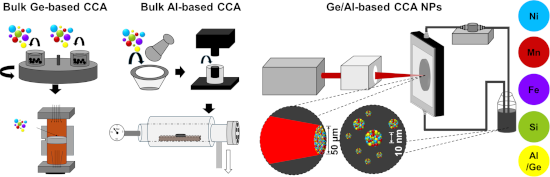
- 2.8 J·cm−2 [41]. Additionally, to increase the NP concentration and reduce the organic solvent use, a closed loop liquid flow system was employed. Size distribution, morphology, elemental composition, and crystal structure of the NPs from both CCA targets were examined using transmission electron
- carbon-supported TEM copper grid and dried under ambient conditions. The particle size distribution was determined by measuring the Feret diameter of individual particles from TEM images using ImageJ software [52]. The NP crystal structure was evaluated using CrysTBox software [53] using digital
- components that can be later in-situ alloyed during PLAL to generate compositionally controlled CCA NPs. CCA NP synthesis and characterization Particle size distribution The NPs synthesized by pulsed laser ablation in ethanol exhibit a log–normal particle size distribution ranging from 2 to 130 nm for both


Morphology and properties of pyrite nanoparticles obtained by pulsed laser ablation in liquid and thin films for photodetection
Beilstein J. Nanotechnol. 2025, 16, 785–805, doi:10.3762/bjnano.16.60
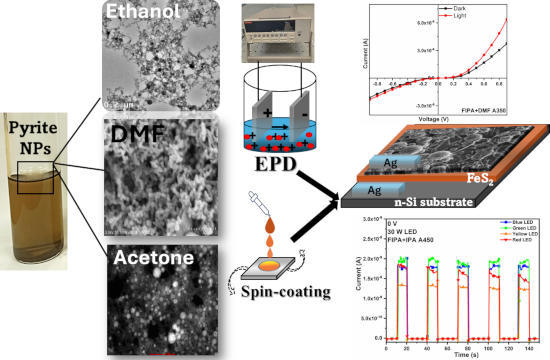
- morphological differences of the pyrite NPs generated in different solvents such as IPA, DMF, ethanol, methanol and acetone, and their respective TEM, HRTEM, and STEM images, particle size distribution, and SAED patterns are provided in Figures 2–6. The lattice fringes from HRTEM images and the diffraction
- of 13.41 nm, a few clusters were also observable and can be justified based on the bimodal size distribution of the particles (1 to 50 nm and from 80 to 85 nm) observed. The long rod-like particles in the SEM images (Figure 2g–i) are indicated by red oval shapes. The (210) and (211) planes that
- calculated in this work were 26.7, 26.9, and 17.1 nm for FeS2 NPs in ethanol, methanol, and acetone, respectively. A clear effect of different solvents on the morphology of the generated NPs by PLAL is visible from the TEM and SEM analyses in the current work. The histogram for size distribution and the






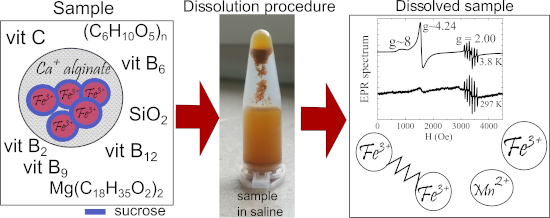
Changes of structural, magnetic and spectroscopic properties of microencapsulated iron sucrose nanoparticles in saline
Beilstein J. Nanotechnol. 2025, 16, 762–784, doi:10.3762/bjnano.16.59
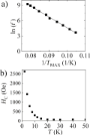
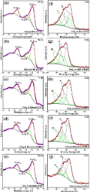
- σ = 0.3, and the inset shows the obtained particle size distribution. It is well visible that the predicted model describes the experimental data perfectly. The small
value of the nanoparticles found in the fitting, and a quite narrow f(D) distribution coincide with the shape of the ZFC curve