Search results
Search for "soft matter" in Full Text gives 45 result(s) in Beilstein Journal of Nanotechnology.
A simple and efficient quasi 3-dimensional viscoelastic model and software for simulation of tapping-mode atomic force microscopy
Beilstein J. Nanotechnol. 2015, 6, 2233–2241, doi:10.3762/bjnano.6.229
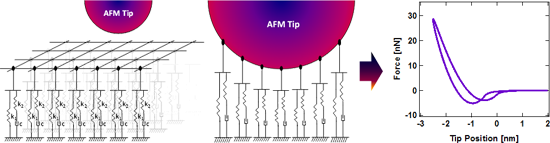
- variations in the surface geometry, following indentation by the tip. The model is a step forward in terms of introducing more accurate physics into the modeling of viscoelastic soft matter within AFM while keeping the computational cost relatively low, and can be further enhanced through the introduction of



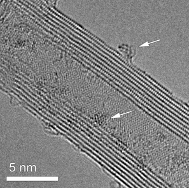
Possibilities and limitations of advanced transmission electron microscopy for carbon-based nanomaterials
Beilstein J. Nanotechnol. 2015, 6, 1541–1557, doi:10.3762/bjnano.6.158
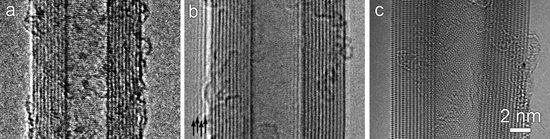
- Introduction For decades the electron microscopy community was strictly divided into biology on the one end and materials science on the other end. Meanwhile, however, the importance of “soft matter”, such as zeolites, porous materials, polymers, hybrid materials and carbon-based nanomaterials, is rapidly
- increasing. Optimal integration of soft matter materials into nanodevices calls for a fundamental interpretation of the structure of the materials, for which classical electron microscopy was actually poorly equipped. Soft matter materials are much more sensitive to electron beam damage compared to
- high resolution, manufacturers went on to higher operation voltages in the sixties and seventies of the twentieth century [2][3][4][5]. This came at the price of increasing beam damage, and consequently separated the study of hard matter (metal or robust inorganic materials) and soft matter


Peptide-equipped tobacco mosaic virus templates for selective and controllable biomineral deposition
Beilstein J. Nanotechnol. 2015, 6, 1399–1412, doi:10.3762/bjnano.6.145
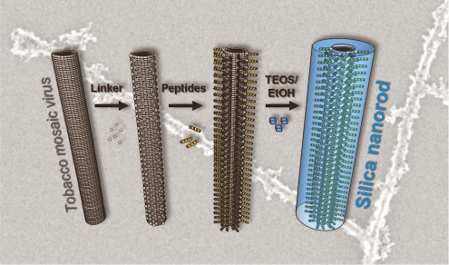
- in guiding the deposition of silica sheaths from TEOS precursor solutions around the viral soft-matter cores. The peptide KD10 designed in this study on the basis of earlier tests [61] allowed for the most selective and controllable silicification by sol–gel condensation. This was likely due to its
- manufacture of freely suspended silica nanorods with a soft-matter core, devoid of significant amounts of byproducts. It would be interesting to characterize the mechanical properties of these composites in comparison to synthetically synthesized silica nanorods. This could potentially lead to fundamentally
- Si, the peak at m/z 28.02 CH2N+, and the peak at m/z 28.03 C2H4+. For TMV–KD10 with TEOS and TMVwt with TEOS, the decrease of the CH2N+ peak, indicating peptide/protein components, is an indirect effect of the mineralization, shielding the soft-matter surface of biotemplate particles. Mineralization




Self-assembly of nanostructures and nanomaterials
Beilstein J. Nanotechnol. 2015, 6, 1397–1398, doi:10.3762/bjnano.6.144

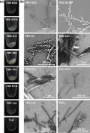
- biological materials, soft matter, metals and semiconductors. Self-assembly is a process that builds an ordered structure, brick-by-brick, starting from disordered building blocks, using simple key ingredients. Self-assembly is commonly controlled by certain intrinsic material parameters (e.g., composition
Heterometal nanoparticles from Ru-based molecular clusters covalently anchored onto functionalized carbon nanotubes and nanofibers
Beilstein J. Nanotechnol. 2015, 6, 1287–1297, doi:10.3762/bjnano.6.133
- . 262348 European Soft Matter Infrastructure).




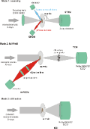
Overview of nanoscale NEXAFS performed with soft X-ray microscopes
Beilstein J. Nanotechnol. 2015, 6, 595–604, doi:10.3762/bjnano.6.61
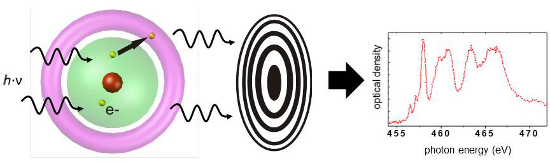
- Peter Guttmann Carla Bittencourt Institute for Soft Matter and Functional Materials, Helmholtz-Zentrum Berlin für Materialien und Energie GmbH, Albert-Einstein-Str. 15, 12489 Berlin, Germany ChIPS, University of Mons, B-7000, Mons, Belgium 10.3762/bjnano.6.61 Abstract Today, in material science


Entropy effects in the collective dynamic behavior of alkyl monolayers tethered to Si(111)
Beilstein J. Nanotechnol. 2015, 6, 583–594, doi:10.3762/bjnano.6.60
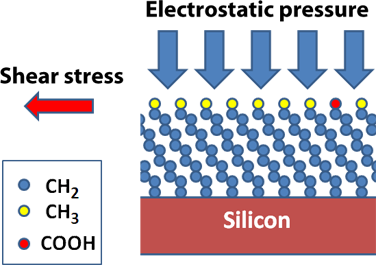
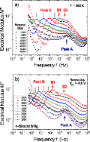
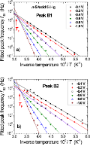
- ][33][34][35]. These robust densely packed insulating molecular layers play the role of nanometer-thick tunnel barriers [25][27][31][32][36][37][38][39]. Although conformational changes are intrinsic to soft matter, the consequences of temperature-induced [25][26][27][31] and pressure-induced [7][9




Dynamic force microscopy simulator (dForce): A tool for planning and understanding tapping and bimodal AFM experiments
Beilstein J. Nanotechnol. 2015, 6, 369–379, doi:10.3762/bjnano.6.36
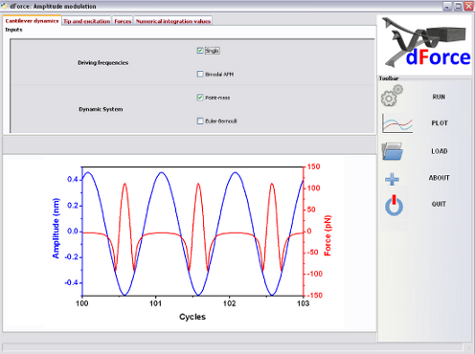
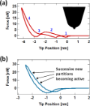
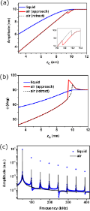
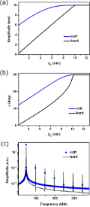
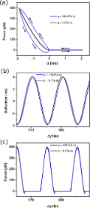
- material (Figure 4c). Viscoelastic materials Experiments involving soft matter usually imply the existence of a viscoelastic response. Figure 5a shows the viscoelastic force calculated with the Garcia–San Paulo expression (Equation 20). Far from the sample surface, the force is zero (not including long




Accurate, explicit formulae for higher harmonic force spectroscopy by frequency modulation-AFM
Beilstein J. Nanotechnol. 2015, 6, 149–156, doi:10.3762/bjnano.6.14
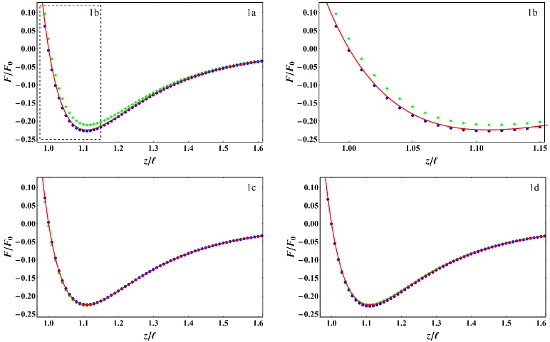
- force maps that carry unprecedented information on the interfacial properties of soft matter [3], water structure [1][2] and ion ordering [4]. The generation of such force maps relies invariably on AC detection methods, most commonly at frequencies in the vicinity of the cantilever’s fundamental


Inorganic Janus particles for biomedical applications
Beilstein J. Nanotechnol. 2014, 5, 2346–2362, doi:10.3762/bjnano.5.244
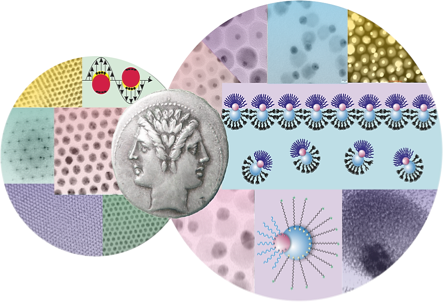
- single particle. De Gennes was one of the first to point out the significance and potential of Janus particles in his Nobel lecture entitled “Soft Matter” in 1991 [21]. Eponym is the two-faced Roman god Janus, the god of beginning and ending, doors and gates [22]. Initiated by the lecture of de Gennes, a






Nanobioarchitectures based on chlorophyll photopigment, artificial lipid bilayers and carbon nanotubes
Beilstein J. Nanotechnol. 2014, 5, 2316–2325, doi:10.3762/bjnano.5.240
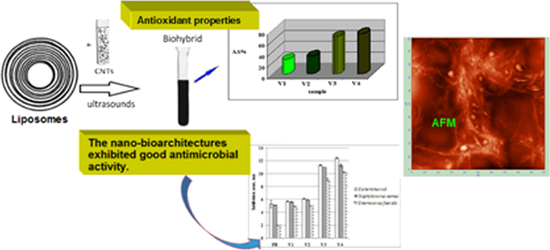
- could open new perspectives for biomedical and biotechnological applications. The increased interest in use of phospholipids is due to the fact that they are basic structural components of biomembranes and artificial lipid membranes (liposomes). Liposomes are spherical, soft-matter vesicles composed of


Near-field photochemical and radiation-induced chemical fabrication of nanopatterns of a self-assembled silane monolayer
Beilstein J. Nanotechnol. 2014, 5, 1441–1449, doi:10.3762/bjnano.5.156
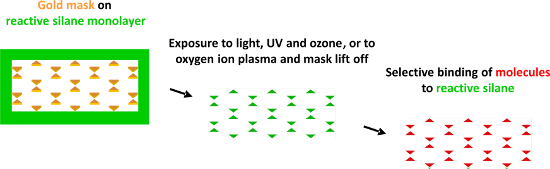
- Macromolecular Chemistry (IOMC) and Jena Center for Soft Matter (JCSM), Friedrich Schiller University, Humboldtstr. 10, 07743 Jena, Germany 10.3762/bjnano.5.156 Abstract A general concept for parallel near-field photochemical and radiation-induced chemical processes for the fabrication of nanopatterns of a self


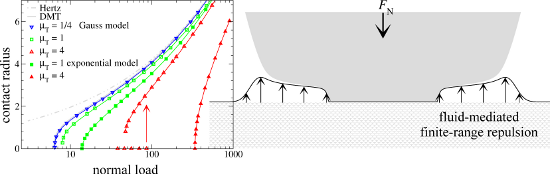
Single-asperity contact mechanics with positive and negative work of adhesion: Influence of finite-range interactions and a continuum description for the squeeze-out of wetting fluids
Beilstein J. Nanotechnol. 2014, 5, 419–437, doi:10.3762/bjnano.5.50


Unlocking higher harmonics in atomic force microscopy with gentle interactions
Beilstein J. Nanotechnol. 2014, 5, 268–277, doi:10.3762/bjnano.5.29
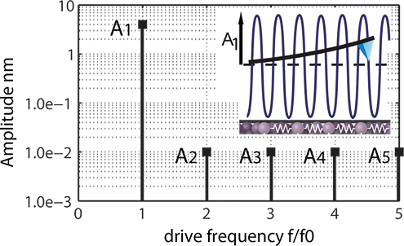
- orthogonality. Furthermore 2(N−1) observables, i.e., higher harmonic amplitudes and phases, are made available even with peak forces no higher than 200 pN, as they are required [25][39] for high resolution and minimally invasive imaging of soft matter. Thermal fluctuations are also considered here in order to
- , harmonic amplitudes rapidly decrease with increasing harmonic number particularly when imaging soft matter [6][15][46]. The main discussion above has focused on externally driving higher harmonics to amplitudes that could be experimentally detected. Then, once these amplitudes are sufficiently high, the

![[Graphic 7]](/bjnano/content/inline/2190-4286-5-29-i27.png?max-width=637&scale=1.18182) of higher harmonics, including the fundamental shift
of higher harmonics, including the fundamental shift ![[Graphic 8]](/bjnano/content/inline/2190-4286-5-29-i28.png?max-width=637&scale=1.18182) , when N = 10 external harmonic ...
, when N = 10 external harmonic ...


Peak forces and lateral resolution in amplitude modulation force microscopy in liquid
Beilstein J. Nanotechnol. 2013, 4, 852–859, doi:10.3762/bjnano.4.96
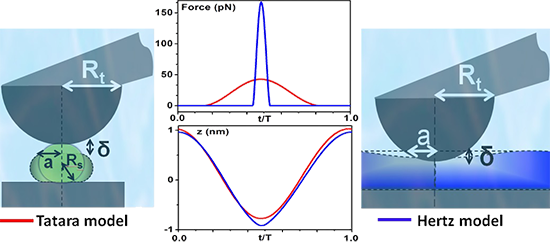
- consequence, the Tatara model allows a maximum vertical deformation equal to Reff and is particularly suited to describe large deformations (with respect to the original size) of relatively soft matter, in which a vertical force generates both vertical and lateral deformations. To apply contact mechanics


Dynamic nanoindentation by instrumented nanoindentation and force microscopy: a comparative review
Beilstein J. Nanotechnol. 2013, 4, 815–833, doi:10.3762/bjnano.4.93
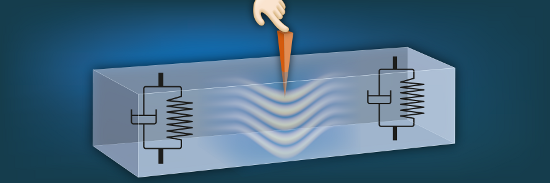
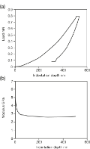
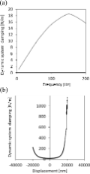
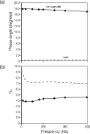
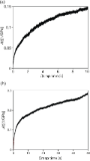
- , and for seeing heterogeneities at the nanoscale, as well as local effects which occur due to a vertical polymer confinement [5]. The time dimension is of particular use in determining the viscoelastic response, which cannot be neglected in analysis of many polymers, biomaterials, and other soft matter




Low-dose patterning of platinum nanoclusters on carbon nanotubes by focused-electron-beam-induced deposition as studied by TEM
Beilstein J. Nanotechnol. 2013, 4, 77–86, doi:10.3762/bjnano.4.9
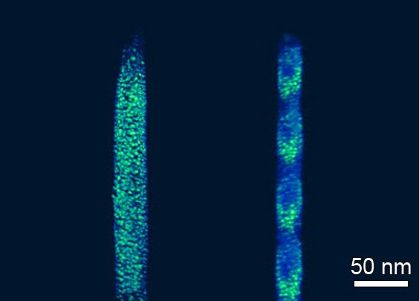
- . Ke, S. Bals and G. Van Tendeloo appreciate financial support from the European Union under the Seventh Framework Program (Integrated Infrastructure Initiative N. 262348 European Soft Matter Infrastructure, ESMI). X. Ke and G. Van Tendeloo are grateful to the ERC advanced grant “COUNTATOM”. S. Bals
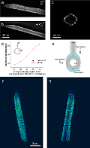


Towards atomic resolution in sodium titanate nanotubes using near-edge X-ray-absorption fine-structure spectromicroscopy combined with multichannel multiple-scattering calculations
Beilstein J. Nanotechnol. 2012, 3, 789–797, doi:10.3762/bjnano.3.88
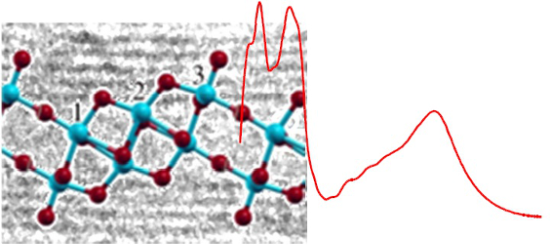
- des Matériaux de Nantes (IMN), Université de Nantes, CNRS, Nantes, France Jožef Stefan Institute, Jamova cesta 39, 1000 Ljubljana, Slovenia Center of Excellence NAMASTE, Jamova cesta 39, 10000 Ljubljana, Slovenia Helmholtz-Zentrum Berlin für Materialien und Energie GmbH, Institute for Soft Matter and



X-ray absorption spectroscopy by full-field X-ray microscopy of a thin graphite flake: Imaging and electronic structure via the carbon K-edge
Beilstein J. Nanotechnol. 2012, 3, 345–350, doi:10.3762/bjnano.3.39
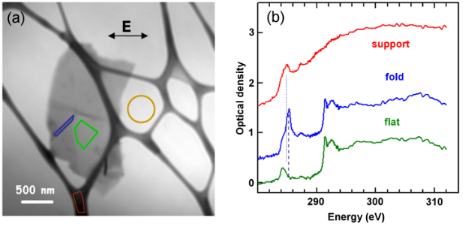
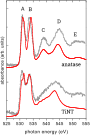
- Jean Rouxel (IMN), Université de Nantes, CNRS, Nantes, France Helmholtz-Zentrum Berlin für Materialien und Energie GmbH, Institute for Soft Matter and Functional Materials, D-12489 Berlin, Germany 10.3762/bjnano.3.39 Abstract We demonstrate that near-edge X-ray-absorption fine-structure spectra


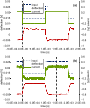
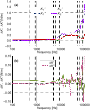
Pulse-response measurement of frequency-resolved water dynamics on a hydrophilic surface using a Q-damped atomic force microscopy cantilever
Beilstein J. Nanotechnol. 2012, 3, 260–266, doi:10.3762/bjnano.3.29
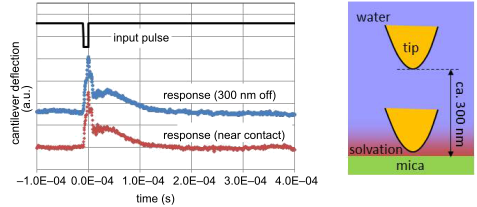
- studying the dynamical properties of matter, especially so-called soft matter. It is remarkable that the time-scales of hydration dynamics reported, based on AFM [11][13][15][19] and other mechanical measurements [20][21], differ by orders of magnitude from even those reported from conventional macroscopic
- water using the AFM have mostly been carried out only at a single frequency. As a matter of course, interest is oriented toward the mapping of the frequency-resolved viscoelasticity spectrum. The number of reports of the frequency-resolved viscoelasticity analysis of soft matter using the AFM is quite
- limited [22][23][24][25]. Using the method of exciting the AFM cantilever with a well-characterized magnetic force [26][27], attempts have been made to measure the frequency-resolved viscoelasticity spectrum of soft-matter systems. The most straightforward approach is a frequency-domain measurement, in