Search results
Search for "stimuli-responsive" in Full Text gives 40 result(s) in Beilstein Journal of Nanotechnology.
The impact of molecular tumor profiling on the design strategies for targeting myeloid leukemia and EGFR/CD44-positive solid tumors
Beilstein J. Nanotechnol. 2021, 12, 375–401, doi:10.3762/bjnano.12.31
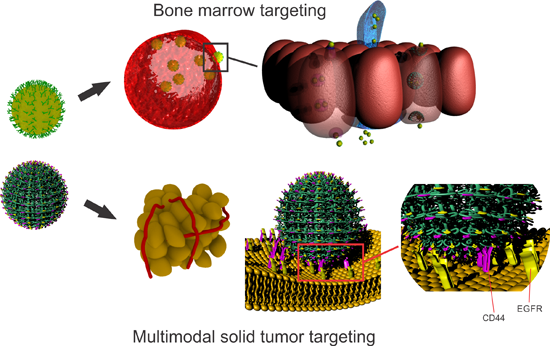
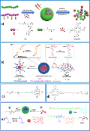
- migrate toward other target molecules to form multimeric bonds, thus enhancing the robustness of the bonding among the nanoscale carriers and target cells. In addition to the sliding targeting ligands, the authors enabled stimuli-responsive drug release by incorporating i-motif DNA in the nanoscale
- , resulting in a burst release of the core contents. In this way, the authors managed to achieve a stimuli-responsive sequential drug release pattern. IM will be released in the cytoplasm from the dextrane complexes due to the activity of intracellular protease while the nilotinib–chitosan complexes will be


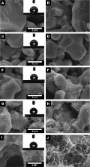
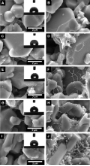
A 3D-polyphenylalanine network inside porous alumina: Synthesis and characterization of an inorganic–organic composite membrane
Beilstein J. Nanotechnol. 2020, 11, 938–951, doi:10.3762/bjnano.11.78
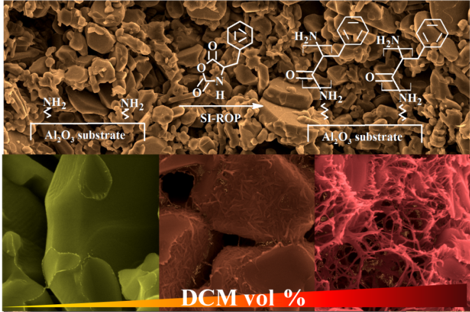
- well as the mechanisms of gel formation have been studied in detail. Hydrophilic gels with functional side groups enable stimuli-responsive hydrogels with interesting properties with regards to drug release systems. A drawback of these gels is their low mechanical stability, which can however be




Multilayer capsules made of weak polyelectrolytes: a review on the preparation, functionalization and applications in drug delivery
Beilstein J. Nanotechnol. 2020, 11, 508–532, doi:10.3762/bjnano.11.41
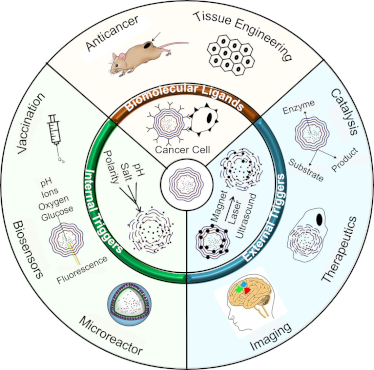
- between β-cyclodextrin monolayers as host and polymers modified with adamantyl groups as guests, which also resulted in stable multilayers [61]. The first stimuli-responsive supramolecular hydrogels films based on these reactions were built in 2006 using β-cyclodextrin and adamantyl modified chitosan
- ]. First stimuli responsive supramolecular hydrogel films based on β-cyclodextrin and adamantyl-modified chitosan derivatives have demonstrated a reversible swelling and shrinking upon changing the ionic strength [62]. At high ionic strength, the decrease in the electrostatic repulsive effect between the



Interfacial charge transfer processes in 2D and 3D semiconducting hybrid perovskites: azobenzene as photoswitchable ligand
Beilstein J. Nanotechnol. 2020, 11, 466–479, doi:10.3762/bjnano.11.38
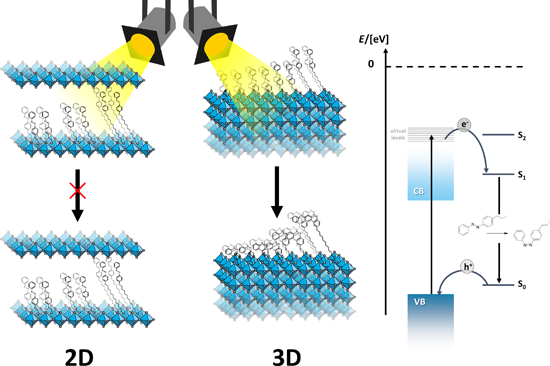
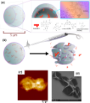
- design of the organic cations [25][26]. A number of molecular π systems contain a stimuli-responsive moiety. These compounds have been widely discussed in literature as molecular switches [27][28][29]. Among these, azobenzene derivatives are very prominent and have been studied extensively [30][31][32




Rational design of block copolymer self-assemblies in photodynamic therapy
Beilstein J. Nanotechnol. 2020, 11, 180–212, doi:10.3762/bjnano.11.15
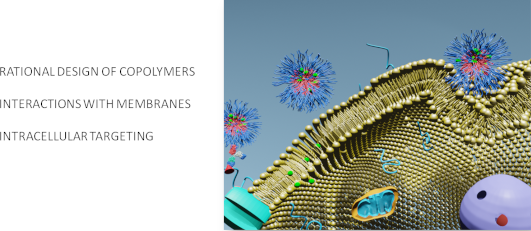
- )degradation or dissociation), the affinity to the PS and its loading and positioning inside the vector, and the possibility to introduce stimuli-responsive groups (enabling appropriate release). Similarly, the molecular weight of the polymer will have an impact on the crystallinity, the vector morphology, its
- the production of ROS upon irradiation. Stimuli-responsive vectors This strategy has been examined a lot during the last years, in a general manner for nanomedicine but also for PDT. As already explained above, the principle is to benefit from the biological medium environment to trigger the drug






Molecular architectonics of DNA for functional nanoarchitectures
Beilstein J. Nanotechnol. 2020, 11, 124–140, doi:10.3762/bjnano.11.11
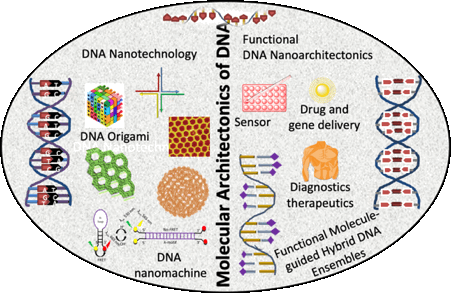
- healthy and Neiman–Pick-diseased patients. The results showed significant differences in the lysosomal population in cells between the diseased and the healthy state. The group of Andersen reported a DNA nanobox with controllable lid, and its dynamic nature potentially facilitated the stimuli-responsive


Fully amino acid-based hydrogel as potential scaffold for cell culturing and drug delivery
Beilstein J. Nanotechnol. 2019, 10, 2579–2593, doi:10.3762/bjnano.10.249
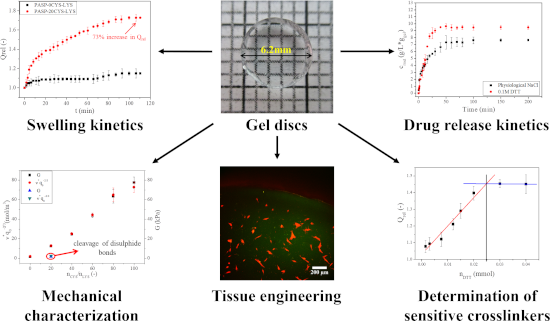
- the changing environmental conditions. Therefore, hydrogels can be used as drug delivery systems [4], implants [5][6], coatings [7][8] or scaffolds for tissue engineering [2][3][9][10]. Besides these stimuli-responsive properties, the chemical and physical structure, the mechanical properties [10] as


Features and advantages of flexible silicon nanowires for SERS applications
Beilstein J. Nanotechnol. 2019, 10, 725–734, doi:10.3762/bjnano.10.72

- economical for synthesis, but suffer from the lack of reproducibility due to unpredictable aggregation. Thus, researchers have implemented various ways to control the aggregation, such as bifunctional linker molecules, stimuli-responsive polymers, short single-stranded DNA chains or aptamers. Optimized solid


Targeting strategies for improving the efficacy of nanomedicine in oncology
Beilstein J. Nanotechnol. 2019, 10, 168–181, doi:10.3762/bjnano.10.16
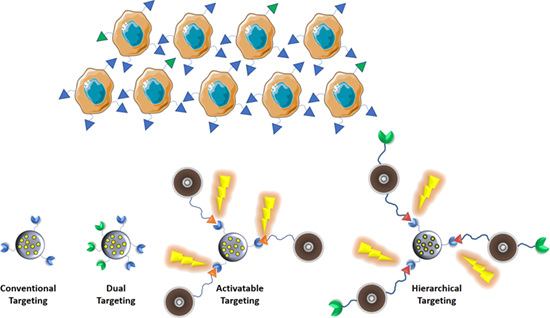
- scenario. Hierarchical targeting systems incorporate stimuli-responsive strategies in such a way that the targeting groups are hidden during the circulation of the carrier through the body and, therefore, the tissular accumulation occurs mainly through the EPR effect. Once the carrier reaches the tumoral
- through the incorporation of stimuli-responsive mechanisms that regulate the drug release from the nanocarrier. The incorporation of targeting moieties on the carrier surface produces a significative increase in the particle accumulation inside tumoral cells, which could improve the efficacy of the


Enhanced antineoplastic/therapeutic efficacy using 5-fluorouracil-loaded calcium phosphate nanoparticles
Beilstein J. Nanotechnol. 2018, 9, 2499–2515, doi:10.3762/bjnano.9.233
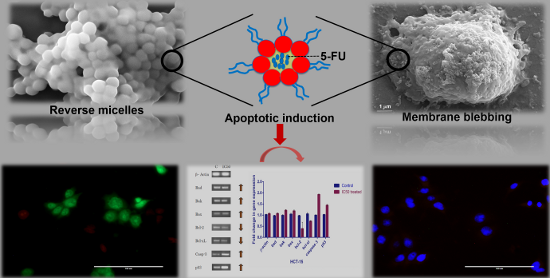
- bioavailability, increased chemical stability, stimuli-responsive behaviour, pH-dependent properties, surface engineering characteristics, low or no antigenicity [16] and aqueous solubility of calcium phosphate nanoparticles greatly enhances the therapeutic efficacy. The exploitation of calcium phosphate


Closed polymer containers based on phenylboronic esters of resorcinarenes
Beilstein J. Nanotechnol. 2018, 9, 1594–1601, doi:10.3762/bjnano.9.151
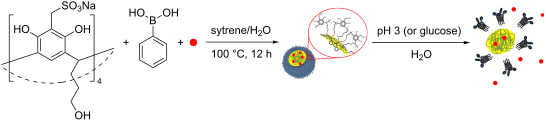
- sensing of carbohydrates and glycoproteins [5][6][7][8][9][10][11], in separation techniques [12] and in labeling and manipulation of proteins [13][14][15]. In recent years, boronic acid derivatives were applied in the construction of functional materials, i.e., stimuli-responsive devices and carriers for
- , which leads to the reconfiguration of the systems [28][29][30][31]. The synthesis of such systems is a multi-stage process that requires high amounts of reagents and time, which inhibits significantly a practical application. We propose a simple and easy method for the synthesis of stimuli-responsive
- constructed and then their tails connected by stimuli-responsive linkers to form a closed polymeric structure. The external stimulus acts on the linker, changing the structure and functionality of the system. This approach is quite simple and opens great opportunities. Employing resorcinarenes with different


High-stress study of bioinspired multifunctional PEDOT:PSS/nanoclay nanocomposites using AFM, SEM and numerical simulation
Beilstein J. Nanotechnol. 2017, 8, 2069–2082, doi:10.3762/bjnano.8.207
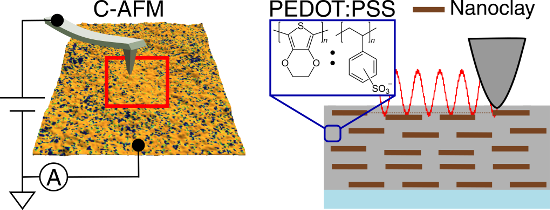
- also results in a fire-retardant material [16][17]. In recent years the focus has also shifted towards extending the functionality of nanocomposites to the design of stimuli-responsive systems [18]. In nanoclay-based systems, external stimuli reshape the organic phase conformation, and as a result, a


Non-covalent and reversible functionalization of carbon nanotubes
Beilstein J. Nanotechnol. 2014, 5, 1675–1690, doi:10.3762/bjnano.5.178
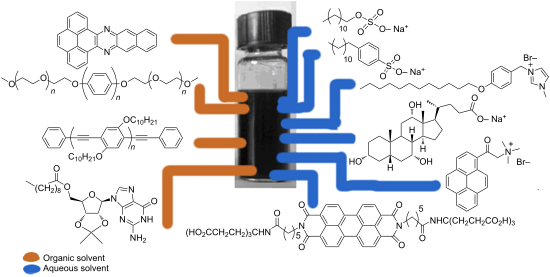
- possibility to obtain stimuli-responsive precipitation or dispersion of CNTs. Keywords: carbon nanotubes; non-covalent functionalization; π-stacking; reversible dispersion/precipitation; Introduction Carbon nanotubes (CNTs) are hollow cylindrical tubes with nanometer scale diameters and lengths up to a few



Approaches to nanostructure control and functionalizations of polymer@silica hybrid nanograss generated by biomimetic silica mineralization on a self-assembled polyamine layer
Beilstein J. Nanotechnol. 2011, 2, 760–773, doi:10.3762/bjnano.2.84
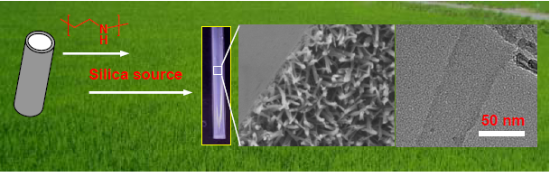
- novel external stimuli-responsive smart surface [47], with the superhydrophobic surface being switched into a superhydrophilic state by means of UV irradiation. Experimental Materials LPEI with an average polymerization degree of around 505 was synthesized by the hydrolysis of the corresponding


Self-organizing bioinspired oligothiophene–oligopeptide hybrids
Beilstein J. Nanotechnol. 2011, 2, 525–544, doi:10.3762/bjnano.2.57
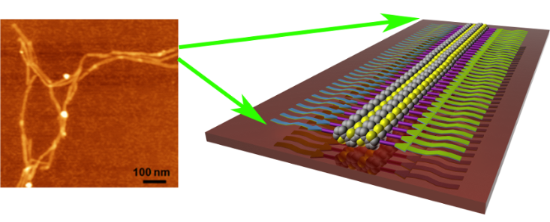
- self-assembly and stimuli-responsive properties, provided by the peptide moieties combined with the semiconducting properties of the thiophene blocks, can result in novel opportunities for the design of advanced smart materials. These bio-inspired molecular hybrids are experimentally shown to form
- of particular interest. The conjugation of oligothiophenes and amyloidogenic peptides may result in new compounds that supplement the potentially semiconducting, optical, and electroluminescent properties of oligo- and polythiophenes with the self-assembling, specific binding, and stimuli responsive