Search results
Search for "structure" in Full Text gives 2228 result(s) in Beilstein Journal of Nanotechnology. Showing first 200.
Two-step laser synthesis of Ag@TiO2 nanomaterials for the photocatalytic degradation of rhodamine B
Beilstein J. Nanotechnol. 2026, 17, 622–634, doi:10.3762/bjnano.17.43
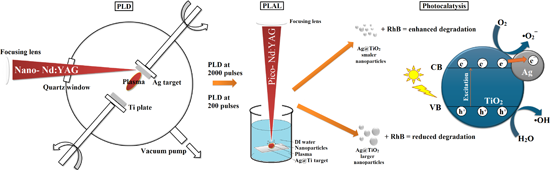
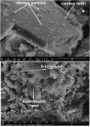
- nanoparticle formation, leading to improved control over nanoparticle structure and photocatalytic performance. Results and Discussion SEM analysis The surface morphology of PLD-prepared samples was analyzed using SEM-EDS (Figure 2 and Figure 3). SEM images of the sample surface after deposition of silver on
- higher concentration of this metal on Ag@TiO2 2000p affected the ablation rate of the Ti plate and induced a growth of titanium oxide nanostructures on the surface. Morphology and size of Ag@TiO2 (200p and 2000p) Morphology and structure of the obtained samples were analyzed using TEM, HRTEM, and SAED
- , confirming the crystalline structure of the synthesized Ag@TiO2 NPs samples. The diffraction rings correspond to the (101), (004), (200), (105), and (211) lattice planes of TiO2 nanocrystals (Figure 4c,f). The dominant contribution of TiO2-related diffraction rings suggests that the crystalline structure of


Recent progress in enhancing built-in electric fields of perovskite solar cells via junction engineering
Beilstein J. Nanotechnol. 2026, 17, 602–621, doi:10.3762/bjnano.17.42
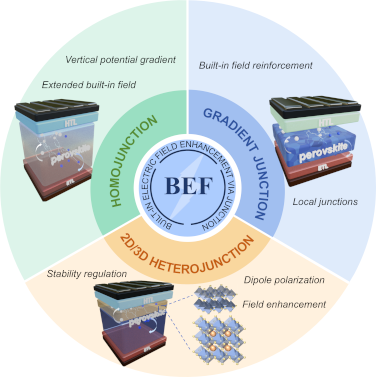
- engineering from the perspective of the BEF is warranted, with particular emphasis on unifying studies of homojunctions, gradient junctions, and 2D/3D heterojunctions into a coherent framework. Against this background, we define a “junction” as a generalized structure formed in the bulk or at the interface
- NSs, owing to their high hole mobility and elevated work function, induce a p-type region at the surface and spontaneously form n/p homojunctions with the preexisting n-type regions in the bulk, effectively creating a continuous energy-level staircase within the absorber. This structure extends the
- device efficiency of 23.2% with negligible hysteresis. Moreover, combined grain-boundary passivation and band-structure modulation by BP NSs enabled unencapsulated devices to retain over 92% efficiency maintained for 150 days (3,600 h) at 25 °C and 40% ± 10% relative humidity. Although this operational




Probing tribological evolution in atomically thin MoS2 at different scales
Beilstein J. Nanotechnol. 2026, 17, 586–597, doi:10.3762/bjnano.17.40
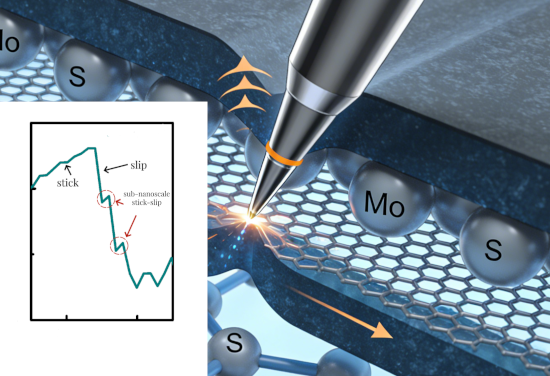
- 2D materials remain elusive, primarily due to the need for high resolution and precise control of tip–sample interactions. Atomically thin 2D materials are ideal platforms for studying nanoscale and sub-nanoscale friction, owing to their atomic smoothness, well-defined crystal structure, and chemical
- inertness [13][14][15]. Molybdenum disulfide (MoS2) as a representative 2D materials is particularly promising because of its trilayered structure (one Mo layer sandwiched between two S layers) and tunable interlayer interactions, making it a model system for investigating the nanoscale and sub-nanoscale
- 1L MoS2 system, there is no interlayer structure, so the sub-nanoscale stick–slip motion is solely attributed to the in-plane motion of the tip apex and the modulation of tip–sample contact geometry [11][12]. This is the fundamental reason why the slip distance of 4L MoS2 is smaller than that of 1L


Impacts of annealing on structural and photophysical properties of zinc phthalocyanine adsorbed on graphene
Beilstein J. Nanotechnol. 2026, 17, 576–585, doi:10.3762/bjnano.17.39
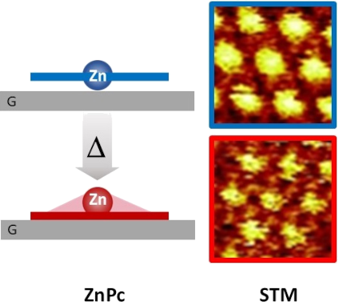
- forces, face-on versus edge-on molecule orientation, and planar-square versus shuttlecock molecule shape. Although the importance of thermal treatment on the interfacial structure of H2Pc [37] and ZnPc [38] on highly oriented pyrolytic graphite (HOPG) and graphene has been demonstrated, its mechanisms
- , application in interface structure management, and impact on electronic or photonic properties are still poorly understood. In this paper, focusing on ZnPc, we report the demonstration and analysis by combined STM operated at the air–solid interface and optical microspectroscopy of a 2D phase change
- Zn atom pointing outward (i.e., away from graphene) thus allowing the Pc-conjugated structure to approach closer to the graphene substrate. Returning to the absorption measurements, we infer that this planar-square to shuttlecock transition is accompanied by a shift of the Q-band, a small proportion


Laser–material interactions in liquids for the synthesis of nanomaterials: current status and perspectives
Beilstein J. Nanotechnol. 2026, 17, 571–575, doi:10.3762/bjnano.17.38

- changes in atomic structure, enabling defect engineering [20]. The broad materials library accessible through LSPC, combined with the wide range of laser, target, and solvent parameters, creates a complex multidimensional optimization space governing nanoparticle size, internal structure, composition, and
Synthesis of Cu–Mo/TiO2 and Co–Mo/TiO2 photocatalysts for the efficient degradation of organic pollutants in water
Beilstein J. Nanotechnol. 2026, 17, 559–570, doi:10.3762/bjnano.17.37
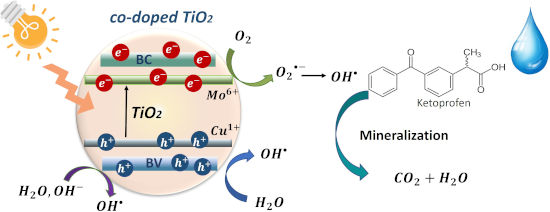
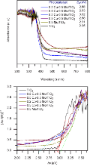
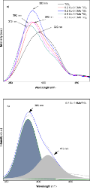
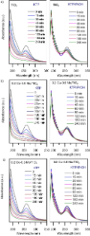
- was evidenced after dopant incorporation into the TiO2 structure. Morphological characterization showed poorly defined spherical particles that decreased in size with increasing Cu and Co concentrations. PL spectra showed an additional signal attributed to the ability of the metal dopants to capture
- into the semiconductor matrix. The incorporation of co-dopants results in the formation of heterostructures with different electronic structures compared to the TiO2 structure, which promotes charge separation and visible light absorption [6]. The incorporation of two types of cations into the TiO2
- area of 34.4 m2/g; with the incorporation of 0.5 wt % Mo and 0.2 wt % Cu, the surface area decreases substantially to 16.4 m2/g. This result can be related to changes in the morphology and crystalline structure of the TiO2 after doping. The decrease in surface area after Cu doping is a behavior



Electrochemical determination of ciprofloxacin using a MIL-101/reduced graphene oxide-modified electrode
Beilstein J. Nanotechnol. 2026, 17, 541–554, doi:10.3762/bjnano.17.35
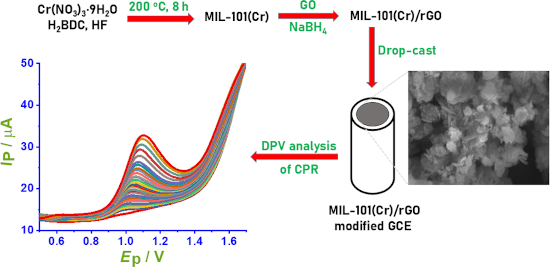
- species in C–O groups, hydroxy groups, or adsorbed water molecules associated with the rGO surface and the porous MOF structure [27]. The presence of these oxygen-containing species further supports the coexistence of MIL-101 and rGO within the composite. Overall, the XPS results confirm the successful
- combination of its two components. MIL-101(Cr) has a high surface area and abundant porous structure, providing numerous active sites and strong adsorption capability for the target molecules; rGO offers high electrical conductivity, facilitating rapid electron transfer. Repeatability, reproducibility, and


Fractional shot noise of an SU(N) Kondo system
Beilstein J. Nanotechnol. 2026, 17, 515–540, doi:10.3762/bjnano.17.34
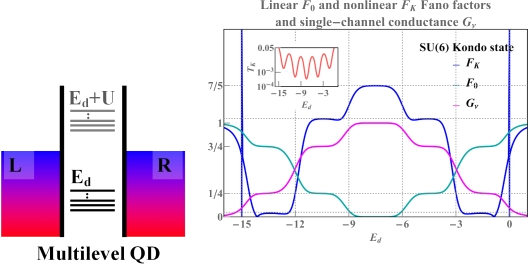
- degeneracy. From the perspective of potential applications, it is important that the Anderson SU(N) model can be realized in a controlled way in various nanoscopic structures [37][38] and in correlated cold atomic gases [39][40]. A proposal of the SU(6) Kondo effect for a QD structure can be found in [39
- capacitively coupled N-dot structure with dots connected to the separate leads. The occupation number operators of the spin-orbital and of the Fermi sea in the left (right) leads are given by and , respectively. We assume the coupling strength to the electrodes with the rectangular density of states 1/2W (W


![[Graphic 127]](/bjnano/content/inline/2190-4286-17-34-i187.svg?max-width=637&scale=1.18182)

Probing internal continua and atomic ultrafast charge transfer within size-controlled nanoparticles by post-collision interaction in core-hole clock spectroscopy
Beilstein J. Nanotechnol. 2026, 17, 505–514, doi:10.3762/bjnano.17.33
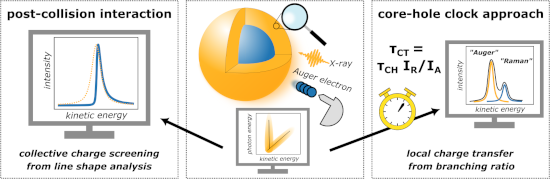
- -collision-interaction; quantum dots; resonant Auger spectroscopy; Introduction The interplay of electron localization, itinerance, and charge transfer is essential to functional nanoparticles and quantum dots (QDs) [1][2][3][4][5][6]. In terms of electronic structure properties, materials on the nanoscale
- photoluminescence quantum yield or RedOx chemistry, depend on a complex interplay of local and collective electronic structure aspects [10]. For example, quantum efficiency is strongly influenced by surface structure [11], the fabrication of core–shell and core–multishell architectures [12][13], and the choice of
- characterization of the QDs with UV–vis absorption spectroscopy, hard X-ray photoelectron spectroscopy (HAXPES), and near-edge X-ray absorption fine structure (NEXAFS) spectroscopy has been performed by us to verify the size-dependence of quantum confinement (see further details in Supporting Information File 1



Upcycling agroindustrial waste into graphene oxide supports for gold nanoparticles: toward sustainable nanomaterials
Beilstein J. Nanotechnol. 2026, 17, 489–504, doi:10.3762/bjnano.17.32
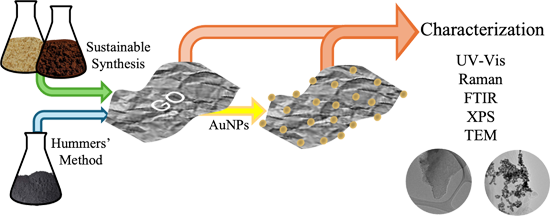
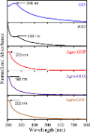
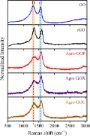
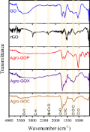
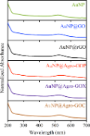
- materials GO and rGO. This spectroscopy technique provides initial insights into the electronic structure and degree of conjugation of the samples. Typically, the UV–vis absorption spectrum of GO exhibits two characteristic features, namely, a main absorption band in the 230–270 nm region, attributed to the
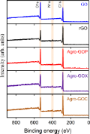
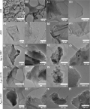
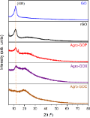
- ) peak, indicating reduced lamellar periodicity and a predominantly disordered structure, matching the results observed in TEM and XPS. TGA curves for the samples are shown in Figure 8, exhibiting a characteristic multistep weight-loss behavior typical of oxygenated carbon materials. An initial mass loss
- conditions (300 °C, 10 min), substantially reduces energy consumption compared to conventional biomass pyrolysis while still enabling the formation of GO with tunable structure and chemical features. The choice of biomass precursor proved crucial: Agro-GO samples exhibited precursor-dependent oxidation



Defects and defect-mediated engineering of two-dimensional materials: challenges and open questions
Beilstein J. Nanotechnol. 2026, 17, 454–488, doi:10.3762/bjnano.17.31
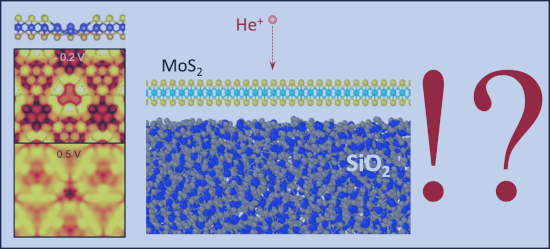
- created by impacts of energetic particles [18][19][20][21] by foreign atoms. Lots of insights into the structure and properties of defective 2D materials have been obtained using transmission electron microscopy (TEM), including conventional TEM and scanning TEM (STEM). These techniques, along with
- scanning probe methods, can provide information on the atomic structure of materials with sub-angstrom resolution [22]. The aberration-corrected TEM has made it possible not only to obtain images of impurities [23][24][25][26] and intrinsic point defects [27][28][29][30][31], but also to follow their
- and the mechanisms of defect formation. This indicates that defects can also be created deliberately during exposure to the electron beam, which can be used for engineering structure and properties of materials with potentially atomic resolution [34][35][36][37]. It should be pointed out that many





Nanocarrier-integrated multilayer films produced by 3D printing for improved skin adhesion and curcumin photostability
Beilstein J. Nanotechnol. 2026, 17, 440–453, doi:10.3762/bjnano.17.30
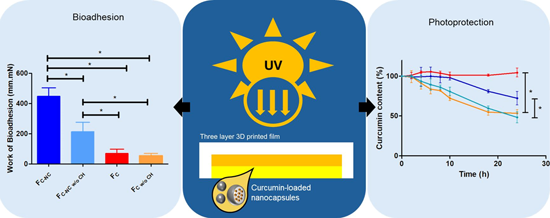
- while maintaining structural integrity after deposition [38][39]. Resulting from the high shear rates experienced within the printing nozzle, the cross-linked structure of the hydrogels may be affected during the 3D printing process. To monitor this effect, the thixotropic properties of the tested
- of Generative AI and AI-Assisted Technologies in the Writing Process During the writing of this work, the authors used ChatGPT to diversify vocabulary and clarify sentence structure. After using this tool/service, the authors reviewed and edited the manuscript as needed and take full responsibility


First-principles study on elastic properties of Cu, (Cu1−x,Nix)3Sn and interfacial mechanical properties of (Cu1−x,Nix)3Sn/Cu in the lead-free solder joint
Beilstein J. Nanotechnol. 2026, 17, 428–439, doi:10.3762/bjnano.17.29
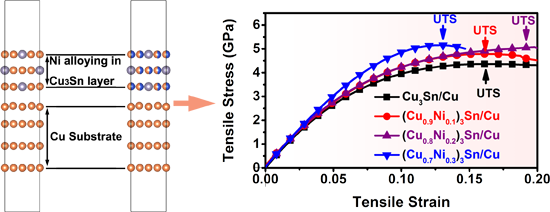
- efficiency without losing the accuracy by reducing the model size of the alloy systems. Considering the phase stability of (CuxNi1−x)3Sn [22], the content of Ni was set within the range from 0 to 30 atom %. As far as the calculations of the structure optimizations and elastic properties are concerned, a
- , the strain along the z-axis was fixed; at the same time, the stresses along the x-axis and the y-axis were relaxed to less than 0.5 GPa. For the calculations on the interface structure, a kinetic energy cutoff of 30 Hartree, a k-point mesh of 4 × 4 × 1 and a potential residual V(r) of less than 10−8
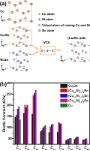
- Hartree were used to achieve self-consistent convergence. Results and Discussions Elastic properties of Cu and (CuxNi1−x)3Sn Figure 1a presents the optimized crystal structures of Cu and (CuxNi1−x)3Sn, where Cu crystallizes into the face-centered cubic (FCC) structure, and the (CuxNi1−x)3Sn crystallizes


Nanoinformatics: spanning scales, systems and solutions
Beilstein J. Nanotechnol. 2026, 17, 423–427, doi:10.3762/bjnano.17.28
- properties of nanomaterials reported in experimental papers, the ability to predict or impute physicochemical properties as inputs for quantitative structure/activity/property relationship (QSAR/QSPR) models is critical. Moncho et al. surveyed the nanomaterials QSAR literature to determine the variety of
- calculated and experimental features used to define and describe nanomaterials, and proposed a classification of the descriptors into those that directly describe a component of the nanoform (core, surface, or structure) and those that indirectly reflect its structure (experimental features related to the
- – quantitative read-across structure–property relationship (q-RASPR), and Stacked MLP – q-RASPR), resulting in more reliable predictions overall, and suggesting that this approach could enhance regulatory acceptance of in silico new approach methodologies for hazard and risk assessment of nanomaterials [5]. A

Biomimetic nanoparticles in cancer photodynamic therapy: a review of targeted delivery systems and therapeutic outcomes
Beilstein J. Nanotechnol. 2026, 17, 396–422, doi:10.3762/bjnano.17.27
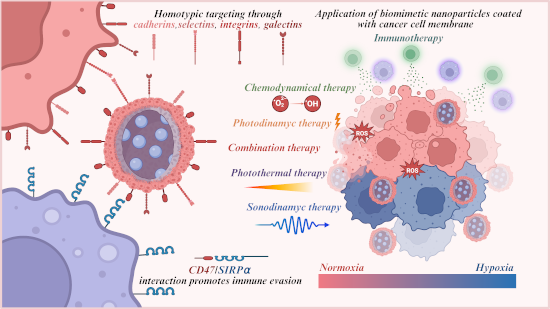
- coating thickness, core material, and release mechanisms. Addressing these challenges through standardized production protocols, improved characterization, and enhanced biocompatibility will be critical to advancing BNPs toward clinical application. Biomimetic nanocarriers, designed to replicate structure


Eco-efficient materials for agricultural crops based on a mineral rich in MOR- and HEU-type zeolites
Beilstein J. Nanotechnol. 2026, 17, 381–395, doi:10.3762/bjnano.17.26
- natural zeolites are a viable alternative for the development of efficient, agroecologically sustainable, and low-cost fertilizer materials for massive applications [3][4]. Natural zeolites are porous crystalline hydrated aluminosilicates. They have a three-dimensional, rigid, negatively charged structure
- negative charge of the structure. As a result, these materials have important intrinsic properties such as ion exchange and adsorption [5]. These qualities allow them to retain and carry chemical species of agricultural interest, such as PO43−, NH4+, NO3−, and molecular compounds (CO(NH2)2) minimizing
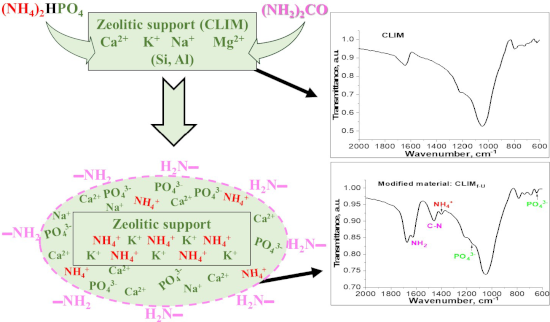
- absorption bands near to 1400 cm−1 corresponding to the bending vibrations of N–H bonds in NH4+-modified natural zeolites. In general, when ammonium interacts with the oxygen atoms of the zeolitic structure, various configurations are formed, each of which exhibits different interaction strength depending on




Polycatecholamine nanocoatings on stainless steel: the effect on attachment of human fibroblasts and platelets
Beilstein J. Nanotechnol. 2026, 17, 365–380, doi:10.3762/bjnano.17.25
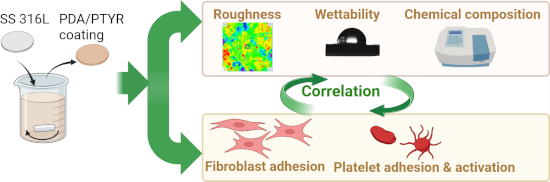
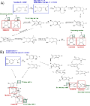
- oxidation. The resulting polymers contain mixtures of catechol and quinone moieties, as well as primary and secondary amine groups, whose relative proportions depend on the polymerization conditions [12][27][28][29]. The differences in monomer structure and oxidation route (e.g., Fenton-type vs autoxidation
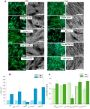
- platelets [48][49]. This was explained by PDA’s potential to bind any type of molecule, including fibrinogen, due to the chemical structure of PDA containing aromatic rings and reactive chemical groups. However, in the literature, there are no reports on PTYR nanocoatings regarding platelet adhesion. Our
- further evaluate the chemical structure of the coatings, FTIR-ATR spectra were obtained and analyzed. Methodology and results are described in Supporting Information File 1. Coating cytotoxicity towards L929 cells The MTT assay was applied to evaluate the cytotoxicity of obtained coatings. MTT salt is




Ferroelectric nanodot reservoir for neuromorphic computing
Beilstein J. Nanotechnol. 2026, 17, 352–364, doi:10.3762/bjnano.17.24
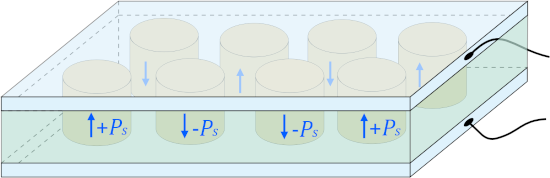
- harnessed for logic operations within a compact physical structure. While various approaches have demonstrated the use of ferroelectrics in neuromorphic computing at the level of individual elements, most existing implementations treat each ferroelectric component as an isolated device or a deterministic
- . Core nanodot unit To describe the basic operational mechanism of the ferroelectric reservoir introduced in Figure 1, we now examine its elementary building block, the ferroelectric nanodot. Figure 2 illustrates the structure and the nonlinear switching behavior of a single nanodot under external
- nanodot is embedded in an individual capacitor structure, and the capacitors are electrically connected in parallel through metallic interconnects. In Figure 3b, an alternative layout is shown in which all nanodots share the same pair of extended electrodes. In this case, the nanodots are arranged between


Interconnection morphology effects on the radio frequency response of carbon nanotube sponges
Beilstein J. Nanotechnol. 2026, 17, 343–351, doi:10.3762/bjnano.17.23
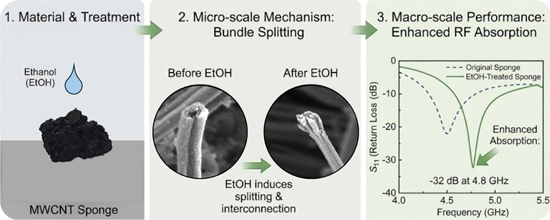
- interconnected structure of the samples. The Raman analysis results are in line with the morphological information obtained from the SEM data. The SEM and Raman experiments confirm the effect of ethanol on the CNS, which improves the presence of grooves and pores as available adsorption sites after ethanol
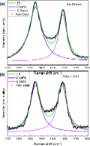
- composed mainly of electrons excited from the sp2 and sp3 hybridization of the honeycomb lattice and from the defects in the structure that also comprises OH groups. In particular, the spectra were fitted by the sum of three main components assigned to carbon–carbon bonds (C=C/C−C/C−H, 284.4 ± 0.1 eV
- fits in Figure 5. From the Raman and XPS studies, as well as the SEM micrographs, we conclude that the ethanol treatment induced a change in the structure of the CNS sample, unravelling many of the aggregated tubes, resulting in an increase in pore size and overall available surface area. Without




Beam shaping techniques for pulsed laser ablation in liquids: Unlocking tunable control of nanoparticle synthesis in liquids
Beilstein J. Nanotechnol. 2026, 17, 309–342, doi:10.3762/bjnano.17.22
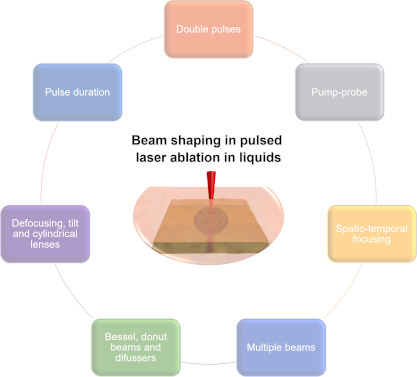
- . have demonstrated that the optical properties of Si/Au NPs, their structure, as well as their chemical composition can be modified by defocusing [143]. Defocusing 0.5 mm inside the target led to enhanced chemical stability of the colloids and increased concentration. Moreover, NP size control could be
- approximated by the Bessel function J0 [145]. The anatomy of the quasi-Bessel beam propagation in space is shown in Figure 8 with a detailed view of its spatiotemporal shape including the evolution of the cross-sectional structure [146]. Two laser beams, one continuous wave (CW) and a femtosecond pulsed laser
- time of common materials, 1–5 ps, resulting in a local heating process [181]. This energy transfer creates a state of nonthermal equilibrium, where the electron temperature rises quickly before the lattice (atomic structure) can respond, leading to localised heating. The energy is delivered quickly







Calculation of the dynamic stiffness of a cantilever under torsional oscillation
Beilstein J. Nanotechnol. 2026, 17, 303–308, doi:10.3762/bjnano.17.21
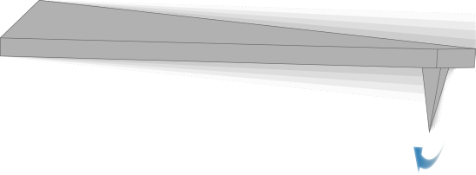
- from the geometrical structure [2], an accurate evaluation of dynamic stiffness requires detailed analyses of the oscillator dynamics. The modification from static to dynamic stiffness depends on the oscillation mode because each mode is governed by a different equation of motion reflecting the

Fast vortex dynamics and relaxation times in NbRe-based heterostructures
Beilstein J. Nanotechnol. 2026, 17, 292–302, doi:10.3762/bjnano.17.20
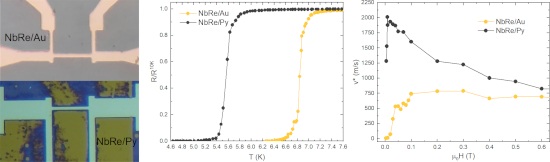
- , were characterized through electrical transport measurements. The I–V characteristics show that, in the NbRe/Py bilayer, vortices reach higher critical velocities than those observed in the NbRe/Au structure. The analysis of the flux-flow instability within the Larkin–Ovchinnikov framework allows one
- function of the magnetic field was investigated to understand how normal metals and ferromagnetic materials affect vortex motion. The experimental data show that the NbRe/Py bilayer exhibits larger critical vortex velocities than those of the NbRe/Au structure. Furthermore, the estimation of the energy


Advancing nanolithography: a comprehensive review of materials for local anodic oxidation with AFM
Beilstein J. Nanotechnol. 2026, 17, 275–291, doi:10.3762/bjnano.17.19
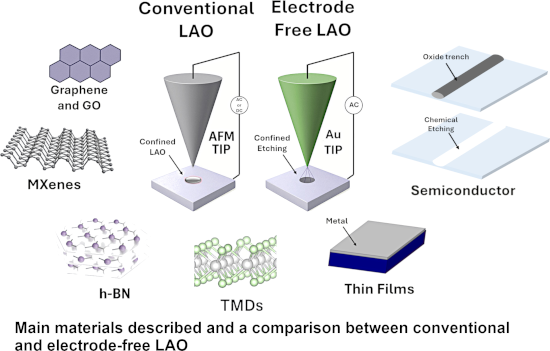
- oxide structure, while deeper regions exhibit increased contributions of Ti2O3 and TiO. The authors claim that the precise control of oxygen vacancies during LAO would enable the reproducible and scalable production of high-performance ReRAM devices. Aluminum oxidation by AFM LAO is well suited for


Durable antimicrobial activity of fabrics functionalized with zeolite ion-exchanged nanomaterials against Staphylococcus aureus and Escherichia coli
Beilstein J. Nanotechnol. 2026, 17, 262–274, doi:10.3762/bjnano.17.18
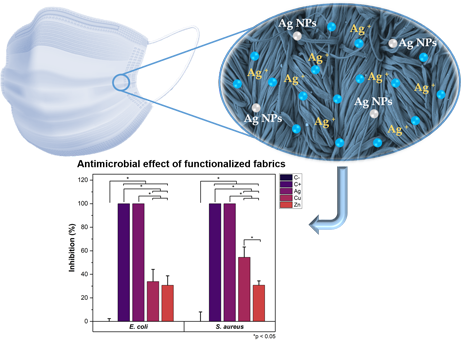
- -exchanged Y-type zeolites, which offer high ion-exchange capacity and a well-defined framework structure that facilitate efficient antimicrobial ion delivery. By applying those nanomaterials to commercial cotton fabrics via the pad–dry–cure method, we aim to further explore the feasibility and effectiveness
- coincided well with data provided by the supplier and measurements obtained through EDS and ICP-OES analysis. As discussed in our previous work [4], the ion exchange treatment did not induce any changes in the chemical composition of the zeolite structure, such as dealumination or disilation. No additional
- , transmission electron microscopy (TEM) images were obtained using a JEOL JEM-2200FS (200 kV), and elemental analysis was performed using EDS. The crystalline structure of the modified fabrics was determined by X-ray diffraction (XRD) in a Panalytical AERIS diffractometer using Cu Kα (λ = 1.54184 Å). The




Multilayered hyperbolic Au/TiO2 nanostructures for enhancing the nonlinear response around the epsilon-near-zero point
Beilstein J. Nanotechnol. 2026, 17, 251–261, doi:10.3762/bjnano.17.17
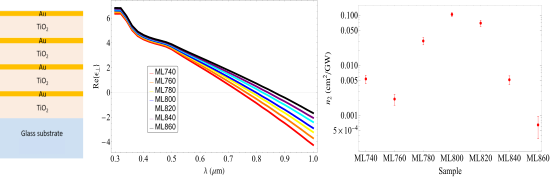
- –dielectric Au/TiO2 structures. The samples were fabricated using Joule effect evaporation for gold and electron beam evaporation for titanium dioxide. Their structure was designed to have an epsilon-near-zero (ENZ) point at different wavelengths around 800 nm, in order to study their nonlinear response as a
- the nonlinear response of a Ru/TiO2 multilayered structure as reported in [22]. This sample was designed to have an ENZ point at 800 nm and was fabricated using atomic layer deposition. During the linear characterization of the optical properties, spectral ellipsometry showed that the ENZ point
- structure so we could only assume that, during the fabrication process, the deposited Ru was oxidized, and the permittivity of the material substantially changed. We studied the nonlinear response of the structure using a tunable femtosecond source and found that, even with the shift in the ENZ point seen