Search results
Search for "sunlight" in Full Text gives 96 result(s) in Beilstein Journal of Nanotechnology.
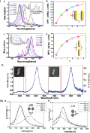
A visible-light photodetector based on heterojunctions between CuO nanoparticles and ZnO nanorods
Beilstein J. Nanotechnol. 2023, 14, 1018–1027, doi:10.3762/bjnano.14.84
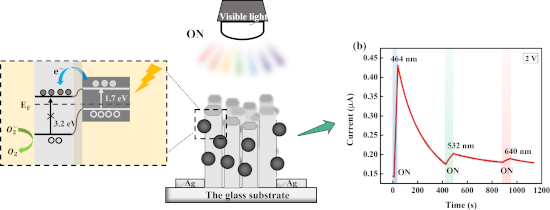
- [21]. Regardless, pure ZnO still has the considerable drawback of a wide bandgap (ca. 3.35 eV), which limits its usability for visible-light photodetectors. ZnO absorbs light only in the UV region (less than 4% of the sunlight spectrum) [23]. Extending the operation range of ZnO nanomaterials toward


Carboxylic acids and light interact to affect nanoceria stability and dissolution in acidic aqueous environments
Beilstein J. Nanotechnol. 2023, 14, 762–780, doi:10.3762/bjnano.14.63
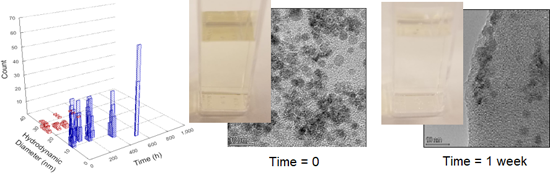
- light was studied to simulate exposure to sunlight compared to nanoceria suspensions protected from light. Light versus dark environments To assess the effect of light, samples were placed on a laboratory bench near windows and compared to replicates stored in the dark to simulate plant environments and
- ]. When exposed to artificial sunlight, ceria nanoparticles produced hydroxy radicals and induced lipid peroxidation of the gills of cardinal tetra, a native species of the Rio Negro region [45]. The citric acid coating can also be altered by UV irradiation. Photolysis of citric acid under a Hg lamp
- nanoceria was exposed to 16 carboxylic acids, ascorbic acid, sodium nitrate, ammonium nitrate, and water at pH 4.5 in light and dark environments to simulate sunlight exposure to plants and within biological systems. The hydrodynamic particle size was determined by DLS over 30 weeks. For most light exposure
Nanomaterials for photocatalysis and applications in environmental remediation and renewable energy
Beilstein J. Nanotechnol. 2023, 14, 722–724, doi:10.3762/bjnano.14.58

- appropriate for treating pollutants, even in atmospheric conditions [9][10][11]. Moreover, the photocatalysis method is also a potential solution for environmental remediation, carbon emission reduction, and renewable energy production [12][13][14]. Combining photocatalysts and sunlight irradiation is a
- was used whereas for water splitting natural sunlight was used [24][25][26]. These results are mentioned as scaling up photocatalytic systems to reach net zero emission goals and the next technology to produce green hydrogen energy [14]. Up-to-date trending topics on photocatalysts based on

Titania nanoparticles for photocatalytic degradation of ethanol under simulated solar light
Beilstein J. Nanotechnol. 2023, 14, 616–630, doi:10.3762/bjnano.14.51
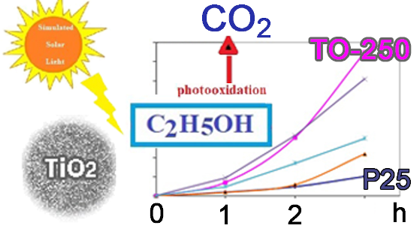
- sunlight in the presence of oxygen. The main intermediate product in the process of hydrogen photogeneration is acetaldehyde as intermediate, which can be further oxidized to CO2 and H2O, according to the following chemical equations: Hydrogen generation As can be seen in Figure 9, the H2 generation
- available at the surface. Carbon dioxide evolution The photo-oxidative conversion of ethanol to CO2 (and water) under simulated sunlight irradiation is depicted in Figure 10, revealing the different kinds of behavior of the sample series “a” and “b”. All samples of series “a” show a significant activity
- an area of about 3.6 cm2. This photoactive surface was subsequently exposed to simulated sunlight. Ethanol (7.2 µL) was injected into the photoreactor with a volume of about 120 cm3 containing 0.3% O2 in Ar. The temperature inside the photoreactor was maintained constant at 18 °C with a cryostat. The




Conjugated photothermal materials and structure design for solar steam generation
Beilstein J. Nanotechnol. 2023, 14, 454–466, doi:10.3762/bjnano.14.36
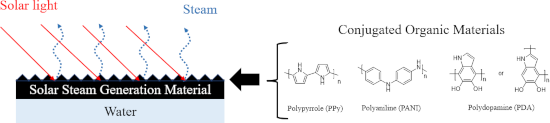
- first one is sunlight absorption. PTMs must be able to efficiently absorb light in order to utilize the irradiation energy. The second one is the photothermal conversion efficiency. Absorbed light needs to be converted to heat energy rather than other forms of energy loss. The last one is the efficiency
- of the steam generation from heat. The generated thermal energy must be used for water evaporation and heat loss to the environment needs to be avoided. Sunlight absorption The wavelength range and intensity of the solar spectrum are important factors for harnessing solar energy. As this review
- focuses on solar energy applications for water evaporation, the light absorbing properties of materials are intended to achieve the highest conversion of sunlight radiation at sea level. The AM1.5 standard represents the average annual solar radiation at the temperate latitudes (Figure 2a). Therefore, the


Plasmonic nanotechnology for photothermal applications – an evaluation
Beilstein J. Nanotechnol. 2023, 14, 380–419, doi:10.3762/bjnano.14.33




Bismuth-based nanostructured photocatalysts for the remediation of antibiotics and organic dyes
Beilstein J. Nanotechnol. 2023, 14, 291–321, doi:10.3762/bjnano.14.26
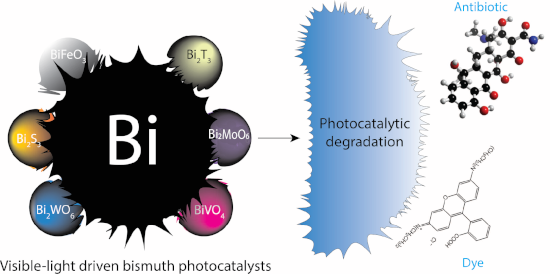
- inactivate pathogens. The term “photocatalysis” refers to chemical reactions that use light and a photocatalyst (basically a semiconductor). A few of the requirements that an effective photocatalyst system should satisfy include high sunlight absorption, an appropriate gap (1.5–2.8 eV), long-term charge
- effective photocatalyst in the visible-light region, because in contrast to other semiconductors such as TiO2, it has a very narrow bandgap (Figure 3) and slow electron–hole recombination. As 44% of solar radiation falls within the visible-light spectrum, BiFeO3 can be activated by direct sunlight, further
- of heterojunction systems have been overcome by Z-scheme photocatalysis systems, surface plasmon resonance effect, and Schottky junctions. An innovative method for further enhancing sunlight-driven photocatalytic performance in comparison to conventional heterojunction composites is to develop a Z


Single-step extraction of small-diameter single-walled carbon nanotubes in the presence of riboflavin
Beilstein J. Nanotechnol. 2022, 13, 1564–1571, doi:10.3762/bjnano.13.130
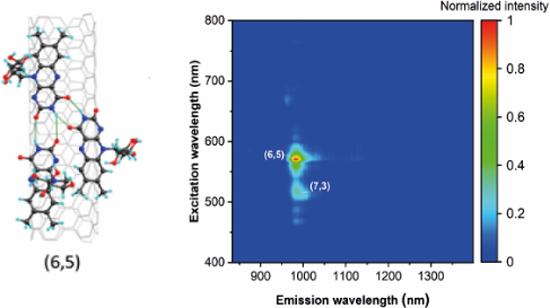
- added to a 2 mM riboflavin solution in deionized water and stored for 14 days at room temperature in a dry chamber without exposure to direct sunlight. The final concentration of SWCNTs in dispersion was 1 mg/mL. Then, the dispersions were processed with ultrasonic treatment using Branson 450 digital


A TiO2@MWCNTs nanocomposite photoanode for solar-driven water splitting
Beilstein J. Nanotechnol. 2022, 13, 1520–1530, doi:10.3762/bjnano.13.125
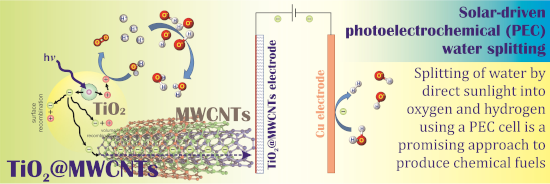
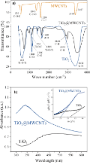
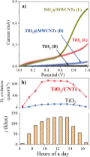
- spectra (DRS) are recorded with a spectrophotometer (FL-1039, HORIBA) using a 450 W xenon lamp. A portable Lux-meter (MW700, Milwaukee) and a pyranometer (SR30, Huseflux) are used for sunlight intensity and irradiance measurements. Photoelectrochemical measurements Electrochemical measurements are
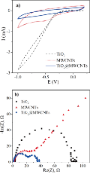
- naturally luminous emittance. The relation of current and potential is recorded under dark (D) and light (L) conditions corresponding to the sunlight intensity below 10 lux and around 100 lux. Photoelectrochemical water splitting performance experiments are carried out under natural sunlight using a two
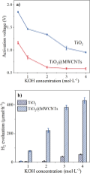
- 10b shows the hydrogen production and the average light intensity as a function of the time of the day from 6:00 AM to 5:00 PM. In Figure 10b, the sunlight illuminance peaks from 10:00 AM to 2:00 PM correlate with the highest hydrogen production of the TiO2@MWCNTs electrode. The TiO2 electrode



Recent trends in Bi-based nanomaterials: challenges, fabrication, enhancement techniques, and environmental applications
Beilstein J. Nanotechnol. 2022, 13, 1316–1336, doi:10.3762/bjnano.13.109
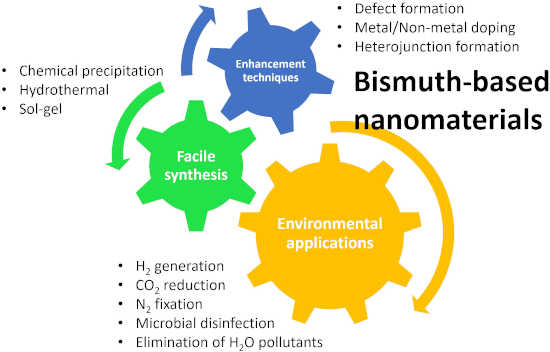
- in rapid recombination [43]. In addition to a low rate of recombination, other essential qualities of a superior photocatalyst include broad sunlight absorption and enough redox capacity. A small bandgap is desirable regarding a broad light absorption band. However, when redox ability is considered




Application of nanoarchitectonics in moist-electric generation
Beilstein J. Nanotechnol. 2022, 13, 1185–1200, doi:10.3762/bjnano.13.99
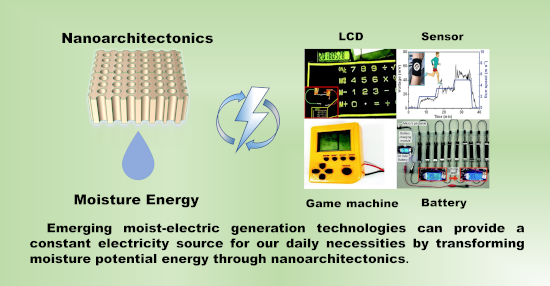
- power variation curve. Figure 10o and 10p were reproduced from [93], Bai, J. et al., “Sunlight-Coordinated High-Performance Moisture Power in Natural Conditions”, Adv. Mater., with permission from John


Influence of thickness and morphology of MoS2 on the performance of counter electrodes in dye-sensitized solar cells
Beilstein J. Nanotechnol. 2022, 13, 528–537, doi:10.3762/bjnano.13.44
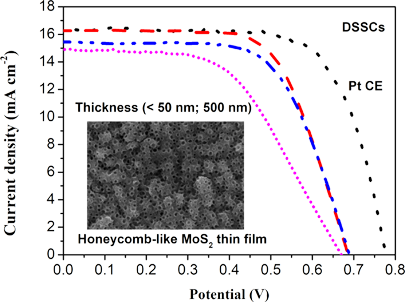
- -Newport-USA, Model No. 94061A). Simulated sunlight of 100 mW·cm−2 (1 sun) was generated and corrected by a 1000 W Xe lamp and an AM 1.5 filter. The photocurrent density–voltage (J–V) curves of the DSSCs were measured using a Keithley model 2400 multisource meter. Electrochemical impedance spectroscopy


Engineered titania nanomaterials in advanced clinical applications
Beilstein J. Nanotechnol. 2022, 13, 201–218, doi:10.3762/bjnano.13.15
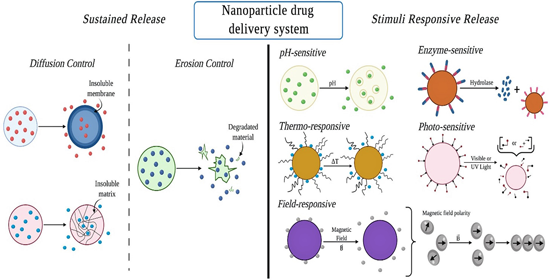
- hyperthermic physiological responses. Titania is capable of producing a number of cytotoxic ROS in the presence of sunlight/UV light (e.g., •OH, •O2−, H2O2), as illustrated in Figure 6, which may contribute to the death of cancer cells, and has been deemed a suitable candidate for PDT [110]. The principal
- a significant photodynamic effect exhibited by PEGylated undoped-TiO2 with 75% killing of HeLa cells at a concentration of 5.5 μg/mL in response to UV or sunlight radiation [113]. TiO2 and ZnO2 are the most effective photosensitizers used in PDT. Yurt et al. conducted experiments in breast and


A comprehensive review on electrospun nanohybrid membranes for wastewater treatment
Beilstein J. Nanotechnol. 2022, 13, 137–159, doi:10.3762/bjnano.13.10
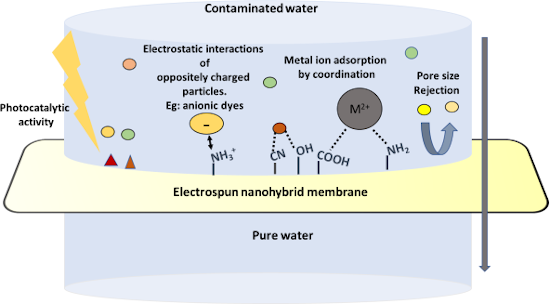
- degradation. The membrane displayed an efficient photocatalytic capacity for MB, CR, and RhB [80]. Although TiO2 is abundant and inexpensive, it only converts to UV part of sunlight, which is only 5% of the solar energy. This makes the use of TiO2 impractical. To counter this drawback Liu and co-workers




A review on nanostructured silver as a basic ingredient in medicine: physicochemical parameters and characterization
Beilstein J. Nanotechnol. 2021, 12, 440–461, doi:10.3762/bjnano.12.36
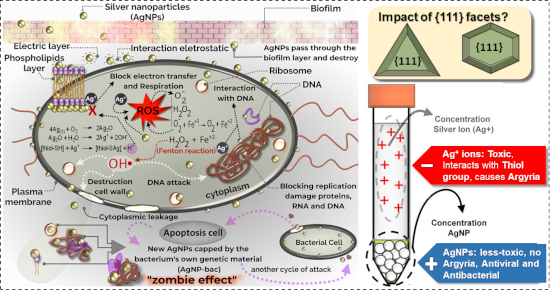
- dissolved oxygen and due to Ag3OH0 species acting as a shield and hindering the dissolution process of the AgNPs, as detailed in Figure 3 [55][56][57]. Stability Another factor that considerably changes the stability of AgNPs is the exposure to artificial or natural sunlight [53]. Grillet et al. studied the


Photothermally active nanoparticles as a promising tool for eliminating bacteria and biofilms
Beilstein J. Nanotechnol. 2020, 11, 1134–1146, doi:10.3762/bjnano.11.98
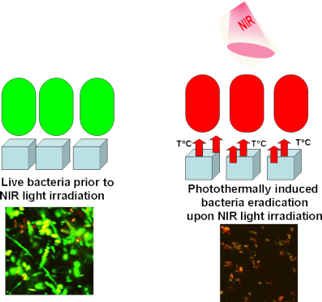
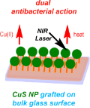
- membrane stress, which is enhanced by the photothermal effect upon sunlight irradiation [102]. Antibacterial continuous flow poly(dimethylsiloxane)-based microreactors with microchannels were fabricated using catechol-grafted poly(N-vinylpyrrolidone) and NIR-active Cs0.33WO3 nanoparticles [103]. Upon NIR
- -responsive cesium tungsten oxide (CsWO3) nanoparticles were immobilized into polymer dots and demonstrated a high antibacterial activity due to the generation of photothermal heat upon 5 min of NIR irradiation (laser intensity 2 W/cm2) [104]. Recent studies have been exploring strategies in which sunlight is
- to be 100% at a 10 µg/mL concentration and 15 min exposure to sunlight. These authors also found the same antibacterial effect with thiolated iron-doped nanoceria upon sunlight exposure [106]. Conclusion Considerable progress in the field of antibacterial treatment has been made due to the


A few-layer graphene/chlorin e6 hybrid nanomaterial and its application in photodynamic therapy against Candida albicans
Beilstein J. Nanotechnol. 2020, 11, 1054–1061, doi:10.3762/bjnano.11.90
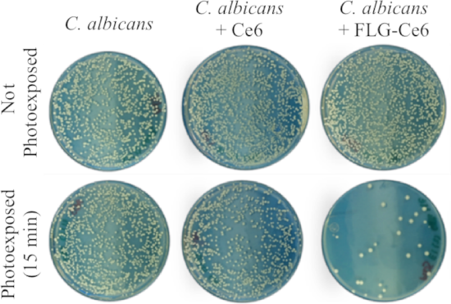
- fungal infections, employs visible light to activate photosensitive molecules, known as photodynamic therapy (PDT) [4]. PDT was discovered in 1900 when Paramecia microorganisms were exposed to a photosensitive molecule in conjugation with sunlight, which was found to eliminate the fungal activity of


Exfoliation in a low boiling point solvent and electrochemical applications of MoO3
Beilstein J. Nanotechnol. 2020, 11, 662–670, doi:10.3762/bjnano.11.52
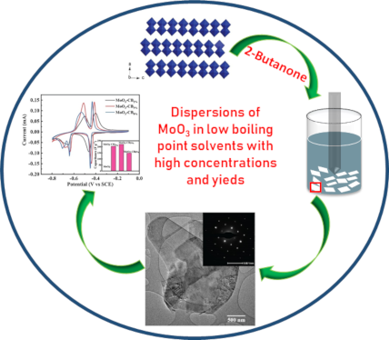
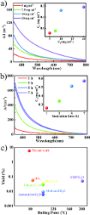
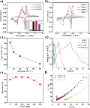
- , the MoO3 dispersion in 2-butanone retains its intrinsic nature even after exposure to sunlight for 24 h. The composites of MoO3 nanosheets were used as an electrode material for supercapacitors and showed a high specific capacitance of 201 F·g−1 in a three-electrode configuration at a scan rate of 50
- was not altered after exposure to sunlight (UV radiation) for 24 h. The exfoliated MoO3 was used as electrode material for supercapacitor applications. The specific capacitance values were as high as 221 F·g−1 at 5 mV·s−1 with good rate capability and capacitance retention in a three-electrode system
- the color to blue. It is worth mentioning that exfoliation in 2-butanone did not result in any color change when exposed to sunlight (UV radiation) for 24 h unlike IPA and IPA/H2O mixture (Figure 2d). The probable reason is the aprotic nature of 2-butanone, which does not support the formation of H

Adsorptive removal of bulky dye molecules from water with mesoporous polyaniline-derived carbon
Beilstein J. Nanotechnol. 2020, 11, 597–605, doi:10.3762/bjnano.11.47
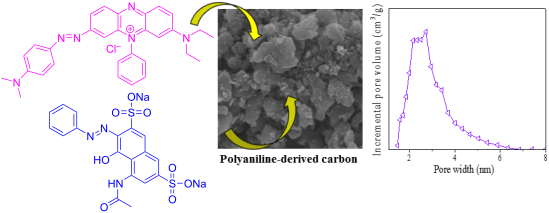
- demand (COD) levels. Additionally, dyes decrease sunlight penetration through water, decreasing the natural restoration activity of rivers. Moreover, dyes in waste water are also considered problematic in the aesthetic sense, since the absorbance of dyes is usually very high (therefore, even small
- membrane separation [2][6][7]. However, these techniques are not very satisfactory for applications on a large scale. For example, dyes are very resistant against degradation by catalysis, with a common example given by the stable characteristics of dyes under even sunlight. Recently, adsorption has been


Gold and silver dichroic nanocomposite in the quest for 3D printing the Lycurgus cup
Beilstein J. Nanotechnol. 2020, 11, 16–23, doi:10.3762/bjnano.11.2
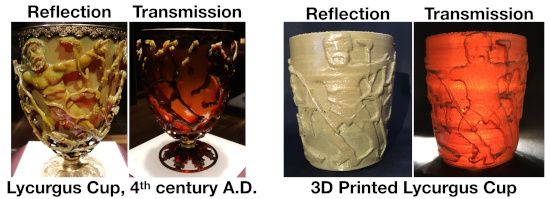
- exposing a solution of the silver precursor, sodium citrate, and a photopolymer initiator to sunlight for four months. When the same starting solution was exposed to incandescent light or xenon light to decrease the synthesis time, the final AgNP solutions presented different colorations. The dichroic
- . In the rest of this article, we will refer to “flashlight LED” and “CRI 95 LED” for specifying the two different light sources. In the sunlight, the cup also reflects light with a brownish colour, similar to the CRI 95 LED illumination (Supporting Information File 1, Figure S4). Although this



Semitransparent Sb2S3 thin film solar cells by ultrasonic spray pyrolysis for use in solar windows
Beilstein J. Nanotechnol. 2019, 10, 2396–2409, doi:10.3762/bjnano.10.230
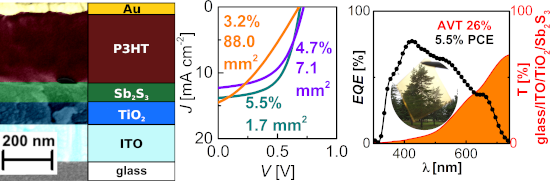
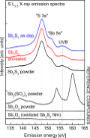
- following for reference: dye-sensitized – PCE of 9.2% at 60% AVT [5]; polymer – PCE of 4.0% at 66% AVT [6]; halide perovskite – PCE of 6.4% at 30% AVT [7]. Dye-sensitized, organic, and halide perovskite absorbers are generally sensitive to moisture, especially in combination with sunlight and air [8][9][10
- moisture and air as well as sunlight. Sb2S3 has attractive properties (Eg ≈ 1.7 eV, absorption coefficient α ≈ 1.8 × 105 cm−1 at 450 nm, anisotropic structure, inorganic) as a light absorber for conventional and semitransparent photovoltaic use [12][13][14]. Sb2S3 has been incorporated as a solar absorber
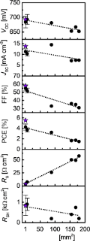
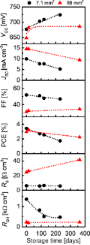
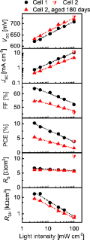
- 0.1 sun, and 10.2% at 0.03 sun, demonstrating the suitability of this solar cell for operation in direct sunlight, as well as under full cloud cover. Results and Discussion Quality assessment of USP-Sb2S3 thin films The substrate coverage of Sb2S3 layers on a glass/ITO/TiO2 substrate, annealed in



Construction of a 0D/1D composite based on Au nanoparticles/CuBi2O4 microrods for efficient visible-light-driven photocatalytic activity
Beilstein J. Nanotechnol. 2019, 10, 1360–1367, doi:10.3762/bjnano.10.134
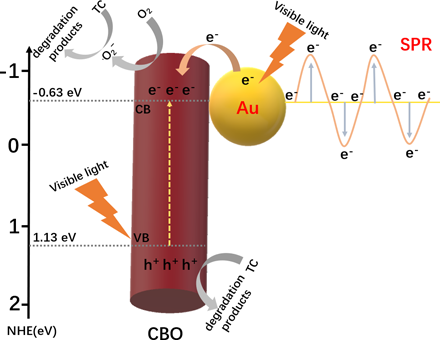
- have gained attention due to their interesting geometrical and particular chemical properties [19][20][21][22]. These excellent properties are: (i) 1D materials have a long axis for efficient absorption of incident sunlight and short path lengths for the transport of photo-induced charge carriers; (ii


A highly efficient porous rod-like Ce-doped ZnO photocatalyst for the degradation of dye contaminants in water
Beilstein J. Nanotechnol. 2019, 10, 1157–1165, doi:10.3762/bjnano.10.115
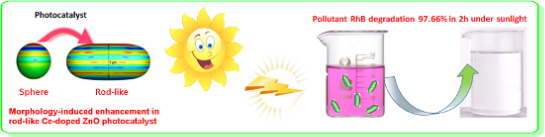
- a sunlight simulator. The results showed that ZnO doped with 3% Ce exhibits the highest RhB degradation rate. To understand the crystal structure, elemental state, surface morphology and chemical composition, the photocatalysts were characterized by X-ray diffraction (XRD), X-ray photoelectron
- water with refractive index n = 1.33. The sunlight stimulator was represented by a time-harmonic incident plane wave with wavelength λ = 400–760 nm. The incident wave was set to propagate along the z-direction and polarize along the x-direction (the long-axis of the ZnO rod). According to Figure 3, we
- , then ZnO and a series of Ce-doped ZnO were synthesized by a one-step pyrolysis method. The photocatalytic activity was evaluated by the degradation rate of RhB using a sunlight stimulator. The changes in crystal structure, Ce element state, morphology and chemical composition were characterized by XRD


Photoactive nanoarchitectures based on clays incorporating TiO2 and ZnO nanoparticles
Beilstein J. Nanotechnol. 2019, 10, 1140–1156, doi:10.3762/bjnano.10.114
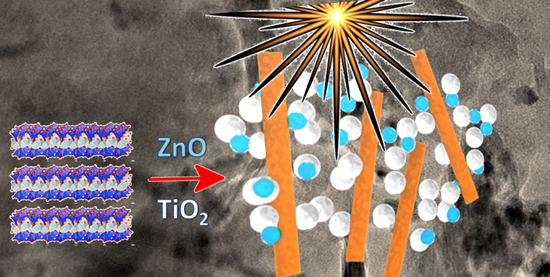
- considered the most extensively studied solid among the diverse transition-metal oxides and transition-metal chalcogenides investigated with that focus over the last decades. However, TiO2 has disadvantages such as limited activity together with a reduced sensitivity to sunlight. Hence, alternative



Electronic properties of several two dimensional halides from ab initio calculations
Beilstein J. Nanotechnol. 2019, 10, 823–832, doi:10.3762/bjnano.10.82
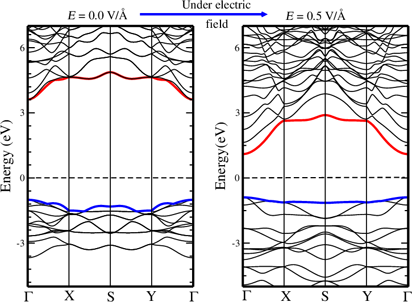
- earlier studies [42] that 2D materials can display a much larger sunlight absorption than commonly employed semiconductors. Also, the materials studied here can be employed in heterostructures to complement or replace other large-bandgap 2D materials, such as hexagonal boron nitride, or to dissociate