


Search results
Search for "thermal stability" in Full Text gives 237 result(s) in Beilstein Journal of Nanotechnology. Showing first 200.
Water in nanoporous hexagonal boron nitride nanosheets: a first-principles study
Beilstein J. Nanotechnol. 2025, 16, 510–519, doi:10.3762/bjnano.16.39
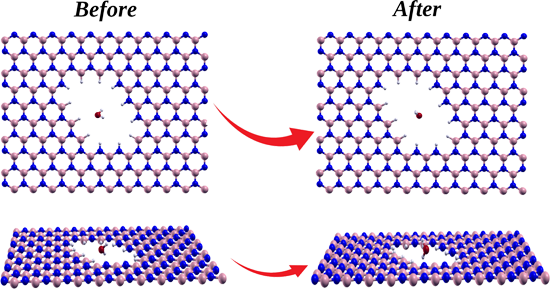
- boron nitride (h-BN) [19]. Among these materials, h-BN stands out because of its properties, which are similar to those of graphene. It is composed of alternating boron and nitrogen atoms arranged in a honeycomb-like crystalline structure, characterized by high thermal stability, low dielectric constant




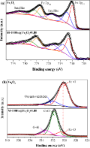
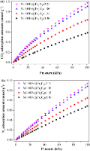
N2+-implantation-induced tailoring of structural, morphological, optical, and electrical characteristics of sputtered molybdenum thin films
Beilstein J. Nanotechnol. 2025, 16, 495–509, doi:10.3762/bjnano.16.38
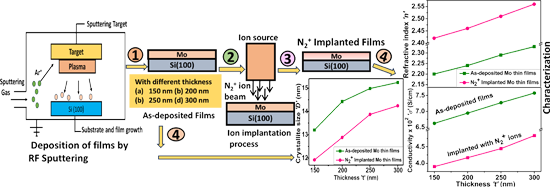
- remarkable thermal stability, high melting point, and chemical inertness. In the present study, Mo thin films of different thicknesses (150, 200, 250, and 300 nm) have been deposited on Si(100) substrates via radio frequency sputtering in an argon atmosphere at room temperature. Some of these films have been
- range of applications [23][24][25][26][27][28]. Kim et al. [23] examined the impact of a 3 × 10¹⁷ N2+·cm−2 ion fluence on the structural characteristics, surface morphology, and thermal stability of Mo thin films. The internal stress of these films transitioned from strongly compressive to weakly


ReactorAFM/STM – dynamic reactions on surfaces at elevated temperature and atmospheric pressure
Beilstein J. Nanotechnol. 2025, 16, 397–406, doi:10.3762/bjnano.16.30
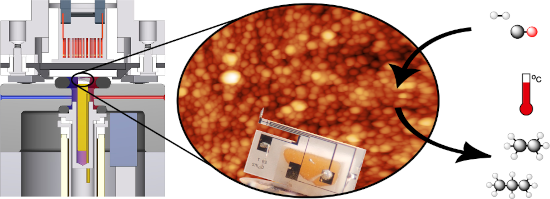
- hall. The AFM/STM is contained in a high-pressure cell and sealed off from the UHV chamber by a Kalrez elastomer seal, which exhibits outstanding thermal stability and chemical resistance together with improved sealing performance in both high-pressure and high-temperature environments. Being in direct


Tailoring of physical properties of RF-sputtered ZnTe films: role of substrate temperature
Beilstein J. Nanotechnol. 2025, 16, 333–348, doi:10.3762/bjnano.16.25
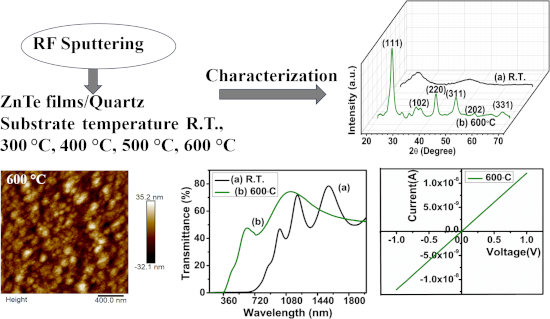
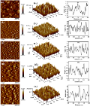
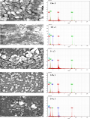
- ) compounds have numerous applications in optoelectronic devices such as light-emitting diodes [1], display devices [2], infrared detectors [3], and terahertz emitters [4]. Owing to their suitable physical properties (deposition at low temperatures and good thermal stability) and unique optical properties due




Enhancing mechanical properties of chitosan/PVA electrospun nanofibers: a comprehensive review
Beilstein J. Nanotechnol. 2025, 16, 286–307, doi:10.3762/bjnano.16.22

- hydrophilicity, and low thermal stability [106][107]. The disadvantages often necessitate the combination of PVA with other materials or the application of post-processing techniques such as cross-linking or coating for performance improvement [108]. As a countermeasure, Rafieian et al. [109] proposed


Emerging strategies in the sustainable removal of antibiotics using semiconductor-based photocatalysts
Beilstein J. Nanotechnol. 2025, 16, 264–285, doi:10.3762/bjnano.16.21
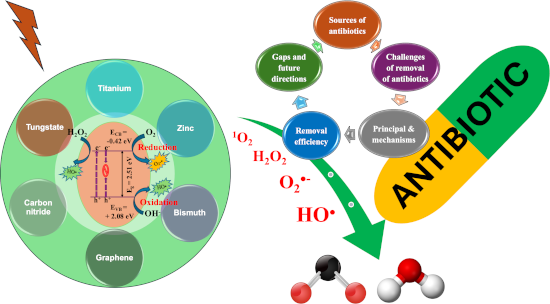
- area, exhibits good thermal stability, is non-toxic, and can be easily morphologically modified (such as nanorods, nanosheets, and nanobelts). Because of its higher quantum efficiency, it is anticipated to demonstrate superior photocatalytic activity in comparison with TiO2, g-C3N4, and BiOBr [66



Lithium niobate on insulator: an emerging nanophotonic crystal for optimized light control
Beilstein J. Nanotechnol. 2024, 15, 1415–1426, doi:10.3762/bjnano.15.114
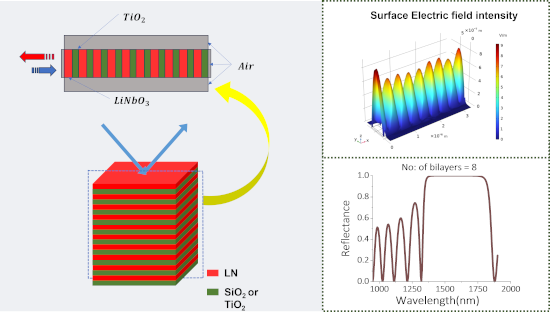
- , owing to its elevated refractive index and thermal stability, they are suitable for applications at high temperatures. Additionally, TiO2 exhibits a wide bandgap, making it conducive for incorporation into photonic crystals designed to operate within the ultraviolet and visible spectra. Moreover, its


Enhanced catalytic reduction through in situ synthesized gold nanoparticles embedded in glucosamine/alginate nanocomposites
Beilstein J. Nanotechnol. 2024, 15, 1227–1237, doi:10.3762/bjnano.15.99
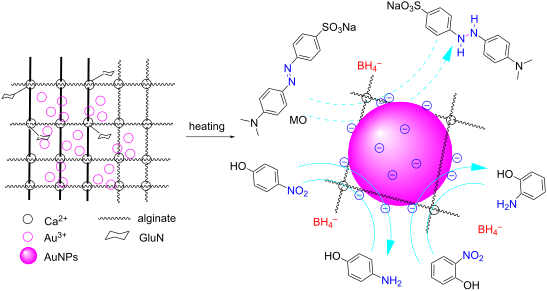
- absorb moisture from the ambient environment well. The second stage revealed a slightly higher thermal stability of AuNPs@GluN/Alg (25% mass loss in the range of 210–290 °C) compared to blank GluN/Alg (31% mass loss in the range of 210–320 °C), indicating that AuNPs enhance the thermal stability of the



Bolometric IR photoresponse based on a 3D micro-nano integrated CNT architecture
Beilstein J. Nanotechnol. 2024, 15, 1030–1040, doi:10.3762/bjnano.15.84
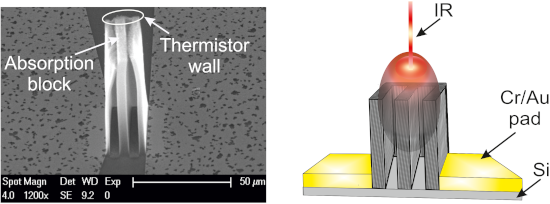
- response to IR (980 nm) absorption for a 20 × 20 μm2 device. The device exhibits an exceptionally fast response time of ≈0.15 ms, coupled with a TCR of −0.91 %/K. These attributes underscore its high operating speed and responsivity, respectively. In particular, the device maintains excellent thermal
- stability and reliable operation at elevated temperatures in excess of 200 °C, extending its potential utility in challenging environmental conditions. This design allows for further device miniaturization using optical lithography techniques. Its unique properties for mass production through large-scale
- CNT thermistor wall stabilized by complementary CNT block structures. Two strategically positioned metal electrodes on the Si substrate provide lateral contacts with the vertical CNT bolometer, facilitating effective resistance measurements. Importantly, this CNT structure exhibits remarkable thermal


Atomistic insights into the morphological dynamics of gold and platinum nanoparticles: MD simulations in vacuum and aqueous media
Beilstein J. Nanotechnol. 2024, 15, 995–1009, doi:10.3762/bjnano.15.81
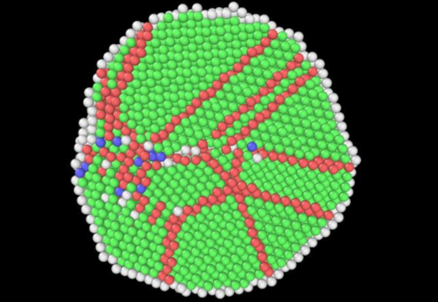
- carried out by Wen et al. [41]. Wang et al. employed ab initio MD to describe the melting of icosahedral Au nanoclusters [42]. The structural and thermal stability of high-index-faceted Pt NPs was addressed by Zeng et al. [43]. Similarly, the thermal stability of unsupported Au NPs was investigated by


Facile synthesis of Fe-based metal–organic frameworks from Fe2O3 nanoparticles and their application for CO2/N2 separation
Beilstein J. Nanotechnol. 2024, 15, 897–908, doi:10.3762/bjnano.15.74
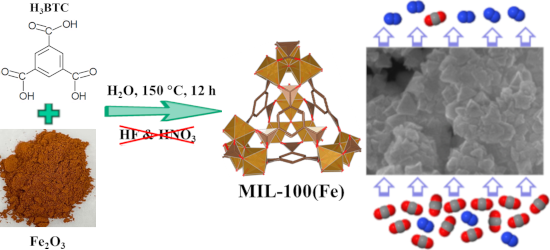
- areas, high thermal stability, changeable pore system sizes, and customizable chemical surfaces [1][2][3][4][5][6]. The family tree of MOFs holds giant lineages such as Zeolitic Imidazolate Framework (ZIF), University of Olso (UiO), Material of Institute Lavoisier (MIL), Dresden University of Technology
- the wavenumber range of 4000–400 cm−1. The thermal stability of the as-prepared materials was investigated over a temperature range of 30–650 °C, employing an acceleration rate of 5 °C·min−1 in an air stream, using a Q50 thermogravimetric analyzer (TA Instruments, New Castle, USA). The chemical states





Effect of repeating hydrothermal growth processes and rapid thermal annealing on CuO thin film properties
Beilstein J. Nanotechnol. 2024, 15, 743–754, doi:10.3762/bjnano.15.62
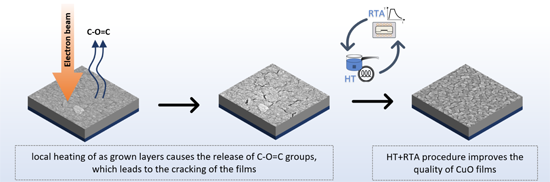
- thin films. Consequently, it has a favorable impact on both electrical and thermal stability. Moreover, as evidenced by XRD and Raman spectroscopy analyses, the sequencing enhances the crystal quality of the films, which remain free from other copper compound phases regardless of the preparation




Exfoliation of titanium nitride using a non-thermal plasma process
Beilstein J. Nanotechnol. 2024, 15, 631–637, doi:10.3762/bjnano.15.53
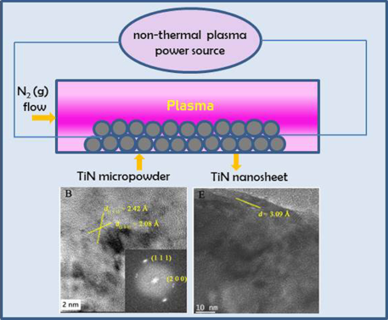
- ferromagnetic properties and demonstrated high visible-light photocatalytic activity when loaded onto titania nanotube arrays. Titanium nitride (TiN) has gained recognition as an advanced engineering material because of its outstanding chemical and thermal stability, extreme hardness, and electrical



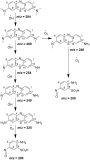
Photocatalytic degradation of methylene blue under visible light by cobalt ferrite nanoparticles/graphene quantum dots
Beilstein J. Nanotechnol. 2024, 15, 475–489, doi:10.3762/bjnano.15.43
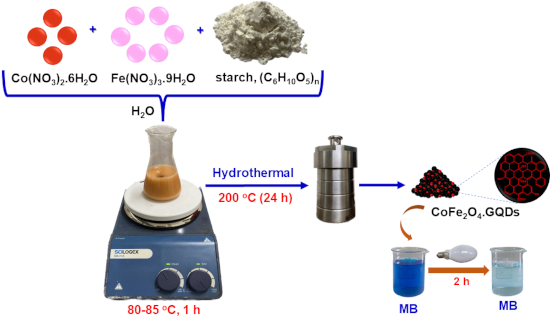
- the most important soft-magnetic ferrite materials because of its ferromagnetic properties, high magnetic and thermal stability, low conductivity, and anisotropy [6]. The controllable synthesis of spherical CF nanoparticles from corresponding salts and Arabic gum as surfactant agent using a




Heat-induced morphological changes in silver nanowires deposited on a patterned silicon substrate
Beilstein J. Nanotechnol. 2024, 15, 435–446, doi:10.3762/bjnano.15.39
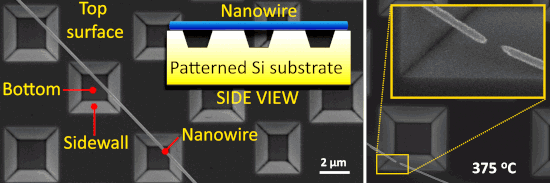
- affect the outcome of the experiment since in any case defects caused by heating/cooling (hence, tensile compression) cycles will result in reduced thermal stability of the suspended part compared to the adhered part. Note that, as mentioned earlier, the morphology evolution in the adhered parts is


Potential of a deep eutectic solvent in silver nanoparticle fabrication for antibiotic residue detection
Beilstein J. Nanotechnol. 2024, 15, 426–434, doi:10.3762/bjnano.15.38
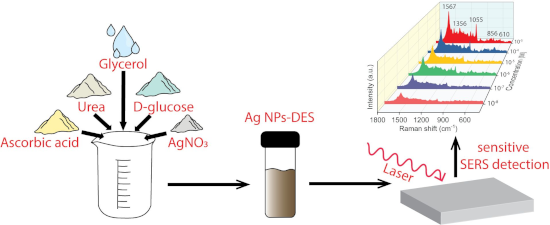
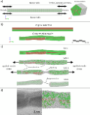
- thermal stability, high polarity, low vapor pressure, and low toxicity, which makes DESs promising candidates for the replacement of thousands of industrial solvents [24][25]. DESs are so versatile that they have been used for nanomaterials synthesis [26][27]. Regarding plasmonic materials, gold


Classification and application of metal-based nanoantioxidants in medicine and healthcare
Beilstein J. Nanotechnol. 2024, 15, 396–415, doi:10.3762/bjnano.15.36
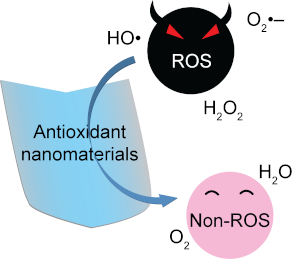
- acid was covalently grafted on the surface of SiO2 nanoparticles. SiO2 nanoparticles provided thermal stability and chemical inertness while gallic acid provided chain-breaking antioxidant properties. By grafting antioxidant compounds on SiO2 nanoparticles, the deterioration can be decreased [59


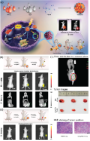
Controllable physicochemical properties of WOx thin films grown under glancing angle
Beilstein J. Nanotechnol. 2024, 15, 350–359, doi:10.3762/bjnano.15.31
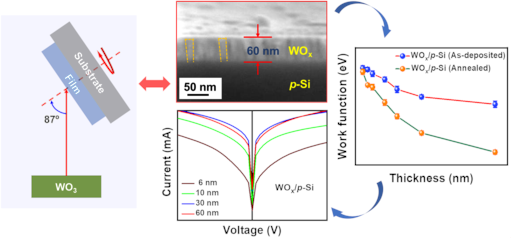
- [2]. WOx nanostructures, exhibiting high chemical and thermal stability, and structural flexibility, have obvious relevance in areas such as photocatalysis [22], electrochromism [23], supercapacitors [24], and lithium batteries [25] and have undergone extensive investigations during the last decades


A visible-light photodetector based on heterojunctions between CuO nanoparticles and ZnO nanorods
Beilstein J. Nanotechnol. 2023, 14, 1018–1027, doi:10.3762/bjnano.14.84
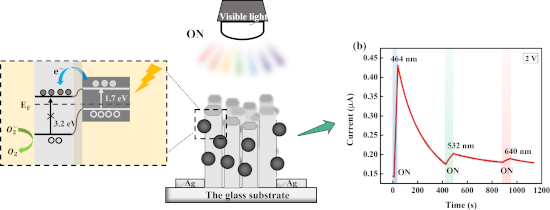
- because of its large exciton binding energy of 60 meV at room temperature [20], excellent chemical and thermal stability, high electron mobility, non-toxicity, low cost, and simple synthesis [21][22]. Various shapes of ZnO nanomaterials can be easily obtained by controlling synthesis conditions (e.g


Nanostructured lipid carriers containing benznidazole: physicochemical, biopharmaceutical and cellular in vitro studies
Beilstein J. Nanotechnol. 2023, 14, 804–818, doi:10.3762/bjnano.14.66
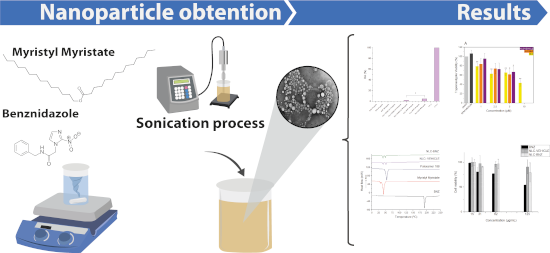
- (ζ) was measured by Doppler anemometry, and it was found to be around −13 mV. Differential scanning calorimetry (DSC) and thermogravimetric analysis (TGA) were performed to determine the thermal stability and melting/recrystallization processes of the components after drug encapsulation. Overlaid DSC
- enthalpies (J·g−1) of the NLC dispersion and the bulk lipid, respectively. The concentration of the lipid phase was 2%. Thermogravimetric analysis Thermogravimetric analysis was performed to assess the thermal stability of BNZ, myristyl myristate, poloxamer 188, and NLC-BNZ on a TGA Q500 apparatus (TA


Humidity-dependent electrical performance of CuO nanowire networks studied by electrochemical impedance spectroscopy
Beilstein J. Nanotechnol. 2023, 14, 683–691, doi:10.3762/bjnano.14.54
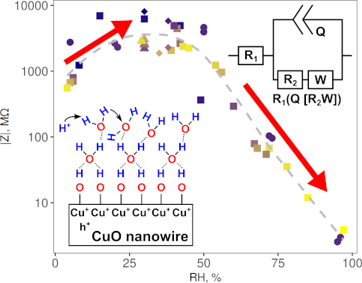
- electrode interconnects for nanoelectronics. Specifically, they can be used to transduce electric signals in nanoelectromechanical system (NEMS) switches [5], which concerns the development of nanoelectronics capable to operate in harsh environments [17]. Additionally, the excellent thermal stability of CuO


Metal-organic framework-based nanomaterials as opto-electrochemical sensors for the detection of antibiotics and hormones: A review
Beilstein J. Nanotechnol. 2023, 14, 631–673, doi:10.3762/bjnano.14.52
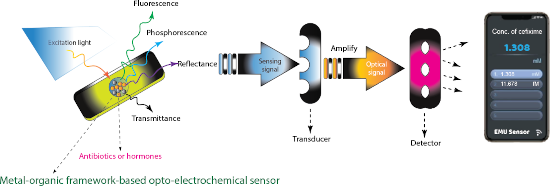
- extremely low densities (0.1–1 g·cm−3), the highest specific surface areas (165–7800 m2·g−1) currently known, tunable surface properties, good mechanical and thermal stability, intriguing and controllable morphologies, and uniform yet tunable pores that are created by the self-assembly of metal ions or


Plasmonic nanotechnology for photothermal applications – an evaluation
Beilstein J. Nanotechnol. 2023, 14, 380–419, doi:10.3762/bjnano.14.33


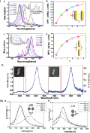


Bismuth-based nanostructured photocatalysts for the remediation of antibiotics and organic dyes
Beilstein J. Nanotechnol. 2023, 14, 291–321, doi:10.3762/bjnano.14.26
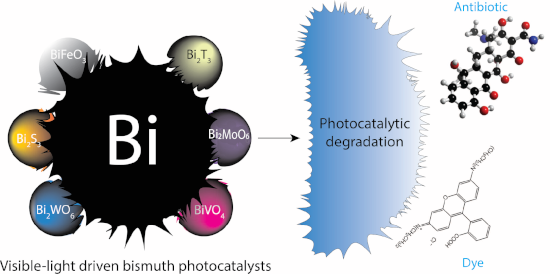
- is a small (6-coordinate, such as Ti, W, Mo, or Fe) cation. It is another visible-light-driven n-type bismuth-based semiconductor and has received a lot of attention because of its distinctive layered structure, eco-friendliness, high photochemical and thermal stability, and benign visible-light


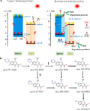
Electrical and optical enhancement of ITO/Mo bilayer thin films via laser annealing
Beilstein J. Nanotechnol. 2022, 13, 1589–1595, doi:10.3762/bjnano.13.133
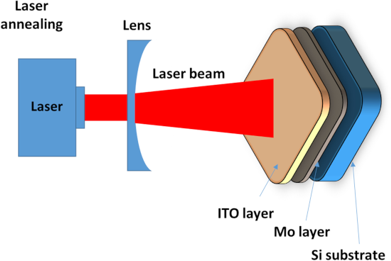
- adherence to the substrate, very high thermal stability (up to 600 °C), and high electrical conductivity [14]. Over the last decades, the development of solar cells has grown dramatically. The cells have become larger, thinner, and lighter. This increases the electrical resistivity, which is undesirable





