


Search results
Search for "time dependent" in Full Text gives 233 result(s) in Beilstein Journal of Nanotechnology. Showing first 200.
A nanocarrier containing carboxylic and histamine groups with dual action: acetylcholine hydrolysis and antidote atropine delivery
Beilstein J. Nanotechnol. 2025, 16, 11–24, doi:10.3762/bjnano.16.2

- (Fl) = 0.01 mM; PB, pH 7.4, 37 °C. 1H NMR spectra for Atr@p(Hist-CA): (a) dialysate after synthesis of Atr@p(Hist-CA), (b) dialysate after addition of ACh, and (c) the rest of dialyzing solution, C(ACh) = 5 mM, m(Atr) = 10 mg, PB, pH 7.4, 25 °C. Time-dependent Atr release from Atr@p(Hist-CA) without


Polymer lipid hybrid nanoparticles for phytochemical delivery: challenges, progress, and future prospects
Beilstein J. Nanotechnol. 2024, 15, 1473–1497, doi:10.3762/bjnano.15.118
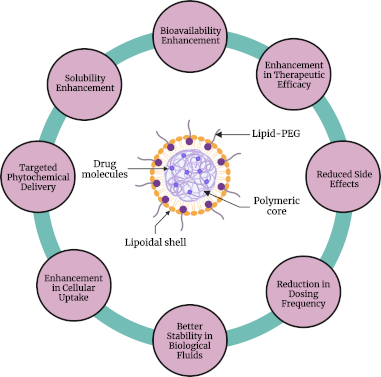
- nanoparticles showed excellent serum stability and revealed sustained drug release characteristics. Cell culture experiments suggested that the developed PLHNPs exhibited a much higher dose- and time-dependent cytotoxicity against both MCF-7 and HepG2 cells. After intravenous administration in SD rats, the


Nanotechnological approaches for efficient N2B delivery: from small-molecule drugs to biopharmaceuticals
Beilstein J. Nanotechnol. 2024, 15, 1400–1414, doi:10.3762/bjnano.15.113
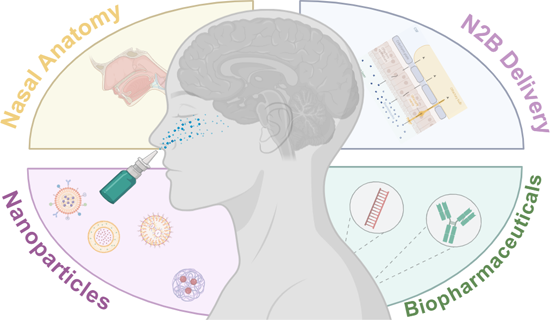
- vivo permeation studies. The PLGA NPs showed size- and time-dependent uptake mechanisms. For instance, PLGA NPs with particle sizes of 80 and 175 nm were taken up after only 5 min in the lamina propria; after 15 min, PLGA NPs with a particle size of 520 nm were associated with nuclei. Additionally, the


Enhanced catalytic reduction through in situ synthesized gold nanoparticles embedded in glucosamine/alginate nanocomposites
Beilstein J. Nanotechnol. 2024, 15, 1227–1237, doi:10.3762/bjnano.15.99
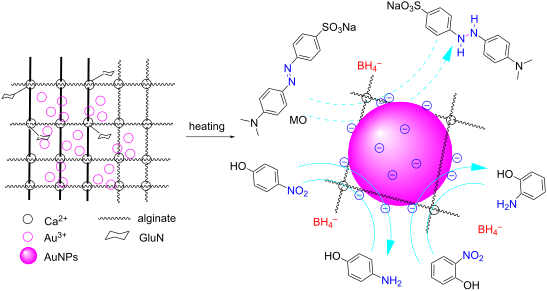
- effectiveness of this reaction hinges on the catalytic surface, influenced by both reagent adsorption and product desorption. We monitored the in situ reduction of organic dyes using the nanocatalyst via time-dependent UV–vis absorption measurements at ambient temperature. Confirmation of reduction was



A low-kiloelectronvolt focused ion beam strategy for processing low-thermal-conductance materials with nanoampere currents
Beilstein J. Nanotechnol. 2024, 15, 1197–1207, doi:10.3762/bjnano.15.97

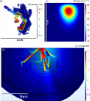
- numerical heat transfer approach A 3D numerical heat transfer approach was used to include the effect of multiple ion impacts. A time-dependent heat equation was used to assess the effects of global and local heat damage for 5 keV Ga ions when using picoampere and nanoampere ion beam currents. The surface
- samples is orders of magnitude higher than that of the thermally low conductive materials used in this report. Conclusion The effects of acceleration voltage and ion energy on the heat damage during FIB processing was assessed using Monte Carlo simulations, finite element simulations, time-dependent
- simulations for 5 keV gallium ions in collagen The finite element simulator COMSOL was used to simulate the interaction of 5 keV Ga+ with collagen using the time-dependent differential equation of heat conduction for a stationary, homogeneous, and isotropic solid, The time evolution of a single gallium ion’s



Synthesis, characterization and anticancer effect of doxorubicin-loaded dual stimuli-responsive smart nanopolymers
Beilstein J. Nanotechnol. 2024, 15, 1189–1196, doi:10.3762/bjnano.15.96
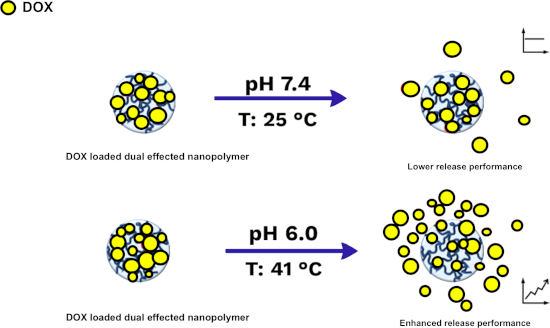
- was highest at 41 °C and pH 7.4 (Figure 4B). The temperature and pH sensitivity eliminates the need for other external stimuli. The time-dependent DOX release experiments conducted here under different conditions demonstrated that the dual response of the SNPs may improve the DD performance compared
- . The data shows that smart nanopolymers can be used to create new types of doxorubicin-based drugs. Solutions utilized during polymerization. FTIR spectra of SNPs and DOX-SNPs. SEM image of SNPs. (A) Loading capacity of DOX at different initial concentrations. (B) Time-dependent release of DOX under


Recent updates in applications of nanomedicine for the treatment of hepatic fibrosis
Beilstein J. Nanotechnol. 2024, 15, 1105–1116, doi:10.3762/bjnano.15.89
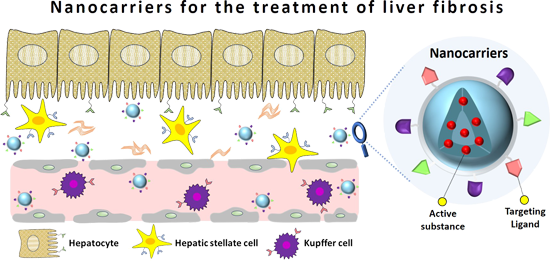
- uptake in a time-dependent manner. Ultimately, the nanocomplex showed excellent in vitro gene-silencing activities, that is, approximately 80–85% of the Pcbp2 mRNA expression was inhibited in activated HSCs-T6 cells after gene transfection for 24 h. The in vivo biodistribution showed that the nanocomplex


Signal generation in dynamic interferometric displacement detection
Beilstein J. Nanotechnol. 2024, 15, 1070–1076, doi:10.3762/bjnano.15.87
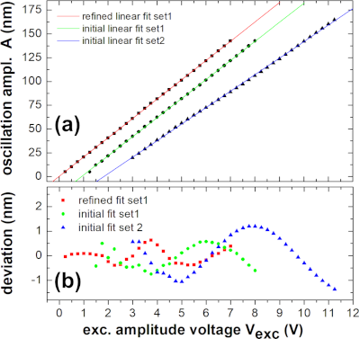
- amount derr, we find for the time-dependent fiber-cantilever distance: Combining Equation 2 and Equation 4 yields the time dependence of the light intensity at the detector. As the detector measures the total incident light power, we introduce the circular illuminated effective area of the detector . The


The effect of age on the attachment ability of stick insects (Phasmatodea)
Beilstein J. Nanotechnol. 2024, 15, 867–883, doi:10.3762/bjnano.15.72

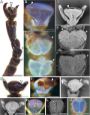
- ]. Research on the time-dependent decline of body functions has often been focused on vertebrates, especially mammals, but insects have found their way into ageing research as well [2][3][4]. They are easy to maintain and have a short lifespan, and changes in their exoskeleton can be easily observed [5]. The


Intermixing of MoS2 and WS2 photocatalysts toward methylene blue photodegradation
Beilstein J. Nanotechnol. 2024, 15, 817–829, doi:10.3762/bjnano.15.68
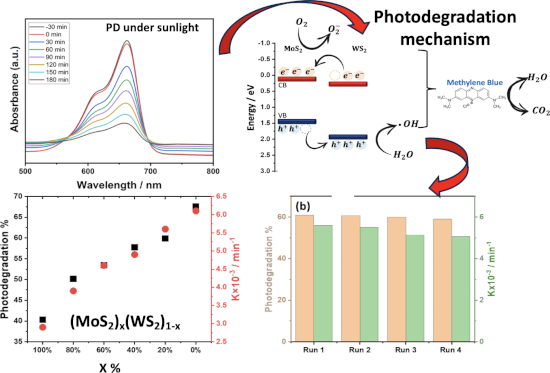
- respect to the MB concentration variation with time. where C0 (mg/L) is the MB initial concentration in solution, and Ct (mg/L) is the time-dependent MB concentration obtained under light excitation. Figure 6c illustrates the changes in the concentration ratio C/C0 and the PD efficiency under visible


Exploring surface charge dynamics: implications for AFM height measurements in 2D materials
Beilstein J. Nanotechnol. 2024, 15, 767–780, doi:10.3762/bjnano.15.64
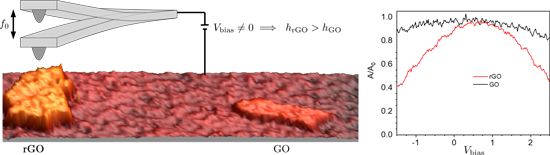
- an effective tip–sample voltage, the oscillating AFM tip generates a time-dependent electrical field, which induces a current and Joule dissipation due to the non-zero resistance of the material. These currents induce an oscillating charge movement. (ii) Simultaneously, these moving charges also
- generate a time-dependent electric field, which needs to be considered consistently. We think that our findings align well with this explanation, as a key difference between GO and rGO is their electrical conductivity. Moreover, the conduction mechanism in GO and rGO flakes is variable-range hopping [75
- infinite series of image charges, but for large z0 these charges become rapidly negligible. Taking this into account, the term Vtip(x, y, z ,t) can be written as where s = (ε2 − ε1)/(ε2 + ε1), and q = 4πε1RVbias. Vbias and z0 may be time-dependent if the tip is oscillating or a variable voltage is applied


Gold nanomakura: nanoarchitectonics and their photothermal response in association with carrageenan hydrogels
Beilstein J. Nanotechnol. 2024, 15, 678–693, doi:10.3762/bjnano.15.56

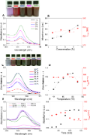
- indicated the incorporation of colloidal AuNMs, whereas colourless beads showed no incorporation of nanoparticles. The stability of the AuNMs in k-CG hydrogels was assessed through optical spectrophotometry as shown in Figure 3b–d. Time-dependent absorption spectra were recorded to ascertain any changes


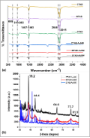


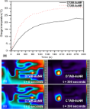


Vinorelbine-loaded multifunctional magnetic nanoparticles as anticancer drug delivery systems: synthesis, characterization, and in vitro release study
Beilstein J. Nanotechnol. 2024, 15, 256–269, doi:10.3762/bjnano.15.24
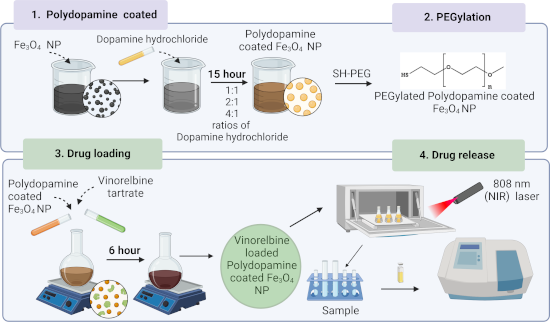
- efficiency (%EE) [39] of VNB into Fe3O4 NPs was calculated using Equation 1; it was found that the entrapment efficiency was approximately 98%. Standard curve of vinorelbine The calibration curve for the time-dependent release of VNB was generated by preparing VNB solutions at concentrations of 0, 20, 40, 60


New application of bimetallic Ag/Pt nanoplates in a colorimetric biosensor for specific detection of E. coli in water
Beilstein J. Nanotechnol. 2024, 15, 95–103, doi:10.3762/bjnano.15.9
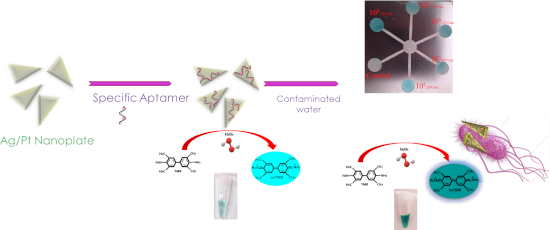
- addition of TMB and H2O2 to the paper-chip containing the aptasensor and E. coli. Due to the increase in aptamer–bacteria interaction based on paper-chip pores, this paper-based biosensor was not time-dependent and showed a fast color-change response in the absence or presence of specific target (Figure 4


Curcumin-loaded albumin submicron particles with potential as a cancer therapy: an in vitro study
Beilstein J. Nanotechnol. 2023, 14, 1127–1140, doi:10.3762/bjnano.14.93
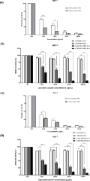
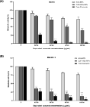
- and MCF-7 cells at the concentration range in this experiment (Figure 6B,D). This evidence indicates that the HSA-MPs carrier is non-toxic, even after prolonged exposure. As shown in Figure 6, free CUR and CUR-HSA-MP treatment substantially induced cell death in a dose- and time-dependent manner




A bifunctional superconducting cell as flux qubit and neuron
Beilstein J. Nanotechnol. 2023, 14, 1116–1126, doi:10.3762/bjnano.14.92
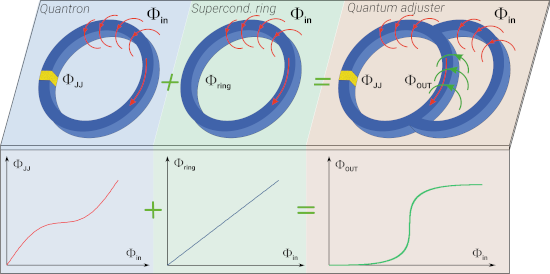
- adiabatic energy levels at anticrossing τLZ. The estimates obtained in the framework of the two-level model are in good agreement with the numerical calculations (solid lines in Figure 2a,b) of the Schrödinger time-dependent equation by the Crank–Nicolson method [46] based on the Magnus decomposition for
- coefficient with the thermostat determined by condition κ = 0.0025ωp, la = 1 + l, lout = 0.1, EJ = 2Ec, and t1 = 3t2. Interference population map for the first excited state (a) and the second state (b) for different values of the inductance l and rates of change of the control field fronts D. (c) Time
- -dependent dynamics of the overlying states (n = 2, 3, 4) and (d) leakage to the second excited level (n = 2) for the system initialised at different poles on the Bloch sphere for the values l = 2.63 and D = 0.0044, similar to those shown in Figure 2a. The parameters of the system were la = 1 + l, lout = 0.1



Dual-heterodyne Kelvin probe force microscopy
Beilstein J. Nanotechnol. 2023, 14, 1068–1084, doi:10.3762/bjnano.14.88
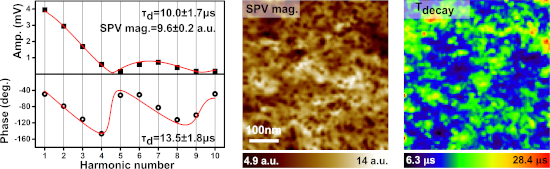
- our previous pp-KPFM measurements on PTB7:PC71BM blends [4][11], which showed that the SPV decay time constant can vary from tens of µs to several hundreds of µs, depending on the morphology and phase composition. Doing so, we maximized our chances to generate a time-dependent SPV (which first




Spatial mapping of photovoltage and light-induced displacement of on-chip coupled piezo/photodiodes by Kelvin probe force microscopy under modulated illumination
Beilstein J. Nanotechnol. 2023, 14, 1059–1067, doi:10.3762/bjnano.14.87
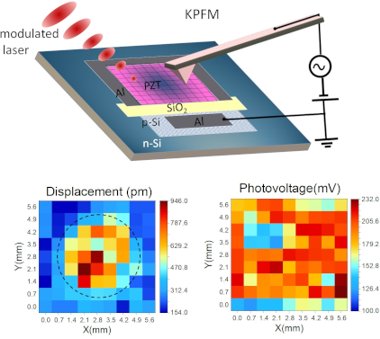
- In this work, a silicon photodiode integrated with a piezoelectric membrane is studied by Kelvin probe force microscopy (KPFM) under modulated illumination. Time-dependent KPFM enables simultaneous quantification of the surface photovoltage generated by the photodiode as well as the resulting
- mechanical oscillation of the piezoelectric membrane with vertical atomic resolution in real-time. This technique offers the opportunity to measure concurrently the optoelectronic and mechanical response of the device at the nanoscale. Furthermore, time-dependent atomic force microscopy (AFM) was employed to
- ); time-dependent AFM; Introduction Light has been recognized as a versatile external energy source to actuate micro/nanorobots with outstanding merits of wireless, remote, and precise controllability [1][2][3][4]. Light-driven micro/nanorobots convert light into mechanical motion and are able to perform


A visible-light photodetector based on heterojunctions between CuO nanoparticles and ZnO nanorods
Beilstein J. Nanotechnol. 2023, 14, 1018–1027, doi:10.3762/bjnano.14.84
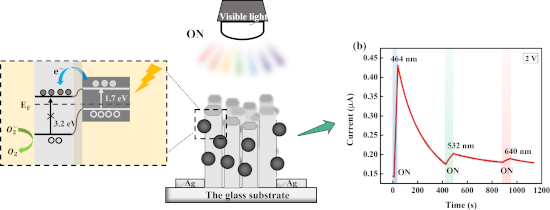
- 0.7 μA, approximately the dark current, which shows the excellent recovery ability of the device. The time-dependent photoresponse at a constant bias of 2 V under 30 s illumination with 395 nm light at different intensities is presented in Figure 3b. When the light is turned on, the photocurrent


Green SPIONs as a novel highly selective treatment for leishmaniasis: an in vitro study against Leishmania amazonensis intracellular amastigotes
Beilstein J. Nanotechnol. 2023, 14, 893–903, doi:10.3762/bjnano.14.73
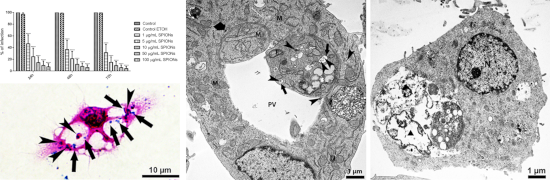
- data revealed a concentration-dependent effect, which increased within 48 and 72 h of treatment. The percentage of infection significantly reduces over time, indicating a time-dependent effect. The IC50 values were calculated for each treatment time and confirmed the results obtained (Figure 4B), that


Silver nanoparticles loaded on lactose/alginate: in situ synthesis, catalytic degradation, and pH-dependent antibacterial activity
Beilstein J. Nanotechnol. 2023, 14, 781–792, doi:10.3762/bjnano.14.64
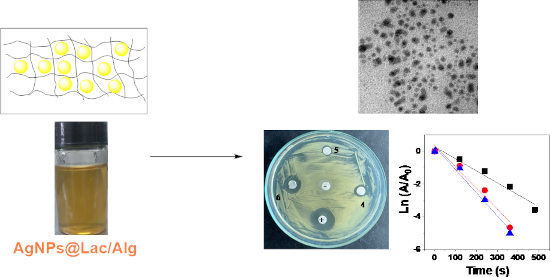
- toxic dyes, methyl orange (MO) and rhodamine B (RhB), using various doses of the nanocomposite. The degradation of toxic dyes using a nanocomposite catalyst was monitored in situ by measuring UV–vis absorption at ambient temperature, with the concentration changing in a time-dependent manner. The


Conjugated photothermal materials and structure design for solar steam generation
Beilstein J. Nanotechnol. 2023, 14, 454–466, doi:10.3762/bjnano.14.36
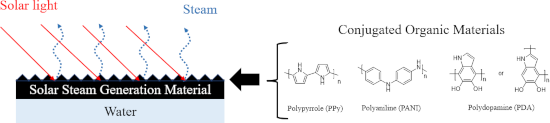
- of the foam floating at the air–water interface. (c) The water contact angle of the foam. (d–f) Time-dependent mass changes with and without the evaporator foam under different optical concentrations. Figure 12 was adapted from [34] (“A durable monolithic polymer foam for efficient solar steam


Spin dynamics in superconductor/ferromagnetic insulator hybrid structures with precessing magnetization
Beilstein J. Nanotechnol. 2023, 14, 233–239, doi:10.3762/bjnano.14.22
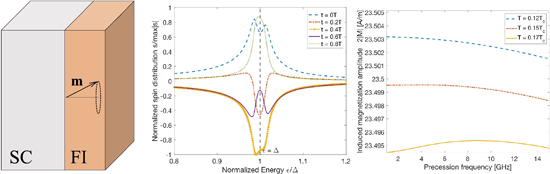
- operator, and the anticommutator {f, g}t = f(t1)g(t1, t2) + g(t1, t2)f(t2). We have dropped the coordinate dependence of the Green’s functions for simplicity of notation. We consider the time-dependent magnetization at the interface as an adiabatic perturbation that changes slowly compared to the timescale
- noticed that a fraction of the spin distribution is lying inside the gap and should not be taken into account. But in the time-dependent case, there is always an energy shift equal to ±ℏΩ/2. This energy shift appears in every time convolution. The real consequences of these undergap states may be found if


Facile preparation of Au- and BODIPY-grafted lipid nanoparticles for synergized photothermal therapy
Beilstein J. Nanotechnol. 2022, 13, 1432–1444, doi:10.3762/bjnano.13.118
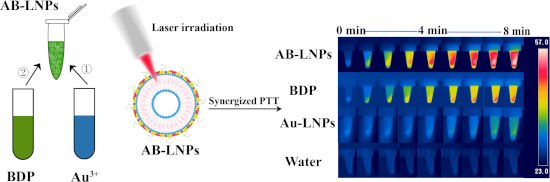
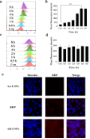
- the successful endocytosis of AB-LNPs into 4T1 cells. However, free BDP did not show time-dependent cellular uptake (Figure 4c,d). Compared with free BDP, AB-LNPs showed significantly enhanced uptake efficiency, indicating that the nanoparticles can increase the internalization and accumulation of




Gelatin nanoparticles with tunable mechanical properties: effect of crosslinking time and loading
Beilstein J. Nanotechnol. 2022, 13, 778–787, doi:10.3762/bjnano.13.68
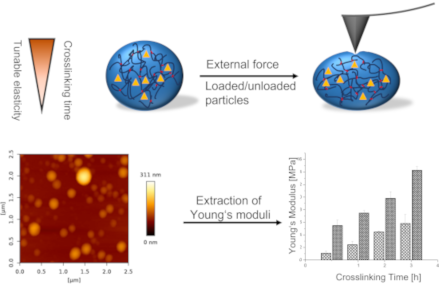
- possible time-dependent elastic behavior. Data processing of AFM AFM data were processed using the JPK SPM Data Processing program (DP) version 6.1.111. Force curves were extracted from the generated files, and four force–distance curves per particle were selected from pixels representing the middle of
- nanoparticles measured by MTT assay. (A) A549 cells incubated with blank GNPs, (B) hAELVi incubated with blank GNPs, (C) A549 cells incubated with FITC-dextran-loaded GNPs, and (D) hAELVi incubated with FITC-dextran-loaded GNPs. No concentration- or time-dependent cell viability reduction below 80% was





