


Search results
Search for "tissue engineering" in Full Text gives 91 result(s) in Beilstein Journal of Nanotechnology.
Classification and application of metal-based nanoantioxidants in medicine and healthcare
Beilstein J. Nanotechnol. 2024, 15, 396–415, doi:10.3762/bjnano.15.36
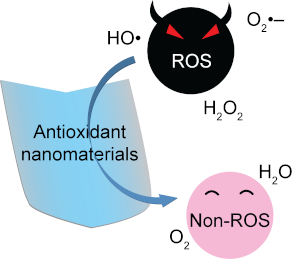
- the conjugation of gold nanoparticles (AuNPs) with an anti-epithelial sodium channel (ENaC), known as a marker for arterial hypertension found in membrane platelets [186]. Beyond nanotechnology, the field has witnessed developments in metallic biomaterials for vascular tissue engineering. Titanium


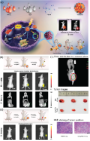
Berberine-loaded polylactic acid nanofiber scaffold as a drug delivery system: The relationship between chemical characteristics, drug-release behavior, and antibacterial efficiency
Beilstein J. Nanotechnol. 2024, 15, 71–82, doi:10.3762/bjnano.15.7
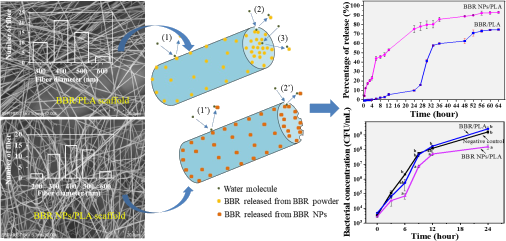
- systems, and tissue engineering, according to the requirement of BBR concentration for the desired therapeutic effects. Keywords: antibacterial activity; berberine; drug-release system; electrospun nanofiber; polylactic acid; Introduction Medicinal plants have various biologically active compounds, such
- cytotoxic activity against MA-104 cells. Therefore, it is proposed that the BBR NPs/PLA nanofiber scaffold can be a potential candidate for broad biomedical applications, such as wound dressing, drug delivery, and tissue engineering. Conclusion PLA nanofiber scaffolds loaded with BBR powder and BBR NPs were


Influence of conductive carbon and MnCo2O4 on morphological and electrical properties of hydrogels for electrochemical energy conversion
Beilstein J. Nanotechnol. 2024, 15, 57–70, doi:10.3762/bjnano.15.6
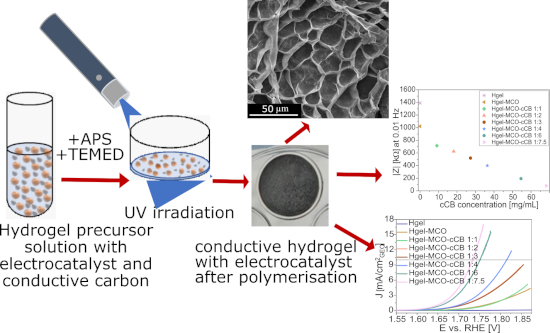
- history and a wide range of applications, especially in biology, medicine, tissue engineering, and pharmacy. The multitude of application areas is related to their exceptional properties: biocompatibility, biodegradability, nontoxicity, good permeability for substances dissolved in water (e.g., oxygen and


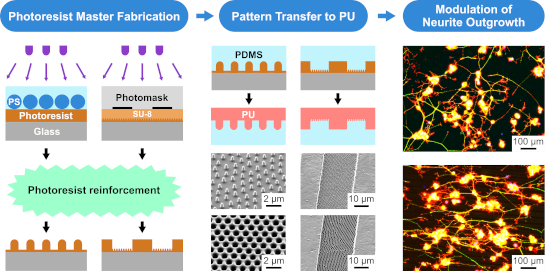
Hierarchically patterned polyurethane microgrooves featuring nanopillars or nanoholes for neurite elongation and alignment
Beilstein J. Nanotechnol. 2023, 14, 1157–1168, doi:10.3762/bjnano.14.96
- Lester Uy Vinzons Guo-Chung Dong Shu-Ping Lin Doctoral Program in Tissue Engineering and Regenerative Medicine, National Chung Hsing University, Taichung City 40227, Taiwan (R.O.C.) Institute of Biomedical Engineering and Nanomedicine, National Health Research Institutes, Miaoli County 35053
- patterned nano-/microstructured PU films enhance both PC12 neurite elongation and alignment, showing the potential use of our proposed method for the micro-/nanopatterning of polymers for nerve tissue engineering. Keywords: hierarchical; nanopatterning; neurite alignment; neurite outgrowth; topography
- compartments, such as the nucleus, filopodia, and focal adhesions, resulting in the modulation of signal cascades that leads to changes in cell proliferation, attachment, orientation, and differentiation, among others [2]. In nerve tissue engineering, the implant micro- and nanotopography serve as physical


Molecular nanoarchitectonics: unification of nanotechnology and molecular/materials science
Beilstein J. Nanotechnol. 2023, 14, 434–453, doi:10.3762/bjnano.14.35
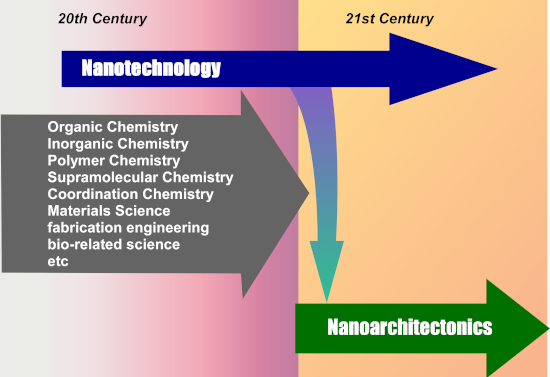
- in a designed layered structure. As summarized in the review by Akashi and Akagi, LbL assembly is valuable as a pathway to the design and development of innovative biomaterials for tissue engineering [100]. Interfacial phenomena contribute significantly to material accumulation and property





Hydroxyapatite–bioglass nanocomposites: Structural, mechanical, and biological aspects
Beilstein J. Nanotechnol. 2022, 13, 1490–1504, doi:10.3762/bjnano.13.123
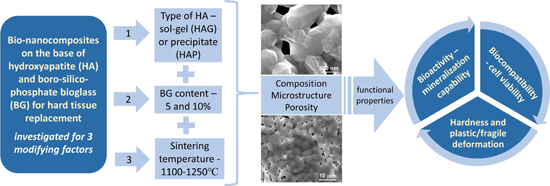
- of Tissue Engineering and Cells Culture of the Nicolae Testemitanu State University of Medicine and Pharmacy (NTSUMP) of the Republic of Moldova. The laboratory has the permission from the University Research Ethics Committee acting in accordance with the Statute of the Research Ethics Committee of
Frequency-dependent nanomechanical profiling for medical diagnosis
Beilstein J. Nanotechnol. 2022, 13, 1483–1489, doi:10.3762/bjnano.13.122
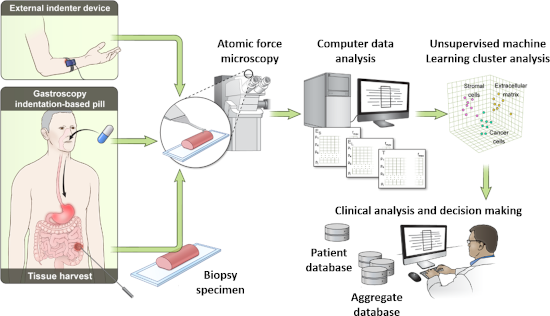
- already available (e.g., microfabrication and micro-robotics). While we have focused specifically on healthcare treatments of mechanically relevant diseases, similar technology adoption paths can be envisioned for other fields, such as tissue engineering, for which frequency-dependent characterization


Biomimetic chitosan with biocomposite nanomaterials for bone tissue repair and regeneration
Beilstein J. Nanotechnol. 2022, 13, 1051–1067, doi:10.3762/bjnano.13.92
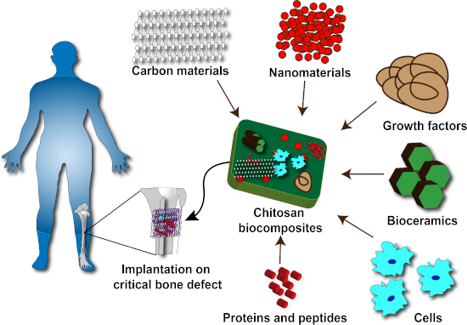
- tissue engineering applications. Keywords: antibacterial activity; biomimetic materials; bone graft substitutes; chitosan; gold; osteoinductive; silver; Introduction Bone-related defects and diseases are a serious concern to the life of patients [1]. Autografts, allografts, and synthetic grafts are
- properties to bone graft substitutes. Therefore, to get all the three properties of bone graft substitutes, synthetic biomaterials are often mixed with growth factors and host-derived cells to increase bone formation [3]. Bone tissue engineering is the process of developing bone graft biomaterials with the
- , uniform raw materials quality, and are abundant. Chitosan is a natural polymeric substance and an extensively studied material for bone tissue engineering due to its biocompatibility, biodegradability, and antimicrobial properties [7][8][9][10]. Chitosan in combination with silver, gold, copper, titanium
Bioselectivity of silk protein-based materials and their bio-inspired applications
Beilstein J. Nanotechnol. 2022, 13, 902–921, doi:10.3762/bjnano.13.81
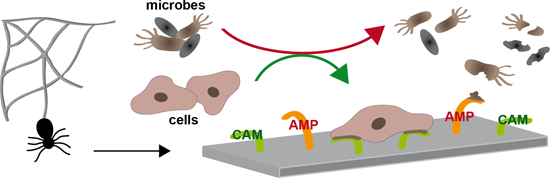
- , slow biodegradation, low immunogenicity, and non-toxicity, making them ideally suited for tissue engineering and biomedical applications. Furthermore, recombinant production technologies allow for application-specific modification to develop adjustable, bioactive materials. The present review focusses
- infections, inflammatory and auto-immune diseases, and for anti-tumor treatments [10][25]. One main goal in developing bioactive, bioadhesive, and functional biomaterial scaffolds for tissue engineering, is the enhanced support and regeneration of injured or non-functional tissues or parts thereof. Apart
- biomedicine and tissue engineering, since they exhibit promising chemical and physical properties, such as bioactivity, structural integrity, and cell stimulation [29][30]. Biomimetic materials modulating specific cellular responses and tissue regeneration have been developed by adjusting and modifying


Micro- and nanotechnology in biomedical engineering for cartilage tissue regeneration in osteoarthritis
Beilstein J. Nanotechnol. 2022, 13, 363–389, doi:10.3762/bjnano.13.31
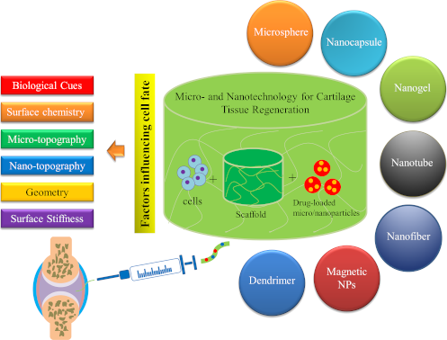
- administration of new and efficient options for treating osteochondral lesions. This paper presents an overview of the recent advances in osteochondral tissue engineering resulting from the application of micro- and nanotechnology approaches in the structure of biomaterials, including biological and microscale
- made and offered hope for the treatment of degenerative diseases [3]. Articular cartilage defects were one of the first potential candidates for tissue engineering (TE) applications due to their anural and avascular integrity. Many efforts have been devoted to developing scaffolds with similar
- . Afterward, recent advances in osteochondral tissue engineering resulting from the application of microspheres, nanoparticles, nanofibers, and nanotubes in the structure of biomaterials will be covered (Figure 1). Finally, the role of various cues such as biological cues, microscale/nanoscale topographical


Effects of drug concentration and PLGA addition on the properties of electrospun ampicillin trihydrate-loaded PLA nanofibers
Beilstein J. Nanotechnol. 2022, 13, 245–254, doi:10.3762/bjnano.13.19
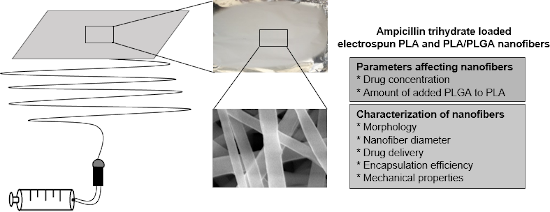
- produce ampicillin trihydrate-loaded poly(lactic acid) (PLA) and PLA/poly(lactic-co-glycolic acid) (PLA/PLGA) polymeric nanofibers via electrospinning using 1,1,1,3,3,3-hexafluoro-2-propanol (HFIP) as the solvent for local application in tissue engineering. The effects of ampicillin trihydrate
- tissue engineering and drug delivery systems. Electrospinning is the most commonly used polymeric nanofiber preparation method, because it is an easy, single-step, low-cost, and reproducible method. It allows for the production of extracellular matrix-like nanofibers that can be easily scaled up and has
- ampicillin trihydrate-loaded implantable PLA and PLA/PLGA polymeric nanofibers for controlled drug release with favorable properties for the use in tissue engineering. In this study, ampicillin trihydrate-loaded PLA and PLA/PLGA nanofibers with acceptable morphology, nanofiber diameter, mechanical properties


Engineered titania nanomaterials in advanced clinical applications
Beilstein J. Nanotechnol. 2022, 13, 201–218, doi:10.3762/bjnano.13.15
- augmenting better attachment of drug molecules, and the drug release profile was extended to more than 15 days by minimizing the burst release effect [59]. Polycaprolactone is a semi-crystalline biodegradable polymer used as a drug carrier, packaging material, and 3D scaffold for bone tissue engineering
- potential. Thus, the optimized TiO2 nanoparticle concentration of the PCL/5TiO2 sample exhibited improved biological and antibacterial properties for bone tissue engineering, thereby improving the properties of orthopedic devices [60]. Ko et al. found that titanium covered with a double layer of gold nps
- contributes to hydroxyapatite (HA) formation and bone matrix mineralization [71]. Likewise, nanophase titania/poly(lactic-co-glycolic acid) (PLGA) composites have been designed that showed greater osteoblast adhesion compared to plain PLGA [72]. In vivo tissue engineering (TE) holds tremendous potential in


Piezoelectric nanogenerator for bio-mechanical strain measurement
Beilstein J. Nanotechnol. 2022, 13, 192–200, doi:10.3762/bjnano.13.14
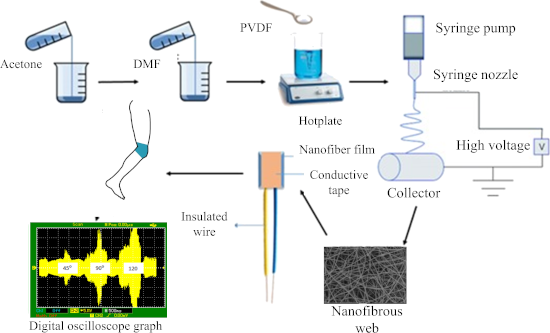
- , monofilaments, and powder. This material is trending in textile-based research where different researchers are working to manufacture smart textiles to generate energy [22][23]. Nanofibers have many technical applications such as in air and liquid filtration [24][25], tissue engineering [26][27], drug delivery


A comprehensive review on electrospun nanohybrid membranes for wastewater treatment
Beilstein J. Nanotechnol. 2022, 13, 137–159, doi:10.3762/bjnano.13.10
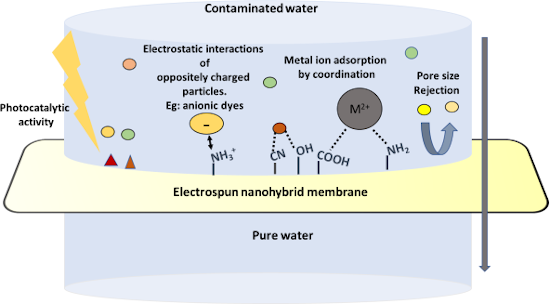
- bioactive products. Patel et al. fabricated bioactive electrospun nanocomposite scaffolds of poly(lactic acid) for bone tissue engineering by incorporating cellulose nanocrystals and observed that the nanohybrid has excellent properties in terms of mechanical strength and thermal stability compared to the




Self-assembly of amino acids toward functional biomaterials
Beilstein J. Nanotechnol. 2021, 12, 1140–1150, doi:10.3762/bjnano.12.85
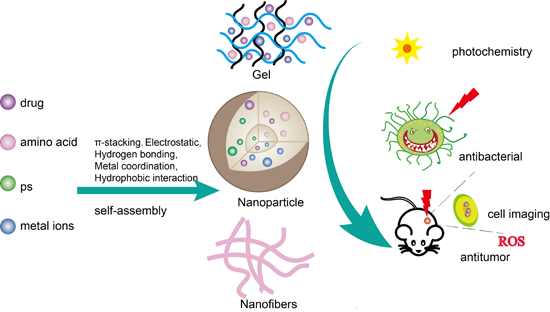
- polymers to enhance, repair, or replace diseased, damaged, or defective tissue [2]. A few examples are tooth repair, peripheral nerve regeneration, nerve tissue engineering, bone and joint replacement and repair, and regeneration of bone defects, biological scaffolds, and wound healing [3][4][5][6][7][8

Comprehensive review on ultrasound-responsive theranostic nanomaterials: mechanisms, structures and medical applications
Beilstein J. Nanotechnol. 2021, 12, 808–862, doi:10.3762/bjnano.12.64
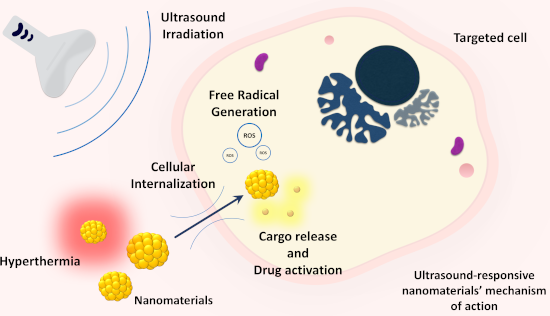
- Sepand Tehrani Fateh Lida Moradi Elmira Kohan Michael R. Hamblin Amin Shiralizadeh Dezfuli School of Medicine, Shahid Beheshti University of Medical Sciences, Tehran, Iran Department of Tissue Engineering and Applied Cell Sciences, School of Advanced Technologies in Medicine, Tehran University of
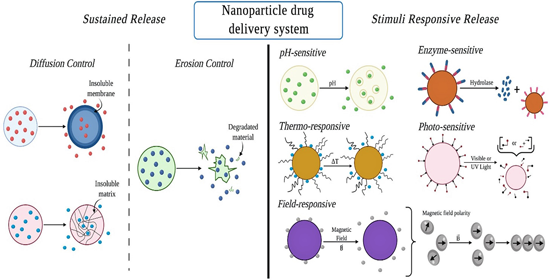
- more different stimuli, which can be chemical, biochemical, or physical in nature. These smart/intelligent systems have many advantages and unique potential in drug delivery, tissue engineering, diagnosis, or biological sensors [4]. In order to produce stimulus-responsive platforms, we need to design


Detecting stable adsorbates of (1S)-camphor on Cu(111) with Bayesian optimization
Beilstein J. Nanotechnol. 2020, 11, 1577–1589, doi:10.3762/bjnano.11.140
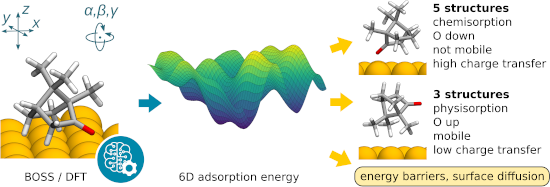
- have been studied extensively for applications in tissue engineering [2] and drug delivery [3]. To optimize the functional properties of these materials, we need detailed knowledge of their atomic structure. Of particular interest is the hybrid interface, which has a central role in defining the


Gram-scale synthesis of splat-shaped Ag–TiO2 nanocomposites for enhanced antimicrobial properties
Beilstein J. Nanotechnol. 2020, 11, 1119–1125, doi:10.3762/bjnano.11.96
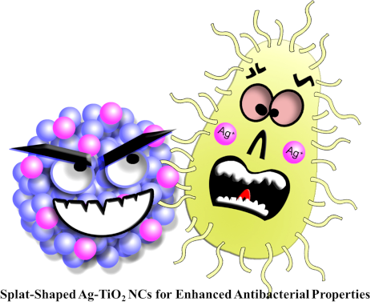
- Zhejiang-Mauritius Joint Research Center for Biomaterials and Tissue Engineering, Hangzhou 310018, China 10.3762/bjnano.11.96 Abstract The control over contagious diseases caused by pathogenic organisms has become a serious health issue. The extensive usage of antibiotics has led to the development of


Wet-spinning of magneto-responsive helical chitosan microfibers
Beilstein J. Nanotechnol. 2020, 11, 991–999, doi:10.3762/bjnano.11.83
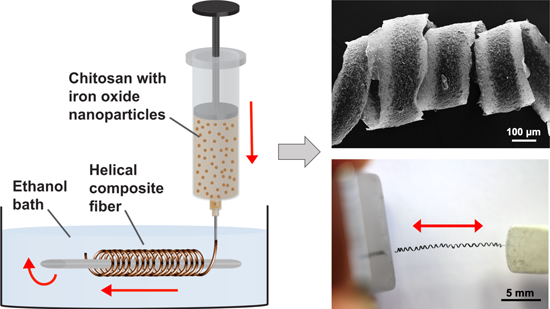
- biotechnological and tissue engineering applications. However, there are only a few methods available for the production of biocompatible helical microfibers. Given that, we present here a simple technique for the fabrication of helical chitosan microfibers with embedded magnetic nanoparticles. Composite fibers
- feedstock solution and winding the emerging fiber around a rotating magnetic collector needle upon coagulation. In summary, our helical chitosan microfibers are very attractive for future use in magnetic tissue engineering or for the development of biocompatible actuator systems. Keywords: biocompatible
- actuators; chitosan fibers; helical fibers; magnetic tissue engineering; mechanical properties; wet-spinning; Introduction Helical fibrous structures are ubiquitous in nature and are found at virtually every length scale. A few examples are the structural motifs in proteins and DNA at the molecular level


Multilayer capsules made of weak polyelectrolytes: a review on the preparation, functionalization and applications in drug delivery
Beilstein J. Nanotechnol. 2020, 11, 508–532, doi:10.3762/bjnano.11.41
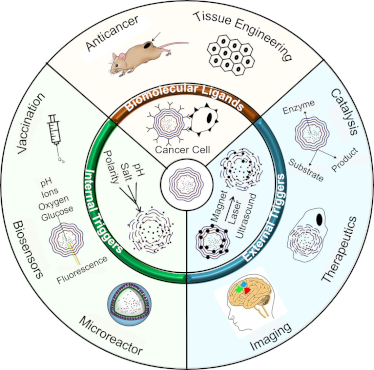
- /biopolymer systems in applications such as therapeutics, biosensing, bioimaging, bioreactors, vaccination, tissue engineering and gene delivery. This review gives an emerging outlook on the advantages and unique responsiveness of weak polyelectrolyte based systems that can enable their widespread use in
- application in implants or tissue engineering. Another strategy for biomolecular functionalization is covalently linking the receptor specific ligands to one of the layer components that are known to interact with cancer cell receptors. For instance, the improved cell adhesion and proliferation was observed



Facile biogenic fabrication of hydroxyapatite nanorods using cuttlefish bone and their bactericidal and biocompatibility study
Beilstein J. Nanotechnol. 2020, 11, 285–295, doi:10.3762/bjnano.11.21
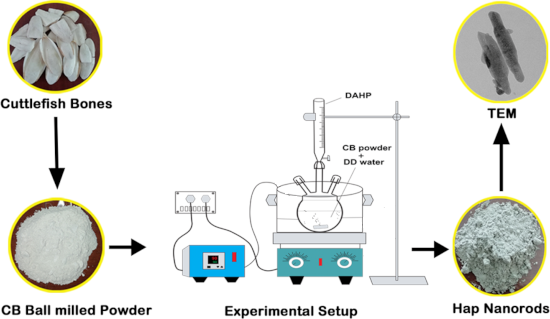
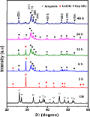
- increasing demand of biomaterials for hard tissue repair [6][7]. It is noteworthy that marine species, including corals, crabs, and fish bones, possess natural calcium phosphate and are currently being extracted and utilized as drug delivery carriers, tissue engineering scaffolds and dental cements in the


Fully amino acid-based hydrogel as potential scaffold for cell culturing and drug delivery
Beilstein J. Nanotechnol. 2019, 10, 2579–2593, doi:10.3762/bjnano.10.249
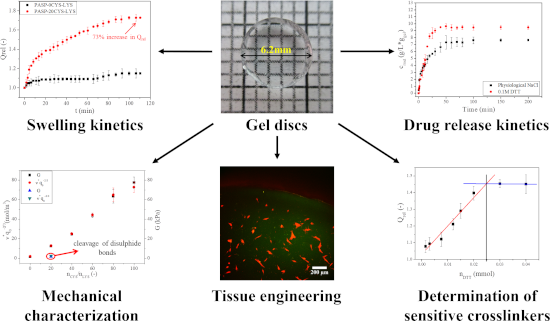
- , Nagyvarad square 4, Budapest, Hungary 10.3762/bjnano.10.249 Abstract Polymer hydrogels are ideal scaffolds for both tissue engineering and drug delivery. A great advantage of poly(amino acid)-based hydrogels is their high similarity to natural proteins. However, their expensive and complicated synthesis
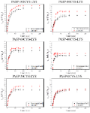
- reductive conditions resulted in an increased drug release due to the cleavage of disulfide bridges in the hydrogels. Consequently, these hydrogels provide new possibilities in the fields of both tissue engineering and controlled drug delivery. Keywords: biocompatibility; cystamine; hydrogel; lysine; poly
- the changing environmental conditions. Therefore, hydrogels can be used as drug delivery systems [4], implants [5][6], coatings [7][8] or scaffolds for tissue engineering [2][3][9][10]. Besides these stimuli-responsive properties, the chemical and physical structure, the mechanical properties [10] as


Atomic force acoustic microscopy reveals the influence of substrate stiffness and topography on cell behavior
Beilstein J. Nanotechnol. 2019, 10, 2329–2337, doi:10.3762/bjnano.10.223
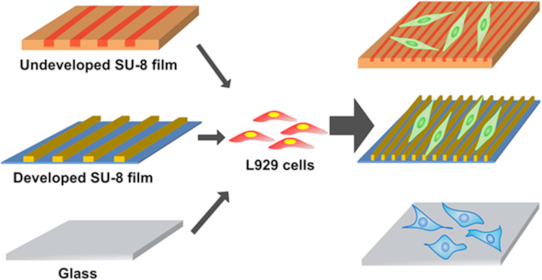
- for the tissue regeneration therapy in biomedicine. Keywords: atomic force acoustic microscopy (AFAM); cell growth; nanopattern; stiffness; SU-8 photoresist; topography; Introduction The interactions of cells with extracellular matrices (ECMs) play important roles in regenerative medicine and tissue
- engineering [1][2] as they affect many cell functions such as cell migration [3][4], attachment, proliferation [5][6] and differentiation [7][8]. Substrate stiffness and topography are two of the most important ECM physical parameters in regulating cell functions [9]. A previous study shows that cells


High-tolerance crystalline hydrogels formed from self-assembling cyclic dipeptide
Beilstein J. Nanotechnol. 2019, 10, 1894–1901, doi:10.3762/bjnano.10.184
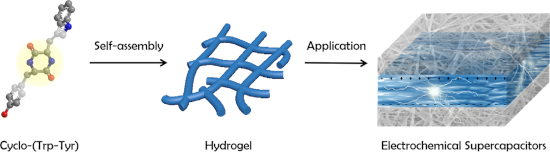
- for a wide range of biomedical and nanotechnological applications, such as tissue engineering, drug delivery, and electronic and photonic energy storage. In this work, a cyclic dipeptide (CDP) cyclo-(Trp-Tyr) (C-WY), which has exceptional structural rigidity and high stability, is selected as a
- their high water content and highly tunable mechanical properties, hydrogels as soft nanoarchitectonics and soft matter are well-suited in extensive applications, such as tissue engineering, drug delivery, and electronic and photonic energy storage [1][2][3][4][5][6][7][8][9][10]. Self-assembled peptide


Nanoarchitectonics meets cell surface engineering: shape recognition of human cells by halloysite-doped silica cell imprints
Beilstein J. Nanotechnol. 2019, 10, 1818–1825, doi:10.3762/bjnano.10.176
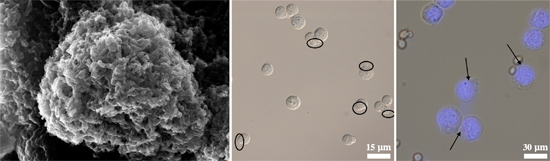
- in cell surface engineering [15]. Surface-engineered cells have found applications in whole-cell biocatalysis [16], cell therapy [17], magnetic cell delivery [18], fabrication of multicellular assemblies [19], cell protection [20][21], biosensors [22] and tissue engineering [23]. Shells derived from
- fillers, drug-delivery vehicles and tissue engineering scaffolds [27]. Halloysite nanotubes derived from various geological deposits differ in their mesoscopic structures [28], allowing to choose the clay nanotubes most suitable for a desired application. The positively charged nanotube lumen can be





