


Search results
Search for "two-dimensional (2D) materials" in Full Text gives 36 result(s) in Beilstein Journal of Nanotechnology.
Computational exploration of two-dimensional silicon diarsenide and germanium arsenide for photovoltaic applications
Beilstein J. Nanotechnol. 2018, 9, 1247–1253, doi:10.3762/bjnano.9.116
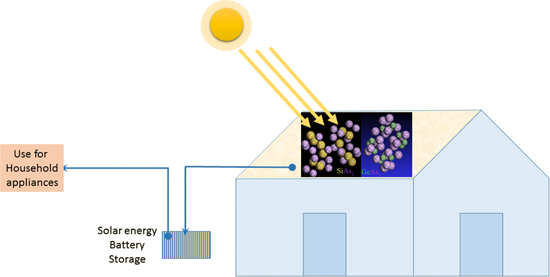
- suitable for photovoltaic applications, such as excellent visible light absorption, favorable exciton formation, and charge separation are equally essential for two-dimensional (2D) materials. Here, we systematically study 2D group IV–V compounds such as SiAs2 and GeAs2 with regard to their structural
- The potential applications of two-dimensional (2D) materials are one of the key research areas for many researchers since graphene was isolated and characterized in 2004 [1]. The number of applications is vast including photovoltaics, nanoelectronics, Dirac materials and solar fuels through water


Nanoscale mapping of dielectric properties based on surface adhesion force measurements
Beilstein J. Nanotechnol. 2018, 9, 900–906, doi:10.3762/bjnano.9.84
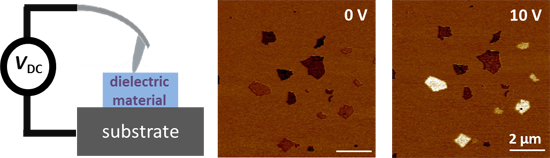
- studies and applications. Here, we report a novel method for the characterization of local dielectric distributions based on surface adhesion mapping by atomic force microscopy (AFM). The two-dimensional (2D) materials graphene oxide (GO), and partially reduced graphene oxide (RGO), which have similar


Sensing behavior of flower-shaped MoS2 nanoflakes: case study with methanol and xylene
Beilstein J. Nanotechnol. 2018, 9, 608–615, doi:10.3762/bjnano.9.57
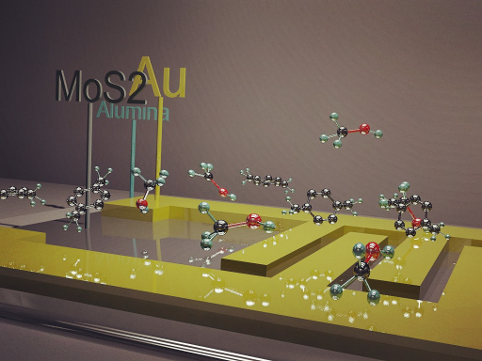
- Maryam Barzegar Masoud Berahman Azam Iraji zad Nanotechnology Research Institute, Sharif University of Technology, Tehran, Iran Physics Department, Sharif University of Technology, Tehran, Iran 10.3762/bjnano.9.57 Abstract Recent research interest in two-dimensional (2D) materials has led to an
- functional theory; gas sensor; hydrothermal method; methanol; MoS2 nanoflakes; xylene vapor; Introduction Recent efforts in exploring two-dimensional (2D) materials have led to the introduction of a new family of materials known as transition metal dichalcogenides (TMDs), which show remarkable electrical


Patterning of supported gold monolayers via chemical lift-off lithography
Beilstein J. Nanotechnol. 2017, 8, 2648–2661, doi:10.3762/bjnano.8.265
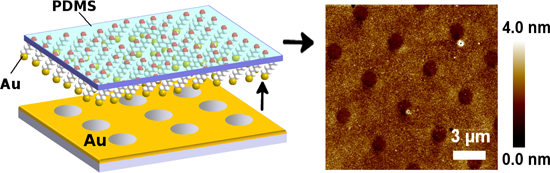
- ]. We have used CLL on gold to control the placement and nanoscale environment around surface-immobilized biomolecules and to simplify patterning steps in device fabrication [1][2][7][8][9][10][11][12][13]. Two-dimensional (2D) materials have proven to be extremely rich in terms of new and potentially


Optical contrast and refractive index of natural van der Waals heterostructure nanosheets of franckeite
Beilstein J. Nanotechnol. 2017, 8, 2357–2362, doi:10.3762/bjnano.8.235
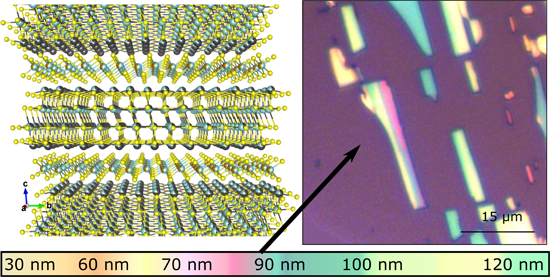
- of high quality two-dimensional (2D) materials [1]. This sample fabrication process, however, typically yields randomly distributed flakes over the substrate surface with a large distribution of flake areas and thicknesses. Therefore fast, reliable, and non-destructive screening methods are crucial


Coexistence of strongly buckled germanene phases on Al(111)
Beilstein J. Nanotechnol. 2017, 8, 1946–1951, doi:10.3762/bjnano.8.195
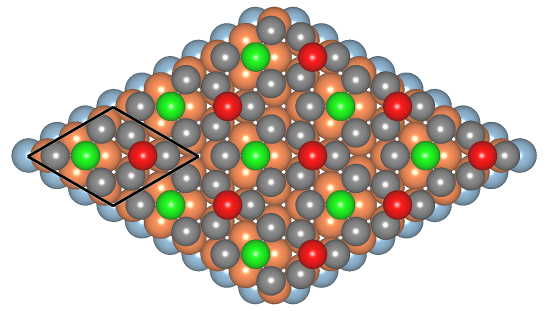
- model. Keywords: core-level spectroscopy; DFT; germanene; STM; Introduction The properties of two-dimensional (2D) materials are currently subjected to intense experimental and theoretical studies. The research is focused on many important properties predicted by theory for various conceivable 2D


α-Silicene as oxidation-resistant ultra-thin coating material
Beilstein J. Nanotechnol. 2017, 8, 1808–1814, doi:10.3762/bjnano.8.182
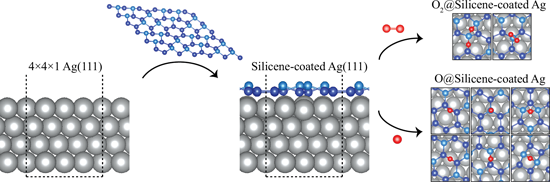
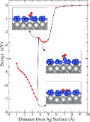
- intensively in surface protection for a long time [1][2], two-dimensional (2D) materials have become new candidates for nanoscale coatings for different material groups. Therefore, coating mechanisms at the nanoscale take are of high interest in nanotechnology, and new candidates for nanostructural protection


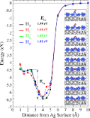
Adsorption and diffusion characteristics of lithium on hydrogenated α- and β-silicene
Beilstein J. Nanotechnol. 2017, 8, 1742–1748, doi:10.3762/bjnano.8.175
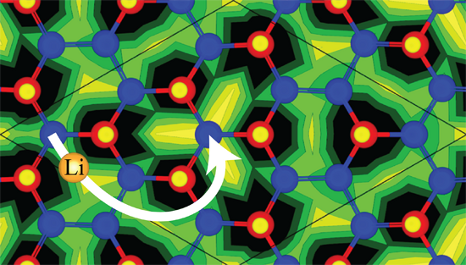
- barriers show that α- and β-silicene are promising platforms for Li-storage applications. Keywords: density functional theory; diffusion; Li atom; silicene; ultra-thin materials; Introduction Following the first synthesis of graphene, the family of two-dimensional (2D) materials have drawn extraordinary


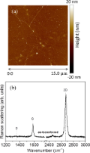
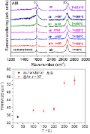
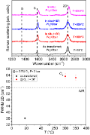
In-situ monitoring by Raman spectroscopy of the thermal doping of graphene and MoS2 in O2-controlled atmosphere
Beilstein J. Nanotechnol. 2017, 8, 418–424, doi:10.3762/bjnano.8.44
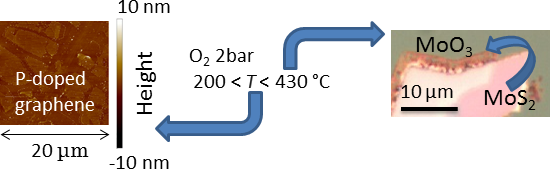
- measurements. The formation of MoO3 on the edges of the flakes is observed indicative of the oxygen-activated transformation. Keywords: two-dimensional (2D) materials; graphene; MoS2; Raman spectroscopy; thermal doping; Introduction A wide interest for two-dimensional (2D) materials has grown in recent years


Two-dimensional and tubular structures of misfit compounds: Structural and electronic properties
Beilstein J. Nanotechnol. 2014, 5, 2171–2178, doi:10.3762/bjnano.5.226
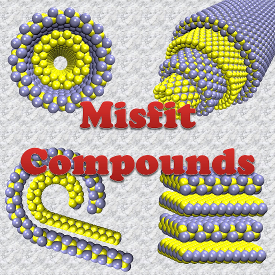
- -dimensional (2D) materials gave access to the preparation of numerous misfit compounds. To date, three comprehensive reviews have dealt with planar [3][4] and tubular [6] misfit compounds, which were as well the foundation for the present overview. In the following, planar and tubular misfit structures are
- )1.00MoSe2, and (SnSe)1.03MoSe2 [5][6][7][8], and misfit layer compounds consisting of other elements such as tellurium [9] or lanthanides [10] have been synthesized. Although some misfit compounds occur naturally [1][11], the recent developments in the synthesis, exfoliation, and handling of layered, two


Fabrication of carbon nanomembranes by helium ion beam lithography
Beilstein J. Nanotechnol. 2014, 5, 188–194, doi:10.3762/bjnano.5.20
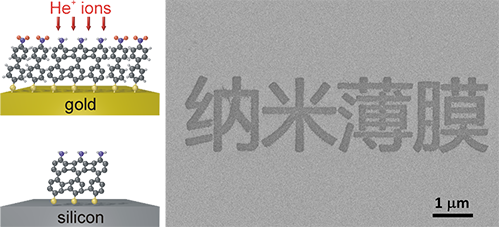
- attachment; helium ion microscopy; ion beam-organic molecules interactions; self-assembled monolayers; Introduction Carbon nanomembranes (CNMs) with monomolecular thickness and macroscopic lateral size represent a new type of functional two-dimensional (2D) materials [1]. A universal scheme to fabricate





