


Search results
Search for "wetting" in Full Text gives 182 result(s) in Beilstein Journal of Nanotechnology.
A comprehensive review on electrospun nanohybrid membranes for wastewater treatment
Beilstein J. Nanotechnol. 2022, 13, 137–159, doi:10.3762/bjnano.13.10
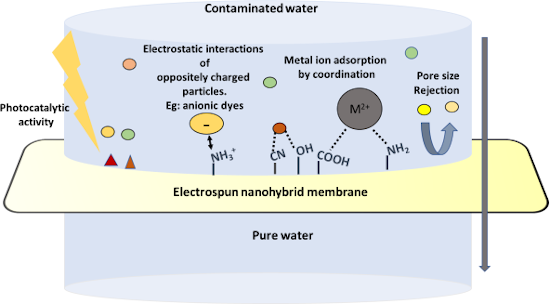
- application as an oil–water separators, owing to the high surface porosity, submicrometer pore sizes, high permeability, and the ability to control the membrane hydrophobicity/hydrophilicity effortlessly. The nanoscale surface roughness of the nanofibers of the membrane has a direct impact on the wetting


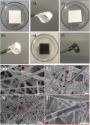


A review on slip boundary conditions at the nanoscale: recent development and applications
Beilstein J. Nanotechnol. 2021, 12, 1237–1251, doi:10.3762/bjnano.12.91
- limited, thus leading to the reduction of water slippage. Figure 3 shows that although water shows similar wetting properties on surfaces of boron nitride and graphene, the friction coefficient (or slip length) of water on boron nitride is much larger (or lower) than that on graphene due to a more


The effect of cobalt on morphology, structure, and ORR activity of electrospun carbon fibre mats in aqueous alkaline environments
Beilstein J. Nanotechnol. 2021, 12, 1173–1186, doi:10.3762/bjnano.12.87
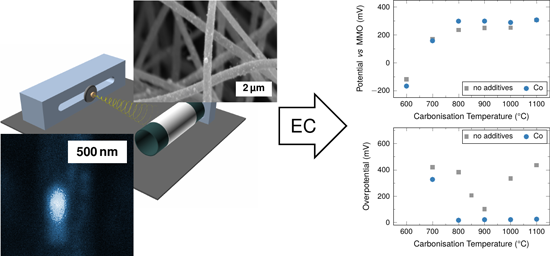
- active sites, that is, triple-phase contact points. These contact points of air, solid catalyst, and liquid electrolyte, need to be high in number or area. This entails a partial wetting of the electrode to ensure accessibility of the sites for gaseous oxygen. From a more industrial perspective


The role of deep eutectic solvents and carrageenan in synthesizing biocompatible anisotropic metal nanoparticles
Beilstein J. Nanotechnol. 2021, 12, 924–938, doi:10.3762/bjnano.12.69
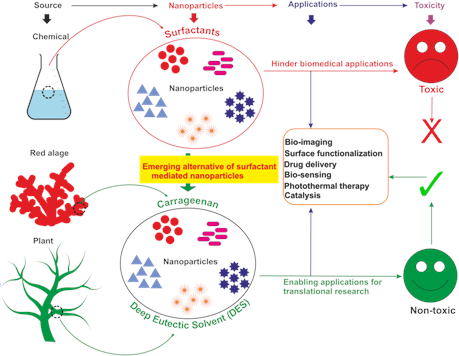
- wetting, double layered structure, and hydrogen bonding is needed as it will allow chemists to controllably manipulate the nanoscale growth [91]. While, in-depth studies (experimental and computational) regarding these aspects are yet to come, several significant preliminary studies have been reported


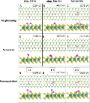
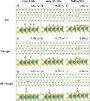
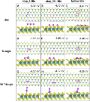
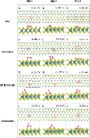
Prediction of Co and Ru nanocluster morphology on 2D MoS2 from interaction energies
Beilstein J. Nanotechnol. 2021, 12, 704–724, doi:10.3762/bjnano.12.56
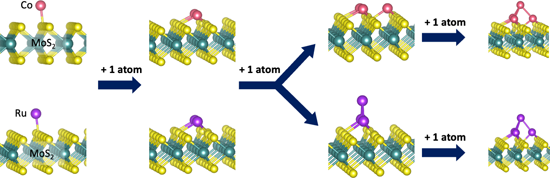
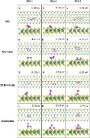
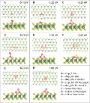
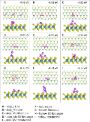
- -quality, conformal thin films with low resistivity, to avoid many of the typical failure mechanisms such as electromigration [42][43]. This means that 3D migration of atoms (agglomeration) should be inhibited, while 2D growth (wetting) should be promoted. In contrast, in catalysis applications the ratio
- favourable metal–substrate interaction should inhibit migration of atoms to form 3D structures during thin film deposition, resulting in a 2D film suitable for interconnect applications, without the need of an additional liner material to promote wetting. This is the subject of further work and will include


Electromigration-induced formation of percolating adsorbate islands during condensation from the gaseous phase: a computational study
Beilstein J. Nanotechnol. 2021, 12, 694–703, doi:10.3762/bjnano.12.55
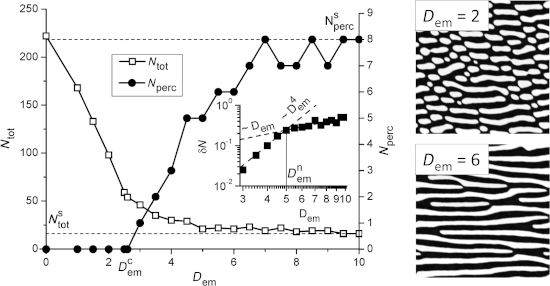
- include the formation of surface steps [28][29][30][31], faceting of the surface [32][33][34][35][36][37], elimination of instability of surface morphology caused by stress and wetting of the substrate [38][39][40][41], the evolution of contact irregularities in switches of microelectromechanical systems


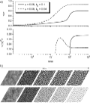


![[Graphic 29]](/bjnano/content/inline/2190-4286-12-55-i36.svg?max-width=637&scale=1.18182) on the adsorption coefficient α ...
on the adsorption coefficient α ...

Spontaneous shape transition of MnxGe1−x islands to long nanowires
Beilstein J. Nanotechnol. 2021, 12, 366–374, doi:10.3762/bjnano.12.30
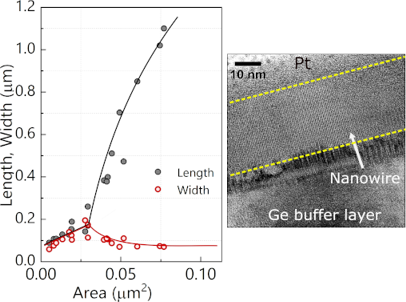
- spontaneous shape transition, from regular islands to elongated nanowires, upon high-temperature annealing of a thin Mn wetting layer evaporated on Ge(111). We demonstrate that 4.5 monolayers is the critical thickness of the Mn layer, governing the shape transition to wires. A small change around this value
- formation of quantum wires [35]. In this method, wires are obtained via epitaxial growth of a strained wetting layer followed by annealing at high temperature. However, only few studies have been dedicated to strain-induced elongation mechanisms leading to the formation of semiconducting nanowires, such as
- report a spontaneous morphology modification, from islands to nanowires, in Mn-rich GeMn nanoparticles. The growth is initiated via reaction of a thin Mn wetting layer, evaporated by MBE, with a Ge(111) substrate. Morphology and microstructure of the NWs have been studied by scanning electron microscopy


Extended iron phthalocyanine islands self-assembled on a Ge(001):H surface
Beilstein J. Nanotechnol. 2021, 12, 232–241, doi:10.3762/bjnano.12.19
- molecular wetting layers [15] and two-dimensional materials, such as graphene [16][17], hBN [11][18], or even organic layers [19]. Recently, it has been proposed that a monolayer of transition metal dichalcogenides, for example, MoS2, may play a similar role [4][20][21]. Similarly, it has been reported that
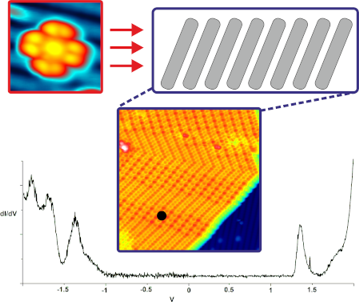
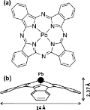
- wetting layer on TiO2 [67]. As indicated in Figure 3b, the STM-measured height of the molecular island reaches approximately 1.05 nm. This is in good agreement with previous reports indicating the STM height of an upright-oriented phthalocyanines to be in the range from 1.10 nm [66] to 1.16 nm [67]. This
- , therefore, shall correspond to the half of the unit cells of the α and the β phase. While the majority of phthalocyanines exhibits alternate rotation of the molecules within neighboring columns, there are examples of structures, in which the molecules are rotated uniformly, that is, CuPc on a wetting layer
Molecular dynamics modeling of the influence forming process parameters on the structure and morphology of a superconducting spin valve
Beilstein J. Nanotechnol. 2020, 11, 1776–1788, doi:10.3762/bjnano.11.160
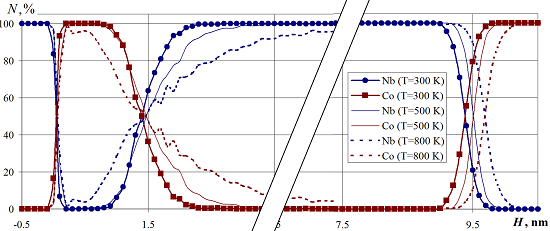
- quantum-mechanical transparency of the interface, TF, was assigned. Here, they considered the effect of the mutual solubility of the metals (of a superconductor and a ferromagnet) on the quantum-mechanical transparency. The transparency parameter of the interface for completely non-wetting metals, such as
- is a high risk of mutual diffusion and the formation of a thick “dead” layer, which also suppresses the transparency of the S/F interface [20]. In the case of materials wetting and limited mutual solubility (as in niobium–nickel and niobium–cobalt, with solubility of about 5% at room temperature


The influence of an interfacial hBN layer on the fluorescence of an organic molecule
Beilstein J. Nanotechnol. 2020, 11, 1663–1684, doi:10.3762/bjnano.11.149
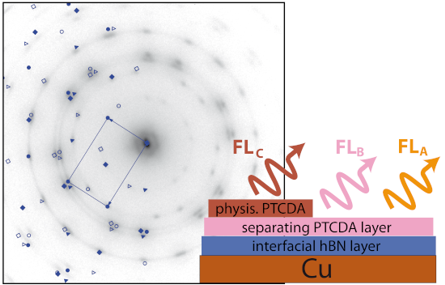

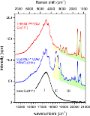


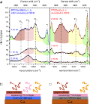
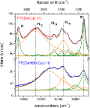


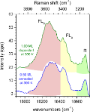
Controlling the electronic and physical coupling on dielectric thin films
Beilstein J. Nanotechnol. 2020, 11, 1492–1503, doi:10.3762/bjnano.11.132
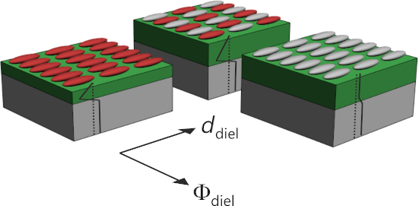
- regime) and charged and uncharged molecules (Fermi level pinning regime) can be obtained. Furthermore, it was found that charge transfer and temperature strongly influence the orientation, conformation, and wetting behavior (physical coupling) of the 6P layers on the MgO(100) thin films. Keywords
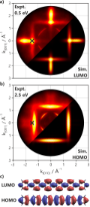
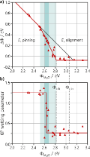
- critical role of the work function for charging and its influence on the surface wetting capability of the molecules will be highlighted. Work function control of electronic coupling Figure 4 displays angle-resolved ultraviolet photoemission spectroscopy (ARUPS) scans after the 6P molecules were submitted
- transfer and wetting behavior for 6P are in contrast with the 5A system. In the latter, the number of charged molecules increases gradually with ΦMgO below the critical work function, and a wetting ML is always present, whether or not the charge transfer occurs. Due to the critical role of the work




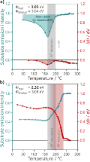
Analysis of catalyst surface wetting: the early stage of epitaxial germanium nanowire growth
Beilstein J. Nanotechnol. 2020, 11, 1371–1380, doi:10.3762/bjnano.11.121
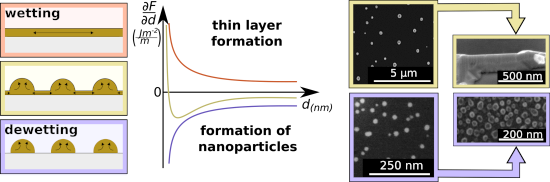
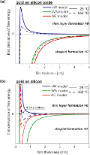
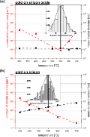
- are fully understood yet, especially regarding metallic fluids, it is clear that the formation of nanometre-sized particles, droplets, and clusters as well as their movement are strongly linked to their wetting behaviour. For this reason, the thermodynamic stability of thin metal layers (0.1–100 nm
- possibility to further process the obtained particles as nanocatalysts is verified. The importance of a persistent thin communication wetting layer between the particles and its effects on particle size and number is also clarified here. In particular, the intrinsic reduction of the Laplace pressure of the
- grow germanium nanowires on different substrates is described. Keywords: dewetting; germanium; interfacial energy; Laplace pressure; nanostructure; nanowire; Ostwald ripening; wetting layer; Introduction Wetting phenomena as well as the formation and movement of droplets are essential for numerous


Impact of fluorination on interface energetics and growth of pentacene on Ag(111)
Beilstein J. Nanotechnol. 2020, 11, 1361–1370, doi:10.3762/bjnano.11.120
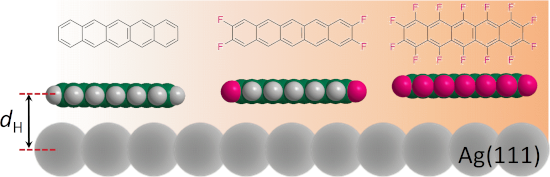
- the coverage to nominally 48 Å did not significantly change the LEED image (see Supporting Information File 1, Figure S3). This indicated that increasing the coverage does not change the lateral order at the contact layer and pointed towards Stranski–Krastanov growth (island on wetting layer) [70


Gas sorption porosimetry for the evaluation of hard carbons as anodes for Li- and Na-ion batteries
Beilstein J. Nanotechnol. 2020, 11, 1217–1229, doi:10.3762/bjnano.11.106
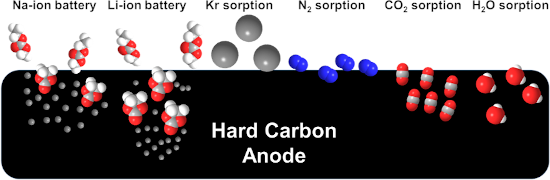
- connecting the cells to the potentiostat, the cells were rested for 2 h in order to assure proper wetting of the electrodes. Three charge-discharge cycles were performed at a rate of C/10 (35.5 mA g−1). The lower cut-off potential was 10 mV and the upper cut-off potential 1.5 V vs Li+/Li whereby the


Hybridization vs decoupling: influence of an h-BN interlayer on the physical properties of a lander-type molecule on Ni(111)
Beilstein J. Nanotechnol. 2020, 11, 1168–1177, doi:10.3762/bjnano.11.101
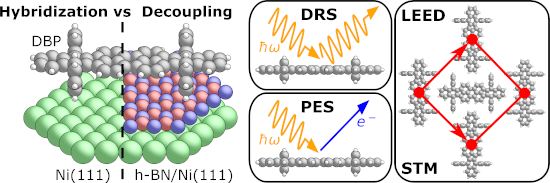
- large-area STM images (Supporting Information File 1, Figure S2), which confirm a close-packed DBP wetting layer as well as DBP clusters on top for a nominal film thickness of about 1.6 MLE. Hence, there is little discrepancy between 1 MLE, defined via DRS, and a fully covered substrate surface


A 3D-polyphenylalanine network inside porous alumina: Synthesis and characterization of an inorganic–organic composite membrane
Beilstein J. Nanotechnol. 2020, 11, 938–951, doi:10.3762/bjnano.11.78
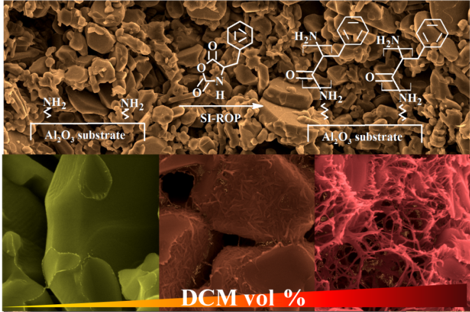
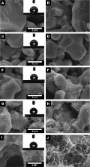
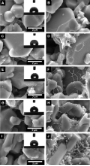
- rearrangement of the secondary, tertiary, or quaternary structure of the polypeptides. The reduction of the measured water contact angle can be explained by the established model of Cassie and Baxter, in which the wetting properties are affected by heterogeneous surfaces (inner surface is not wetted) and the




Templating effect of single-layer graphene supported by an insulating substrate on the molecular orientation of lead phthalocyanine
Beilstein J. Nanotechnol. 2020, 11, 814–820, doi:10.3762/bjnano.11.66
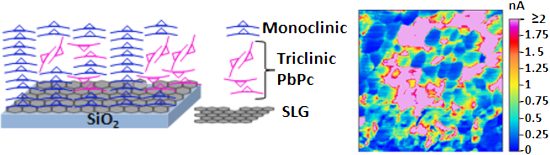
- consider any influence of the underlying substrate on the MPc orientation. It has been shown that a monolayer of graphene, due to its extremely thin nature, exhibits transparency to the wetting behavior on substrates where van der Waals forces are the dominant surface–water interactions [14]. The wetting
- polymer residues via thermal treatment [30]. Recently, Rafiee et al. found, in the context of wetting, that the van der Waals forces are not disrupted by the graphene sheet as it is extremely thin (ca. 0.3 nm) [14]. Hence, we consider that the edge-on configurations are formed under the influence of the


Electromigration-induced directional steps towards the formation of single atomic Ag contacts
Beilstein J. Nanotechnol. 2020, 11, 680–687, doi:10.3762/bjnano.11.55
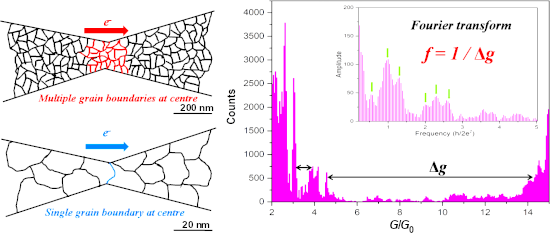
- was employed in order to obtain nanostructures of bow-tie shape that were 100 to 200 nm wide at the smallest constriction. After HF dip, in order to get a hydrogen-terminated surface, 1 nm of Ti served as wetting layer before we evaporated 5 nm of Ag onto the substrate at room temperature. Thirdly


Exfoliation in a low boiling point solvent and electrochemical applications of MoO3
Beilstein J. Nanotechnol. 2020, 11, 662–670, doi:10.3762/bjnano.11.52
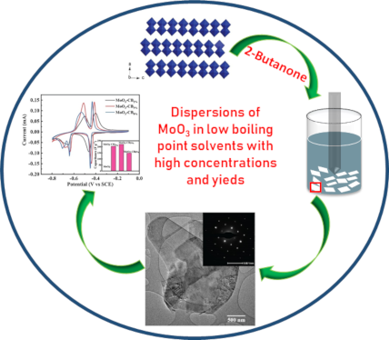
- supercapacitors [30][31]. The composite with 5 wt % CB was tested for about 500 cycles (Figure 3e). Initially the specific capacitance was found to increase, which can be attributed to the wetting of the active material in the initial cycles [26]. Electrochemical impedance spectroscopy was used to study the
- response with a small iR drop. This can be attributed to the better conductivity after adding CB. To study the stability of the composite, cyclic voltammetry was carried out up to 2000 cycles. Initially, the capacitance increases, which may be attributed to the wetting of the electrode with the electrolyte

Preparation, characterization and photocatalytic performance of heterostructured CuO–ZnO-loaded composite nanofiber membranes
Beilstein J. Nanotechnol. 2020, 11, 631–650, doi:10.3762/bjnano.11.50
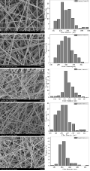
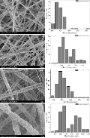
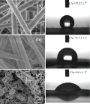
- account the nanofiber diameters of the CNFMs presented in Table 1, it can be found that the pore sizes of the CNFMs are mainly determined by the nanofiber diameters. Larger nanofiber diameters lead to larger pore sizes. Wetting properties: The measured contact angle (CA) values of the CNFMs with different
- -treatment temperature. Wetting properties: The CA values of the CNFMs obtained without and with heat treatment are illustrated in Figure 14. The hydrophobicity of the heat-treated CNFMs is smaller than that of the CNFMs without heat treatment, due to the formation of hydrophilic CuO and ZnO nanoparticles
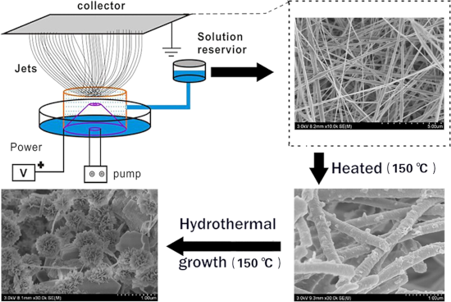
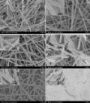
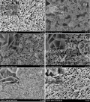
- a hydrothermal method. The effects of growth solution concentration as well as temperature and time of the hydrothermal synthesis on the morphology of the heterostructured CuO–ZnO-loaded CNFMs were investigated by SEM. Also, structure and wetting properties of the CNFMs were studied. Effect of the











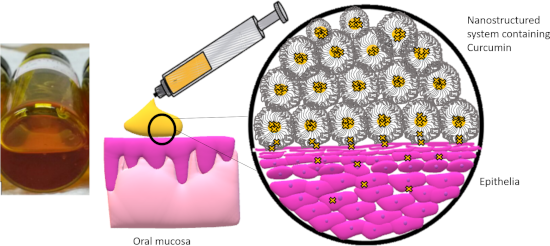
Design of a nanostructured mucoadhesive system containing curcumin for buccal application: from physicochemical to biological aspects
Beilstein J. Nanotechnol. 2019, 10, 2304–2328, doi:10.3762/bjnano.10.222


Ultrathin Ni1−xCoxS2 nanoflakes as high energy density electrode materials for asymmetric supercapacitors
Beilstein J. Nanotechnol. 2019, 10, 2207–2216, doi:10.3762/bjnano.10.213
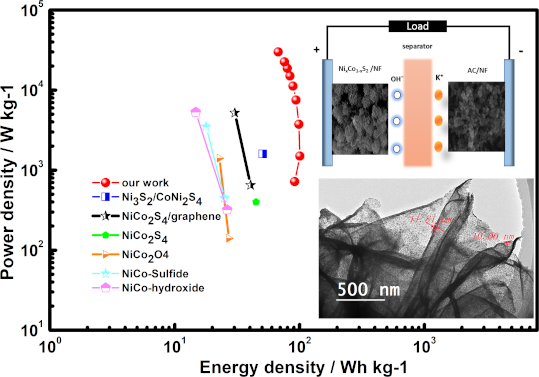
- higher conductivity of the sulfide material [39]. Another critical parameter of supercapacitor electrodes is cycling stability. It can be seen from Figure 3d that the capacity increased in the first 50 cycles, which can be due to the wetting process of the electrode in the electrolyte [40]. After a total


Nanostructured and oriented metal–organic framework films enabling extreme surface wetting properties
Beilstein J. Nanotechnol. 2019, 10, 1994–2003, doi:10.3762/bjnano.10.196
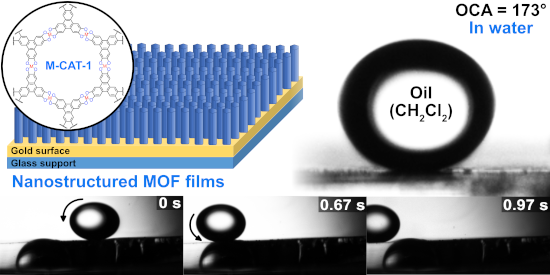
- report on the synthesis of highly oriented and nanostructured metal–organic framework (MOF) films featuring extreme surface wetting properties. The Ni- and Co- derivatives of the metal–catecholate series (M-CAT-1) were synthesized as highly crystalline bulk materials and thin films. Oriented pillar-like
- nanostructured M-CAT-1 films exhibiting pronounced needle-like morphology on gold substrates were established by incorporating a crystallization promoter into the film synthesis. These nanostructured M-CAT-1 MOF films feature extreme wetting phenomena, specifically superhydrophilic and underwater superoleophobic
- . Keywords: antifog; antifouling; biomimetic coatings; metal–organic frameworks (MOFs); superhydrophilic; superoleophobic; thin films; vapor-assisted conversion; Introduction Over millions of years, plants and animals have evolved a spectrum of surface designs enabling specific wetting properties tailored


Fabrication and characterization of Si1−xGex nanocrystals in as-grown and annealed structures: a comparative study
Beilstein J. Nanotechnol. 2019, 10, 1873–1882, doi:10.3762/bjnano.10.182
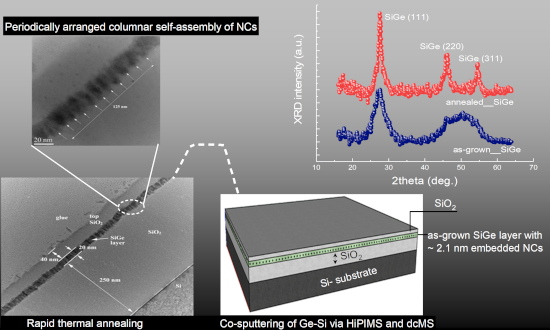
- crystals upon annealing. A similar phenomenon may have occurred in our structures, as depicted in Figure 4 and Figure 5. Thus, we can anticipate heterogeneous nucleation to be a dominant process during crystallization rather than conventional homogenous nucleation. This can be due to a better wetting of


Upcycling of polyurethane waste by mechanochemistry: synthesis of N-doped porous carbon materials for supercapacitor applications
Beilstein J. Nanotechnol. 2019, 10, 1618–1627, doi:10.3762/bjnano.10.157
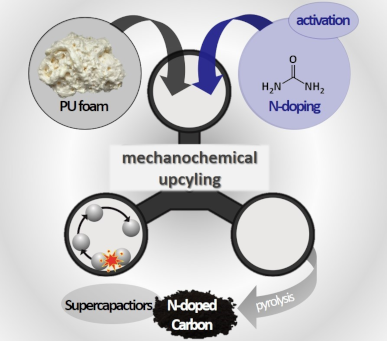
- vapor adsorption was performed exemplarily for the samples PUPC-800-3, PUUPC-800-1, and PUUPC-800-2 to demonstrate the effect of the porosity and the generated nitrogen functionalities on sorption, phase and wetting behavior. The water isotherms of all measured samples are assigned to a type V isotherm





