


Search results
Search for "SERS" in Full Text gives 107 result(s) in Beilstein Journal of Nanotechnology.
Growth model and structure evolution of Ag layers deposited on Ge films
Beilstein J. Nanotechnol. 2018, 9, 66–76, doi:10.3762/bjnano.9.9
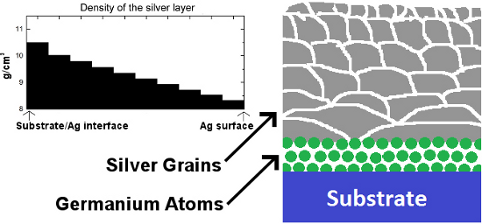
- nm thickness has an imaginary part of permittivity lower than 1 within the 315–827 nm range [4]. Therefore, silver is widely used in plasmonic sensors [5][6][7], as substrates for surface enhanced Raman scattering (SERS) [8][9], as inclusion in solar cells [10][11][12] and in other plasmonic devices
- stated earlier, the segregation-induced band in the permittivity spectrum is a plasmonic one [4], so the signal from Ge clusters in the voids between silver grains is most likely enhanced by localized plasmons excited on the silver grains, in a similar way as SERS or TERS, hence only the slight drop in







Refractive index sensing and surface-enhanced Raman spectroscopy using silver–gold layered bimetallic plasmonic crystals
Beilstein J. Nanotechnol. 2017, 8, 2492–2503, doi:10.3762/bjnano.8.249
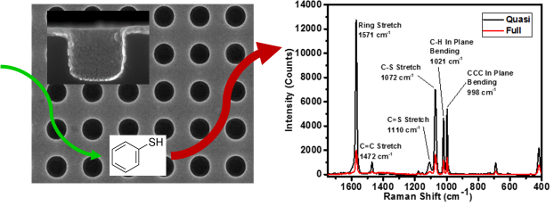
- /bjnano.8.249 Abstract Herein we describe the fabrication and characterization of Ag and Au bimetallic plasmonic crystals as a system that exhibits improved capabilities for quantitative, bulk refractive index (RI) sensing and surface-enhanced Raman spectroscopy (SERS) as compared to monometallic
- -domain (FDTD) simulations theoretically verify the nature of the multimode plasmonic resonances generated by the devices and allow for a better understanding of the enhancements in multispectral refractive index and SERS-based sensing. Taken together, these results demonstrate a robust and potentially
- promising as an analytical technique for real-time, fully label-free detection of molecules, both quantitatively and qualitatively, as well as for monitoring surface interactions [5][10][11]. Surface-enhanced Raman spectroscopy, better known as SERS, is another important analytical application that utilizes


Fabrication of gold-coated PDMS surfaces with arrayed triangular micro/nanopyramids for use as SERS substrates
Beilstein J. Nanotechnol. 2017, 8, 2271–2282, doi:10.3762/bjnano.8.227
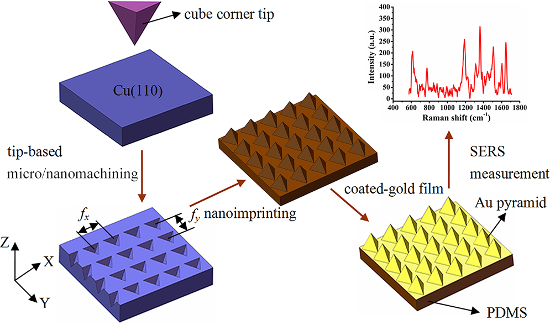
- the structures were successfully transferred to a polydimethylsiloxane (PDMS) surface using a reverse nanoimprinting approach. The structured PDMS surface is coated with a thin Au film, and the final substrate is demonstrated as a surface-enhanced Raman spectroscopy (SERS) substrate. Rhodamine 6G (R6G
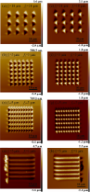
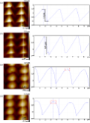
- ) was used as a probe molecule in the present study to confirm the SERS measurements. Arrays of micro/nanostructures of different dimensions were formed by the overlap of pyramidal cavities with different adjacent distances using the tip-based continuous indentation process. The effects of the reverse
- 1362 cm−1 R6G peak on the structured Au-film-coated PDMS substrate is about 8 times higher than the SERS tests on a commercial substrate (Q-SERS). A SERS enhancement factor ranging from 7.5 × 10⁵ to 6 × 10⁶ was achieved using the structured Au-film-coated PDMS surface, and it was demonstrated that the





Optical techniques for cervical neoplasia detection
Beilstein J. Nanotechnol. 2017, 8, 1844–1862, doi:10.3762/bjnano.8.186

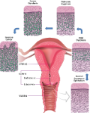
- Raman scattering, SERS). However, these improvements often increase the time of measurements and the complexity/cost of the instrument, which may hinder clinical applications of Raman spectroscopy. In addition, the spread of diagnostically relevant peaks across the Raman spectra requires the development



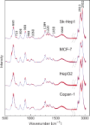
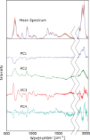
Surface-enhanced Raman spectroscopy of cell lysates mixed with silver nanoparticles for tumor classification
Beilstein J. Nanotechnol. 2017, 8, 1183–1190, doi:10.3762/bjnano.8.120

- limited to the range of one cell per second because of the relatively low sensitivity. Surface-enhanced Raman scattering (SERS) is a widespread way to amplify the intensity of Raman signals by several orders of magnitude and, consequently, to improve the sensitivity and throughput. SERS protocols using
- immuno-functionalized nanoparticles turned out to be challenging for cell identification because they require complex preparation procedures. Here, a new SERS strategy is presented for cell classification using non-functionalized silver nanoparticles and potassium chloride to induce aggregation. To
- demonstrate the principle, cell lysates were prepared by ultrasonication that disrupts the cell membrane and enables interaction of released cellular biomolecules to nanoparticles. This approach was applied to distinguish four cell lines – Capan-1, HepG2, Sk-Hep1 and MCF-7 – using SERS at 785 nm excitation


Nanoantenna-assisted plasmonic enhancement of IR absorption of vibrational modes of organic molecules
Beilstein J. Nanotechnol. 2017, 8, 975–981, doi:10.3762/bjnano.8.99
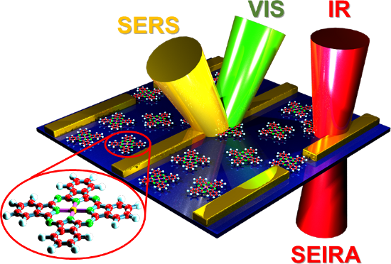
- limit, which is crucial for sensor applications. The sensitivity of these optical methods can be drastically increased by implementation of nanoantenna-assisted plasmonic-enhanced spectroscopy techniques such as surface-enhanced IR absorption (SEIRA) [12] or surfaced-enhanced Raman scattering (SERS) [13
- ]. The principle of SEIRA and SERS is based on specially designed, resonant, metal nanoantennas, providing a high electromagnetic field intensity in close proximity to the plasmonic nanostructure when resonantly excited in the IR or optical regime [14][15]. It was shown that elongated nanoantennas can
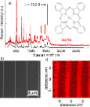
- surface plasmon energy of the nanoantennas to the energy of the molecular vibrations. Along with SEIRA, SERS is also traditionally used to study the vibrational spectra of various organic and biological substances [18], which may be present in very low quantities down to single molecules [19]. Raman



Near-field surface plasmon field enhancement induced by rippled surfaces
Beilstein J. Nanotechnol. 2017, 8, 956–967, doi:10.3762/bjnano.8.97
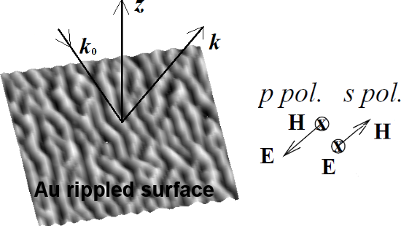
- of fundamental relevance to study near-field nonlinear optical phenomena [1][2]. Particularly relevant is the strong electric field enhancement on resonance that can be of special interest for various applications, such as surface-enhanced Raman spectroscopy (SERS) [3][4], tip-enhanced Raman
- , we obtain and plot the local enhancement parameter, Γ, for a wide variety of patterned surfaces. In particular, we will focus on a specific class of gold nanostructures featuring a rippled surface (which have already demonstrated their potential as SERS substrates) as well as their nonlinear optical
- frequency. By changing the frequency, one can excite different nanometer-sized hot spots on a film. This effect has high potential for various applications in SERS, plasmon-enhanced photocatalysis and sensing applications [6][7][8][9][10][11][12][13][14][15]. In addition, polarization plays a fundamental


Microfluidic setup for on-line SERS monitoring using laser induced nanoparticle spots as SERS active substrate
Beilstein J. Nanotechnol. 2017, 8, 237–243, doi:10.3762/bjnano.8.26

- of residues of malachite green (MG) using surface-enhanced Raman scattering (SERS) is reported. The SERS active substrate was prepared via laser induced synthesis of silver or gold nanoparticles spot on the bottom of a 200 μm inner dimension glass capillary, by focusing the laser beam during a
- continuous flow of a mixture of silver nitrate or gold chloride and sodium citrate. The described microfluidic setup enables within a few minutes the monitoring of several processes: the synthesis of the SERS active spot, MG adsorption to the metal surface, detection of the analyte when saturation of the
- SERS signal is reached, and finally, the desorption of MG from the spot. Moreover, after MG complete desorption, the regeneration of the SERS active spot was achieved. The detection of MG was possible down to 10−7 M concentration with a good reproducibility when using silver or gold spots as SERS


Surface-enhanced Raman scattering of self-assembled thiol monolayers and supported lipid membranes on thin anodic porous alumina
Beilstein J. Nanotechnol. 2017, 8, 74–81, doi:10.3762/bjnano.8.8
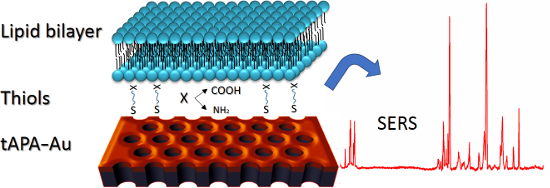
- with ≈160 nm pore diameter and ≈80 nm corresponding wall thickness to be prepared. The tAPA surfaces were made SERS-active by coating with a thin (≈25 nm) gold (Au) layer. The as obtained tAPA–Au substrates were incubated first with different thiols, namely mercaptobenzoic acid (MbA) and aminothiol (AT
- ), and then with phospholipid vesicles of different composition to form a supported lipid bilayer (SLB). At each step, the SERS substrate functionality was assessed, demonstrating acceptable enhancement (≥100×). The chemisorption of thiols during the first step and the formation of SLB from the vesicles
- during the second step, were independently monitored by using a quartz crystal microbalance with dissipation monitoring (QCM-D) technique. The SLB membranes represent a simplified model system of the living cells membranes, which makes the successful observation of SERS on these films promising in view


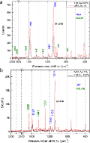

Surface-enhanced infrared absorption studies towards a new optical biosensor
Beilstein J. Nanotechnol. 2016, 7, 1736–1742, doi:10.3762/bjnano.7.166
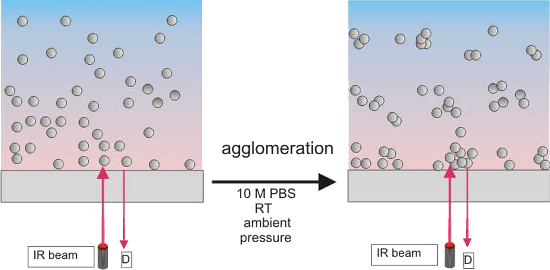
- gained some importance in the field of sensor applications during the last three decades [8][9][10]. The theory of SEIRA is similar to the theory of surface-enhanced Raman spectroscopy (SERS) where electrochemical and chemical mechanisms seem to be responsible for the signal enhancement [11]. The effect


Graphene-enhanced plasmonic nanohole arrays for environmental sensing in aqueous samples
Beilstein J. Nanotechnol. 2016, 7, 1564–1573, doi:10.3762/bjnano.7.150
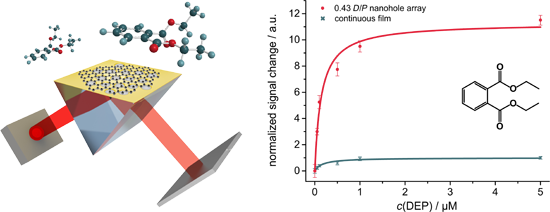
- -enhanced Raman scattering (SERS) in the year 2015 alone. In contrast, in the same year only 25 publications report on the enhancement of SPR signals by introducing nanostructured surfaces. One reason can be attributed to the different size of the sensing spots used in these two prominent techniques




Localized surface plasmons in structures with linear Au nanoantennas on a SiO2/Si surface
Beilstein J. Nanotechnol. 2016, 7, 1519–1526, doi:10.3762/bjnano.7.145
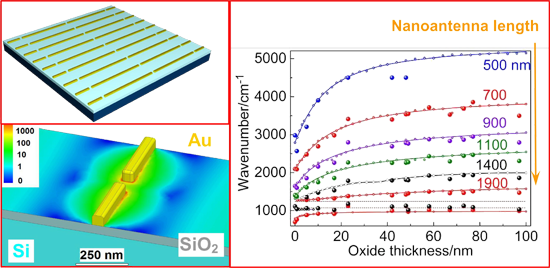
- or terahertz frequencies [11][12][13][14]. Nanoantennas exhibiting the LSPR in the optical spectral range are already used for surface-enhanced Raman scattering (SERS) [15][16][17][18][19], and for fluorescence enhancements [20][21][22]. Nanoantennas with the LSPR energy located in the infrared


Dealloying of gold–copper alloy nanowires: From hillocks to ring-shaped nanopores
Beilstein J. Nanotechnol. 2016, 7, 1361–1367, doi:10.3762/bjnano.7.127
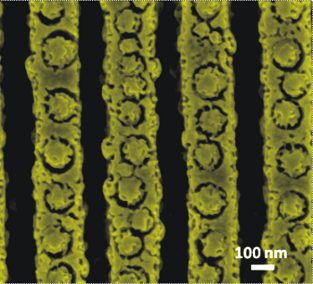
- nanowires exhibit a very high roughness and high specific surface making of them a promising candidate for the development of SERS-based sensors. Keywords: copper; dealloying; gold; hillocks; nanoporous; Introduction Improvement in nanoscience involves fundamental evolution in the synthesis and
- size and shape coupled to the alignment and periodic organization of the nanowires is expected to promote the SERS effect originating from such gold nanostructures. Experimental Nanopatterned substrates The nanopatterned silicon substrates used as a template to grow the nanowires were prepared using a




Tunable longitudinal modes in extended silver nanoparticle assemblies
Beilstein J. Nanotechnol. 2016, 7, 1219–1228, doi:10.3762/bjnano.7.113
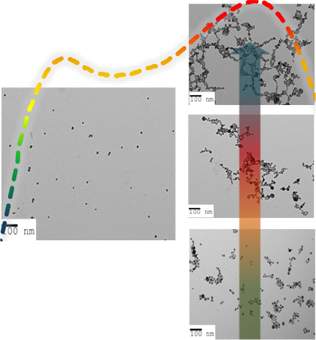
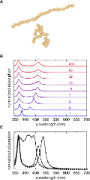
- of modern applications in surface-enhanced Raman spectroscopy (SERS), optical sensing and emission enhancement of molecules residing in the near field [33][34]. In addition to applications in spectroscopy, plasmonic interactions may also be exploited in other light-based devices. The miniaturization
- and transverse plasmonic modes, in contrast to the observations reported here. For example, resorcinol-reduced silver nanoparticles were aggregated by heating, but the aggregates, despite their enhanced SERS signals, did not exhibit interesting spectral properties [39]. Likewise, AgNPs self-assembled
- anisotropy, as revealed by the simulation data. A stronger spectral anisotropy is achieved by deuterating the ligand due to the formation of highly dense anisotropic silver aggregates, offering a feasible method of preparing competent SHG (second harmonic generation) and SERS-active substrates. Based on


Sandwich-like layer-by-layer assembly of gold nanoparticles with tunable SERS properties
Beilstein J. Nanotechnol. 2016, 7, 1028–1032, doi:10.3762/bjnano.7.95
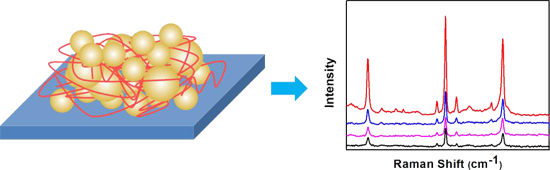
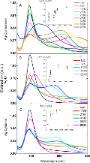
- 10.3762/bjnano.7.95 Abstract Sandwich-like layer-by-layer thin films consisting of polyelectrolytes and gold nanoparticles were utilized to construct surface-enhanced Raman scattering (SERS) substrates with tunable SERS properties. It is found that both the size of the nanoparticles in the layers and the
- interlayer distance significantly influence the SERS performance of the multilayered thin film. These simple, low-cost, easily processable and controllable SERS substrates have a promising future in the field of molecular sensing. Keywords: assembly; layer-by-layer; multilayer thin film; nanoparticle
- ; polyelectrolyte; Introduction Surface-enhanced Raman scattering (SERS) spectroscopy, which relies on metal nanostructures made of noble metals (Au, Ag and Cu) that sustain localized surface plasmon resonance (LSPR), is applied as a promising analytical tool for detecting and identifying trace amounts of


Templated green synthesis of plasmonic silver nanoparticles in onion epidermal cells suitable for surface-enhanced Raman and hyper-Raman scattering
Beilstein J. Nanotechnol. 2016, 7, 834–840, doi:10.3762/bjnano.7.75

- nanostructures generated in the extracellular space of onion layers and within the epidermal cell walls can serve as enhancing plasmonic structures for one- and two-photon-excited spectroscopy such as surface enhanced Raman scattering (SERS) and surface enhanced hyper-Raman scattering (SEHRS). Our studies
- to the plasmonic nanostructures are probed by surface-enhanced Raman scattering (SERS) and two-photon-excited analogous surface-enhanced hyper-Raman scattering (SEHRS) [21][22]. While SERS signals scale with the local optical field strengths by 104, SEHRS signals have a scaling factor of 106. This
- high non-linearity makes SEHRS a very sensitive method to probe spatial variations in local fields and to localize plasmonic nanostructures, surpassing also SERS. Here we compare SEHRS images and bright field microscopy of the onion cell layers. Additionally, our SERS and SEHRS experiments give


Direct formation of gold nanorods on surfaces using polymer-immobilised gold seeds
Beilstein J. Nanotechnol. 2016, 7, 809–816, doi:10.3762/bjnano.7.72
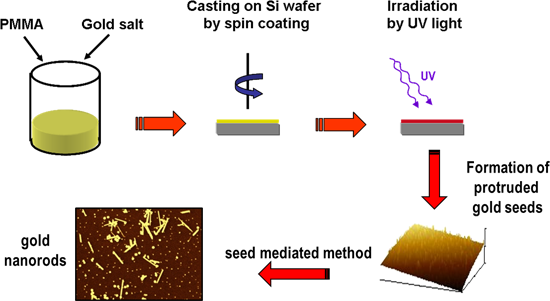
- ], photocatalysis [25], chemical sensing, biosensing [26][27] and surface-enhanced Raman spectroscopy (SERS) [28]. Last but not least, the synthesis process can be easily extended to screen printing or other thick film deposition processes for batch synthesis procedures [29]. Results and Discussion There are


Highly compact refractive index sensor based on stripe waveguides for lab-on-a-chip sensing applications
Beilstein J. Nanotechnol. 2016, 7, 751–757, doi:10.3762/bjnano.7.66
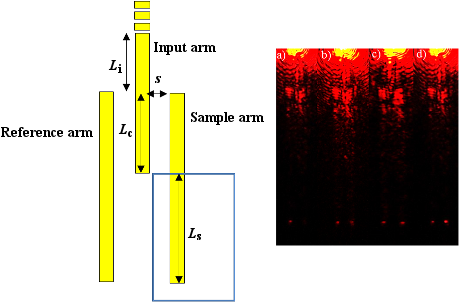
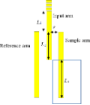
- highly sensitive to the surrounding dielectric environment. This unique property is incredibly useful in sensing applications. Mach–Zehnder (MZ) interferometry [1][2][3][4][5], surface enhanced Raman spectroscopy (SERS) [6][7][8][9], ring resonators [10] and surface plasmon resonance (SPR) [11][12][13



Antibacterial activity of silver nanoparticles obtained by pulsed laser ablation in pure water and in chloride solution
Beilstein J. Nanotechnol. 2016, 7, 465–473, doi:10.3762/bjnano.7.40
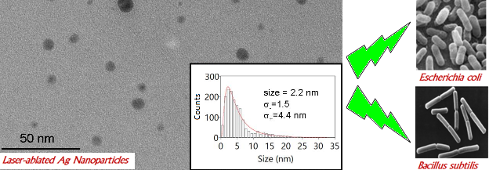
- previously observed a strong surface-enhanced Raman scattering (SERS) signal from such AgNPs by “activating” the NP surface by the addition of a small quantity of LiCl to the colloid. Such surface effects could also influence the antimicrobial activity of the NPs. Their activity, on the other hand, could
- a strong increase of the Raman response of molecular adsorbates in the SERS (Surface Enhanced Raman Scattering) effect. A strong SERS signal from such AgNPs can be obtained by “activating” the NP surface by addition of a small quantity of LiCl to the colloid. In addition, a sizeable catalytic effect
- in LiCl solutions obtained from both ps and ns ablation, the higher antimicrobial activity compared with that shown by the corresponding colloid ablated in pure water could be explained on the basis of the increased surface activity. This is evidenced by the increase of both the SERS and catalytic


Rigid multipodal platforms for metal surfaces
Beilstein J. Nanotechnol. 2016, 7, 374–405, doi:10.3762/bjnano.7.34



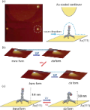


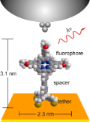


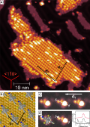


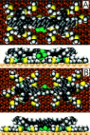


Hemolysin coregulated protein 1 as a molecular gluing unit for the assembly of nanoparticle hybrid structures
Beilstein J. Nanotechnol. 2016, 7, 351–363, doi:10.3762/bjnano.7.32
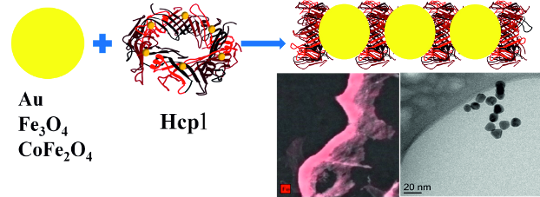
- parameter for the formation of Au NP assembly is the specific ionic strength in the mixture. The resulting network-like structure of Au NPs is characterized by Raman spectroscopy, showing surface-enhanced Raman scattering (SERS) by a factor of 8·104 and a stable secondary structure of the Hcp1_cys3 unit. In
- ; nanoparticles; self-assembly; SERS; Introduction Self-assembly plays a pivotal role in bottom-up strategies for the synthesis of advanced nanostructures [1]. The resulting assemblies can be one-, two- or three-dimensional. One-dimensional nanostructures show particularly great promise due to their large
- nanomaterials. Furthermore, kinetic investigation of the formation of such 1D Au NP structures and the utilization of this structure, for example, as a SERS template and catalyst are also of great interest. The formation kinetics of Au NP networks triggered by Hcp1_cys3 is investigated using UV–vis spectroscopy





Linear and nonlinear optical properties of hybrid metallic–dielectric plasmonic nanoantennas
Beilstein J. Nanotechnol. 2016, 7, 111–120, doi:10.3762/bjnano.7.13
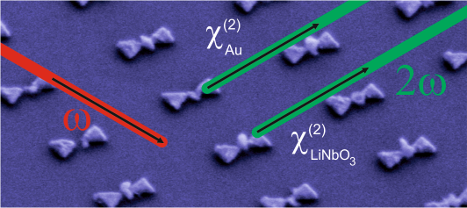
- itself is not the source of the signal, but rather an optically active species is responsible and the antenna is “dark”. This observation is in particular true for surface-enhanced Raman scattering (SERS) [45][46][47] and for experiments on surface-enhanced infrared absorption spectroscopy (SEIRA) [48


Controlled graphene oxide assembly on silver nanocube monolayers for SERS detection: dependence on nanocube packing procedure
Beilstein J. Nanotechnol. 2016, 7, 9–21, doi:10.3762/bjnano.7.2
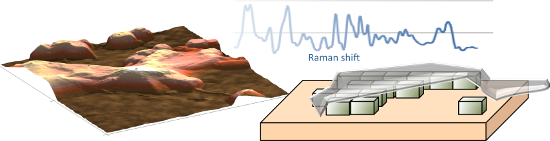
- Sesto Fiorentino, Italy Department of Chemistry and CSGI, University of Florence, Via della Lastruccia 3–13, I-50019 Sesto Fiorentino, Italy 10.3762/bjnano.7.2 Abstract Hybrid graphene oxide/silver nanocubes (GO/AgNCs) arrays for surface-enhanced Raman spectroscopy (SERS) applications were prepared by
- nanocubes layers fully covered with GO revealed the presence of a homogeneous, flexible and smooth GO sheet folding over the silver nanocubes and extending onto the bare surface. Preliminary SERS experiments on adenine showed a higher SERS enhancement factor for GO on Langmuir–Blodgett films of AgNCs with
- respect to bare AgNC systems. Conversely, poor SERS enhancement for adenine resulted for GO-covered AgNCs obtained by spontaneous adsorption. This indicated that the assembly and packing of AgNCs obtained in this way, although more homogeneous over the substrate surface, is not as effective for SERS


Chemiresistive/SERS dual sensor based on densely packed gold nanoparticles
Beilstein J. Nanotechnol. 2015, 6, 2498–2503, doi:10.3762/bjnano.6.259
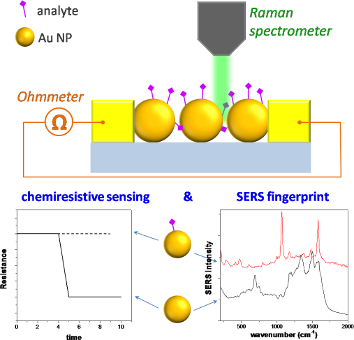
- , 400084 Cluj-Napoca, Romania 10.3762/bjnano.6.259 Abstract Chemiresistors are a class of sensitive electrical devices capable of detecting (bio)chemicals by simply monitoring electrical resistance. Sensing based on surface enhanced Raman scattering (SERS) represents a radically different approach, in
- share a common principle: nanometric interparticle gaps are needed, for electron tunneling in chemiresistors, and for enhancing electromagnetic fields by plasmon coupling in SERS-based sensors. By exploiting such nano-gaps in self-assembled films of gold nanoparticles, we demonstrate the proof of
- concept of a dual electrical/optical sensor, with both chemiresistive and SERS capabilities. The proposed device is realized by self-assembling 15 nm gold nanoparticles into few micrometers-wide strips across commercially available interdigitated electrodes. The dual-mode operation of the device is


Surface-enhanced Raman scattering by colloidal CdSe nanocrystal submonolayers fabricated by the Langmuir–Blodgett technique
Beilstein J. Nanotechnol. 2015, 6, 2388–2395, doi:10.3762/bjnano.6.245
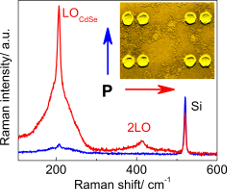
- 10.3762/bjnano.6.245 Abstract We present the results of an investigation of surface-enhanced Raman scattering (SERS) by optical phonons in colloidal CdSe nanocrystals (NCs) homogeneously deposited on both arrays of Au nanoclusters and Au dimers using the Langmuir–Blodgett technique. The coverage of the
- deposited NCs was less than one monolayer, as determined by transmission and scanning electron microscopy. SERS by optical phonons in CdSe nanocrystals showed a significant enhancement that depends resonantly on the Au nanocluster and dimer size, and thus on the localized surface plasmon resonance (LSPR
- ) energy. The deposition of CdSe nanocrystals on the Au dimer nanocluster arrays enabled us to study the polarization dependence of SERS. The maximal SERS signal was observed for light polarization parallel to the dimer axis. The polarization ratio of the SERS signal parallel and perpendicular to the dimer





