


Search results
Search for "activity" in Full Text gives 813 result(s) in Beilstein Journal of Nanotechnology. Showing first 200.
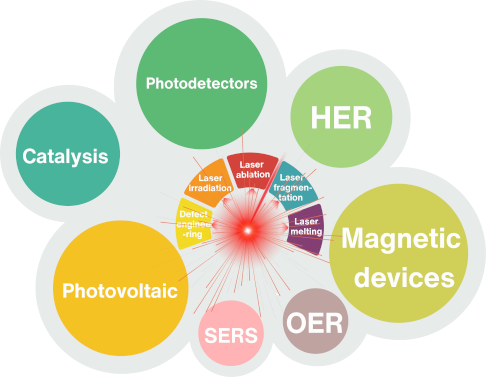
Laser processing in liquids: insights into nanocolloid generation and thin film integration for energy, photonic, and sensing applications
Beilstein J. Nanotechnol. 2025, 16, 1428–1498, doi:10.3762/bjnano.16.104


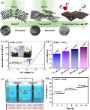




Photochemical synthesis of silver nanoprisms via green LED irradiation and evaluation of SERS activity
Beilstein J. Nanotechnol. 2025, 16, 1417–1427, doi:10.3762/bjnano.16.103
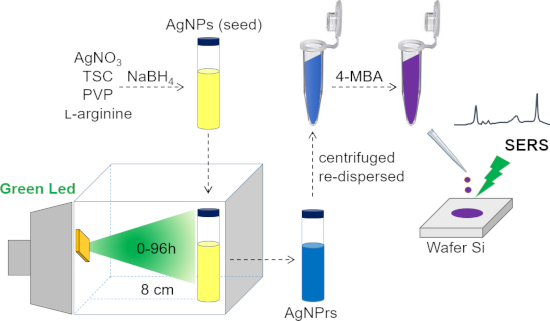
- AgNPrs. Optimal conversion was observed after 72 h of irradiation, producing well-defined AgNPrs with an average size of 78 nm. The SERS activity of the AgNPrs was evaluated using 4-mercaptobenzoic acid as a probe molecule. Compared to spherical AgNPs, AgNPrs exhibited a significantly higher SERS
- ] SERS substrates by impregnating them with silver nanostructures. While many efforts have been devoted to the synthesis of AgNPrs and evaluation of their SERS activity, limited studies have focused on the SERS performance of photochemically synthesized AgNPrs, particularly in 4-mercaptobenzoic acid (4
- SERS activity compared to AgNPs (seeds). The measurements were performed under identical experimental conditions, including fixed laser polarization, to ensure consistency and the current comparison is intended to be qualitative in nature. The enhancement factor (EF) was calculated using Equation 3 [23


The role of biochar in combating microplastic pollution: a bibliometric analysis in environmental contexts
Beilstein J. Nanotechnol. 2025, 16, 1401–1416, doi:10.3762/bjnano.16.102
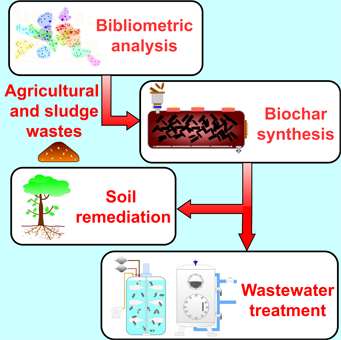
- in terms of enzyme activity [22][25], existing studies did not comprehensively assess MP removal efficiencies across different size ranges in aqueous environments, nor have they extensively evaluated the broader impact of MP contamination on soil ecosystems using BC. The role of modified BC
- BC and modified BC in mitigating MP-contaminated soil by evaluating crop yield, microbial expression, gene activity, and enzymatic responses, while also analyzing the effectiveness of various modified biochars in removing MPs of different sizes in aqueous environments. The findings of this review
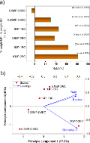
- expanded (2022–2024) to encompass agricultural runoff assessments and urease enzyme activity in agricultural soils. Microplastics: “Biochar” remains the most central keyword, reinforcing its critical role in addressing MP contamination. From 2022 to 2024, the singular emergence of “nanoparticle” suggests a



Synthesis and antibacterial properties of nanosilver-modified cellulose triacetate membranes for seawater desalination
Beilstein J. Nanotechnol. 2025, 16, 1380–1391, doi:10.3762/bjnano.16.100
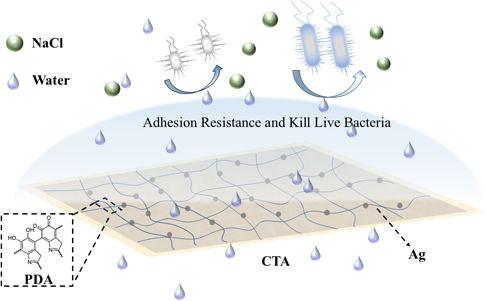
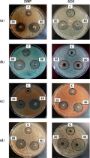
- properties. Antibacterial ring experiments revealed significant bactericidal activity against five different bacterial strains, namely, Bacillus cereus, Bacillus thuringiensis, Lysinibacillus xylanilyticus, Lysinibacillus lparviboronicapiens and Burkholderia ambifaria. Moreover, water flux and salt rejection
- nanomaterials can be engineered to optimize their antimicrobial activity, making them versatile tools in the development of advanced membrane technologies. Quantum effects, such as localized surface plasmon resonance in metallic nanoparticles, can further enhance antimicrobial properties by generating reactive
- into polyacrylonitrile (PAN) nanofibers, the fabricated Ag/PAN-TFN FO membrane demonstrated excellent antibacterial activity against Escherichia coli and Staphylococcus aureus with improved water flux and salt rejection. The in situ synthesis method ensures a uniform distribution of AgNPs within the


Enhancing the therapeutical potential of metalloantibiotics using nano-based delivery systems
Beilstein J. Nanotechnol. 2025, 16, 1350–1366, doi:10.3762/bjnano.16.98
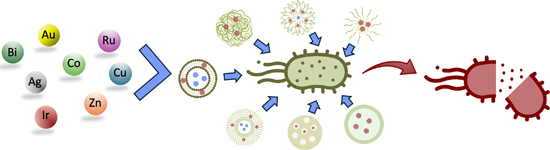
- as a strategy to discover new antibiotic drugs [13]. In this context, the gold(I) antirheumatic drug Auranofin (RidauraTM) [14] was evaluated for its antibacterial activity, exerting potent antimicrobial effect against multiresistant strains [15]. The promising antibacterial profile of auranofin
- antimicrobial agents since they usually exhibit superior antimicrobial activity compared to silver(I) alone [100]. The mechanism of action of most silver complexes is based on a slow release of the silver(I) ions, which react with the thiol groups of proteins or with key functional groups of enzymes; the
- prevented the aggregation of silver ions, which is crucial for maintaining the antibacterial activity of the silver complexes. The Ag-NHC complex 5 (Figure 3) was also encapsulated in ʟ-tyrosine nanoparticles, which offer enhanced therapeutic potential through controlled and targeted release [103]. This


Ferroptosis induction by engineered liposomes for enhanced tumor therapy
Beilstein J. Nanotechnol. 2025, 16, 1325–1349, doi:10.3762/bjnano.16.97
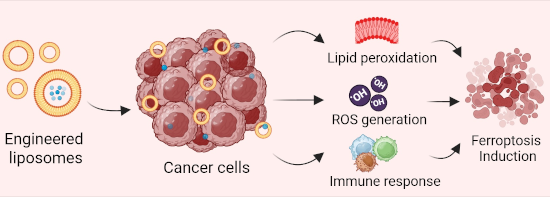
- peroxides and the formation of non-toxic lipid alcohol under normal conditions [44]. Changes in GPX4 activity may indicate ferroptosis, which can be monitored by measuring NADPH and phosphatidylcholine hydroperoxide [45][46]. Heat shock proteins can also inhibit ferroptosis by stimulating GPX4 or regulating
- ROS production, such that HSPB1 and HSPA5 inhibit ferroptosis by inhibiting ROS production and increasing the activity of the enzyme GPX4 [47][48]. 2.1.2 Iron-mediated pathway. The critical role of iron in ferroptosis was identified through observations of ferroptosis inducers. Researchers found that
- increase the activity of the enzyme lipoxygenase, which, as mentioned in the previous section, is associated with ferroptosis [49]. To investigate the role of iron in ferroptosis, we should first familiarize ourselves with its metabolism within the cell. Transferrin is responsible for ferric iron (Fe+3


Enhancing the photoelectrochemical performance of BiOI-derived BiVO4 films by controlled-intensity current electrodeposition
Beilstein J. Nanotechnol. 2025, 16, 1289–1301, doi:10.3762/bjnano.16.94
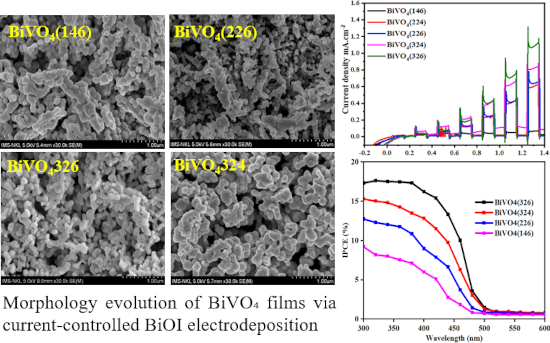
- converted into porous BiVO4 photoanodes. This approach yielded electrodes with enhanced PEC activity, achieving a photocurrent density of approximately 1.25 mA·cm−2 at 0.5 V vs RHE in neutral phosphate buffer under AM1.5G illumination. This study highlighted the potential of BiOI-derived BiVO4 as a template
- synthesis parameters and PEC activity, while presenting a scalable and reproducible route for fabricating high-performance BiVO4 photoanodes. Experimental Material Bismuth nitrate pentahydrate (Bi(NO3)3·5H2O, 99.9%, Sigma-Aldrich) and vanadyl acetylacetonate (VO(acac)2, 98%, Sigma-Aldrich) were used as Bi
- promote the formation of active crystal facets, which are critical for PEC performance. These results align with the enhanced photoelectrochemical activity observed for BiVO4(326), as the improved vibrational characteristics reflect more efficient light absorption and charge separation



Acrocomia aculeata oil-loaded nanoemulsion: development, anti-inflammatory properties, and cytotoxicity evaluation
Beilstein J. Nanotechnol. 2025, 16, 1277–1288, doi:10.3762/bjnano.16.93
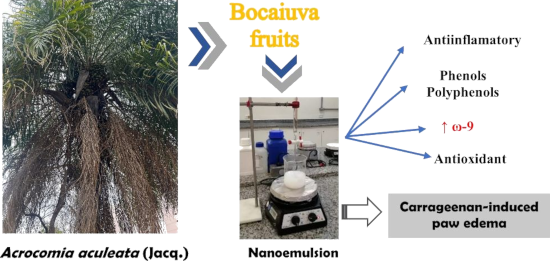
- have several medical applications. However, little is known about its pharmacological activity. Therefore, this study aimed to develop and evaluate the anti-inflammatory activity of a nanoemulsion loaded with the oil extracted from the pulp of the fruit of Acrocomia aculeata. Griffin’s method
- determined the hydrophilic–lipophilic equilibrium ratio of the nanoemulsion. It was shown to have an adequate droplet size (173.60 nm) with excellent homogeneity (polydispersity index 0.200). The anti-inflammatory activity of the nanoemulsion was evaluated by the carrageenan-induced paw edema method. Finally
- , the non-hemolytic and cytotoxic activity of the nanoformulation was determined to assess its safety. The nanoemulsion loaded with Acrocomia aculeata fruit pulp oil was shown to have parameters suitable for its characterization, impressive anti-inflammatory activity, and a safe profile. Keywords


Better together: biomimetic nanomedicines for high performance tumor therapy
Beilstein J. Nanotechnol. 2025, 16, 1246–1276, doi:10.3762/bjnano.16.92
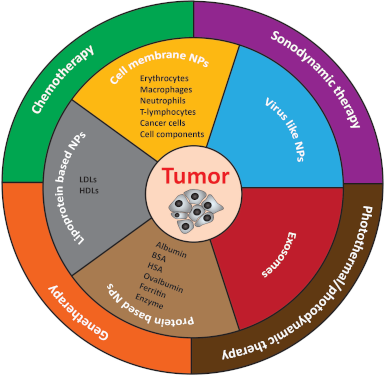
- [41]. Wayteck et al. have prepared liposomes that can hitchhike on cells to the tumor site and get separated to perform their cytotoxic activity [42]. 1.1.5 Cancer cells. Cancer cells establish their own mechanism to escape immune response [43]. They are tightly bound by surface proteins to hinder the
- with chemotherapeutic agents, rHDL shows outstanding active targeting and anticancer activities [57]. Moreover, rHDL showed potential to co-load hydrophobic paclitaxel and hydrophilic doxorubicin in apo A-I targeted rHDL nanoparticles. These nanoparticles showed superior antitumor activity in vitro and
- -modified nanosystem showed increased drug accumulation and enhanced therapeutic activity both in subcutaneous and orthotopic tumor models [125][126]. Another study regarding targeted therapy and improved drug delivery to the brain used the dual modification of RBC-coated lipid nanoparticles with T7 peptide






Functional bio-packaging enhanced with nanocellulose from rice straw and cinnamon essential oil Pickering emulsion for fruit preservation
Beilstein J. Nanotechnol. 2025, 16, 1234–1245, doi:10.3762/bjnano.16.91
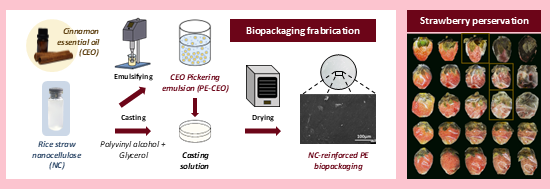
- exhibits good heat-resistance, mechanical, and water-barrier properties. At an emulsion concentration as low as 10% (v/w) in the casting solution, high UV absorbance capacity (up to 100% UVC), high antibacterial activity (92.4% Escherichia coli inhibition), and good antioxidative properties (up to 43% DPPH
- antimicrobial and antioxidation properties that can offer extended shelf life [27][28][29]. Essential oils are great candidates and possess a variety of bioactive properties while maintaining a high biocompatibility [30]. Cinnamon essential oil (CEO) is one of the best-known essential oils with strong activity
- properties The DPPH radical scavenging (Figure 4a) showed a linear increase in scavenging activity with increasing CEO concentration, reaching a maximum of 43% at 10% (v/w) CEO incorporation. This trend suggests a direct correlation between the phenolic content of CEO and its ability to inhibit DPPH free



Hydrogels and nanogels: effectiveness in dermal applications
Beilstein J. Nanotechnol. 2025, 16, 1216–1233, doi:10.3762/bjnano.16.90
- as cellulose ether [90], carboxymethyl cellulose (CMC) [82], hydroxyethyl cellulose (HEC) [113], or cellulose nanofibers [135] yield valuable hydrogels. Keratin hydrogels are interesting for the properties of keratin, as they have intrinsic biocompatibility, therapeutic activity, and favorable
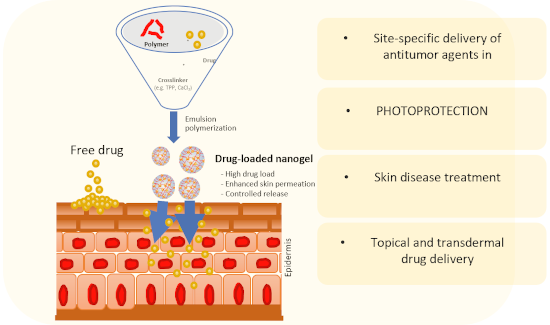
- thermodynamic activity of the system). Thus, the physicochemical properties related to the first approach involve only the interactions between drugs and vehicles. On the other hand, changing the drug solubility and/or its diffusion through SC is much more complex and comprises multiple interactions among drug
- through the oxidative coupling of catechol groups using a hydrogen peroxide/horseradish peroxidase (H2O2/HRP) catalytic system [41]. The addition of the antibiotic doxycycline provided the hydrogels with antimicrobial activity to treat infected full-thickness defect wounds. Flexible films composed of


Investigation of the solubility of protoporphyrin IX in aqueous and hydroalcoholic solvent systems
Beilstein J. Nanotechnol. 2025, 16, 1209–1215, doi:10.3762/bjnano.16.89
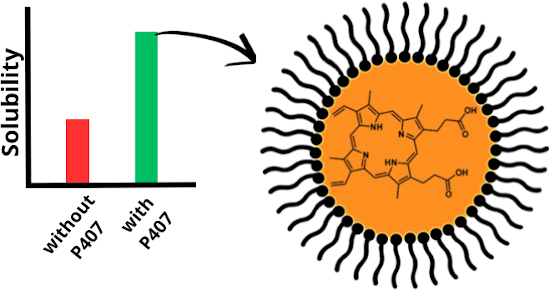
- PSs have their hydrophobicity as drawback, which can lead to the formation of aggregates in aqueous solutions, compromising bioavailability and photodynamic activity [5]. The aggregation of the PS decreases its photoactive properties since, for its action, it must be in the monomeric form, in which


Chitosan nanocomposite containing rotenoids: an alternative bioinsecticidal approach for the management of Aedes aegypti
Beilstein J. Nanotechnol. 2025, 16, 1197–1208, doi:10.3762/bjnano.16.88
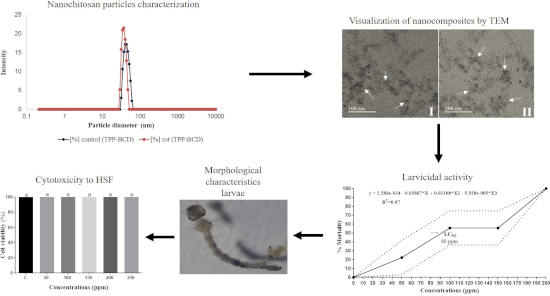
- delivery system for rotenoids isolated from Clitoria fairchildiana seeds, leveraging their larvicidal activity against third-instar larvae of Ae. aegypti. The nanocomposite was synthesized using a controlled ionic gelation method incorporating the TPP-β-CD inclusion complex, which resulted in nanoparticles
- Clitoria fairchildiana seeds with larvicidal activity against third-instar Ae. aegypti larvae. These studies revealed morphological and metabolic changes in the larvae, suggesting that V-ATPase inhibition triggers oxidative stress, resulting in high production of reactive oxygen species (ROS) in the midgut
- isolated and characterized from C. fairchildiana seeds [14]. These compounds exhibited larvicidal activity against third-instar Ae. aegypti larvae, causing morphological changes and metabolic alterations as a result of increased production of ROS in the insect midgut [14]. It is already well-documented in



Mechanical stability of individual bacterial cells under different osmotic pressure conditions: a nanoindentation study of Pseudomonas aeruginosa
Beilstein J. Nanotechnol. 2025, 16, 1171–1183, doi:10.3762/bjnano.16.86
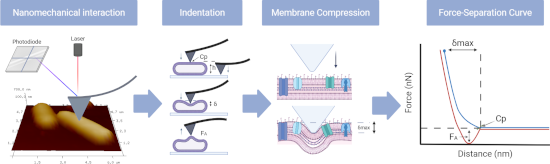
- adaptability to diverse environments. They also highlight the potential of the experimental approach to study the activity of rationally designed molecular channel inhibitors that can specifically bind channel proteins. Schematic representation of the force–volume approach to quantify nanomechanical


Crystalline and amorphous structure selectivity of ignoble high-entropy alloy nanoparticles during laser ablation in organic liquids is set by pulse duration
Beilstein J. Nanotechnol. 2025, 16, 1141–1159, doi:10.3762/bjnano.16.84
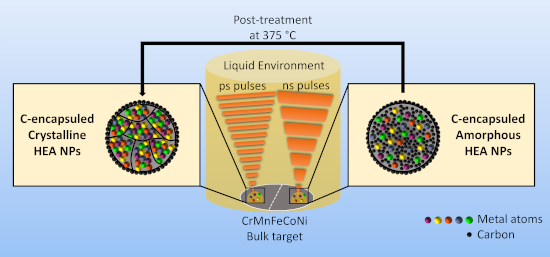
- decomposition [4], oxygen evolution reactions (OER) [14], oxygen reduction reactions (ORR) [15], in CO oxidation [16], and in CO2 and CO reduction [17]. This high activity in catalysis has been attributed to adsorption energy distribution patterns (AEDP) during catalytic reactions [18], which may be tuned based
- to be the catalytically active species [108] while in HEA NP electrocatalysis, such oxides are formed under anodic potential [19]. Also, the presence of surface manganese oxide still provides good catalytic activity with sharp performance profiles allowing for derivation of composition–activity




Influence of ion beam current on the structural, optical, and mechanical properties of TiO2 coatings: ion beam-assisted vs conventional electron beam evaporation
Beilstein J. Nanotechnol. 2025, 16, 1097–1112, doi:10.3762/bjnano.16.81
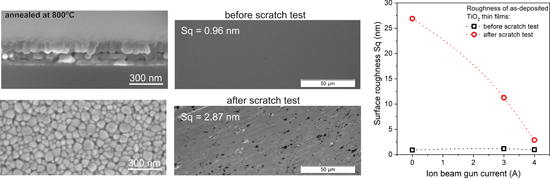
- TiO2 coatings (Figure 1). Therefore, post-deposition annealing becomes one of the key pathways in controlling the structure, morphology, and photocatalytic activity of TiO2 films [3]. After post-process annealing, all thin films exhibited peaks related to the (101) and (004) planes of anatase, for




Fabrication of metal complex phthalocyanine and porphyrin nanoparticle aqueous colloids by pulsed laser fragmentation in liquid and their potential application to a photosensitizer for photodynamic therapy
Beilstein J. Nanotechnol. 2025, 16, 1088–1096, doi:10.3762/bjnano.16.80
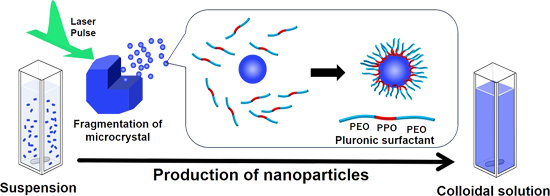
- the activity of the target substance in general. An alternative and promising method for dispersing hydrophobic organic compounds as colloids is pulsed laser fragmentation in liquids (PLFL) [9][10]. This relatively new fabrication method has advantages because a microcrystalline sample powder


Piezoelectricity of hexagonal boron nitrides improves bone tissue generation as tested on osteoblasts
Beilstein J. Nanotechnol. 2025, 16, 1068–1081, doi:10.3762/bjnano.16.78
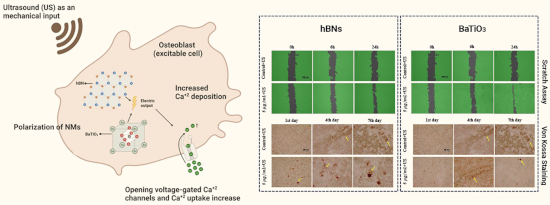
- hexagonal boron nitride (hBN) with ultrasound (US) stimulation is an emerging therapeutic approach. While polymers such as PVDF require electrical poling and often exhibit lower piezoelectric activity, inorganic materials inherently possess stronger piezoelectric properties and greater mechanical stability
- osteoblast cell activity, the HOb cell line (cell line no. 406-05a, European Collection of Cell Cultures, UK) was chosen due to its sensitivity to mechanical and electric stimuli. Cell viability, reactive oxygen species (ROS) detection, cellular uptake, scratch, and von Kossa staining assays (Abcam, UK) were
- ) colorimetric assay to determine the nontoxic concentration levels of both NMs and the impact of US exposure on viability. The oxidized form of the dye enters the cytosol when it is added to the cell culture, and it is converted to its reduced form by the mitochondrial enzyme activity of living cells [39


Soft materials nanoarchitectonics: liquid crystals, polymers, gels, biomaterials, and others
Beilstein J. Nanotechnol. 2025, 16, 1025–1067, doi:10.3762/bjnano.16.77
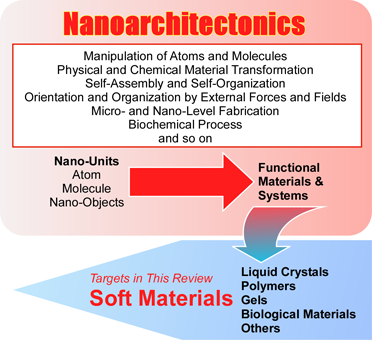
- electroactivity. This combination is intended to result in enhanced ORR activity. The LbL-assembled films were electrically connected, thereby increasing the electrocatalytic current obtainable for ORR in aqueous environments with neutral pH. Furthermore, the selective incorporation and enrichment of oxygen
- within the MOF microporous matrix, which serves as an oxygen reservoir linked to the polymer electrocatalytic material, enhances the overall ORR activity. This exemplary work demonstrated the potential for a new method of fabricating MOF-based electrocatalytic surfaces. Further enhancements in
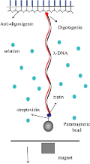
- gentamicin sulfate through electrostatic interaction and hydrogen bonding in a mixture of gentamicin sulfate and Pluronic F127. The prepared material demonstrated sustained antibacterial activity and facilitated osteoblast (MC3T3-E1) differentiation, which is essential for bone formation. Moreover, the






Multifunctional properties of bio-poly(butylene succinate) reinforced with multiwalled carbon nanotubes
Beilstein J. Nanotechnol. 2025, 16, 1014–1024, doi:10.3762/bjnano.16.76
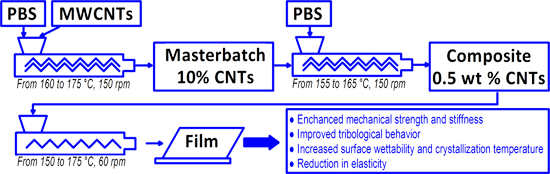
- improved thermal stability, crystallization temperatures, stiffness, and electrical conductivity (not investigated in this work), a significant gap remains regarding tribological performance, surface activity, and rheological responses under varying loads and temperatures. This study demonstrates that the



Time-resolved probing of laser-induced nanostructuring processes in liquids
Beilstein J. Nanotechnol. 2025, 16, 968–1002, doi:10.3762/bjnano.16.74
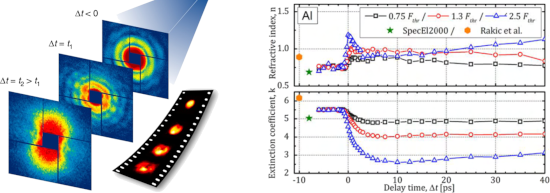
- ablation and fragmentation products with a high defect density, and enhances catalytic activity. In addition, the liquid may also participate in the reaction by electrostatic stabilization [12], formation of gases [16], or chemical interaction with the target to enhance redox reactions or passivating


Shape, membrane morphology, and morphodynamic response of metabolically active human mitochondria revealed by scanning ion conductance microscopy
Beilstein J. Nanotechnol. 2025, 16, 951–967, doi:10.3762/bjnano.16.73
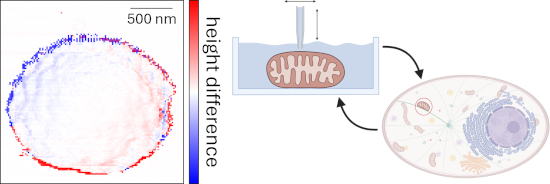
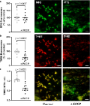
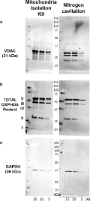
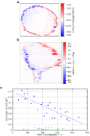
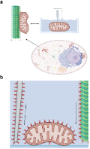
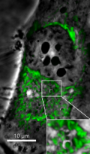
- citric acid cycle, mitochondria facilitate oxidative phosphorylation, which generates the energy carrier adenosine triphosphate (ATP). Indicators of mitochondrial metabolic activity include a high membrane potential and oxygen consumption [4][5]. Recent research emphasises that mitochondria should not be
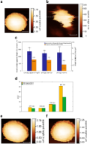
- 2.05 μm and a maximum apparent height of 2.28 μm. To explore the relationship between shape and metabolic activity, we also measured seven fixed mitochondria using SICM (Figure 4a). These fixed mitochondria had diameters ranging from 0.2 to 1.4 μm (average: 0.8 μm) and apparent heights between 0.2 and
- SPM techniques, the time constant is sufficiently large to allow a morphodynamic response. Morphodynamic effects are particularly pronounced at the edges of mitochondria. When a mitochondrion adopts a more spherical shape through morphodynamic activity, the maximum apparent height increases slightly



Synthesis of biowaste-derived carbon-dot-mediated silver nanoparticles and the evaluation of electrochemical properties for supercapacitor electrodes
Beilstein J. Nanotechnol. 2025, 16, 933–943, doi:10.3762/bjnano.16.71
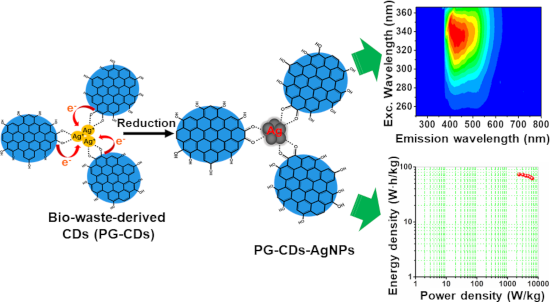
- activity, which can then optimize the capacitive response. Supporting Information File 1, section S1 contains the details of the electrochemical characterization techniques. Figure 5a depicts the CV plot of PG-CDs-AgNPs electrode at various scan rates (5–200 mV/s). It is evident through the PG-CDs-AgNPs CV
- -CDs-AgNPs has a greater slope suggests that these particles have optimal supercapacitive properties and electrochemical activity. In the three-electrode investigation, PG-CDs-AgNPs showed better electrochemical activity overall in terms of capacitive performance, charge-transfer activity, and
- discharge time. Electrochemical analysis of the asymmetric supercapacitor device in a 1 M TEABF4/DMSO organic electrolyte Electrochemical evaluations attributed that in the three-electrode configuration, the PG-CDs-AgNPs electrode possessed superior electrochemical activity. Thus, utilizing carbon black (CB


Structural and magnetic properties of microwave-synthesized reduced graphene oxide/VO2/Fe2O3 nanocomposite
Beilstein J. Nanotechnol. 2025, 16, 921–932, doi:10.3762/bjnano.16.70
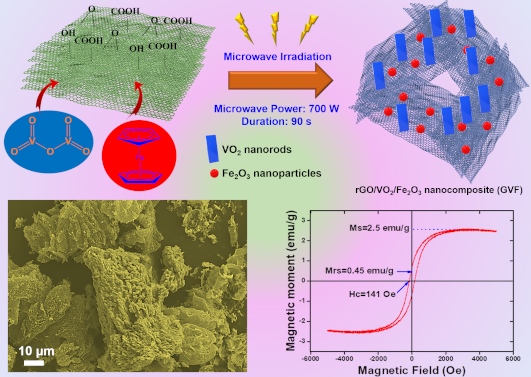
- for supercapacitor applications. In another work, Mn3O4 nanograins-intercalated rGO NC was synthesized through the MW-assisted hydrothermal approach, which showed superior oxygen reduction reaction (ORR) activity [11]. Aside from the oxides, mixed metal sulfides are likewise reported to be combined



Insights into the electronic and atomic structures of cerium oxide-based ultrathin films and nanostructures using high-brilliance light sources
Beilstein J. Nanotechnol. 2025, 16, 860–871, doi:10.3762/bjnano.16.65

- rationalized the observed high activity of the material in direct methanol fuel cells [37]. Regarding the Ni-CeO2−x(111) system, a study of the methanol reaction revealed that the strong metal–support interactions between Ni and CeO2 determines the high selectivity for CO2 production, instead of the formation
- -ray irradiation. The observed effect was identified as responsible for the enhanced catalytic activity of mixed ceria–zirconia materials in the applications [39]. Photoemission is a technique with a sensitivity limited to the topmost surface layers. In typical resonant photoemission experiments on
- associated to the formation of a Ce–Pt alloyed interfacial phase exhibiting a (2 × 2) periodicity [47]. The influence of the substrate on the stability and reactivity of supported ceria nanoislands has also been investigated by Ce M5 XANES in the case of Au(111) [48]. A loss of redox activity accompanied by





