


Search results
Search for "adsorbates" in Full Text gives 122 result(s) in Beilstein Journal of Nanotechnology.
The effect of atmospheric doping on pressure-dependent Raman scattering in supported graphene
Beilstein J. Nanotechnol. 2018, 9, 704–710, doi:10.3762/bjnano.9.65
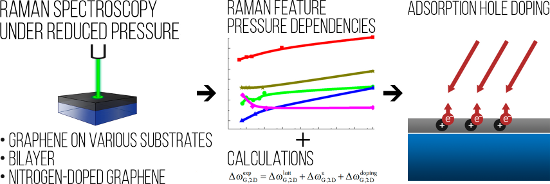
- . Keywords: adsorption; doping; graphene; pressure; Raman spectroscopy; substrate; Introduction Graphene is a promising material for a variety of applications due to its unique physical properties [1]. Among its other outstanding features, one can distinguish its strong sensitivity to adsorbates, leading to
- doping by adsorbates [13], and substrate-induced electrostatic doping [16]. The G and 2D peak positions upshifted by 5–8 cm−1 and the considerably low I2D/IG ratio of 1.3–1.4 for graphene transferred onto copper and Al2O3 could be explained by similar effects, which in this case, tend to be less
- graphene transferred to Cu and Al2O3 as typical conducting and dielectric materials, a stronger carrier density change was obtained for the latter. As the pressure decreases, removal of adsorbates from the surface of graphene on Al2O3 results in the Raman spectra parameters becoming close to those typical


Anchoring of a dye precursor on NiO(001) studied by non-contact atomic force microscopy
Beilstein J. Nanotechnol. 2018, 9, 242–249, doi:10.3762/bjnano.9.26
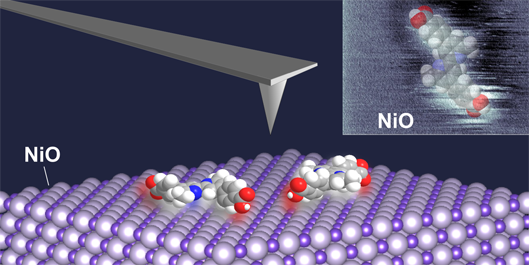
- non-contact atomic force microscopy at room temperature. Depending on the coverage, single molecules, groups of adsorbates with random or recognizable shapes, or islands of closely packed molecules were identified. Single molecules and self assemblies are resolved with submolecular resolution showing



Gas-assisted silver deposition with a focused electron beam
Beilstein J. Nanotechnol. 2018, 9, 224–232, doi:10.3762/bjnano.9.24
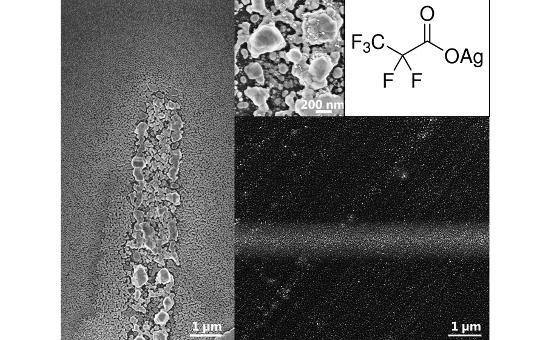
- ]. This was explained by the presence of two different regimes within and outside the PE beam area. Within the PE beam area the electron density is orders of magnitude higher compared to the adjacent outside halo area (cf. Figure 1c). Within the PE beam area the adsorbates dissociate by electron
- interaction into deposited metal atoms and volatile, yet still physisorbed ligands. Due to the high electron flux within the PE beam area, the desorption rate of these volatile ligands is lower than their dissociation rate, resulting in a higher carbon content. Outside the PE beam area, the adsorbates still
- irradiates it again, thus the FEBID can continue with fresh adsorbates and less co-deposition of carbon. For further studies, box deposits were written with the same electron dose of 7.44 nC/µm2 but different dwell and refreshment times. On first sight it is visible that for short refreshment times as in


Comparative study of post-growth annealing of Cu(hfac)2, Co2(CO)8 and Me2Au(acac) metal precursors deposited by FEBID
Beilstein J. Nanotechnol. 2018, 9, 91–101, doi:10.3762/bjnano.9.11
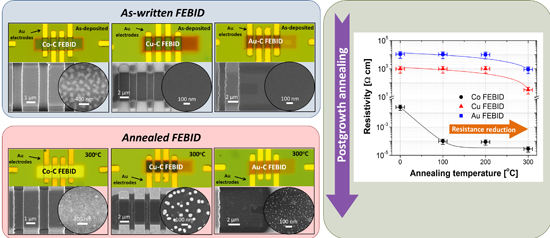
- -established maskless nanopattering technique. It is based on the local dissociation of adsorbates upon the irradiation with electrons, combining the advantages of a direct-write process with the depositing possibility of a number of geometries at nanometric scale [1][2][3][4][5][6][7][8][9][10][11]. The
- electrons generated in the vicinity of the impinging primary beam, is transferred to the adsorbates. The dissociation yields both volatile ligand fragments (pumped away) and deposited non-volatile products (such as metals) [8][9][12][13]. FEBID has been recently used to define nanodevices for several


Optical contrast and refractive index of natural van der Waals heterostructure nanosheets of franckeite
Beilstein J. Nanotechnol. 2017, 8, 2357–2362, doi:10.3762/bjnano.8.235
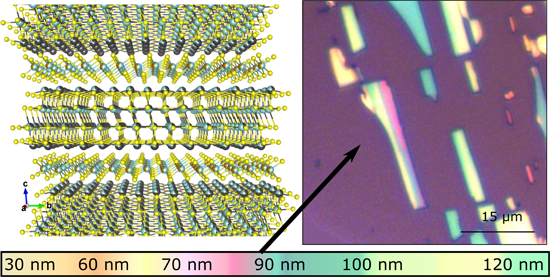
- adsorbates between the layers. Very recently Molina-Mendoza et al. demonstrated mechanical and liquid-phase exfoliation of franckeite down to 3–4 unit cells and they fabricated field-effect devices, near infrared photodetectors and PN junctions [15]. Also, Velický et al. isolated single unit cell nanosheets


Modelling focused electron beam induced deposition beyond Langmuir adsorption
Beilstein J. Nanotechnol. 2017, 8, 2151–2161, doi:10.3762/bjnano.8.214
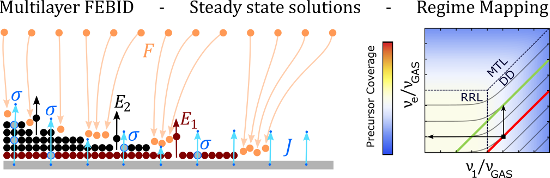
- physi-adsorption when E1 ≠ E2. This is essential when working on surfaces which may be chemically activated by electron irradiation [48]. Chemisorbed adsorbates are common, for instance, when using FEBID precursors leading to highly metallic deposits, such as Co2(CO)8, Co(CO)3NO and Fe(CO)5, where


Adsorbate-driven cooling of carbene-based molecular junctions
Beilstein J. Nanotechnol. 2017, 8, 2060–2068, doi:10.3762/bjnano.8.206
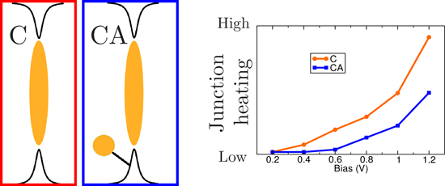
- also find that the direct influence of adsorbate states is significantly smaller and tends to heat adsorbate vibrations. Our results highlight the important role of molecular adsorbates not only on the electronic and elastic transport properties but also on the current-induced energy exchange and
- only indirect information on the nature of the junction from conductance and forces [14][23][24]. In spite of this, the role of molecular co-adsorbates in elastic and inelastic transport processes has not been studied in detail. Therefore going beyond the approximation of a “clean” junction and
- analyzing the effect of adsorbates is particularly relevant. Here we address this issue by investigating the effect on the current-induced heat exchange of a molecular species adsorbed in the vicinity of the molecular junction. As we show in this paper, the presence of adsorbates not bonded directly to the


![[Graphic 14]](/bjnano/content/inline/2190-4286-8-206-i21.png?max-width=637&scale=1.18182) = 176 meV as a function of applied bias for the C and CA junctions, a...
= 176 meV as a function of applied bias for the C and CA junctions, a...

A comparative study of the nanoscale and macroscale tribological attributes of alumina and stainless steel surfaces immersed in aqueous suspensions of positively or negatively charged nanodiamonds
Beilstein J. Nanotechnol. 2017, 8, 2045–2059, doi:10.3762/bjnano.8.205
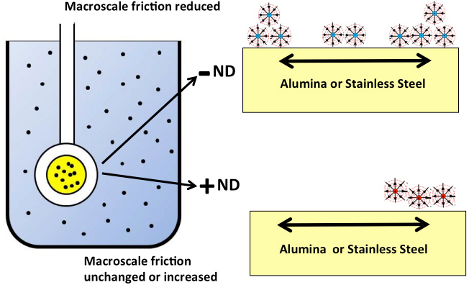
- NDs or physisorbed adsorbates, neither of which would be readily observed by AFM. In order to convert the frequency shifts to particle density on the surface, we assume a cluster size of 25 nm and a packing fraction within the cluster of 0.7. The mass of each cluster would be [(25 nm/5 nm)3] × 0.7


Stable Au–C bonds to the substrate for fullerene-based nanostructures
Beilstein J. Nanotechnol. 2017, 8, 1073–1079, doi:10.3762/bjnano.8.109
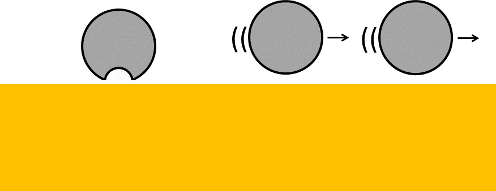
- to the herringbone corner sites were only observed after soft sputtering of the fullerene films, implying that these adsorbates result from an increased reactivity of the molecules after sputtering. Isolated fullerenes with C vacancies In order to understand the STM measurements, we carried out


Nanoantenna-assisted plasmonic enhancement of IR absorption of vibrational modes of organic molecules
Beilstein J. Nanotechnol. 2017, 8, 975–981, doi:10.3762/bjnano.8.99
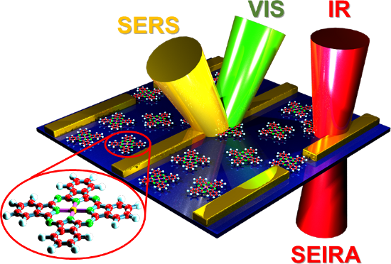
- enhance the SEIRA signal by molecular vibrations in model adsorbates such as octadecanthiol (ODT) [16] and 4,4'-bis(N-carbazolyl)-1,1'-biphenyl (CBP) by up to five orders of magnitude [17]. The IR absorption bands of these molecules become pronounced, even for molecular monolayers, by tuning the localized



Graphene functionalised by laser-ablated V2O5 for a highly sensitive NH3 sensor
Beilstein J. Nanotechnol. 2017, 8, 571–578, doi:10.3762/bjnano.8.61
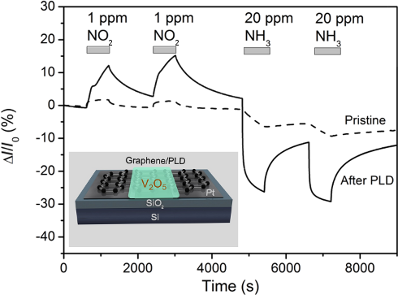
- adsorbed gas molecules, but during adsorption, the excitation is not used [1][26][31]. However, in practical applications there is a constant need to activate the sensor surface by cleaning it of H2O, O2 and other adsorbates, which would otherwise passivate it. The illumination by UV light as a tool for


Impact of air exposure and annealing on the chemical and electronic properties of the surface of SnO2 nanolayers deposited by rheotaxial growth and vacuum oxidation
Beilstein J. Nanotechnol. 2017, 8, 514–521, doi:10.3762/bjnano.8.55
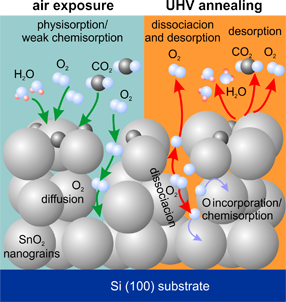
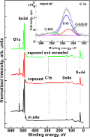
- led us to conclusion that carbonaceous and water-related species are partially strongly chemisorbed and partially physisorbed or weakly reversibly chemisorbed. Especially the water-related adsorbates are most probably a consequence of a partial dissociation of water vapor during the annealing process
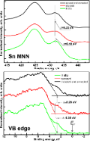
- SnO2 nanolayers. Such adsorbates are often creating so-called surface dipoles [37] influencing the local charge distribution and, in consequence, the energy distance between the Fermi level position and the top of valence band at the surface, EF − EV. This statement is justified because the observed in



Fiber optic sensors based on hybrid phenyl-silica xerogel films to detect n-hexane: determination of the isosteric enthalpy of adsorption
Beilstein J. Nanotechnol. 2017, 8, 475–484, doi:10.3762/bjnano.8.51
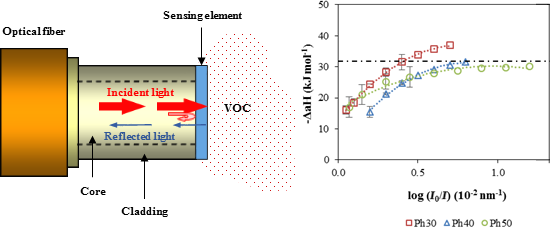
- confinement effects related to the condensation of adsorbates in narrower mesopores [27][28]. The solid–fluid interaction increases as the pore size diminishes and, therefore, the adsorption enthalpy in the phase transition region [26]. Conclusion We investigated the response, in the presence of n-hexane, of






Monolayer graphene/SiC Schottky barrier diodes with improved barrier height uniformity as a sensing platform for the detection of heavy metals
Beilstein J. Nanotechnol. 2016, 7, 1800–1814, doi:10.3762/bjnano.7.173
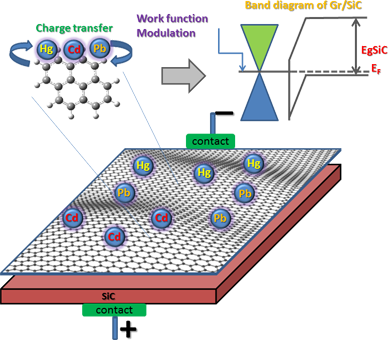
- electronic properties to a change in concentrations of surface functional groups and adsorbates. However, sensors based on reduced graphene oxide are only well investigated in terms of determination of the concentration limit of heavy metals and improving the response time [18][19][20][21][22][23][24][25][26
- favorable (from the energetic and thermodynamic point of view) geometrical configuration of incoming adsorbates, we consider the adsorption of Cd, Hg and Pb at different high-symmetry positions on the graphene surface, such as on-top site, hollow site and bridge site. For simulation of graphene, we used a
- properties of graphene. In fact, instead of considering the interaction between neutrally charged graphene surfaces with incoming adsorbates, it would be more correct to take into account the accumulation of n-type charge carriers at the surface of the graphene/SiC structure to study the adsorption of metals




Active and fast charge-state switching of single NV centres in diamond by in-plane Al-Schottky junctions
Beilstein J. Nanotechnol. 2016, 7, 1727–1735, doi:10.3762/bjnano.7.165
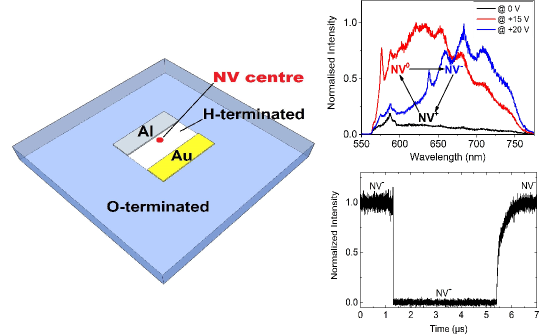
- terminations and adsorbates. Hence, its charge state switches in an uncontrolled way between NV−, NV0 and presumably NV+ [8][9][10]. In addition, for realizing quantum computing applications such as quantum information processing with the electron spin of the NV− centre and quantum information storage with the


Scanning probe microscopy studies on the adsorption of selected molecular dyes on titania
Beilstein J. Nanotechnol. 2016, 7, 1642–1653, doi:10.3762/bjnano.7.156
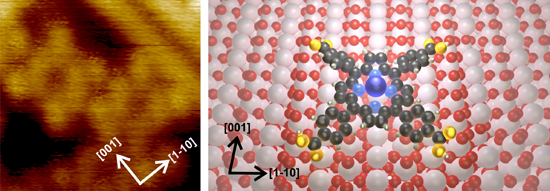
- layers of physisorbed species. Interestingly, an increased density of the molecular adsorbates leads to changes in the adsorption mode from physisorption to chemisorption, leaving the molecules arranged in a well-ordered brick-wall-like structure. In a more recent study, the same authors examined the
- interact strongly with the substrate and eventually form domains that have a (1 × 5) molecular superstructure [34]. Interestingly, it appeared possible to study charge donation from the substrate to the molecular adsorbates in the PTCDI/TiO2(110) system. Excess electrons in rutile TiO2(110) are introduced
- charges may be extracted from the surface and lead to reduction of molecular adsorbates. Lanzilotto et al. [35] have shown that the interaction range of the excess electrons is limited to a single unit cell, i.e., ca. 1 nm2, and, hence, reduced PTCDI is identified as single molecules within the (1 × 5


Enhanced detection of nitrogen dioxide via combined heating and pulsed UV operation of indium oxide nano-octahedra
Beilstein J. Nanotechnol. 2016, 7, 1507–1518, doi:10.3762/bjnano.7.144
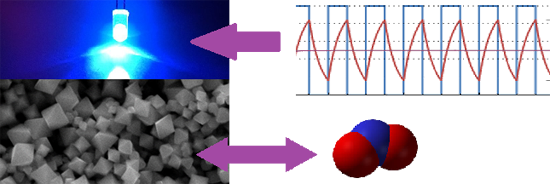
- (e.g., oxygen, nitrogen dioxide), UV irradiation will result in the lowering of the amount of oxygen and/or nitrogen dioxide adsorbates. Since indium oxide is an n-type semiconductor, the desorption of oxidizing species from its surface translates into an increase in the number of free charge carriers
- and, thus, in a decrease in the DC resistance of the gas sensor [18][19]. Furthermore, the partial removal of oxygen adsorbates may trigger the diffusion of bulk oxygen towards the surface, especially when the UV irradiated metal oxide sensor is operated at temperatures well above room temperature [20
- regained. This behaviour can be explained as follows. UV light helps desorbing ionosorbed species from the surface of indium oxide [18]. Therefore, during the cleaning phases in which the sensor is flushed with dry air, UV light helps desorbing nitrogen dioxide adsorbates, reducing the indium oxide and


In situ characterization of hydrogen absorption in nanoporous palladium produced by dealloying
Beilstein J. Nanotechnol. 2016, 7, 1197–1201, doi:10.3762/bjnano.7.110
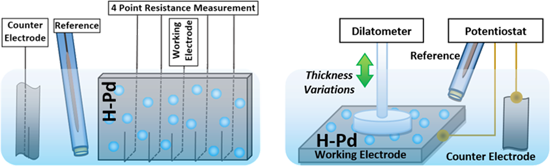
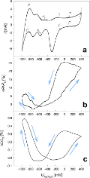
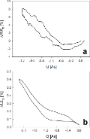
- expected. An additional resistance contribution by adsorbates might arise in the present case, in analogy to the oxygen regime of porous nanophase metals [16][21].This is, however, unlikely as the variations of R during adsorption are small. The striking similarities between ΔR/R0 and ΔL/L0 suggest that

Antibacterial activity of silver nanoparticles obtained by pulsed laser ablation in pure water and in chloride solution
Beilstein J. Nanotechnol. 2016, 7, 465–473, doi:10.3762/bjnano.7.40
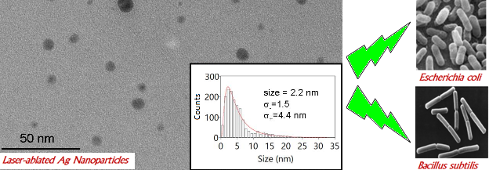
- a strong increase of the Raman response of molecular adsorbates in the SERS (Surface Enhanced Raman Scattering) effect. A strong SERS signal from such AgNPs can be obtained by “activating” the NP surface by addition of a small quantity of LiCl to the colloid. In addition, a sizeable catalytic effect
- enhancement of adsorbates and also in the catalytic activity could be responsible for the increased antimicrobial activity observed for the Ag colloids ablated in chloride solution. These positive charges on the surface of AgNPs prepared in LiCl solution could effectively interact with the negatively charged


Length-extension resonator as a force sensor for high-resolution frequency-modulation atomic force microscopy in air
Beilstein J. Nanotechnol. 2016, 7, 432–438, doi:10.3762/bjnano.7.38
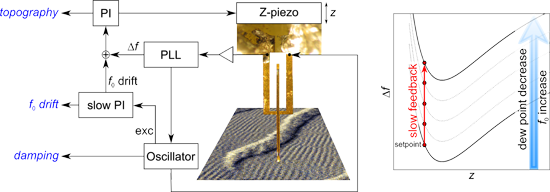
- stiffness of the LER. Depending on the sample and its preparation larger attractive forces have also been observed. To prove the feasibility of scanning with small forces a surface decorated by adsorbates was chosen. For this purpose we rinsed a freshly exfoliated (adhesive tape, BT-150E-AT, Nitto Denko
- . Conclusion We have demonstrated high-resolution FM-AFM imaging under ambient conditions with the length-extension resonator. The resonator can be operated stably at small as well as large tip–sample interaction forces. Adsorbates of nitrogen were imaged on HOPG, which paves the road for high-resolution


Rigid multipodal platforms for metal surfaces
Beilstein J. Nanotechnol. 2016, 7, 374–405, doi:10.3762/bjnano.7.34

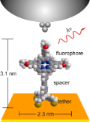
- electronic coupling with the gold electrode is required. We note that tripodal adsorbates reported so far adopted anchors with aliphatic thiol groups that are not π-conjugated, such as benzylthiol and adamantylthiol. While some synthetic papers focused mainly on the concept [75][76][77][78][82], initial
- . Review Aliphatic tripodal adsorbates Tripodal structures have been employed to engineer assemblies where three anchoring groups of a single platform can bind to the metal surface. First aliphatic aminotrithiol-based tripodal structure 1 (Figure 2) was introduced by Whitesell and Chang in 1993 [99]. They
- surface, probably due to heavy steric interactions as suggested by molecular mechanics modelling. Afterwards, Lee et al. introduced and synthetized a series of new tridentate chelating adsorbates 2 (Figure 2) having different alkyl chain lengths ranging from C12 to C18 and used them to prepare loosely






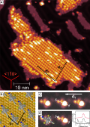


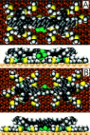


Hydration of magnesia cubes: a helium ion microscopy study
Beilstein J. Nanotechnol. 2016, 7, 302–309, doi:10.3762/bjnano.7.28
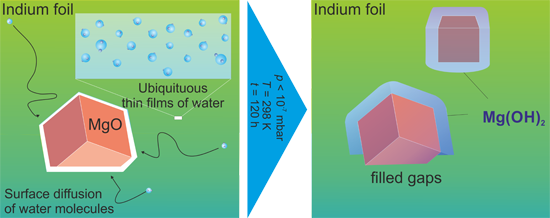
- . 0.25 pA, respectively. The MgO cube powders were vacuum annealed at T = 1173 K for a minimum duration of one hour in order to eliminate surface adsorbates including residual hydroxyls of high thermal stability [25]. After breaking the vacuum, we immobilized the particles in air by pressing the powder


Surface-site reactivity in small-molecule adsorption: A theoretical study of thiol binding on multi-coordinated gold clusters
Beilstein J. Nanotechnol. 2016, 7, 53–61, doi:10.3762/bjnano.7.6
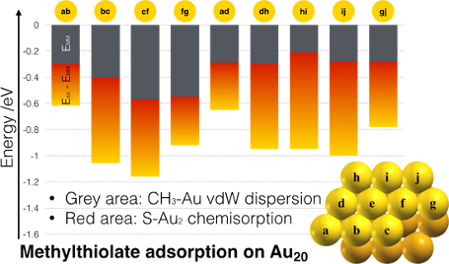
- have so far been done for aminoacids. That unsaturated metal atoms bind more strongly to adsorbates has been long established in the literature, particularly as a result of nanoparticle–molecule studies. Several thorough studies by Nørskov and co-workers [46][47][48] investigated site coordination
- projection of the adsorbate principal axis), and the relative location of the headgroup with respect to the substrate atoms (Figure 1). Three initial molecule–surface distances were used for all adsorbates (4.1, 4.3 and 4.5 Å), equilibrating to an average S–Au distance of 2.5 Å. Initial configurations were


Large area scanning probe microscope in ultra-high vacuum demonstrated for electrostatic force measurements on high-voltage devices
Beilstein J. Nanotechnol. 2015, 6, 2485–2497, doi:10.3762/bjnano.6.258
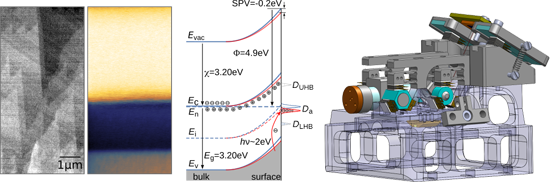
- samples of interest are semiconductor surfaces involving various doping concentrations and even cross-sections of interfaces [41][42]. Such measurements are influenced by surface band-bending effects induced by either intrinsic surface defects, adsorbates, interface states and last but not least by the


Self-organization of gold nanoparticles on silanated surfaces
Beilstein J. Nanotechnol. 2015, 6, 2345–2353, doi:10.3762/bjnano.6.242
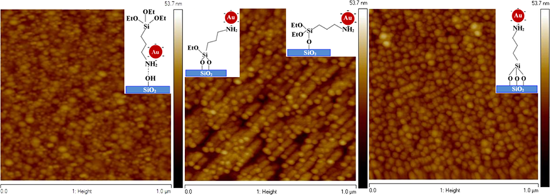
- Molecular self-assembly or self-organization is a technique which is widely used for the spontaneous arrangement of nanomaterials. Coupling agents such as thiol-terminated, amine-terminated, alkyl-terminated and phenyl-terminated silanes on metal nanoparticles (so called adsorbates) attach on various





