Search results
Search for "cancer cells" in Full Text gives 166 result(s) in Beilstein Journal of Nanotechnology.
Overview of mechanism and consequences of endothelial leakiness caused by metal and polymeric nanoparticles
Beilstein J. Nanotechnol. 2023, 14, 329–338, doi:10.3762/bjnano.14.28
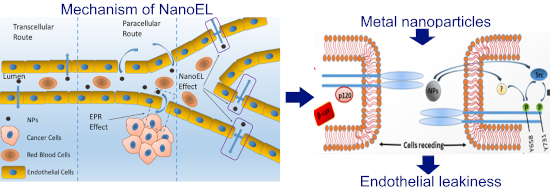
- aspect is the EPR effect, which is a phenomenon characteristic of mature solid tumors. The vascular permeability factors (e.g., VEGF) produced in higher concentrations by cancer cells stimulate the formation of an abnormal vascular structure, which can be used in the passive targeting of nanodrugs
- achievable utilizing NPs less than 100 nm in diameter. In contrast, active targeting strategies involve functionalizing the NP surface with appropriate ligands specific for receptors overexpressed by the cancer cells (e.g., folic acid and transferrin). The combination of the paracellular gap size resulting
- of tumors may also contribute to faster intravasation and extravasation of cancer cells, which has been confirmed in both in vitro and in vivo studies. Peng et al. demonstrated that the exposure of breast cancer cells to TiO2, SiO2, and Au NPs significantly accelerates the intravasation and


Recent progress in cancer cell membrane-based nanoparticles for biomedical applications
Beilstein J. Nanotechnol. 2023, 14, 262–279, doi:10.3762/bjnano.14.24
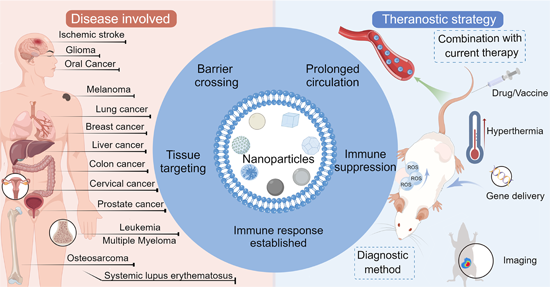
- membranes have been exploited for the development of novel membrane NP-based therapies, such as erythrocytes [10], platelets [11], cancer cells [14], stem cells [12], immune cells [13], central nervous system-derived cells [17], bacterial outer membrane vesicles [18], and extracellular vesicles [19]. Cancer
- living tumor cells to patients, cell membrane coating nanotechnology is safer during usage because of the inactivation of tumor cells and the removal of intracellular components [22]. In treatments of tumors that lack effective targeting, cancer cells achieve precise delivery of bionanoparticles to
- research in applying biomimetic NPs coated with tumor cell membranes in the medical field and provide a comprehensive summary of the different diseases and diagnostic and therapeutic methods involved (Figure 1). First, different properties of cancer cell membranes are discussed separately. Cancer cells


Nanotechnology – a robust tool for fighting the challenges of drug resistance in non-small cell lung cancer
Beilstein J. Nanotechnol. 2023, 14, 240–261, doi:10.3762/bjnano.14.23
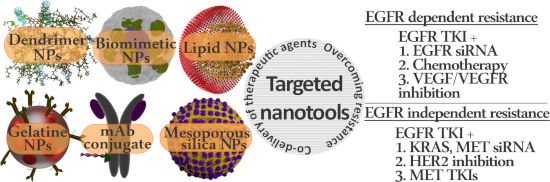
- proliferation and survival mechanisms on which the cancer cells are heavily dependent. The efficacy of existing small molecules in synergistic combinations for relevant genetic mutations in resistant cancers has been evaluated in many research and clinical studies, with promising results in some types of mutant
- copolymer core–shell NPs, (ii) polymer–polypeptide hybrid core–shell NPs, and (iii) polymer–lipid hybrid core–shell NPs additionally decorated with ligands for overexpressed receptors on cancer cells [92]. Traditionally selected overexpressed cancer cell surface markers for the active targeting of NPs
- intravascular gaps or fenestrations or actively by a transcytotic mechanism, loaded with one or more types of stage-2 nanoparticles. The payload of drug/diagnostic agent-loaded nanoparticles optimized for improved interaction with various cancer cells, including lung cancer cells, is released over time at the


Cyclodextrins as eminent constituents in nanoarchitectonics for drug delivery systems
Beilstein J. Nanotechnol. 2023, 14, 218–232, doi:10.3762/bjnano.14.21
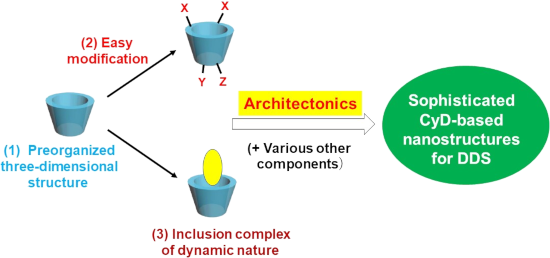
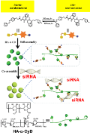
- siRNA from the endosome. In another example, a supramolecular nanoparticle was prepared from a linear CyD-based polymer, hydrophilic polyethylene glycol bearing an adamantane at the end, and siRNA [64]. By attaching a human transferrin protein, this composite was steered to target cancer cells to
- nanoassemblies (pale green balls in the third row from the top). Due to high biocompatibility and tumor-targeting capacity of HA, these ternary nanoassemblies effectively entered cancer cells. Upon UV irradiation (365 nm), the azobenzene isomerizes from the trans form to the cis form, disassembling the α-CyD
- inclusion complex (thus, the ternary assembly is also disassembled). As the result, the siRNA cargo is released and shows excellent cytotoxicity against cancer cells. In Figure 5, NIR light is used (instead of UV in Figure 4) to release siRNA at the target site. As described in section 2.3, the NIR




In search of cytotoxic selectivity on cancer cells with biogenically synthesized Ag/AgCl nanoparticles
Beilstein J. Nanotechnol. 2022, 13, 1505–1519, doi:10.3762/bjnano.13.124
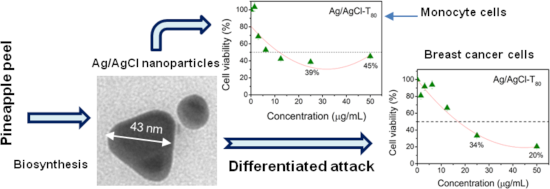
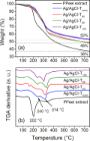
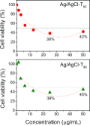
- , Saltillo Coahuila, 25294, México 10.3762/bjnano.13.124 Abstract Green synthesis may be a useful approach to achieve selective cytotoxicity of silver nanoparticles on cancer cells and healthy cells. In this study, the concomitant biosynthesis of silver (Ag)/silver chloride (AgCl) nanoparticles from
- of the MCF-7 line. The best cytotoxicity effects on cancer cells were obtained with nanoparticles at 60 and 80 °C where cell viability was reduced up to 80% at a concentration of 50 µg/mL. A significant preference was observed in the cytotoxic effect of Ag/AgCl nanoparticles against cancer cells in
- comparison to monocytes. Keywords: cancer cells; cytotoxic behavior; green synthesis; pineapple extract; silver chloride nanoparticles; silver nanoparticles; structural characterization; Introduction The study of metallic nanoparticle synthesis by green methods is gaining importance, especially in cases





Frequency-dependent nanomechanical profiling for medical diagnosis
Beilstein J. Nanotechnol. 2022, 13, 1483–1489, doi:10.3762/bjnano.13.122
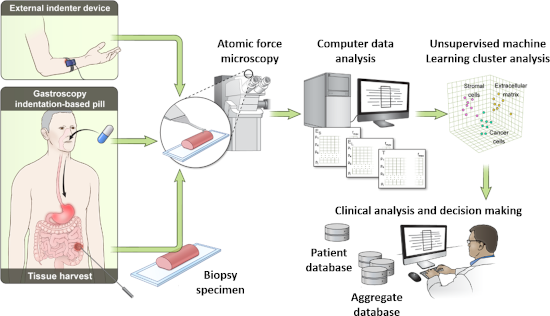
- progression, and within monitoring and treatments such as chemotherapies and immunotherapies. In our opinion, closer collaboration of the above disciplines would enable rigorous nanomechanical studies of cancer cells and tumor microenvironments in controlled physiologically relevant conditions. This could


Facile preparation of Au- and BODIPY-grafted lipid nanoparticles for synergized photothermal therapy
Beilstein J. Nanotechnol. 2022, 13, 1432–1444, doi:10.3762/bjnano.13.118
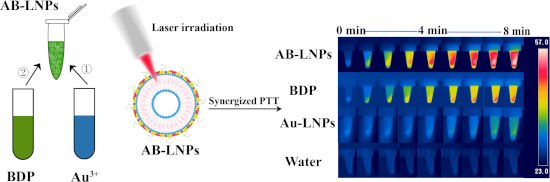
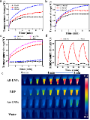
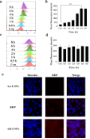
- could be associated stably to Au-LNPs, and the release of BODIPY from AB-LNPs could be accelerated by laser irradiation. AB-LNPs are scalable and showed excellent photothermal effects. AB-LNPs showed enhanced cellular uptake efficiency compared to free BODIPY in 4T1 breast cancer cells. Under laser
- synergistic PTT in the treatment of cancer and other diseases. Keywords: BODIPY; gold nanoparticles; lipid nanoparticles; photothermal therapy; synergism; Introduction Photothermal therapy (PTT) relies on photothermal agents (PTAs) to convert light into heat energy to burn cancer cells. Due to its spatial
- drugs inside the cancer cells. The internalization of BDP or AB-LNPs in 4T1 cells was also observed by CLSM. The intracellular fluorescence signals of 4T1 cells treated with AB-LNPs were brighter than that of free BDP, indicating the enhanced internalization of BDP through entrapping in lipid




Orally administered docetaxel-loaded chitosan-decorated cationic PLGA nanoparticles for intestinal tumors: formulation, comprehensive in vitro characterization, and release kinetics
Beilstein J. Nanotechnol. 2022, 13, 1393–1407, doi:10.3762/bjnano.13.115
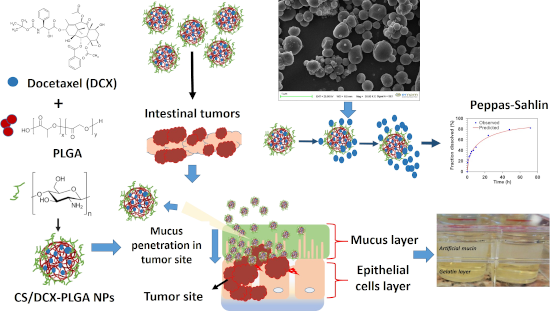
- -synthetically from 10-deacetyl-baccatin isolated from the Taxus family (T. baccata and T. brevifolia). It is a potent and long-known anticancer agent that acts in the metaphase-anaphase process of cancer cells, exerts a cytotoxic effect on microtubules that are vital for mitotic cellular activity, and prevents
- the proliferation of cancer cells [32][33][34]. Its potent activity against a wide spectrum of cancers such as colon cancer, gastric cancer, breast cancer, recurrent ovarian cancer, and non-small cell lung cancer has been elucidated by in vitro and in vivo studies [35]. Its poor water solubility
- considering the doubling time and the in vitro release profiles of the NPs [10]. PLGA NP formulations loaded with DCX have been found to show considerable toxicity on HT-29 colon cancer cells. As illustrated in Figure 6, the HT-29 cell line treated with DCX-PLGA NPs and CS/DCX-PLGA NP formulations show 71.1


Recent advances in green carbon dots (2015–2022): synthesis, metal ion sensing, and biological applications
Beilstein J. Nanotechnol. 2022, 13, 1068–1107, doi:10.3762/bjnano.13.93
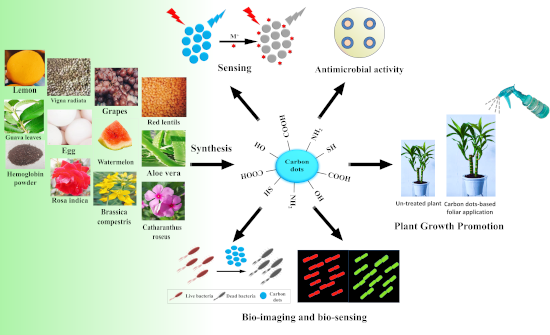
- to target folate-receptor cancer cells [114]. Pork-based CDs without any surface-passivating agent were synthesized. Pork meat, itself, is composed of many organic molecules that can provide multiple heteroatoms in the CDs. The resulting CDs have excellent advantages such as a high QY of 17.3% and
- described the reaction mechanism, which involves hydrolyzation of starch to form glucose, and then glucose is condensed to form CDs by ring-closure condensation. These CDs have been effectively used in bioimaging of cervical cancer cells as a suitable PL probe [124]. Wen et al. have created an incredibly


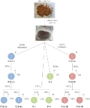


Biomimetic chitosan with biocomposite nanomaterials for bone tissue repair and regeneration
Beilstein J. Nanotechnol. 2022, 13, 1051–1067, doi:10.3762/bjnano.13.92
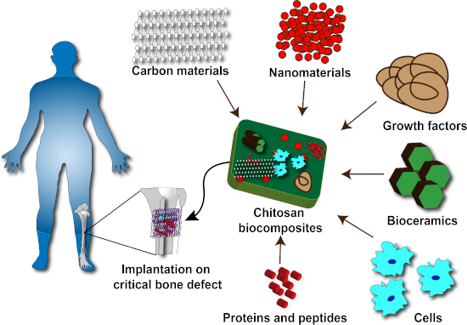
- osteoblasts and inhibition of the development of osteosarcoma cancer cells in the work by Sumathra et al. (2018). The in vitro experiment was carried out by using the osteosarcoma MG-63 cell line. The MTT assay for the composites showed cell expansion and growth. The anticancer activity of cisplatin-loaded
Effects of substrate stiffness on the viscoelasticity and migration of prostate cancer cells examined by atomic force microscopy
Beilstein J. Nanotechnol. 2022, 13, 560–569, doi:10.3762/bjnano.13.47
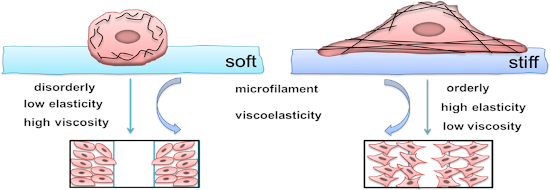
- substrate stiffness and the mechanical properties of cells in prostate tumour metastasis, providing a basis for understanding the changes in the biomechanical properties at a single-cell level. Keywords: actin cytoskeleton; atomic force microscopy; migration; prostate cancer cells; substrate stiffness
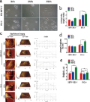
- functions have not been well appreciated [16]. In recent years, alterations in the physical properties of cells have been considered as a marker of malignant transformation of cancer cells [17][18][19]. Based on atomic force microscopy (AFM) measurements, our group found that the progression of prostate
- metastasis and possible regulatory mechanisms, which can further guide the study and treatment of cancer metastasis. Results and Discussion Effect of substrate stiffness on the migration of prostate cancer cells In order to investigate the mechanical properties and metastatic ability of human prostate cancer



Detection and imaging of Hg(II) in vivo using glutathione-functionalized gold nanoparticles
Beilstein J. Nanotechnol. 2022, 13, 549–559, doi:10.3762/bjnano.13.46
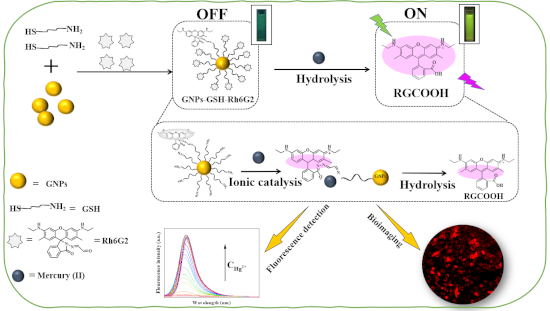
- cancer cells. In another work, Basu et al. designed a novel sensing system using DNA-functionalized GNPs. GNPs have a strong binding affinity to phosphate and sugar groups in DNA [20]. The combined GNPs-DNA has unique physicochemical properties and was used to detect Mg2+. Furthermore, Liu et al


Ethosomal (−)-epigallocatechin-3-gallate as a novel approach to enhance antioxidant, anti-collagenase and anti-elastase effects
Beilstein J. Nanotechnol. 2022, 13, 491–502, doi:10.3762/bjnano.13.41
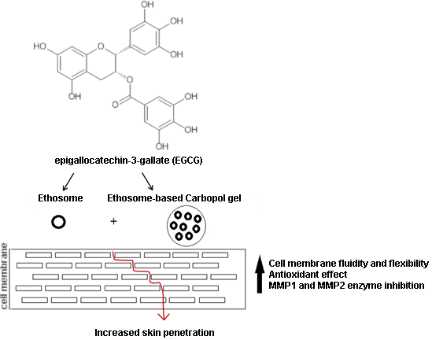
- human cancer cells without causing toxicity problems in normal cells. In general, it has been confirmed that they are relatively nontoxic in healthy L929 cells but toxic in cancer cell lines [29]. Preparation and characterization of formulations Like many phenolic compounds, EGCG is not sufficiently



Engineered titania nanomaterials in advanced clinical applications
Beilstein J. Nanotechnol. 2022, 13, 201–218, doi:10.3762/bjnano.13.15
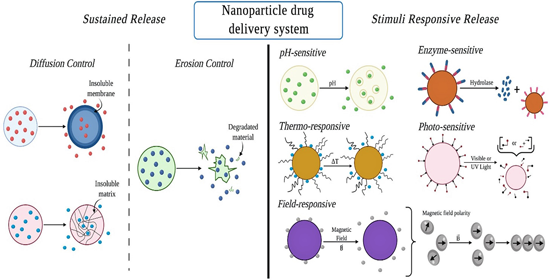
- reported by Rehman [8], who used the photodynamic properties of TiO2 for killing HeLa cancer cells. The hydrophobic nature of photosensitizers commonly used in photodynamic therapy led to selectivity and aggregation issues that jeopardize their effectiveness. Therefore, TiO2 nanoparticles (nps), which
- hyperthermic physiological responses. Titania is capable of producing a number of cytotoxic ROS in the presence of sunlight/UV light (e.g., •OH, •O2−, H2O2), as illustrated in Figure 6, which may contribute to the death of cancer cells, and has been deemed a suitable candidate for PDT [110]. The principal
- the effective treatment of cancer cells. Although conventional ultrasound treatment penetrates deeper in biological tissue and is non-radiative, it has a low tissue attenuation coefficient. Hence, an alternative therapy was developed combining both sonosensitizers and ultrasound techniques. You et al


Theranostic potential of self-luminescent branched polyethyleneimine-coated superparamagnetic iron oxide nanoparticles
Beilstein J. Nanotechnol. 2022, 13, 82–95, doi:10.3762/bjnano.13.6
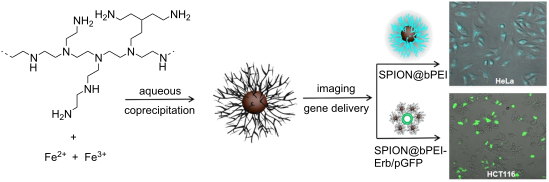
- = 365 nm, λem = 482 nm for SPION@bPEI). The fluorescence microscopy images were obtained by using an Olympus-excellence RT Life Science microscope (λexc = 488 nm, λem = 510 nm for GFP). Results and Discussion Delivery of therapeutic PIC to cancer cells with SPION@bPEI and in vitro optical imaging Highly




Alteration of nanomechanical properties of pancreatic cancer cells through anticancer drug treatment revealed by atomic force microscopy
Beilstein J. Nanotechnol. 2021, 12, 1372–1379, doi:10.3762/bjnano.12.101
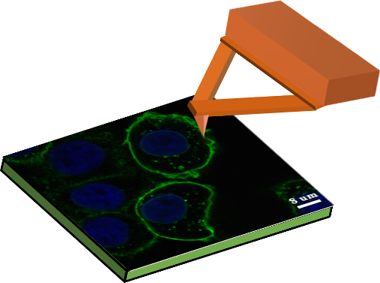
- regulation of cell activity, and hence to the health level of organisms. Here, the morphology and mechanical properties of normal pancreatic cells (HDPE6-C7) and pancreatic cancer cells (AsPC-1, MIA PaCa-2, BxPC-3) were studied by atomic force microscopy. In addition, the mechanical properties of MIA PaCa-2
- after treatment with different concentrations of doxorubicin hydrochloride (DOX) were also investigated. The results show the Young's modulus of normal cells is greater than that of three kinds of cancer cells. The Young's modulus of more aggressive cancer cell AsPC-1 is smaller than that of less
- properties; pancreatic cancer cells; Introduction Pancreatic cancer is a highly malignant tumor [1] with the highest mortality rate (ca. 100%) and the lowest 5-year survival rate (≤5%) when all stages are combined [2][3]. Since no significant symptoms appear until the late stage of pancreatic cancer, the


Biocompatibility and cytotoxicity in vitro of surface-functionalized drug-loaded spinel ferrite nanoparticles
Beilstein J. Nanotechnol. 2021, 12, 1339–1364, doi:10.3762/bjnano.12.99
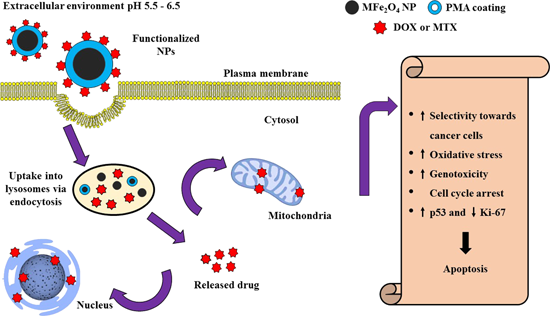
- controls. The efficient retention of polymer-functionalized NPs in cancer cells, with the help of the EPR effect and a leaky vasculature system (pore diameter = 100 nm–2 µm) [7], reduces their nonspecific biological interactions with plasma proteins, contributing to a higher bioavailability [37]. SRB
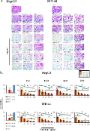
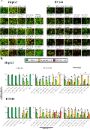
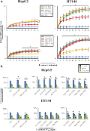
- showed viability up to 80%, indicating excellent biocompatibility of amphiphilic polymers at a lower dose in vitro. IC50 concentrations of functionalized MFe2O4 NPs in cancer cells To determine IC50 concentrations of drug-loaded NPs and their effect on the metabolic activity of HepG2 and HT144 cells, MTT
- in each replicate and compared to NTC (Figure 5b). Spinel ferrite NPs have been reported to cause cytotoxicity in cancer cells, mediated via ROS production, increased transcription of p53 and apoptotic genes (caspase 3 and 9, Bax), and downregulation of the antiapoptotic Bcl-2 gene, leading to





Self-assembly of amino acids toward functional biomaterials
Beilstein J. Nanotechnol. 2021, 12, 1140–1150, doi:10.3762/bjnano.12.85
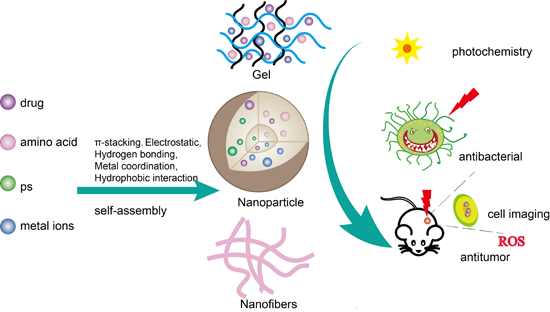
- cancer cells [50]. Furthermore, naphthalimide (NI) derivatives can also be used as end-capping materials for amino acids. Naphthalimide has unique photophysical properties and photostability as a luminescent material for aggregation-induced emission (AIE), which can display high emission properties in
- were used for the selective sensing of Fe3+ within cancer cells and imaging of Fe3+ [54]. Amino-acid-coordinated self-assembly. Coordination-driven self-assembly is a supramolecular self-assembly method based on metal-coordination bond formation, which has the advantages of fewer steps, fast final
- coordination of Mn2+, Fmoc-ʟ-L, and Ce6, a yield of 36 wt % can be obtained. After the uptake of FMC NPs by cancer cells, Mn2+ and Ce6 can be released in response to intracellular high levels of glutathione (GSH). Magnetic resonance imaging (MRI) results showed an almost complete elimination of the tumor three

Use of nanosystems to improve the anticancer effects of curcumin
Beilstein J. Nanotechnol. 2021, 12, 1047–1062, doi:10.3762/bjnano.12.78
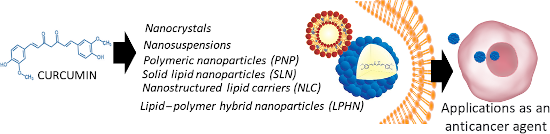
- cancer cells (HCT116) by promoting cell cycle arrest at the G2/M phase [49]. A CUR nanocrystal has been successfully prepared using melt sonocrystallization, in which its therapeutic potential was evidenced according to in vitro cytotoxicity studies against a human oral cancer cell line (KB). The results
- propose that their CUR nanoemulsion can inhibit tumor growth and metastasis, with a particular focus on patients who have undergone surgery to have them excised. Inostroza et al. [112] report significant effectiveness of a CUR oil-in-water nanoemulsion against gastric cancer cells (AGS). CUR-based
- against cancer cells [126]. Curcumin-loaded MNP (94.2 µg/mg of nanoparticles) were assayed against MDA-MB-231 cells. They contained iron oxide and β-cyclodextrin and were coated with Pluronic F68 polymer (polyethylene oxide-co-polypropylene oxide-co-polyethylene oxide) with an average size of 9 nm


Comprehensive review on ultrasound-responsive theranostic nanomaterials: mechanisms, structures and medical applications
Beilstein J. Nanotechnol. 2021, 12, 808–862, doi:10.3762/bjnano.12.64
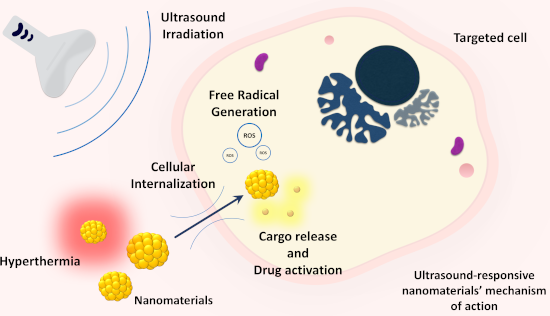
- . reported that when the distance between the cell and the MB was increased to 5.5 µm, the exerted shear stress on the cell membrane suddenly decreased [78]. Schlicher et al. exposed prostate cancer cells (DU145) to 24 kHz US irradiation to investigate the cavitation events and the changes in the cell
- isothiocyanate (FITC)-labeled bovine serum albumin (BSA), FITC-labeled 150, 500, and 2000 kDa dextrans into DU145 prostate cancer cells. They blocked the endocytosis mechanism to assess whether the endocytic pathway was upregulated during US exposure. They showed that all of these fluorescent molecules were
- -frequency ultrasound is mostly associated with mechanical effects [143]. During hyperthermia, the target tumor tissue is exposed to a high temperature above 47 °C, and thermal ablation occurs by direct destruction of the cancer cells. After sub-ablative local hyperthermia involving a slight increase in the


Recent progress in actuation technologies of micro/nanorobots
Beilstein J. Nanotechnol. 2021, 12, 756–765, doi:10.3762/bjnano.12.59
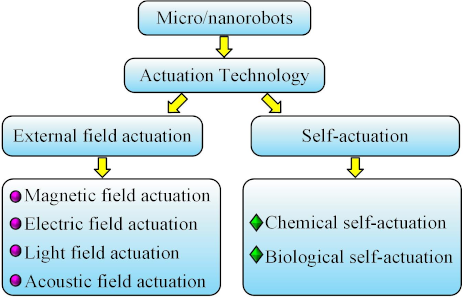
- swing and spiral motion. At the same time, by applying a suitable magnetic field, the nanoeel can be accurately guided to a target location for drug release. Under a magnetic field of 10 mT and 7 Hz, drug delivery to cancer cells could be achieved. The efficiency of killing cancer cells is 35% in the


Recent progress in magnetic applications for micro- and nanorobots
Beilstein J. Nanotechnol. 2021, 12, 744–755, doi:10.3762/bjnano.12.58
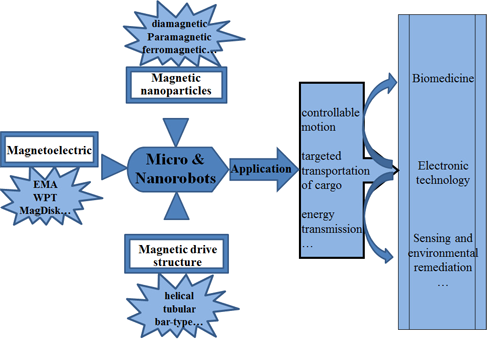
- , with which cancer cells and non-cancerous cells can be distinguished. Furthermore, a cell sensor that uses MaBiDz for rapid detection and imaging of target mRNA biomarkers of metastatic breast cancer has been realized. Its function shows that it is likely to be used as a biomimetic organelle MNR in the


The impact of molecular tumor profiling on the design strategies for targeting myeloid leukemia and EGFR/CD44-positive solid tumors
Beilstein J. Nanotechnol. 2021, 12, 375–401, doi:10.3762/bjnano.12.31
- synthesis of nucleic acids required for DNA replication, while taxanes and vinca alkaloids interfere with the polymerization/depolymerization of the microtubules thus inhibiting mitosis [8]. However, in addition to cancer cells, all of these drugs also affect the normal/healthy tissues with cells that
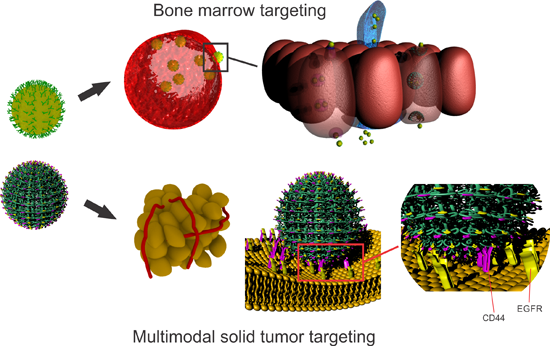
- delivery of a wide variety of therapeutic molecules to cancer cells. This allows the molecules to reach critical tissue compartments, such as the BM and lymph nodes, which are otherwise inaccessible to the drugs. Targeting specific surface-exposed moieties of the cancer cell subpopulations is considered as
- cells, which could be used as potential targets for a NDDS-based therapeutic approach (Table 1). The folate receptor is usually overexpressed in all cancer cells and the high frequency (ca. 70%) of folate receptor (FR) β expression in CML and AML relative to normal hematopoietic cells suggests the


Doxorubicin-loaded gold nanorods: a multifunctional chemo-photothermal nanoplatform for cancer management
Beilstein J. Nanotechnol. 2021, 12, 295–303, doi:10.3762/bjnano.12.24
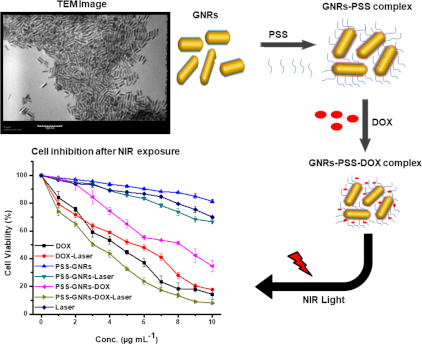
- urgently needed to kill cancerous cells without damaging normal cells or tissues. One approach is to selectively remove cancer cells using the advanced drug delivery systems. These carrier systems hold sufficient amounts of the drug with prolonged circulation time and sustained drug release at the tumor
- external stimulus [13]. Additionally, the NIR light-induced heat can improve the sensitivity of cancer cells towards chemotherapeutic agents by increasing blood vessel dilation and membrane permeability. These findings provide an incentive to combine photothermal therapy and chemotherapy for cancer
- -conjugated gold nanorods are highly biocompatible vehicles for sustained drug delivery, reduce cardiotoxicity in vivo, and have high photothermal efficacy [34]. A previous report showed that DOX-loaded tiopronin-coated gold nanoparticles (Au-TIOP-DOX) had a better efficacy in killing cancer cells than free


Differences in surface chemistry of iron oxide nanoparticles result in different routes of internalization
Beilstein J. Nanotechnol. 2021, 12, 270–281, doi:10.3762/bjnano.12.22
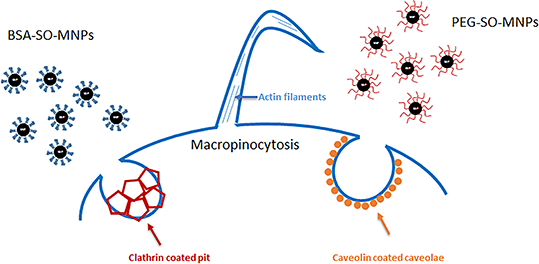
- the protein corona in terms of the amount and specificity of proteins adsorbed from the serum, overall affecting the final size of the nanoparticles in the biological fluid [46]. Because the cellular entry mechanism of identical nanoparticles can differ between cancer cells and non-malignant cells [47