Search results
Search for "carboxyl groups" in Full Text gives 86 result(s) in Beilstein Journal of Nanotechnology.
Sugarcane juice derived carbon dot–graphitic carbon nitride composites for bisphenol A degradation under sunlight irradiation
Beilstein J. Nanotechnol. 2018, 9, 353–363, doi:10.3762/bjnano.9.35
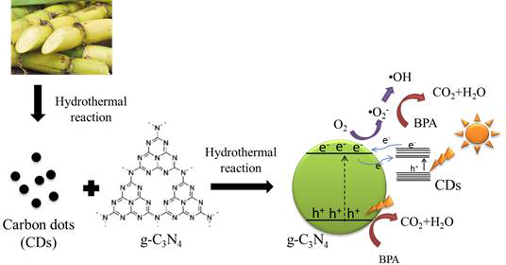
- revealed new signals for carbonyl and carboxyl groups originating from the CDs in CD/g-C3N4 composites while X-ray diffraction (XRD) results showed distortion of the host matrix after incorporating CDs into g-C3N4. Both analyses signified the interaction between g-C3N4 and CDs. The photoluminescence (PL
- eV (C–N) and 288.8 eV (N–C=N) after the incorporation of CDs, revealing the abundant carbonyl and carboxyl groups on the CDs as a result of the significant interaction between g-C3N4 and CDs [71][72][73][74]. The N 1s spectrum was deconvoluted into three peaks at 398.8 eV, 399.8 eV and 401.1 eV. The


Synthesis of metal-fluoride nanoparticles supported on thermally reduced graphite oxide
Beilstein J. Nanotechnol. 2017, 8, 2474–2483, doi:10.3762/bjnano.8.247
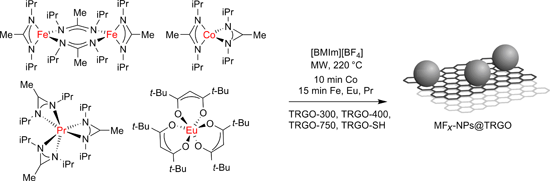
- reduction. During the thermal reduction of graphite oxide by flash pyrolysis, the decomposition of epoxy, carbonyl and carboxyl groups accounts for a build-up of pressure that exfoliates functionalized graphene [4]. In 1958, Hummers and Offeman reported on a ”graphene” synthesis by oxidation of graphite


Imidazolium-based ionic liquids used as additives in the nanolubrication of silicon surfaces
Beilstein J. Nanotechnol. 2017, 8, 1961–1971, doi:10.3762/bjnano.8.197
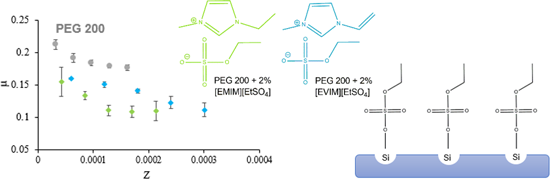
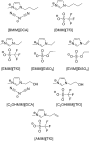
- imidazolium ring. Mo et al. [23] studied the lubricant properties of ILs based on the cation EMIM containing methyl, hydroxy, nitrile, and carboxyl groups deposited by dip-coating on Si surfaces. They found favorable friction reduction with [C2OHMIM][Cl] being the least efficient IL. In contrast, promising



Two-dimensional carbon-based nanocomposites for photocatalytic energy generation and environmental remediation applications
Beilstein J. Nanotechnol. 2017, 8, 1571–1600, doi:10.3762/bjnano.8.159
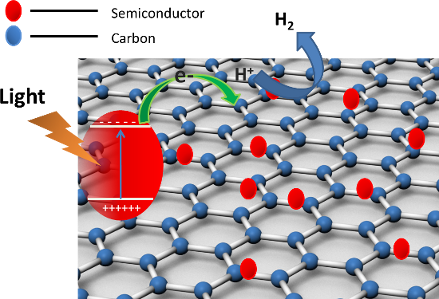
- photocatalytic activity in water splitting reactions under visible light irradiation. Ammonia-modified GO (NGO) shows n-type conductivity due to the introduction of nitrogen functionality. The band gap of NGO is narrowed due to the removal of various epoxy and carboxyl groups and it further acts as a promising


Fully scalable one-pot method for the production of phosphonic graphene derivatives
Beilstein J. Nanotechnol. 2017, 8, 1094–1103, doi:10.3762/bjnano.8.111
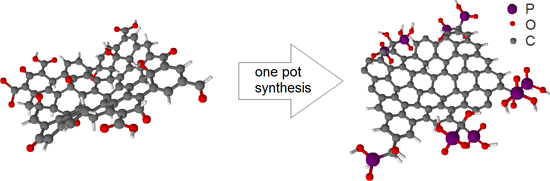
- hydroxy groups are present on the basal planes of GO, whereas at their edges carboxyl groups are dominant [1][2][3]. As stated above, GO platelets have chemically reactive oxygen groups, among which carboxylic groups are considered to be the most active ones. The activation of the –COOH group is usually


Recombinant DNA technology and click chemistry: a powerful combination for generating a hybrid elastin-like-statherin hydrogel to control calcium phosphate mineralization
Beilstein J. Nanotechnol. 2017, 8, 772–783, doi:10.3762/bjnano.8.80
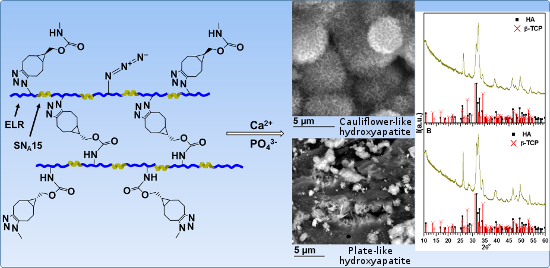
- designed with different polarities. This variability provides access to a multitude of related, but different, amphiphilic multiblock ELRs with pre-programmed self-assembling capabilities. Moreover, if the guest residue X carries amino or carboxyl groups, for example in lysine or glutamic acid, different



Comparison of four methods for the biofunctionalization of gold nanorods by the introduction of sulfhydryl groups to antibodies
Beilstein J. Nanotechnol. 2017, 8, 372–380, doi:10.3762/bjnano.8.39
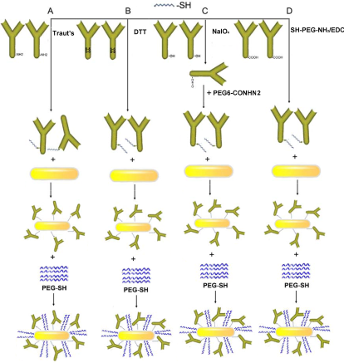
- modified GNRs through an EDC/NHS coupling reaction [15][16]. Nevertheless, this ligand exchange method easily causes aggregation of GNRs because the amino and carboxyl groups of biomolecules can cross-link well with gold nanoparticles. Thus, an effective method should be developed to functionalize GNRs for
- functionalization strategy is through the reaction of amino groups of thiol-poly(ethylene glycol)amine (SH-PEG-NH2) with carboxyl groups in the anti-IgG by using EDC. The thiol moiety of SH-PEG-NH2 can be directly conjugated to GNRs through the Au–S bond. In the current work, we compared the four abovementioned


Streptavidin-coated gold nanoparticles: critical role of oligonucleotides on stability and fractal aggregation
Beilstein J. Nanotechnol. 2017, 8, 1–11, doi:10.3762/bjnano.8.1
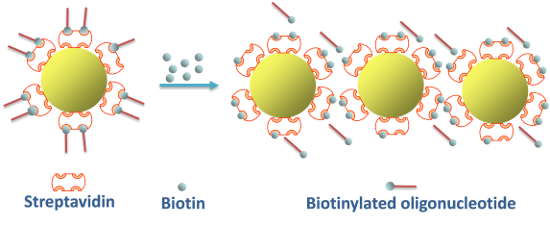
- nanoparticle surface. The large red-shift of the plasmon band (Figure 4A) attributed to the nanoparticle linear aggregation caused by BiotinDNA displacement is not observed in this case. At pH 6 an almost complete deprotonation of citrate carboxyl groups is observed (citrate pKa values are 3.2, 4.8, 6.4). It




From iron coordination compounds to metal oxide nanoparticles
Beilstein J. Nanotechnol. 2016, 7, 2074–2087, doi:10.3762/bjnano.7.198
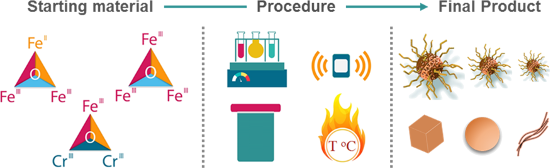
- carboxyl groups at 1649–1641 cm−1 and 1439 cm−1. The bands at 2853–2851 cm−1 and 2922 cm−1 are attributed to CH2 groups, which are characteristic of fatty acids [26]. Absorption bands characteristic for CH3 groups were identified at 2955 cm−1 in the spectra of all the samples. From the data obtained by IR


3D printing of mineral–polymer bone substitutes based on sodium alginate and calcium phosphate
Beilstein J. Nanotechnol. 2016, 7, 1794–1799, doi:10.3762/bjnano.7.172
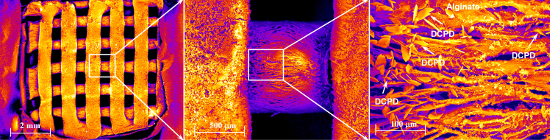
- by an increase in concentration of heterogeneous nucleation centers of a calcium phosphate phase on the carboxyl groups of the amino acids. X-ray diffraction data lend support to this tendency: the height of the strongest peak (020) of DCPD decreases by a factor of 7 as the alginate and
- phosphate reacts with alginate through the carboxyl groups of amino acids and calcium in calcium phosphate, because the frequency changes are observed for groups located near calcium ions in the phosphate structures [13]. The compressive strength of 3D printed samples is shown in Figure 6. The mechanical


Scanning probe microscopy studies on the adsorption of selected molecular dyes on titania
Beilstein J. Nanotechnol. 2016, 7, 1642–1653, doi:10.3762/bjnano.7.156
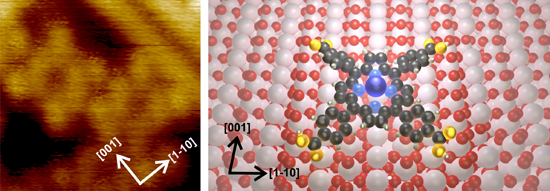
- to the experiment from Lovat et al. [52] discussed earlier, it is evident that the proper choice of side groups in zinc porphyrins may influence the adsorption behaviour of the molecules. Once the molecules are equipped with carboxyl groups, their adsorption geometry changes from flat lying to
- implications because it changes the inherent chemical and physical functionalities of the metal porphyrins in the layer. The influence of carboxyl groups on the behaviour of the porphyrin molecules has also been studied with STM [56][57]. Olszowski et al. [56] compared the adsorption of meso
- carboxyphenyl groups are aligned along the [001] direction forming two covalent bonds between the carboxyl groups and the surface five-fold coordinated titanium atoms in a monodentate fashion; the other two carboxyphenyl groups are aligned along the [1−10] direction. In the second geometry, Cu-TCPPs are rotated


Antitumor magnetic hyperthermia induced by RGD-functionalized Fe3O4 nanoparticles, in an experimental model of colorectal liver metastases
Beilstein J. Nanotechnol. 2016, 7, 1532–1542, doi:10.3762/bjnano.7.147
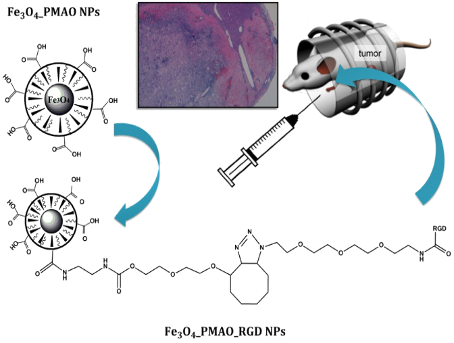
- absorption is related to the carboxyl groups in PMAO, resulting from the opening of anhydride rings, confirming the recovery of the nanoparticles by the amphiphilic ligand. The percentage of organic coating has been calculated by TGA measurements performed in Ar atmosphere. A weight loss of 8% was observed


Photocurrent generation in carbon nanotube/cubic-phase HfO2 nanoparticle hybrid nanocomposites
Beilstein J. Nanotechnol. 2016, 7, 1075–1085, doi:10.3762/bjnano.7.101
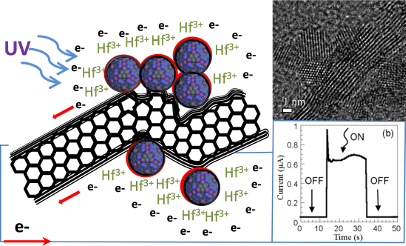
- nanoparticles in the process of CNT decoration. In fact, acid treatment creates defects (vacancies and holes in the side walls) on the CNT surfaces along with carboxyl groups in the case of carboxylic acid treatment [24]. The bond with these carboxyl groups is then created via hydroxyl groups present on the


Assembling semiconducting molecules by covalent attachment to a lamellar crystalline polymer substrate
Beilstein J. Nanotechnol. 2016, 7, 784–798, doi:10.3762/bjnano.7.70
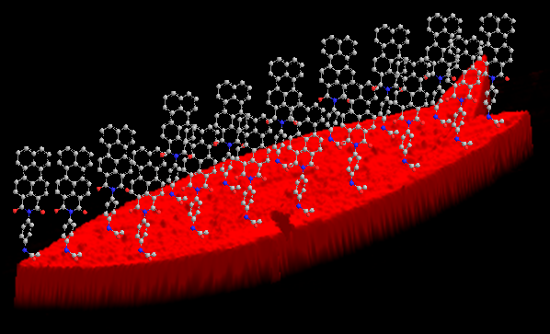
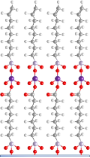
- lamellar crystal. Thus, the surfaces of these crystals were covered by side-branches. By using carboxyl groups as side-branches, which allow for chemical reactions, we could functionalize the crystal with semiconducting molecules. Here, we compare properties of crystals differing in size: small
- larger scales, as has been demonstrated for colloidal particles for which ordered monolayers of square centimeter sizes were achieved [7]. The polymer, which we chose for our experiments, was polyethylene with carboxyl groups at every 45th carbon atom, denoted as CPE45. The carboxyl groups were chosen
- how smooth CPE45 surfaces can be produced and under which conditions the density of carboxyl groups is sufficient to allow for the formation of a compact layer of covalently attached semiconducting molecules. Finally, we will also examine the morphology and spectroscopic properties of the layer of


Nanostructured surfaces by supramolecular self-assembly of linear oligosilsesquioxanes with biocompatible side groups
Beilstein J. Nanotechnol. 2015, 6, 2377–2387, doi:10.3762/bjnano.6.244
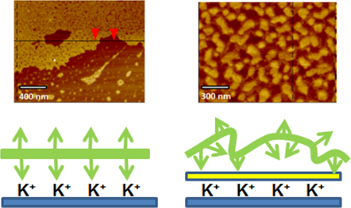
- adherence is good. The morphology of the samples prepared on muscovite mica treated with citric acid (mica-CA, Figure 5) is governed by the presence of the residual carboxyl groups. The homopolymer P1 (LPSQ-COOH) can form very smooth assemblies on native mica but on mica-CA it tends to coil into fine
- functions (less effective in hydrogen bonding) is uniform and very smooth (Rq = 0.117 nm) except for visible drops of excess primer. Priming mica with NAC, CA and TG thus yields smooth, chemo-specific, hydrophilic supports (see later also Figure 9a and Discussion). The abundance of hydroxyl and carboxyl
- groups on mica treated with CA is responsible for its exceptionally high surface energy. AFM studies of LPSQ-COOH/X adsorbed on primed mica After priming, the mica tiles were air-dried and then the polymer layer was adsorbed from diluted solutions of functionalized LPSQ-COOH/X and analysed with AFM and




Protein corona – from molecular adsorption to physiological complexity
Beilstein J. Nanotechnol. 2015, 6, 857–873, doi:10.3762/bjnano.6.88
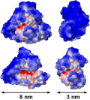
- the HSA molecule from (−10.5 ± 1.3) mV for native HSA to (−19 ± 4) mV for HSAsuc (both in PBS at pH 7.4). For comparison, they also altered the carboxyl groups of the native HSA molecule by reacting them with ethylenediamine, thus, converting them into positively charged amino groups, creating an



Self-assembled anchor layers/polysaccharide coatings on titanium surfaces: a study of functionalization and stability
Beilstein J. Nanotechnol. 2015, 6, 617–631, doi:10.3762/bjnano.6.63
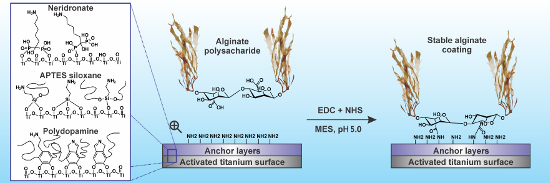
- the set prerequisites. This polysaccharide is biocompatible and degradable under normal physiological conditions [40] and has been used in various biomedical applications [41][42]. The presence of carboxyl groups in the structure of β-D-mannuronate and α-L-guluronate monomer units can be utilized for
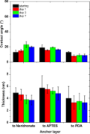
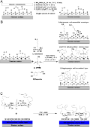
- The tethering of alginate (ALG) chains by reaction of the carboxyl groups to the amine-functionalized titanium surfaces was performed by following standard EDC/NHS protocols. The binding reaction resulted in the formation of 5.0 ± 1.9 nm thick alginate films, irrespective of the anchor layer. The
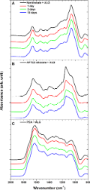
- activated carboxyl groups of ALG and the amines present in the anchor layer were probed by IRRAS measurements. A representative IR spectrum of free alginate deposited on the flat titanium surface is presented in Figure 5. The spectrum is dominated by the symmetric νsym (C=O) and asymmetric νasym (C=O) modes


The fate of a designed protein corona on nanoparticles in vitro and in vivo
Beilstein J. Nanotechnol. 2015, 6, 36–46, doi:10.3762/bjnano.6.5
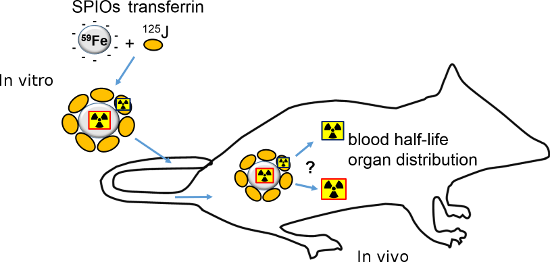
- charged due to the formation of carboxyl groups at the surface. To get a platform of particles with different surface characteristics we then used a poly(ethylenglycol)(PEG)-amine (C-PEG) or a PEG-α,ω-bisamine (N-PEG) in the presence of the coupling agent, 1-ethyl-3-(3-dimethylaminopropyl)carbodiimide
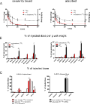
- bifunctional PEGs. Monodisperse oleic acid stabilized iron oxide cores (11 nm iron oxide core, see electron micrograph) were used as starting material. Whereas our polymer coated model SPIOs (A) is negatively charged due to free carboxyl groups (25 nm, hydrodynamic diameter), reaction with methoxy-PEG amine


Functionalized polystyrene nanoparticles as a platform for studying bio–nano interactions
Beilstein J. Nanotechnol. 2014, 5, 2403–2412, doi:10.3762/bjnano.5.250
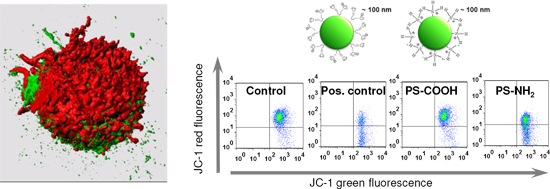
- used superparamagnetic iron oxide nanoparticles. Keywords: amino groups; apoptosis; carboxyl groups; cell proliferation; leukemia cell lines; macrophages; mTOR; polystyrene nanoparticles; Review Applications of polystyrene Polystyrene, one of the most extensively used types of plastic [1], is an


Nanoparticle interactions with live cells: Quantitative fluorescence microscopy of nanoparticle size effects
Beilstein J. Nanotechnol. 2014, 5, 2388–2397, doi:10.3762/bjnano.5.248
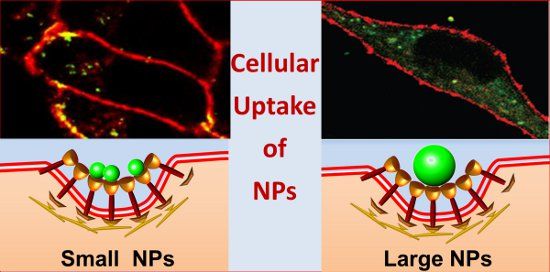
- essentially the same size and surface charge, namely plain, CTMA-stabilized PS+ NPs and amino-functionalized PS NPs (NPS NPs) carrying about 6,000 amino groups on their surfaces (Table 1) [33]. This study was further extended to include the effect of surface carboxyl groups on the interaction of anionic NPs
- groups on the NP surface, e.g., carboxyl groups, overcome the Coulomb repulsion and facilitate binding to membrane-bound receptors that activate the endocytosis machinery. However, independent of the surface charge and functionalization, NP accumulation on the membrane was entirely absent during uptake


In vitro and in vivo interactions of selected nanoparticles with rodent serum proteins and their consequences in biokinetics
Beilstein J. Nanotechnol. 2014, 5, 1699–1711, doi:10.3762/bjnano.5.180
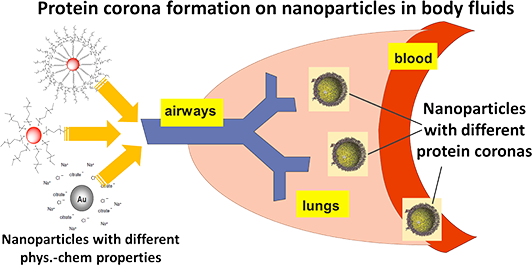
- ; details are given in [5]. We chose nano-sized and submicrometer-sized carbon black versus 50 nm monodisperse polystyrene NP with surface modifications of either carboxyl groups (negative charge), or amino groups (positive charge) or plain surface (neutral charge) as measured by their zeta potential and
- supernatant after BSA separation from the 50 nm Polystyrene (PS) NP–protein complexes (PS-Plain: neutral charge, PS-COOH: negative charge by carboxyl groups, PS-NH2: positive charge by amino groups) depending on the NP dose; the error bars show the standard deviation). Each line represents the linear
- three routes: intratracheal instillation into the lungs, intravenous injection into blood and intra-esophageal instillation into the gastro-intestinal tract. The AuNP were synthesized and surface-modified not only with small ionic ligands such as sulfonated triphenylphosphine, amino groups, or carboxyl


Donor–acceptor graphene-based hybrid materials facilitating photo-induced electron-transfer reactions
Beilstein J. Nanotechnol. 2014, 5, 1580–1589, doi:10.3762/bjnano.5.170
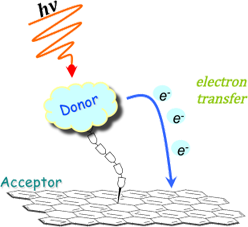
- electron donor and C60 were added to GO through an esterification reaction between the carboxyl groups of GO and the hydroxy groups present on ZnPc as well as on the fullerene derivative. Photoexcitation of ZnPc–GO–C60 at 390 nm, the wavelength at which ZnPc was predominantly excited, resulted in the


The cell-type specific uptake of polymer-coated or micelle-embedded QDs and SPIOs does not provoke an acute pro-inflammatory response in the liver
Beilstein J. Nanotechnol. 2014, 5, 1432–1440, doi:10.3762/bjnano.5.155
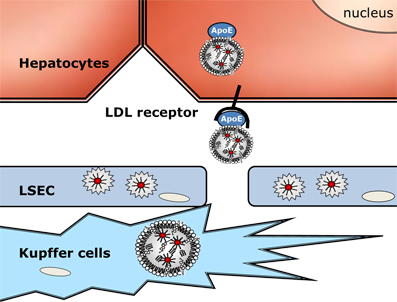
- through a 0.45, 0.2, and 0.1 μm Millipore filter. Based on dynamic light scattering (DLS) measurements, the size of polymer-coated nanocrystals is 25 nm. These polymer-coated nanoparticles are negatively charged due to the formation of carboxyl groups at the surface. Labelling of lipid micelles with


Enhanced photocatalytic hydrogen evolution by combining water soluble graphene with cobalt salts
Beilstein J. Nanotechnol. 2014, 5, 1167–1174, doi:10.3762/bjnano.5.128
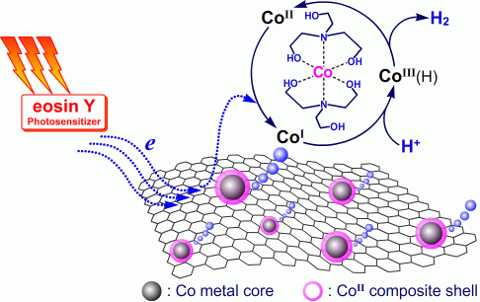
- –C (epoxy), C=O (carbonyl), and C(O)O (carboxyl) groups, respectively [55]. For G-SO3, the peak centered at 284.6 eV becomes narrower, suggesting the partial restoration of the π-electron network in G-SO3. Other oxygen-containing carbon peaks, decreased sharply, indicating GO is reduced efficiently


Organic and inorganic–organic thin film structures by molecular layer deposition: A review
Beilstein J. Nanotechnol. 2014, 5, 1104–1136, doi:10.3762/bjnano.5.123
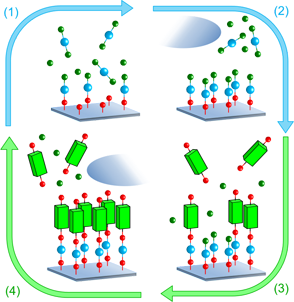
- acids used to fabricate hybrid films together with TMA vary from each other regarding the number of carboxyl groups attached to the aromatic ring and how the groups are positioned. Benzoic acid has only one carboxyl group, which may explain why no decent growth for these films were observed. From