Search results
Search for "cells" in Full Text gives 1112 result(s) in Beilstein Journal of Nanotechnology. Showing first 200.
Programmable soliton dynamics in all-Josephson-junction logic cells and networks
Beilstein J. Nanotechnol. 2025, 16, 1883–1893, doi:10.3762/bjnano.16.131

- the concept of applying a small number of key cells, which should create precisely engineered tunable inhomogeneities. Such inhomogeneity may be designed as an element of tunable kinetic inductance [17]. This element has high inductance at small scales and can be controlled using currents [18][19
- fundamental building block of our design is the “kinetic inductance controllable key” (KICK), which is constructed from the two modified unit cells of an all-Josephson Junction Transmission Line (all-JJTL). As depicted in Figure 1a, each cell is modified by incorporating a controlled kinetic inductance in
- envision it serving as a reconfigurable “backbone” to link various specialized functional units within a larger integrated circuit. For example, the WayMatrix could be configured to connect arrays of memory cells to arithmetic logic units or to route data between different processing cores. Another key


Self-assembly and adhesive properties of Pollicipes pollicipes barnacle cement protein cp19k: influence of pH and ionic strength
Beilstein J. Nanotechnol. 2025, 16, 1863–1872, doi:10.3762/bjnano.16.129
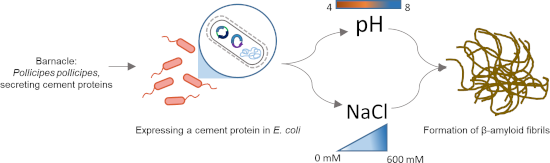
- . coli BL21 (DE3) cells as previously described [21] and purified by two step purification, that is, immobilised metal affinity chromatography (IMAC) followed by ion exchange chromatography (IEC). For IMAC, the Co-IDA resin column was washed with 25 mM Tris-HCl buffer (pH 8.0) containing 150 mM NaCl and


On the road to sustainability – application of metallic nanoparticles obtained by green synthesis in dentistry: a scoping review
Beilstein J. Nanotechnol. 2025, 16, 1851–1862, doi:10.3762/bjnano.16.128
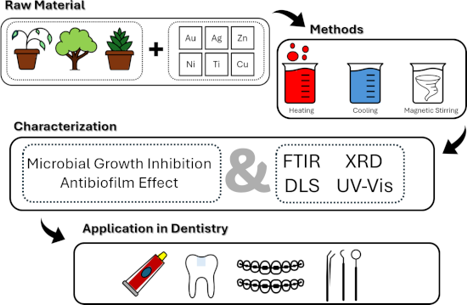
- demonstrated that these nanoparticles exhibit low toxicity, effectiveness against antibiotic-resistant microorganisms, and strong colloidal stability, ensuring long-term dispersion [26][27]. Additionally, they exhibit antioxidant activity and selective cytotoxic effects on tumor cells, including oral cancer
- conducted exclusively in vitro experiments, with no progression to in vivo experimentation in 53.7% (n = 53) of cases. Moreover, 47.8% (n = 45) lacked cytotoxicity assessments or evaluations in human cells. This gap raises important concerns regarding the long-term biocompatibility, biodistribution, and


Phytol-loaded soybean oil nanoemulsion as a promising alternative against Leishmania amazonensis
Beilstein J. Nanotechnol. 2025, 16, 1826–1836, doi:10.3762/bjnano.16.126

- diterpenes exhibit promising antileishmanial activity while displaying low toxicity to host cells [13][14][15]. One such compound is a phytol, a highly lipophilic, acyclic monounsaturated diterpene alcohol derived from chlorophyll metabolism in plants [16], and has demonstrated promising antileishmanial
- presented in Table 1. 3T3 fibroblast-like cell viability Cell viability in mammalian cells was assessed using 3T3 fibroblast-like cells at 24 and 48 hours (Figure 3). Our results showed that none of the treatments induced significant cytotoxicity in this cell type at 24 hours. However, at 48 hours
- , cytotoxicity was observed in cells treated with free PHYT and blank-NE at a concentration of 200 µg/mL, resulting in 67% and 71% cell viability, respectively. Interestingly, PHYT-NE remained safe at all tested concentrations and time points, with cell viability above 80% even at the highest concentration. In


Exploring the potential of polymers: advancements in oral nanocarrier technology
Beilstein J. Nanotechnol. 2025, 16, 1751–1793, doi:10.3762/bjnano.16.122
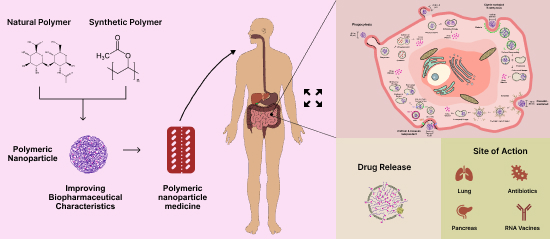
- the mucus layer which acts as a barrier that must be overcome in the oral administration of drugs [7]. Another intrinsic physical barrier of the GIT is the intestinal epithelium (Figure 1), which consists of a single layer of epithelial cells, including enterocytes and secretory cells. Drug passage
- through the epithelium occurs via the transcellular and paracellular pathways, as well as through M cells located on the surface of Peyer’s patches [8]. Positioned under the mucus layer, the intestinal epithelium plays crucial roles in defending against hostile contents, selectively absorbing nutrients
- , and maintaining homeostasis within the GIT. The diverse cells of the intestinal epithelium can be explored as therapeutic targets for oral absorption, given the significant roles they play in the epithelial barrier [9]. Nanotechnology is a field that focuses on the study and production of nanometric


Advances of aptamers in esophageal cancer diagnosis, treatment and drug delivery
Beilstein J. Nanotechnol. 2025, 16, 1734–1750, doi:10.3762/bjnano.16.121
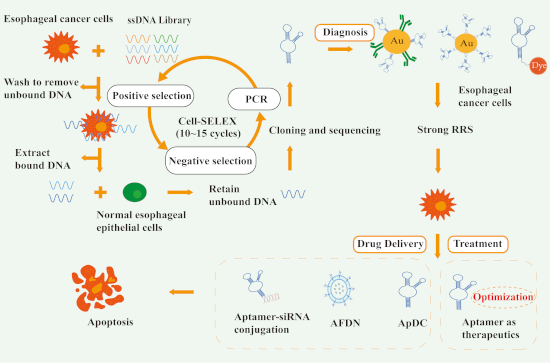
- /mTOR/S6 pathway [5], and SOX2/miR-30e/USP4/SMAD4/CK2 pathway [6] are important mechanisms promoting the malignant phenotype of cancer cells. Some of the pathogenesis and risk factors of ESCC and EAC are shown in Figure 1. The initial clinical manifestations of both conditions are often nonspecific and
- cancer cells, thereby significantly enhancing tumor-specific drug accumulation. Concurrently, siRNA-mediated silencing of MDR1 effectively suppresses P-gp-mediated drug efflux, overcoming multidrug resistance (MDR) in tumor cells. By integrating active targeting, gene silencing, and chemosensitization
- , this synergistic strategy presents a promising approach to circumvent chemotherapy resistance in cancer treatment. In general, DNA aptamers have higher thermal stability, RNA aptamers are richer in secondary structure, and peptide aptamers are smaller in size and easier to enter cells [29]. Furthermore


Multifunctional anionic nanoemulsion with linseed oil and lecithin: a preliminary approach for dry eye disease
Beilstein J. Nanotechnol. 2025, 16, 1711–1733, doi:10.3762/bjnano.16.120
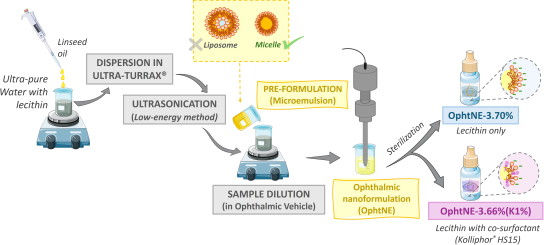
- >75% cell viability in L929 cells and ~10% 2,2-diphenyl-1-picrylhydrazyl (DPPH) antioxidant effect. These findings support the multifunctional potential (cytocompatibility and antioxidant) of sterile OphtNE-3.66%(K1%) for the treatment of DED, emphasizing the need for in vivo studies to ensure its
- analytical grade reagents were used as received from the supplier without further purification. Ultrapure water was obtained from a Milli-Q® (Merck Millipore) direct water purification system (18.2 MΩ·cm) and used for all aqueous solutions. L-929 cells (code 0188) were obtained from the Banco de Células do
- absorbance of the nanoformulation, and Absblank represents the absorbance of the sample without DPPH (sample + ethanol). Cytotoxicity assay L929 fibroblast cells were cultured in RPMI 1640 medium supplemented with 10% (v/v) fetal bovine serum (FBS), 1% (v/v) penicillin–streptomycin, and 1% (v/v) GlutaMAX



Beyond the bilayer: multilayered hygroscopic actuation in pine cone scales
Beilstein J. Nanotechnol. 2025, 16, 1695–1710, doi:10.3762/bjnano.16.119
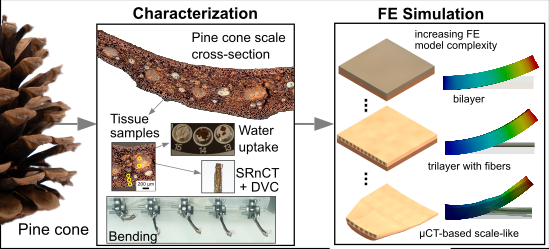
- the bending motion of the scale. One crucial influencing factor is the difference within or between tissues, as Eger et al. [23] highlighted. The authors measured the relative change of moisture content as a function of relative humidity by gravimetric water uptake measurements of the sclereid cells
- tissues. Furthermore, they described a porosity gradient in the sclereid cell layer, without distinguishing between the sclereid cell layer and the brown tissue layer. The more porous adaxial sclereid cells they described are consistent with the earlier description of the brown tissue between the sclereid
- layer and the sclerenchyma fibers [12]. Other approaches have also observed a gradient in the cross-sectional shape of the prosenchymatous cells of sclerenchyma fibers of Pinus elliottii cones and higher tensile strength of the abaxial compared to the adaxial side of the sclerenchyma fibers [18


Ambient pressure XPS at MAX IV
Beilstein J. Nanotechnol. 2025, 16, 1677–1694, doi:10.3762/bjnano.16.118
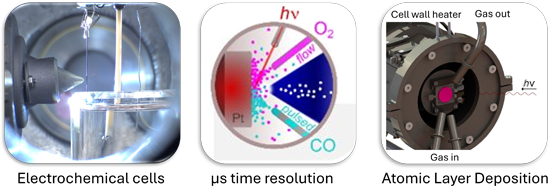
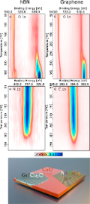
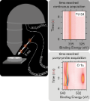
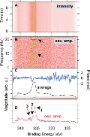
- new research fields with respect to traditional surface science, such as corrosion and battery research, with specifically designed electrochemical cells suitable for APXPS measurements [8]. The SPECIES & HIPPIE beamlines SPECIES is a soft X-ray beamline on the 1.5 GeV ring. It covers a wide photon
- fields of, among others, catalysis research, material characterization, and thin film deposition, utilizing dedicated cells. HIPPIE, on the 3 GeV ring, covers a wider photon energy range than SPECIES (250 to 2500 eV), also with variable polarization [10]. It has two branches, each with its own
- reactions in batteries, fuel cells, corrosion, and electrocatalysis. With the advent of ambient pressure setups and specially designed sample environments, APXPS now allows for direct probing of the chemical and electronic structure at solid–liquid interfaces under realistic conditions. This capability





Prospects of nanotechnology and natural products for cancer and immunotherapy
Beilstein J. Nanotechnol. 2025, 16, 1644–1667, doi:10.3762/bjnano.16.116
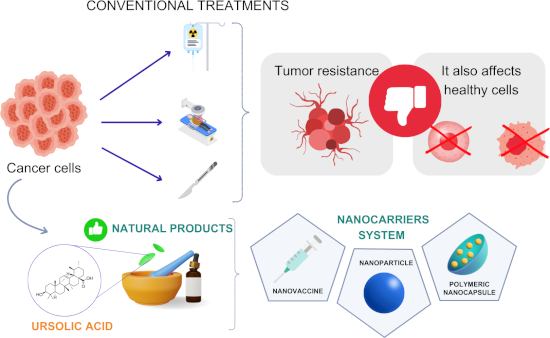
- agents. Consequently, the combination of natural products with nanotechnology holds significant therapeutic potential. Keywords: cancer; immunotherapy; nanotechnology; natural products; patent; review; Introduction Cancer is a disease characterized by the uncontrolled proliferation of abnormal cells
- tumor cells. This highly specialized network includes cells such as T lymphocytes, dendritic cells, macrophages, and natural killer (NK) cells, as well as soluble mediators like cytokines and chemokines, which regulate inflammatory and adaptive responses [5][6]. However, cancer often employs strategies
- T-lymphocyte associated protein 4), which inhibit T-cell activation, allowing cancer cells to escape immune-mediated destruction [8]. Immunotherapy shows promise as a cancer treatment approach, encompassing strategies such as monoclonal antibodies, immune checkpoint inhibitors, antitumor vaccines


Venom-loaded cationic-functionalized poly(lactic acid) nanoparticles for serum production against Tityus serrulatus scorpion
Beilstein J. Nanotechnol. 2025, 16, 1633–1643, doi:10.3762/bjnano.16.115
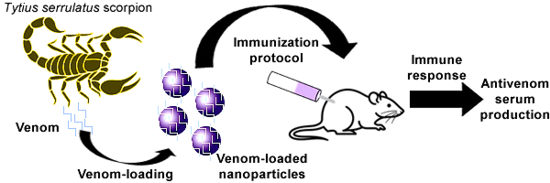
- vitro, creates a challenge for drug delivery systems aiming to effectively target affected tissues or cells [14][15]. Nanocarriers have been widely studied for enabling prolonged circulation and sustained drug release over time, depending on their structural properties [16][17]. Therefore, protein
- carriers, further investigation is required to assess their safety profile. In vitro cytotoxicity assays on relevant cell lines, particularly immune or epithelial cells and long-term biocompatibility studies, including histopathological analysis following repeated administration, will be essential to


Bioinspired polypropylene-based functionally graded materials and metamaterials modeling the mistletoe–host interface
Beilstein J. Nanotechnol. 2025, 16, 1592–1606, doi:10.3762/bjnano.16.113
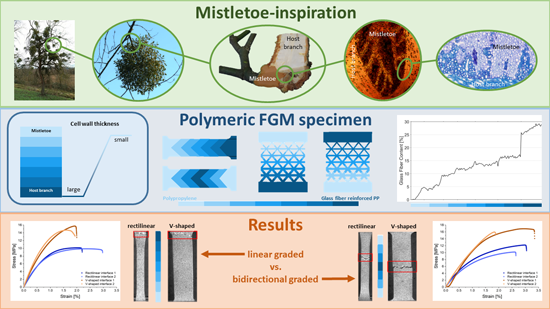
- material with rectilinear interface. Triangular structures were selected for their isotropic properties, which help minimize the impact of loading direction deviations during testing. The metamaterial structure consisted of unit cells with a uniform beam thickness of 1.8 mm (Figure 2G). The effective
- of the unit cells beams (η = L/t) [39]. This equation was used to calculate the beam thicknesses of the three mechanical metamaterials configurations with different gradients of the base material. The triangular metamaterial had a beam length of L = 12.29 mm and a thickness of t =2.0 mm, resulting in


Few-photon microwave fields for superconducting transmon-based qudit control
Beilstein J. Nanotechnol. 2025, 16, 1580–1591, doi:10.3762/bjnano.16.112
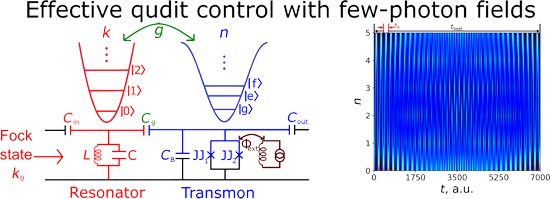
- systems of linear equations, and analyzing heat conduction equations [1][2][3][4][5][6]. The basis for the physical implementation of these computations is a quantum processor consisting of computational cells called qudits, whose states can be represented with satisfactory accuracy in the form of a


Modeling magnetic properties of cobalt nanofilms used as a component of spin hybrid superconductor–ferromagnetic structures
Beilstein J. Nanotechnol. 2025, 16, 1557–1566, doi:10.3762/bjnano.16.110
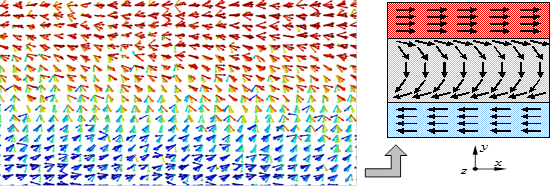
- magnetic heads for recording and reading information, memory cells, and other devices [11] which utilize magnetic properties of materials. Magnetic properties of nanofilms [12][13], in particular cobalt nanofilms, represent an important subject of research in both theoretical and practical fields of
- material structure corresponded to a face-centered cubic crystal lattice (fcc). The size of the system in the first problem was small at 500 atoms (5 × 5 × 5 elementary crystal cells) and was due to the study of a similar system in [22]. The appearance of the modeled cobalt crystallite and the magnetic
- ) nanofilms containing 20 elementary crystal cells along the x and y axes were considered. The thickness of the films in the z-axis direction was varied in the range from 5 to 20 in steps of one elementary crystal cell. As studies show, the magnetic ordering in cobalt nanofilms with a thickness of less than


Nanomaterials for biomedical applications
Beilstein J. Nanotechnol. 2025, 16, 1499–1503, doi:10.3762/bjnano.16.105

- this progress. The use of nanomaterials has notably contributed to advancements in the fields of disease diagnosis, treatment, and prevention. They can closely interact with cells and molecules of the body due to their small size, which helps to diagnose, enhance imaging, and repair damaged tissues
- diagnostics and medical imaging. Using these materials, physicians diagnose diseases earlier and more accurately than before [4]. In tissue engineering, nanofibers are being used to develop scaffolds to promote the proliferation of cells. These scaffolds aid patients suffering from chronic wounds as they
- promote the healing of damaged tissues or organs [5]. Photothermal treatments are also possible with nanomaterials, as specially prepared particles can heat up and destroy cancer cells when exposed to light [6]. Moreover, nanomaterials can be incorporated into implants and prosthetics for enhanced
Laser processing in liquids: insights into nanocolloid generation and thin film integration for energy, photonic, and sensing applications
Beilstein J. Nanotechnol. 2025, 16, 1428–1498, doi:10.3762/bjnano.16.104
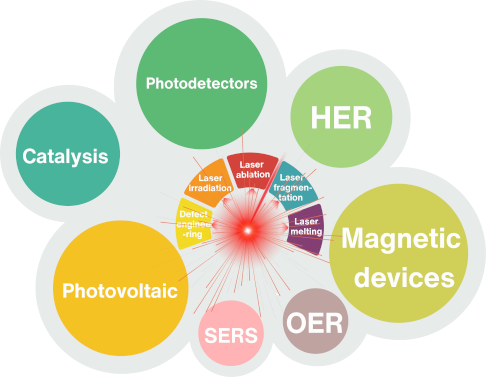
- Raman spectroscopy (SERS) substrates, and solar cells. In this review article, we describe different methods of nanocolloidal synthesis using laser-assisted processes and corresponding thin film fabrication methods, particularly those utilized for device fabrication and characterization. The four
- CuPc films [105]. In order to fabricate a NP/graphene nanocomposite, drops of colloidal solutions from each samples were cast and spin-coated onto graphene substrates to obtain a “starry-sky” morphology, which can be used in fuel cells, sensors, catalysis, and electronic and optical devices [106
- pulsed laser ablation, and used the NPs to fabricate Cu–In composite NPs and Cu(In,Ga)Se2 (CIGS) thin film solar cells through EPD [134][135]. They used cathodic EPD, where the substrate serves as the cathode, to prevent potential oxidation of the metallic NPs and substrate that could occur on the anode






Parylene-coated platinum nanowire electrodes for biomolecular sensing applications
Beilstein J. Nanotechnol. 2025, 16, 1392–1400, doi:10.3762/bjnano.16.101
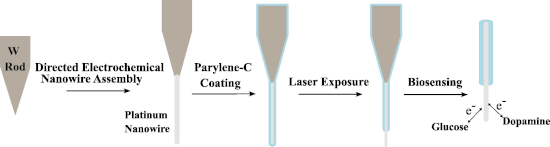
- . developed a glucose sensor using copper nanowires and CNTs, achieving a limit of detection as low as 0.3 nM, highlighting the remarkable sensitivity of CNT-based electrodes [9]. Nevertheless, several studies reported the toxicity of CNTs for tissues and cells including loss of cellular integrity, DNA damage
- advantage makes them suitable for biosensing applications with high spatial resolution involving single cells. The morphology and functionality of the electrodes were characterized through elemental analysis and copper deposition, demonstrating their capability for effective surface modification. Results


Synthesis and antibacterial properties of nanosilver-modified cellulose triacetate membranes for seawater desalination
Beilstein J. Nanotechnol. 2025, 16, 1380–1391, doi:10.3762/bjnano.16.100
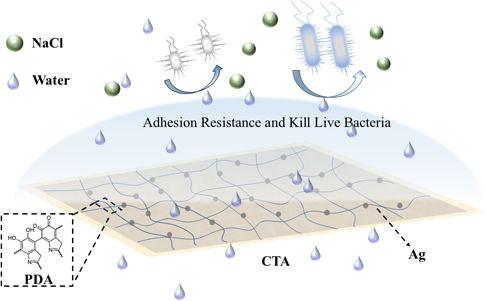
- ) membrane for water desalination. The TiO2-modified membrane demonstrated significant antibacterial activity against Escherichia coli. Under UV light, the survival ratio of bacterial cells reduced to 5% within 4 h; the membrane was completely sterilized within 5 h. This effect is attributed to the


Enhancing the therapeutical potential of metalloantibiotics using nano-based delivery systems
Beilstein J. Nanotechnol. 2025, 16, 1350–1366, doi:10.3762/bjnano.16.98
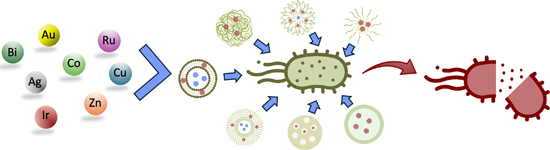
- overcome these problems [24]. Thus, encapsulation systems create a protective environment for metallodrugs, ensuring that they are delivered to the therapeutic site intact and limiting their interaction with healthy cells. In this way, nanoencapsulation systems drastically improve the efficacy and safety
- drug carriers with ligands that bind to specific receptors overexpressed on the surface of the target site [45]. There are notable differences between the surfaces of eukaryotic cells and pathogenic bacteria, which provides obvious advantages in active-targeting strategies. In Gram-positive bacteria
- receptors and ligands, as well as the number of interactions necessary to overcome the energy barrier for cellular uptake. Properly balancing these factors ensures efficient binding and internalization of the nanoparticles by the target cells [50][51]. For example, nanoparticles can be engineered to


Ferroptosis induction by engineered liposomes for enhanced tumor therapy
Beilstein J. Nanotechnol. 2025, 16, 1325–1349, doi:10.3762/bjnano.16.97
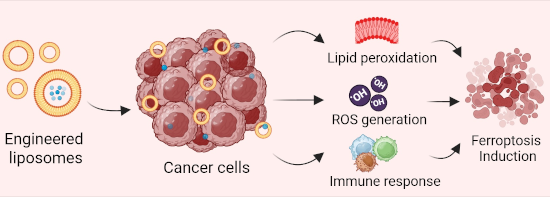
- is defined by irregularities in the processes that control cell division, leading to the survival and rapid spread of cancerous cells. Despite significant advances in medical science and technology, cancer is still a disease with limited therapeutic options. Metastasis and recurrence of cancer lead
- to high disability and mortality, and the exact mechanisms are still unclear. Current chemotherapy faces challenges, including non-specificity, toxicity to healthy cells, the development of stem-like cells, and the progression of multidrug resistance [1]. Drug resistance is a major obstacle in cancer
- therapy and is closely linked to alterations in cancer metabolism [2][3][4]. Changed metabolic pathways allow cancer cells to grow faster than usual, adapt to restricted nutrient conditions, and develop drug resistance [3]. There is still a gap in the efficacy of various cancer therapies despite numerous


Acrocomia aculeata oil-loaded nanoemulsion: development, anti-inflammatory properties, and cytotoxicity evaluation
Beilstein J. Nanotechnol. 2025, 16, 1277–1288, doi:10.3762/bjnano.16.93
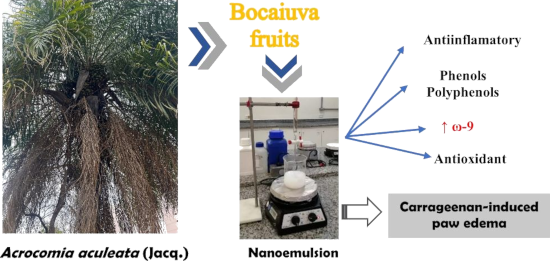
- ) was used as a positive control, whereas cells from the culture without the nanoemulsion served as a negative control. Different concentrations of the nanoemulsion (1.65, 3.30, 6.60, 12.5, 25, 50, and 100 μg/mL) were added to the cultured cells and kept in contact for 24 h. Assays were performed in


Better together: biomimetic nanomedicines for high performance tumor therapy
Beilstein J. Nanotechnol. 2025, 16, 1246–1276, doi:10.3762/bjnano.16.92
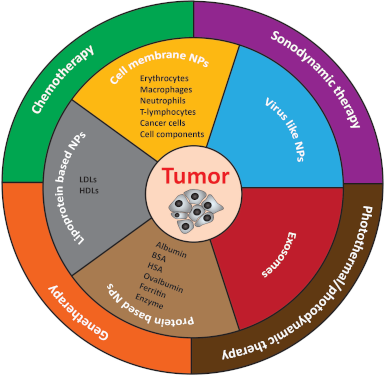
- emerged as an exciting frontier in the field of biomedicine. These nanoparticles can emulate essential biological functions, drawing from an abundant reservoir of cellular capabilities. This includes engaging in biological binding, precise homing to tumor sites, and interaction with immune cells. These
- utility, biomimetic nanoparticles hold great promise for advancing the field of cancer treatment. Keywords: biomimetic nanoparticles; homotypic binding; nanomaterials; targeted drug delivery; tumor therapy; Introduction Cancer is a complex disease, which involves numerous cells and their crosstalk with
- surrounding environment, including immunosuppression in T cells via PD-1/PD-L1 axis, recruitment of stem cells via CXCR4/CXCL2 chemokine axis, maturation of immune cells via membrane interactions, and various other physical/chemical interactions, uncover the emergence of cell membrane-based drug delivery






Hydrogels and nanogels: effectiveness in dermal applications
Beilstein J. Nanotechnol. 2025, 16, 1216–1233, doi:10.3762/bjnano.16.90
- , comprising high biocompatibility and three-dimensional conformation. Their structural organization simulates the architecture of living tissues, allowing the flux of nutrients, oxygen, metabolites, and even whole cells. As a result, hydrogels can be molded into body parts, being successfully employed in
- human pulmonary fibroblast derivative, the cells were cultured for seven days in a modified Eagle’s medium and then decellularized by washing several times with PBS. Then a 7% aqueous PVA solution was added to the pulmonary fibroblast derivative. For the cross-linking of the solution, the freeze/thaw
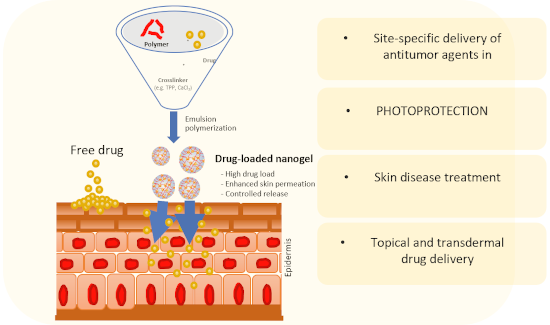
- skin disease treatment, such as psoriasis [185][186], (enabling photoprotection [187]), and atopic dermatitis [62][188]. Hydrogels have also been used for site-specific delivery of antitumor agents in cutaneous tumor cells [189][190] as shown in Table 2. Chitosan hydrogels containing nanoencapsulated


Investigation of the solubility of protoporphyrin IX in aqueous and hydroalcoholic solvent systems
Beilstein J. Nanotechnol. 2025, 16, 1209–1215, doi:10.3762/bjnano.16.89
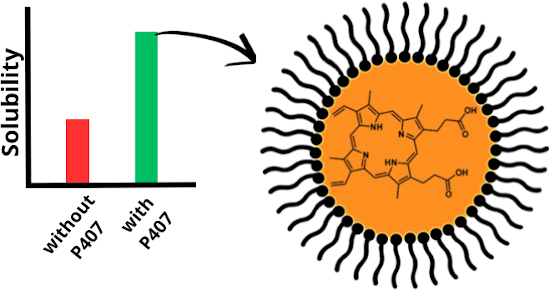
- , at a specific wavelength, PpIX absorbs energy and transfers it to molecular oxygen, generating reactive oxygen species (ROS). These ROS are highly toxic to cells, inducing oxidative damage in various biomolecules such as lipids, proteins and DNA, leading to cell death [6][7]. However, PpIX and other


Chitosan nanocomposite containing rotenoids: an alternative bioinsecticidal approach for the management of Aedes aegypti
Beilstein J. Nanotechnol. 2025, 16, 1197–1208, doi:10.3762/bjnano.16.88
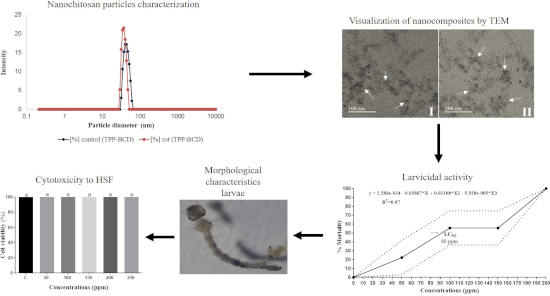
- , even when delivered via nanocomposites. The cytotoxicity analysis of natural rotenoids to HSF cells revealed no statistically significant differences in cell viability between the control group and the treatments with either in natura rotenoids or the CS/TPP-β-CD–rot nanocomposite (Figure 7; p > 0.05
- delivery system is biocompatible with HSF cells. Therefore, both free rotenoids and the CS/TPP-BCD rot formulation are safe for use at the tested concentration. Previous studies reported that synthetic insecticides, such as type II pyrethroids (deltamethrin, cyphenothrin, λ-cyhalothrin, cyfluthrin
- to rotenoids and to the CS/TPP–β-CD–rot nanocomposite was evaluated using the 3-(4,5-dimethylthiazol-2-yl)-2,5-diphenyltetrazolium bromide (MTT) assay. The cells were cultured in 96-well plates at a density of 3 × 10⁵ cells/mL. After adherence, the cells were treated with either in natura rotenoids