Search results
Search for "coatings" in Full Text gives 333 result(s) in Beilstein Journal of Nanotechnology. Showing first 200.
Nanocarriers and macrophage interaction: from a potential hurdle to an alternative therapeutic strategy
Beilstein J. Nanotechnol. 2025, 16, 97–118, doi:10.3762/bjnano.16.10

- to protect their cargo, promote extravasation, and reach the target tissue effectively. Fluid forces can strip NCs of their surface coatings, reducing their ability to adhere to vessel walls, an essential step for extravasation into the parenchyma of target tissues. Particles larger than 200 nm and
- influenced by the molar ratio between ionizable lipids and mRNA nucleotides; thus, it protects the nucleic acid and promotes efficient in vivo delivery [54]. In summary, combining physicochemical modifications, surface coatings, and immune evasion techniques can significantly enhance the therapeutic


Characterization of ZnO nanoparticles synthesized using probiotic Lactiplantibacillus plantarum GP258
Beilstein J. Nanotechnol. 2025, 16, 78–89, doi:10.3762/bjnano.16.8
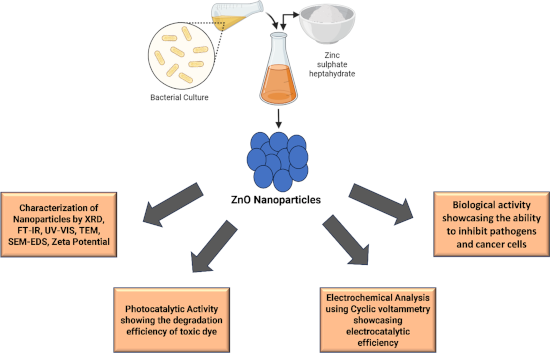
- , suggesting their potential utility in environmental contexts and as biomedical coatings. Conclusion This work effectively proved the use of native lactic acid bacteria as capping and reducing agents in the green synthesis of ZnO NPs. The NPs exhibited potential structural, optical, and biological qualities



Bioinspired nanofilament coatings for scale reduction on steel
Beilstein J. Nanotechnol. 2025, 16, 25–34, doi:10.3762/bjnano.16.3

- . This reduction is attributed to altered flow dynamics near the super-hydrophobic surface, inhibiting nucleation and growth of scale. Our findings highlight the potential of bioinspired SNF coatings to enhance the performance and longevity of steel surfaces in industrial environments. Keywords
- SNFs. These filaments have been developed for coatings on polymers [10][11][12], textiles [12][13][14][15][16][17], aluminium and titanium [11][12], and glass [11][12][13][18][19], to replicate the water-repelling effects observed in nature [13][18][20][21]. Coatings with nano- or micrometer-sized
- stability and hydrophobicity of these bioinspired nanofilaments on steel, a key material for industrial antiscaling applications that has not been investigated in this context. We test whether SNF coatings can prevent scaling of steel surfaces. In the following session, we describe a reliable procedure to


Biomimetic nanocarriers: integrating natural functions for advanced therapeutic applications
Beilstein J. Nanotechnol. 2024, 15, 1619–1626, doi:10.3762/bjnano.15.127

- with cancer treatment offer numerous advantages, including immune evasion, targeting behavior, specific site accumulation, targeted delivery of drugs or genes, and reduced side effects. Studies involving inorganic nanocarriers with cell membrane coatings (CMC-NPs) have highlighted the importance of the
- relevant and challenging human diseases. This study demonstrates that mimicking cell membranes, particularly those of immune system cells, offers significant benefits by reducing the degradation of biomaterials by the host. The use of biocompatible coatings not only enhances treatment efficacy but also


The round-robin approach applied to nanoinformatics: consensus prediction of nanomaterials zeta potential
Beilstein J. Nanotechnol. 2024, 15, 1536–1553, doi:10.3762/bjnano.15.121
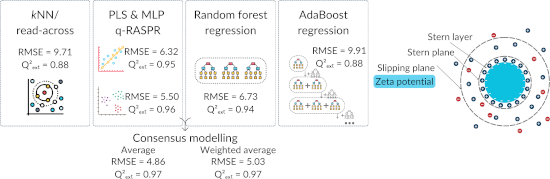
- CuO) were represented as 0 and metals (e.g., Ag, Au, and Cu) were represented as 1. For the shape group descriptor, the string names “Spherical”, “Square Plates” and “Rod” were one-hot encoded. Lastly, out of 22 unique coatings, five categories were created (sodium citrate, ʟ-arginine, PVP, uncoated


Polymer lipid hybrid nanoparticles for phytochemical delivery: challenges, progress, and future prospects
Beilstein J. Nanotechnol. 2024, 15, 1473–1497, doi:10.3762/bjnano.15.118
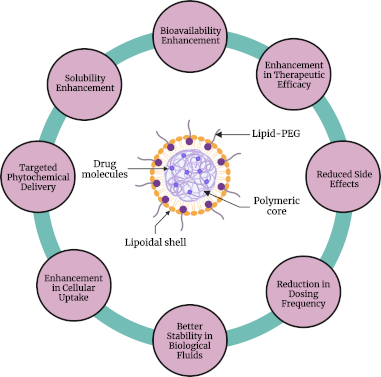
- PLHNPs. Another surface modification strategy involves the addition of stealth coatings, such as PEG, to the nanoparticle surface. A schematic representation for the development of PEGylated PLHNPs is depicted in Figure 4A. PEGylation involves attaching PEG chains to the surface of the nanoparticles


A biomimetic approach towards a universal slippery liquid infused surface coating
Beilstein J. Nanotechnol. 2024, 15, 1376–1389, doi:10.3762/bjnano.15.111
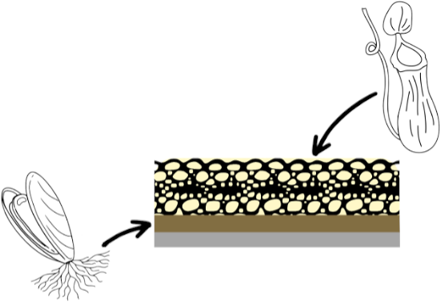
- surface coatings based on the slick surfaces of carnivorous pitcher plants (Nepenthes), termed slippery liquid-infused porous surfaces (SLIPS). This study introduces a simplified method to produce SLIPS using a polydopamine (PDA) anchor layer, inspired by mussel adhesion. SLIPS layers were formed on
- adhesion to the surface. This hemocompatibility work suggests that PDA SLIPS coatings slow or prevent clotting, but the observation of both FXII activation and the presence of adherent and activated platelets at the PDA SLIPS samples imply that this formulation of a SLIPS coating is not completely
- biomimetic approach to surface passivation involves a series of surface coatings based on the slick surfaces of carnivorous pitcher plants (Nepenthes), termed slippery liquid-infused porous surfaces (SLIPS) [4]. When wetted, the slippery surfaces on the plant cause prey to slide into the bottom of the




Hymenoptera and biomimetic surfaces: insights and innovations
Beilstein J. Nanotechnol. 2024, 15, 1333–1352, doi:10.3762/bjnano.15.107
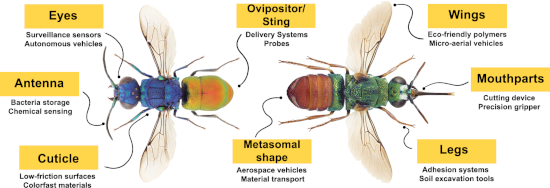
- of some species reduce friction and wear, inspiring the development of low-friction materials and coatings. By mimicking these natural textures, it is possible to create synthetic materials that exhibit similar friction-reducing properties, leading to significant advancements in mechanical efficiency
- and durability. For instance, low-friction coatings inspired by Hymenoptera cuticles can be applied to materials to reduce wear and tear, thereby enhancing performance, and extending the lifespan of the material. Surface roughness can have beneficial effects on the overall aerodynamic characteristics
- of artificial surfaces, such as rough coatings on high-speed trains [12], dimples on golf balls [13], and shark skin denticles on aircrafts [14]. Some micromachines can also benefit from micro- and nanostructures that create roughness on surfaces and influence aerodynamics and heat transfer [15]. The




Interface properties of nanostructured carbon-coated biological implants: an overview
Beilstein J. Nanotechnol. 2024, 15, 1041–1053, doi:10.3762/bjnano.15.85
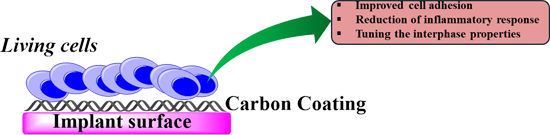
- can be achieved through several processes. Among them, the production of specialized coatings based on carbon-based materials stands very promising. The use of carbon coatings allows one to simultaneously fine-tune tribological, mechanical, and chemical properties. Here, we review applications of
- nanostructured carbon coatings (nanodiamonds, carbon nanotubes, and graphene-related materials) for the improvement of the overall properties of medical implants. We are focusing on biological interactions, improved corrosion resistance, and overall mechanical properties, trying to provide a complete overview
- within the field. Keywords: biocompatibility; carbon nanotubes; coatings; graphene; nanodiamonds; surfaces; Introduction For centuries, the simple manipulation of natural resources has represented the only available strategy for the realization of artifacts, buildings, and innovations, until the



A review on the structural characterization of nanomaterials for nano-QSAR models
Beilstein J. Nanotechnol. 2024, 15, 854–866, doi:10.3762/bjnano.15.71
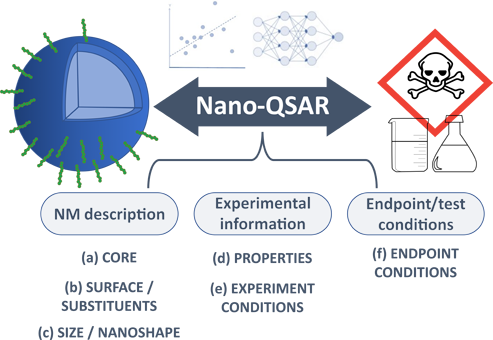
- descriptor of the category “a” or “b” in our classification). Kudrinskiy et al. also modelled silver nanoparticles with different coatings without introducing directly the capping agent in the model, but only by observing the differences in size, reactivity, and electric behavior of the nanoforms with


Effect of repeating hydrothermal growth processes and rapid thermal annealing on CuO thin film properties
Beilstein J. Nanotechnol. 2024, 15, 743–754, doi:10.3762/bjnano.15.62
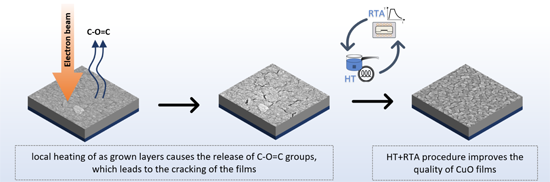
- -cleaning [1], anti-corrosion [2], and antibacterial [3] coatings. Like other CuO nanostructures, thin films also show potential for applications in photovoltaic cells [4][5], lithium-ion batteries [6], supercapacitors [7], gas sensors [8], and biosensors [9]. Furthermore, the literature reports their




AFM-IR investigation of thin PECVD SiOx films on a polypropylene substrate in the surface-sensitive mode
Beilstein J. Nanotechnol. 2024, 15, 603–611, doi:10.3762/bjnano.15.51
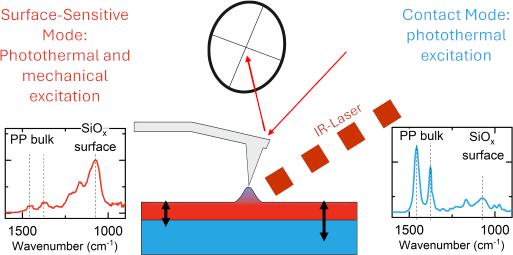
- films on polypropylene substrates. Polypropylene is widely used as packaging material [11] and in other industrial applications [12][13][14]; however, it is commonly known for its poor gas barrier properties [11][13]. Therefore, silicon oxide coatings are used to improve the gas barrier properties [13
- ]. In this study thin coatings of SiOx were deposited by plasma-enhanced chemical vapor deposition (PECVD) in an oxygen-rich plasma process with hexamethyldisiloxane (HMDSO) used as monomer. With this process, the thickness of the coating can be controlled and homogeneous films can be produced [15
- technique. The signal of the 5 nm thin SiOx layer has increased enormously. These measurements show the high sensitivity of this technique by detecting even 5 nm ultra-thin coatings on top of a polymeric substrate. This effect could have been supported by the choice of substrate material as shown in the


Heat-induced morphological changes in silver nanowires deposited on a patterned silicon substrate
Beilstein J. Nanotechnol. 2024, 15, 435–446, doi:10.3762/bjnano.15.39
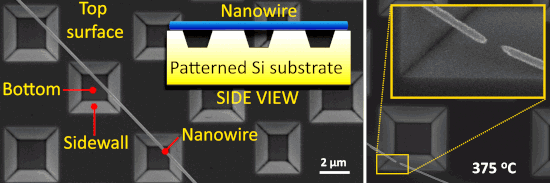
- instability and energy minimization via spheroidization [28][31]. It has been demonstrated that various coatings can effectively protect metallic NWs by suppressing surface diffusion [32][33][34]. The kinetics of diffusive processes in NWs are tightly related to the surface energies of the system. Both Ag and


In situ optical sub-wavelength thickness control of porous anodic aluminum oxide
Beilstein J. Nanotechnol. 2024, 15, 126–133, doi:10.3762/bjnano.15.12
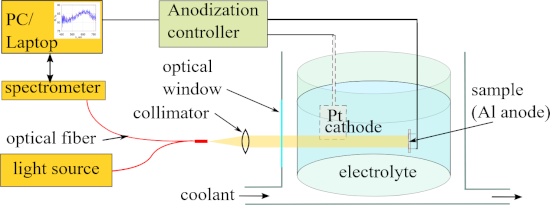
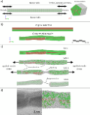
- microscopy and is particularly valuable for the small-scale production of PAAO-based functional optical coatings. Keywords: electrochemistry; ellipsometry; porous anodic alumina; spectroscopy; thin films; Introduction Porous anodic aluminum oxide (PAAO) is a versatile self-organized material with
- applications in many fields of science and technology, including nanofabrication [1], optical coatings [2], sensing [3][4][5], and others [6]. Many synthesis protocols have been developed for precise control of the pore structure of PAAO [7], which allow for the creation of nanoscale patterns for various types
- monitoring of PAAO layer growth and the termination of the process at a desired PAAO thickness for reliable fabrication of subwavelength optical coatings with thickness below 300 nm. Results and Discussion The obtained PAAO layer structure (Figure 1a) with a hexagonal pore arrangement, ≈100 nm center-to


Low temperature atomic layer deposition of cobalt using dicobalt hexacarbonyl-1-heptyne as precursor
Beilstein J. Nanotechnol. 2023, 14, 951–963, doi:10.3762/bjnano.14.78
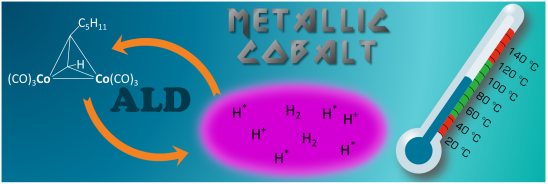
- of layer thickness while achieving better conformal coatings than any other deposition technique. The commonly used ALD database “Atomic Limits” [7] (based on the reviews of Puurunen [8], Miikkulainen et al. [9], Knoops et al. [10], and Mackus et al. [11]) currently lists 23 different ALD processes


Prediction of cytotoxicity of heavy metals adsorbed on nano-TiO2 with periodic table descriptors using machine learning approaches
Beilstein J. Nanotechnol. 2023, 14, 939–950, doi:10.3762/bjnano.14.77
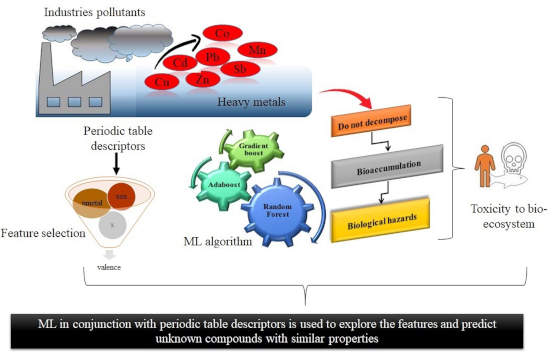
- derivatives [15], 51 manufactured nanoparticles with varying core metals, coatings, and surface attachments [16], and 80 surface-modified multiwall carbon nanotubes have been reported. Another approach, namely nano-read-across (nano-RA) [17], has been used to determine the cytotoxicity of unknown


Antibody-conjugated nanoparticles for target-specific drug delivery of chemotherapeutics
Beilstein J. Nanotechnol. 2023, 14, 912–926, doi:10.3762/bjnano.14.75
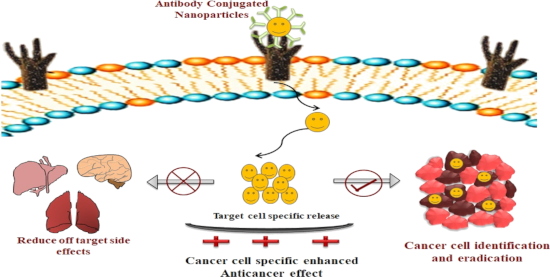
- or elimination of NP targeting capability by shielding or completely covering relevant functional groups. To block the adhesion of corona proteins on NP surfaces, various strategies have been established using surface barrier layers, such as polymer, protein, or biomimetic coatings, with the ultimate



Carboxylic acids and light interact to affect nanoceria stability and dissolution in acidic aqueous environments
Beilstein J. Nanotechnol. 2023, 14, 762–780, doi:10.3762/bjnano.14.63
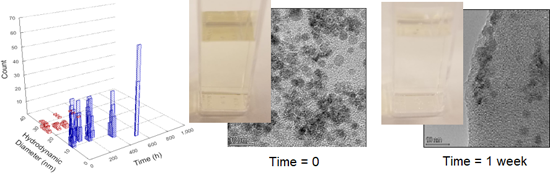
- ; environmentally mediated dissolution; nanoceria; Introduction Background Ceria nanomaterials have many applications, including acting as redox catalysts/metal supports [1], sunscreens [2], heat-resistant coatings [3], and much more [4]. Biomedical applications of ceria-based compounds as therapeutics have the
Control of morphology and crystallinity of CNTs in flame synthesis with one-dimensional reaction zone
Beilstein J. Nanotechnol. 2023, 14, 741–750, doi:10.3762/bjnano.14.61
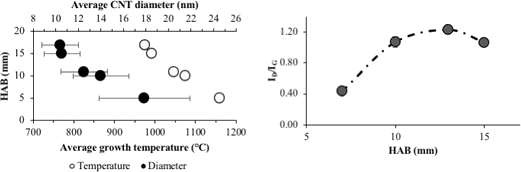
- multi-walled CNTs (MWCNTs) with carboxyl functionalization [3]. The aerospace industry utilizes CNTs with high thermal, chemical, mechanical, and electrical performance as a nanocomposite additive to overcome problems in aircraft coatings, such as corrosion, ice accretion, lightning strike, and erosion


Metal-organic framework-based nanomaterials as opto-electrochemical sensors for the detection of antibiotics and hormones: A review
Beilstein J. Nanotechnol. 2023, 14, 631–673, doi:10.3762/bjnano.14.52
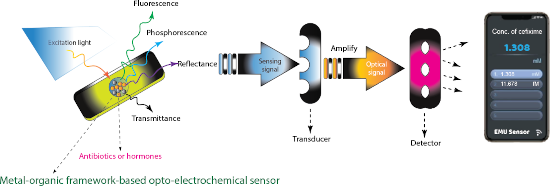


SERS performance of GaN/Ag substrates fabricated by Ag coating of GaN platforms
Beilstein J. Nanotechnol. 2023, 14, 552–564, doi:10.3762/bjnano.14.46
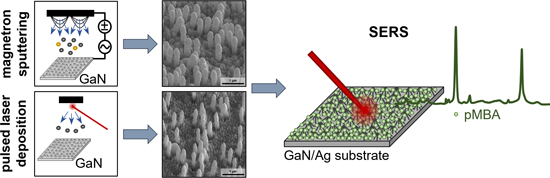
- to the samples fabricated by MS, the surface of the Ag layer obtained by PLD is more developed and structured. As shown in Figure 3, pillars with a Ag layer have shapes similar to wheat ears. The Ag coatings formed on the pillars have preferred growth planes spatially oriented at a specific angle


Conjugated photothermal materials and structure design for solar steam generation
Beilstein J. Nanotechnol. 2023, 14, 454–466, doi:10.3762/bjnano.14.36
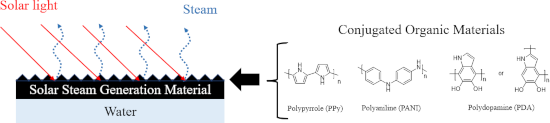
- ][49][50]. In 2021, Zou et al. developed a biodegradable and sustainable bilayer composite for highly efficient solar evaporation based on a photothermally enhanced arginine-doped polydopamine (APDA) and raw wood [47]. In this study, APDA coatings with enhanced photothermal effects were prepared by
- ratio, high porosity, and high mass transport. Therefore, they are often applied to SSG absorbers along with other macrostructures such as membranes and foams [29][52][53][54][55]. One noticeable example is the study of nanofiber-based light-trapping coatings [29]. Ma et al. proposed an ultrasonic spray
- coating method to obtain light-trapping coatings of nanofibers by the copolymerization of dopamine and pyrrole, which can be directly and rapidly synthesized on a polystyrene (PS) foam at room temperature (Figure 9). Due to its excellent wettability, the coating is water permeable and can be directly


Quercetin- and caffeic acid-functionalized chitosan-capped colloidal silver nanoparticles: one-pot synthesis, characterization, and anticancer and antibacterial activities
Beilstein J. Nanotechnol. 2023, 14, 362–376, doi:10.3762/bjnano.14.31
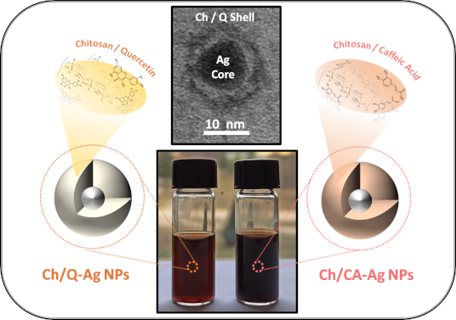
- range of uses such as antibacterial and antimicrobial agents, healthcare-related products, medical device coatings, anticancer agents, optical sensors, anti-inflammatory agents, biocatalysts, cosmetics, and biosensors [41][42][43][44][45]. The combination of polymer-coated metal nanoparticles


A novel approach to pulsed laser deposition of platinum catalyst on carbon particles for use in polymer electrolyte membrane fuel cells
Beilstein J. Nanotechnol. 2023, 14, 190–204, doi:10.3762/bjnano.14.19
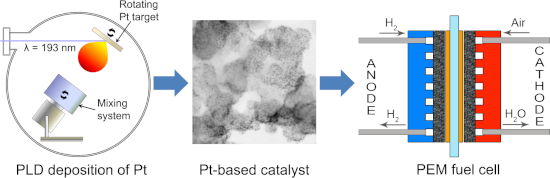
- determine the ratio of Pt-to-C (based on the atomic concentration of the elements) for comparing Pt coatings with reference materials (Table 1) and evaluating the quality of the deposited platinum (Figure 4). The Pt-to-C ratio for the reference catalysts 20% Pt XC-72R and HiSpec 3000 was 0.035 and 0.031



Antimicrobial and mechanical properties of functionalized textile by nanoarchitectured photoinduced Ag@polymer coating
Beilstein J. Nanotechnol. 2023, 14, 95–109, doi:10.3762/bjnano.14.11
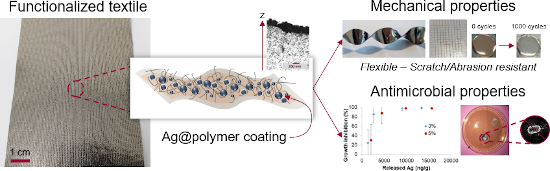
- photoinduced approach was investigated for textile functionalization with a silver@polymer self-assembled nanocomposite. By exposing the photosensitive formulation containing a silver precursor, a photoinitiator, and acrylic monomers to a UV source, highly reflective metallic coatings were obtained directly on
- adhesion, etc.) [32][33]. The deposition techniques are also costly, time-consuming and restrictive (under vacuum, numerous steps, toxic chemicals, etc.), which limits industrial scale-up options. Nanometal-polymer coatings offer an interesting alternative to the aforementioned metallized textiles. Such
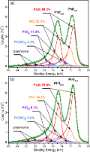
- samples, in order to follow the AgNP synthesis for different exposure times. The obtained spectra are presented in Figure 2, as well as images of the coatings taken for different exposure times. The characteristic surface plasmon resonance band of AgNPs for both coatings is observed around 430 nm and