Search results
Search for "density-functional theory" in Full Text gives 249 result(s) in Beilstein Journal of Nanotechnology. Showing first 200.
Reconstruction of a 2D layer of KBr on Ir(111) and electromechanical alteration by graphene
Beilstein J. Nanotechnol. 2021, 12, 432–439, doi:10.3762/bjnano.12.35
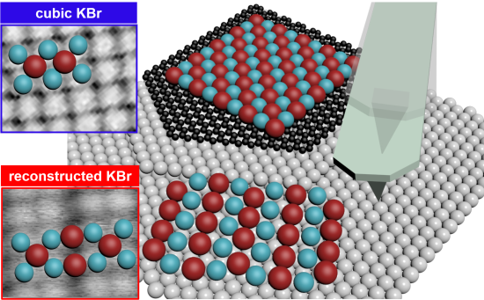
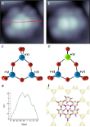
- reconstruction of a two-dimensional layer of KBr on an Ir(111) surface is observed by high-resolution noncontact atomic force microscopy and verified by density functional theory (DFT). The observed KBr structure is oriented along the main directions of the Ir(111) surface, but forms a characteristic double-line
- temperature and density functional theory (DFT) calculations. The results suggest that this particular reconstruction of KBr occurs on Ir(111), due to a specific correlation of the lattice parameter. When deposited on a single layer of graphene on the same substrate, the topography of the KBr islands returns
- answer, density functional theory (DFT) calculations have been performed to conclude on the observed structure. As a fundamental consideration, the lattice match for the orientation of KBr to fit the direction of Ir(111) due to was used and several possible periodicities have been considered as


TiOx/Pt3Ti(111) surface-directed formation of electronically responsive supramolecular assemblies of tungsten oxide clusters
Beilstein J. Nanotechnol. 2021, 12, 203–212, doi:10.3762/bjnano.12.16
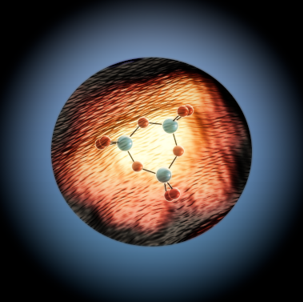
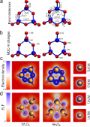
- supramolecular structures. It is noteworthy that individual W3O9 clusters, according to previous density functional theory (DFT) calculations [11], are characterized by the most stable six-membered ring structure with D3h symmetry. It consists of oxygen-bridged tungsten atoms with two additional terminal oxygen
- calculated values based on the used deposition rate. Tests with a varied deposition rate showed no significant impact on the cluster adsorption behavior. Density functional theory simulations The simulations of W3O9 and W3O8 clusters were performed using the AMS suite [31]. The geometry optimization and



ZnO and MXenes as electrode materials for supercapacitor devices
Beilstein J. Nanotechnol. 2021, 12, 49–57, doi:10.3762/bjnano.12.4
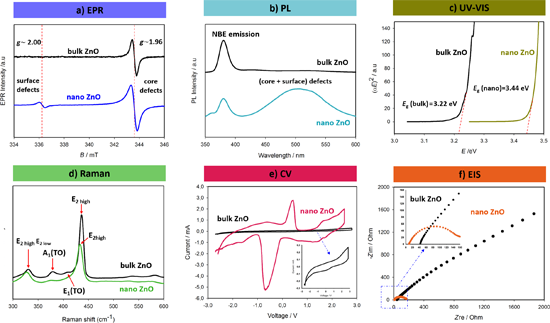
- deconvoluted into several peaks and each maximum of these peaks is assigned to one type of emission. Sometimes the emission energies are matched with defect formation energies calculated using first-principle density functional theory. This approach has many problematic issues. First, of all, synthesis routes
Molecular dynamics modeling of the influence forming process parameters on the structure and morphology of a superconducting spin valve
Beilstein J. Nanotechnol. 2020, 11, 1776–1788, doi:10.3762/bjnano.11.160
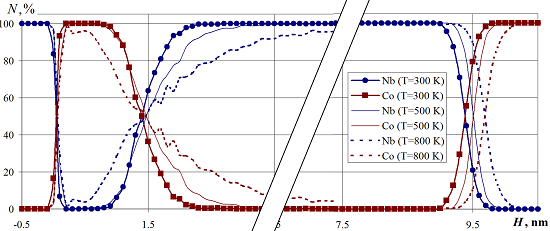
- the nanosystem. There are many possible choices for the type of potential, but recently, due to its accuracy and adequacy, many-particle force fields have gained great popularity. In this work, we used the potential of the modified embedded-atom method (MEAM) which is based on density functional
- theory (DFT). In this method, the resulting potential of the nanosystem is represented as the sum of the energy contributions of the individual atoms, and the contributions of pair and multielement interactions are considered separately. Thus, where Ui(r) is the potential of an individual atom, affecting


PTCDA adsorption on CaF2 thin films
Beilstein J. Nanotechnol. 2020, 11, 1615–1622, doi:10.3762/bjnano.11.144
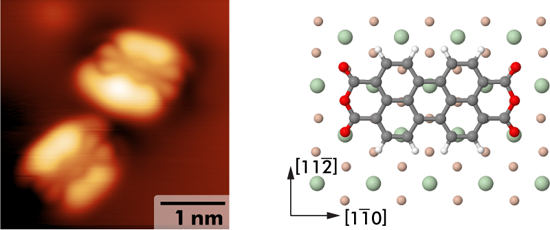
- (111) surface with deposition on thicker CaF2/CaF1/Si(111) films. The identification of mostly single molecules on the CaF1/Si(111) interface layer is explained by the presence of atomic-size defects within this layer. Geometry-optimisation calculations using density functional theory reveal a geometry
- theoretically modelled using density functional theory (DFT). A prominent difference of the molecular properties on the different surface areas is the presence of mostly single molecules in CaF1/Si(111) regions, while ultrasmall molecular assemblies are experimentally observed on thicker CaF2 films. A rather
- -tracking system [30]. Image data were acquired in constant-current or constant-height mode while applying a sample bias Ub. Gwyddion [31] was used for the image data analysis. Density functional theory calculations were performed using cp2k (http://www.cp2k.org) [32] and parameters similar to previous


Detecting stable adsorbates of (1S)-camphor on Cu(111) with Bayesian optimization
Beilstein J. Nanotechnol. 2020, 11, 1577–1589, doi:10.3762/bjnano.11.140
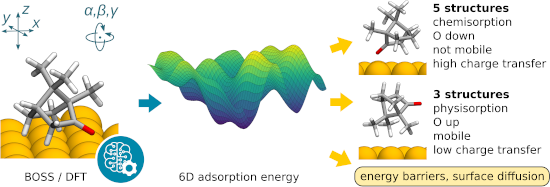
- Bayesian Optimization Structure Search (BOSS) method as an efficient solution for identifying the structure of non-planar adsorbates. We apply BOSS with density-functional theory simulations to detect the stable adsorbate structures of (1S)-camphor on the Cu(111) surface. We identify the optimal structure
- properties, and ultimately allow us to tune the functionality of advanced materials. Keywords: Bayesian optimization; camphor; Cu(111); density-functional theory; electronic structure; organic surface adsorbates; physical chemistry; structure search; surface science; Introduction Current frontier
- fast to compute, but they cannot accurately model hybrid materials, in which atomic interactions often feature a mixture of covalent and dispersive bonding, with charge transfer and polarization effects. Instead, we must employ quantum mechanical methods, such as density-functional theory (DFT) [12][13


Adsorption and self-assembly of porphyrins on ultrathin CoO films on Ir(100)
Beilstein J. Nanotechnol. 2020, 11, 1516–1524, doi:10.3762/bjnano.11.134
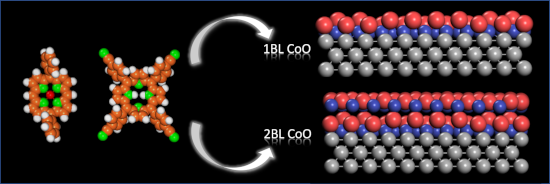
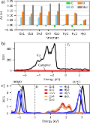
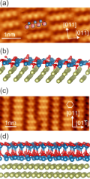
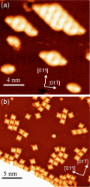
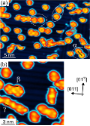
- films on Ir(100) by scanning tunneling microscopy (STM) and density functional theory (DFT). The two substrates differ greatly with respect to their structural and potential-energy landscape corrugation with immediate consequences for adsorption and self-assembly of the molecules studied. On both films




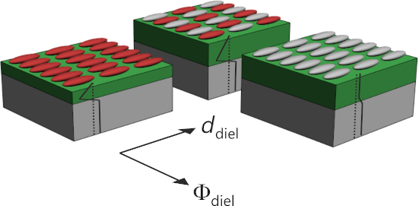
Controlling the electronic and physical coupling on dielectric thin films
Beilstein J. Nanotechnol. 2020, 11, 1492–1503, doi:10.3762/bjnano.11.132
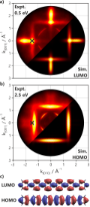
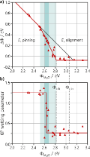
- ]. It should be noted that the occupation of the LUMO is predicted to reduce the torsional angle in the molecule, given that it has a bonding character with respect to the phenyl rings (see Figure 3c) [33]. However, this is not a sufficient condition for planarization. Density functional theory (DFT
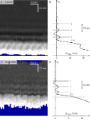
- angle of 40°. The experimental maps (top left of a and b) are shown in comparison to the maps calculated from the density functional theory orbitals (c) for two orthogonally oriented planar 6P molecules of the LUMO (bottom right of a) and the HOMO (bottom right of b). The geometry for the maximum LUMO




Self-assembly and spectroscopic fingerprints of photoactive pyrenyl tectons on hBN/Cu(111)
Beilstein J. Nanotechnol. 2020, 11, 1470–1483, doi:10.3762/bjnano.11.130
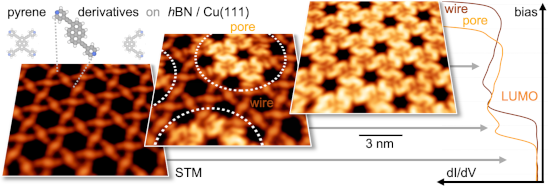
- characterizing a family of pyridin-4-ylethynyl-functionalized pyrene derivatives in different environments. UV–vis measurements in toluene solutions revealed absorption at wavelengths consistent with density functional theory (DFT) calculations, while emission experiments showed a high fluorescence quantum yield




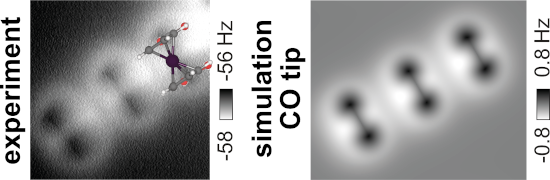
Protruding hydrogen atoms as markers for the molecular orientation of a metallocene
Beilstein J. Nanotechnol. 2020, 11, 1432–1438, doi:10.3762/bjnano.11.127
- ), Cu(110), and Cu3N/Cu(110) surfaces [20] as well as on the insulator surfaces calcite(104) [21] and CaF2(111) [22]. An eclipsed ferrocene conformation was found to be predominant on the metallic surfaces [20] and on calcite(104) [21]. On CaF2(111) surfaces, density functional theory (DFT) calculations
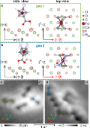


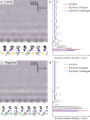
![[Graphic 10]](/bjnano/content/inline/2190-4286-11-127-i10.svg?max-width=637&scale=1.18182) row of FDCA molecules in geo 2. (a–c) Constant-height frequency-shi...
row of FDCA molecules in geo 2. (a–c) Constant-height frequency-shi...
Atomic defect classification of the H–Si(100) surface through multi-mode scanning probe microscopy
Beilstein J. Nanotechnol. 2020, 11, 1346–1360, doi:10.3762/bjnano.11.119
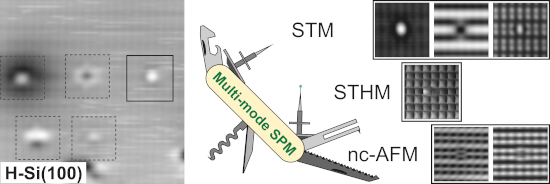
- will foster further investigation with more robust theoretical frameworks such as by density functional theory. Results and Discussion SPM imaging modes The variability observed in differing scanning probe imaging modes originates from the applied feedback mode, different tunnelling parameters, or the



Structural and electronic properties of SnO2 doped with non-metal elements
Beilstein J. Nanotechnol. 2020, 11, 1321–1328, doi:10.3762/bjnano.11.116
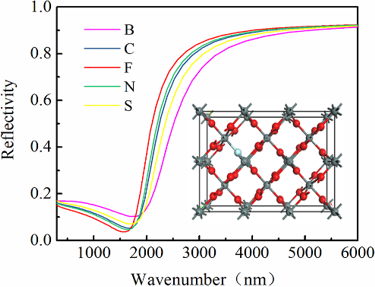
- reflectivity in the infrared region, and the reflectance of the crystals doped with N, C, S, and B decreased sequentially. Based on this theoretical calculations, F-doped SnO2 is found to be the best photoelectric material for preparing low-emissivity coatings. Keywords: density functional theory (DFT); doped
- dope SnO2. The calculations were carried out with the CASTEP software. In this paper, density functional theory (DFT) is used to analyze electronic structure and optical properties of SnO2 doped with non-metal elements. Crystal Structure Model and Calculation Method The SnO2 crystal has a tetragonal
- functional theory, crystal structure, electronic structure, and optical properties of SnO2 doped with non-metal elements were theoretically analyzed. The calculation results confirm that the doping caused the crystal lattice to expand. The F-doped SnO2 lattice has the lowest binding energy and is prone to



Straightforward synthesis of gold nanoparticles by adding water to an engineered small dendrimer
Beilstein J. Nanotechnol. 2020, 11, 1110–1118, doi:10.3762/bjnano.11.95
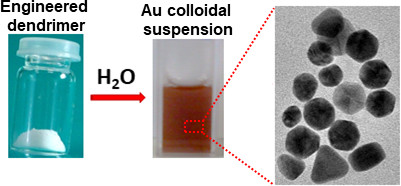
- chemical signal. In addition, it has been shown that the 2JPP coupling constant values decrease when the electron-withdrawing power of the substituents decreases [55]. The density functional theory (DFT) calculations on free and Au-complexed P=N–P=S linkages have shown that a charge is transferred from the


Monolayers of MoS2 on Ag(111) as decoupling layers for organic molecules: resolution of electronic and vibronic states of TCNQ
Beilstein J. Nanotechnol. 2020, 11, 1062–1071, doi:10.3762/bjnano.11.91
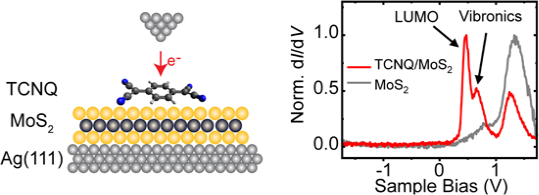
- , we corroborate this assignment by simulating constant-height dI/dV maps of a free, flat-lying molecule. We first calculated the gas-phase electronic structure using density functional theory (DFT) calculations with the B3PW91 functional and the 6-31g(d,p) basis set as implemented in the Gaussian 09


A new photodetector structure based on graphene nanomeshes: an ab initio study
Beilstein J. Nanotechnol. 2020, 11, 1036–1044, doi:10.3762/bjnano.11.88
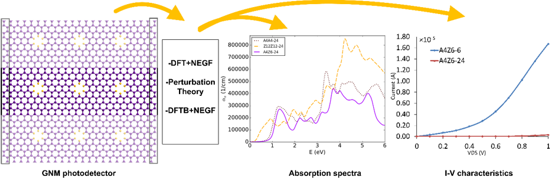
- Abstract Recent experiments suggest graphene-based materials as candidates in future electronic and optoelectronic devices. In this paper, we propose to investigate new photodetectors based on graphene nanomeshes (GNMs). Density functional theory (DFT) calculations are performed to gain insight into


Three-dimensional solvation structure of ethanol on carbonate minerals
Beilstein J. Nanotechnol. 2020, 11, 891–898, doi:10.3762/bjnano.11.74
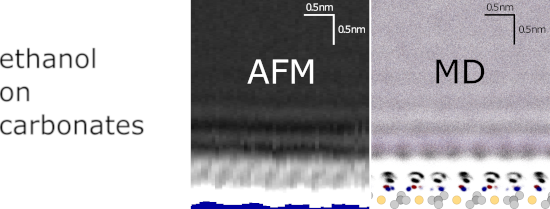
- has been investigated theoretically by using both density functional theory (DFT) [12][13] and molecular dynamics (MD) simulations [14][15][16][17]. It has been found that ethanol molecules strongly bind towards calcite (10.4) terraces – even stronger than water [12][14][16][17]. Ethanol molecules

Adsorption behavior of tin phthalocyanine onto the (110) face of rutile TiO2
Beilstein J. Nanotechnol. 2020, 11, 821–828, doi:10.3762/bjnano.11.67
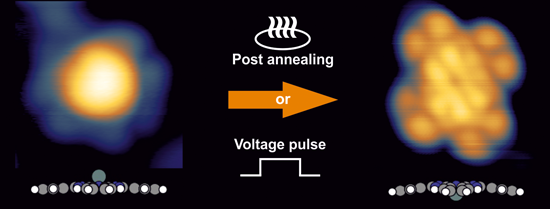
- measurements of single molecules reveal the coexistence of two conformations of molecules on the TiO2 surface. Density functional theory-based simulations (DFT) indicate that the difference originates from the position of the tin atom protruding from the molecule plane. The irreversible switching of Sn-up
- [6], CuPc [7][8][9][10], ZnPc [11], FePc [12] and H2Pc [13]), while their nonplanar counterparts such as SnPc have been rarely probed [14]. Spectroscopy studies or density functional theory (DFT) calculations of molecular species adsorbed onto titanium dioxide can be an arduous task, especially for
- Kα) combined with a Scienta EAC2200 Nanosam 570 analyzer. Ti 2p peaks were used for global calibration of the XPS spectra. A Shirley function was used for background correction during XPS data analysis. Calculations were performed by employing density-functional theory (DFT) using the SIESTA code [15


Hexagonal boron nitride: a review of the emerging material platform for single-photon sources and the spin–photon interface
Beilstein J. Nanotechnol. 2020, 11, 740–769, doi:10.3762/bjnano.11.61
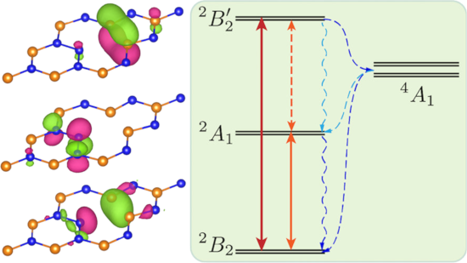
- indirect bandgaps. Bandgap energy values largely varying from 3.6 eV to 7.1 eV have been reported in the literature [84][85][86]. Theoretical calculations for the h-BN band structure also show significant differences in the eV values. Some density functional theory (DFT) in the local-density-approximation





Quantitative determination of the interaction potential between two surfaces using frequency-modulated atomic force microscopy
Beilstein J. Nanotechnol. 2020, 11, 729–739, doi:10.3762/bjnano.11.60
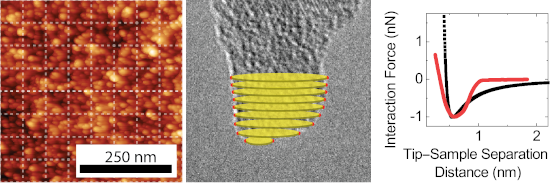
- mechanics models [22][23][24][25] to allow better visualization of surface interactions. While useful insights can be obtained using fully atomistic simulations, such as molecular dynamics simulations or density functional theory, these techniques are impractical for describing larger contacts with a large


Adsorptive removal of bulky dye molecules from water with mesoporous polyaniline-derived carbon
Beilstein J. Nanotechnol. 2020, 11, 597–605, doi:10.3762/bjnano.11.47
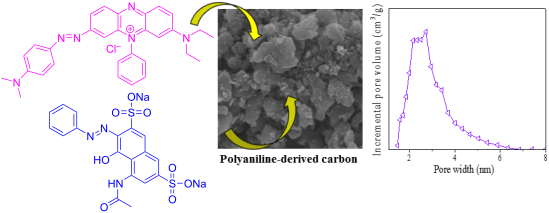
- adsorbents. The pore size distributions were calculated with nonlocal density functional theory (NLDFT). The hydrophobicity of the studied adsorbents was evaluated by measuring the relative quantities of adsorbed water and n-octane at 30 °C with thermogravimetric analysis (TGA, Perkin-Elmer TGA 4000 system


Atomic-resolution imaging of rutile TiO2(110)-(1 × 2) reconstructed surface by non-contact atomic force microscopy
Beilstein J. Nanotechnol. 2020, 11, 443–449, doi:10.3762/bjnano.11.35
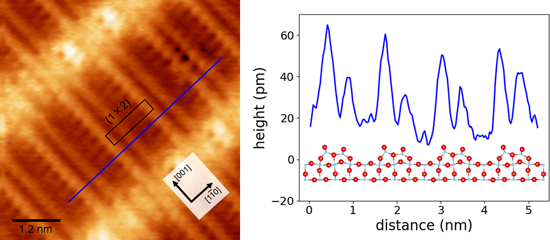
- microscopy (STM) [10][11][12], transmission electron microscopy [13][14], and density functional theory (DFT) [15][16][17][18][19]. These studies have determined many surface properties such as structure, local defects, and adsorption sites. The (1 × 1) surface transforms to the (1 × 2) surface by oxygen


DFT calculations of the structure and stability of copper clusters on MoS2
Beilstein J. Nanotechnol. 2020, 11, 391–406, doi:10.3762/bjnano.11.30
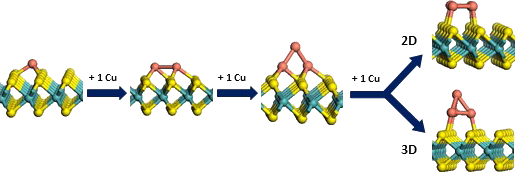
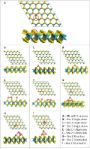
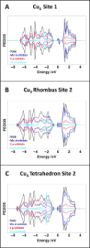
- density functional theory (DFT) study of the adsorption of small Cun (n = 1–4) structures on 2D MoS2 as a model system. We find on a perfect MoS2 monolayer that a single Cu atom prefers an adsorption site above the Mo atom. With increasing nanocluster size the nanocluster binds more strongly when Cu atoms
- character of Cu nanoclusters is preserved. Keywords: copper (Cu); density functional theory (DFT); 2D materials; molybdenum disulfide (MoS2); thin film nucleation; Introduction Since the successful exfoliation of monolayers of graphene by Novoselov et al., 2D materials have gained a large interest in a
- out with density functional theory (DFT) using the Vienna ab initio simulation package (VASP) version 5.4 [34]. It uses 3D periodic boundary conditions and the spin-polarized generalized gradient approximation (GGA) using the Perdew–Burke–Ernzerhof (PBE) approximation to the exchange–correlation

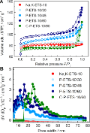
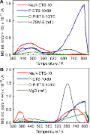
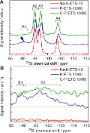
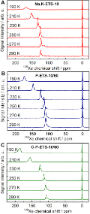
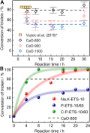
Synthesis of highly active ETS-10-based titanosilicate for heterogeneously catalyzed transesterification of triglycerides
Beilstein J. Nanotechnol. 2019, 10, 2039–2061, doi:10.3762/bjnano.10.200








Improvement of the thermoelectric properties of a MoO3 monolayer through oxygen vacancies
Beilstein J. Nanotechnol. 2019, 10, 2031–2038, doi:10.3762/bjnano.10.199
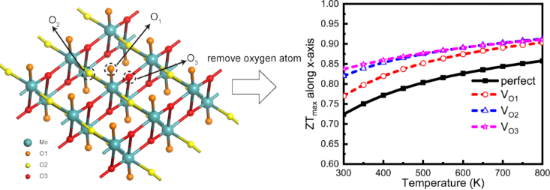
- -principles calculations. The calculations of the electrical properties of the MoO3 monolayer are performed using density functional theory (DFT) as implemented in the Vienna ab initio simulation package (VASP) code [18][19]. We utilize the generalized gradient approximation (GGA) of the Perdew–Burke


First principles modeling of pure black phosphorus devices under pressure
Beilstein J. Nanotechnol. 2019, 10, 1943–1951, doi:10.3762/bjnano.10.190
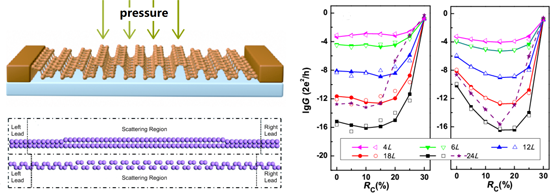
- investigate the quantum transport of pure BP devices within the framework of combination of non-equilibrium Green’s function (NEGF) and density functional theory (DFT) [33][34]. The manuscript is organized as follows: In section “Simulation Details”, we show the pure zigzag and armchair BP nanodevices and