Search results
Search for "dispersions" in Full Text gives 178 result(s) in Beilstein Journal of Nanotechnology.
Cu2O nanoparticles for the degradation of methyl parathion
Beilstein J. Nanotechnol. 2020, 11, 1546–1555, doi:10.3762/bjnano.11.137
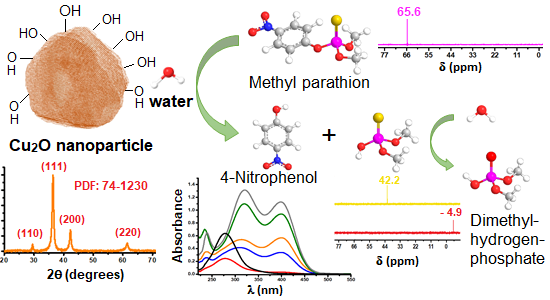
- indicate Miller indices obtained from powder diffraction file (PDF) 74-1230. Color powders for the three different sizes as well as their color in aqueous dispersions with a concentration of 7.5 × 10⁻⁴ M. a) HRTEM image of typical Cu2O NP used in degradation of MP. Particle average size in the range of 16


A few-layer graphene/chlorin e6 hybrid nanomaterial and its application in photodynamic therapy against Candida albicans
Beilstein J. Nanotechnol. 2020, 11, 1054–1061, doi:10.3762/bjnano.11.90
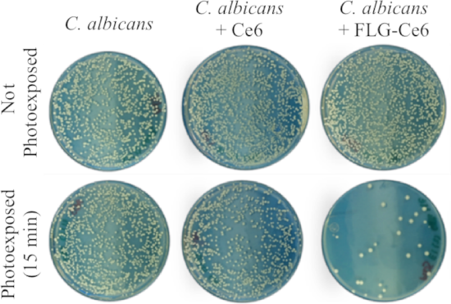
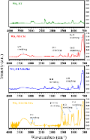
- power impinging on the sample was between 5 and 10 mW, the spatial resolution was 2 cm−1 and the spot size was ≈1 µm2. The samples were recorded from drops of the dispersions deposited on clean silicon wafers and left to dry under vacuum. The chemical composition of the samples was investigated using X


Wet-spinning of magneto-responsive helical chitosan microfibers
Beilstein J. Nanotechnol. 2020, 11, 991–999, doi:10.3762/bjnano.11.83
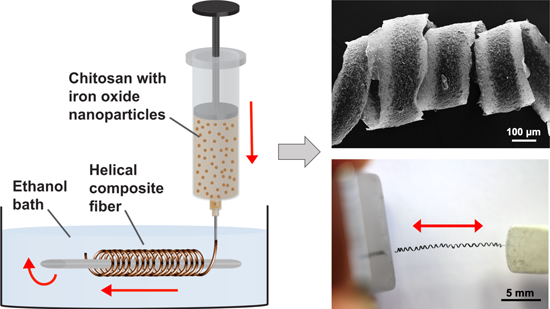
- IOP dispersions in 1% acetic acid using a dynamic light scattering device (ZetaSizer NanoSP, Malvern, United Kingdom). Preparation of chitosan microfibers with IOPs A coagulation bath containing absolute ethanol (VWR, Darmstadt, Germany) was prepared in a polyethylene terephthalate glycol tube (MOCAP


Nickel nanoparticles supported on a covalent triazine framework as electrocatalyst for oxygen evolution reaction and oxygen reduction reactions
Beilstein J. Nanotechnol. 2020, 11, 770–781, doi:10.3762/bjnano.11.62
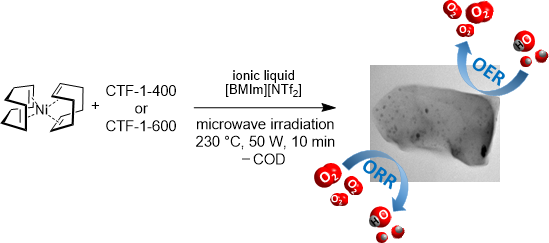
- in a glovebox for 12 h. The mass of the nickel precursor was set to yield 0.5 or 1.0 wt % metal nanoparticles in IL, whereas 1.0 wt % CTF was used for all syntheses in IL dispersions. This dispersion was placed in a microwave (CEM Discover) and irradiated with a power of 50 W to 230 °C for 10 min


Exfoliation in a low boiling point solvent and electrochemical applications of MoO3
Beilstein J. Nanotechnol. 2020, 11, 662–670, doi:10.3762/bjnano.11.52
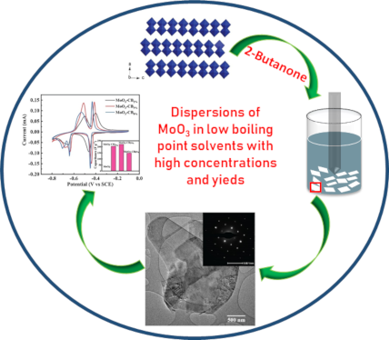
- crucial to exfoliate MoO3 for improved performance in a variety of applications. Liquid-phase exfoliation (LPE) has been shown to be an effective technique for obtaining dispersions of two-dimensional materials. It also offers the advantages of low cost and scalability [2]. The LPE process is initiated
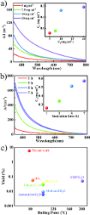
- dimethylformamide are the best solvents [10]. The high boiling point of these dispersions (bp > 150 °C) restrict the usage in flexible devices along with issue that these solvents are also toxic (NFPA 704 health code above 2 [11]). There are reports in literature where MoO3 has been exfoliated in solvents with low
- boiling point, such as isopropyl alcohol (IPA) [5]. Alternative approaches for obtaining MoO3 dispersions in low boiling point solvents have also been reported. For instance, Alsaif et al. have exfoliated MoO3 in mixtures of water and alcohols (methanol, ethanol, IPA) [12]. In these dispersions molybdenum

Understanding nanoparticle flow with a new in vitro experimental and computational approach using hydrogel channels
Beilstein J. Nanotechnol. 2020, 11, 296–309, doi:10.3762/bjnano.11.22
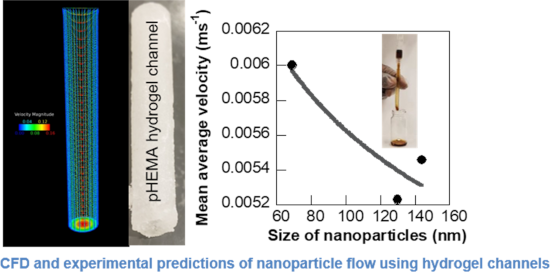
- diffusion and hydrodynamic forces for the flow of these aqueous NP dispersions and additional frictional forces in the NP flow path due to the soft and uneven surface of the hydrogel channels. This size-dependent flow behavior of aqueous NP solutions within soft biomimetic channels is a key finding in terms
- experimental results. A computational analysis was conducted for nanofluid flow through an unbent cylindrical hydrogel channel to further confirm the applicability and accuracy of our experimental results. Two aqueous dispersions of 0.07 mmol PVP/0.005 mmol PEI-coated iron oxide NPs (size: 144 nm) of inlet
- for understanding the mechanisms of NP transport in physiological microenvironments with pHEMA hydrogel channels are the first of its kind, to the best of our knowledge. We discovered that the flow trajectory of aqueous NP dispersions was greatly influenced by the Brownian forces, surrounding fluid


Size effects of graphene nanoplatelets on the properties of high-density polyethylene nanocomposites: morphological, thermal, electrical, and mechanical characterization
Beilstein J. Nanotechnol. 2020, 11, 167–179, doi:10.3762/bjnano.11.14
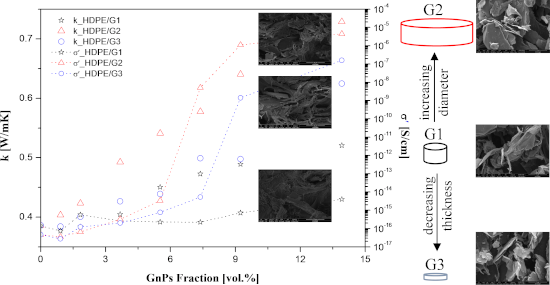
- surfaces of the HDPE/GnP nanocomposites with 5.52 vol % GnPs are shown in Figure 1d, Figure 1e, and Figure 1f to compare their structures. All types of GnPs were randomly and homogeneously distributed throughout the HDPE matrix where these layers separated the GnP nanoflakes. Two different dispersions of


Small protein sequences can induce cellular uptake of complex nanohybrids
Beilstein J. Nanotechnol. 2019, 10, 2477–2482, doi:10.3762/bjnano.10.238
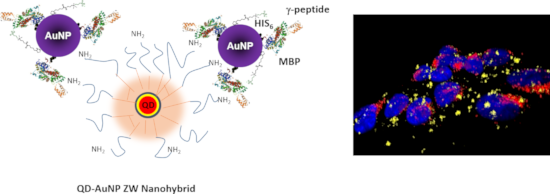
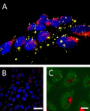
- the bound MBP stays functional [8][23][28]. Further details are available in Supporting Information File 1. After confirming the structural integrity and colloidal stability of the nanohybrids, we then proceeded to probe their interactions with HeLa cell cultures. For this, dispersions made of

Coating of upconversion nanoparticles with silica nanoshells of 5–250 nm thickness
Beilstein J. Nanotechnol. 2019, 10, 2410–2421, doi:10.3762/bjnano.10.231
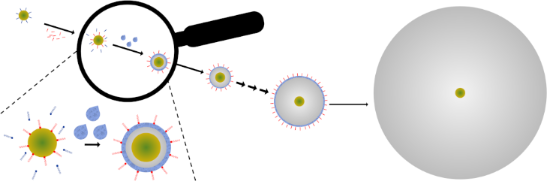
- narrow PDI value of sample C1_5S. The z-average value exceeds the average diameter derived from TEM by (17 ± 5)%. The dispersion has a high colloidal stability due to the highly negative zeta potential of the particles, which is typical for silica dispersions from Stöber-like growth processes containing
- (pore size: 0.2 µm; materials: nylon or polytetrafluoroethylene (PTFE) for particles dispersed in cyclohexane and nylon or regenerated cellulose for particles dispersed in ethanol, Rotilab). Zeta potential measurements of the aqueous dispersions were carried out with a Zetasizer Nano ZS in capillary
- the UCNP samples, 1 mL of the dispersions (c = 5 g/L in cyclohexane for the oleate-coated UCNPs or in ethanol for the silica-coated UCNP) was dried. The dried particles were dissolved in 1 mL of aqua regia for at least 30 min and diluted with at least 5 mL of ultrapure water. The measurements were


Design of a nanostructured mucoadhesive system containing curcumin for buccal application: from physicochemical to biological aspects
Beilstein J. Nanotechnol. 2019, 10, 2304–2328, doi:10.3762/bjnano.10.222
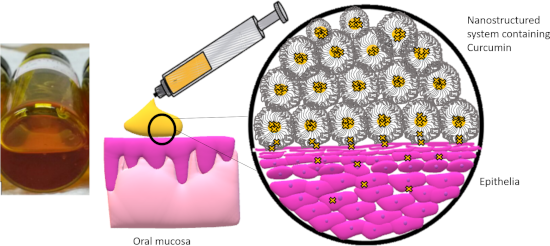
- in tumor and healthy cell lines. The formulations prepared from solid dispersions stored at 25 °C containing P407, C974P and CUR displayed viscoelastic properties, plastic behavior with rheopexy at body temperature (which provides better retention), and increased mucoadhesive force due to the


BergaCare SmartLipids: commercial lipophilic active concentrates for improved performance of dermal products
Beilstein J. Nanotechnol. 2019, 10, 2152–2162, doi:10.3762/bjnano.10.208
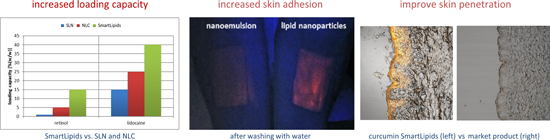
- particle dispersions during storage and in final products are (1) an unchanged crystalline structure of the particle matrix and (2) the quantitative proof of remaining existence/presence of particles. The created crystalline structure should primarily remain in the unordered state for firm inclusion of


Improved adsorption and degradation performance by S-doping of (001)-TiO2
Beilstein J. Nanotechnol. 2019, 10, 2116–2127, doi:10.3762/bjnano.10.206
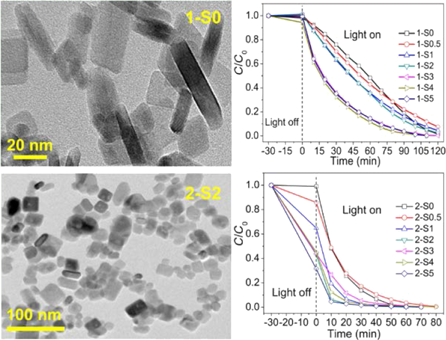
- distribution calculated using the BJH method. The PL spectra of 2-S0, 2-S0.5, 2-S2, 2-S3 and 2-S5 using an excitation wavelength of λex = 300 nm. ESR spectra of radical adducts trapped by DMPO in 2-S0 (a, e), 2-S2 (b, f), 2-S3 (c, g), and 2-S2 (d, h) dispersions: (a, b, c, d) DMPO–•OH formed in aqueous
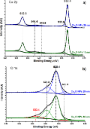
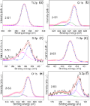
- dispersions, (e, f, g, h) DMPO–•O2− formed in methanol dispersion. The unit cell parameters a, c and the c/a value for S-doped (001)-TiO2 at 250 °C. Position of the FTIR absorption peaks and the corresponding vibrational modes. The chemical states (CSs) of Ti, O and S and the corresponding binding energies




Microbubbles decorated with dendronized magnetic nanoparticles for biomedical imaging: effective stabilization via fluorous interactions
Beilstein J. Nanotechnol. 2019, 10, 2103–2115, doi:10.3762/bjnano.10.205
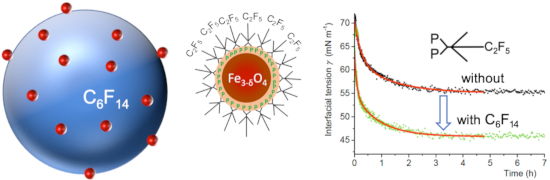
- ), were synthesized and grafted on the surface of iron oxide nanoparticles (IONPs) for microbubble-mediated imaging and therapeutic purposes. The size and stability of the dendronized IONPs (IONP@CnX2n+1OEG8Den) in aqueous dispersions were monitored by dynamic light scattering. The investigation of the
- into the phospholipid shell of the MBs. OEG chains were selected in order to improve the dispersibility of the IONPs in water [27][28]. Dendritic phosphonates are effective anchoring agents due to the covalent PO–metal bonds that stabilize aqueous dispersions of IONPs [27][29]. Such dendronized IONPs
- rapidly onto the interface, as indicated by the instant reduction of the interfacial tension σ by ≈4 mN m−1 (from 72 to 68 ± 0.5 mN m−1, Supporting Information File 1, Figure S3). The concentration of Fe in the IONP dispersions was varied from 10−4 to 10−1 mol L−1. The variations of the interfacial


Preservation of rutin nanosuspensions without the use of preservatives
Beilstein J. Nanotechnol. 2019, 10, 1902–1913, doi:10.3762/bjnano.10.185
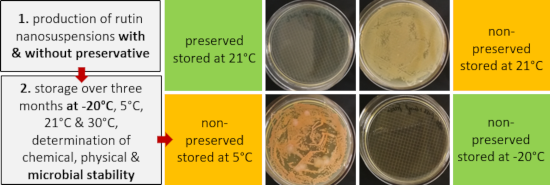
- , bulk suspensions containing 5% (w/w) rutin and 1% (w/w) surfactant were prepared. The pre-dispersions were homogenized with a high-speed stirrer (D-27, Miccra GmbH, Germany) at 24,000 rpm for 5 min in continuous mode and were subsequently subjected to HPH (20 cycles at 1500 bar). During homogenization


Lipid nanostructures for antioxidant delivery: a comparative preformulation study
Beilstein J. Nanotechnol. 2019, 10, 1789–1801, doi:10.3762/bjnano.10.174
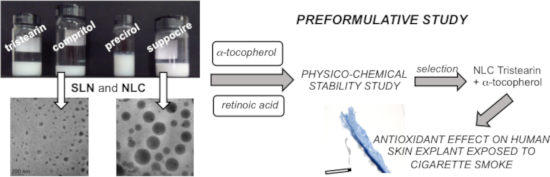
- , the emulsion was subjected to ultrasound homogenization at 6.75 kHz for 15 min (Microson ultrasonic Cell Disruptor-XL Minisonix) and allowed to cool at 25 °C. Lipid nanoparticle dispersions were stored at room temperature. In the case of drug-loaded nanoparticles, TOC (0.4–0.8% w/w with respect to the
- formation during the preparation, which caused irregular and inhomogeneous formulations; thus 2.5% w/w of poloxamer was used. The hot homogenization method followed by ultrasound [39] lead to production of milky and homogeneous dispersions. Immediately after cooling, in most cases, a small amount of

Biocatalytic oligomerization-induced self-assembly of crystalline cellulose oligomers into nanoribbon networks assisted by organic solvents
Beilstein J. Nanotechnol. 2019, 10, 1778–1788, doi:10.3762/bjnano.10.173
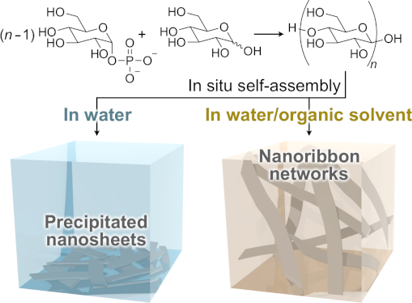
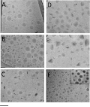
- , the mixtures after the reaction (0.3 mL) were subjected to pipetting to obtain product dispersions. The resultant particulate products were purified with water/organic solvent mixtures (the organic solvent concentrations were the same as those in the reaction mixtures) by performing at least five
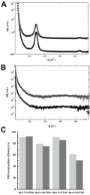
- centrifugation (20,400g)/redispersion cycles to remove more than 99.999% of the soluble fraction of the reaction mixtures. For MALDI–TOF mass spectrometry, the purified product dispersions were stored at 4 °C until use. For the quantification of the insoluble products, a volume of the purified product
- dispersions was dried at 105 °C for 24 h, followed by weighing. For 1H NMR spectroscopy, ATR-FTIR absorption spectroscopy, and XRD measurements, as much as possible of the supernatant after the final centrifugation was removed by pipette, followed by adding water to the products. The resultant product aqueous





Synthesis of nickel/gallium nanoalloys using a dual-source approach in 1-alkyl-3-methylimidazole ionic liquids
Beilstein J. Nanotechnol. 2019, 10, 1754–1767, doi:10.3762/bjnano.10.171
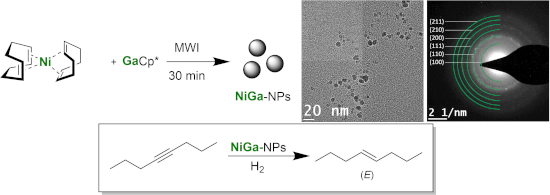
- for a chosen time (30 min, 1 h, 12 h or 24 h) in the dried and desoxygenated IL or PC before microwave decomposition to gain 0.5–1.5 wt % dispersion of the nanoparticles. All precursor dispersions were decomposed at a power of 50 W to a temperature of 230 °C for a chosen time (10 min, 20 min, 30 min




Development of a new hybrid approach combining AFM and SEM for the nanoparticle dimensional metrology
Beilstein J. Nanotechnol. 2019, 10, 1523–1536, doi:10.3762/bjnano.10.150
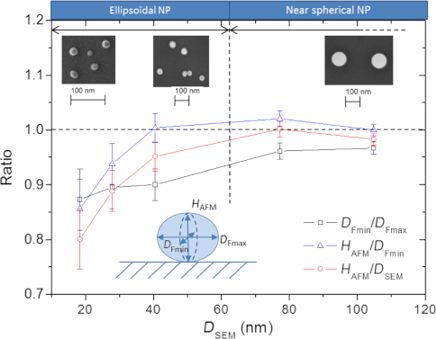
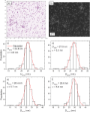
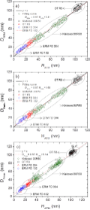
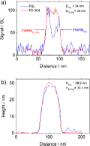
- likely explain the fact that, as shown in Figure 7, the measurement dispersions are higher for near-spherical nanoparticles with sizes larger than 40 nm. Regarding the 1st mode of the 30R50 population (DSEM = 37.6 nm), the ratio (HAFM/DFmin) is equal to 1.00 ± 0.03, suggesting that these NPs have a




Multicomponent bionanocomposites based on clay nanoarchitectures for electrochemical devices
Beilstein J. Nanotechnol. 2019, 10, 1303–1315, doi:10.3762/bjnano.10.129
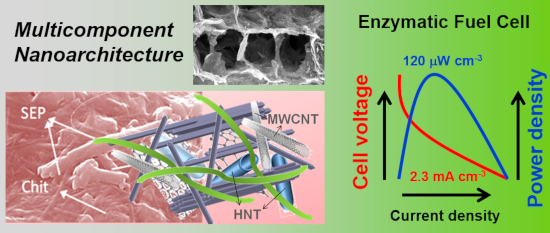
- , Università degli Studi di Palermo, Viale delle Scienze pad 17, 90128 Palermo, Italy 10.3762/bjnano.10.129 Abstract Based on the unique ability of defibrillated sepiolite (SEP) to form stable and homogeneous colloidal dispersions of diverse types of nanoparticles in aqueous media under ultrasonication
- different properties will determine a functional set of predetermined utility with SEP maintaining stable colloidal dispersions of different nanoparticles and polymers in water. Keywords: bionanocomposites; carbon nanostructures; electrochemical devices; halloysite nanotubes; sepiolite; Introduction In
- obtain homogeneous dispersions within different polymeric matrices [22][23][24]. Therefore, other and more efficient colloidal stabilizers are needed to fully exploit the potential of HNTs. It has been recently observed that fibrous sepiolite clay mineral of rheological grade (see Experimental section



Glucose-derived carbon materials with tailored properties as electrocatalysts for the oxygen reduction reaction
Beilstein J. Nanotechnol. 2019, 10, 1089–1102, doi:10.3762/bjnano.10.109
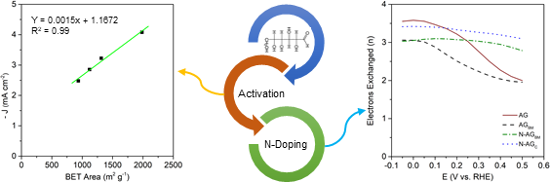
- during the ORR was also measured by using a rotating ring disk electrode (5 mm diameter, 24.9% collection efficiency, Methrom) as a working electrode, which was prepared by depositing a solution of the carbon sample on the disk area. The dispersions were prepared as detailed above and the mass loading


Tailoring the stability/aggregation of one-dimensional TiO2(B)/titanate nanowires using surfactants
Beilstein J. Nanotechnol. 2019, 10, 1024–1037, doi:10.3762/bjnano.10.103
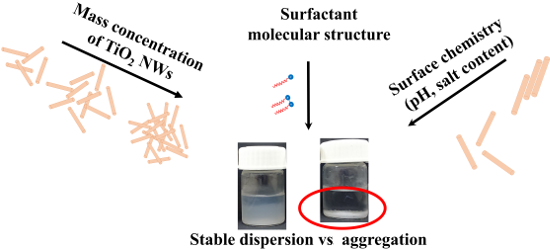
- application of TNMs has spurred numerous discussions and investigations concerning their behavior, transport and fate in aqueous environments [11][12]. The aggregation behavior, that is, the stability of nanomaterial (NM) dispersions in general, is one of the key factors for their successful application
- NM dispersions can be controlled by applying one of two approaches: (i) mechanical treatment or (ii) chemical and physical modification [15]. Recently, one-dimensional (1D) TNMs have emerged as an exceptional class of NMs. Their geometry offers unique properties that are difficult to achieve with
- surfactants adsorb onto the TNW surface. Moreover, the SCM in principle enables the prediction and optimization of surfactant adsorption on TNW surfaces, thus defining the conditions for stabilization or aggregation. The obtained results point to a simple way of controlling the TNW stability in dispersions


Correlation of surface-enhanced Raman scattering (SERS) with the surface density of gold nanoparticles: evaluation of the critical number of SERS tags for a detectable signal
Beilstein J. Nanotechnol. 2019, 10, 1016–1023, doi:10.3762/bjnano.10.102
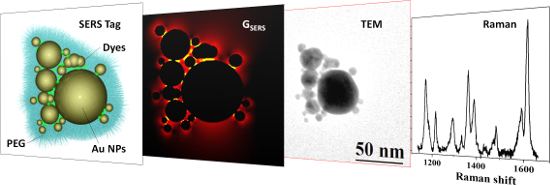
- three aqueous dispersions of AuNTs were mixed with a PVA solution and deposited on a TEM grid (Figure 2A). In this way, after evaporation of the liquid, the AuNTs remained dispersed in a PVA film with nanometric thickness (Figure 2B), according to a well-established procedure [42]. After sampling


Electronic and magnetic properties of doped black phosphorene with concentration dependence
Beilstein J. Nanotechnol. 2019, 10, 993–1001, doi:10.3762/bjnano.10.100
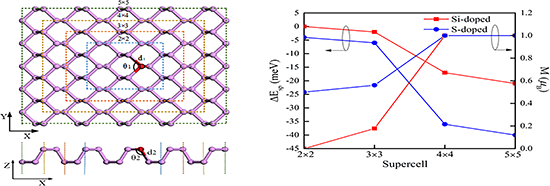
- underestimates the bandgap of phosphorene, numerous studies have announced that the dispersions of bands near the Fermi level predicted by HSE06 and the GGA of PBEsol are similar [32][33][34]. Moreover, GGA of PBEsol needs much less resources than HSE06. To balance the accuracy of calculation results and the


Structural and optical properties of penicillamine-protected gold nanocluster fractions separated by sequential size-selective fractionation
Beilstein J. Nanotechnol. 2019, 10, 955–966, doi:10.3762/bjnano.10.96
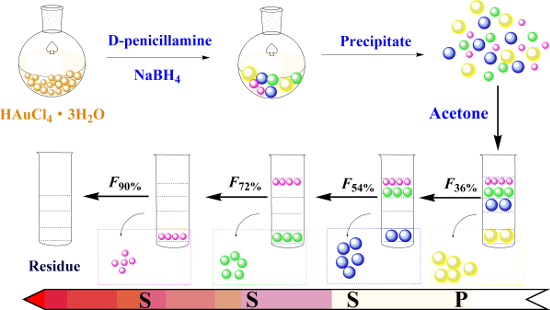
- common method that has been used to the size fraction nanomaterial dispersions such as CdS and CdSe. However, this method has been mainly carried out to separate water-insoluble nanoparticles from organic solvents. On the other hand, it is also understood that the photophysical, electrochemical and other



Tungsten disulfide-based nanocomposites for photothermal therapy
Beilstein J. Nanotechnol. 2019, 10, 811–822, doi:10.3762/bjnano.10.81
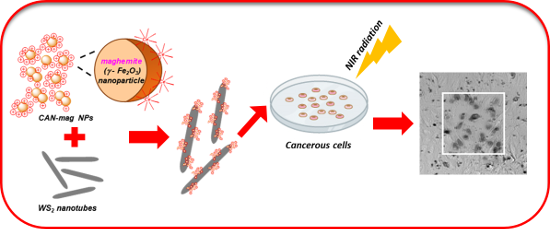
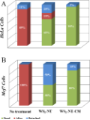
- human cancer cells – HeLa (cervical cancer) and MCF7 (breast cancer). The cells were cultured on 24-well plates. When the cells reached 80% confluence, freshly prepared aqueous dispersions of WS2-NT or WS2-NT-CM (45 µL, 1 mg/mL) were added to two of the plates, and a third plate, with no additives, was
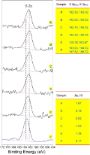
- . There is another advantage of the composites over their components alone. WS2-NTs tend to aggregate, and the addition of CAN-mag reduces aggregation. Aqueous dispersions of the functionalized nanotubes stay stable for hours, while bare nanotubes in water sink almost instantly. Also, when comparing the
- curve shape and saturation values for WS2-NT-CM are to be expected. When bringing dispersions of CAN-mag nanoparticles and WS2-NT-CM close to a magnet, however, it is only the latter that is visibly attracted. The video (Supporting Information File 2) shows the liquid of a WS2-NT-CM dispersion gradually