


Search results
Search for "drop casting" in Full Text gives 66 result(s) in Beilstein Journal of Nanotechnology.
Bacteriorhodopsin–ZnO hybrid as a potential sensing element for low-temperature detection of ethanol vapour
Beilstein J. Nanotechnol. 2016, 7, 501–510, doi:10.3762/bjnano.7.44
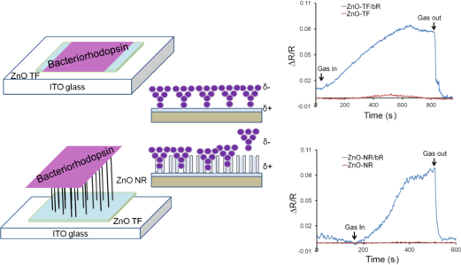
- ratio in order to retain the conformational stability of bR in the solution phase without affecting its photoactive properties [37]. The drop casting method was used for the deposition of this suspension on the ZnO-TF as well as ZnO-NRs [14]. This modification serves to enhance the surface activity
- /bR) were fabricated by manually drop casting 50 µL of the bR protein suspension (using a micropipette) on the ZnO-TF and ZnO-NR substrates (625 mm2 area) [14]. The deposited film was dried in vacuum at room temperature by using a standard 3 L desiccator connected to a Millipore vacuum pump (4 bar
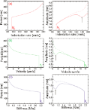
- ), respectively. Comparative XRD patterns of the ZnO-TF, ZnO-TF/bR, ZnO-NR and ZnO-NR/bR structures. SEM characterization. (a) ZnO-TF has grown over the ITO substrate and was annealed at 400 °C. (b) ZnO-NR structure grown over the ZnO-TF seed layer. (c) ZnO-TF/bR hybrid structure prepared by drop casting. (d) ZnO


Controlled graphene oxide assembly on silver nanocube monolayers for SERS detection: dependence on nanocube packing procedure
Beilstein J. Nanotechnol. 2016, 7, 9–21, doi:10.3762/bjnano.7.2
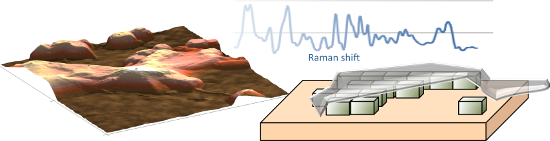
- GO. Although fabrication of GO-covered nanoparticles has been explored using several methods such as voltammetric co-reduction [33], formation of composite graphene oxide/PAMAM–silver nanoparticles through self-assembly followed by microwave irradiation [34] and GO drop-casting onto amino
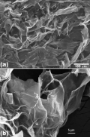
- graphene oxide deposits on silicon oxide obtained by simple drop casting followed by evaporation and shows, as expected, the presence of irregularly shaped sheets of lateral dimension ranging from a few nanometres to micrometres with nonuniform thickness ranging from 1.0 nm for single layers to 3.6 nm for


Nanoscale rippling on polymer surfaces induced by AFM manipulation
Beilstein J. Nanotechnol. 2015, 6, 2278–2289, doi:10.3762/bjnano.6.234
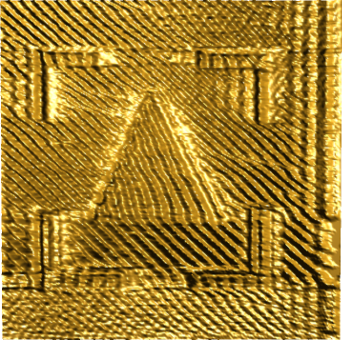
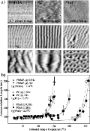
- interpretation of the data more complicated. Presence of solvents: As it is widely known, polymers dissolve in solvents with similar chemo-physical properties. This is why they can be easily molded in a variety of shapes including thin films, by means of spin coating or drop casting. The relative presence of




Optimized design of a nanostructured SPCE-based multipurpose biosensing platform formed by ferrocene-tethered electrochemically-deposited cauliflower-shaped gold nanoparticles
Beilstein J. Nanotechnol. 2015, 6, 1840–1852, doi:10.3762/bjnano.6.187
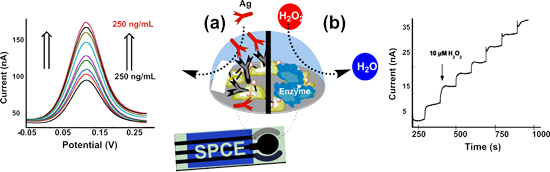
- biosensor was prepared by simply drop-casting a mixture of the HRP enzyme solution and chitosan as displayed in Figure 1. The chitosan was used as a matrix to retain the enzyme on the nanostructured surface [39]. The stepwise preparation was also characterized using CV and EIS spectroscopy. CV showed an
- ultrapure water and the unmodified gold was blocked by the addition of 5 µL of a 3% BSA solution. The enzyme-based platform was prepared by drop-casting 5 µL of HRP solution (10 mg/mL) onto the ferrocene-modified cfAuNPs-structured electrode. Determination of the concentrations of hIgG and H2O2 in real


Electrical properties and mechanical stability of anchoring groups for single-molecule electronics
Beilstein J. Nanotechnol. 2015, 6, 1558–1567, doi:10.3762/bjnano.6.159
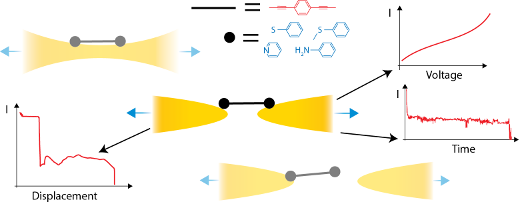
- tip-shaped electrodes. The vertical displacement of the pushing rod translates in an horizontal displacement in the plane of the electrode with an attenuation factor of 5 · 10−5. Molecules 1–4 were deposited onto the MCBJ device by drop-casting a solution (2 μL of 1 mM in dichloromethane) on the


Electronic interaction in composites of a conjugated polymer and carbon nanotubes: first-principles calculation and photophysical approaches
Beilstein J. Nanotechnol. 2015, 6, 1138–1144, doi:10.3762/bjnano.6.115
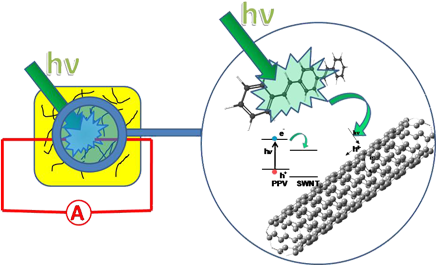
- SWNT in methanol as solvent. PPV–SWNT composite films of 200 nm thickness were obtained with SWNT mass concentrations x = 0–64% by drop casting onto ultraclean quartz substrates followed by thermal conversion under vacuum at 573 K. Time-resolved PL experiments were carried out by exciting the samples


Exploiting the hierarchical morphology of single-walled and multi-walled carbon nanotube films for highly hydrophobic coatings
Beilstein J. Nanotechnol. 2015, 6, 353–360, doi:10.3762/bjnano.6.34
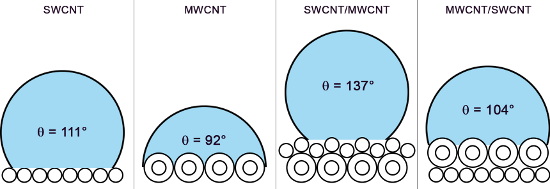
- angles of samples was V = 10 μL. Moreover, every contact angle was measured 15 s after drop casting to ensure that the droplet reached its equilibrium position. Scanning electron micrographs of SWCNT (a,c) and MWCNT (b,d) films at different magnifications 200,000× (a,b), and 10,000× (c,d). In the images


Poly(styrene)/oligo(fluorene)-intercalated fluoromica hybrids: synthesis, characterization and self-assembly
Beilstein J. Nanotechnol. 2014, 5, 2450–2458, doi:10.3762/bjnano.5.254
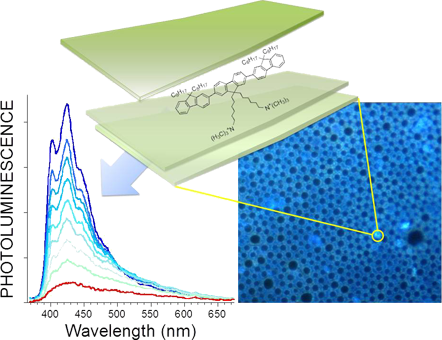
- PT15 (Figure 3). Thicker films of PT5, PT15 and PT30 prepared by drop casting of toluene solutions, show a distribution of SME aggregates ranging from a few micrometers to a few tens of micrometers. As evidenced by the fluorescence microscope images in Figure 4, the blue emission comes solely from the
- orientation of most of the silicates forming clusters (Figure 4d). Self-assembly We explored further possibilities of organization of these materials by drop casting dilute solutions in carbon disulfide under humid atmosphere. Under these conditions, the fast evaporation of the solvent and its consequent




UHV deposition and characterization of a mononuclear iron(III) β-diketonate complex on Au(111)
Beilstein J. Nanotechnol. 2014, 5, 2139–2148, doi:10.3762/bjnano.5.223
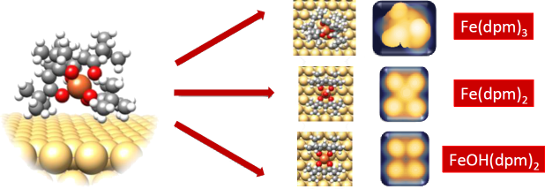
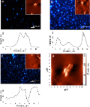
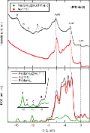
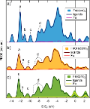
- high coverages compatible with an ex situ prepared sample cannot be achieved by UHV sublimation, a thick film sample of Fe(dpm)3 was prepared by drop-casting. XAS spectra at the Fe L2,3 edge, acquired at the BACH beamline of the Elettra synchrotron for both circular left (σ+) and circular right (σ
- Au 4f7/2 peak at 80.04 eV. UPS spectra were calibrated such that the Fermi level was located at 0 eV. X-ray absorption spectroscopy The deposition was prepared by drop-casting using a 2 mM dichloromethane solution on a gold film grown on mica. The Fe L2,3 XMCD measurements were performed in total



Imaging the intracellular degradation of biodegradable polymer nanoparticles
Beilstein J. Nanotechnol. 2014, 5, 1905–1917, doi:10.3762/bjnano.5.201
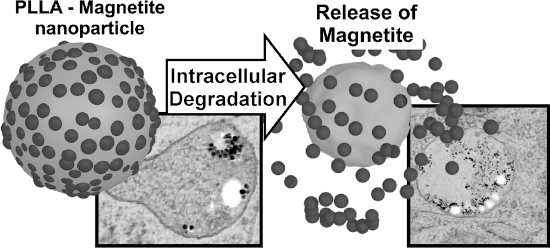
- decoration quality, pristine magnetite-labeled PLLA nanoparticles were subjected to TEM investigation. Figure 3 shows TEM micrographs of the magnetite-decorated PLLA nanoparticles prepared by either drop casting on a carbon support film and additional carbon evaporation (Figure 3A), or prepared by high
- membrane; Green: PLLA nanoparticles. TEM bright field micrographs of a dispersion of magnetite-decorated PLLA nanoparticles prepared by drop casting and subsequent carbon evaporation (A) and by high pressure freezing (HPF) followed by freeze substitution and microtomy (B). The inset of B shows the


Controlling the dispersion of supported polyoxometalate heterogeneous catalysts: impact of hybridization and the role of hydrophilicity–hydrophobicity balance and supramolecularity
Beilstein J. Nanotechnol. 2014, 5, 1749–1759, doi:10.3762/bjnano.5.185
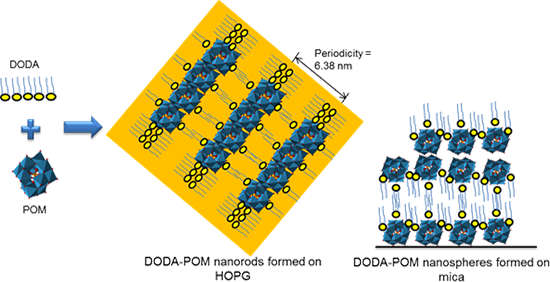
- driven through the electrostatic interaction of POM anions with the positively charged DODA surfactant. Firstly, we study the DODA–POM hybrids deposited on HOPG. Drop-casting of a small amount (about 9.5 µL) of a very dilute solution (0.025 g·L−1) allows for the formation of molecular layers that are of


Highly NO2 sensitive caesium doped graphene oxide conductometric sensors
Beilstein J. Nanotechnol. 2014, 5, 1073–1081, doi:10.3762/bjnano.5.120
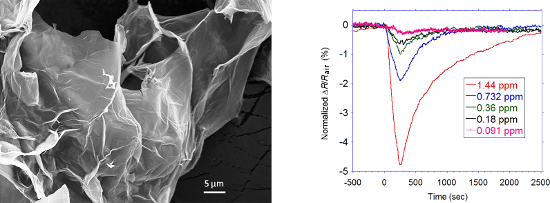
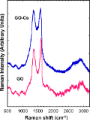
- studied by varying the gas concentration. The developed GO-Cs sensor shows a higher response to NO2 than the pristine GO based sensor due to the oxygen functional groups. The detection limit measured with GO-Cs sensor is ≈90 ppb. Keywords: caesium; conductometric; doping; drop casting; gas sensor
- polyvinylidene fluoride membrane (0.2 μm). The precipitate was then added to water (30 mL) and filtered. The process was repeated twice to obtain dark solid GO-Cs. Finally, the gas sensors were fabricated by drop casting of the prepared GO and GO-Cs materials onto 2 × 2 mm2 transducers and then they were placed




Optical and structural characterization of oleic acid-stabilized CdTe nanocrystals for solution thin film processing
Beilstein J. Nanotechnol. 2014, 5, 881–886, doi:10.3762/bjnano.5.100
- crystal structure, which make them very attractive in this technological area. Thin films deposition techniques such as drop-casting [17], screen printing [18], and ink jet printing [19], are currently used to fabricate electronic devices on great variety of substrates, either rigid or flexible, looking
- for preserve their size effects [20][21][22]. All of these techniques need ink-like stable dispersions comprising functionalized nanomaterials dispersed in a convenient solvent. Drop-casting offers a cost efficient production of photovoltaic semiconductor thin films. Nevertheless, depending on the
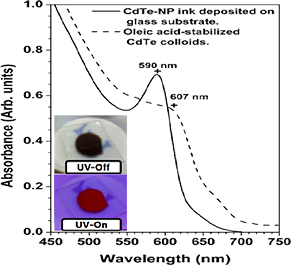
- deposited on glass substrates via drop-casting technique without annealing. For absorbance characterization, a liquid sample processed by the size-separation technique was analyzed and for Raman measurements, the same sample but deposited by dripping on glass substrate was studied. TEM characterization


Extracellular biosynthesis of gadolinium oxide (Gd2O3) nanoparticles, their biodistribution and bioconjugation with the chemically modified anticancer drug taxol
Beilstein J. Nanotechnol. 2014, 5, 249–257, doi:10.3762/bjnano.5.27

- measurement was carried out on a Shimadzu dual-beam spectrophotometer (model UV-1601 PC) operated at a resolution of 1 nm. Transmission electron microscopy (TEM) TEM analyses of gadolinium oxide nanoparticles were carried out on a JEOL model 1200 EX operated at 80 kV. Samples were prepared by drop-casting the
- drop-casting the particles (suspended in water) on carbon coated copper grid. The selected area electron diffraction (SAED) pattern analysis was carried out on the same grid. X-ray diffraction (XRD) X-ray diffraction (XRD) measurements of biosynthesized Gd2O3 nanoparticles were carried out by coating


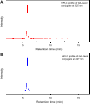
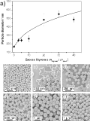
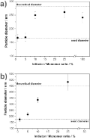
Platinum nanoparticles from size adjusted functional colloidal particles generated by a seeded emulsion polymerization process
Beilstein J. Nanotechnol. 2011, 2, 459–472, doi:10.3762/bjnano.2.50
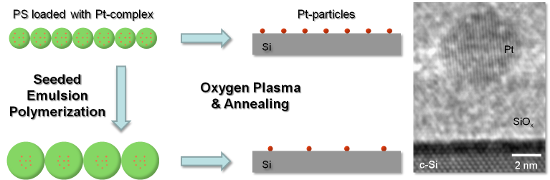
- ) Addition of ethanol to the water phase. c) Addition of methanol to the continuous water phase. A non-conventional lithographic process is used to produce arrays of Pt NPs from platinum-acetylacetonate containing polymer particles on top of a Si wafer. a) Colloidal monolayer formed by drop casting of seeded



Fabrication and spectroscopic studies on highly luminescent CdSe/CdS nanorod polymer composites
Beilstein J. Nanotechnol. 2010, 1, 94–100, doi:10.3762/bjnano.1.11
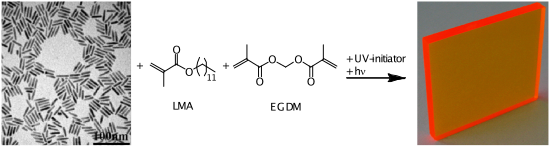
- free drop-casting process. Core/shell NRs were chosen as they exhibit higher stability against photooxidation and chemical attack by radicals [2][9]. The band-gap within a type-I core/shell nanocrystal gradually increases from the inside to the outside [2][10]. In our first method, where radicals are
- amount of cross-linker either flexible (<20 wt % EGDM) or rigid nanocomposites could be fabricated. In our second method we fabricated thin polymer films using a radical free drop-casting process. Cellulose triacetate (CTA) was chosen as polymer because of its high transparency, hydrophobicity and





