Search results
Search for "endothelial" in Full Text gives 88 result(s) in Beilstein Journal of Nanotechnology.
Gold-coated plant virus as computed tomography imaging contrast agent
Beilstein J. Nanotechnol. 2019, 10, 1983–1993, doi:10.3762/bjnano.10.195
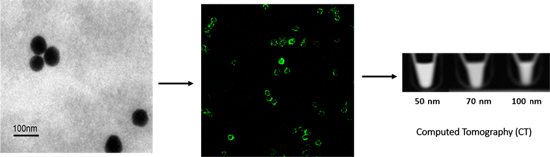
- of growth surface and were used between passages 2 and 3. Subculture occurred after 60–70% confluence after trypsinization (0.025% trypsin, 0.5 mM EDTA, 10 mM HEPES buffer pH 6.5). RAW264.7 cell labeling and confocal microscopy: Cells of a murine endothelial line (100 μL of 1 × 10⁶ cells/mL, RAW264.7




Effects of gold and PCL- or PLLA-coated silica nanoparticles on brain endothelial cells and the blood–brain barrier
Beilstein J. Nanotechnol. 2019, 10, 941–954, doi:10.3762/bjnano.10.95
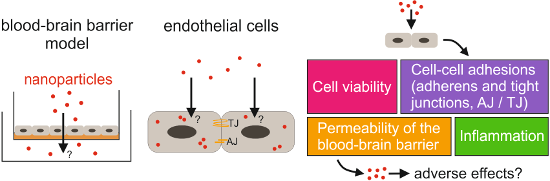
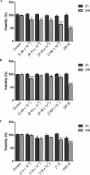
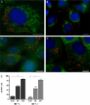
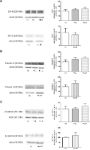
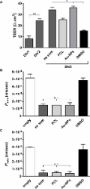
- are foreign objects, careful evaluation of their toxicological and functional aspects prior to medical application is imperative. In this study, we aimed to determine the effects of gold and polymer-coated silica nanoparticles used in laser tissue soldering on brain endothelial cells and the blood
- –brain barrier using rat brain capillary endothelial cells (rBCEC4). All types of nanoparticles were taken up time-dependently by the rBCEC4 cells, albeit to a different extent, causing a time- and concentration-dependent decrease in cell viability. Nanoparticle exposure did not change cell proliferation
- effects of various NPs on cells of the vasculature and the BBB need to be determined. The BBB is made of specialized endothelial cells (ECs), astrocytes and pericytes, forming a tight barrier, thus restricting access to the brain [14][15]. Disruption of this barrier allows potentially harmful molecules to



Targeting strategies for improving the efficacy of nanomedicine in oncology
Beilstein J. Nanotechnol. 2019, 10, 168–181, doi:10.3762/bjnano.10.16
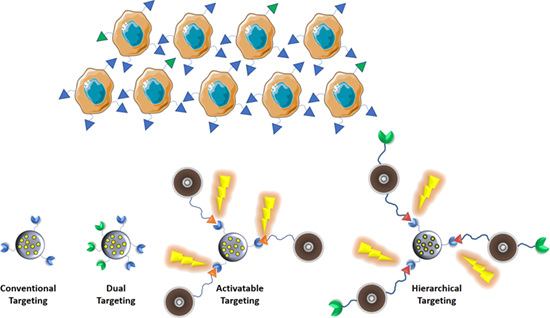
- to employ antibodies for the recognition of the tumoral blood vessels instead of the tumoral cells. Endoglin, or CD105, is a glycoprotein usually overexpressed on the surface of the endothelial cells which compose the tumoral vessels. TRC105 is a human/murine chimeric antibody which recognizes CD105
- effects: the EPR due to their size and active targeting provided by the glycoprotein gp60 interaction. The protein gp60 is overexpressed in the endothelial cell surface and allows the albumin-based systems to extravasate to the tumour mass through caveola formation and transcytosis. After this, albumin
- tissue accumulation and preferential glioma cells internalization. Mechanism of retention and accumulation of Abraxane in tumoral tissue. The authors’ own generalized depiction of the scheme proposed previously in [64]. Combination of unspecific CPP and endothelial specific ligands for tissue recognition


Characterization and influence of hydroxyapatite nanopowders on living cells
Beilstein J. Nanotechnol. 2018, 9, 3079–3094, doi:10.3762/bjnano.9.286
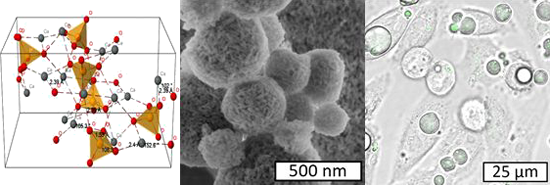
- significantly limits the insight of underlying mechanisms that affect living cells. There is a wide range of available cell lines to study possible organism reactions and cytotoxicity mechanisms, such as endothelial, neural, hepatic, phagocytic or cancer cells [26][27]. Still, systematic studies describing

![[Graphic 1]](/bjnano/content/inline/2190-4286-9-286-i2.svg?max-width=637&scale=1.18182) .
.



Preparation of micro/nanopatterned gelatins crosslinked with genipin for biocompatible dental implants
Beilstein J. Nanotechnol. 2018, 9, 1735–1754, doi:10.3762/bjnano.9.165
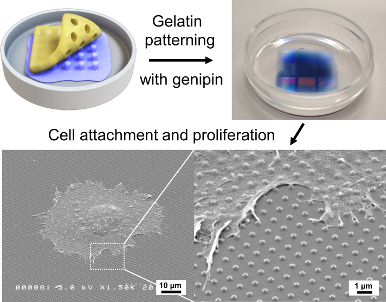
- [45]. These micro/nanopillars, with diameters of 1 µm or 250 nm, increased the proliferation of endothelial cells better than a planar gelatin surface. Zorlutuna et al. have reported that a collagen surface with a nanogroove could be fabricated by crosslinking with carbodiimide [37][46]. This
- several types of cells, the grooves with widths ranging from submicrometers to several tens of micrometers can effectively maneuver to align the cells [57][58]. However, Zorlutuna et al. have reported that human microvascular endothelial cells were not aligned in collagen grooves with widths of 333, 500
- [45][46]. In one study, the cell proliferation of corneal endothelial cells on GelMA pillars with a diameter of 250 nm or 1 µm was found to be increased compared to the planar GelMA surface [45]. Zorlutuna et al. have also shown that cell proliferation of vascular smooth muscle cells in collagen






BN/Ag hybrid nanomaterials with petal-like surfaces as catalysts and antibacterial agents
Beilstein J. Nanotechnol. 2018, 9, 250–261, doi:10.3762/bjnano.9.27
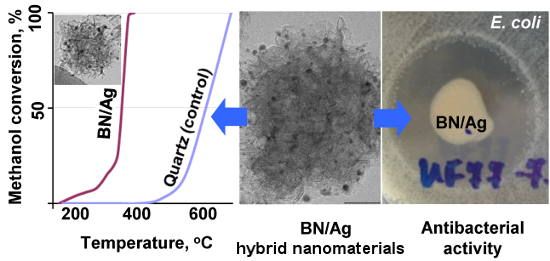
- may leave the blood vessels through fenestrations in the endothelial lining [38]. Recent studies have revealed that BN NPs are not toxic and can be additionally saturated with chemotherapeutic agents for multifunctional biological applications [39]. Therefore, our results open up new possibilities for





Liquid-crystalline nanoarchitectures for tissue engineering
Beilstein J. Nanotechnol. 2018, 9, 205–215, doi:10.3762/bjnano.9.22
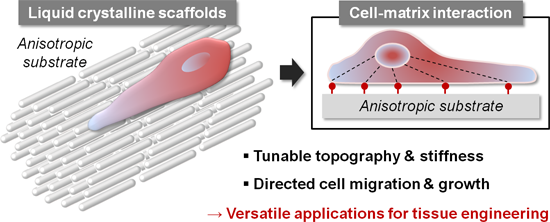
- potential along the bundle gel. Collagen-based helical nanofibrillar scaffolds have shown the ability to support the growth of human endothelial cells [104]. The nanofibrils were generated by applying shear stress on a collagen solution in a (chiral) nematic phase. When the cells were seeded in a 3D


Involvement of two uptake mechanisms of gold and iron oxide nanoparticles in a co-exposure scenario using mouse macrophages
Beilstein J. Nanotechnol. 2017, 8, 2396–2409, doi:10.3762/bjnano.8.239
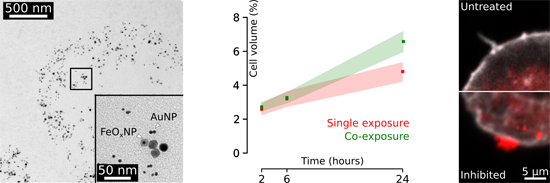
- microvascular endothelial cells via flotillin-mediated uptake [18]. Flotillin-mediated uptake was also observed for silica NPs in lung epithelial and endothelial cells [19]. The various uptake pathways have one aspect in common: The internalized NP is ultimately located in an intracellular vesicle. Endocytosis



Cationic PEGylated polycaprolactone nanoparticles carrying post-operation docetaxel for glioma treatment
Beilstein J. Nanotechnol. 2017, 8, 1446–1456, doi:10.3762/bjnano.8.144
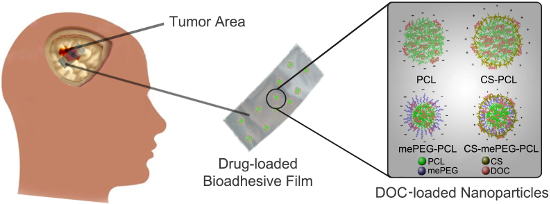
- affect cellular uptake, interaction with biological membranes, absorption rate, biodistribution in the body, as well as the physical stability of the nanoparticles [50]. It is known that nanoparticles can escape from systemic circulation via fenestrations, which are small openings through the endothelial




Low uptake of silica nanoparticles in Caco-2 intestinal epithelial barriers
Beilstein J. Nanotechnol. 2017, 8, 1396–1406, doi:10.3762/bjnano.8.141
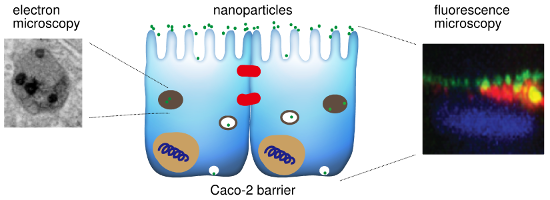
- type of barrier, namely an in vitro model of the human endothelial blood brain barrier [14][15][51][52]. Thus, the low degree of uptake observed in the Caco-2 barrier may be a characteristic of this type of barrier and could be related to the more complex polarised nature of thicker epithelial layers



Micro- and nano-surface structures based on vapor-deposited polymers
Beilstein J. Nanotechnol. 2017, 8, 1366–1374, doi:10.3762/bjnano.8.138
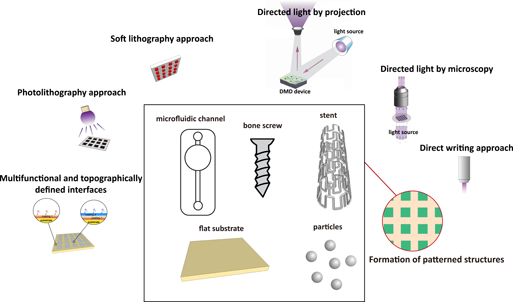
- –Arg–Glu–Asp–Val (CREDV) peptide showed the synergic anti-fouling property and preferentially enhanced attachment of endothelial cells in such patterned areas [50]. In another report, a multifunctional coating was realized via CVD copolymerization to deposit a poly(p-xylylene) copolymer, which


Nano-engineered skin mesenchymal stem cells: potential vehicles for tumour-targeted quantum-dot delivery
Beilstein J. Nanotechnol. 2017, 8, 1218–1230, doi:10.3762/bjnano.8.123
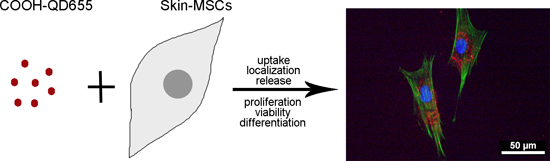
- , experiments in HEK cells showed the uptake of carboxyl QDs through caveolin/lipid raft-mediated endocytosis; although it has been reported that caveolin-mediated endocytosis is the dominating uptake route in endothelial cells, smooth muscle cells and adipocytes [44][46]. Damalakiene et al. demonstrated that





Silicon microgrooves for contact guidance of human aortic endothelial cells
Beilstein J. Nanotechnol. 2017, 8, 675–681, doi:10.3762/bjnano.8.72
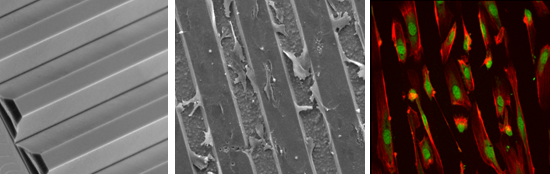
- cell adhesion, morphology and proliferation were assessed, by comparing them to flat silicon substrates, used as control condition. Using human aortic endothelial cells, microscopy images demonstrate that the cellular response is different depending on the silicon surface, when it comes to cell
- microscale features to mimic the endothelium in lineal vessels. Keywords: cell morphology; contact guidance; microgrooves; silicon; human aortic endothelial cells (HAECs); Introduction Micro- and nanostructured materials for medical devices have demonstrated that surface topography as well as surface
- the affinity of the cell to be elongated and guided by the shape of the surface. The response of the cells to these topographical cues and the concept of contact guidance have been described previously for a wide variety of cells such as neuronal, epithelial or endothelial cells [8][9][10]. In


Nano- and microstructured materials for in vitro studies of the physiology of vascular cells
Beilstein J. Nanotechnol. 2016, 7, 1620–1641, doi:10.3762/bjnano.7.155
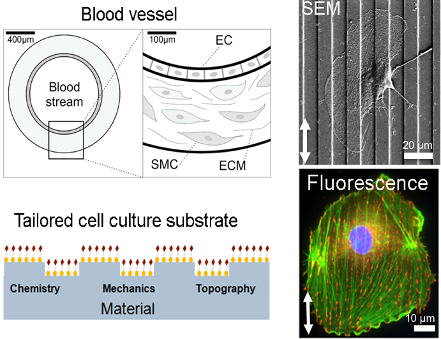
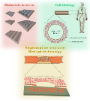
- ) and endothelial cells (ECs) with materials having micro- and nanostructured surfaces. We summarize fabrication techniques for surface topographies, materials, geometries, biochemical functionalization, and mechanical properties of such materials. Furthermore, various studies on vascular cell behavior
- potential interesting future studies. Keywords: fabrication methods; materials selection; nano- and micro-topography; vascular endothelial cells; vascular smooth muscle cells; Introduction Cells adhering to biomaterials are influenced by the surface topography, the surface chemistry and the mechanical
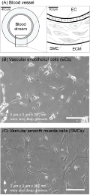
- discusses model studies with a special emphasis on the fabrication of substrates with well-defined nano- and microstructured surfaces for in vitro studies with vascular cells (Figure 1). Vascular endothelial cells (ECs) and smooth muscle cells (SMCs) are two vascular cell types forming blood vessels (Figure



Viability and proliferation of endothelial cells upon exposure to GaN nanoparticles
Beilstein J. Nanotechnol. 2016, 7, 1330–1337, doi:10.3762/bjnano.7.124
- Moldova 10.3762/bjnano.7.124 Abstract Nanotechnology is a rapidly growing and promising field of interest in medicine; however, nanoparticle–cell interactions are not yet fully understood. The goal of this work was to examine the interaction between endothelial cells and gallium nitride (GaN
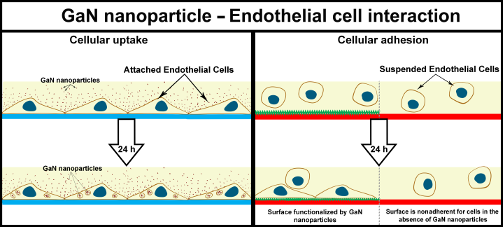
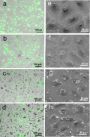
- ) semiconductor nanoparticles. Cellular viability, adhesion, proliferation, and uptake of nanoparticles by endothelial cells were investigated. The effect of free GaN nanoparticles versus the effect of growing endothelial cells on GaN functionalized surfaces was examined. To functionalize surfaces with GaN, GaN
- nanoparticles were synthesized on a sacrificial layer of zinc oxide (ZnO) nanoparticles using hydride vapor phase epitaxy. The uptake of GaN nanoparticles by porcine endothelial cells was strongly dependent upon whether they were fixed to the substrate surface or free floating in the medium. The endothelial



Tight junction between endothelial cells: the interaction between nanoparticles and blood vessels
Beilstein J. Nanotechnol. 2016, 7, 675–684, doi:10.3762/bjnano.7.60
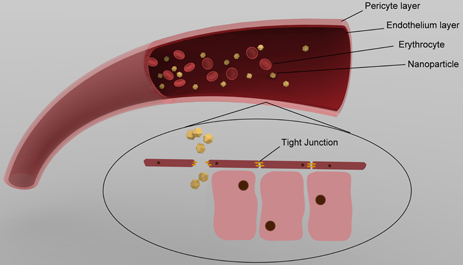
- here whether nanoparticles can cause several adverse effects to human health. In this review, based on research on nanotoxicity, we mainly discuss the negative influence of nanoparticles on blood vessels in several aspects and the potential mechanism for nanoparticles to penetrate endothelial layers of
- approach for nanoparticles to penetrate endothelial layers and then have an impact on other tissues and organs. Keywords: blood vessels; endothelial cells; nanoparticles; oxidative stress; tight junction; Introduction Products related to nanoparticles (NPs) are increasingly growing in number. We can
- ]. Several modified NPs were also used in vascular-targeted therapy, which showed their way into endothelial cells and escape from the endosome in vitro [39]. Likewise, while iron oxide NPs are very helpful with their capability for imaging, their toxicity towards vascular endothelial cells cannot be ignored

Nanostructured surfaces by supramolecular self-assembly of linear oligosilsesquioxanes with biocompatible side groups
Beilstein J. Nanotechnol. 2015, 6, 2377–2387, doi:10.3762/bjnano.6.244
- underlying matrix. For example, surfaces carrying COOH groups were applied for studies on the effect of surface wettability on protein adsorption and adhesion of human umbilical vein endothelial cells (HUVECs) and HeLa cells [3], human fibroblasts [14], human mesenchymal stem cells [15][22], corneal
- epithelial cells [23], fibroblasts [24], myoblasts [25] and endothelial cells [26]. Substrates with COOH groups were also used to elucidate the role of chemistry-dependent differences in cell differentiation owing to specific binding to proteins adsorbed on the surface [25][27][28]. Well-defined substrates




Protein corona – from molecular adsorption to physiological complexity
Beilstein J. Nanotechnol. 2015, 6, 857–873, doi:10.3762/bjnano.6.88
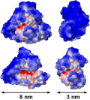
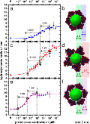
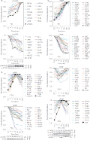
- experiments by using primary human cell models of the blood system. Pristine NPs immediately affected the vitality of endothelial cells, triggered thrombocyte activation and aggregation, and resulted in hemolysis of erythrocytes. However, such pristine NPs existed only for a very brief period of time in the



Silica micro/nanospheres for theranostics: from bimodal MRI and fluorescent imaging probes to cancer therapy
Beilstein J. Nanotechnol. 2015, 6, 546–558, doi:10.3762/bjnano.6.57
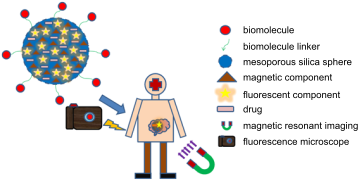
- fluorescence studies. The size of the particles was found to be 31 ± 4 nm with an emission peak at approx. 620 nm. The in vitro studies with human umbilical vein endothelial cells (HUVEC) suggested that these NPs could be used simultaneously as fluorescent and MRI contrasting agent. 2.4 Manganese oxide as


Pulmonary surfactant augments cytotoxicity of silica nanoparticles: Studies on an in vitro air–blood barrier model
Beilstein J. Nanotechnol. 2015, 6, 517–528, doi:10.3762/bjnano.6.54
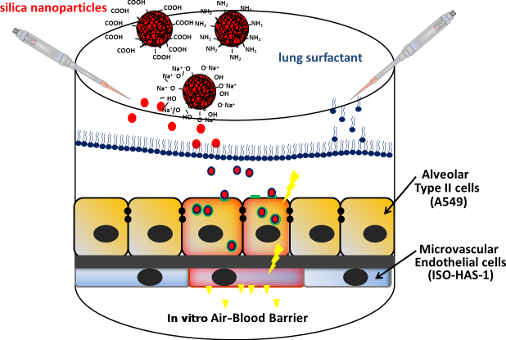
- entry for pathogens or aspirated nano-sized particles (NPs). It comprises an epithelial layer directed to the alveolar lumen and a microvascular endothelial layer, which is exposed towards the vessel lumen [1]. Before aspirated NPs encounter this cellular air–blood barrier, they impinge on the
- vitro mono- and complex coculture models (MC and CC) of the air–blood barrier. As alveolar epithelial cells we used A549 and ISO-HAS-1 as microvascular endothelial cells in a coculture model. To evaluate in what way and to what extent different aSNP-surface functionalisations play a role in their
- surfactant substitution and originated from bovine alveolar lavage. It is composed of surfactant proteins SP-B and SP-C as well as phospholipids. It was suspended in PBS (phosphate-buffered saline) at a concentration of 40 mg/mL. Cell culture: ISO-HAS-1 (human microvascular endothelial cell line, originated


A surface acoustic wave-driven micropump for particle uptake investigation under physiological flow conditions in very small volumes
Beilstein J. Nanotechnol. 2015, 6, 414–419, doi:10.3762/bjnano.6.41
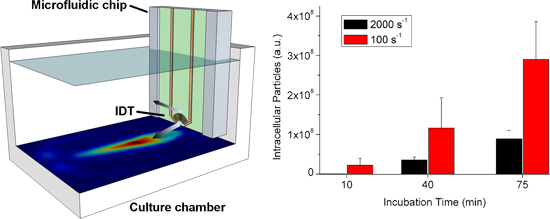
- rates over the whole physiological range in sample volumes as small as 200 μL can be achieved. A precise characterization method for the induced flow profile is presented and the influence of flow on the uptake of Pt-decorated CeO2 particles by endothelial cells (HMEC-1) is demonstrated. Under
- , experiences a force of approximately 77 pN [5]. Finally, in many studies, endothelial cells are of special interest due to their outstanding role regarding the distribution of nanoparticles by the vascular system. Hence, another important issue is that a static medium is certainly not a physiological
- surrounding for these cells, which are exposed in vivo to shear rates of up to 3000 s−1 [6]. It was recently shown that the glycocalix of endothelial cells is substantially reorganized under shear [7] and several effects of shear stress on cellular uptake mechanisms have been reported [8][9][10]. One solution


Comparative evaluation of the impact on endothelial cells induced by different nanoparticle structures and functionalization
Beilstein J. Nanotechnol. 2015, 6, 300–312, doi:10.3762/bjnano.6.28
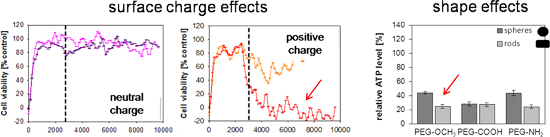
- better insight into general rules determining the biocompatibility of gold, Janus and semiconductor (quantum dot) nanoparticles. Endothelial cells were subject of this study, since blood is the first barrier after intravenous nanoparticle application. In particular, stronger effects on the viability of
- endothelial cells were found for nanoparticles with an elongated shape in comparison to spherical ones. Furthermore, a positively charged nanoparticle surface (NH2, CyA) leads to the strongest reduction in cell viability, whereas neutral and negatively charged nanoparticles are highly biocompatible to
- endothelial cells. These findings are attributed to a rapid internalization of the NH2-functionalized nanoparticles in combination with the damage of intracellular membranes. Interestingly, the endocytotic pathway seems to be a size-dependent process whereas nanoparticles with a size of 20 nm are internalized




Oxygen-plasma-modified biomimetic nanofibrous scaffolds for enhanced compatibility of cardiovascular implants
Beilstein J. Nanotechnol. 2015, 6, 254–262, doi:10.3762/bjnano.6.24
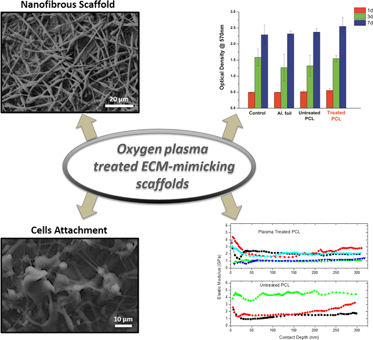
- case of cardiovascular implants, though, the successful revascularization after implantation remains an unmet clinical problem [11]. This implies that endothelial cells must properly attach and migrate into the surface of the implanted material in order to form an appropriate network that will enable


The distribution and degradation of radiolabeled superparamagnetic iron oxide nanoparticles and quantum dots in mice
Beilstein J. Nanotechnol. 2015, 6, 111–123, doi:10.3762/bjnano.6.11
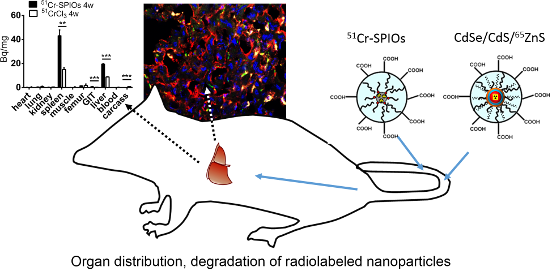
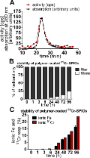
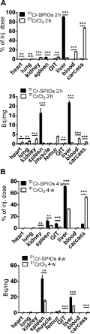
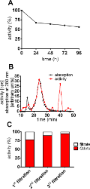
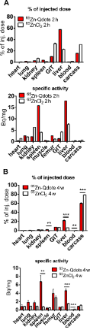
- the Zn pool was observed. Confocal microscopy of rat liver cryosections (prepared 2 h after intravenous injection of polymer-coated Qdots) revealed a colocalization with markers for Kupffer cells and liver sinusoidal endothelial cells (LSEC), but not with hepatocytes. In J774 macrophages, fluorescent
- cells was warranted. Therefore, polymer-coated Qdots were injected and the mice were observed two hours after intravenous injection into the tail vein and cryosections of the liver were prepared (Figure 9). It is well-established that liver sinusoidal endothelial cells (LSECs) carry out a scavenger
- function by expressing several types of scavenger receptors and that Kupffer cells (KCs) belong to the family of macrophages and form part of the reticuloendothelial system. Thus, the sections were analyzed by immunofluorescence and stained for hepatic endothelial cells and Kupffer cells, which are known





Synthesis of boron nitride nanotubes and their applications
Beilstein J. Nanotechnol. 2015, 6, 84–102, doi:10.3762/bjnano.6.9
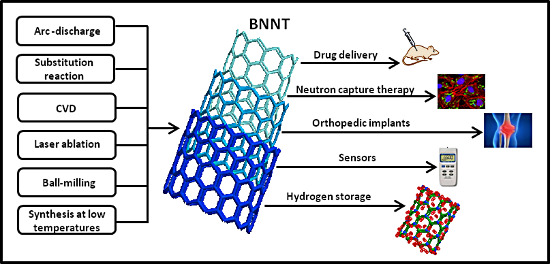
- of nanomedicine. The covalent grafting of BNNTs with human transferrin, linked through a carbamide bond, was reported [67]. The transferrin–BNNTs were tested on primary human umbilical vein endothelial cells (HUVECs) to investigate their cellular uptake. It was concluded that the functionalization of